

What do you think?

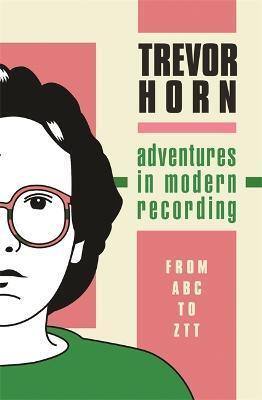
Adventures in Modern Recording
A Telegraph Book of the Year
As a renowned recording-studio maven, Trevor Horn has been dubbed 'the man who invented the '80s'. His production work since the glory days of ZTT represents a veritable 'who's who' of intelligent modern pop, including the likes of ABC, Frankie Goes to Hollywood, Paul McCartney, Rod Stewart, Pet Shop Boys, Seal, Simple Minds, Grace Jones and Yes - among many others.
This book is Trevor's story in his own words, as told through the prism of twenty-three of his most important songs - from the ones that inspired him to the ones that defined him.
This play-by-play memoir transports readers into the heart of the studio to witness the making of some of music's most memorable moments, from the Buggles' ground-breaking 'Video Killed the Radio Star' to Band Aid's perennial 'Do They Know It's Christmas?', via hits such as 'Relax', 'Poison Arrow', 'Owner of a Lonely Heart' and 'Crazy'.
Offering unrivaled access to the dark arts of the producer's world and the even darker arts of the music business itself, prepare for some adventures in modern recording...
As a renowned recording-studio maven, Trevor Horn has been dubbed 'the man who invented the '80s'. His production work since the glory days of ZTT represents a veritable 'who's who' of intelligent modern pop, including the likes of ABC, Frankie Goes to Hollywood, Paul McCartney, Rod Stewart, Pet Shop Boys, Seal, Simple Minds, Grace Jones and Yes - among many others.
This book is Trevor's story in his own words, as told through the prism of twenty-three of his most important songs - from the ones that inspired him to the ones that defined him.
This play-by-play memoir transports readers into the heart of the studio to witness the making of some of music's most memorable moments, from the Buggles' ground-breaking 'Video Killed the Radio Star' to Band Aid's perennial 'Do They Know It's Christmas?', via hits such as 'Relax', 'Poison Arrow', 'Owner of a Lonely Heart' and 'Crazy'.
Offering unrivaled access to the dark arts of the producer's world and the even darker arts of the music business itself, prepare for some adventures in modern recording...
384 pages, Paperback
Published February 6, 2024
Ratings & Reviews
Friends & Following
Create a free account to discover what your friends think of this book!
Community Reviews
Displaying 1 - 30 of 66 reviews

January 25, 2023
If you appreciate Trevor Horn’s work then this is solid gold. It’s all here: ABC, Malcolm McLaren, Frankie, ZTT, Art of Noise, Seal etc. Loved it.
4/5
As a renowned recording-studio maven, Trevor Horn has been dubbed 'the man who invented the '80s'.
His production work since the glory days of ZTT represents a veritable 'who's who' of intelligent modern pop, including the likes of ABC, Frankie Goes to Hollywood, Paul McCartney, Rod Stewart, Pet Shop Boys, Seal, Simple Minds, Grace Jones and Yes - among many others.
This book is Trevor's story in his own words, as told through the prism of twenty-three of his most important songs - from the ones that inspired him to the ones that defined him.
This play-by-play memoir transports readers into the heart of the studio to witness the making of some of music's most memorable moments, from the Buggles' ground-breaking 'Video Killed the Radio Star' to Band Aid's perennial 'Do They Know It's Christmas?', via hits such as 'Relax', 'Poison Arrow', 'Owner of a Lonely Heart' and 'Crazy'.
Offering unrivalled access to the dark arts of the producer's world and the even darker arts of the music business itself, prepare for some adventures in modern recording...
4/5
As a renowned recording-studio maven, Trevor Horn has been dubbed 'the man who invented the '80s'.
His production work since the glory days of ZTT represents a veritable 'who's who' of intelligent modern pop, including the likes of ABC, Frankie Goes to Hollywood, Paul McCartney, Rod Stewart, Pet Shop Boys, Seal, Simple Minds, Grace Jones and Yes - among many others.
This book is Trevor's story in his own words, as told through the prism of twenty-three of his most important songs - from the ones that inspired him to the ones that defined him.
This play-by-play memoir transports readers into the heart of the studio to witness the making of some of music's most memorable moments, from the Buggles' ground-breaking 'Video Killed the Radio Star' to Band Aid's perennial 'Do They Know It's Christmas?', via hits such as 'Relax', 'Poison Arrow', 'Owner of a Lonely Heart' and 'Crazy'.
Offering unrivalled access to the dark arts of the producer's world and the even darker arts of the music business itself, prepare for some adventures in modern recording...
November 26, 2022
A genuinely fascinating deep dive into Horn’s career, from his first interest in music to his semi-retirement in the wake of his beloved wife/manager’s fatal accident (which he states from the beginning that he’s not going to talk about, which fair enough). The chapters covering his Imperial period are the best, especially the chapter about Malcolm McLaren’s Duck Rock, which makes that strange and wonderful record seem even more remarkable. Arguably would have liked more about the Art of Noise, but whatever. Horn comes across as charming and self-effacing throughout.

Did Not Finish
November 29, 2022Trevor Horn is very probably the best producer pop music has ever had, but I couldn't get into this memoir. I thought it might just be the obligatory chapters on childhood which were the issue, where he'd skirt past something potentially interesting – OK, his astigmatism is because his mother had rickets while she was pregnant with him, but what the hell was the situation which led to a pregnant woman being that malnourished in 20th century Britain? So I flipped forward to his imperial phase to see what was waiting, and picked a chapter on one of my favourite songs by one of my favourite bands, Left To My Own Devices, where Horn was the one introducing the Pet Shop Boys to the epic mode. Nope; possibly more interesting to someone with more musical grounding, but it was still leaving me cold. Gods know there's no shame in that, though – a polymath is a very impressive thing, but it's perfectly acceptable to do one thing very well indeed, and Horn has more than proven himself on that front. Maybe his book isn't anything special, but then I doubt Diana Athill would have managed to make Frankie or ABC sound that good had she been behind the mixing desk.

April 23, 2025
It is a collection of anecdotes about various projects that Trevor Horn has worked on. Neatly explained chronologically in different chapters. If you work in the music industry yourself, as a mixing engineer or producer, it is really to feast on.

December 30, 2022
Hugely interesting career retrospective of "the man who invented the 80s". The one-song-per-chapter structure was an excellent choice.
Some have said the book is light on personal tales and heavy on musical minutiae, which it really isn't. That it stops just before his wife's tragic death is probably a good thing, for very good reason. Horn comes across as a (fair) bit of a prat sometimes—which genius producer isn't?—and, fair play to him, is forthcoming about it.
The tales are as entertaining as you'd expect—getting high in township South Africa while working on Malcolm McLaren's infamous Duck Rock, averting printing-press riots over (homo)erotic FGTH album sleeves, playing the first Coachella with the Art of Noise, mock-conducting Piper Perabo just off screen on the set of Coyote Ugly. I would have liked to read more about the Frankie lawsuit and the subsequent downfall of ZTT; about more Seal albums rather than just his debut; about Horn's more recent work (including his return to stage performance) and relationships. But perhaps there's enough there for a volume 2.
I strongly recommend that you play the songs as you read about them. Makes all the difference.
Some have said the book is light on personal tales and heavy on musical minutiae, which it really isn't. That it stops just before his wife's tragic death is probably a good thing, for very good reason. Horn comes across as a (fair) bit of a prat sometimes—which genius producer isn't?—and, fair play to him, is forthcoming about it.
The tales are as entertaining as you'd expect—getting high in township South Africa while working on Malcolm McLaren's infamous Duck Rock, averting printing-press riots over (homo)erotic FGTH album sleeves, playing the first Coachella with the Art of Noise, mock-conducting Piper Perabo just off screen on the set of Coyote Ugly. I would have liked to read more about the Frankie lawsuit and the subsequent downfall of ZTT; about more Seal albums rather than just his debut; about Horn's more recent work (including his return to stage performance) and relationships. But perhaps there's enough there for a volume 2.
I strongly recommend that you play the songs as you read about them. Makes all the difference.

August 25, 2023
Highly entertaining and illuminating memoirs from one of the greatest producers in pop music history. Coming into this I was most interested in what he'd have to say about Frankie Goes to Hollywood and Grace Jones, and he certainly does not disappoint, but there are also interesting chapters on Seal, Rod Stewart, LeAnn Rimes and Paul McCartney among many others.
I also really liked the description of his childhood, his first very gradual steps into the music industry, as well as his disarming honesty regarding his own musical limitations.
I also really liked the description of his childhood, his first very gradual steps into the music industry, as well as his disarming honesty regarding his own musical limitations.
July 6, 2025
Probably the best book I’ve read this year! I didn’t know much about Trevor Horn before this, but I am now a super fan of his work. The stories in this book are well told and humorous, and as someone interested in music production it was a fascinating read. I was sad to have finished it and wished it wouldn’t end. Great book!

January 6, 2024
Really good read with plenty of back story to the artists he's produced including ABC, Yes, Seal and many more. Fascinating insight into the world of producing music.

August 9, 2026
Trevor Horn is one of my musical heroes. He deserves five stars for his music. And since this is also a very entertaining and often funny and charming read, I go for the full five stars. Don't read it if you're not into his music. It's all about technological things I didn't get. But it's nice to read how these big songs and great hits came to be.
My favorites (if I have to slim it down to three): Poison Arrow (ABC), Crazy (Seal) and Can't Fight the Moonlight (LeAnn Rimes).
My favorites (if I have to slim it down to three): Poison Arrow (ABC), Crazy (Seal) and Can't Fight the Moonlight (LeAnn Rimes).

November 20, 2022
The music memoir of one of the most famous producers who's worked with everyone who's anyone. Paul McCartney, Pet Shop Boys, ABC, Rod Stewart, Grace Jones, the list goes on and on. He tells his story in 24 songs, bookended by the stressful experience of organising the 2004 Prince's Trust concert at Wembley. It starts from the music that influenced him when he was growing up, playing bass with various jobbing bands through to hitting fame fronting the Buggles and then key tracks as a top producer.
It's also a touching tribute to his late wife, the remarkable Jill Sinclair, one of the founders of SARM Studios and one of his co-founders for ZTT Records. Horn gives her due credit for the crucial role she played in his career, including telling him "As an artist, you'll always be second division, whereas if you go into production, you can become the best producer in the world." How right she was.
This is very much a music memoir rather than a personal one, and this is the prism through which we see Horn. But it's obvious that the music took up so much of his life, it's impossible to disentangle them. There's plenty of technical detail for music connoisseurs but enough stories about the artists he's worked with and the trials and tribulations of working with some of them to be entertaining. What does impress is the dedication involved in getting that elusive sound to make a track right. Also, how important relationships with people are and the effect that can have on production. It's fascinating to read about the production of iconic tracks like Frankie Goes To Hollywood's 'Relax' or 'Two Tribes or Seal's 'Crazy'. You'll want to immediately go listen to these tracks again to focus on the production. Maybe there should be an accompanying playlist!
Anyone who has any interest in music and/or the 80s will want a read of this one. A great insight into the art of music production and the stories behind some of the biggest hits of the time. At the very least, it'll help you rediscover some excellent music.
It's also a touching tribute to his late wife, the remarkable Jill Sinclair, one of the founders of SARM Studios and one of his co-founders for ZTT Records. Horn gives her due credit for the crucial role she played in his career, including telling him "As an artist, you'll always be second division, whereas if you go into production, you can become the best producer in the world." How right she was.
This is very much a music memoir rather than a personal one, and this is the prism through which we see Horn. But it's obvious that the music took up so much of his life, it's impossible to disentangle them. There's plenty of technical detail for music connoisseurs but enough stories about the artists he's worked with and the trials and tribulations of working with some of them to be entertaining. What does impress is the dedication involved in getting that elusive sound to make a track right. Also, how important relationships with people are and the effect that can have on production. It's fascinating to read about the production of iconic tracks like Frankie Goes To Hollywood's 'Relax' or 'Two Tribes or Seal's 'Crazy'. You'll want to immediately go listen to these tracks again to focus on the production. Maybe there should be an accompanying playlist!
Anyone who has any interest in music and/or the 80s will want a read of this one. A great insight into the art of music production and the stories behind some of the biggest hits of the time. At the very least, it'll help you rediscover some excellent music.

February 20, 2023
Don't know how I heard that this book had been published, but instantly, I was out to get a physical copy. It interrupted my reading of Prince Harry's book, and it offered an interesting contrast. The focus here is almost exclusively on the work. The music. The painstaking process of taking a song, and turning it into a hit record. A lot of technical detail about how that happens, and I enjoyed that aspect of the book. For example the use of compressors on Crazy by Seal. I'll never listen to that track the same way again.
Horn is probably the greatest music producer of his generation. Arguably, the most successful British music producer of all time. I'd probably go with him, over say someone like George Martin, who is more recognised for his work with one band, or Stock Aitken and Waterman (more chart success, but formulaic). Trevor Horn has had number ones with his own bands and with a diverse range of artists and over a very long period of time.
There isn't one boring chapter in this book. I'm probably more familiar with his work from about 1985 onwards. The book is predominantly about his work leading up to 1985 (which covers more than two thirds of the book), so I'm being introduced to a lot of his work that I'm not overly familiar with, like ABC, Yes, Frankie, Propaganda, and Art of Noise. It's all written in a very engaging, direct, matter-of-fact way. A little bit gossipy here and there, but not too much. A couple of errors which I didn't quite like, like calling Pet Shop Boys album Introspective, Introspection. Neil Tennant will be wagging his finger somewhere.
However, I'm quibbling here. Overall, a great read. Deliberately stops with the 2004 concert (a brilliant live concert btw) to celebrate his 25th year as a producer and doesn't cover the period after that. He tells the reader that shortly afterwards his beloved wife and business partner, Jill Sinclair suffered catastrophic injuries in an accident at home and it was too painful for him to tell the story any further.
Horn is probably the greatest music producer of his generation. Arguably, the most successful British music producer of all time. I'd probably go with him, over say someone like George Martin, who is more recognised for his work with one band, or Stock Aitken and Waterman (more chart success, but formulaic). Trevor Horn has had number ones with his own bands and with a diverse range of artists and over a very long period of time.
There isn't one boring chapter in this book. I'm probably more familiar with his work from about 1985 onwards. The book is predominantly about his work leading up to 1985 (which covers more than two thirds of the book), so I'm being introduced to a lot of his work that I'm not overly familiar with, like ABC, Yes, Frankie, Propaganda, and Art of Noise. It's all written in a very engaging, direct, matter-of-fact way. A little bit gossipy here and there, but not too much. A couple of errors which I didn't quite like, like calling Pet Shop Boys album Introspective, Introspection. Neil Tennant will be wagging his finger somewhere.
However, I'm quibbling here. Overall, a great read. Deliberately stops with the 2004 concert (a brilliant live concert btw) to celebrate his 25th year as a producer and doesn't cover the period after that. He tells the reader that shortly afterwards his beloved wife and business partner, Jill Sinclair suffered catastrophic injuries in an accident at home and it was too painful for him to tell the story any further.

March 9, 2023
Mr. Horn sounds his notes about producing music for ABC, Frankie Goes To Hollywood, Malcolm McLaren and the like.
He clearly had a very large part to play in the songs of those guys.
He also talks about his own direct creations such as Buggles and The Art of Noise.
An interesting read, I drank it down very quickly.
But then I'm interested in music and production.
A thank you goes to James Ck. for his recommendation of this.
He clearly had a very large part to play in the songs of those guys.
He also talks about his own direct creations such as Buggles and The Art of Noise.
An interesting read, I drank it down very quickly.
But then I'm interested in music and production.
A thank you goes to James Ck. for his recommendation of this.

February 19, 2023
This is a great technical music-geeky book. But very well written. And honest.
I already respected Trevor Horn. Now I really respect him. And it's amazing how long it took to make Crazy. You would never know by listening to it.
I already respected Trevor Horn. Now I really respect him. And it's amazing how long it took to make Crazy. You would never know by listening to it.

November 9, 2022
Light on personal stuff but the music side is all there

June 11, 2025
It's been fab reading Trevor's fascinating autobiog over the past 3 weeks - he's a real hero of mine, and I loved reading about his childhood and how it all started, through to his successful careers as pop star and then top-rated producer.
I didn't realize he'd played in bands before Buggles - it was so interesting to see what his early influences were, and how it shaped the music he'd become famous for.
There's chapters of course on Buggles, Dollar, ABC, Yes, Frankie & Propaganda - and also some on other artists I hadn't realized he'd produced.
There's so not much about his personal life, but that's fine - especially when the music can do the talking and is life's work in itself.
This is a must for all fans of his music, and for anyone who's even remotely interested in the glory days of the pop record.
It certainly got me digging out my old records, as well as trying some new ones!
Highly recommended.
I didn't realize he'd played in bands before Buggles - it was so interesting to see what his early influences were, and how it shaped the music he'd become famous for.
There's chapters of course on Buggles, Dollar, ABC, Yes, Frankie & Propaganda - and also some on other artists I hadn't realized he'd produced.
There's so not much about his personal life, but that's fine - especially when the music can do the talking and is life's work in itself.
This is a must for all fans of his music, and for anyone who's even remotely interested in the glory days of the pop record.
It certainly got me digging out my old records, as well as trying some new ones!
Highly recommended.

January 12, 2024
Excellent account of a life in music; playing, producing sounds, and especially, listening. As is the case of anybody who achieves 'success' in their chosen field, it's never pure luck. Trevor Horn worked for everything he's achieved from a young age, and with an innate musical ability, never losing sight of his goal of making a life in music - which always looks impossible at first - and being in the right place to take the opportunities which arose, his achievements stand up for themselves.
His reflections on the studio processes and the artists with whom he has worked are fascinating, often revelatory, and concerning his re-booting of Yes with 90125, the light he sheds on the long road to the band's re-appraisal merely reinforces the reason why these musicians are held in such respect. Tony Kaye excepted!
Highly recommended, music fans!
His reflections on the studio processes and the artists with whom he has worked are fascinating, often revelatory, and concerning his re-booting of Yes with 90125, the light he sheds on the long road to the band's re-appraisal merely reinforces the reason why these musicians are held in such respect. Tony Kaye excepted!
Highly recommended, music fans!

November 17, 2024
British New Wave music was a big part of my life as a high school teen in the early 80's. Those rich synths and lush melodies accompanying dance beats were my lifeblood at the time. And at the heart of much of that was producer Trevor Horn.
I like Horn's approach to this look at his life and music with twenty-three chapters themed by song titles. I found it interesting to hear about how the Buggles came about and how he ended up briefly as the frontman for Yes. And I very much appreciated the in-depth looks at the making of some of my favorite albums at the time: ABC's Lexicon of Love, Malcolm McLaren's Duck Rock and Frankie Goes to Hollywood's Welcome to the Pleasuredome.
I like Horn's approach to this look at his life and music with twenty-three chapters themed by song titles. I found it interesting to hear about how the Buggles came about and how he ended up briefly as the frontman for Yes. And I very much appreciated the in-depth looks at the making of some of my favorite albums at the time: ABC's Lexicon of Love, Malcolm McLaren's Duck Rock and Frankie Goes to Hollywood's Welcome to the Pleasuredome.

June 27, 2026
Leuk inkijkje in wat er komt kijken bij het produceren van plaatjes. Veel heel bekende, leuke liedjes direct in mijn hoofd. Maar ook… wat een gedoe voor een liedje 🎵.
January 28, 2023
musical memories
Brought back so many musical memories from my growing up that I loved. I had no idea that Trevor Horn production was the common thread between these great songs. It was fascinating and funny to read the stories behind the making of the records and to learn what a long labour of love producing a record takes.
Brought back so many musical memories from my growing up that I loved. I had no idea that Trevor Horn production was the common thread between these great songs. It was fascinating and funny to read the stories behind the making of the records and to learn what a long labour of love producing a record takes.

November 9, 2022
i was very kindly sent a proof copy of this book from the publisher!
i asked for this title because anyone who knows me well knows how interested i am in the music industry, having done work experience at UMG and a life goal of mine being to eventually work in music law. i'm also a writer, performer and all-round music lover and so i have been introduced to music production in the past.
trevor horn dives into the production process of his favourite/most personally influential songs alongside the backdrop of his 2004 prince's trust concert, which he produced. i found the chapters to be incredibly interesting and a thoughtful blend of technical talk and celebrity anecdotes which made for a charming and insightful read. the form - one chapter per song plus prince's trust part 1 as introduction and part 2 as epilogue - to also be incredibly effective. i immediately warmed to trevor's voice and this book made me very interested in him as a person, as he seems very lovely so i plan to check out more of his work and future projects.
i asked for this title because anyone who knows me well knows how interested i am in the music industry, having done work experience at UMG and a life goal of mine being to eventually work in music law. i'm also a writer, performer and all-round music lover and so i have been introduced to music production in the past.
trevor horn dives into the production process of his favourite/most personally influential songs alongside the backdrop of his 2004 prince's trust concert, which he produced. i found the chapters to be incredibly interesting and a thoughtful blend of technical talk and celebrity anecdotes which made for a charming and insightful read. the form - one chapter per song plus prince's trust part 1 as introduction and part 2 as epilogue - to also be incredibly effective. i immediately warmed to trevor's voice and this book made me very interested in him as a person, as he seems very lovely so i plan to check out more of his work and future projects.

February 27, 2024
When it’s good it’s good. But, as the book goes on the chapters become shorter and the details more scant. It feels like the interviews this ghost-written book was based on were front loaded. Or maybe Trevor just lost interest, or the writer ran out of time and budget. I enjoyed it, but nowhere near as much as I thought I would.

May 14, 2023
This is not a deeply analytical or thoughtful book, it lays out the evidence rather than drawing out interesting conclusions about it; commercial success is the measure that the producer is looking for, never more so than when as a young hotshot producers he is fearless when he tells one upcoming group he is producing 'ditch the bass player; you need better', and later a much more successful group refuse to be produced by him, having heard of his previous advice. But maybe a results-driven musical approach was in tune with the top-down results-driven ambience of the times.
This book is about popular music from the 1960s, 70s and 80s, with a small nod towards the 1990s. With nothing else to do it could be read in a day, maybe two days if you take breaks from the book and look up the musical references on youtube. I'd call the writing style 'nimble' but the writing is not as perceptive as that. He can be on point with his similes about musicians and recording set ups and sometimes shockingly tone deaf with a phrase. At quite a few points the writing is 'in need of a better editor', either to take out certain sentences, change the tone of what is said, or to add more thought to what is written on the page. There is the occasional snappy phrase, if he had re worked his description of working as producer and co-writer with Yes for the album '90125', that the journey was 'A flight beset by turbulence', and adapted it to describe his earlier flight with the band 1980-81 where the band literally crashed after one album and one world tour with the relatively young Trevor as lead vocalist and lyric writer the writing would have built more. Horn seemed almost opaque as he wrote about his experience of joining Yes in 1980/81, but he does convey the sense of the rush to make him fit into a musical structure/dynamic that he had hero-worshiped when younger. To be silently sacked from Yes after a world tour must have been nearly as shocking as the invitation to join the band. The impression left is that he signed documents that meant he was never to talk about the who, what, when, where and why if his brief term attempting to 'replace' Jon Anderson, one of his musical heroes. It must have taken Horn a lot of courage and humility to go up and talk to Anderson three to four years later.
There is a lot to be silent about generally in this book, with regard to the music industry. The way contracts often prove to have unintended consequences, and the inability of artists to say anything because their recording and touring contracts divide in the main between mundane and secretive. The exception here is the amounts of money spent on Malcolm McLaren's 'Duck Rock' project, where the completion of the project was practically a world recording tour.
Musically, the book starts in the 1960s with Horn being caught between the music of his musician dad and the music played on the radio, particularly the music of The Beatles, making it's imprint on whoever heard it. The music of his dad was the big band music first made popular in the 1940s which he played live and could sight-read. So young Trevor was taught to read music, as much as play it, quite early in his life. The stories of being bullied in school for wearing of glasses, and finding that musical instruments are more fragile was insightful. The link between his wearing glasses and his mothers health whilst carrying him was well observed. Many pregnant women could not look after their health and the health of their child as well as they wanted to, and did not know that what they endured in pregnancy would affect their child.
I liked it when young Mr Horn starts playing double bass and guitar and plays and tours in big bands and orchestras, and when he starts to take an interest in the potential of the tape recorder. I remember the descriptions of the early years in the Elton John biography, 'Me', and in the Tony Visconti book 'Bowie Bolan and The Brooklyn Boy'. In both of those books the most interesting parts of the books were when the musician was learning their craft, whilst there was some engage detail in their 'imperial years' the formative years were most interesting. The London years (1971-79) are when Trevor Horn's story really picks up. That is when he is quite often playing music he did not like for people who don't listen to music (though some might dance to it) and where the music business seems to be at it's most grubby, but when it teaches musicians the most.
His producing the number one hit in the mid-seventies for Tina Charles 'I love to love (but my baby loves to dance)' was a false start in the music business. The episode where The Buggles enter Horn's life are where his musicians apprenticeship truly seems to be over.
to be continued....
This book is about popular music from the 1960s, 70s and 80s, with a small nod towards the 1990s. With nothing else to do it could be read in a day, maybe two days if you take breaks from the book and look up the musical references on youtube. I'd call the writing style 'nimble' but the writing is not as perceptive as that. He can be on point with his similes about musicians and recording set ups and sometimes shockingly tone deaf with a phrase. At quite a few points the writing is 'in need of a better editor', either to take out certain sentences, change the tone of what is said, or to add more thought to what is written on the page. There is the occasional snappy phrase, if he had re worked his description of working as producer and co-writer with Yes for the album '90125', that the journey was 'A flight beset by turbulence', and adapted it to describe his earlier flight with the band 1980-81 where the band literally crashed after one album and one world tour with the relatively young Trevor as lead vocalist and lyric writer the writing would have built more. Horn seemed almost opaque as he wrote about his experience of joining Yes in 1980/81, but he does convey the sense of the rush to make him fit into a musical structure/dynamic that he had hero-worshiped when younger. To be silently sacked from Yes after a world tour must have been nearly as shocking as the invitation to join the band. The impression left is that he signed documents that meant he was never to talk about the who, what, when, where and why if his brief term attempting to 'replace' Jon Anderson, one of his musical heroes. It must have taken Horn a lot of courage and humility to go up and talk to Anderson three to four years later.
There is a lot to be silent about generally in this book, with regard to the music industry. The way contracts often prove to have unintended consequences, and the inability of artists to say anything because their recording and touring contracts divide in the main between mundane and secretive. The exception here is the amounts of money spent on Malcolm McLaren's 'Duck Rock' project, where the completion of the project was practically a world recording tour.
Musically, the book starts in the 1960s with Horn being caught between the music of his musician dad and the music played on the radio, particularly the music of The Beatles, making it's imprint on whoever heard it. The music of his dad was the big band music first made popular in the 1940s which he played live and could sight-read. So young Trevor was taught to read music, as much as play it, quite early in his life. The stories of being bullied in school for wearing of glasses, and finding that musical instruments are more fragile was insightful. The link between his wearing glasses and his mothers health whilst carrying him was well observed. Many pregnant women could not look after their health and the health of their child as well as they wanted to, and did not know that what they endured in pregnancy would affect their child.
I liked it when young Mr Horn starts playing double bass and guitar and plays and tours in big bands and orchestras, and when he starts to take an interest in the potential of the tape recorder. I remember the descriptions of the early years in the Elton John biography, 'Me', and in the Tony Visconti book 'Bowie Bolan and The Brooklyn Boy'. In both of those books the most interesting parts of the books were when the musician was learning their craft, whilst there was some engage detail in their 'imperial years' the formative years were most interesting. The London years (1971-79) are when Trevor Horn's story really picks up. That is when he is quite often playing music he did not like for people who don't listen to music (though some might dance to it) and where the music business seems to be at it's most grubby, but when it teaches musicians the most.
His producing the number one hit in the mid-seventies for Tina Charles 'I love to love (but my baby loves to dance)' was a false start in the music business. The episode where The Buggles enter Horn's life are where his musicians apprenticeship truly seems to be over.
to be continued....

February 12, 2026
I had always thought of Trevor Horn mostly as a technopop kind of guy, thanks to acts like The Buggles and the fact that he made Frankie Goes to Hollywood the biggest worldwide success since the Beatles - but he's also produced Seal, and Simple Minds' "Belfast Child", and Rod Stewart's "Downtown train", a cover of a Tom Waits folk song. His philosophy is always that he must take the client's song and turn it into a hit, while fulfilling the client's vision for it. This book is a combination of biography, each chapter describing the development of his career through his involvement with a particular act, and a series of entertaining anecdotes about the bands he worked with. ("There was no denying the aroma of cruise liner that hung around Dollar" - meow!) His career straddled the gap between the analogue and the digital age of musical production. In the former, producers would still do simple tricks like opening and closing a door to change the acosutics within the recording chamber; by the latter, if an orchestra has played a tune in G and the client wants it in B major, you can use a computer to shift it just like that. Read this for the pleasure of meeting a genuinely nice guy and also watching a consummate professional at work, sharing the tricks of his trade.

August 13, 2023
I've been a fan of Trevor Horn production since the first Buggles album, so this was an interesting read. Trevor covers his own early beginnings as a jobbing session musician to his time with YES (an interesting relationship!) and then that slew of albums in the 80's - ABC, Frankie Goes to Hollywood, Yes (again), the Art of Noise, Grace Jones, Seal...
Whilst it isn't all here - I was sorry not to read about the details of Mike Oldfield and Tubular Bells II for example, which I understand are quite well-known - and there is not a lot of detail about the court cases over ZTT, Frankie Goes to Hollywood, what we get here is entertaining enough. I was kept up at night reading, in that "just one more chapter" situation I'm sure many have been in.
Trevor still sounds like someone I could happily chat to over a drink and a meal - although I'm not sure everyone mentioned here would agree.
Recommended as a read for anyone with an interest in the UK music scene of the 1980's.
Whilst it isn't all here - I was sorry not to read about the details of Mike Oldfield and Tubular Bells II for example, which I understand are quite well-known - and there is not a lot of detail about the court cases over ZTT, Frankie Goes to Hollywood, what we get here is entertaining enough. I was kept up at night reading, in that "just one more chapter" situation I'm sure many have been in.
Trevor still sounds like someone I could happily chat to over a drink and a meal - although I'm not sure everyone mentioned here would agree.
Recommended as a read for anyone with an interest in the UK music scene of the 1980's.

October 12, 2024
An entertaining, if at times slightly dry memoir by producer extraordinaire Trevor Horn. It details his childhood love of music, plugging away in various showbands, before a brush with fame as The Buggles (Video Killed The Radio Star) and his eventual transition into production.
Along the way we get various anecdotes about the albums he's worked on and acts he's worked with, nothing too prurient. In fact this is all very wholesome and Horn comes over as a nice guy who forged a career in the music business through sheer persistence and talent.
He glosses over the more tragic areas of his story (the loss of his wife), not wanting to cause any further pain to his family, which is understandable. But this keeps the autobiography on one level - strictly business.
An enjoyable enough listen (read by Horn himself), especially if you are interested in the inner working of a music studio and one of the great music producers.
Along the way we get various anecdotes about the albums he's worked on and acts he's worked with, nothing too prurient. In fact this is all very wholesome and Horn comes over as a nice guy who forged a career in the music business through sheer persistence and talent.
He glosses over the more tragic areas of his story (the loss of his wife), not wanting to cause any further pain to his family, which is understandable. But this keeps the autobiography on one level - strictly business.
An enjoyable enough listen (read by Horn himself), especially if you are interested in the inner working of a music studio and one of the great music producers.

March 13, 2024
It's mostly about the musical journey so don't expect too much insight into his private life. But the role of his parents, particularly his musician father is interesting. The influence of Jill on his business life is there but the tragic events in her final years is not. And there are a couple of early relationships eg with Tina Charles that make the cut. But what a musical journey with so many different kinds of musicians - we know the great tracks from Buggles, ABC, Frankies and Seal and are reminded of other work with Yes, Simple Minds and Rod Stewart and in film. He's honest about mistakes and interesting about issues overcome. Occasionally nerdy in his enthusiasm for those that know more about production than I do. Very enjoyable- I was diving into YouTube clips every quarter of an hour.

April 3, 2023
Autobiographies can be an iffy choice for a read, especially if they turn out to be egregiously self-aggrandizing. I had to go out on a limb here because Horn is both a fascinating character in the music business and my favorite male vocalist (the late Mark Hollis notwithstanding). And I'm happy to say that Horn delivers what I wanted out of this book - insights into his creative process, along with comments on why he chose the particular projects he did. There are moments of frustration, of hilarity, and most interesting to me, of times when difficulties led to creative breakthroughs. I enjoyed the heck out of this book - and if you made a mix tape of the songs he chose to cover in this volume, then you could also say it's got an incredible soundtrack.

August 29, 2025
A very fun read, even if you don't know much about recording music, as there is a quite a bit of terminology which Mr. Horn explains a lot of the time. I actually had no idea he produced so many different types of artists. Being a Yes fan, I was most familiar with "90125". The part I would have loved to hear more of is the making of the album "Drama", where he was a bonified member of Yes. Would have been interesting to hear about the songwriting and recording process for that album but there is actually NOTHING mentioned. Instead, he focuses on how he kind of flamed out on the tour. Also no mention of his return to producing Yes with "Fly From Here", but that didn't bother me as much as I am sure he didn't cover every album he produced.

January 8, 2026
There is no doubting Trevor Horn's musical credentials. His catalogue speaks for itself, and I listened to the audiobook version of Adventures in Modern Recording narrated by Trevor. As a musical fanatic, I really hoped I would find this enlightening and that I would get an insight into the man himself, much as I had with Nick Mason's book Inside Out. Nick was charming, but Trevor is somewhat of a cold fish. Maybe to be as driven as he is, you have to be, but they say don't meet your heroes and listening to him narrate the book is as near to meeting him as I'll ever get. That said, the book is insightful, interesting for those who know the music and lived through the times, and a piece of modern history. But I so wanted to like him.
January 1, 2024
Up there with Wolfgang Flur's I Was A Robot as the best musical memoir of any stripe. Every chapter is a winner, from the early japes to Buggles to Frankie to the surprises that I'm not going to spoil in the slightest. Every music student or fan of music should read this, and Trevor Horn should be up there with George Martin and Quincy Jones as one of the sonic architects of the analogue era. Brilliantly written, and a fine tribute to his late wife Jill Sinclair. The kind of book you foist on to people and order them to read, so you can share in the joy of the stories. A spoken word tour awaits, perhaps with Paul Morley asking the questions.
Displaying 1 - 30 of 66 reviews