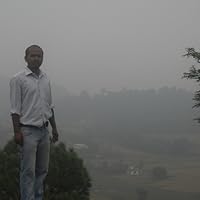
Jamyang Norbu has taken the stories of 'forgotten' Tibetans--resistance fighters, secret agents, soldiers, peasants, merchants, even street beggars--and skillfully worked their myriad accounts into a single glorious 'memory history' of the Tibetan struggle. He uses recollections from his own childhood to ease the reader into an immersive understanding of the complexity of Tibet's modern the Chinese invasion, the uprisings in Kham and Amdo, the formation of the Four Rivers Six Ranges Resistance Force, the March '59 Lhasa Uprising, the CIA supported Air Operations, the Nyemo peasant Uprising of 68/69 and the Mustang Guerilla Force in northern Nepal, where Norbu later served.
He writes of leaving home to drive tractors at refugee settlements, educate refugee children, produce plays at the Tibetan Institute of Performing Arts, and collect intelligence for the Tibetan Office of Research and Analysis (TORA) and for France's External Intelligence Agency (SDECE). He uses these anecdotes not so much as autobiography but as a framing device to recount the lives, deeds and, too often, tragedies of the many Tibetans he encountered and befriended throughout his life--nearly all of whom played vital roles in shaping the recent history of their country but whose contributions are still unsung and forgotten. Jamyang Norbu's lifelong commitment to collecting and orchestrating the 'echoes' of these many forgotten voices from the past has resulted in a lyrical, learned and compassionate book that could well be described as the prose epic of the Tibetan freedom struggle.
Jamyang Norbu (འཇམ་དབྱངས་ནོར་བུ) is a Tibetan political activist and writer, who lived for over 40 years as an exile in India. He now resides in America.
He founded and directed the Amnye Machen Institute, Tibetan Centre for Advanced Studies, Dharamsala. He is the author of Warriors of Tibet, the biography of a Khampa warrior; Illusion and Reality, a collection of his political essays, and the editor of The Performing Traditions of Tibet. He was also the director of the Tibetan Institute for Performing Arts and has written five plays and a traditionall opera libretto.
Norbu has lectured on Tibetan culture and the freedom struggle at more than a hundred universities and institutions in the USA, Canada, Australia, France, India, Japan, and the UK. He has also appeared on a number of television and radio shows and interviews all over the world to argue the case of Tibet.
Quite a magisterial book with detailing the struggle, the ordeal and the eventual occupation of Tibet. So many stories of indomitable human spirit of fight for ones land and the immense suffering. Write has done a great service to tibetan writing. A must have book to all those who are interested in knowing Tibet, it's people and struggle