

What do you think?

Agent of Rome #1
Het beleg
270 AD. Rome has ruled Syria for more than three centuries but now the weakened empire faces a desperate threat. Queen Zenobia of Palmyra has turned her Roman-trained army against her former masters. Arabia, Palestine, and Egypt have fallen and now Antioch, Syria's capital, stands exposed. A young intelligence agent fresh from training, Cassius Corbulo, is the only Roman officer left in the line of the Palmyran advance. He receives orders to take command of the fort of Alauran, the last stronghold still in Roman hands, and hold it until reinforcements arrive. What Cassius finds at Alauran would daunt the most seasoned veteran, let alone a 19 year-old with no experience of war. A mere scattering of divided and demoralized legionaries remain, backed up by some fractious Syrian auxiliaries and a drunken Praetorian Guardsman. With the Palmyrans just days away, Cassius must somehow find the discipline, resourcefulness, and courage to organize the garrison, save Alauran, and secure Rome's eastern frontier.
413 pages, Paperback
First published July 21, 2011
About the author
Nick Brown
15 books118 followersA keen reader from a young age, Nick graduated from Enid Blyton to Douglas Hill and JRR Tolkien, and from there to Ian Fleming, Michael Crichton and C.J. Sansom. After three years studying in Brighton, he travelled to Nepal where he worked at an orphanage and trekked to Mount Everest. After qualifying as a history teacher in 2000, he worked for five years in England before taking up a post at an international school in Warsaw.
Nick had completed a few screenplays and a futuristic thriller before being inspired to try historical fiction after reading C.J. Sansom’s Dissolution: “Researching the Roman army and life in the third century was a fascinating but time-consuming project and the book went through many drafts before arriving at its final form. I had always intended Cassius to be a somewhat atypical protagonist and when I came across the research about the Roman ‘secret service’, I knew I’d found an ideal vocation for my reluctant hero.”
If he’s not writing he might be found at the cinema, in a pub or playing football.
Nick is represented by the David Grossman Literary Agency (general@dglal.co.uk)
Follow Nick on Twitter @randomrome or Agent of Rome on Facebook.
Nick had completed a few screenplays and a futuristic thriller before being inspired to try historical fiction after reading C.J. Sansom’s Dissolution: “Researching the Roman army and life in the third century was a fascinating but time-consuming project and the book went through many drafts before arriving at its final form. I had always intended Cassius to be a somewhat atypical protagonist and when I came across the research about the Roman ‘secret service’, I knew I’d found an ideal vocation for my reluctant hero.”
If he’s not writing he might be found at the cinema, in a pub or playing football.
Nick is represented by the David Grossman Literary Agency (general@dglal.co.uk)
Follow Nick on Twitter @randomrome or Agent of Rome on Facebook.
Ratings & Reviews
Friends & Following
Create a free account to discover what your friends think of this book!
Community Reviews
Displaying 1 - 30 of 51 reviews

June 7, 2014
Cassius Corbulo is a poor warrior; he is young and inexperienced. As an imperial security service agent, he expected to spend his service years behind a desk organising supplies. To the surprise of him, and the reader, he is thrust into the prestigious role of Centurion. His task is to organise the defence of Alauran, a stronghold in the Syrian dessert, and rein in its wayward defenders who have been leaderless for too long. The problem is he’s straight out of officer training and has never fought in real combat, nor has he expected ever to do so. Consequently, he has to act the part of an experienced warrior or the men would never follow him.
Suffice to say, by posing as a centurion, he has some big boots to fill. Luckily for him he has one tool at his disposal: his intelligence. And he needs it too, for the soldiers of the stronghold resent orders from such a young officer. To make things worse, a murder occurs in the heart of the stronghold casting suspicion on several characters. This coupled with a rather large solider who, half the century fear to go near due to his frequent violent outburst, needs to be persuaded into the ranks. On top of that, they have no hope of victory unless the local residents can be recruited into an auxiliary force. This results in a monumental set of tasks for Cassius. And the enemy, that outnumber them five to one, haven’t even arrived yet.
The pacing of this book is remarkable. The ending is drawn out, leading to a bloody climax of epic proportions. The narrative is broken up with chapters from the point of view of the approaching Palmyra forces. The Palmyrans are led by a brilliant swordsman named Azaf whom is charged with capturing Alauran from Roman hands. This creates suspense through the novel as his forces slowly approach the Roman stronghold.
As I mentioned in my review for book four in this series, the legions of Rome are a very popular basis for a novel. It’s refreshing to read a series in which the story does not sequence around Hadrian’s Wall or a province in modern day France or Germany. This makes the novel stand out in the genre as it focuses on the eastern side for a change: this time in the Syrian dessert.
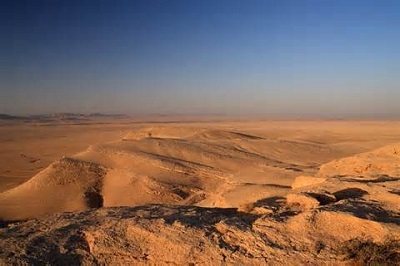
“A hillock of sand fifty feet high, “the crest” did indeed provide an excellent view of the area surrounding Alauran, particularly the dessert of the east. Scattered across its slopes were patches of thorn bush, drained of colour by the summer sun. Aside from a few grasshoppers and sand flies there was no other sign of life.”
Furthermore, it’s unique to read a military style historical novel, in which the protagonist is not an invincible enemy-slaying soldier like figure: he is believable. He could be injured or killed and the reactions he has to combat are realistic; he is regretful for his actions and inadequacies in the face of the enemy. It is because of this that this is my personal favourite of the overcrowded “Rome” novel market. This novel doesn’t just have well written and developed characters but, also an excellently paced plot.
Overall, this is an extremely exciting adventure rich in character growth and blood. It is very rare that I ever say this in a review of a book, or think it to be honest, but I cannot find a single fault with this novel, so I think it’s time to stop praising it and read the second instalment!
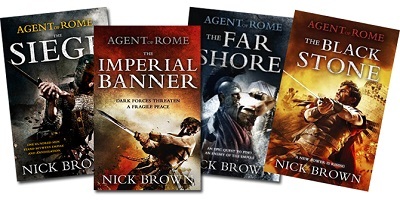
Below are links to my reviews of the rest of the series:
Book 2 - The Imperial Banner
Book 3 - The Far Shore
Book 4- The Black Stone
Suffice to say, by posing as a centurion, he has some big boots to fill. Luckily for him he has one tool at his disposal: his intelligence. And he needs it too, for the soldiers of the stronghold resent orders from such a young officer. To make things worse, a murder occurs in the heart of the stronghold casting suspicion on several characters. This coupled with a rather large solider who, half the century fear to go near due to his frequent violent outburst, needs to be persuaded into the ranks. On top of that, they have no hope of victory unless the local residents can be recruited into an auxiliary force. This results in a monumental set of tasks for Cassius. And the enemy, that outnumber them five to one, haven’t even arrived yet.
The pacing of this book is remarkable. The ending is drawn out, leading to a bloody climax of epic proportions. The narrative is broken up with chapters from the point of view of the approaching Palmyra forces. The Palmyrans are led by a brilliant swordsman named Azaf whom is charged with capturing Alauran from Roman hands. This creates suspense through the novel as his forces slowly approach the Roman stronghold.
As I mentioned in my review for book four in this series, the legions of Rome are a very popular basis for a novel. It’s refreshing to read a series in which the story does not sequence around Hadrian’s Wall or a province in modern day France or Germany. This makes the novel stand out in the genre as it focuses on the eastern side for a change: this time in the Syrian dessert.
“A hillock of sand fifty feet high, “the crest” did indeed provide an excellent view of the area surrounding Alauran, particularly the dessert of the east. Scattered across its slopes were patches of thorn bush, drained of colour by the summer sun. Aside from a few grasshoppers and sand flies there was no other sign of life.”
Furthermore, it’s unique to read a military style historical novel, in which the protagonist is not an invincible enemy-slaying soldier like figure: he is believable. He could be injured or killed and the reactions he has to combat are realistic; he is regretful for his actions and inadequacies in the face of the enemy. It is because of this that this is my personal favourite of the overcrowded “Rome” novel market. This novel doesn’t just have well written and developed characters but, also an excellently paced plot.
Overall, this is an extremely exciting adventure rich in character growth and blood. It is very rare that I ever say this in a review of a book, or think it to be honest, but I cannot find a single fault with this novel, so I think it’s time to stop praising it and read the second instalment!
Below are links to my reviews of the rest of the series:
Book 2 - The Imperial Banner
Book 3 - The Far Shore
Book 4- The Black Stone

May 24, 2013
What stood out for me was the character growth of Cassius Corbulo, the young, sensitive, inexperienced Security man, leading the defense of a small garrison of Romans and Syrians pitted against an overwhelming force of Queen Zenobia's Palmyrans--270 A.D. The siege and climactic battle were very exciting and compare favorably with battle scenes in other novels. I'm very happy the author did not feel compelled to insert love interest, which to me would have been out of place here. I'm sure as the series progresses, though, Cassius will meet some attractive young ladies.
This novel is a "keeper" and I hope to read more of this series.
This novel is a "keeper" and I hope to read more of this series.

September 17, 2021
**Should Read as 4.5 Stars!**
Read this book in 2012, and this book is the 1st part of the "Agent of Rome" series, with Cassius Corbulo as frumentarius (grain merchant) in Syria against the hordes from Queen Zenobia of Palmyra.
What the title suggest the main action will take place at the Garrison of Alauran with the Palmyrans laying Siege to try to overrun this garrison, and Corbulo as a young man in charge of the defence of Alauran has to do his utmost to keep this garrison in Roman hands.
This action-packed adventure, which is set in the year, AD270, will turn out to be a very delightful Roman military story in which the Roman forces in the East are tested to their very limits with Cassius Corbulo right in the middle of it, and one which is told in a most entertaining fashion by the author.
Highly recommended, for this Roman adventure is in my opinion: "A Great Cassius Corbulo Opener"!
Read this book in 2012, and this book is the 1st part of the "Agent of Rome" series, with Cassius Corbulo as frumentarius (grain merchant) in Syria against the hordes from Queen Zenobia of Palmyra.
What the title suggest the main action will take place at the Garrison of Alauran with the Palmyrans laying Siege to try to overrun this garrison, and Corbulo as a young man in charge of the defence of Alauran has to do his utmost to keep this garrison in Roman hands.
This action-packed adventure, which is set in the year, AD270, will turn out to be a very delightful Roman military story in which the Roman forces in the East are tested to their very limits with Cassius Corbulo right in the middle of it, and one which is told in a most entertaining fashion by the author.
Highly recommended, for this Roman adventure is in my opinion: "A Great Cassius Corbulo Opener"!

July 19, 2021
A different Roman period for me from other series that im engaged in, been looking to pick this one up for a while now.
C AD 270 & we’re in Syria, Antioch to be precise & facing the threat of the Palmyra’s who have rose up in rebellion & conquered the rest of the region.
Will Antioch stand or fall? Enter our hero! Cassius Corbulo a young fresh faced intelligence officer who is the highest ranking officer surviving from the assembled troops who gather at Alauran, the last stronghold still in Roman hand. Will they stand & save Antioch?
Well…… Corbulo has to be the nicest Centurion ever with many a pls & thank you after each order he gives….. I think it’s more down to his lack of years then his amiable nature but it’s kinda a tad unrealistic for a commander by my reckoning. Although in truth Corbulo is more of a “posh” centurion, very much akin to the officer classes of the British Army in the age of empire, positioned by birth right rather than ability.
The whole book is devoted to the “siege” be it the preparation, the defence or the aftermath.
As Corbulo was putting together his defence of Alauran I kept having flashbacks to the film….. The Magnificent Seven….. because as he started to assemble his troops & appoint section leaders that’s how it came across to me as I was counting them off! As to the battle scenes, I couldn’t really picture them at times if im honest.
Amiable enough read, even if the realism is toned down…. For sure it’s a family friendly read, ok for Sunday afternoon TV.
3 Stars, not sure if I’ll be reading onwards, not really my cup of tea ol bean, bit too sappy for the likes o me.
C AD 270 & we’re in Syria, Antioch to be precise & facing the threat of the Palmyra’s who have rose up in rebellion & conquered the rest of the region.
Will Antioch stand or fall? Enter our hero! Cassius Corbulo a young fresh faced intelligence officer who is the highest ranking officer surviving from the assembled troops who gather at Alauran, the last stronghold still in Roman hand. Will they stand & save Antioch?
Well…… Corbulo has to be the nicest Centurion ever with many a pls & thank you after each order he gives….. I think it’s more down to his lack of years then his amiable nature but it’s kinda a tad unrealistic for a commander by my reckoning. Although in truth Corbulo is more of a “posh” centurion, very much akin to the officer classes of the British Army in the age of empire, positioned by birth right rather than ability.
The whole book is devoted to the “siege” be it the preparation, the defence or the aftermath.
As Corbulo was putting together his defence of Alauran I kept having flashbacks to the film….. The Magnificent Seven….. because as he started to assemble his troops & appoint section leaders that’s how it came across to me as I was counting them off! As to the battle scenes, I couldn’t really picture them at times if im honest.
Amiable enough read, even if the realism is toned down…. For sure it’s a family friendly read, ok for Sunday afternoon TV.
3 Stars, not sure if I’ll be reading onwards, not really my cup of tea ol bean, bit too sappy for the likes o me.

May 29, 2015
Story.“The Siege” is set against the backdrop of Emperor Aurelian’s reign during the Palmeryan revolt led by Queen Zenobia. The main character is a young security service officer named Cassius Corbulo, who by chance gets sent far off into the desert, south-east of Antioch, to the fort of Alauran so as to coordinate the defense against a potential invasion force – strategically important due to its water source. Corbulo’s mission seems impossible at first glance having to deal with inward doubts, insecurities in his soldiery and leadership skills – a 19 years of age youth, assigned to command battle hardened men… it does sound hilarious; while at same time he faces the challenges of the new command posting – a decaying fort inhabited by a group of unpaid, apathetic legionaries whose only concerns are for filling up their bellies; some Syrian auxiliary slingers whose allegiance is unclear and last but not least a Praetorian in a permanent state of drunkenness. However, step by step Cassius proves himself as a rather witted individual, good at running the strings, thus overcoming each trial that is set before him.
Characterwise. One of the main traits I look for in a book is related to development of characters, the degree of sympathy these “actors” bring forth to my status-quo and how well they are intertwined with the actual story. Fleshed out. In this particular case, the author has outdone himself. By comparison with other novels, the main character is, in my opinion, peculiar to the bones. What intrigued me the most was how humane Cassius appeared to the eye, he had a bit of arrogance given his high birth, but at the same knew when to back off or when to ask for help in a matter. Emotionally, he shed tears, trembled/ blocked in front of danger, took pity for the casualties and even took some courageous stances. And on top of that, he is no soldier – poor handling of a sword, low stamina. Moreover, the situation he is put in… first posting, no experience, acting under the cover of Centurion… So I am asking you now, does he not seem peculiar given all these facts? I cannot remember a historical fiction book in which a main protagonist is so flawed, so humane, so successful overall. Luckily for him, he had excelled in “the cerebral disciplines” during his training years.
As for secondary characters, I have to mention Simo, the household slave who accompanies our hero from beginning till the end and starts off as a manservant ending up as a doctor for the little fort – this one has such an innocent manner of behaving, along with his speech. In my own little world, I laughed out loud at the relation between man and servant. Funny relationship. Interesting to watch closely how Cassius’ treatment of his slave changes slowly to become a more casual one, of friendship – though I still felt a tone of superiority.
Another even more odd character was the one called the Praetorian. I got to admit it kept me on needles to see what his role will be in the story given his background and seeing how he treated himself and everybody else – short-tempered, aggressive. Has a rather big impact on the whole story given his not so many apparitions in the plot, and plays the role of fort’s drunkard.
Setting. It is rather an unusual one, but put into frame with great depictions, vividly described and richly innovative and imaginatively speculative wherever it must be so. For example, Alauran, whose existence I initially thought was real, to later find out in the author’s notes that it is a figment of his imagination. The siege was neatly done, I really liked the whole defensive approach and the “camels” idea was ingenious. Though, I’m curious, weren’t the horses in that region more tolerant to camels? Read in some other review, about the Palmeryan attack to be unreal… I thought about it as well, but it did make sense given their supply shortage and misinformation on actual number of defenders.
All in all, I profoundly enjoyed the book. It has great depictions, somewhat unique characterization and story for a novel set in the Roman world. Moreover, it possesses not much gore, minimal verbal violence and lots of poignant moments. I appreciate the maps for the region and fort – helped my imagination a lot. Therefore, in case you considered plunging in, don’t hesitate and take a leap of faith. Highly recommended!
Characterwise. One of the main traits I look for in a book is related to development of characters, the degree of sympathy these “actors” bring forth to my status-quo and how well they are intertwined with the actual story. Fleshed out. In this particular case, the author has outdone himself. By comparison with other novels, the main character is, in my opinion, peculiar to the bones. What intrigued me the most was how humane Cassius appeared to the eye, he had a bit of arrogance given his high birth, but at the same knew when to back off or when to ask for help in a matter. Emotionally, he shed tears, trembled/ blocked in front of danger, took pity for the casualties and even took some courageous stances. And on top of that, he is no soldier – poor handling of a sword, low stamina. Moreover, the situation he is put in… first posting, no experience, acting under the cover of Centurion… So I am asking you now, does he not seem peculiar given all these facts? I cannot remember a historical fiction book in which a main protagonist is so flawed, so humane, so successful overall. Luckily for him, he had excelled in “the cerebral disciplines” during his training years.
As for secondary characters, I have to mention Simo, the household slave who accompanies our hero from beginning till the end and starts off as a manservant ending up as a doctor for the little fort – this one has such an innocent manner of behaving, along with his speech. In my own little world, I laughed out loud at the relation between man and servant. Funny relationship. Interesting to watch closely how Cassius’ treatment of his slave changes slowly to become a more casual one, of friendship – though I still felt a tone of superiority.
Another even more odd character was the one called the Praetorian. I got to admit it kept me on needles to see what his role will be in the story given his background and seeing how he treated himself and everybody else – short-tempered, aggressive. Has a rather big impact on the whole story given his not so many apparitions in the plot, and plays the role of fort’s drunkard.
Setting. It is rather an unusual one, but put into frame with great depictions, vividly described and richly innovative and imaginatively speculative wherever it must be so. For example, Alauran, whose existence I initially thought was real, to later find out in the author’s notes that it is a figment of his imagination. The siege was neatly done, I really liked the whole defensive approach and the “camels” idea was ingenious. Though, I’m curious, weren’t the horses in that region more tolerant to camels? Read in some other review, about the Palmeryan attack to be unreal… I thought about it as well, but it did make sense given their supply shortage and misinformation on actual number of defenders.
All in all, I profoundly enjoyed the book. It has great depictions, somewhat unique characterization and story for a novel set in the Roman world. Moreover, it possesses not much gore, minimal verbal violence and lots of poignant moments. I appreciate the maps for the region and fort – helped my imagination a lot. Therefore, in case you considered plunging in, don’t hesitate and take a leap of faith. Highly recommended!

January 14, 2020
I got rather excited by the idea of this book when I saw it: an action/adventure about a secret agent traveling to exotic locations where he faces off against outlandish villains for the benefit of king and country. What? No, not James Bond. It’s some Roman called Corbulo. Cassius Corbulo.
Actually, the book isn’t nearly as much Bond in a toga as I had expected. Cassius is young and inexperienced and while he is a secret agent (frumentarius) he mainly operates as a common soldier. The Palmyrans are coming and he needs to assume control of a fortress since there’s literally no one else in the area who can see to its defense. As such, the book is far more of a knockoff of Harry Sidebottom’s Fire in the East (the first of the Warrior of Rome books), which also concerned a soldier sent to assume command of a Syrian fortress (in that case a whole city) and defend it against an Eastern army (in that case the Persians). Heck, it’s even set in the same era, and given that there are a grand total of three other books that I know of set in the mid-third century (and none of them are military fiction) that cannot be a coincidence.
This book suffers greatly from that comparison. Sidebottom is an excellent writer and also an actual ancient historian, so his book feels very realistic and bloody. This book is more fantastical, with shallower characters and rather over-the-top battles. I found the cultural observations to be rather thinly drawn as well. The Romans never have any real personality. The Palmyrans even less so.
Like Sidebottom’s book, the story suffers from the restrictions of siege warfare. Sieges are frankly not all that exciting. At least not for the defenders. They stand in one place and react to the enemy’s plans. And since 2/3 of the book concerns the siege you spend an awful lot of time watching characters react to things. If there is an example of a siege done right I’ve yet to read it, but I suspect it would derive most of its strength from contrasting the tactics of both sides. The combat scenes also show the limitations of the author’s knowledge. The siege sounds more like a Fantasy battle than a historical one. Sniper bowmen keep soldiers off the walls while many of the key moments involve one-on-one duels. Roman tactics don’t really reflect how they fought and the Palmyrans seem more a faceless horde than an army.
The character journey is at least interesting, even if the most interesting bits happen before the siege even begins. Cassius never wanted to be a soldier. He joined the secret service since it offered him prospects for advancement. So when he finds himself posing as a regular centurion and assuming command of a legionary detachment he has to conquer both his subordinates’ doubts and his own fears. Most of the visible signs of this occur, as I said, before the battle begins. Once that starts his role diminishes and you forget the whole conflict between being a secret agent and being a soldier. This seems as good a place as any to note that I fundamentally disagree with Sidebottom’s view of the frumentarii as an organized force of spies and assassins. Brown takes that exaggerated portrayal and dials it up to eleven, which wouldn’t be so bad if this was just an absurd action/adventure but really brings nothing to a low-key conflict like this one.
I’m still interested in the idea of James Bond in a toga (Iacobus Adligatio?) so I may continue with further books in the series, which sound rather less bound to a single location. However, as the initial book in a series I thought this was rather a letdown. The lead character’s development was good, though rather simplistic, but the adventure he was placed in felt limiting and repetitive. Supporting characters were distinguished by one or two character traits, but generally proved to be fairly bland. If anything in this sounds good to you, check out Sidebottom’s book instead. The scale is grander (a whole city rather than a small fort), the writing is better, characters have more depth, and accuracy is through the roof.
Actually, the book isn’t nearly as much Bond in a toga as I had expected. Cassius is young and inexperienced and while he is a secret agent (frumentarius) he mainly operates as a common soldier. The Palmyrans are coming and he needs to assume control of a fortress since there’s literally no one else in the area who can see to its defense. As such, the book is far more of a knockoff of Harry Sidebottom’s Fire in the East (the first of the Warrior of Rome books), which also concerned a soldier sent to assume command of a Syrian fortress (in that case a whole city) and defend it against an Eastern army (in that case the Persians). Heck, it’s even set in the same era, and given that there are a grand total of three other books that I know of set in the mid-third century (and none of them are military fiction) that cannot be a coincidence.
This book suffers greatly from that comparison. Sidebottom is an excellent writer and also an actual ancient historian, so his book feels very realistic and bloody. This book is more fantastical, with shallower characters and rather over-the-top battles. I found the cultural observations to be rather thinly drawn as well. The Romans never have any real personality. The Palmyrans even less so.
Like Sidebottom’s book, the story suffers from the restrictions of siege warfare. Sieges are frankly not all that exciting. At least not for the defenders. They stand in one place and react to the enemy’s plans. And since 2/3 of the book concerns the siege you spend an awful lot of time watching characters react to things. If there is an example of a siege done right I’ve yet to read it, but I suspect it would derive most of its strength from contrasting the tactics of both sides. The combat scenes also show the limitations of the author’s knowledge. The siege sounds more like a Fantasy battle than a historical one. Sniper bowmen keep soldiers off the walls while many of the key moments involve one-on-one duels. Roman tactics don’t really reflect how they fought and the Palmyrans seem more a faceless horde than an army.
The character journey is at least interesting, even if the most interesting bits happen before the siege even begins. Cassius never wanted to be a soldier. He joined the secret service since it offered him prospects for advancement. So when he finds himself posing as a regular centurion and assuming command of a legionary detachment he has to conquer both his subordinates’ doubts and his own fears. Most of the visible signs of this occur, as I said, before the battle begins. Once that starts his role diminishes and you forget the whole conflict between being a secret agent and being a soldier. This seems as good a place as any to note that I fundamentally disagree with Sidebottom’s view of the frumentarii as an organized force of spies and assassins. Brown takes that exaggerated portrayal and dials it up to eleven, which wouldn’t be so bad if this was just an absurd action/adventure but really brings nothing to a low-key conflict like this one.
I’m still interested in the idea of James Bond in a toga (Iacobus Adligatio?) so I may continue with further books in the series, which sound rather less bound to a single location. However, as the initial book in a series I thought this was rather a letdown. The lead character’s development was good, though rather simplistic, but the adventure he was placed in felt limiting and repetitive. Supporting characters were distinguished by one or two character traits, but generally proved to be fairly bland. If anything in this sounds good to you, check out Sidebottom’s book instead. The scale is grander (a whole city rather than a small fort), the writing is better, characters have more depth, and accuracy is through the roof.

June 11, 2015
3,5 stars.
I liked the refreshing original setting of the novel (the Romans in Syria at the time of the revolt of Queen Zenobia's Palmyrans), the superb characterization (especially Cassius Corbulo as a realistic and very human hero, with some very well done character development), and the great first half of the story (from the introduction of Cassius till the organisation of the garrisoned troops). In the second half of the book came the siege itself with a whole lot of battle scenes and my attention wandered somewhat. The outcome with the praetorian was also quite predictable.
Still a good first book with a lot of potential for the sequels.
I liked the refreshing original setting of the novel (the Romans in Syria at the time of the revolt of Queen Zenobia's Palmyrans), the superb characterization (especially Cassius Corbulo as a realistic and very human hero, with some very well done character development), and the great first half of the story (from the introduction of Cassius till the organisation of the garrisoned troops). In the second half of the book came the siege itself with a whole lot of battle scenes and my attention wandered somewhat. The outcome with the praetorian was also quite predictable.
Still a good first book with a lot of potential for the sequels.

July 18, 2015
I am going back in time by reading this one. I was lucky enough to be sent (the latest as it was at the time) 'The Black Stone,' which was actually number four in the series. I’d seen the name and some of the covers before that, but not got onto reading any. But having been solidly impressed by TBS, I’m making up for lost time by starting (again) at the beginning with ’The Siege.'
And maybe time-travel is perhaps not at all a bad metaphor for me to use for this review. As Nick Brown certainly has a knack for bringing the period, the landscape and the characters to convincingly vivid life. We’re back in 270 AD, on the eastern edges of the Roman Empire and as with all the best books, the story is a deceptively simple one. The main character - and of the subsequent novels of course - is Cassius Corbulo. He is just 19 as the book begins, straight from officer training, he is sent to command the Roman forces who find themselves in the path of Queen Zenobia of Palmyra’s rapidly advancing forces. And they’re not happy. Not with the Romans anyway. The Roman forces Cassius is sent to command have been lacking a Centurion and discipline and the usual Roman efficiency has suffered accordingly. Problem is, Cassius isn’t a Centurian yet. But he thinks it best not to let his forces in on the secret just yet. He faces an uphill struggle to convince the Legionary veterans that they should take orders from a beardless 'boy,' ‘Centurian’ or not and a lot of the story is about Cassius trying to win them over and prepare them to face the Palmyrians - or at least hold on until the Roman reinforcements can arrive to save the day. Though, Cassius isn’t sure they’re coming. Another little secret he has to keep from his men. What Cassius is, if not an actual Centurion, is a ‘Grain Officer.’ An 'agent of the Imperial Security Service. An independent wing of the military, the Service had been established during the time of the Emperor Domitian. Originally concerned with the supply and distribution of grain to the legions, it's officers were spread far and wide across the Empire.’ They seem to be a mixture of spy and Internal Affairs. And 'the Service' are disliked by the ordinary soldiers. So understandably, Cassius would rather the men under him did not find out too much about THAT little secret either.
The ‘Siege’ of the title, develops rather like the Roman version of The Alamo, if you've seen the John Wayne film. I did, at times, think it read a little like a western. The new Sheriff sent to sort-out a run-down, lawless town, in a lawless area, etc. The Wild West. Except here, it's the Wild East. If you're a Roman, West if you’re a…, well, you get the picture. The soldiers need convincing that running away and hiding isn’t their best option, no matter how much more attractive that might seem to be when compared with taking orders from a suspiciously youthful Centurion. There are old-soaks who’ve seen it all before, there are trouble-makers, there’s a very interesting Praetorian Guard character, who is trying to obliterate his internal pains by staying drunk but who Cassius thinks may hold the key to the fort’s forces’ survival. There are good-guys who seem like they can be relied on and there are quite probably spies lurking here and there. Then, all the time in the background, there's the ever-nearing, unavoidable date with destruction, in the shape of the Palmyrians coming inexorably closer. Something’s got to give and Cassius is determined it isn’t going to be the Romans, not on his watch.
As the book progresses, so does the character of Cassius. He starts out, as we all would no matter how much training we had behind us, scared shitless and decidedly unsure if this was the right career choice. He develops slowly, as experience only comes with time in the job - not something he has a lot of just now. But, you can see he is already on the way to developing the instinct to do the right thing at the right time in the right situation. The real key to survival in the Roman army, I’d think.
As I say, this is the first in the ‘Agent of Rome’ series. It is now five books long and was clearly imagined to be a quite lengthy series. Nick (I feel I can call him Nick now) gets straight down to the business of this book's story - and the action - rather than spend ages giving scene-setting and/or background, that we pick up along the way. Which is as I like it.
So, if you want to be transported back to 3rd century eastern Roman Empire, then I can’t think of better place to start or finish, than Nick Brown's 'Agent of Rome' series.
More world-class reviews on Speesh Reads
And maybe time-travel is perhaps not at all a bad metaphor for me to use for this review. As Nick Brown certainly has a knack for bringing the period, the landscape and the characters to convincingly vivid life. We’re back in 270 AD, on the eastern edges of the Roman Empire and as with all the best books, the story is a deceptively simple one. The main character - and of the subsequent novels of course - is Cassius Corbulo. He is just 19 as the book begins, straight from officer training, he is sent to command the Roman forces who find themselves in the path of Queen Zenobia of Palmyra’s rapidly advancing forces. And they’re not happy. Not with the Romans anyway. The Roman forces Cassius is sent to command have been lacking a Centurion and discipline and the usual Roman efficiency has suffered accordingly. Problem is, Cassius isn’t a Centurian yet. But he thinks it best not to let his forces in on the secret just yet. He faces an uphill struggle to convince the Legionary veterans that they should take orders from a beardless 'boy,' ‘Centurian’ or not and a lot of the story is about Cassius trying to win them over and prepare them to face the Palmyrians - or at least hold on until the Roman reinforcements can arrive to save the day. Though, Cassius isn’t sure they’re coming. Another little secret he has to keep from his men. What Cassius is, if not an actual Centurion, is a ‘Grain Officer.’ An 'agent of the Imperial Security Service. An independent wing of the military, the Service had been established during the time of the Emperor Domitian. Originally concerned with the supply and distribution of grain to the legions, it's officers were spread far and wide across the Empire.’ They seem to be a mixture of spy and Internal Affairs. And 'the Service' are disliked by the ordinary soldiers. So understandably, Cassius would rather the men under him did not find out too much about THAT little secret either.
The ‘Siege’ of the title, develops rather like the Roman version of The Alamo, if you've seen the John Wayne film. I did, at times, think it read a little like a western. The new Sheriff sent to sort-out a run-down, lawless town, in a lawless area, etc. The Wild West. Except here, it's the Wild East. If you're a Roman, West if you’re a…, well, you get the picture. The soldiers need convincing that running away and hiding isn’t their best option, no matter how much more attractive that might seem to be when compared with taking orders from a suspiciously youthful Centurion. There are old-soaks who’ve seen it all before, there are trouble-makers, there’s a very interesting Praetorian Guard character, who is trying to obliterate his internal pains by staying drunk but who Cassius thinks may hold the key to the fort’s forces’ survival. There are good-guys who seem like they can be relied on and there are quite probably spies lurking here and there. Then, all the time in the background, there's the ever-nearing, unavoidable date with destruction, in the shape of the Palmyrians coming inexorably closer. Something’s got to give and Cassius is determined it isn’t going to be the Romans, not on his watch.
As the book progresses, so does the character of Cassius. He starts out, as we all would no matter how much training we had behind us, scared shitless and decidedly unsure if this was the right career choice. He develops slowly, as experience only comes with time in the job - not something he has a lot of just now. But, you can see he is already on the way to developing the instinct to do the right thing at the right time in the right situation. The real key to survival in the Roman army, I’d think.
As I say, this is the first in the ‘Agent of Rome’ series. It is now five books long and was clearly imagined to be a quite lengthy series. Nick (I feel I can call him Nick now) gets straight down to the business of this book's story - and the action - rather than spend ages giving scene-setting and/or background, that we pick up along the way. Which is as I like it.
So, if you want to be transported back to 3rd century eastern Roman Empire, then I can’t think of better place to start or finish, than Nick Brown's 'Agent of Rome' series.
More world-class reviews on Speesh Reads
October 8, 2021
I accidentally stumbled upon these books, when I was looking for a cover of 'De Verre Kust' (Voyager) by Diana Gabaldon. I saw the cover for 'De Verre Kust' (The Far Shore) from Nick Brown, and, as I'm a person that judges a book by its cover (sorry 🤣), I was immediatly sold! Little research taught me that 3 books are translated to Dutch, and I had to start with 'Het Beleg' (The Siege). I went in blank, as I dont know the books or author, but The Siege was quite epic! A bit of a bummer that it doesn't take place in Western Europe, where I live, but it's still amazing how to read how Cassius lead a group of legionairs and defended a fort, at his very young age! Can't wait to read about Cassius' upcoming adventures!
Now you're here and reading this, may I suggest you listen to the amazing power metal band called Warkings? They chant about historical events (and people like Maximus, Spartacus and many more) and mostly about the Roman empire. They're truly amazing! Their music is very fitting for Agents Of Rome!
Now you're here and reading this, may I suggest you listen to the amazing power metal band called Warkings? They chant about historical events (and people like Maximus, Spartacus and many more) and mostly about the Roman empire. They're truly amazing! Their music is very fitting for Agents Of Rome!

August 1, 2012
This review was first published in the Historical Novel Review.
270 AD. Queen Zenobia of Palmyra has turned on her erstwhile master, Rome. She has sent her armies across Arabia, Egypt, and Syria to sweep away the weakened Roman forces. Antioch now stands exposed, with only the small garrison at the fort of Alauran standing in her armies’ path.
Cassius Corbulo is new to the Roman ranks. He’s the privileged son of a noble family, untested, unbloodied, and ill-prepared. Nevertheless, his rank in the secret service—agents derisively known as the grain men—qualifies him to act as a centurion, and he is sent off with only his Gallic servant to organize the fort’s defense and hold off Zenobia’s forces until more troops can be brought forward.
Brown has given this Roman military/adventure story a great twist in having Cassius hail from the secret service ranks. These men, part bureaucrat and part secret police, were answerable to the emperor himself, and were despised by Roman soldiers. Much more than a simple military story, The Siege is also a character study and offers a rare glimpse into 3rd century Rome and her occupation of Syria. I enjoyed watching Cassius’ growth as he met with myriad challenges, and I appreciated that the carnage didn’t set in until the last third of the book, though I enjoyed the battle, which was worthy of Scarrow and Sidebottom, even if smaller in scale.
The Siege is book one of Brown’s new Agent of Rome series, and I look forward to the next installment.
270 AD. Queen Zenobia of Palmyra has turned on her erstwhile master, Rome. She has sent her armies across Arabia, Egypt, and Syria to sweep away the weakened Roman forces. Antioch now stands exposed, with only the small garrison at the fort of Alauran standing in her armies’ path.
Cassius Corbulo is new to the Roman ranks. He’s the privileged son of a noble family, untested, unbloodied, and ill-prepared. Nevertheless, his rank in the secret service—agents derisively known as the grain men—qualifies him to act as a centurion, and he is sent off with only his Gallic servant to organize the fort’s defense and hold off Zenobia’s forces until more troops can be brought forward.
Brown has given this Roman military/adventure story a great twist in having Cassius hail from the secret service ranks. These men, part bureaucrat and part secret police, were answerable to the emperor himself, and were despised by Roman soldiers. Much more than a simple military story, The Siege is also a character study and offers a rare glimpse into 3rd century Rome and her occupation of Syria. I enjoyed watching Cassius’ growth as he met with myriad challenges, and I appreciated that the carnage didn’t set in until the last third of the book, though I enjoyed the battle, which was worthy of Scarrow and Sidebottom, even if smaller in scale.
The Siege is book one of Brown’s new Agent of Rome series, and I look forward to the next installment.

February 21, 2014
Cassias Corbulo is a fresh grain officer who has been dropped into the role of defending a key resource with a rag-tag group of soldiers. With a much larger contingent of the enemy on the way, he must pull this group together to defend Rome’s interests and save his own life.
With so many books set in Roman Britain (that I have been reading lately), it was nice to get a different picture of the vast Roman Empire. Syria is such a completely foreign place. Nick Brown did an excellent job of bringing the country to life and the trials of fighting in such a harsh and unforgiving environment.
Cassius is an interesting character. He is in over his head; he does not have the experience to pull off this task on his own. Cassius uses the tools at his disposal to get the job done, ingrained Roman discipline threats and bribery. This is what made the Roman world work and last for so long.
Nick Brown spent a good amount of time with the enemy. This was a great point of view. They had their own troubles and problems to overcome. The Palmyrans were not the simple barbarians that would attempt to overpower the Roman line with sheer numbers.
The only drawback that I had was the wait. The story was a bit slow to develop, but once the action started this was more than made up for.
If you are looking for a different view of the might of the Roman Empire and enjoy a flawed protagonist who is not the Roman equivalent of Superman, then I would recommend The Siege. I will be looking for more from The Agent of Rome series.
*4 Stars
With so many books set in Roman Britain (that I have been reading lately), it was nice to get a different picture of the vast Roman Empire. Syria is such a completely foreign place. Nick Brown did an excellent job of bringing the country to life and the trials of fighting in such a harsh and unforgiving environment.
Cassius is an interesting character. He is in over his head; he does not have the experience to pull off this task on his own. Cassius uses the tools at his disposal to get the job done, ingrained Roman discipline threats and bribery. This is what made the Roman world work and last for so long.
Nick Brown spent a good amount of time with the enemy. This was a great point of view. They had their own troubles and problems to overcome. The Palmyrans were not the simple barbarians that would attempt to overpower the Roman line with sheer numbers.
The only drawback that I had was the wait. The story was a bit slow to develop, but once the action started this was more than made up for.
If you are looking for a different view of the might of the Roman Empire and enjoy a flawed protagonist who is not the Roman equivalent of Superman, then I would recommend The Siege. I will be looking for more from The Agent of Rome series.
*4 Stars

October 19, 2023
Great experience reading this novel that sheds light on a period and place in Roman history that is rather obscure and unknown. Apart from stirring my historic interest for Roman Syria, Queen Zenobia and Palmyra, the story of Cassius touched me particularly for the vivid descriptions and the poetic twists. In my opinion, Cassius is an 'un-Roman Roman'. I was intrigued by his character and background as I recognised some of my own experiences in a different time and different army.

December 2, 2017
Having started with number 6 in the Agent of Rome series I’ve gone back to the beginning and the first posting for a young and callow Cassius Corbulo. Two thirds of the elements that will make this a great series are already there: Cassius himself and his slave Simo, ever punctilious for his master yet careful to conserve the small dignity afforded to him as a slave in Imperial Rome. What’s missing in this first book is the third member of the team, the bodyguard Indavara, who makes his debut in the next novel. However, even without him, this book serves to introduce an unusual, for historical fiction, hero and his even more unusual slave. Cassius is not much good with a sword, relying on his brain rather than muscles, although he does match up with the male wish fulfillment element of historical fiction in that he is unfeasibly handsome and attractive to women. Simo is, potentially, an even more interesting character; I hope Brown will look more deeply into how a slave might attempt dignity when he is, literally, property. The story itself rips along. As soon as I’d finished The Siege I started on The Imperial Banner, the next in the series.

July 3, 2013
The Siege is the first book in Nick Brown’s debut the Agent of Rome series and tells the tale of Cassius Corbulo, a young Roman aristocrat who after too much boozing and womanizing is forced to join the army by his Senator father. Luckily because of his standing in Roman society, Corbulo manages to gain a place in the Imperial Security Service, which in normal circumstances would handle administration within the army such as gaining food and supplies and not really fight on the front line with normal Legionaries.
However, when Queen Zenobia of Palmyra throws off the shackles of Rome and revolts in 270 AD, Corbulo finds himself been the highest ranking officer on the Syrian boundary and is tasked with holding an important fort called Alauran on the Roman supply line. Been a fresh recruit and only just passing his officer training, Corbulo is uneasy about taking a posting as the commander of the fort and when he learns that the cohort which is guarding Alauran are veterans from the Third Legion, Corbulo’s insecurity is made much worse.
When Corbulo arrives at Alauran he finds the fort in a state of severe disrepair and with the death of their commander, the Legionaries of the defences have become lazy and ill disciplined. Nevertheless, Corbulo has to find a way to repair the fort and get the Legionaries on his side as news arrives that a Palmyran force has been dispatched to attack and capture Alauran. Lacking in leadership skills, Corbulo uses other methods such as bribes to gain the support of the fort’s most influential officers and manages to motivate the men and their allies to fight and repair the defences with the promise of a relief column arriving within the next week (which Corbulo is not 100% sure will arrive!). However, this may not be enough as the unexplained murder of one of Corbulo’s best men reveals that there is a traitor in the camp. In addition, the sheer number of Palmyran forces which arrives to siege Alauran means Corbulo will have to use all of his limited knowledge of soldiering and the experience of his officers to stem the tide of the Syrian conquest of Roman land!
As a debut novel this book was extremely well written and thought out and different to any other Roman novels I have read. Yes, like Scarrow’s Cato and Riches’s Corvus, the main character was an inexperienced young aristocrat who is thrown into leadership and has to make the best of a bad situation. But what I really enjoyed about this book and what I thought made it refreshing to this genre, is that whereas Cato and Corvus evolve into great leaders charging into battle and killing numerous foes, in this book at least, Corbulo doesn’t. He is still nervous and confused about what he has to do as a leader and often times would rather let others tell him what to do instead of the other way round. I thought this was a great factor because it made the book seem much more realistic because I know if I was thrown into that situation, I’d have no clue what to do! I also think this factor helps portray the situation the Roman Empire was in in 270 AD as they would fast track young aristocrats into leadership roles because they had no other experienced men to fill them. I don’t know, maybe in the later books Corbulo will evolve into a great leader but in this first novel I’m glad Brown made him the nervous young man I think he should have been.
I’d suggest this book to anyone who enjoys Roman historical novels and authors such as Simon Scarrow, Anthony Riches, Ben Kane and Gordon Doherty. I’d also suggest it to anyone who is looking for a great historical fiction novel because this book was brilliant and I’m sure is going to be a part of an amazing series. By the way, I’d like to say a massive thank you to Nick Brown for getting in touch and introducing me to his work- look out for his new novel Agent of Rome, The Far Shore which will be released on July 18th!
For more book reviews check out http://adam-p-reviews.blogspot.co.uk/
However, when Queen Zenobia of Palmyra throws off the shackles of Rome and revolts in 270 AD, Corbulo finds himself been the highest ranking officer on the Syrian boundary and is tasked with holding an important fort called Alauran on the Roman supply line. Been a fresh recruit and only just passing his officer training, Corbulo is uneasy about taking a posting as the commander of the fort and when he learns that the cohort which is guarding Alauran are veterans from the Third Legion, Corbulo’s insecurity is made much worse.
When Corbulo arrives at Alauran he finds the fort in a state of severe disrepair and with the death of their commander, the Legionaries of the defences have become lazy and ill disciplined. Nevertheless, Corbulo has to find a way to repair the fort and get the Legionaries on his side as news arrives that a Palmyran force has been dispatched to attack and capture Alauran. Lacking in leadership skills, Corbulo uses other methods such as bribes to gain the support of the fort’s most influential officers and manages to motivate the men and their allies to fight and repair the defences with the promise of a relief column arriving within the next week (which Corbulo is not 100% sure will arrive!). However, this may not be enough as the unexplained murder of one of Corbulo’s best men reveals that there is a traitor in the camp. In addition, the sheer number of Palmyran forces which arrives to siege Alauran means Corbulo will have to use all of his limited knowledge of soldiering and the experience of his officers to stem the tide of the Syrian conquest of Roman land!
As a debut novel this book was extremely well written and thought out and different to any other Roman novels I have read. Yes, like Scarrow’s Cato and Riches’s Corvus, the main character was an inexperienced young aristocrat who is thrown into leadership and has to make the best of a bad situation. But what I really enjoyed about this book and what I thought made it refreshing to this genre, is that whereas Cato and Corvus evolve into great leaders charging into battle and killing numerous foes, in this book at least, Corbulo doesn’t. He is still nervous and confused about what he has to do as a leader and often times would rather let others tell him what to do instead of the other way round. I thought this was a great factor because it made the book seem much more realistic because I know if I was thrown into that situation, I’d have no clue what to do! I also think this factor helps portray the situation the Roman Empire was in in 270 AD as they would fast track young aristocrats into leadership roles because they had no other experienced men to fill them. I don’t know, maybe in the later books Corbulo will evolve into a great leader but in this first novel I’m glad Brown made him the nervous young man I think he should have been.
I’d suggest this book to anyone who enjoys Roman historical novels and authors such as Simon Scarrow, Anthony Riches, Ben Kane and Gordon Doherty. I’d also suggest it to anyone who is looking for a great historical fiction novel because this book was brilliant and I’m sure is going to be a part of an amazing series. By the way, I’d like to say a massive thank you to Nick Brown for getting in touch and introducing me to his work- look out for his new novel Agent of Rome, The Far Shore which will be released on July 18th!
For more book reviews check out http://adam-p-reviews.blogspot.co.uk/

May 4, 2012
When ever you get a new / debut author in a genre its potentially a mixed blessing, could this be a new giant of the genre? could he/ she be a turkey? There are the subtle parts of a new writer, like will they be a writer of explosive action, or slow burn deep facts, or a mix of them both?
With so many authors out there turning out great books it then means its down to the marketing and the cover artists to draw the eye and make you pick up the book and read the back cover.
With Siege of Rome the cover is fantastic, giving the reader the impression of action, pace, and history, Some excellent back cover blurb to really rope the reader in, so i was hooked and ready to part with my cash...was it a good idea?
Yes is the simple answer, the cover is actually slightly deceiving as the book is not just an all out action thriller, it is a well paced well thought out story with a great plot, with a complex multi faceted hero in the guise of Cassius Corbulo, It also good to see a less written about section of the Roman world by going east to the parts that are more ancient than even Rome, Palestine, Egypt, Syria, Palmyra, all names far older than Rome.
With this fantastic background Nick brown has woven his great ability as a writer of time and location, blending the history with an ability to take the reader right to the location and when you couple that with his great characterisation, people who are living breathing soldiers, with more than cut and slash on their minds, people who have families and a past, who have fears and problems and unlike a lot of writers Nick lets you know this and lets you meet your hero at his best and worst so you know every facet of his character. Making this book so much more than a swords and sandals gory war story.
I highly recommend you part with some cash and buy this book
(Parm)
Synopsis (from back of book)
270 AD
Rome has ruled Syria for over three centuries. But now the weakened empire faces a desperate threat: Queen Zenobia of Palmyra has turned her Roman-trained army against her former masters and the once invincible legions have been crushed. Arabia, Palestine and Egypt have fallen and now Antioch, Syria's capital, stands exposed.
Cassius Corbulo is a young intelligence agent fresh from officer training. He has been assigned the menial task of rounding up wounded legionaries but then urgent new orders arrive. He is the only ranking Roman officer left in the line of the Palmyran advance. He must take command of the fort of Alauran, the last stronghold still in Roman hands, and hold it against the enemy until reinforcements arrive.
What Cassius finds at Alauran would daunt the most seasoned veteran, let alone a nineteen year old with no experience of war. A mere scattering of divided and demoralised legionaries remain, backed up by some fractious Syrian auxiliaries and a drunken Praetorian Guardsman. With the Palmyrans just days away, Cassius must somehow find the discipline, resourcefulness and courage to organise the garrison, save Alauran and secure Rome's eastern frontier...
With so many authors out there turning out great books it then means its down to the marketing and the cover artists to draw the eye and make you pick up the book and read the back cover.
With Siege of Rome the cover is fantastic, giving the reader the impression of action, pace, and history, Some excellent back cover blurb to really rope the reader in, so i was hooked and ready to part with my cash...was it a good idea?
Yes is the simple answer, the cover is actually slightly deceiving as the book is not just an all out action thriller, it is a well paced well thought out story with a great plot, with a complex multi faceted hero in the guise of Cassius Corbulo, It also good to see a less written about section of the Roman world by going east to the parts that are more ancient than even Rome, Palestine, Egypt, Syria, Palmyra, all names far older than Rome.
With this fantastic background Nick brown has woven his great ability as a writer of time and location, blending the history with an ability to take the reader right to the location and when you couple that with his great characterisation, people who are living breathing soldiers, with more than cut and slash on their minds, people who have families and a past, who have fears and problems and unlike a lot of writers Nick lets you know this and lets you meet your hero at his best and worst so you know every facet of his character. Making this book so much more than a swords and sandals gory war story.
I highly recommend you part with some cash and buy this book
(Parm)
Synopsis (from back of book)
270 AD
Rome has ruled Syria for over three centuries. But now the weakened empire faces a desperate threat: Queen Zenobia of Palmyra has turned her Roman-trained army against her former masters and the once invincible legions have been crushed. Arabia, Palestine and Egypt have fallen and now Antioch, Syria's capital, stands exposed.
Cassius Corbulo is a young intelligence agent fresh from officer training. He has been assigned the menial task of rounding up wounded legionaries but then urgent new orders arrive. He is the only ranking Roman officer left in the line of the Palmyran advance. He must take command of the fort of Alauran, the last stronghold still in Roman hands, and hold it against the enemy until reinforcements arrive.
What Cassius finds at Alauran would daunt the most seasoned veteran, let alone a nineteen year old with no experience of war. A mere scattering of divided and demoralised legionaries remain, backed up by some fractious Syrian auxiliaries and a drunken Praetorian Guardsman. With the Palmyrans just days away, Cassius must somehow find the discipline, resourcefulness and courage to organise the garrison, save Alauran and secure Rome's eastern frontier...

March 28, 2013
I was wary of beginning Nick Brown's 'Agent of Rome: The Siege' and put it off for a long time. Having read the blurb, it looked to me to be ridiculously close in plot to Harry Sidebottom's first Warrior of Rome, in that both involve a Roman site under siege from an eastern power at almost the same point in history. The locations are close, both in Syria. The times are roughly a decade apart.
I needn't have worried. There are similarities, yes, but… well let me put it this way: I could give two artists the brief to paint a picture of a tree on a hill in September, and one might look like a Monet while the other might be a Braque. So that's that dealt with. The two stories are dissimilar enough to make comparisons pointless.
Brown has taken on an interesting premise for the main character, selecting a member of the Imperial Secret Service; one of the (in)famous Frumentarii or grain officers. What he has done is to tackle the service in the style of a sensible, sensitive young nobleman with only the best intent at heart. This is not the sly, devious, murderous, dangerous view of that organisation we are used to. There is very little reference in detail to the service in this book as, despite being an officer of it, Corbulo is thrown into a situation where he is more active as a military officer.
As usual, I won't push the plot other than to say that it involves a tiny Roman garrison at the far eastern edge of Syria, full of misfits and laxity, which faces a siege by the forces of the newly expansionist Palmyrene empire. More need not be said and indeed should not, lest the plot be ruined.
What I can say is that Brown has created a believable and fascinating view of frontier life in third century eastern Rome, full of well-painted and interesting characters, each driven by realistic needs and desires, thrown together into a horrendous situation.
In short and as an incentive to go read it - The Siege was reminiscent of that most excellent of all siege movies: Zulu, and I can think of no higher praise than that.
I needn't have worried. There are similarities, yes, but… well let me put it this way: I could give two artists the brief to paint a picture of a tree on a hill in September, and one might look like a Monet while the other might be a Braque. So that's that dealt with. The two stories are dissimilar enough to make comparisons pointless.
Brown has taken on an interesting premise for the main character, selecting a member of the Imperial Secret Service; one of the (in)famous Frumentarii or grain officers. What he has done is to tackle the service in the style of a sensible, sensitive young nobleman with only the best intent at heart. This is not the sly, devious, murderous, dangerous view of that organisation we are used to. There is very little reference in detail to the service in this book as, despite being an officer of it, Corbulo is thrown into a situation where he is more active as a military officer.
As usual, I won't push the plot other than to say that it involves a tiny Roman garrison at the far eastern edge of Syria, full of misfits and laxity, which faces a siege by the forces of the newly expansionist Palmyrene empire. More need not be said and indeed should not, lest the plot be ruined.
What I can say is that Brown has created a believable and fascinating view of frontier life in third century eastern Rome, full of well-painted and interesting characters, each driven by realistic needs and desires, thrown together into a horrendous situation.
In short and as an incentive to go read it - The Siege was reminiscent of that most excellent of all siege movies: Zulu, and I can think of no higher praise than that.

July 31, 2013
An easy, very accessible read remarkable only for how bland, pedestrian and unremarkable it is.
The premise is relatively novel in that the main protagonist, Cassius, is a fish out of water having to pretend he is a Centurion in order to get a ragtag bunch of isolated legionaries to cooperate with him.
Aside from that element, there's precious little to distinguish or make this book stand out from any of the other Roman fiction books out there.
There's less depth to the characters than you'd find in a puddle and the plot & character development moves along so slowly that it's practically tectonic.
At first I thought that the slow nature of the development was indicative of a 'slow burner' of a book that would build to something resembling tension. It didn't.
When that didn't pan out, I misguidedly thought that the slow pace was a clever literary representation of how little had moved on or changed in Alauran for so long. It wasn't.
For how it reads, it is relatively competently written, it just shoots itself in the foot by being so damn slow, lightweight and non-descript.
Frankly I could go into more detail about this book but I already feel like I've wasted enough time reading the thing let alone spend even more time trying to articulate what a vacuous wad of paper this is.
In summary; tired, clichéd one-dimensional characters with all the charm and appeal of cardboard cutouts; action & plot development so slow it's tiring; nothing to make you care about anything that happens or who dies; and the distinct overwhelming feeling that you could skip pages and still be no further behind in the plot.
Poor. Though the author deserves credit for taking what should have been a fascinating part of history and turn it into such a tepid non-entity.
The premise is relatively novel in that the main protagonist, Cassius, is a fish out of water having to pretend he is a Centurion in order to get a ragtag bunch of isolated legionaries to cooperate with him.
Aside from that element, there's precious little to distinguish or make this book stand out from any of the other Roman fiction books out there.
There's less depth to the characters than you'd find in a puddle and the plot & character development moves along so slowly that it's practically tectonic.
At first I thought that the slow nature of the development was indicative of a 'slow burner' of a book that would build to something resembling tension. It didn't.
When that didn't pan out, I misguidedly thought that the slow pace was a clever literary representation of how little had moved on or changed in Alauran for so long. It wasn't.
For how it reads, it is relatively competently written, it just shoots itself in the foot by being so damn slow, lightweight and non-descript.
Frankly I could go into more detail about this book but I already feel like I've wasted enough time reading the thing let alone spend even more time trying to articulate what a vacuous wad of paper this is.
In summary; tired, clichéd one-dimensional characters with all the charm and appeal of cardboard cutouts; action & plot development so slow it's tiring; nothing to make you care about anything that happens or who dies; and the distinct overwhelming feeling that you could skip pages and still be no further behind in the plot.
Poor. Though the author deserves credit for taking what should have been a fascinating part of history and turn it into such a tepid non-entity.

November 7, 2014
The setting for The Siege is a fort in the Syrian desert, held by a handful of Roman legionaries. It is the year 270 AD, and the Roman Empire is in decline with its possessions under attack from the Palmyrans of Queen Zenobia. A young officer, Cassius Corbulo, arrives at the fort and takes command, charged with holding the fort against the Palmyrans' imminent attack.
This is an engrossing historical novel, which has two great strengths - the character development of Cassius, from bewildered rookie officer to leader of men, and the description of the bloody battle at the culmination of the siege. The description of Cassius' relationship with the hostile and weary soldiers under his command is realistic and sensitively developed. The battle action is fast-paced and exciting.
Unfortunately the lead up to the siege is very slow and uneventful - not that this isn't realistic, but it makes it hard to engage with events and I found the first half of the novel dragged significantly. The author also labours the point of Cassius' youth and inexperience too much and too long, so that it becomes a bit tiresome. However, this is still an enjoyable read and I'm glad I kept going to the end as the final battle was certainly worth the wait.
This is an engrossing historical novel, which has two great strengths - the character development of Cassius, from bewildered rookie officer to leader of men, and the description of the bloody battle at the culmination of the siege. The description of Cassius' relationship with the hostile and weary soldiers under his command is realistic and sensitively developed. The battle action is fast-paced and exciting.
Unfortunately the lead up to the siege is very slow and uneventful - not that this isn't realistic, but it makes it hard to engage with events and I found the first half of the novel dragged significantly. The author also labours the point of Cassius' youth and inexperience too much and too long, so that it becomes a bit tiresome. However, this is still an enjoyable read and I'm glad I kept going to the end as the final battle was certainly worth the wait.

April 2, 2014
Cassius Quintius Corbulo, newly commissioned officer in the oft despised branch of the Roman army, The Frumentarii, is well aware that he is ill equipped for the duty that has been thrust upon him. At the ripe old age of nineteen and with no experience in field command he is tasked with saving an outpost fort that is manned by a ragtag, veteran, under strength Century which has lost all semblance of discipline and which faces the imminent arrival of an enemy force five times their number. Against this backdrop, the author has constructed a well crafted story filled with great characters and a tension filled plot line. I found myself immersed in the character of Corbulo has he struggles with his self doubt and at times his overwhelming fears. I also found myself unable to put the book down and lost a bit of sleep because of it, but that is a good quality in any book. Well researched and written in an easy flowing style with action scenes described in a way to bring the reader into the minds of the beleaguered Romans and their adversaries. I heartily recommend this book and will be losing more sleep when I start the sequel. 5 stars.

November 17, 2011
After reading the second and latest in the Agent of Rome series - The Imperial Banner - I knew I should go back and read the first. I'm glad I did. Although not quite as polished as book 2 (one of my favourite books of 2012), it is excellent. The Siege is, not unexpectedly, about a siege but it is more than that. The events build slowly and satisfyingly as we get to know the men who will play such a crucial role in the siege of the small desert town, not least their young and fearful commander Cassius Corbulo. When the siege itself is underway, this is not a book you'll be able to put down.

September 12, 2018
The cover promises action and the story delivers with plenty of conflict and suspense as well. To a degree, a book called "The Siege" is going to be predictable; fortunately it offers lots of interesting characters and exchanges to offset that problem and it is certainly never boring.

February 25, 2014
This is a great book and I really look forward to reading the next in the series. The main character's development (Cassius) is simply awesome. He becomes quite the leader through his ups and downs with the 3rd legion. I've been looking forward to a book that goes into detail about battles and injuries. This one does so, without being over the top gory about it. I enjoyed how the book tells two sides of the battle - the Romans, and the Palmyrans. I would recommend this book to anyone who enjoys this time period, or anyone who enjoys battles, and the struggles between allies/brothers.
July 8, 2017
‘The Siege’ (2010) is the engaging and lively opening of a series of novels set in the crisis of the 3rd Century CE, during which Palmyra broke away from the Roman Empire. I wanted to read and review it partially because the setting was intrinsically interesting to me, and partly because it’s a great example of a debut from a writer with similar interests, background and style to mine. I wanted to grow as a writer and learn more about what it takes to become (whisper it) published.
My first impressions of the physical book (a glance at the cover and a scan of the blurb) were that it immediately seemed somewhat solider and more substantive than the average sword & sandals fare which clutters many a bookshop’s shelf, the cover iconography of which invariably features eagles, helmet crests, SPQR and hyperbole. The cover and the title of ‘The Siege’ are tonally very different from this norm – they speak of grit rather than glamour, reality rather than rhetoric – so my hopes were high.
Happily, this early optimism was borne out by the quality, pace and style of the writing within. Detail follows obviously, but in summary, Brown writes as fluidly and entertainingly as, say, Cornwell in his Uthred of Bebbenburg phase, just without the twenty year apprenticeship churning out sub-par boddice-rippers with titles like ‘Sharpe’s Revenge’. That this is a first novel is really very impressive.
The story is pretty much all action, with the tension building relentlessly from the first chapter. And the action is breathlessly told, but without the glorying in viscera which can blight this genre. That said, there are also plenty of opportunities for the characters to be explored and fleshed out. When you read a weak book of this type, you can reach the end with only the sketchiest ability to differentiate between the main protagonists. Here, to pick an example from many, the embittered and vindictively violent NCO – so often a trope – became elevated through the writing to a real person. When Strabo [SPOILER KLAXON] eventually succumbs to his inevitable death-in-pursuit-of-vengeance, it’s an affecting moment.
It’s tempting as a writer to imbue a book’s hero with the ability to solve problems, to be the fulcrum around which key actions pivot, but Brown has elected to create an altogether quieter, less self-assured character in the form of ‘Centurion’ Cassius Corbulo. In fact, he is acutely aware of his shortcomings in experience, gravitas and physicality and spends most of the book in a state of rising panic about being ‘found out’. This is a brave decision for an author to take, as it makes the task of connecting with the character less straightforward for the average reader. It worked though – I found myself believing in Cassius as a human, because of his fragility and uncertainty. It also affords the author greater creativity, I think. He has freed himself from the safety net of having the hero save the day through sheer force of his brilliance and has to generate a more complex, tricksier resolution to each plot twist.
I also really enjoyed the minor authorial touches which have been skilfully applied and which made the story much more authentic. For example, we all know that in the pre-Pasteur world, lives were nasty, brutish and short and disease and disability rife. However, this is an inconvenient, dull historic fact that is usually glossed over in books set in the distant past. Not so here. In ‘The Siege’, one character is clearly dying of lung cancer, although is oblivious to the cause of his ailment. Another has some kind of unspecified mental impairment. These medical conditions are not opportunistically inserted plot points. They serve no narrative purpose. They’re in there because that’s what it would have been like.
A similar example of the writer’s craft which Brown applies adroitly is the way in which he uses incidental description to draw a mental picture for the reader, gestures and postures deftly described so that the scene comes to life in the reader’s mind. Equally, sparing use is made of quotations from writers and poets whose epithets would have been the cliches of the time and constantly in people’s mouths. It’s all very convincing.
Likewise, the inclusion of details from the period – e.g. the way in which the colour purple was made from the excretions of snails – is never clumsily handled and doesn’t come across as the superfluous imparting of facts from an historian. For an author to ignore the fact that the past was ‘another country’ and focus only on the story is really just historical fiction tourism: the utilising of the past for colour and interest with little genuine interest in how it must shape the story. It’s difficult to get right, hence why many don’t bother – first you have to do the research, then you need to weave relevant details in without being preachy or dry. Brown achieves this, which is why ‘The Siege’ is, for me, proper historical fiction. The story doesn’t just happen to occupy a picturesque and easily-parsed corner of the past (e.g. ‘the roaring twenties’), it inhabits its period and could not take place anywhen else.
So, safe to say that I really enjoyed it and will make haste in the direction of Agent of Rome #2.
The final couple of pages are taken up with Acknowledgements, in which Brown hints at the long journey this book took to publication, the countless hours of redrafting and seeking feedback from anyone who would give it. It’s a reminder that success is the product of talent multiplied by effort, and that a book of this quality only became so incrementally – a very useful lesson on which to end.
My first impressions of the physical book (a glance at the cover and a scan of the blurb) were that it immediately seemed somewhat solider and more substantive than the average sword & sandals fare which clutters many a bookshop’s shelf, the cover iconography of which invariably features eagles, helmet crests, SPQR and hyperbole. The cover and the title of ‘The Siege’ are tonally very different from this norm – they speak of grit rather than glamour, reality rather than rhetoric – so my hopes were high.
Happily, this early optimism was borne out by the quality, pace and style of the writing within. Detail follows obviously, but in summary, Brown writes as fluidly and entertainingly as, say, Cornwell in his Uthred of Bebbenburg phase, just without the twenty year apprenticeship churning out sub-par boddice-rippers with titles like ‘Sharpe’s Revenge’. That this is a first novel is really very impressive.
The story is pretty much all action, with the tension building relentlessly from the first chapter. And the action is breathlessly told, but without the glorying in viscera which can blight this genre. That said, there are also plenty of opportunities for the characters to be explored and fleshed out. When you read a weak book of this type, you can reach the end with only the sketchiest ability to differentiate between the main protagonists. Here, to pick an example from many, the embittered and vindictively violent NCO – so often a trope – became elevated through the writing to a real person. When Strabo [SPOILER KLAXON] eventually succumbs to his inevitable death-in-pursuit-of-vengeance, it’s an affecting moment.
It’s tempting as a writer to imbue a book’s hero with the ability to solve problems, to be the fulcrum around which key actions pivot, but Brown has elected to create an altogether quieter, less self-assured character in the form of ‘Centurion’ Cassius Corbulo. In fact, he is acutely aware of his shortcomings in experience, gravitas and physicality and spends most of the book in a state of rising panic about being ‘found out’. This is a brave decision for an author to take, as it makes the task of connecting with the character less straightforward for the average reader. It worked though – I found myself believing in Cassius as a human, because of his fragility and uncertainty. It also affords the author greater creativity, I think. He has freed himself from the safety net of having the hero save the day through sheer force of his brilliance and has to generate a more complex, tricksier resolution to each plot twist.
I also really enjoyed the minor authorial touches which have been skilfully applied and which made the story much more authentic. For example, we all know that in the pre-Pasteur world, lives were nasty, brutish and short and disease and disability rife. However, this is an inconvenient, dull historic fact that is usually glossed over in books set in the distant past. Not so here. In ‘The Siege’, one character is clearly dying of lung cancer, although is oblivious to the cause of his ailment. Another has some kind of unspecified mental impairment. These medical conditions are not opportunistically inserted plot points. They serve no narrative purpose. They’re in there because that’s what it would have been like.
A similar example of the writer’s craft which Brown applies adroitly is the way in which he uses incidental description to draw a mental picture for the reader, gestures and postures deftly described so that the scene comes to life in the reader’s mind. Equally, sparing use is made of quotations from writers and poets whose epithets would have been the cliches of the time and constantly in people’s mouths. It’s all very convincing.
Likewise, the inclusion of details from the period – e.g. the way in which the colour purple was made from the excretions of snails – is never clumsily handled and doesn’t come across as the superfluous imparting of facts from an historian. For an author to ignore the fact that the past was ‘another country’ and focus only on the story is really just historical fiction tourism: the utilising of the past for colour and interest with little genuine interest in how it must shape the story. It’s difficult to get right, hence why many don’t bother – first you have to do the research, then you need to weave relevant details in without being preachy or dry. Brown achieves this, which is why ‘The Siege’ is, for me, proper historical fiction. The story doesn’t just happen to occupy a picturesque and easily-parsed corner of the past (e.g. ‘the roaring twenties’), it inhabits its period and could not take place anywhen else.
So, safe to say that I really enjoyed it and will make haste in the direction of Agent of Rome #2.
The final couple of pages are taken up with Acknowledgements, in which Brown hints at the long journey this book took to publication, the countless hours of redrafting and seeking feedback from anyone who would give it. It’s a reminder that success is the product of talent multiplied by effort, and that a book of this quality only became so incrementally – a very useful lesson on which to end.
August 30, 2014
The story of Roman soldiers and centurions is brought to life magnificently in this book by Nick Brown
You follow the struggles and battles and bloodshed as if you were living the life yourself
Fabulous history comes to life as war rages
You follow the struggles and battles and bloodshed as if you were living the life yourself
Fabulous history comes to life as war rages
August 15, 2017
I quite enjoyed this, some interesting characters created.
Be curious to see who he continues on to the next book with, other than the protagonist.
3.5/5
Be curious to see who he continues on to the next book with, other than the protagonist.
3.5/5

January 18, 2020
The sort of book that you can't put down, despite the odd flaw. The build up to the siege was just as thrilling as the battle scenes, which is a good trick if the author can pull it off, and he does in this tale. My one issue is the Praetorian guard. He seems a wasted resource who is just used to bring the climax to a dramatic end. I hope he appears in later books and his character is developed.
This entire review has been hidden because of spoilers.
April 11, 2018
The first of the Agent of Rome series - I'm glad I started at the beginning and plan to read more. Fairly gory, but then that's part of the ancient world (I imagine). Particularly liked the way the main characters were revealed - it was a good read.
June 23, 2025
I bought this book in 2016 and never read it before now, well I should have. It was really good and exactly the kind of book I would have loved back then. Although I'm now more of a romance reader, I really enjoyed it :)

March 5, 2016
I must say that I really enjoyed this book! I've had this on my shelf at home for a while, after buying it some years ago as a hardback in a £0.99 sale from Waterstones, and I've now got round to reading it and I'm so glad I did.
The writing and story flow very well, the character development is brilliant and I really engaged with many of the characters throughout, willing them on during various events. The story is about a young security officer called Cassius, who is set the unwanted task of rebuilding, running and defending a fort containing a much desired water source, against a much larger and all conquering Palymyran force.
This story had be engrossed and flying towards the end as I anxiously read on wanting to find out how each chapter, event and overall story ended. Thumbs up from me, I will be looking for more works from this author!
The writing and story flow very well, the character development is brilliant and I really engaged with many of the characters throughout, willing them on during various events. The story is about a young security officer called Cassius, who is set the unwanted task of rebuilding, running and defending a fort containing a much desired water source, against a much larger and all conquering Palymyran force.
This story had be engrossed and flying towards the end as I anxiously read on wanting to find out how each chapter, event and overall story ended. Thumbs up from me, I will be looking for more works from this author!

November 5, 2012
The subject matter of Nick Brown’s debut work of historical fiction immediately sparked my interest. The core story (the siege of an isolated Roman outpost in the Syrian desert) was a compelling narrative that described an interesting and lesser known period of the Roman Empire’s history. Where Brown excelled above all else was his ability to keep the narrative focused on a small cast of engaging and well-developed characters. The emphasis of intimacy over epic scope was refreshing and, in my opinion, really paid off.
Displaying 1 - 30 of 51 reviews