Jump to ratings and reviews
Rate this book

Старица и други раскази

Rate this book
„Старица“ и други раскази и литературни анегдоти.

118 pages, Paperback

First published January 1, 1939

Loading...
Loading...

About the author

Daniil Kharms

243 books417 followers
Daniil Ivanovich Yuvachev (Даниил Хармс) was born in St. Petersburg, into the family of Ivan Yuvachev, a well known member of the revolutionary group, The People's Will. By this time the elder Yuvachev had already been imprisoned for his involvement in subversive acts against the tsar Alexander III and had become a religious philosopher, acquaintance of Anton Chekhov during the latter's trip to Sakhalin.

Daniil invented the pseudonym Kharms while attending high school at the prestigious German "Peterschule". While at the Peterschule, he learned the rudiments of both English and German, and it may have been the English "harm" and "charm" that he incorporated into "Kharms". Throughout his career Kharms used variations on his name and the pseudonyms DanDan, Khorms, Charms, Shardam, and Kharms-Shardam, among others. It is rumored that he scribbled the name Kharms directly into his passport.

In 1924, he entered the Leningrad Electrotechnicum, from which he was expelled for "lack of activity in social activities". After his expulsion, he gave himself over entirely to literature. He joined the circle of Aleksandr Tufanov, a sound-poet, and follower of Velemir Khlebnikov's ideas of zaum (or trans-sense) poetry. He met the young poet Alexander Vvedensky at this time, and the two became close friends and inseparable collaborators.

In 1927, the Association of Writers of Children's Literature was formed, and Kharms was invited to be a member. From 1928 until 1941, Kharms continually produced children's works and had a great success.

In 1928, Daniil Kharms founded the avant-garde collective OBERIU, or Union of Real Art. He embraced the new movements of Russian Futurism laid out by his idols, Khlebnikov, Kazimir Malevich, and Igor Terentiev, among others. Their ideas served as a springboard. His aesthetic centered around a belief in the autonomy of art from real world rules and logic, and the intrinsic meaning to be found in objects and words outside of their practical function.

By the late 1920s, his antirational verse, nonlinear theatrical performances, and public displays of decadent and illogical behavior earned Kharms — who always dressed like an English dandy with a calabash pipe — the reputation of being a talented but highly eccentric “fool” or “crazy-man” in Leningrad cultural circles.

Even then, in the late 20s, despite rising criticism of the OBERIU performances and diatribes against the avant-garde in the press, Kharms nurtured a fantasy of uniting the progressive artists and writers of the time (Malevich, Filonov, Terentiev, Vladimir Mayakovsky, Kaverin, Zamyatin) with leading Russian Formalist critics (Tynianov, Shklovsky, Eikhenbaum, Ginzburg, etc.,) and a younger generation of writers (all from the OBERIU crowd—Alexander Vvedensky, Konstantin Vaginov, Nikolai Zabolotsky, Igor Bakhterev), to form a cohesive cultural movement of Left Art. Needless to say it didn't happen that way.

Kharms was arrested in 1931 together with Vvedensky, Tufanov and some other writers, and was in exile from his hometown (forced to live in the city of Kursk) for most of a year. He was arrested as a member of "a group of anti-Soviet children's writers", and some of his works were used as an evidence. Soviet authorities, having become increasingly hostile toward the avant-garde in general, deemed Kharms’ writing for children anti-Soviet because of its absurd logic and its refusal to instill materialist and social Soviet values.

He continued to write for children's magazines when he returned from exile, though his name would appear in the credits less often. His plans for more performances and plays were curtailed, the OBERIU disbanded, and Kharms receded into a very private writing life. He wrote for the desk drawer, for his wife, Marina Malich, and for a small group of friends, the “

Ratings & Reviews

What do you think?
Rate this book

Friends & Following

Create a free account to discover what your friends think of this book!

Community Reviews

5 stars
306 (41%)
4 stars
237 (32%)
3 stars
134 (18%)
2 stars
36 (4%)
1 star
17 (2%)
Displaying 1 - 30 of 70 reviews
Profile Image for Vit Babenco.
1,886 reviews6,565 followers
August 14, 2018
Once Carl Gustav Jung suggested that the collective unconscious rules over human minds putting within them instincts and archetypes. In the first half of the twentieth century, the collective unconscious sowed absurdist concepts into many creative heads. The ideas, the collective unconscious instilled into Daniil Kharms’s head, were even more absurd than those sown in the heads of the others…
There was a red-haired man who had no eyes or ears. Neither did he have any hair, so he was called red-haired theoretically.
He couldn’t speak, since he didn’t have a mouth. Neither did he have a nose.
He didn’t even have any arms or legs. He had no stomach and he had no back and he had no spine and he had no innards whatsoever. He had nothing at all! Therefore there’s no knowing whom we are even talking about.
In fact it’s better that we don’t say any more about him.

But any, however absurd, idea contains a corpuscle of rationality anyway.
I wonder how many red-haired men of this sort inhabit the modern world…
A certain old woman, out of excessive curiosity, fell out of a window, plummeted to the ground, and was smashed to pieces.
Another old woman leaned out of the window and began looking at the remains of the first one, but she also, out of excessive curiosity, fell out of the window, plummeted to the ground and was smashed to pieces.
Then a third old woman plummeted from the window, then a fourth, then a fifth.
By the time a sixth old woman had plummeted down, I was fed up watching them, and went off to Mal’tseviskiy Market where, it was said, a knitted shawl had been given to a certain blind man.

Some believe that man is the measure of all things and some are sure that the measure of all things is absurdity.
Profile Image for Glenn Russell.
1,573 reviews13.7k followers
Read
April 20, 2019


At least with Dostoyevsky, if you kill an old pawnbroker, she stays dead and doesn't turn up three hours later crawling around in your apartment. Not so with Kharms.

The Old Woman is case in point. The unnamed narrator, a writer I'll call Daniil, spots an old woman holding a clock as he walks through a courtyard. He stops and asks her for the time. The old woman tells him to have a look whereupon he discovers there are no hands on the clock. The old woman peers at the clock face herself and says: it is now a quarter to three. Daniil walks on but this is not the last of the old woman, and that's understatement.

Further along, Danill runs into Sakerdon Mikhailovich and invites his buddy for a drink of vodka at the local cellar bar. After which he proceed on his leisurely stroll but then Daniil suddenly remembers: he forgot to turn off his electric oven! He turns round, walks home, takes off his jacket, locks the door and lies down on the couch in order to get some needed sleep before resuming his writing.

His rest is interrupted by offensive shouting from urchins out on the street. Danill engages his imagination: those urchins are infected by tetanus and since they are frozen stiff, their parents must drag them home. The urchins recover but he hits them with another tetanus infection and they all croak. Hehehe – serves them right.

Ah, the stove is still on! Danill jumps up and turns the damn thing off. He lies down again, this time with pen and paper. Ever the creative artist, he feels a terrible power within. He starts a story about a miracle worker who never once in his life performed miracles. Imagination on fire, Daniil pops up, grabs different objects and starts running around the room, from window to table to oven to window where he can see a man with an artificial leg walking along knocking loudly with his leg and stick.

Suddenly, there’s a knocking on his door. It’s the old woman from the courtyard! He’s dumbfounded. The old woman says: so, here I am. The old woman walks in, takes a seat in his very own armchair and tells him to shut and lock the door. Then the old woman orders: kneel. Daniil gets down on his knees. He feels all is absurd. He tells the old woman he should kick her out. Unflustered, she demands that he lie down on his stomach and bury his face in the floor. He obeys.


But then he comes to his senses and moves toward the old woman. Her head is drooping. He grabs the old woman and realizes: the old woman is dead. Daniil is annoyed beyond measure. “What did she die in my room for? I can’t stand dead people.”

What to do? Speak with the house manager? Cover the old woman with a newspaper? Then he hears the engine driver in the next apartment moving around. That’s all he needs – another tenant finding out he has a dead old woman sitting in his armchair. Daniil lights his pipe, pulls his legs up on his couch, relaxes and ponders his next step. He drifts off into a dream where his hands have turned into a fork and spoon. Moments later, a clay Sakerdon Mikhailovich is sitting next to him in a folding chair.

Upon waking, Daniil is filled with joy – the old woman is not in the armchair. Ah, it all was only a dream! He gives a sigh of relief: oh, my good Lord, all the things that can happen in dreams. Well, at least now there's no reason to go to the house manager. But then he catches sight of the dead old woman lying face up on the floor, her dentures out of her mouth and clamping into her nose. What a swine! Danill runs over and kicks the old woman in the chin. Not a good idea – people will think he murdered the old woman. Drats! And on top of it all, he’s starving. Off to the bakery for bread.

Standing in the queue at the bakery, Daniil meets an attractive young woman. They strike up a conversation; its love at first sight. Danill invites his beautiful lover back to his apartment. She gladly accepts and off they go. But wait – what will she think once she catches sight of the dead woman? Alarmed, Daniil starts running in the opposite direction. And so the tale continues with many more topsy-turvy happenings.


I relayed the opening portion of Danill Kharms’ The Old Woman to share a specific taste of the author’s brand of absurdism. The more Kharms we read, the more we encounter the author’s recurring themes of starvation, falling out of windows, senseless violence, verbal abuse and men and women being hauled off to jail. And Kharms offers no overarching moral judgement - these things just happen as they happen.

However, those in power within Soviet Russia were of quite a different mind: they interpreted the author's writing as a slap in the face to all things Soviet. Daniil Kharms faced ongoing harassment up until the day when he was locked away in a mental institution where it is reported he died of starvation at the age of thirty-eight.

If your interest has been piqued, as I certainly hope it has, I encourage you to pick up Incidences published by Serpent's Tale, a collection of dozens of the author's shorter fiction along with the 30-page The Old Woman. Additionally, as a bonus, the book also includes Neil Cornwell's extensive introduction to the life and writing of Daniil Kharms within historical, cultural and literary context.


Russian absurdist Daniil Kharms, 1905-1942

“I am interested only in "nonsense"; only in that which makes no practical sense. I am interested in life only in its absurd manifestations.” ― Daniil Kharms
Profile Image for Matty S..
Author 53 books89 followers
February 5, 2026
If you think you know what absurdism is, think twice — then throw that thought out the window, because Kharms already pushed it first.

Старуха (Old Woman) isn’t a collection of stories so much as a series of literary explosions: tiny, deranged detonations that leave you blinking, laughing, and mildly concerned for the laws of physics. Characters appear, vanish, fall, die, resurrect, and contradict themselves before the sentence even ends. Kharms doesn’t just break narrative rules — he forgets they ever existed, and the result is a kind of cosmic slapstick that feels both ancient and violently modern.

Reading Kharms is like watching a bureaucratic angel have a nervous breakdown. Every piece is a miniature universe where logic is optional, causality is decorative, and the narrator might abandon you mid-thought because he got bored. The humor is sharp, cruel, and childlike all at once — a kind of metaphysical pranksterism that makes Gogol look restrained and Dostoevsky look clinically stable. In Kharms’s world, old ladies fall out of windows like it’s a national sport, people multiply like a glitch in the matrix, Aleksey Tolstoy neighs, Pushkin stumbles over Gogol and falls, and language behaves like a drunk acrobat. It’s chaos, but it’s intentional chaos — crafted with the precision of someone who understood the absurd more deeply than anyone before or after him.

And yet, beneath the madness, there’s a strange, aching clarity. Kharms’s fragments expose the fragility of meaning itself — how easily stories collapse, how quickly identity dissolves, how absurd the world becomes when you stare at it too long. Старуха is hilarious, unsettling, and utterly singular. It’s not a book you “read”; it’s a book that happens to you, like a philosophical accident. If absurdism has a pure, undiluted form, this is it — wild, fearless, and beautifully unhinged.
Profile Image for Heba.
1,291 reviews3,181 followers
Read
June 14, 2022
هذه المرة الأولى التي أتعرف فيها على الكاتب الروسي " دانيال خارمس " ، يمتلك أسلوباً متفرداً في حياكة نسيج النص ، نسق مغلق من خيوط قصيرة مُلتفة ، شيء ما غامض يُملي عليك تتبعها والسير وراءها ...أنت تريد أن تصل للنهاية وإن كنت لا أستطيع أن أعدك بأنك ستفعل...
التقى أحدهم بامرأة عجوز تحمل بيدها ساعة حائط ، يسألها عن الوقت ، وبالرغم من إنها بلا عقارب إلا إنها تجيبه بأنها الثالثة إلا ربع...يغادر دون أن يلتفت وراءه
وبعد مضي بعض الوقت تطرق العجوز الباب في زيارة مفاجئة ، تملي عليه عدد من الأوامر ومن ثم يراها ممدة على الأرض ..إن العجوز ميتة..
كيف يمكن التخلص منها وهى تداهم كل لحظة من حياة الرجل ، بات وجودها ملاصقاً لكل خطوة يخطوها خارج المنزل...
ثمة عناء مرير من الوقوف على حافة اللاوعي والمرء بمعزل عن السيطرة على أفكاره...
وبالنهاية لا تدري أكان ذلك كابوساً مُزعجاً...أم قصة عبثية يكتبها رجل كان يرى بأنه يمتلك قدرة هائلة على الكتابة؟!!...
Profile Image for Saif.
315 reviews210 followers
February 25, 2020
رواية ذات رمزية عالية لم استطع فك شفرتها
ترجع رمزيتها بسبب الرقابةالمشدده للنظام الشيوعي
الذي ربما شبهه بالمرأه العجوز
Profile Image for Hizam.
135 reviews64 followers
January 10, 2020
من أمتع ما قرأت ...
خيال مميز وقدره رهيبة على جعل القارئ مشدود لأحداث القصة القصيرة .
رواية لن أنسى أحداثها ما حييت ❤️
Profile Image for Yousra .
724 reviews1,408 followers
February 12, 2022
مدهشة هذه النوفيلا أو الرواية القصيرة أو القصة الطويلة 😅

في البداية ومن الإسم ظننت الكاتب من أمريكا اللاتينية، لم أتخيل أن يكون روسيا

رجل سيرته قصيرة ومريرة وانتاجه أكثره في الشعر وأدب الأطفال كما فهمت من المقدمة، طورد واتهم بتهم سياسية وسُجن ومات من الجوع في سجنه

قصتة هذه عبثية مجنونة لا أعلم لماذا ذكرتني بشدة بنعاس لهاروكي موراكامي أو أورا لكارلوس فوينتس ...ربما لأنني أراها جميعا كتابات عبثية تفاجأت بها وأحببتها بكل صراحة 😅😁

النهاية عجيبة مفتوحة ومبتورة لدرجة أنني خفت أن تكون هناك صفحات ناقصة في كتابي وتوعدت في سري الدار بالويل والثبور وعظائم الأمور إن صحت شكوكي 😆😆😂😂

أريد قراءة المزيد من كتابات هذا الرجل 😃
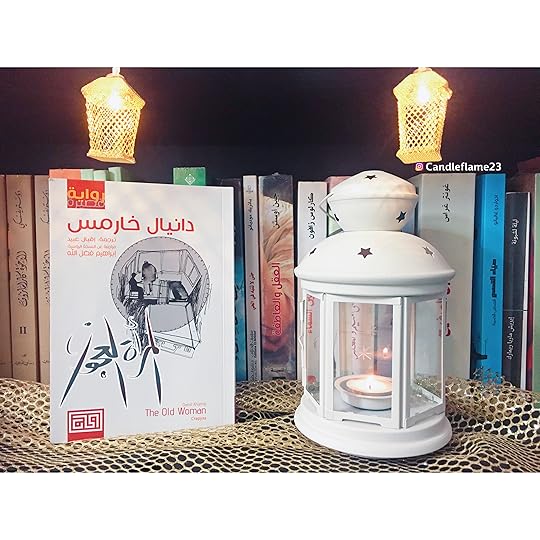
Profile Image for Candleflame23.
1,336 reviews1,043 followers
May 20, 2019
.
.
من أروع أروع أروع ما قرأت ، هي اللقاء الأول
مع دانيال خارمس وكان اللقاء ممتع " يفوق الوصف "
الرواية القصيرة التي لم تتخطى حدود الـ 72 صفحة
فقط ، فقط استطاعت أن تُحدث في نفسي مالم
تفعله روايات أخرى تجاوزت الـ 400 صفحة !

‏
ولأني من عشاق الأدب الروسي سأفتش عن
المزيد من أعمال خارمس وأتمنى أن أعثر عليها
مترجمة بمثل هذه الترجمة السلسة لإقبال عبيد .
.
.
رواية تستحق القراءة ~ 🌸📚
.

‏
.
تمت
#أبجدية_فرح 5/5
#المرأة_العجوز “ The Old Woman”
#دانيال_خارمس صادر عن
#دار_الخان للترجمة والنشر ~🌸📚
.
.

January 10, 2020
غريبة .

هكذا فقط قد أصفها ..
الرجل الذي التقى العجوز صاحبة الساعة التي ليس لها عقارب ..

لوهلة شعرتُ أنني أشاهد فيلم رعب ،
والآن بعد أن أنهيتها يتراءا لي أن هناك ترميز خلف تلك الأحداث ..
فتِلك العجوز وذاك الصاحب وتلك الفتاة الجميلة لم يكونا شخوصاً عادية ..

ممتعة وتشدُّ أنفاسك وتشعر أنك تزدردها كالماء ثم ماتلبثُ أن تقِفُ في مُنتصفِ حلقك غصَّة !

رائعة .. ولكن لازلت أقول أنها غريبة !
Profile Image for neli ❤︎.
97 reviews1 follower
June 6, 2023
humorné a opravdu poněkud originální povídky
Profile Image for كـ.
694 reviews54 followers
November 10, 2025
رائعة وممتعة جدا .. أحببتها
Profile Image for أدهم حمدي.
149 reviews8 followers
July 14, 2025
فوجئت بعد قراءتها أن الكاتب روسي وهو أمر مستغرب لأن ذلك الأسلوب العبثي لأول مرة أشهده فيهم ، حكاية مقبضة عن رجل يسأل امرأة عجوز عن الساعة فتنظر إلى ساعتها التي بلا عقارب وتخبره بالرقم ليعود بعدها لمنزله ويجد أن العجوز قد تتبعته ودخلت شقته إجبارا وأملت عليه بعض الأوامر المهينة المذلة ثم ماتت في مكانها لتأخذ الجثة بعد ذلك مسار تخويفي مرهب لبطل الرواية ، لست قادرا على استشفاف معانيها كاملة ولكنني أستشعرها كحلم كابوسي مخيف وخانق للغاية.
Profile Image for مريم بنت محمد .
98 reviews8 followers
November 15, 2018
قصة غريبة جدا ،، تتركك في اللحظة التي تتعالى فيها دقات قلبك لمعرفة النهاية ،، بلا نهاية ،، عليك أنت أن تتصور ما سيحدث لبطل القصة ،،
هلوسة غريبة ،، عقل مُثار ،، ضائع بين الواقع والخيال.
المهم أنها تستحق القراءة
Profile Image for Miss Gi.
14 reviews1 follower
September 4, 2024
في جلسة أنهيتها لكنني أحتاج لقراءة ثانية و ربما حتى عاشرة لفهم اذا المؤلف مجنون و نقل أفكاره و خياله أثناء كتابة هذه الروايه أم أنه يتظاهر بذلك ليوصل فكرته و نظرته و معاناته في روسيا أثناء سيطرة النظام الشيوعي.. رواية غامضة شفافة تستطيع مشاهدتها من زاويتك الخاصة
Profile Image for عبدالعزيز مال الله.
Author 5 books82 followers
March 15, 2018
عمل غريب لكاتب مجنون؛ مدهش لا يشبهه أحد. انهيته بجلسة واحدة وأعتقد أن كل من يقرأ العمل لأول مرة سيفعل ذلك وسيلتهم الصفحات؛ صفحة تلو الاخرى حتى يصل إلى النهاية
Profile Image for Mouza.
134 reviews14 followers
May 25, 2018
رواية قصيرة جدا، عن رجل أعزب بسيط يتورط بامرأة عجوز،
أحيانا يعيش المرء قصة "قلق" لا يشاركها أحد،

سؤال عن الجملة الأخيرة: هل كان بطل القصة يؤمن بالرب؟

الرواية مصافحة جيدة مع دانيال خارمس.
Profile Image for Moealjarallah.
17 reviews6 followers
May 29, 2019
أحببتها أكثر عندما أعدت قراءها بتأن.
Profile Image for عبدالواحد الأنصاري.
69 reviews46 followers
July 10, 2019
قصة طويلة أو رواية قصيرة، لا يهم، يكفي أنها قصة جميلة وحسب

العمل تظهر فيه آثار واضحة لديستويفسكي وكافكا، وهو مع ذلك أصيل واستثنائي وأخاذ

أنا منبهر جداً
Profile Image for Mustafa Al Nasheet.
263 reviews46 followers
August 10, 2020
رواية محيرة وغريبة !
وكأن الكاتب أمسك القلم وبدأ يكتب دون أن يدري ماذا سيكتب !
فظهر عنده هذا النتاج .
Profile Image for Ninia.
57 reviews4 followers
August 13, 2026
შეუნიღბავი დაცინვა დოსტოევსკის და დიიიიიდი რუსული ლიტერატურის, რომელსაც ხელი არ შეუშლია ამ განათლებული, კულტურული ხალხისთვის მუდამ ტირანები მოეყვანა სათავეში. იმავე ენაზე და იმავე კულტურულ სივრცეში, სადაც იწერებოდა "დანაშაული და სასჯელი" იქმნებოდა გულაგი და იწერებოდა 20 მილიონი "დანოსიც" და ვერავინ ხედავდა ამაში ვერანაირ წინააღმდეგობას. დიდმა ლიტერატურამ ვერ იმოქმედა საზოგადოების მორალურ არჩევანზე. არ არსებობს არანაირი დოსტოევსკისეული შინაგანი ჭმუნვა დამნაშავის, არსებობს მხოლოდ მკაცრი ბიუროკრატია და გვამი, რომელიც თავიდან უნდა მოიშორო.

ამ მოთხრობაში უკვე კარგად ჩანს საბჭოთა ტერორის მთელი სიმძიმე და ის დაუფარავი აგრესიაც, როდესაც სახელმწიფო გაიძულებს იყო კეთილი მეზღაპრე, მაშინ როცა გარშემო მხოლოდ ტერორი, ტანჯვა და აპათიაა.


არაჩვეულებრივი ავტორი, რომელსაც იგივე გაუკეთა საბჭოეთმა რაც ვაჟას, ერთი მხოლოდ საბავშვო მწერლად აქცია, მეორე მხოლოდ ბუნების მგოსნად, რადგან ორივეს აზროვნების სიღრმე ტოტალიტარული სახელმწიფოსთვის დამღუპველი იყო.
9 reviews
April 12, 2025
Asi před měsícem se mi do ruky doslala malá knížečka ze začatku 90. let plná absurdních próziček. Hned první je o človeku, který nic neměl, ani tělo němě, a tak se ani neví o kom byla řeč. Druhá je o stařenácha vypadávajících zvědavostí z okna. Třetí je seznam příběhů lidí, kteří furt jen umírají, přichází o rozum, nebo se třeba jen nějak zatoulají.
Namám slov na to jí, nějak lépe popsat, vymyká se všemu, co co jsem kdy četl, ale jsme z ní úplně unešený.
Jmenuje se Sen a napslal jí Daniil Charms.
Na Goodread bohužel vůbec není, ale Stařena je i v té sbírce, která výšla v češtině tak o Snu píšu pod ní. Jestli se vám podaří sen najít, určitě mu dejte šanci.
Profile Image for Olga Horn.
79 reviews1 follower
November 26, 2021
Любимейшая.
Со "Старухой" всё предельно просто и сложно. Она как никто другой вдохновляет на написание собственных текстов. Кажущаяся простота и абсурд говорят моему подсознанию, что всё может быть предельно просто, что писать можно и нужно. Волшебный текст. Люблю и часто перечитываю.
Profile Image for Schedex.
54 reviews18 followers
Read
April 6, 2019
Über den Verdruss
Wenn Daniil Charms‘ Ich-Erzähler mit den ewig tristen Angelegenheiten des Lebens konfrontiert wird, sind es nicht etwa Regungen wie tiefe Betroffenheit oder gar Reue, die vermittels seiner Beschreibungen zum Ausdruck kommen, sondern viel eher Anzeichen von einer allgemeinen Grundhaltung des Verdrusses, die – so scheint es – selbst den Tod zur Lappalie zu erklären vermag. Досада lautet dabei im Russischen jener Begriff, der vom Protagonisten in Старуха nicht nur oft gefühlt, sondern sogar als simple wie treffende Interjektion artikuliert wird. Egal ob es sich dabei um das Vernehmen lärmender Kinderstimmen oder das Entdecken des Leichnams einer alten Frau im eigenen Wohnzimmersessel handelt – letztendlich ist es immer die leicht resignative und dadurch aber auch kühl antizipierende Haltung, die bei den resoluten Lösungsansätzen des Handlungsträgers bereits durchscheint und somit eine eher rationalistisch geprägte Sichtweise konstatieren lässt, bei der das ethische Empfinden grundsätzlich zweitrangig ist. Solange im Endeffekt nur die gewohnte Ordnung wiederhergestellt werden und der Durchschnittsmensch unbehelligt seinem Tagesgeschäft nachgehen kann, darf man auch den kleinen Plagegeistern wiederum die Plage an den Hals wünschen und die Oma im Sumpf versenken. Natürlich können Charms‘ Gegenüberstellungen von Alltäglichem und dem Unüblichen, welches keiner klar erkennbaren Logik folgt, des Weiteren als Versuch gedeutet werden, dem sowjetischen bzw. modernen Menschen seine eigene Lethargie bewusstzumachen und konsequent vorzuführen, doch sollte man dabei bedenken, dass eine allzu strenge Kontextualisierung Gefahr läuft, die bewusst abstrakt bleibende und gleichzeitig simple Ausdruckskraft von Старуха wiederum aufzulösen.
Dass Charms‘ Schreiben nämlich ausgerechnet, im Unkonkreten, im (noch) nicht Realisierten Hoffnung vermutet, spiegelt sich schließlich vor allem in den innerhalb der Erzählung stattfindenden Schreibversuchen des Ich-Erzählers wider: Die hier ansetzende und letztendlich nicht zu Ende geführte Schilderung eines Individuums, das theoretisch Wunder vollbringen könnte, dies aber dann doch nicht tut, verweist dabei auf ein Außerhalb, innerhalb dessen der Verdruss einem nobleren Gestus weichen könnte. Entscheidend ist jedoch dabei, dass der Konnex zwischen Möglichkeit und Verwirklichung im Werk selbst nie vollzogen wird, wodurch die Deprivation, als Katalysator eigenmächtigen Handelns, bis zum Schluss und darüber hinaus bestehen bleibt. Dementsprechend stellt sich im Endeffekt der Verdruss selbst wiederum als verdrießlich heraus und schafft damit jenen Kreis, aus dem es auszubrechen gilt.
Profile Image for Ahmed Alkaabi.
749 reviews42 followers
December 26, 2018
الرواية: #المرأة_العجوز
المؤلف: #دانيال_خارمس
ترجمة: #إقبال_عبيد
مراجعة: #إبراهيم_فضل الله
الناشر : #دار_الخان_للنشر_والتوزيع
.
.
#قراءتي :
.
- رواية قصيرة للقاص والشاعر الروسي دانيال خارمس.
.
- بدأت الرواية بحدث مصادفة الروائي لإمرأة عجوز في الشارع تحمل ساعة بلا عقارب!، سألها عن الساعة وتذكر أعمال في المنزل لم يقم بها، عاد إلى المنزل لتواجهه مشكلة أكبر هناك ...
.
- الرواية مليئة بالأحداث والمتغيرات رغم صغر حجمها.
.
- الرواية انتهت في ذروة حماسي لمعرفة ما بعدها، تمنيت لو إنها لم تنتهي.
.
- تحتوي الرواية في مقدمتها على سيرة مبسطة للمؤلف.
.
- تجربة جميلة.
.
#إقتباسات
.
‏- سأكتب. أشعر بقوة هائلة تتملكني، لقد فكرت في كل شيء منذ أمس، سأكتب قصة عن صانع معجزات، يعيش في عصرنا هذا ولا يصنع معجزات.!
.
- ‏ثمة أمور في الحياة ينبغي على المرء اقترافها وحده بلا شهود.
.
- ‏كانت الأفكار تتقافز برأسي وتختلط ثم تعود إلى نقطة البداية ومجددًا تتقافز لتحتل مساحة جديدة، وأنا بقيت واقفًا استمع إلى أفكاري وكأنني أقف خارجها بمعزل عنها، كأنني لست من يسيطر عليها.
.
- ‏لكن قل لي من الأسوأ الأطفال أم الموتى؟؟سألته
-أظن الأطفال هم الأسوأ، إنهم كثيرًا ما يزعجوننا، بينما الموتى لا يتدخلون في حياتنا.
Profile Image for Amna.
248 reviews17 followers
December 21, 2020
يلتقي بطل الرواية بامرأة عجوز أثناء مغادرته مكان إقامته. كانت المرأة تحمل ساعة دون عقارب، وعلى ذلك، يسألُها بطل الرواية عن الوقت فتجيبه.
يُغادرها لاستكمال مشواره، فيتذكر فجأة أنه نسي أن يطفيء الفرن الكهربائي في مسكنه، فيعود إليه بكل ضيق.

يحاول النوم، إلّا أنه يقرر أن يبدأ كتابة رواية عن صانع معجزات، يمتلك المعجزات ويرفض استخدامها...يقرر أنه سيقضي ثماني عشرة ساعة متواصلة في الكتابة..إلّا أن الوقت يمّر دون أن يكتب شيئا..غير :" كان صانع المعجزات مديد القامة"..
يطرق أحدهم الباب، فيسرع بطل الرواية لفتحه..يتفاجأ بالمرأة العجوز التي تدخل الغرفة وتجلس على مقعدة بجانب النافذة وتأمره بالانبطاح على بطنه..يُنفّذ أمرها..
يستيقظ ليجد أن المساء قد حل، والعجوز لا تزال موجودة، ولكنها ميتة....يحاول التخلّص من جثتها، ويتحقق له ذلك دون تخطيط..

رواية قصيرة وسريعة. أولى التجارب مع دانيال خارمس

اقتباسات:
- ثمة أمور في الحياة ينبغي على المرء اقترافها وحده، بلا شهود
-أعتقد أنه لا يوجد أناس مؤمنون وآخرون غير مؤمنين؟ إنما يوجد راغبون في الإيمان، وراغبون في عدن الإيمان
- وأنا بقيت واقفا أستمع إلى أفكاري، وكأنني أقف خارجها، بمعزل عنها، كأنني لست من يسيطر عليها
1 review
November 29, 2020

لم أفهم شيئًا البتة!! ،قرأت مقدمة عن حياة الكاتب المأساوية تحت ظل حكم السوفييت لروسيا وكيف مات من الجوع في شتاءٍ قارس وحده! ،عندما بدأت القراءة شعرت بالحماس وربما بعضاً من الرعب حينما كانت تكلمه أفكاره، ارتفعت حماستي لأصدم بالنهاية ، لست معتادة على الأدب الروسي البتة فهذا في الحقيقة أول شيء روسي أقرأه ،سمعت أن في كتابه شيءُ من كافكا و ديستوفسكي و رمزيتهما وعبثيتهما، ولكن ما قرأته به من الرمزية الشيء الكثير وهو مالم أعتد عليه حتى الآن، سأعيد قرائه مرة أخرى محاولة مني لفهم بعض رمزيته .
Displaying 1 - 30 of 70 reviews