

What do you think?
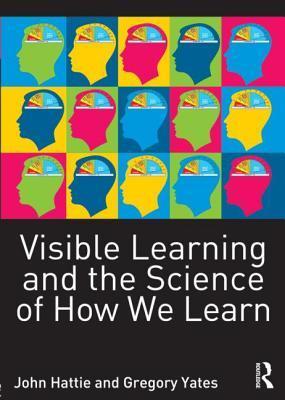
Visible Learning and the Science of How We Learn
On publication in 2009 John Hattie’s Visible Learning presented the biggest ever collection of research into what actually work in schools to improve children’s learning. Not what was fashionable, not what political and educational vested interests wanted to champion, but what actually produced the best results in terms of improving learning and educational outcomes. It became an instant bestseller and was described by the TES as revealing education’s ‘holy grail’. Now in this latest book, John Hattie has joined forces with cognitive psychologist Greg Yates to build on the original data and legacy of the Visible Learning project, showing how it’s underlying ideas and the cutting edge of cognitive science can form a powerful and complimentary framework for shaping learning in the classroom and beyond. Visible Learning and the Science of How We Learn explains the major principles and strategies of learning, outlining why it can be so hard sometimes, and yet easy on other occasions. Aimed at teachers and students, it is written in an accessible and engaging style and can be read cover to cover, or used on a chapter-by-chapter basis for essay writing or staff development. The book is structured in three parts – ‘learning within classrooms’, ‘learning foundations’, which explains the cognitive building blocks of knowledge acquisition and ‘know thyself’ which explores, confidence and self-knowledge. It also features extensive interactive appendices containing study guide questions to encourage critical thinking, annotated bibliographic entries with recommendations for further reading, links to relevant websites and YouTube clips. Throughout, the authors draw upon the latest international research into how the learning process works and how to maximise impact on students, covering such topics This fascinating book is aimed at any student, teacher or parent requiring an up-to-date commentary on how research into human learning processes can inform our teaching and what goes on in our schools. It takes a broad sweep through findings stemming mainly from social and cognitive psychology and presents them in a useable format for students and teachers at all levels, from preschool to tertiary training institutes.
368 pages, Paperback
First published January 1, 2013
About the author
John Hattie
148 books107 followersJohn Allan Clinton Hattie ONZM (born 1950) was born in Timaru, New Zealand, and has been a professor of education and director of the Melbourne Education Research Institute at the University of Melbourne, Australia, since March 2011. He was previously professor of education at the University of Auckland.
Source: Wikipedia
Source: Wikipedia
Ratings & Reviews
Friends & Following
Create a free account to discover what your friends think of this book!
Community Reviews
Displaying 1 - 28 of 28 reviews

November 19, 2013
Takeaways from reading the book:
What can people do to learn:
- Locations 2500 and 4400: Stop multitasking. The human mind is unable to genuinely focus on 2 activities at once. The moment you remove your attention from a task, you can expect no meaningful learning or skill development to take place. When two signals come in at once, your attention will be drawn to one of them. If you try to learn two different things within 10 to 15 minutes of each other, the brain gets them mixed up, and confusion results.
- Location 2500: Learn a new skill in short blocks of around 20 minutes followed by short rest periods. Why? Because mind wandering will occur after 15 to 20 minutes. This finding calls for professional moderation of any event at which people participate. Skill development involves periods of growth followed by periods of consolidation or even lack of growth.
- Location 2800: When the mind actively does something, it becomes memorable.
- Location 2800: It is far easier to build on existing knowledge than it is to learn new material from scratch. New information, which cannot be related to existing knowledge, is quickly shed.
- Location 4400: Studying well requires clear, mental focus. Therefore, find a quiet space and focus on learning 1 thing.
- Towards the end of the interesting book, two effects relevant for successful learning are mentioned: The IKEA effect and the endowment effect. The IKEA effect stems from the personal contributions and actual work that an individual student puts into achieving a worthwhile goal, project, or product. And the endowment effect works through simple ownership of the finished product.
What can teachers do to help people learn:
- Location 1300: Invite students to engage actively with learning sources. This role is agreed upon by all parties and all theories of learning.
- Location 1800: Give feedback, for example by providing information about what students can do to achieve their goals. In this regard, I learned that peer feedback is, for students, often helpful / valuable.
- Location 2800: Start from the knowledge that people already have and take small steps forwards with them.
- Location 4950: Help students strengthen their self-esteem. Research shows there are links from self-esteem to many positive traits such as motivation, achievement, being liked by others, reduced anxiety, robust mental health, positive social attitudes and social responsibility.
- Location 6000: Smiling is among the most powerful tools that a teacher can use.
- Location 6000: Posture matching and mimicking the behavior of another person are powerful tools of a teacher. People, who cooperate and get on well, will show a high level of behavioral mirroring.
What can people do to learn:
- Locations 2500 and 4400: Stop multitasking. The human mind is unable to genuinely focus on 2 activities at once. The moment you remove your attention from a task, you can expect no meaningful learning or skill development to take place. When two signals come in at once, your attention will be drawn to one of them. If you try to learn two different things within 10 to 15 minutes of each other, the brain gets them mixed up, and confusion results.
- Location 2500: Learn a new skill in short blocks of around 20 minutes followed by short rest periods. Why? Because mind wandering will occur after 15 to 20 minutes. This finding calls for professional moderation of any event at which people participate. Skill development involves periods of growth followed by periods of consolidation or even lack of growth.
- Location 2800: When the mind actively does something, it becomes memorable.
- Location 2800: It is far easier to build on existing knowledge than it is to learn new material from scratch. New information, which cannot be related to existing knowledge, is quickly shed.
- Location 4400: Studying well requires clear, mental focus. Therefore, find a quiet space and focus on learning 1 thing.
- Towards the end of the interesting book, two effects relevant for successful learning are mentioned: The IKEA effect and the endowment effect. The IKEA effect stems from the personal contributions and actual work that an individual student puts into achieving a worthwhile goal, project, or product. And the endowment effect works through simple ownership of the finished product.
What can teachers do to help people learn:
- Location 1300: Invite students to engage actively with learning sources. This role is agreed upon by all parties and all theories of learning.
- Location 1800: Give feedback, for example by providing information about what students can do to achieve their goals. In this regard, I learned that peer feedback is, for students, often helpful / valuable.
- Location 2800: Start from the knowledge that people already have and take small steps forwards with them.
- Location 4950: Help students strengthen their self-esteem. Research shows there are links from self-esteem to many positive traits such as motivation, achievement, being liked by others, reduced anxiety, robust mental health, positive social attitudes and social responsibility.
- Location 6000: Smiling is among the most powerful tools that a teacher can use.
- Location 6000: Posture matching and mimicking the behavior of another person are powerful tools of a teacher. People, who cooperate and get on well, will show a high level of behavioral mirroring.

June 21, 2014
I don't generally read all the way through a textbook for any class, but this one is the exception. Hattie and Yates turn around so many misconceptions and I was riveted throughout the entire text. Good textbooks like this one that don't instantly put me to sleep are a rarity.

February 26, 2021
Buen libro lleno de resultados de investigación sobre el aprendizaje y la enseñanza, describe los principios del aprendizaje los cuales han sido obtenidos de miles de investigaciones sobre cómo aprenden los seres humanos. He usado este libro para fundamentar mis investigaciones.
El único pero que le veo es que en los últimos capítulos pierde el hilo conductor de los primeros, aunque resultan interesantes parece que habla de otra cosas, además de parecer revueltos.
Buen libro para conocer los procesos cognoscitivos y algunos afectivos de los seres humanos
El único pero que le veo es que en los últimos capítulos pierde el hilo conductor de los primeros, aunque resultan interesantes parece que habla de otra cosas, además de parecer revueltos.
Buen libro para conocer los procesos cognoscitivos y algunos afectivos de los seres humanos

February 15, 2015
This book has the what and why on what raises measures of academic achievement, as well as chapter on how body language, cognitive load, investment via creation of product, etc., impact learning. However, in many places the great information is buried via too much background information or citing of more studies than necessary. And, there is little on the "how" to implement many of the ideas.

August 2, 2015
Done...finally. Brilliant research, many good and thoughtful ideas to put into practice in teaching.

July 18, 2020
Useful and interesting look at some of the psychological phenomenon behind how and why we learn (or fail to). Very readable textbook, with each chapter having good summaries (though sometimes these introduce new information or build upon the chapter instead of clearly summarising it) and some study questions to help you process the information - and each chapter can be read independently if you don't want to commit to the whole thing. It occasionally felt like some of the studies quoted were tangential instead of building up the main argument, and it also felt like it was seriously lacking in ways to implement such ideas in the classroom (more "don't do this" than "do this"). But still, it's a really good resource for educators in any context.

August 28, 2018
Brilliant, really up to date with tantalizingly interesting references included throughout. It isn't often one can pick up a text book and read it from cover to cover. The questions at the end of chapters really helped to tease out my understanding and it is well worth getting to the later chapters on invisible gorillas and the IKEA effect.

October 2, 2018
This text helped clarify a lot of myths or misremembered ideas about learning I previously held. It is written in a pleasant tone, doesn't ramble, and was an enjoyable read.
While it seems like it may be assigned reading for those pursuing a teaching degree, I think it holds further value to anyone in a profession that requires a great deal of self-education, like software.
While it seems like it may be assigned reading for those pursuing a teaching degree, I think it holds further value to anyone in a profession that requires a great deal of self-education, like software.

March 24, 2019
I’ve a feeling I should be more critical of the ideas presented here but it all seems practical and makes sense. There’s something useful in each chapter and it’s supported by lots of research. It’s also easy to read and dense with resources.

January 31, 2020
Vissa kapitel var riktigt bra, andra kapitel var visserligen intressanta men inte lika relevanta för mig som lärarstudent. Jag uppskattar de teorier som Hattie använder, men i fråga om problembaserat lärande kan jag inte hålla med honom, eftersom jag tror att det i vissa fall funkar rätt bra.
September 16, 2023
Accessible compilation of useful research into what makes for good teaching and learning. Lots of applicable ideas to implement. Usefully organized to make it easy to be selective in key areas, but also easy to read as a whole text.

September 2, 2017
"Knowing what to do matters more than knowing what your level is"
It is a book a need beside me so that I can use it to be a better teacher for my students.
It is a book a need beside me so that I can use it to be a better teacher for my students.

August 8, 2018
Worth reading twice
If you’re struggling to interpret Hattie’s effect sizes and put them into practice, this is a good book to start. You get research that shows what common practices get wrong and suggested replacements for those practices that will work.
If you’re struggling to interpret Hattie’s effect sizes and put them into practice, this is a good book to start. You get research that shows what common practices get wrong and suggested replacements for those practices that will work.

September 9, 2019
This is a book for educators to revisit many times. Everytime I read it, I garner something new.

March 6, 2020
Helps me understand a lot of behaviours

June 30, 2021
Excellent reading for teachers. It does a good job at debunking myths about teaching.
May 20, 2022
Great overview of the scientific literature on education. Gives you a good idea of the current landscape

August 3, 2022
Every educator should read this book. Enlightening and engaging, it is a foundational reference on how people learn.

July 8, 2024
Really enjoyed this, I'm a visual learner who struggled in school.

January 3, 2023
This book has inspired me to write this article: https://medium.com/age-of-awareness/3...
💡 2-Sentence-Summary
Visible Learning and the Science of How We Learn by John Hattie is a comprehensive meta-analysis of educational research, providing evidence-based insights into what makes effective teaching and learning. Hattie's work identifies key factors that contribute to student achievement, including the importance of feedback, teacher-student relationships, and student expectations. He emphasizes the need for educators to have a deep understanding of how students learn and to use this knowledge to inform their instructional practices, as well as the need for ongoing assessment and evaluation to ensure that teaching is effective.
💭 What I think about it
I loved every chapter, even though it's more on the academic side of writing - this book is correctly regarded as a highly influential and important book for educators and learners. It's a thorough analysis of educational research and offers practical implications for teaching and learning. Hattie's work has had a significant impact on education policy and practice, and his meta-analysis is frequently cited in academic literature and teacher training programs.
🌟 Who benefits from reading this book?
I'd recommend this book to anyone interested in improving their own learning as you'll gain a deeper understanding of the science of how we learn and apply this knowledge to your own learning practices. But more specifically, I'd recommend this book to three audiences:
For educators, the book provides evidence-based insights into what makes effective teaching and learning, including key factors that contribute to student achievement, such as feedback, teacher-student relationships, and student expectations. It emphasizes the need for ongoing assessment and evaluation to ensure that teaching is effective.
For researchers, the book provides a comprehensive meta-analysis of educational research, synthesizing a vast amount of data to identify what works and what doesn't work in education.
For policymakers, the book provides a roadmap for improving education outcomes, highlighting the need for evidence-based policy decisions that prioritize effective teaching and learning.
📚 How the book changed my life
By applying the insights from the book, I improved my teaching practices, leading to better learning outcomes for my writing online accelerator students. I gained a deeper understanding of the factors contributing to effective teaching and learning.
✍️ My Favorite Quotes
The key to making a difference in the learning of students is to identify what impacts positively on student learning and to implement these actions.
Know thy impact. It’s not enough to have high expectations, we need to know what effect our teaching is having.
The biggest effects on student learning occur when teachers become learners of their own teaching, and when students become their own teachers.
We know since the beginnings of behavioral science the importance of feedback for academic achievement. And yet, the variability of feedback effectiveness is massive. Some feedback is way better than other. (Source: Reviews of the literature on feedback (Hattie & Gan, 2011; Hattie & Timperley, 2007))
The key question is, does feedback help someone understand what they don’t know, what they do know, and where they go? That’s when and why feedback is so powerful, but a lot of feedback doesn’t—and doesn’t have any effect
In a nutshell: The teacher decides the learning intentions and success criteria, makes them transparent to the students, demonstrates them by modelling, evaluates if they understand what they have been told by checking for understanding, and re-telling them what they have told by tying it all together with closure.
💡 2-Sentence-Summary
Visible Learning and the Science of How We Learn by John Hattie is a comprehensive meta-analysis of educational research, providing evidence-based insights into what makes effective teaching and learning. Hattie's work identifies key factors that contribute to student achievement, including the importance of feedback, teacher-student relationships, and student expectations. He emphasizes the need for educators to have a deep understanding of how students learn and to use this knowledge to inform their instructional practices, as well as the need for ongoing assessment and evaluation to ensure that teaching is effective.
💭 What I think about it
I loved every chapter, even though it's more on the academic side of writing - this book is correctly regarded as a highly influential and important book for educators and learners. It's a thorough analysis of educational research and offers practical implications for teaching and learning. Hattie's work has had a significant impact on education policy and practice, and his meta-analysis is frequently cited in academic literature and teacher training programs.
🌟 Who benefits from reading this book?
I'd recommend this book to anyone interested in improving their own learning as you'll gain a deeper understanding of the science of how we learn and apply this knowledge to your own learning practices. But more specifically, I'd recommend this book to three audiences:
For educators, the book provides evidence-based insights into what makes effective teaching and learning, including key factors that contribute to student achievement, such as feedback, teacher-student relationships, and student expectations. It emphasizes the need for ongoing assessment and evaluation to ensure that teaching is effective.
For researchers, the book provides a comprehensive meta-analysis of educational research, synthesizing a vast amount of data to identify what works and what doesn't work in education.
For policymakers, the book provides a roadmap for improving education outcomes, highlighting the need for evidence-based policy decisions that prioritize effective teaching and learning.
📚 How the book changed my life
By applying the insights from the book, I improved my teaching practices, leading to better learning outcomes for my writing online accelerator students. I gained a deeper understanding of the factors contributing to effective teaching and learning.
✍️ My Favorite Quotes
The key to making a difference in the learning of students is to identify what impacts positively on student learning and to implement these actions.
Know thy impact. It’s not enough to have high expectations, we need to know what effect our teaching is having.
The biggest effects on student learning occur when teachers become learners of their own teaching, and when students become their own teachers.
We know since the beginnings of behavioral science the importance of feedback for academic achievement. And yet, the variability of feedback effectiveness is massive. Some feedback is way better than other. (Source: Reviews of the literature on feedback (Hattie & Gan, 2011; Hattie & Timperley, 2007))
The key question is, does feedback help someone understand what they don’t know, what they do know, and where they go? That’s when and why feedback is so powerful, but a lot of feedback doesn’t—and doesn’t have any effect
In a nutshell: The teacher decides the learning intentions and success criteria, makes them transparent to the students, demonstrates them by modelling, evaluates if they understand what they have been told by checking for understanding, and re-telling them what they have told by tying it all together with closure.

July 14, 2015
Great book for teachers bringing together research into various aspects of learning. One interesting concept for me was the idea of automaticity. This is where you become so used to what you are doing that it doesn't take up so much of your brain processing. Gaining automaticity enables the brain to focus on more complex tasks. For example, one you can just look at words and read them without having to spend time decoding, you are able to comprehend more, because your brain has more available resources to deal with the comprehension side of things rather than the decoding side. Research also rubbishes the idea of teacher as facilitator, and in fact direct explicit teaching is shown to be a far more effective kind of teaching than 'facilitating.' There is also some interesting information about memory and how it works. Another chapter of interest was on learning styles. Apparently the research does not support the idea that knowing learning styles will help you teach your students any better than not knowing their learning styles. I also enjoyed the chapter on multitasking, which was shown to be a fallacy. Finally, there was also a helpful chapter on technology and education and whether technology is changing the way we learn.

July 14, 2014
An engaging and accessible guide to teaching and learning for both new teachers and experienced ones alike, steeped in the most up-to-date educational pedagogy.
Easy to read and digest it focuses throughout on improving student outcomes, basing it's ideas and principles on solid scientific research.
The journey from classroom learning, through how we learn to the nature of self, confidence and fast/slow thinking makes a lot of sense.
For the new teacher it serves a a toolbox of ideas on teaching and learning that can be used immediately in the classroom environment.
For the more experienced teacher it provides many thought provoking ideas that serve to challenge a teacher’s thinking or way of doing things.
Easy to read and digest it focuses throughout on improving student outcomes, basing it's ideas and principles on solid scientific research.
The journey from classroom learning, through how we learn to the nature of self, confidence and fast/slow thinking makes a lot of sense.
For the new teacher it serves a a toolbox of ideas on teaching and learning that can be used immediately in the classroom environment.
For the more experienced teacher it provides many thought provoking ideas that serve to challenge a teacher’s thinking or way of doing things.
February 26, 2015
This is a great introduction to the science of thinking as it pertains to learning. It summarizes recent studies in this field in an easy-to-read manner. It avoids the use of jargon when possible, and when new terms are introduced, it does a good job of explaining them simply and clearly. I recommend this for all teachers.

July 17, 2015
I read this book in preparation of returning to teaching after nearly 8 years being at home with my children. It provide some good insight into how we learn. I think it will be worth rereading once I have been back in the classroom for a while.

February 19, 2014
Good information for teachers on the results of scientific research on the process of learning. Practical, well-supported, and easy to read.

April 22, 2014
If you teach humans ... It is probably worth reading.

July 14, 2019
Book has a lot of practical examples of research intersecting with the classroom instruction and classroom life.

Read
August 15, 2018Comprehensive study into what works in education. There are some critical discussions about Hattie's statistical methods, but still a very interesting read!
Displaying 1 - 28 of 28 reviews