

What do you think?

Save the Story
La storia di Antigone raccontata da Ali Smith
Cornacchia: Insomma, da dove viene la storia di Antigone?
Ali: Antigone è una figura della mitologia greca. Uno dei modi più famosi in cui la sua storia è stata narrata e rinarrata nei secoli è un bellissimo dramma, una tragedia scritta da Sofocle attorno al 442 a.C. Sofocle era un celebre tragediografo (e anche un generale dell’esercito greco), autore di più di cento drammi, la maggior parte dei quali sono andati perduti. Ne sono rimasti solo sette, e uno di questi è Antigone.
Antigone è uno dei tre drammi noti come Drammi Tebani; gli altri due sono su Edipo, il padre di Antigone, e si chiamano Edipo Colono e Edipo Re. Sembra che Antigone sia stato scritto per primo, anche se le cose che vi sono narrate accadono dopo quelle raccontate negli altri due. Sofocle era molto affascinato dal personaggio di Antigone. Nei secoli, il dramma profondo che fece emergere dalla sua storia, la storia di tutti coloro che si oppongono alle regole e alla politica, è stato messo in scena, riscritto e adattato, e non ha mai perso di interesse o di potenza. Questo perché alcune cose non cambiano mai, indipendentemente dal punto della storia in cui ci troviamo.
Cornacchia: Quindi tu hai riscritto la storia a partire da quella di Sofocle, che a sua volta l’ha presa dall’antico mito?
Ali: Più o meno.
Cornacchia: Non è un po’ come rubare?
Ali: No, non credo. E’ il modo principale in cui le storie vengono raccontante. E’ uno dei modi in cui le storie sopravvivono al tempo.
Cornacchia: E’ come quando mi butto su qualcosa che sembra appetitoso, non so, un cavallo morto o dell’immondizia, e ne scelgo la parte migliore?
Ali: Diciamo di sì. Le storie sono una specie di nutrimento. Ne abbiamo bisogno, e il fatto che la storia di Antigone continui a essere raccontata, dimostra che abbiamo bisogno di questa storia, e che in essa c’è qualcosa capace di nutrirci, nonostante sia molto cupa e triste.
Cornacchia: Già, già. Ho letto la versione di Sofocle e mi ha incuriosito il fatto che hai aggiunto alcuni personaggi, e mi riferisco nello specifico a me, la cornacchia, e al cane che aspetta accucciato presso il portone. Personalmente penso che tu abbia fatto un buon lavoro, perché mi hai dato un certo rilievo, mentre il cane ha un ruolo minore, in quanto a enfasi narrativa… Ma lascia che ti chieda, perché ci hai aggiunti?
Ali: Il punto è, cara Cornacchia, che l’immaginario del dramma originale, è zeppo di corvi e cani. Gli uccelli e i cani sono nominati di continuo, perché si parla di quel che accade a un cadavere insepolto.
Cornacchia: Squisito.
Ali: Sì, be’, per te, ma non per tutti. Nella versione originale c’è l’idea che non siamo nient’altro che carcasse, e che gli animali selvaggi ci mangeranno, a meno che qualcuno non lo impedisca. Allo stesso tempo, Sofocle ci fa intravedere un rapporto speciale tra gli umani e le altre creature viventi, introducendo il personaggio di Tiresia, una specie di santone attraverso il quale sia il mondo spirituale che quello naturale possono esprimersi allo stesso tempo. E lungo l’intero dramma, ci sono domande che, sebbene non esplicite, riguardano i confini tra le cose, tra la sfera umana, animale e spirituale. Domande sul selvatico e sull’addomesticato, domande sul civilizzato e l’incivile, su cos’è naturale e cosa non lo è, su cosa è spirituale e cosa no. Perciò mi è sembrato giusto mettervi là, molto presenti nella trama. Anche gli animali hanno l’anima, penso.
Cornacchia: E io ho più anima di uno stupido cane, ovviamente.
Ali: Sei un po’ ingiusta coi cani, adesso. Ma il mondo va così, purtroppo. La cosa più facile è stabilire che qualcun altro è diverso da noi, e può essere comandato o reso inferiore, espropriato o escluso. Questa è la base per ogni conflitto di potere. In realtà, è la base della storia di Antigone, e di tutte le sue domande sulla natura e la natura umana.
Cornacchia: Oh, molto, molto furba.
Ali: Sì, è una storia molto furba, grazie a Sofocle.
Cornacchia: Stupidi ancora-vivi.
Ali: E smettila di guardarmi gli occhi in quel modo. Sono miei.
Cornacchia: Stupidi ancora-vivi e le loro furbissime storie.
Ali: Sì, è una storia bellissima, e ancora molto viva dopo quasi venti secoli. Come te.
Cornacchia: Mi stai dando della vecchia, stupida ancora-viva?
Ali: Semmai il contrario.
Cornacchia: Cra, bene.
Ali: Antigone è una figura della mitologia greca. Uno dei modi più famosi in cui la sua storia è stata narrata e rinarrata nei secoli è un bellissimo dramma, una tragedia scritta da Sofocle attorno al 442 a.C. Sofocle era un celebre tragediografo (e anche un generale dell’esercito greco), autore di più di cento drammi, la maggior parte dei quali sono andati perduti. Ne sono rimasti solo sette, e uno di questi è Antigone.
Antigone è uno dei tre drammi noti come Drammi Tebani; gli altri due sono su Edipo, il padre di Antigone, e si chiamano Edipo Colono e Edipo Re. Sembra che Antigone sia stato scritto per primo, anche se le cose che vi sono narrate accadono dopo quelle raccontate negli altri due. Sofocle era molto affascinato dal personaggio di Antigone. Nei secoli, il dramma profondo che fece emergere dalla sua storia, la storia di tutti coloro che si oppongono alle regole e alla politica, è stato messo in scena, riscritto e adattato, e non ha mai perso di interesse o di potenza. Questo perché alcune cose non cambiano mai, indipendentemente dal punto della storia in cui ci troviamo.
Cornacchia: Quindi tu hai riscritto la storia a partire da quella di Sofocle, che a sua volta l’ha presa dall’antico mito?
Ali: Più o meno.
Cornacchia: Non è un po’ come rubare?
Ali: No, non credo. E’ il modo principale in cui le storie vengono raccontante. E’ uno dei modi in cui le storie sopravvivono al tempo.
Cornacchia: E’ come quando mi butto su qualcosa che sembra appetitoso, non so, un cavallo morto o dell’immondizia, e ne scelgo la parte migliore?
Ali: Diciamo di sì. Le storie sono una specie di nutrimento. Ne abbiamo bisogno, e il fatto che la storia di Antigone continui a essere raccontata, dimostra che abbiamo bisogno di questa storia, e che in essa c’è qualcosa capace di nutrirci, nonostante sia molto cupa e triste.
Cornacchia: Già, già. Ho letto la versione di Sofocle e mi ha incuriosito il fatto che hai aggiunto alcuni personaggi, e mi riferisco nello specifico a me, la cornacchia, e al cane che aspetta accucciato presso il portone. Personalmente penso che tu abbia fatto un buon lavoro, perché mi hai dato un certo rilievo, mentre il cane ha un ruolo minore, in quanto a enfasi narrativa… Ma lascia che ti chieda, perché ci hai aggiunti?
Ali: Il punto è, cara Cornacchia, che l’immaginario del dramma originale, è zeppo di corvi e cani. Gli uccelli e i cani sono nominati di continuo, perché si parla di quel che accade a un cadavere insepolto.
Cornacchia: Squisito.
Ali: Sì, be’, per te, ma non per tutti. Nella versione originale c’è l’idea che non siamo nient’altro che carcasse, e che gli animali selvaggi ci mangeranno, a meno che qualcuno non lo impedisca. Allo stesso tempo, Sofocle ci fa intravedere un rapporto speciale tra gli umani e le altre creature viventi, introducendo il personaggio di Tiresia, una specie di santone attraverso il quale sia il mondo spirituale che quello naturale possono esprimersi allo stesso tempo. E lungo l’intero dramma, ci sono domande che, sebbene non esplicite, riguardano i confini tra le cose, tra la sfera umana, animale e spirituale. Domande sul selvatico e sull’addomesticato, domande sul civilizzato e l’incivile, su cos’è naturale e cosa non lo è, su cosa è spirituale e cosa no. Perciò mi è sembrato giusto mettervi là, molto presenti nella trama. Anche gli animali hanno l’anima, penso.
Cornacchia: E io ho più anima di uno stupido cane, ovviamente.
Ali: Sei un po’ ingiusta coi cani, adesso. Ma il mondo va così, purtroppo. La cosa più facile è stabilire che qualcun altro è diverso da noi, e può essere comandato o reso inferiore, espropriato o escluso. Questa è la base per ogni conflitto di potere. In realtà, è la base della storia di Antigone, e di tutte le sue domande sulla natura e la natura umana.
Cornacchia: Oh, molto, molto furba.
Ali: Sì, è una storia molto furba, grazie a Sofocle.
Cornacchia: Stupidi ancora-vivi.
Ali: E smettila di guardarmi gli occhi in quel modo. Sono miei.
Cornacchia: Stupidi ancora-vivi e le loro furbissime storie.
Ali: Sì, è una storia bellissima, e ancora molto viva dopo quasi venti secoli. Come te.
Cornacchia: Mi stai dando della vecchia, stupida ancora-viva?
Ali: Semmai il contrario.
Cornacchia: Cra, bene.
99 pages, Paperback
First published January 1, 2011
About the author
Ali Smith
155 books5,622 followersAli Smith is a writer, born in Inverness, Scotland, to working-class parents. She was raised in a council house in Inverness and now lives in Cambridge. She studied at Aberdeen, and then at Cambridge, for a Ph.D. that was never finished. In a 2004 interview with writing magazine Mslexia, she talked briefly about the difficulty of becoming ill with chronic fatigue syndrome for a year and how it forced her to give up her job as a lecturer at University of Strathclyde to focus on what she really wanted to do: writing. She has been with her partner Sarah Wood for 17 years and dedicates all her books to her.
Ratings & Reviews
Friends & Following
Create a free account to discover what your friends think of this book!
Community Reviews
Displaying 1 - 30 of 130 reviews

September 6, 2017
Sophocles’ tragic play is made accessible to middle-grade readers in this retelling of Antigone by Ali Smith.
Antigone, daughter of Oedipus, is heartbroken to learn of her brothers, Eteocles and Polynices, having died in a violent battle over the crown of Thebes. The new ruler, King Creon, announces his decision to bury one of her brothers as a hero and leave the other brother’s body to rot in the field. Outraged, Antigone finds the courage to stand up to the tyrant ruler on behalf of her beloved brother.
Smith’s playful use of words is evident in this easily consumed retelling, though she has softened her use of the surreal and abstract to make this narrative more comprehensive for young readers. For the most part, she stays true to the original tale. However, borrowing from imagery in the original play, Smith elects to add a dog and to convey the story through the eyes of a crow.
The crow crossed the sky, slow-beating her wings. Beat, beat, beat. It was night, not yet morning, and her feathers were so black that she coasted the air invisible above the city wall.
Suddenly the dog leapt to his feet and when he did the crow’s heart jumped. Beat, beat, beat, beat! Even though there was no way that dog could jump as high as a city gate she threw herself up into the air, the feathers tingling her tail.
But that dog didn’t notice. Instead, he stood listening, one paw lifted in the air.
The little door in the huge wooden gate opened.
Through it came two still-alive human girls. They came warily, as if they were guarding a secret.
Antigone’s story is accompanied by illustrations from artist Laura Paoletti whose mixed media collage work is comprised of moody grays and purple with pops of crimson. Few in number, the illustrations are a welcomed addition to the narrative, though some are so simplistic the book would not suffer were they removed.
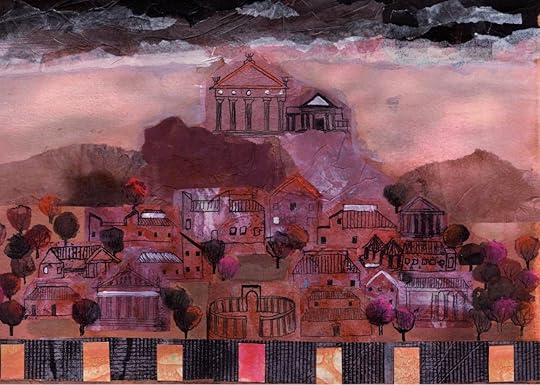
With quaint illustrations and the addition of two child-friendly characters, this gentle retelling by Ali Smith suitably introduces young readers to a timeless classic.
Antigone, daughter of Oedipus, is heartbroken to learn of her brothers, Eteocles and Polynices, having died in a violent battle over the crown of Thebes. The new ruler, King Creon, announces his decision to bury one of her brothers as a hero and leave the other brother’s body to rot in the field. Outraged, Antigone finds the courage to stand up to the tyrant ruler on behalf of her beloved brother.
Smith’s playful use of words is evident in this easily consumed retelling, though she has softened her use of the surreal and abstract to make this narrative more comprehensive for young readers. For the most part, she stays true to the original tale. However, borrowing from imagery in the original play, Smith elects to add a dog and to convey the story through the eyes of a crow.
The crow crossed the sky, slow-beating her wings. Beat, beat, beat. It was night, not yet morning, and her feathers were so black that she coasted the air invisible above the city wall.
Suddenly the dog leapt to his feet and when he did the crow’s heart jumped. Beat, beat, beat, beat! Even though there was no way that dog could jump as high as a city gate she threw herself up into the air, the feathers tingling her tail.
But that dog didn’t notice. Instead, he stood listening, one paw lifted in the air.
The little door in the huge wooden gate opened.
Through it came two still-alive human girls. They came warily, as if they were guarding a secret.
Antigone’s story is accompanied by illustrations from artist Laura Paoletti whose mixed media collage work is comprised of moody grays and purple with pops of crimson. Few in number, the illustrations are a welcomed addition to the narrative, though some are so simplistic the book would not suffer were they removed.
With quaint illustrations and the addition of two child-friendly characters, this gentle retelling by Ali Smith suitably introduces young readers to a timeless classic.

May 8, 2020
2nd time read, 22nd of March, 2021
Not A favorite anymore.
5⭐
___________________
1st time read, 7th of May, 2020
A favorite.
Not A favorite anymore.
5⭐
___________________
1st time read, 7th of May, 2020
A favorite.

July 16, 2016
The Story of Antigone is a retelling of Sophocles classic for young people of today, with beautiful illustrations and the masterful narration of an all-knowing crow who understands all too well the weaknesses of humans. The crow appears as a classic chorus, a seer, and a caustic elder. The story is of a young girl who challenges her uncle by burying her brother's body. Her love for her brother outweighs her duty to the leader. And after the story, there is an interview with the crow about adapting the original play for this story. All done very cleverly.
There is an excellent description of what stories are in this discussion which I am going to include, in part, here:
Stories are a kind of nourishment. We do need
them, and the fact that the story of Antigone, a
story about a girl who wants to honour the body
of her dead brother, and why she does, keeps being
told suggests that we do need this story, that it
might be one of the ways that we make life and
death meaningful, that it might be a way to help
us understand life and death, and that there's
something nourishing in it, even though it is full
of terrible and difficult things, a very dark story
full of sadness. (loc 388)
I do recommend this as a book for parents to read with their children.
This book is part of Save the Story from Pushkin Children's Books, a series which brings great stories of the past to youth of today. I definitely plan to seek out others in this series and recommend them to others.
A copy of this book was provided by the publisher through NetGalley in return for an honest review.
There is an excellent description of what stories are in this discussion which I am going to include, in part, here:
Stories are a kind of nourishment. We do need
them, and the fact that the story of Antigone, a
story about a girl who wants to honour the body
of her dead brother, and why she does, keeps being
told suggests that we do need this story, that it
might be one of the ways that we make life and
death meaningful, that it might be a way to help
us understand life and death, and that there's
something nourishing in it, even though it is full
of terrible and difficult things, a very dark story
full of sadness. (loc 388)
I do recommend this as a book for parents to read with their children.
This book is part of Save the Story from Pushkin Children's Books, a series which brings great stories of the past to youth of today. I definitely plan to seek out others in this series and recommend them to others.
A copy of this book was provided by the publisher through NetGalley in return for an honest review.

January 30, 2015
I vividly remember reading Antigone at school and really liking it. In fact, I continued to seek out different variations of the story to see how authors throughout the ages have used the story and applied against their own time and circumstances.
Ali Smith does not do this. She does not use the story and make it her own by adapting it to a modern setting or changing characters. However, AS manages to bring the original story home to a modern audience / readership. What I mean is that AS retells the original story - using the characters of a crow and a dog as narrators - but does not expect the reader to have any background knowledge of the story of Oedipus (Antigone's father) or indeed the customs of ancient Thebes.
Highly recommended to anyone who wants to know more about the story but is put off by any of the outdated translations of Sophocles' work.
Ali Smith does not do this. She does not use the story and make it her own by adapting it to a modern setting or changing characters. However, AS manages to bring the original story home to a modern audience / readership. What I mean is that AS retells the original story - using the characters of a crow and a dog as narrators - but does not expect the reader to have any background knowledge of the story of Oedipus (Antigone's father) or indeed the customs of ancient Thebes.
Highly recommended to anyone who wants to know more about the story but is put off by any of the outdated translations of Sophocles' work.

December 10, 2013
This book fits in very well with a few of my casual 'collections': Greek mythology; well-written, beautifully illustrated children's books; and, of course, those by Ali Smith. It brought back memories of my sophomore year in high school (an all-girls) when we studied and acted out the Sophocles play this version is based on.
Because it is by Ali Smith, it is witty, fun, humorous and serious. She chooses to tell her version through the eyes of a crow, with a dog as a supporting character. Her choices turn out to have great meaning. The crow even 'interviews' the author at the end of the book as to the origins of her version of the story, and that, perhaps best of all, has me pulling out my high-school copy of Sophocles' The Complete Plays (still intact, though sans cover) to reread his Antigone.
Because it is by Ali Smith, it is witty, fun, humorous and serious. She chooses to tell her version through the eyes of a crow, with a dog as a supporting character. Her choices turn out to have great meaning. The crow even 'interviews' the author at the end of the book as to the origins of her version of the story, and that, perhaps best of all, has me pulling out my high-school copy of Sophocles' The Complete Plays (still intact, though sans cover) to reread his Antigone.

July 20, 2025
Ho molto apprezzato questa riproposizione del mito di Antigone raccontata come una storia per bambini. C'è un forte rimaneggiamento linguistico che propone nei dialoghi un modo di parlare contemporaneo. A mio avviso questa scelta è perfettamente in linea con il tono generale dato al racconto. La trovata davvero geniale di usare come voce narrante una cornacchia riesce in qualche modo a mantenere un tono leggero, nonostante i serissimi temi trattati.
Il mito di Antigone è una di quelle storie di cui abbiamo sempre bisogno, soprattutto in tempi come questi in cui in giro per il mondo ci sono sempre più leader che non accettano di essere contestati e cercano di punire o reprimere il dissenso.
Mi è piaciuto parecchio anche l'epilogo che sottolinea la voglia e la necessità di ascoltare storie. Se questo racconto di Ali Smith può avvicinare le persone grandi e piccole a questo mito, ben venga!
Il mito di Antigone è una di quelle storie di cui abbiamo sempre bisogno, soprattutto in tempi come questi in cui in giro per il mondo ci sono sempre più leader che non accettano di essere contestati e cercano di punire o reprimere il dissenso.
Mi è piaciuto parecchio anche l'epilogo che sottolinea la voglia e la necessità di ascoltare storie. Se questo racconto di Ali Smith può avvicinare le persone grandi e piccole a questo mito, ben venga!

July 24, 2018
As you'd expect from Ali Smith, this retelling of the story of Antigone for young people is full of wonderful imagery and witty word play. It's really rather wonderful!

July 13, 2022
antigone but with british humour, love it

February 9, 2026
Hilarious. Especially since I've listened to it being narrated by the author.
I wish I had started with this funny, cheecky contemporary adaptation instead of Sophocles' tragedy 🤭. No, kidding, I liked them both.
I wish I had started with this funny, cheecky contemporary adaptation instead of Sophocles' tragedy 🤭. No, kidding, I liked them both.

August 12, 2019
An intelligent and entertaining way to introduce Greek Lit to your young children.

February 22, 2019
An excellent variation on the classic play. Playful, beautifully written with complete respect to the original. More than worth reading.

August 10, 2024
Su la testa!!!
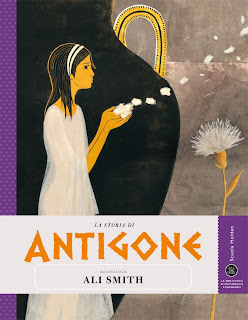
Nera la notte.
Nera la cornacchia che nella riscrittura del mito, Ali Smith rende testimone oculare.
La battaglia appena finita e l’editto con cui Creonte, nuovo re di Tebe ordina di non dare sepoltura al corpo ancora caldo di Polinice.
Sempre la cornacchia che svolazzando sulla città ci riporta il dialogo tra due sorelline Ismene ed Antigone. Il dilemma della prima è certezza nella seconda che è poi la più piccola.
Disobbedire al re e rendere onore al fratello caduto.
Una lezione di civiltà che urla a tutti noi..
”…ma è anche possibile che ci siano altri modi di vedere le cose e che anche quei modi siano giusti”
Non sempre il re ha ragione..
Illustrazioni di Laura Paoletti da applauso.

April 19, 2020
Leave it to Ali Smith to poke fun at the wonted tropes of any given Greek tragedy while retelling one in her own words. Her words, as usual, are witty and wise, mirroring the politics and power struggles of today as much as yesterday.
The Story of Antigone becomes a fable in Smith’s hands, narrated from the perspective of an all-seeing crow. A black dog is also integral to this refashioning of the age-old tale. This is as much a story about human behaviour as it is about animal behaviour, where every action is about toeing the line between ‘civilised’ and ‘savage’.
The story remains the same as told by Sophocles, one of my favourites, but in Smith’s rendition, you choose how you want to see it. Oh, and then there’s a fun interview between the crow and Ali Smith herself at the end. Just too genius!
Full disclosure: This is a picture book meant for kids, but only adults will really get the cynicism implied. 3 stars!
The Story of Antigone becomes a fable in Smith’s hands, narrated from the perspective of an all-seeing crow. A black dog is also integral to this refashioning of the age-old tale. This is as much a story about human behaviour as it is about animal behaviour, where every action is about toeing the line between ‘civilised’ and ‘savage’.
The story remains the same as told by Sophocles, one of my favourites, but in Smith’s rendition, you choose how you want to see it. Oh, and then there’s a fun interview between the crow and Ali Smith herself at the end. Just too genius!
Full disclosure: This is a picture book meant for kids, but only adults will really get the cynicism implied. 3 stars!
January 10, 2025
It is quite obvious that this novella was written for children as the intended audience, but alas, I still found beauty and cleverness in Ali Smith's writing (I expected no less). I was particularly taken by the absolutely beautiful and striking illustrations by Laura Paoletti and the pretty little interview at the end of the book.
A quick read, perfect if you want to catch up on mythology and ponderings over citizenship, civilisation, socially accepted behaviour etc etc
A quick read, perfect if you want to catch up on mythology and ponderings over citizenship, civilisation, socially accepted behaviour etc etc

April 22, 2018
Maybe more of a 2.5
I was introduced to Antigone in Home Fire, and while I've been meaning to pick up the original for a while I thought I would try this, given that it was available in my library (and because I'm a big fan of Ali Smith).
This was alright, but I finished feeling that I wasn't all that more familiar with the story. The narrative was a little confusing at times, especially given that this book is aimed at children. I loved the illustrations, and there was nothing particularly wrong with this, but I don't feel like I got a whole lot out of it. I guess it's finally time to pick up the original!
I was introduced to Antigone in Home Fire, and while I've been meaning to pick up the original for a while I thought I would try this, given that it was available in my library (and because I'm a big fan of Ali Smith).
This was alright, but I finished feeling that I wasn't all that more familiar with the story. The narrative was a little confusing at times, especially given that this book is aimed at children. I loved the illustrations, and there was nothing particularly wrong with this, but I don't feel like I got a whole lot out of it. I guess it's finally time to pick up the original!

December 27, 2019
Ali Smith is a very hit-or-miss author for me; I've enjoyed half I've read and not enjoyed the others. Unfortunately this was a miss for me.
This may be partly my fault as I've never been a huge fan of Greek mythology and that meant that I knew nothing of Antigone's story going into the book. Ali Smith narrates the audiobook herself which helps but the poetic and lyrical style made the narrative even more confusing. By the end, the short "interview with the author" made the story make sense but by that point I'd already listened to the 100 page retelling and taken very little from it.
Unfortunately I wouldn't recommend this if you're new to Ali Smith or Greek mythology but if you're a fan of either, you'll probably enjoy it.
1 out of 5 stars!
This may be partly my fault as I've never been a huge fan of Greek mythology and that meant that I knew nothing of Antigone's story going into the book. Ali Smith narrates the audiobook herself which helps but the poetic and lyrical style made the narrative even more confusing. By the end, the short "interview with the author" made the story make sense but by that point I'd already listened to the 100 page retelling and taken very little from it.
Unfortunately I wouldn't recommend this if you're new to Ali Smith or Greek mythology but if you're a fan of either, you'll probably enjoy it.
1 out of 5 stars!

October 21, 2013
In this retelling of Antigone’s story, originally written as a drama by Sophocles around 422 BC, Ali Smith takes the surprising and original decision of having a crow as the narrator. It is the crow who observes young Antigone while she decides to go and bury one of her brothers after a terrible battle which left both her brothers dead – one a hero and one deemed a traitor. The king of Thebes may have decided that his nephew Polynices was a traitor at the time of his death and as such doesn’t deserve a burial, twelve year old Antigone can’t bear to leave her brother’s body out in the open to be eaten by animals and slowly rot away. Fully aware that the penalty for honouring her brother’s remains will be her own death, Antigone still goes out of the city to find his body and bury it.
Antigone’s act of defiance doesn’t go unpunished but since this is a Greek tragedy in the truest sense of the word, it comes as no surprise that the King’s cruel treatment of young Antigone results in devastating consequences for him and his family. Because this is of course a story about power and those who would abuse it as much as it is a story about love and loyalty. Maybe Ali Smith explains it best when she explains her reasons for writing this story to the crow in the last chapter of this book:
“…that the story of Antigone, a story about a girl who wants to honour the body of her dead brother, and why she does, keeps being told suggests that we do need this story, that it might be one of the ways that we make life and death meaningful, that it might be a way to help us understand life and death, and that there’s something nourishing in it, even though it is full of terrible and difficult things, a very dark story full of sadness.”
Having the crow as the narrator of this story is a stroke of genius on Ali Smith’s part. The crow can describe the horrors of what happens to a body left in the open, without burial, in rather gruesome detail much easier than a human voice ever could. We expect some cruelty from animals like crows, and it will be much easier to accept the facts shared in this story – especially for young readers – when they come from this rather dispassionate point of view.
Like I said in my review of “The Story of Gulliver” these books are part of the “Save the Story” series which aims to bring classic stories to a new generation of readers because these stories should never be lost. All the stories in these books have a message to share; a message that was important at the time the story was written and has lost none of its importance in the years, decades or centuries that have passed since. These books give young readers the opportunity to become acquainted with important stories that have stood the test of time while at the same time giving them the opportunity to think about some big issues. And all of this is achieved without the books ever feeling preachy or educational.
This book is once again a work of beauty, and I am not only referring to the story. This is a high quality hardback with the words printed in a beautiful font in two different colours and accompanied by wonderful illustrations. This is the sort of book you will love to own, will be proud to have on your shelves and will want to keep even long after your young reader has moved on to other books and genres. In fact, even if you do not have a young reader in your life you could do a lot worse than getting the books in this series for yourself; especially if, like me, you’re only vaguely familiar at best with the classics being retold here.
Antigone’s act of defiance doesn’t go unpunished but since this is a Greek tragedy in the truest sense of the word, it comes as no surprise that the King’s cruel treatment of young Antigone results in devastating consequences for him and his family. Because this is of course a story about power and those who would abuse it as much as it is a story about love and loyalty. Maybe Ali Smith explains it best when she explains her reasons for writing this story to the crow in the last chapter of this book:
“…that the story of Antigone, a story about a girl who wants to honour the body of her dead brother, and why she does, keeps being told suggests that we do need this story, that it might be one of the ways that we make life and death meaningful, that it might be a way to help us understand life and death, and that there’s something nourishing in it, even though it is full of terrible and difficult things, a very dark story full of sadness.”
Having the crow as the narrator of this story is a stroke of genius on Ali Smith’s part. The crow can describe the horrors of what happens to a body left in the open, without burial, in rather gruesome detail much easier than a human voice ever could. We expect some cruelty from animals like crows, and it will be much easier to accept the facts shared in this story – especially for young readers – when they come from this rather dispassionate point of view.
Like I said in my review of “The Story of Gulliver” these books are part of the “Save the Story” series which aims to bring classic stories to a new generation of readers because these stories should never be lost. All the stories in these books have a message to share; a message that was important at the time the story was written and has lost none of its importance in the years, decades or centuries that have passed since. These books give young readers the opportunity to become acquainted with important stories that have stood the test of time while at the same time giving them the opportunity to think about some big issues. And all of this is achieved without the books ever feeling preachy or educational.
This book is once again a work of beauty, and I am not only referring to the story. This is a high quality hardback with the words printed in a beautiful font in two different colours and accompanied by wonderful illustrations. This is the sort of book you will love to own, will be proud to have on your shelves and will want to keep even long after your young reader has moved on to other books and genres. In fact, even if you do not have a young reader in your life you could do a lot worse than getting the books in this series for yourself; especially if, like me, you’re only vaguely familiar at best with the classics being retold here.

April 13, 2017
I wouldn't think that the tragedies of Sophocles would make interesting books for younger readers, but I was proven wrong. 'The Story of Antigone' by Ali Smith with illustrations by Laura Paoletti is a very good adaptation of the famous drama.
The story starts on the battlefield in the aftermath of a terrible slaughter. Our narrator is a crow, which is morbid and a perfect choice as a witness to the events. Antigone wants to bury her vanquished brother, but King Creon, the victor, wants no such thing. What follows is a struggle between a headstrong king and a young woman who would stand up to him. The outcome is tragic, but the lesson of being willing to give your all for what you believe in rings true today.
The illustrations are in earth tones and are quite good. It's a pretty dark story, but the narrator and a stray dog have a few moments to lighten things up. There is also a question and answer at the end between Crow and the adapter Ali. This is a very good adaptation for younger readers.
I received a review copy of this ebook from Pushkin Press and NetGalley in exchange for an honest review. Thank you for allowing me to review this ebook.
The story starts on the battlefield in the aftermath of a terrible slaughter. Our narrator is a crow, which is morbid and a perfect choice as a witness to the events. Antigone wants to bury her vanquished brother, but King Creon, the victor, wants no such thing. What follows is a struggle between a headstrong king and a young woman who would stand up to him. The outcome is tragic, but the lesson of being willing to give your all for what you believe in rings true today.
The illustrations are in earth tones and are quite good. It's a pretty dark story, but the narrator and a stray dog have a few moments to lighten things up. There is also a question and answer at the end between Crow and the adapter Ali. This is a very good adaptation for younger readers.
I received a review copy of this ebook from Pushkin Press and NetGalley in exchange for an honest review. Thank you for allowing me to review this ebook.

December 14, 2018
It seems that Antigone has been appearing in my life ever since I was 17. I first had to study Anoulih’s retelling for my French A Level, which made me seek out Sophecles play. Then during my 2017 Man Booker longlist readings, I encountered Kamila Shamsie‘s modern update, which in turn said that Ali Smith’s retelling was her inspiration.
Since I am a fan of Ali Smith I HAD to read her version.
As always Ali Smith does things differently. The story of a girl being punished for burying her disgraced brother is seen through the eyes of a crow and a dog. Since both animals get a mention in the original play, Smith is accentuating the role death has in the story.
Despite the dour tone of the story Smith retains her trademark sense of humor and her usual themes of feminism and the stupidity of mankind comes to the forefront. There’s also an afterword worth reading as Smith explains the themes and why she chose the story.
A must read for Ali Smith fans or Antigone ones.
Since I am a fan of Ali Smith I HAD to read her version.
As always Ali Smith does things differently. The story of a girl being punished for burying her disgraced brother is seen through the eyes of a crow and a dog. Since both animals get a mention in the original play, Smith is accentuating the role death has in the story.
Despite the dour tone of the story Smith retains her trademark sense of humor and her usual themes of feminism and the stupidity of mankind comes to the forefront. There’s also an afterword worth reading as Smith explains the themes and why she chose the story.
A must read for Ali Smith fans or Antigone ones.

March 1, 2021
This is an incredibly charming, relatively straightforward retelling of the myth of Antigone according to Sophocles. For children.
There are a couple of additions: most notably a narrator in the form of a Crow, who seems to be a more exhausted, less linguistically violent relative of Ted Hughes' creation. It has the strange quality of feeling not at all like an Ali Smith book - it is written incredibly simply, sentences don't go off on tangents, it doesn't have the galloping rhythm of her adult fiction, it's even got speech marks - and also feeling incredibly like an Ali Smith book. That's chiefly with the incorruptible goodness of Antigone, who behaves just like any other Radiant Disruptor in Smith's work.
It's seems like an oddity in Smith's bibliography, but I'm a Smith completist, so this was inevitable.
There are a couple of additions: most notably a narrator in the form of a Crow, who seems to be a more exhausted, less linguistically violent relative of Ted Hughes' creation. It has the strange quality of feeling not at all like an Ali Smith book - it is written incredibly simply, sentences don't go off on tangents, it doesn't have the galloping rhythm of her adult fiction, it's even got speech marks - and also feeling incredibly like an Ali Smith book. That's chiefly with the incorruptible goodness of Antigone, who behaves just like any other Radiant Disruptor in Smith's work.
It's seems like an oddity in Smith's bibliography, but I'm a Smith completist, so this was inevitable.

June 23, 2014
A superb, wry and very accessible retelling of the story of Antigone for children told by a crow.
The illustrations are stunning too and the crow is such a character. There is even an interview between crow and the author at the end of this beautifully produced book which expounds on the origin of the story and its relevance to storytelling and the human condition. Brilliant! The dog's quite good too.
The illustrations are stunning too and the crow is such a character. There is even an interview between crow and the author at the end of this beautifully produced book which expounds on the origin of the story and its relevance to storytelling and the human condition. Brilliant! The dog's quite good too.

February 24, 2016
Beautiful, terrifying and sad.
If this book's aim is to make mythical stories accessible to a contemporary young audience, it does that, and more.
The whole package is exceptional, with lovely illustrations. The story is told with humour and affection (well, as much as there can be with as much death going on here as there is).
If this book's aim is to make mythical stories accessible to a contemporary young audience, it does that, and more.
The whole package is exceptional, with lovely illustrations. The story is told with humour and affection (well, as much as there can be with as much death going on here as there is).

December 6, 2015
Absolutely beautiful. The combination of poetic prose and stunning illustrations reinvigorates this story and marks it as a meaningful retelling of the Ancient Greek classic.
April 21, 2019
Riscrittura originale del classico per un pubblico più giovane. Il libro è di grandi dimensioni e prevede anche una serie di immagini all’interno. Piacevole ma utile per prime letture

February 7, 2023
Not a particularly interesting retelling, but the illustrations were pretty neat!

November 8, 2024
Ali Smith tackled myths for adult readers in her work for the Canongate Myth Series. Here she tells the story of Antigone for children. I was intrigued to see how she would adapt this violent and difficult story for kids. I was not disappointed. She frames the story from a non-human standpoint, using crows as the main story teller, with a little input from a small dog. This is super effective. It adds distance and an element of much needed humour to leaven the darkest moments. I was particularly interested in her description of the themes of Antigone and why she used the animals as the narrators. This simplification of the story made me see it in a completely different light, and her willingness to share the ideas that motivated her to write, gave me a fresh perspective. This is brilliant.

January 21, 2019
L'ho già detto che amo Ali Smith?
Ho trovato questo volume quasi per caso, per poi scoprire che si tratta di un progetto di riscrittura di alcuni classici della letteratura mondiale curata in Italia dalla Scuola Holden di Torino e dal gruppo l'Espresso. In questo volume Ali Smith si cimenta, con successo, in una riscrittura "semplificata" dell'Antigone, mito classico greco conosciuto ai più nella versione di Sofocle.
Il risultato è un volume illustrato bellissimo e una preziosissima lettura del mito classico adattissimo anche per i lettori più giovani nella quale la Smith da prova della sua enorme capacità di scrittura e interpretazione.
Che dire, io già amavo Antigone, riscritta da Ali Smith ... la amo ancora di più!
Ho trovato questo volume quasi per caso, per poi scoprire che si tratta di un progetto di riscrittura di alcuni classici della letteratura mondiale curata in Italia dalla Scuola Holden di Torino e dal gruppo l'Espresso. In questo volume Ali Smith si cimenta, con successo, in una riscrittura "semplificata" dell'Antigone, mito classico greco conosciuto ai più nella versione di Sofocle.
Il risultato è un volume illustrato bellissimo e una preziosissima lettura del mito classico adattissimo anche per i lettori più giovani nella quale la Smith da prova della sua enorme capacità di scrittura e interpretazione.
Che dire, io già amavo Antigone, riscritta da Ali Smith ... la amo ancora di più!

December 28, 2023
Laura and I read together. This is meant to be a children's story version so there was def some silliness, especially wrt the perspective of the crow BUT this rly solidified my understanding of the Antigone story, the summary of what exactly happens. Smith does a great job of preserving the story, not dumbing down and yet writing in a clear and straightforward manner. Need to read the original Sophocles along w the other Oedipus related stories but looooved the Straub & Huillet film

April 9, 2023
Read this because I really like the way Ali Smith writes and I'm interested in Greek mythology. It was short, well put and smoothly flowing, but not aimed for me, didn't really get anything.
But it's for young aduls, which I find nothing wrong with, I usually love those kinds of books. But something about this just didn't stick.
But it's for young aduls, which I find nothing wrong with, I usually love those kinds of books. But something about this just didn't stick.

March 22, 2020
Antigone for children!! If I read/listened to this story as a child, I would have loved it. It's heartbreaking in a way that keeps the heart pining but sores it with love nonetheless. I am faithful to the Sophocles version but as a starter--this. Give it to your kids!!
Displaying 1 - 30 of 130 reviews