

What do you think?
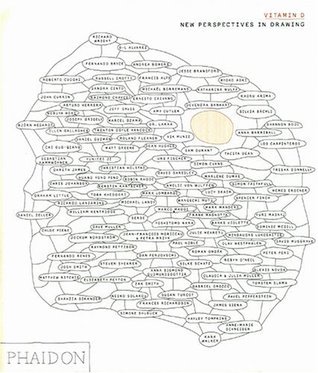
Vitamin D
Vitamin D: New Perspectives in Drawing
Drawing has recently experienced a renewal of importance in the art world and has rarely been as widely represented in biennials, art fairs, and exhibitions as it is now. Similar in concept, scope, and structure to Phaidon's successful volume Vitamin P, Vitamin D presents, in A-Z order, the work of 109 artists who have emerged internationally since 1990. All use drawing as a primary medium. Whether representational or abstract, small or large in scale, using only one line or rich in colors and pattern, drawings have a highly descriptive and meticulously detailed quality that is being explored by an increasing number of contemporary artists. Extending beyond images traditionally associated with this medium, Vitamin D illustrates the complexity, variety, and relevance of the practice of drawing today.
352 pages, Hardcover
First published December 1, 2005
Ratings & Reviews
Friends & Following
Create a free account to discover what your friends think of this book!
Community Reviews
Displaying 1 - 30 of 41 reviews
May 24, 2013
These books (the "Vitamin" series of art books) are really really great, and are invaluable resources for fine/visual art students.
BUT
What is it with the tiny tiny tiny tiny writing? This isn't something that usually bothers me in books but honestly it's almost unreadable. I get it's an art book, but if there's going to be writing I'd like to be able to actually read it without my face being five centimetres from the page!
BUT
What is it with the tiny tiny tiny tiny writing? This isn't something that usually bothers me in books but honestly it's almost unreadable. I get it's an art book, but if there's going to be writing I'd like to be able to actually read it without my face being five centimetres from the page!


July 20, 2008
While Vitamin D: New Perspectives in Drawing doesn't suffer from the same over-defensiveness of Vitamin P, it also doesn't quite have its diversity of forms. Many contemporary artists have taken the directness of drawing as permission to adopt the faux-naive drawing style, an overly-cartoony form of hipster drawing I find boring even when it's done at it's best. Nonetheless, there are some real treasures hidden in this collection – one just has to dig a little deeper than in its sister book.

January 24, 2008
Definitely worth it's price tag ... as an artist, I find this book is so full of inspiration (something money can't buy).
I randomly came across it walking through Chapters a month or so ago and couldn't take my eyes off it!
Since then, I've made a point of looking through it everytime I'm in there (which is a lot) ... today I finally bought it!
Beautiful book, worth every penny.
I randomly came across it walking through Chapters a month or so ago and couldn't take my eyes off it!
Since then, I've made a point of looking through it everytime I'm in there (which is a lot) ... today I finally bought it!
Beautiful book, worth every penny.

August 12, 2008
Someone else had a hold on this and I wouldn't have been able to remember half of the people I liked in it anyway, there are so many. That's what galleries are good for--providing a distinct experience that I can call on to remember artists' names.

August 14, 2008
Some interesting work to cast your eyes upon-- I need this jolt right about now...

January 27, 2009
i had to have it the first time i cracked it open. each time i leaf through the pages i get more and more out of it. lovely.
June 20, 2012
Reproductions of drawings were unsatisfactory, and the type was a light grey and too small. Disappointed.
September 15, 2024
I compare this to a small biennale, you end up loving & remembering a handful, enriched at times, forgetting many, & at other times thinking how f* did this person get here, gotta be corruption involved.
It's a difficult task to do, hence why there's 2 of these, I really enjoy an overview with dense pieces of writing about each artist, a few of the artists whose work I didn't like, but still gained from the write up as they're involved in subjects I often give less thought to.
Ps. no, the print size of the lettering is normal size. Like giving books low reviews because they arrived late in the post, ugg.
It's a difficult task to do, hence why there's 2 of these, I really enjoy an overview with dense pieces of writing about each artist, a few of the artists whose work I didn't like, but still gained from the write up as they're involved in subjects I often give less thought to.
Ps. no, the print size of the lettering is normal size. Like giving books low reviews because they arrived late in the post, ugg.
April 6, 2019
Vitamin D offers a fresh and pioneering overview of the current state and underlying significance of drawing as an artistic medium. It highlights the originality and innovation with which contemporary artists in the genre - from across the world and in a vast variety of contexts - experiment with a diversity of styles and statements.
September 10, 2024
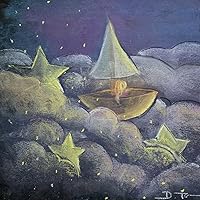
amazing artworks

July 9, 2024
I actually found this book outside, on the street. Drawing is my preferred art medium. The book contains quite a well curated list of contemporary artists and provides an interesting intro into modern take on drawing. The book includes works by some of my favorite artists. Some were quite new to me. Though the book presents a somewhat one-sided view of the drawing perspective.

December 24, 2015
There's a lot of drawing in this mammoth book and many different definitions of exactly what drawing is. Though the selection is certainly interesting, I was not overwhelmed by inspiration. At times the work seemed overly studied to me; even though well-executed, much of it seemed to lack vision and/or passion.
Still among the work of the 100+ artists represented, ther is plenty to admire. Artists I already kne and liked: Chris Johanson, Marlene Dumas, William Kentridge, Wagechi Mutu. And many new to me: the graphic charts of Simon Evans, Dominic McGill's mad political combinations of text and image, Dr Lakra's tattooed magazine photos, Simone Shubuck's art brut-inspired visions, Shannon Bool's textured layers, Raymond Chaves' black and white linear spaces, Cai Guo-Quiang's deteriorating narrated abstractions.
"Vitamin D" is a good place to start looking and thinking about the variety of ways contemporary artists approach drawing.
Still among the work of the 100+ artists represented, ther is plenty to admire. Artists I already kne and liked: Chris Johanson, Marlene Dumas, William Kentridge, Wagechi Mutu. And many new to me: the graphic charts of Simon Evans, Dominic McGill's mad political combinations of text and image, Dr Lakra's tattooed magazine photos, Simone Shubuck's art brut-inspired visions, Shannon Bool's textured layers, Raymond Chaves' black and white linear spaces, Cai Guo-Quiang's deteriorating narrated abstractions.
"Vitamin D" is a good place to start looking and thinking about the variety of ways contemporary artists approach drawing.

April 16, 2009
I particularly like the way the book is structured and organized. The entire books is an homage to the form. Each artist is introduced by way of brief biographical information as well as a general explanation of their role in and contribution to the contemporary art world. This makes it much more of a reference or guidebook than strictly an art book. Lovely!
February 26, 2008
I used to lug this book around with me place to place because I never got tired of looking through it. I had to stop doing that because it is SO heavy and began ruining the cover of the book! Vitamin D is awesome, hands down.
September 4, 2008
If you're wondering what is going on in modern drawing/printmaking, check out this book from the library, and you won't be disappointed. Thousands of images printed on heavy drawing paper, this book is beautiful.
October 4, 2008
I love this book. Some of the articles are very snooty and don't discus the artist's work in a constructive way for me but others are fascinating and insightful. Some of the drawings I love and others I don't but it still is a great source of inspiration for me.

July 12, 2012
I wanted to like this more but it just didn't hold up to my expectations. Maybe P will be more what I'm looking for. Certainly a book filled with talented artists but as a personal inspiration it didn't resonate.
Currently Reading
September 4, 2007A really rocking book on contemporary drawing. Well selected and amazing well printed. Includes Royal Art Lodge....

January 11, 2008
I wish I could carry this around with me. I should become a bodybuilder.

February 6, 2008
amazing collection. someone buy this book for me!!!

March 14, 2008
Another "must have" book for anyone interested in art.

Want to Read
July 26, 2008i actually like vitamin d more than vitamin p.... the drawings are more interesting...flip through the text and always learn something

February 18, 2009
Wonderfully crafted. Nice selection of artists. Short but informative essays on each one with at least 4 examples for each artist. A great reference.

August 21, 2009
I think it is usefull for artists specialy painters.

March 3, 2011
brilliant, amazing, refreshing!!!!!!!!!!!!!

May 16, 2011
Anyone with any creative inkling, be it fine art, design or just doodling on a pad when you're bored. This is a must.

September 21, 2011
This is an excellent book on contemporary drawing.
December 31, 2011
This is my 'go to' book for inspiration when I need it.
April 15, 2012
want one to keep
Displaying 1 - 30 of 41 reviews