

What do you think?

e. e. cummings: A Life
From the author of American Bloomsbury, Louisa May Alcott, and Home Before Dark, a major reassessment of the life and work of the novelist, painter, and playwright considered to be one of America’s preeminent twentieth-century poets. At the time of his death in 1962, at age sixty-eight, he was, after Robert Frost, the most widely read poet in the United States.
E. E. Cummings was and remains controversial. He has been called “a master” (Malcolm Cowley); “hideous” (Edmund Wilson). James Dickey called him a “daringly original poet with more vitality and more sheer uncompromising talent than any other living American writer.”
In Susan Cheever’s rich, illuminating biography we see Cummings’s idyllic childhood years in Cambridge, Massachusetts; his Calvinist father—distinguished Harvard professor and sternly religious minister of the Cambridge Congregational Church; his mother—loving, attentive, a source of encouragement, the aristocrat of the family, from Unitarian writers, judges, and adventurers.
We see Cummings—slight, agile, playful, a product of a nineteenth-century New England childhood, bred to be flinty and determined; his love of nature; his sense of fun, laughter, mimicry; his desire from the get-go to stand conventional wisdom on its head, which he himself would often do, literally, to amuse.
At Harvard, he roomed with John Dos Passos; befriended Lincoln Kirstein; read Latin, Greek, and French; earned two degrees; discovered alcohol, fast cars, and burlesque at the Old Howard Theater; and raged against the school’s conservative, exclusionary upper-class rule by A. Lawrence Lowell.
In Cheever’s book we see that beneath Cummings’s blissful, golden childhood the strains of sadness and rage were already at play. He grew into a dark young man and set out on a lifelong course of rebellion against conventional authority and the critical establishment, devouring the poetry of Ezra Pound, whose radical verses pushed Cummings away from the politeness of the traditional nature poem toward a more adventurous, sexually conscious form.
We see that Cummings’s self-imposed exile from Cambridge—a town he’d come to hate for its intellectualism, Puritan uptightness, racism, and self-righteous xenophobia—seemed necessary for him as a man and a poet. Headstrong and cavalier, he volunteered as an ambulance driver in World War I, working alongside Hemingway, Joyce, and Ford Madox Ford . . . his ongoing stand against the imprisonment of his soul taking a literal turn when he was held in a makeshift prison for “undesirables and spies,” an experience that became the basis for his novel, The Enormous Room.
We follow Cummings as he permanently flees to Greenwich Village to be among other modernist poets of the day—Marianne Moore, Hart Crane, Dylan Thomas—and we see the development of both the poet and his work against the backdrop of modernism and through the influences of his Stein, Amy Lowell, Joyce, and Pound. Cheever’s fascinating book gives us the evolution of an artist whose writing was at the forefront of what was new and daring and bold in an America in transition.
(With 28 pages of black-and-white images.)
E. E. Cummings was and remains controversial. He has been called “a master” (Malcolm Cowley); “hideous” (Edmund Wilson). James Dickey called him a “daringly original poet with more vitality and more sheer uncompromising talent than any other living American writer.”
In Susan Cheever’s rich, illuminating biography we see Cummings’s idyllic childhood years in Cambridge, Massachusetts; his Calvinist father—distinguished Harvard professor and sternly religious minister of the Cambridge Congregational Church; his mother—loving, attentive, a source of encouragement, the aristocrat of the family, from Unitarian writers, judges, and adventurers.
We see Cummings—slight, agile, playful, a product of a nineteenth-century New England childhood, bred to be flinty and determined; his love of nature; his sense of fun, laughter, mimicry; his desire from the get-go to stand conventional wisdom on its head, which he himself would often do, literally, to amuse.
At Harvard, he roomed with John Dos Passos; befriended Lincoln Kirstein; read Latin, Greek, and French; earned two degrees; discovered alcohol, fast cars, and burlesque at the Old Howard Theater; and raged against the school’s conservative, exclusionary upper-class rule by A. Lawrence Lowell.
In Cheever’s book we see that beneath Cummings’s blissful, golden childhood the strains of sadness and rage were already at play. He grew into a dark young man and set out on a lifelong course of rebellion against conventional authority and the critical establishment, devouring the poetry of Ezra Pound, whose radical verses pushed Cummings away from the politeness of the traditional nature poem toward a more adventurous, sexually conscious form.
We see that Cummings’s self-imposed exile from Cambridge—a town he’d come to hate for its intellectualism, Puritan uptightness, racism, and self-righteous xenophobia—seemed necessary for him as a man and a poet. Headstrong and cavalier, he volunteered as an ambulance driver in World War I, working alongside Hemingway, Joyce, and Ford Madox Ford . . . his ongoing stand against the imprisonment of his soul taking a literal turn when he was held in a makeshift prison for “undesirables and spies,” an experience that became the basis for his novel, The Enormous Room.
We follow Cummings as he permanently flees to Greenwich Village to be among other modernist poets of the day—Marianne Moore, Hart Crane, Dylan Thomas—and we see the development of both the poet and his work against the backdrop of modernism and through the influences of his Stein, Amy Lowell, Joyce, and Pound. Cheever’s fascinating book gives us the evolution of an artist whose writing was at the forefront of what was new and daring and bold in an America in transition.
(With 28 pages of black-and-white images.)
240 pages, Hardcover
First published January 1, 2014
Ratings & Reviews
Friends & Following
Create a free account to discover what your friends think of this book!
Community Reviews
Displaying 1 - 30 of 113 reviews

July 3, 2022
At just 240 pages, this is not an exhaustive, literary biography, but more of an introduction to the poet. It’s has an almost breezy informality, and is easily accessible. I was able to read through it in a day.
Of course, the book’s short length presents limitations. I would have enjoyed more details about his time in Paris as part of the Lost Generation crew. That is barely touched on in this book, and there is no detail at all about Cummings involvement with Dadaism.
Cheever’s one major focus seems to be the relationship between Cummings and his only daughter, Nancy. Taken away from him at seven, Cummings did not see his daughter for twenty years. Cheever’s spends more pages on this situation and the relationship they formed as adults then any other event in the poet’s life.
Of course, the book’s short length presents limitations. I would have enjoyed more details about his time in Paris as part of the Lost Generation crew. That is barely touched on in this book, and there is no detail at all about Cummings involvement with Dadaism.
Cheever’s one major focus seems to be the relationship between Cummings and his only daughter, Nancy. Taken away from him at seven, Cummings did not see his daughter for twenty years. Cheever’s spends more pages on this situation and the relationship they formed as adults then any other event in the poet’s life.

December 6, 2013
I'm glad the author included this e.e. communings poem. I think I had it memorized in High School! :)
may I feel said he
(i'll squeal said she
just once said he
it's fun said she
(may I touch said he
how much said she
a lot said he)
why not said she
(let's go said he
not to far said she
what's too far said he
where you are said she)
may i stay said he
(which way said she
like this said he
if you kiss said she
may i move said he
is it love said she)
if you're willing said he
(but you're killing said she
but its life said he
but your wife said she
now said he)
ow said she
(tiptop said he
don't stop sad she
oh no said he)
go slow said she
(cccome?said he
ummm said she)
you're divine!said he
you are Mine said she
I enjoyed reading this book. (An e.e. Cummings fan from way back). --
Yet--I'm not sure how to rate this book. I never know how to rate 'personal' (life story) books.
A few things 'new' I learned about e.e. Cummings:
...He graduated Valedictorian from Harvard
...He had a distaste for Harvard's intellectualism
...He loved naked women, was addicted to striptease and burlesque theater
...He was a conversational genius, creating dazzling monologues.
...He thought his mother was the most amazing person he ever met.
...Married 3 times
...1 daughter (for 22 years he had no contact with her)
...His personal and professional life were strangely divided. "As a man he was spiraling toward agonizing loneliness; as a writer he was never more popular or successful."
..."Cummings was an equal-opportunity hater. He hated Hitler and he hated Jews" [NOTE: this part was not clear to me in the book --and did not go into any detail].... I didn't find it' fitting that e.e. Cummings would hate Jews ---(I personally found it hard to believe)...
when all the reading in this book 'before' said things like how Cummings had an intolerance for 'evil' and 'freedoms'.
With only 'one' sentence in the book about Cummings hating Jews...
I wonder how much force was behind that word 'hate' used in the book.
About e.e. Cummings estranged daughter: The author writes: "Cumming's connection to his only child is one of the most illuminating, heartbreaking, and startling passages in his life. It is worth a book on its own.".
My final thoughts: At times-I didn't think the focus of this book was about e.e. Cummings, *himself* anyway -- (but more a 'time-period' of life) --A group of artists, authors, revolutionaries living in Greenwich Village--bohemian lifestyles ...(smoking, drinking, sex)
A reminder that the best literature came out of World War 1 --
A thrill of the prospect of a new way of seeing the world!
may I feel said he
(i'll squeal said she
just once said he
it's fun said she
(may I touch said he
how much said she
a lot said he)
why not said she
(let's go said he
not to far said she
what's too far said he
where you are said she)
may i stay said he
(which way said she
like this said he
if you kiss said she
may i move said he
is it love said she)
if you're willing said he
(but you're killing said she
but its life said he
but your wife said she
now said he)
ow said she
(tiptop said he
don't stop sad she
oh no said he)
go slow said she
(cccome?said he
ummm said she)
you're divine!said he
you are Mine said she
I enjoyed reading this book. (An e.e. Cummings fan from way back). --
Yet--I'm not sure how to rate this book. I never know how to rate 'personal' (life story) books.
A few things 'new' I learned about e.e. Cummings:
...He graduated Valedictorian from Harvard
...He had a distaste for Harvard's intellectualism
...He loved naked women, was addicted to striptease and burlesque theater
...He was a conversational genius, creating dazzling monologues.
...He thought his mother was the most amazing person he ever met.
...Married 3 times
...1 daughter (for 22 years he had no contact with her)
...His personal and professional life were strangely divided. "As a man he was spiraling toward agonizing loneliness; as a writer he was never more popular or successful."
..."Cummings was an equal-opportunity hater. He hated Hitler and he hated Jews" [NOTE: this part was not clear to me in the book --and did not go into any detail].... I didn't find it' fitting that e.e. Cummings would hate Jews ---(I personally found it hard to believe)...
when all the reading in this book 'before' said things like how Cummings had an intolerance for 'evil' and 'freedoms'.
With only 'one' sentence in the book about Cummings hating Jews...
I wonder how much force was behind that word 'hate' used in the book.
About e.e. Cummings estranged daughter: The author writes: "Cumming's connection to his only child is one of the most illuminating, heartbreaking, and startling passages in his life. It is worth a book on its own.".
My final thoughts: At times-I didn't think the focus of this book was about e.e. Cummings, *himself* anyway -- (but more a 'time-period' of life) --A group of artists, authors, revolutionaries living in Greenwich Village--bohemian lifestyles ...(smoking, drinking, sex)
A reminder that the best literature came out of World War 1 --
A thrill of the prospect of a new way of seeing the world!

March 26, 2023
A short but solid biography of the versatile modernist.

October 1, 2013
A fair enough biography, but with some qualms:
1) possibly because Cheever herself is the daughter of a famous writer, she seems a bit more hung up on Cummings's daughter than seems strictly necessary
2) she makes a couple of waves at addressing Cummings's alleged anti-Semitism, but never really grapples with it in any prolonged way
3) building off 2, she makes a couple of excellent forays into laying bare the mechanics of writing a biography, but only a couple--I'd have preferred either a more thorough metabiography or to drop these sections entirely. As they are, they are out of place.
4) It's riddled with factual mistakes. The one that really stuck out was an almost incomprehensible attempt to explain annulment by referencing Henry VIII. But she also gets a lot wrong (or blithely accepts the high school textbook version) about US and world politics during Cummings's life. (for example: Herbert Hoover was not "oblivious . . . purposefully fail[ing] to understand what was happening"--he was simply ineffectual or wrongheaded about what he tried, not to mention unlucky). There were more examples - don't remember them right now.
1) possibly because Cheever herself is the daughter of a famous writer, she seems a bit more hung up on Cummings's daughter than seems strictly necessary
2) she makes a couple of waves at addressing Cummings's alleged anti-Semitism, but never really grapples with it in any prolonged way
3) building off 2, she makes a couple of excellent forays into laying bare the mechanics of writing a biography, but only a couple--I'd have preferred either a more thorough metabiography or to drop these sections entirely. As they are, they are out of place.
4) It's riddled with factual mistakes. The one that really stuck out was an almost incomprehensible attempt to explain annulment by referencing Henry VIII. But she also gets a lot wrong (or blithely accepts the high school textbook version) about US and world politics during Cummings's life. (for example: Herbert Hoover was not "oblivious . . . purposefully fail[ing] to understand what was happening"--he was simply ineffectual or wrongheaded about what he tried, not to mention unlucky). There were more examples - don't remember them right now.

December 6, 2022
anyone lived in a pretty how town
(with up so floating many bells down)
spring summer autumn winter
he sang his didn't he danced his did
Women and men(both little and small)
cared for anyone not at all
they sowed their isn't they reaped their same
sun moon stars rain. . . .
And that beauty is only part of one of my favorite ee cummings poems. . .but then I have so many of his as favorites. . . .
Susan Cheever's book was a light introduction to what is a complicated man. I was surprised to gain a pretty good idea that he and I might be on opposite ends of most spectrums. . . I so love his work, that was a big surprise to me. It had never occurred to me that we might actually be opposed in politics and thought processes. . .at least as he was in later life. However, I am not deterred.
My self-study of ee cummings marches forward.
(with up so floating many bells down)
spring summer autumn winter
he sang his didn't he danced his did
Women and men(both little and small)
cared for anyone not at all
they sowed their isn't they reaped their same
sun moon stars rain. . . .
And that beauty is only part of one of my favorite ee cummings poems. . .but then I have so many of his as favorites. . . .
Susan Cheever's book was a light introduction to what is a complicated man. I was surprised to gain a pretty good idea that he and I might be on opposite ends of most spectrums. . . I so love his work, that was a big surprise to me. It had never occurred to me that we might actually be opposed in politics and thought processes. . .at least as he was in later life. However, I am not deterred.
My self-study of ee cummings marches forward.

January 26, 2014
True to it's title, E. E. Cummings: A Life shows the life of America's first modernist in all its banality. Readers gravitate toward biography partly for this precise reason: it reassures us that our lives are not so different than those of our favorite personalities by demonstrating how their lives were not so different from our own. In many ways, Cummings needs this kind of treatment, because he was not only the first American modernist, he was - arguably - the only American modernist. His apparent descent from outer space and fleeting time on the scene creates an enigma that isn't explained by the two or three poems we're treated to as undergrads. Understanding his pseudo-Brahmin roots (replete with childhood melodrama) and romantic failures only serve to enhance our understanding of Cummings's poetry.
Of course, between those two existential bookends comes the e. e. cummings we all know and love. Cummings had a notoriously Good Time as an itinerant ambulance driver in Paris during the first World War. But while he could be lumped in with other Americans of his approximate generation who enjoyed themselves immensely in Europe (Dos Passos, Hemingway, etc.), this only represented a time for Cummings. And unlike so many bohemian/academic junketeers who went to the Soviet Union in the 1920s, Cummings evaded the seduction of the pink siren of utopianism.
And like so many others of his approximate generation, Cummings practiced free love. But here his biographer makes her first in a series of salient observations. Unlike the libertines, Cummings understood relationships to be an emotional contract freely entered into by consenting parties. He did not (with a few occasional exceptions, of course - Cummings did, after all, have some riotous Good Times under the influence of alcohol and comely companionship) undertake sex casually. He was not a creature of one night stands. He believed that his partners - by virtue of the consent that consummated the relationship - were free to go as soon as they wished. But this was more like a standard prenuptial agreement Cummings carried with him than the abandon of "free love." And it means that when Cummings's partners tired of him - especially if they tired of him before he tired of them - Cummings was deeply wounded.
This, along with the moving chapter on Cummings's eventual reunification with his only daughter, could tempt more licentious biographers to psychoanalyze the man. Cummings's poems are - after all - virtual invitations to speculate on the artist's id. I admire Cheever's bold choice to ignore this path. It would have undoubtedly led A Life into a cul-de-sac.
But back to the original sentence. Cummings was America's only modernist. Why? The answer cannot be that the times were not ripe for modernists. Europe produced them like a factory (Marcel Duchamp, Yves Klein (albeit a little later), the Italian futurists) - and many of them came to America! Why, then, did America not produce her own? And why did Cummings, being the prototype, fail to thrive? The answer lies in the fact that America itself was the problem. Cummings was beloved within certain circles. Clearly, liberal arts colleges were his stock-in-trade. But Cummings ran afoul of his Greenwich Village neighbors with his conservative politics and anti-semitism. And during the Depression and post-war years, America didn't seem to want Cummings at his most candid. (It wanted him at his most statuesque.) The author puts it well toward the end of the book:
"Cummings's (book) sales are a barometer of the national mood. In confident times his poems are beloved. Their questioning, their humor, and their rule-breaking formalism seem to gibe with a democracy ready to ask hard questions and make fun of itself. In precarious times, readers seem to want an older, more assured poet, someone who speaks with authority rather than scoffs at it."
I believe we still live in that America. It has changed since Cummings's time. Modern students easily confuse cummings's syntax and meter as informalities, rather than the dense, experimental forms they are. This mistake is made because the lowercase "i" is no longer a character, but a manifestation of the new communication (which is a mixture of knee-jerk (ABC Family-fied) civil disobedience and dangerous contempt for intellectualism). Modern students are in danger of misunderstanding modernism for anarchy. Cheever's biography clearly shows how Cummings was anything other than undisciplined and casual. The irony is that the people who read it aren't the ones in need of the demonstration.
Of course, between those two existential bookends comes the e. e. cummings we all know and love. Cummings had a notoriously Good Time as an itinerant ambulance driver in Paris during the first World War. But while he could be lumped in with other Americans of his approximate generation who enjoyed themselves immensely in Europe (Dos Passos, Hemingway, etc.), this only represented a time for Cummings. And unlike so many bohemian/academic junketeers who went to the Soviet Union in the 1920s, Cummings evaded the seduction of the pink siren of utopianism.
And like so many others of his approximate generation, Cummings practiced free love. But here his biographer makes her first in a series of salient observations. Unlike the libertines, Cummings understood relationships to be an emotional contract freely entered into by consenting parties. He did not (with a few occasional exceptions, of course - Cummings did, after all, have some riotous Good Times under the influence of alcohol and comely companionship) undertake sex casually. He was not a creature of one night stands. He believed that his partners - by virtue of the consent that consummated the relationship - were free to go as soon as they wished. But this was more like a standard prenuptial agreement Cummings carried with him than the abandon of "free love." And it means that when Cummings's partners tired of him - especially if they tired of him before he tired of them - Cummings was deeply wounded.
This, along with the moving chapter on Cummings's eventual reunification with his only daughter, could tempt more licentious biographers to psychoanalyze the man. Cummings's poems are - after all - virtual invitations to speculate on the artist's id. I admire Cheever's bold choice to ignore this path. It would have undoubtedly led A Life into a cul-de-sac.
But back to the original sentence. Cummings was America's only modernist. Why? The answer cannot be that the times were not ripe for modernists. Europe produced them like a factory (Marcel Duchamp, Yves Klein (albeit a little later), the Italian futurists) - and many of them came to America! Why, then, did America not produce her own? And why did Cummings, being the prototype, fail to thrive? The answer lies in the fact that America itself was the problem. Cummings was beloved within certain circles. Clearly, liberal arts colleges were his stock-in-trade. But Cummings ran afoul of his Greenwich Village neighbors with his conservative politics and anti-semitism. And during the Depression and post-war years, America didn't seem to want Cummings at his most candid. (It wanted him at his most statuesque.) The author puts it well toward the end of the book:
"Cummings's (book) sales are a barometer of the national mood. In confident times his poems are beloved. Their questioning, their humor, and their rule-breaking formalism seem to gibe with a democracy ready to ask hard questions and make fun of itself. In precarious times, readers seem to want an older, more assured poet, someone who speaks with authority rather than scoffs at it."
I believe we still live in that America. It has changed since Cummings's time. Modern students easily confuse cummings's syntax and meter as informalities, rather than the dense, experimental forms they are. This mistake is made because the lowercase "i" is no longer a character, but a manifestation of the new communication (which is a mixture of knee-jerk (ABC Family-fied) civil disobedience and dangerous contempt for intellectualism). Modern students are in danger of misunderstanding modernism for anarchy. Cheever's biography clearly shows how Cummings was anything other than undisciplined and casual. The irony is that the people who read it aren't the ones in need of the demonstration.

December 17, 2014
When we begin this biography of E. E. Cummings we're aware that Susan Cheever knew him through her father, John. The opening is fascinating as she tells of the night in 1958 she met him following a poetry reading. She sat in the back seat and studied him while her father drove Cummings from the reading in Westchester, at Susan's school, to his home in Patchin Place in Greenwich Village. Her portrait is of a puckish and likable man.
It's unfortunate that what looks at first to be an intimate book on Cummings, a memoir of their connection, quickly turns into conventional biography. Friendship seems to be acquaintance. And perhaps it's because she's unable to draw on a close and personal association with him that the book settles into a study as thin and frail as Cummings himself.
I'm generous with stars these days. Still, this book doesn't deliver. I don't think Cheever tells us anything about Cummings we didn't already know. Or any perspective on his character and work that we haven't come across before. She more than once emphasizes his childlike, playful nature and sees it reflected in the poetry and his own lowercase persona which bucked against authority, any authority. Yet she also claims Cummings as one of the century's high modernists, even as she admits his reputation is waning under repeated charges by academics and poets that his work shouldn't be taken too seriously. Somehow it means a lot to me that in discussing language and style in a poet most widely known for that rather than content she never uses the word lyrical.
Some aspects of the life and work aren't developed. At one point she writes a sentence hinting he was bisexual. She goes no farther with the thought than that sentence. She spends time describing the correspondence of Cummings and Ezra Pound, but the content of the correspondence she chooses to discuss has to do with their disagreement about the true nature of blue jays.
Cummings is here, the poet I love is here. But there are better biographies.
It's unfortunate that what looks at first to be an intimate book on Cummings, a memoir of their connection, quickly turns into conventional biography. Friendship seems to be acquaintance. And perhaps it's because she's unable to draw on a close and personal association with him that the book settles into a study as thin and frail as Cummings himself.
I'm generous with stars these days. Still, this book doesn't deliver. I don't think Cheever tells us anything about Cummings we didn't already know. Or any perspective on his character and work that we haven't come across before. She more than once emphasizes his childlike, playful nature and sees it reflected in the poetry and his own lowercase persona which bucked against authority, any authority. Yet she also claims Cummings as one of the century's high modernists, even as she admits his reputation is waning under repeated charges by academics and poets that his work shouldn't be taken too seriously. Somehow it means a lot to me that in discussing language and style in a poet most widely known for that rather than content she never uses the word lyrical.
Some aspects of the life and work aren't developed. At one point she writes a sentence hinting he was bisexual. She goes no farther with the thought than that sentence. She spends time describing the correspondence of Cummings and Ezra Pound, but the content of the correspondence she chooses to discuss has to do with their disagreement about the true nature of blue jays.
Cummings is here, the poet I love is here. But there are better biographies.

June 14, 2018
According to this book,
-Cummings was "this country's only true modernist poet" (in what sense "true," wonders Pound Williams Stevens Moore et al)
-Pound, HD, and Aldington together changed imagism to vorticism when Amy Lowell took over (HD and Aldington published in all of Lowell's Imagist Anthologies)
-A Unitarian is a Puritan (theology explodes).
Here is one of the treatments of poems:
"He uses the word 'defunct' to create a syllabic meter in the second line": meaning that it has two syllables? "Is dead" would do the same thing. Come on.
It is repetitive and tendentious, somehow alternately gossipy and sermonizing.
There is a charming section at the beginning where the author tells about her personal interactions with Cummings, who was a friend of her father's, but the next part of the book that was useful is the end, where other, presumably more scholarly, biographies are listed.
he sorry said this books
orry jus
tnot
real (ver) sorr
y gO
Od a
Tall(so
rry
-Cummings was "this country's only true modernist poet" (in what sense "true," wonders Pound Williams Stevens Moore et al)
-Pound, HD, and Aldington together changed imagism to vorticism when Amy Lowell took over (HD and Aldington published in all of Lowell's Imagist Anthologies)
-A Unitarian is a Puritan (theology explodes).
Here is one of the treatments of poems:
"He uses the word 'defunct' to create a syllabic meter in the second line": meaning that it has two syllables? "Is dead" would do the same thing. Come on.
It is repetitive and tendentious, somehow alternately gossipy and sermonizing.
There is a charming section at the beginning where the author tells about her personal interactions with Cummings, who was a friend of her father's, but the next part of the book that was useful is the end, where other, presumably more scholarly, biographies are listed.
he sorry said this books
orry jus
tnot
real (ver) sorr
y gO
Od a
Tall(so
rry
August 28, 2014
Perhaps we shouldn't read biographies of artists we admire. It can make it difficult to then read the poems without a veil of distaste getting in the way.
Cheever tells us cummings wasn't irresponsible he just loved the innocence of childhood. Yes, and he was irresponsible. And anti-Semitic. And he was a bohemian who wanted to shake off the rigidity of the Cambridge society he grew up in. But he borrowed money from his mother constantly. Cheever portrays him as the victim in his relationship with his daughter, without giving us any indication that he really tried to keep in touch with Nancy or see her.
Beyond my dislike of cummings, the book is just poorly written. Many judgements are just told to us rather than shown through illustration. The book doesn't doesn't flow easily but is held up by repetitions and explanations and theories being rehashed.
Other times I would have welcomed an explanation. Marion, who was so kind and welcoming to everyone throughout the book, suddenly has a change of character concerning his daughter Nancy. Why might that be? She put up with former wives and girlfriends but becomes jealous and hovering when his daughter is around.
Oh well, maybe I'm a cranky old man like cummings and need to stop complaining. Up next: Marge Piercy. Maybe she will make me more resonable.
Cheever tells us cummings wasn't irresponsible he just loved the innocence of childhood. Yes, and he was irresponsible. And anti-Semitic. And he was a bohemian who wanted to shake off the rigidity of the Cambridge society he grew up in. But he borrowed money from his mother constantly. Cheever portrays him as the victim in his relationship with his daughter, without giving us any indication that he really tried to keep in touch with Nancy or see her.
Beyond my dislike of cummings, the book is just poorly written. Many judgements are just told to us rather than shown through illustration. The book doesn't doesn't flow easily but is held up by repetitions and explanations and theories being rehashed.
Other times I would have welcomed an explanation. Marion, who was so kind and welcoming to everyone throughout the book, suddenly has a change of character concerning his daughter Nancy. Why might that be? She put up with former wives and girlfriends but becomes jealous and hovering when his daughter is around.
Oh well, maybe I'm a cranky old man like cummings and need to stop complaining. Up next: Marge Piercy. Maybe she will make me more resonable.

January 10, 2014
“Cummings is a pivotal figure in the creation of modern verse, and Cheever conveys his journey with color, warmth, and understanding, especially his imprisonment in France during the First World War, his father’s death and his final reunion with his daughter. She leaves the reader with only one wish: to be a fly on the wall while the poet held forth to his friends.”
Linda Jeffries-Summers, Howard County Library, Columbia, MD
Linda Jeffries-Summers, Howard County Library, Columbia, MD

September 27, 2014
An interesting and well written biography of a fascinating---and probably misunderstood---man.

August 26, 2025
I didn’t know much about Cummings and thought, given the pushing-the-envelope nature of his poetry, would likely have an interesting background story (especially in contrast to rural outdoorsman Robert Frost or insurance executive Wallace Steven’s); I wasn’t disappointed - and this book examines the culture around Cummings as well as looking at larger questions such as how we ascertain what is and isn’t part of a biography.
I listened to the audiobook and thought it interesting (?) that, although written by a woman, Susan Cheever, it was narrated by Stefan Rudnicki who has a deep, rumbling, resonant from deep-in-the-chest voice…
“Modernism, as Cummings and his mid-twentieth century colleagues embraced it, had three parts: the first was the exploration of using sounds instead of meanings to connect words to the reader’s feelings; the second was the idea of stripping away all unnecessary things to bring attention to form and structure, the formerly hidden skeleton of work would now be exuberantly visible. The third facet of modernism was an embrace of adversity. In a world seduced by easy understanding, the modernists believed that difficulty enhanced the pleasure of reading. In a Cummings poem, the reader must often pick his way toward comprehension, which comes when it does in a burst of light and recognition. Like many of his fellow modernist, there were those who walked out of Stravinsky’s “Rite of Spring,” and viewers were scandalized by Marcel Duchamp’s “Nude Descending a Staircase.” Cummings was sometimes reviled fakirs and the fanatics of the critical establishment. Princeton poet Richard P Blackmer said, ‘Cummings’s poems were baby talk’ and poetry arbiter Helen Vendler called them ‘repellent’ and ‘foolish’. ‘What is wrong with a man who writes this?’ she asked. Nothing was wrong with Cummings. Or Duchamp. Or Stravinsky. Or Joyce for that matter. All were trying to slow down the seemingly inexorable rush of the world; to force people to notice their own lives. In the 21st-century that rush has now reached force five. We are all inundated with information and given no time to wonder what it means or where it came from. Access without understanding, facts without context, have become our daily diet.” (Preface)
“In his almost 3,000 poems, he sometimes furiously, sometimes lovingly, debunked anything or anyone in power. Even Death in his famous poem about Buffalo Bill, with its spangled alliterations and intimate last lines: ‘and what I wanna know is, how do you like your blue eyed boy Mr. Death?’” (Preface)
“When he was a school boy, his classmates joked that God would forgive them their ‘short Cummings.’”
There was accepted, antisemitism in education and accepted antisemitism in literature. The House of Myrth, Edith Wharton‘s best selling 1905 novel, features a slimy Jewish character named Simon Rosedale, who was described as having the unattractive characteristics of his race. In The Age of Innocence, which won the Pulitzer Prize in 1921, Wharton deploys the same character in the form of Julius Beaufort. although Cummings was disturbed by antisemitism at Harvard and in Cambridge, and this was one of the reasons he left, later in his own career, the charge of antisemitism would be leveled at him and his work.”
“cubism, with its effort to represent different points of view, was at the heart of the show. Cummings was thrilled and changed. At the center of the controversy was Marcel Duchamp’s ‘Nude Descending a Staircase, number two.’ the Duchamp painting tries to show actual movement. Instead of taking a moment from life and making it static on the canvas, Duchamp with many of the goals that were still embryonic in Cummings’s young imagination, decided to represent a whole series of moments in a series of modernistic forms, descending from the upper left to the lower right corner of the canvas. A poem could do the same thing.”
“His behavior changed from that of a rule-follower and believer in the Unitarian church and all this Puritanical precepts as embodied in his all-powerful hulking father, to being a trickster, a Loki, a character like the poetic coyote, the character who was always working below the surface to challenge authority and blow up the foundations of the comfortable world.”
“In the study of art and literary history, One of the great problems is how to separate the art from the artist, how to separate the master works of Wagner or Richard Strauss, a (Ezra) Pound or even a Cummings, from the terrible things they said and wrote in their rules is puny, deluded human beings: men. On one side of the spectrum possible reactions we have the silliness of political correctness: students were denied the joys of Dickens or even Salinger because of those writers behavior as men and their identity as men. When literature is divided into categories based on the politics or even the worldly identity of the writer, everyone loses. On the other side of the spectrum we have Pound.”
“wrote his most startling and famous works when he was a young man in his twenties:
‘All in Green Went My Love Riding’
‘Buffalo Bills’
‘Injust Spring’
‘The Cambridge ladies’”
“including the he horrors of the trench Warfare in battle of the Somme in the summer and fall of 1916; three of Cummings’ fellow poets of the western front, Wilfred Owen, Siegfried Sasoon, and Robert Graves had already been emotionally destroyed by what it happened to them in the trenches…”
“The Enormous Room is an often ignored piece of the astonishing literary output that characterize the survivors of the western front in England and America. Fittingly, Robert Graves wrote an introduction to the British publication praising Cummings’s language. ‘He uses some new alloys of words and has rare passages as iridescent as decay in meat. it seems to me so much the best American war period book,’ he wrote. although it was not published until 1922 five years after Cumming’s actual experience on the Western front, the enormous room is still the best account of his months there, one of the best accounts of the hidden war, in which thousands of citizens were haphazardly and Quixotically held in makeshift prisons. Every war Has its little guys: the people and families, who, because of what is happening on the battlefield, have their rights and freedoms pushed aside in one way or another. on the western front, Cummings was their spokesman.”
“ the only requirement for membership in the community was a hatred of authority, and a sometimes humorous recognition of the absurdity of the situation. Cummings and Brown were welcomed as charter members…”
“Neighborhood… Influential poets, writers, and photographers, including Crane, Cooley, the famous bum Joe Gould, Wilson, Mariann Moore, Thomas Wolfe, Walker Evans, and James Agee started the collaboration that became Let Us Now Praise Famous Men while walking the streets of the Village.”
“In the varieties of religious experience, James wrote about the different kinds of characters men might inhabit, especially men like Cummings who found themselves somehow on the outside of their own childhood world…James writes about a question that fascinated him and has fascinated many creative people since: how can two or more seemingly opposite characters inhabit the same body and personality? in his lecture James put the question through the renegade French novelist Alphonse Daudet and his confession of amoral doubleness; ‘homo duplex, homo duplex’ writes Daudet. ‘The first time that I perceived that I was two was at the death of my brother Henri. When my father cried out so dramatically, ‘he is dead, he is dead’ while my first self wept, my second self thought how truly given was that cry, how fine it would be at the theater. I was 14 years old.”
“Rebecca sent her son a long letter, as well as some neckties for which Cummings naturally had scant use, but the mother can hope…”
“ the fall of 1926 tulips and chimneys had been out for three years and its astonishing poems were still reverberating in the public consciousness p, as he embarked on more poems, more paintings, and a play. he followed it up with two more collections of poems &[AND] and 41 poems in 1925 and another is 5 in 1926. tulips and chimneys published when Cummings was a very young man and inspired by the huge relief of being free from a variety of prisons, including Puritanical Cambridge, and le forte mace, collects most of the poems for which Cummings is just the famous
all in Green went my love riding
in just
Buffalo Bills.
I was sitting in McSorley’s
the Cambridge ladies,
the book is a treasure trove of astonishing poems written by a young man who is still a adventure in the world of wonders great losses were about to change that.
Overtime as the situation under Stalin got worse. The Russians Cummings explained to the tribune reporter Dan Brown ‘were very scared and very serious’. Cummings liked the Russians, but he did not like Russia and more amazingly he did not like communism ‘are the Russian people happy? they struck me like this. They just love to suffer and they’re suffering like hell, so they must be happy. you know Dostoevsky: people talk about the strain and tension of life in the United States: It is nothing to that in Moscow,’ he said. ‘If you said ‘boo’ to some of these people they might drop dead . They are in a particularly nervous condition.”
“He saw as the failure of the great communist idea. his natural perversity had added heat to his observations. later he referred to Russia as the ‘subhuman communist super state, where men are shadows and women are non-men. this underworld is hell .’”
“ one of his best known and most often poems comes from this well of disappointment and fury in no thanks
the boys I mean are not refined
They go with girls who buck and bite
they do not give a fuck for Luck.
They hump them 13 times a night
one hangs a hat upon her tit
one carve across in her behind.
They do not give a shit for the boys
I mean, are not refined .
They come with girls who bite and butt
who cannot read and cannot write
who laugh like they would fall apart
and masturbate with dynamite
the boys I mean, are not refined
they cannot chat that
they do not give a fart for Art.
They kill like you would take a piss
They speak whatever’s on their mind they do whatever is in their pants.
The boys I mean are not refined
they shake the mountains when they dance
Collected Poems published In February 1938, marked the beginning of as a major American poet, a metamorphosis from his previous incarnation as a precocious, bad boy From the hundreds he had written in the past decade starting with poems from tulips and chimneys and adding 22 that were brand new
Collected Poems was nominated for year’s the Pulitzer Prize. when Cummings writes birds sing sweeter than books tell how. He is singing his theme song, Harry Levin wrote in an evaluation of Cummings‘s work. Poetry might be described in his terms as the vain attempt of books to emulate the birds. Cummings’s natural lyric affirmation living, he wrote, had turned brilliantly under the stress of modern circumstances into satirical negation. The daughters of Greenwich Village are caught, as it were, on the rebound from dowagers of Brattle Street.
Cummings always identified with children. His favorite poem was Wordsworth’s child-worshipping “Intimations of Immortality”; in the poem children come innocent and whole from heaven, trailing clouds of glory very much like Adam and Eve in the garden of Eden before the fall. as they age, children are corrupted by our dark punishing civilization shades of the prison house begin to close upon the growing boy…
He published 50 poems with Sloan and Pierce and the poem that is one of his longest, most famous and most powerful more than a decade after his father‘s deaths found a way in language to understand death
My father moved through dooms of love through scenes of through halves of give singing each morning out of each night, my father moved through depths of height, this motionless, forgetful where turned at his glance to shining here that if so, timid air is firm under his eyes would stir and squirm Newly as from unburied, which floats the first who his April touch, sleeping cells to swarm their faces dreamers to their ghostly roots and shoot some why completely weep my father’s fingers brought her sleep. Mainly no smallest voice might cry he could feel the mountains grow the after the success of collected poems in
The poet wrote about simpler things like Blue Jays Cummings loved Blue Jays, handsome, and naughty, and in fact, this led to one of their few arguments, which began with a Cummings poem, published in 95 poems,
crazy Jay blue demon laugh shrinking at me you were born of easily hatred of timid and loathing for dull, regular righteous, comfortable un worlds thief, crook, cynic, swim, float, drifting fragment of heaven, trickster, villain, ruckus rogue, and vivid Voltaire you beautiful anarchist I salute thee.
Pound the Disagreed with Cummings is critical assessment of the bird. He was a fan of Blue Jays. Why are you get such ideas BJ he asked a letter with typical addiction.
Cummings’s friendship with Pound had a less lighthearted aspect to it, which later came back to haunt him and which haunts his reputation even now. Cummings grew up at a time when accepted and admired Reputation Cummings grew up at a time when antisemitism was accepted, and even admired Marion was mindlessly, socially antisemitic, casting around for the reason he had not found a job during his miserable time in Hollywood tended to blame, blame the Jews before World War II and the dreadful knowledge of what it happened during the holocaust many Americans were antisemitic in his book of poems. Kyrie published in March 1950 by Oxford University press fit pushed an extreme further than it had gone with disastrous results, one poem and the collection poem that had in fact, been written and published previously before the war was too offensive not to cause outrage ‘a Kike is the most dangerous machine is yet invented by even Yankee ingenuity.’
Trying to recreate another time and place is difficult. trying not to let our own modern knowledge understanding bleed into those descriptions of the past is almost impossible. on the one hand biographers responsibility is to bring the past to life on the page in all its details, including the relative knowledge and ignorance of the community described. on the other hand, shouldn’t biographer give the reader and the subject the benefit of everything known at the time of writing? Should Poems and books be understood in a vacuum and the historical silence in which writer connects, viscerally and spiritually with a reader? or should they be understood as pieces of the web of their own time and ours. when Cummings was writing poetry Richards at Cambridge in England was arguing the former in his renowned New Criticism. Work should stand on its own Richards wrote in his book Practical Criticism in 1929. what would happen if a reader knew nothing of the writer or the work, no biographical material or Text explanation. since Richards wrote his ideas have been overwhelmed by the cult of personality. in our world is unthinkable to read a poem without knowing who the author is, what he or she intended, and what the poem is about. biography has spawned the cottage industry of literary medical men and women, writing essays in which they diagnose the illnesses of a Coleridge heroin addiction or Louisa MaeAlcott, bipolar disorder, or Hemmingway, clinical depression and Alcoholism. in our attempts to understand the past it is important to weigh the environment then against the knowledge we have now. Cumming was raised in a community which was casually racist.
These days he is too popular for the academy and often too sassy to be taught in high school. Many people remember him for his use of the lowercase, but few understand that this lowercasing was a fraction of the experiment with performance and syntax that was at the heart of Cummings’s modernism. educated about poetic and the various forms of language, He chose to twist the form He knew to yield more powerful poems. as a result He is one of the most important American poets. furthermore, although modernism out of style, we live in a time when it’s mandate to make it new and to notice the world is more important than ever. Cummings and his colleagues felt they were being inundated with unprocessed information. They hoped that their poetry would make sense of the world.”
I listened to the audiobook and thought it interesting (?) that, although written by a woman, Susan Cheever, it was narrated by Stefan Rudnicki who has a deep, rumbling, resonant from deep-in-the-chest voice…
“Modernism, as Cummings and his mid-twentieth century colleagues embraced it, had three parts: the first was the exploration of using sounds instead of meanings to connect words to the reader’s feelings; the second was the idea of stripping away all unnecessary things to bring attention to form and structure, the formerly hidden skeleton of work would now be exuberantly visible. The third facet of modernism was an embrace of adversity. In a world seduced by easy understanding, the modernists believed that difficulty enhanced the pleasure of reading. In a Cummings poem, the reader must often pick his way toward comprehension, which comes when it does in a burst of light and recognition. Like many of his fellow modernist, there were those who walked out of Stravinsky’s “Rite of Spring,” and viewers were scandalized by Marcel Duchamp’s “Nude Descending a Staircase.” Cummings was sometimes reviled fakirs and the fanatics of the critical establishment. Princeton poet Richard P Blackmer said, ‘Cummings’s poems were baby talk’ and poetry arbiter Helen Vendler called them ‘repellent’ and ‘foolish’. ‘What is wrong with a man who writes this?’ she asked. Nothing was wrong with Cummings. Or Duchamp. Or Stravinsky. Or Joyce for that matter. All were trying to slow down the seemingly inexorable rush of the world; to force people to notice their own lives. In the 21st-century that rush has now reached force five. We are all inundated with information and given no time to wonder what it means or where it came from. Access without understanding, facts without context, have become our daily diet.” (Preface)
“In his almost 3,000 poems, he sometimes furiously, sometimes lovingly, debunked anything or anyone in power. Even Death in his famous poem about Buffalo Bill, with its spangled alliterations and intimate last lines: ‘and what I wanna know is, how do you like your blue eyed boy Mr. Death?’” (Preface)
“When he was a school boy, his classmates joked that God would forgive them their ‘short Cummings.’”
There was accepted, antisemitism in education and accepted antisemitism in literature. The House of Myrth, Edith Wharton‘s best selling 1905 novel, features a slimy Jewish character named Simon Rosedale, who was described as having the unattractive characteristics of his race. In The Age of Innocence, which won the Pulitzer Prize in 1921, Wharton deploys the same character in the form of Julius Beaufort. although Cummings was disturbed by antisemitism at Harvard and in Cambridge, and this was one of the reasons he left, later in his own career, the charge of antisemitism would be leveled at him and his work.”
“cubism, with its effort to represent different points of view, was at the heart of the show. Cummings was thrilled and changed. At the center of the controversy was Marcel Duchamp’s ‘Nude Descending a Staircase, number two.’ the Duchamp painting tries to show actual movement. Instead of taking a moment from life and making it static on the canvas, Duchamp with many of the goals that were still embryonic in Cummings’s young imagination, decided to represent a whole series of moments in a series of modernistic forms, descending from the upper left to the lower right corner of the canvas. A poem could do the same thing.”
“His behavior changed from that of a rule-follower and believer in the Unitarian church and all this Puritanical precepts as embodied in his all-powerful hulking father, to being a trickster, a Loki, a character like the poetic coyote, the character who was always working below the surface to challenge authority and blow up the foundations of the comfortable world.”
“In the study of art and literary history, One of the great problems is how to separate the art from the artist, how to separate the master works of Wagner or Richard Strauss, a (Ezra) Pound or even a Cummings, from the terrible things they said and wrote in their rules is puny, deluded human beings: men. On one side of the spectrum possible reactions we have the silliness of political correctness: students were denied the joys of Dickens or even Salinger because of those writers behavior as men and their identity as men. When literature is divided into categories based on the politics or even the worldly identity of the writer, everyone loses. On the other side of the spectrum we have Pound.”
“wrote his most startling and famous works when he was a young man in his twenties:
‘All in Green Went My Love Riding’
‘Buffalo Bills’
‘Injust Spring’
‘The Cambridge ladies’”
“including the he horrors of the trench Warfare in battle of the Somme in the summer and fall of 1916; three of Cummings’ fellow poets of the western front, Wilfred Owen, Siegfried Sasoon, and Robert Graves had already been emotionally destroyed by what it happened to them in the trenches…”
“The Enormous Room is an often ignored piece of the astonishing literary output that characterize the survivors of the western front in England and America. Fittingly, Robert Graves wrote an introduction to the British publication praising Cummings’s language. ‘He uses some new alloys of words and has rare passages as iridescent as decay in meat. it seems to me so much the best American war period book,’ he wrote. although it was not published until 1922 five years after Cumming’s actual experience on the Western front, the enormous room is still the best account of his months there, one of the best accounts of the hidden war, in which thousands of citizens were haphazardly and Quixotically held in makeshift prisons. Every war Has its little guys: the people and families, who, because of what is happening on the battlefield, have their rights and freedoms pushed aside in one way or another. on the western front, Cummings was their spokesman.”
“ the only requirement for membership in the community was a hatred of authority, and a sometimes humorous recognition of the absurdity of the situation. Cummings and Brown were welcomed as charter members…”
“Neighborhood… Influential poets, writers, and photographers, including Crane, Cooley, the famous bum Joe Gould, Wilson, Mariann Moore, Thomas Wolfe, Walker Evans, and James Agee started the collaboration that became Let Us Now Praise Famous Men while walking the streets of the Village.”
“In the varieties of religious experience, James wrote about the different kinds of characters men might inhabit, especially men like Cummings who found themselves somehow on the outside of their own childhood world…James writes about a question that fascinated him and has fascinated many creative people since: how can two or more seemingly opposite characters inhabit the same body and personality? in his lecture James put the question through the renegade French novelist Alphonse Daudet and his confession of amoral doubleness; ‘homo duplex, homo duplex’ writes Daudet. ‘The first time that I perceived that I was two was at the death of my brother Henri. When my father cried out so dramatically, ‘he is dead, he is dead’ while my first self wept, my second self thought how truly given was that cry, how fine it would be at the theater. I was 14 years old.”
“Rebecca sent her son a long letter, as well as some neckties for which Cummings naturally had scant use, but the mother can hope…”
“ the fall of 1926 tulips and chimneys had been out for three years and its astonishing poems were still reverberating in the public consciousness p, as he embarked on more poems, more paintings, and a play. he followed it up with two more collections of poems &[AND] and 41 poems in 1925 and another is 5 in 1926. tulips and chimneys published when Cummings was a very young man and inspired by the huge relief of being free from a variety of prisons, including Puritanical Cambridge, and le forte mace, collects most of the poems for which Cummings is just the famous
all in Green went my love riding
in just
Buffalo Bills.
I was sitting in McSorley’s
the Cambridge ladies,
the book is a treasure trove of astonishing poems written by a young man who is still a adventure in the world of wonders great losses were about to change that.
Overtime as the situation under Stalin got worse. The Russians Cummings explained to the tribune reporter Dan Brown ‘were very scared and very serious’. Cummings liked the Russians, but he did not like Russia and more amazingly he did not like communism ‘are the Russian people happy? they struck me like this. They just love to suffer and they’re suffering like hell, so they must be happy. you know Dostoevsky: people talk about the strain and tension of life in the United States: It is nothing to that in Moscow,’ he said. ‘If you said ‘boo’ to some of these people they might drop dead . They are in a particularly nervous condition.”
“He saw as the failure of the great communist idea. his natural perversity had added heat to his observations. later he referred to Russia as the ‘subhuman communist super state, where men are shadows and women are non-men. this underworld is hell .’”
“ one of his best known and most often poems comes from this well of disappointment and fury in no thanks
the boys I mean are not refined
They go with girls who buck and bite
they do not give a fuck for Luck.
They hump them 13 times a night
one hangs a hat upon her tit
one carve across in her behind.
They do not give a shit for the boys
I mean, are not refined .
They come with girls who bite and butt
who cannot read and cannot write
who laugh like they would fall apart
and masturbate with dynamite
the boys I mean, are not refined
they cannot chat that
they do not give a fart for Art.
They kill like you would take a piss
They speak whatever’s on their mind they do whatever is in their pants.
The boys I mean are not refined
they shake the mountains when they dance
Collected Poems published In February 1938, marked the beginning of as a major American poet, a metamorphosis from his previous incarnation as a precocious, bad boy From the hundreds he had written in the past decade starting with poems from tulips and chimneys and adding 22 that were brand new
Collected Poems was nominated for year’s the Pulitzer Prize. when Cummings writes birds sing sweeter than books tell how. He is singing his theme song, Harry Levin wrote in an evaluation of Cummings‘s work. Poetry might be described in his terms as the vain attempt of books to emulate the birds. Cummings’s natural lyric affirmation living, he wrote, had turned brilliantly under the stress of modern circumstances into satirical negation. The daughters of Greenwich Village are caught, as it were, on the rebound from dowagers of Brattle Street.
Cummings always identified with children. His favorite poem was Wordsworth’s child-worshipping “Intimations of Immortality”; in the poem children come innocent and whole from heaven, trailing clouds of glory very much like Adam and Eve in the garden of Eden before the fall. as they age, children are corrupted by our dark punishing civilization shades of the prison house begin to close upon the growing boy…
He published 50 poems with Sloan and Pierce and the poem that is one of his longest, most famous and most powerful more than a decade after his father‘s deaths found a way in language to understand death
My father moved through dooms of love through scenes of through halves of give singing each morning out of each night, my father moved through depths of height, this motionless, forgetful where turned at his glance to shining here that if so, timid air is firm under his eyes would stir and squirm Newly as from unburied, which floats the first who his April touch, sleeping cells to swarm their faces dreamers to their ghostly roots and shoot some why completely weep my father’s fingers brought her sleep. Mainly no smallest voice might cry he could feel the mountains grow the after the success of collected poems in
The poet wrote about simpler things like Blue Jays Cummings loved Blue Jays, handsome, and naughty, and in fact, this led to one of their few arguments, which began with a Cummings poem, published in 95 poems,
crazy Jay blue demon laugh shrinking at me you were born of easily hatred of timid and loathing for dull, regular righteous, comfortable un worlds thief, crook, cynic, swim, float, drifting fragment of heaven, trickster, villain, ruckus rogue, and vivid Voltaire you beautiful anarchist I salute thee.
Pound the Disagreed with Cummings is critical assessment of the bird. He was a fan of Blue Jays. Why are you get such ideas BJ he asked a letter with typical addiction.
Cummings’s friendship with Pound had a less lighthearted aspect to it, which later came back to haunt him and which haunts his reputation even now. Cummings grew up at a time when accepted and admired Reputation Cummings grew up at a time when antisemitism was accepted, and even admired Marion was mindlessly, socially antisemitic, casting around for the reason he had not found a job during his miserable time in Hollywood tended to blame, blame the Jews before World War II and the dreadful knowledge of what it happened during the holocaust many Americans were antisemitic in his book of poems. Kyrie published in March 1950 by Oxford University press fit pushed an extreme further than it had gone with disastrous results, one poem and the collection poem that had in fact, been written and published previously before the war was too offensive not to cause outrage ‘a Kike is the most dangerous machine is yet invented by even Yankee ingenuity.’
Trying to recreate another time and place is difficult. trying not to let our own modern knowledge understanding bleed into those descriptions of the past is almost impossible. on the one hand biographers responsibility is to bring the past to life on the page in all its details, including the relative knowledge and ignorance of the community described. on the other hand, shouldn’t biographer give the reader and the subject the benefit of everything known at the time of writing? Should Poems and books be understood in a vacuum and the historical silence in which writer connects, viscerally and spiritually with a reader? or should they be understood as pieces of the web of their own time and ours. when Cummings was writing poetry Richards at Cambridge in England was arguing the former in his renowned New Criticism. Work should stand on its own Richards wrote in his book Practical Criticism in 1929. what would happen if a reader knew nothing of the writer or the work, no biographical material or Text explanation. since Richards wrote his ideas have been overwhelmed by the cult of personality. in our world is unthinkable to read a poem without knowing who the author is, what he or she intended, and what the poem is about. biography has spawned the cottage industry of literary medical men and women, writing essays in which they diagnose the illnesses of a Coleridge heroin addiction or Louisa MaeAlcott, bipolar disorder, or Hemmingway, clinical depression and Alcoholism. in our attempts to understand the past it is important to weigh the environment then against the knowledge we have now. Cumming was raised in a community which was casually racist.
These days he is too popular for the academy and often too sassy to be taught in high school. Many people remember him for his use of the lowercase, but few understand that this lowercasing was a fraction of the experiment with performance and syntax that was at the heart of Cummings’s modernism. educated about poetic and the various forms of language, He chose to twist the form He knew to yield more powerful poems. as a result He is one of the most important American poets. furthermore, although modernism out of style, we live in a time when it’s mandate to make it new and to notice the world is more important than ever. Cummings and his colleagues felt they were being inundated with unprocessed information. They hoped that their poetry would make sense of the world.”
August 27, 2014
This was a special treat coming from the daughter of author John Cheever, and provided an insider's view of the poet. I'd just read The Enormous Room, and enjoyed learning about the back-story of Cumming's involvement in WWI. I was initially dismayed to learn about Cumming's anti-communist leanings (since he seemed tailor-made for the liberal's attitude - or as William James might have put it, he seemed ''tender minded'' rather than ''tough minded''). But then I learned in the book about his travels to the Soviet Union in the early 30's, and how he saw, more clearly than any of his liberal colleagues, how toxic Stalinist Russia was, and my faith in him was restored. However, his anti-Semitic poetry still left me very troubled. We can't just chalk it up to the influence of his mentor Ezra Pound, because Cumming's is responsible for his own words, and this cruel, inhuman poetry was totally counter to his love of humanity - did he not think about the Holocaust when he wrote this? Did he even write any poetry about the Holocaust, I wonder? (I have his complete poems, and so will eventually find out for myself). It's not enough to say, as Cheever does in the book that anti-Semitism was common in the first half of the twentieth century. It's like saying, well, Capone murdered a lot of people in the twenties, but murder was common then. Cumming's whole purchase on humanity, as revealed in his poetry, set a standard that he failed miserably at. What a disappointment! I'm much more willing to forgive his poor parenting skills and relationship problems - I mean, after all, he was an artist, for God's sake! Still, his poetry is amazing for all the rules it broke (and the book helped me understand that he did this having received the best training in poetic form). I liked the inclusion of extracts, and in some cases, whole poems, from Cumming's corpus. The book raises the whole issue of neoteny - the holding of youth into adulthood - and the perils and promises that that entails. Clearly, evolution needs the creativity of childhood brought up into the adult years. But as this book suggests, it's a really tricky process, because the adult years also require stability, maturity, responsibility, seriousness, sagacity, and more. Balancing the two is a little like an Ed Sullivan acrobatic act. The book was I feel, too short, and also, I think, too much focused on his relationship to his daughter, especially at the end (and became even a bit melodramatic). But, in general, I enjoyed this look into the life of an amazing poet, who (as Cheever points out) is no longer it seems relevant in an age of big data, TED talks, and texting (although, now that I think about it, perhaps Cumming's was the original texter with his original spellings and punctuation!)

Read
August 14, 2017On the title page “E.E. Cummings is capitalized, but on the book jacket, his name, “a life” and even “Susan Cheever” are in lowercase!
This book feels like it was written in an afternoon. Susan Cheever publishes books at a pretty brisk pace, judging from her photo and the list of previous works – including a biography of Louisa May Alcott. She met Cummings, only once: a story she tells in the preface. This book is gossipy, heavily illustrated – with black-and-white photographs, and a couple of Cummings’ drawings – plus an arresting oil portrait of the poet at age 8 by Charles Sidney Hopkinson. It’s kind of an extended essay rather than a biography as we now understand the term (i.e. a detailed account of where the subject spent each week). Cheever defends, rather elegantly, Cummings’ writing, and leaves out all his later, weirder works, where all the words jumble together (though in an aside she suggests they’re not his greatest achievements). Cummings grew up next to Harvard, where his father had formerly taught, down the street from William James, who was his pal. The poet graduated Harvard and immediately got a masters degree in literature (also from Harvard). Inspired by Pound, Cummings became an avant-gardist, but one highly trained in poetic form. This is Cheever’s cancel thesis. (Also, Cummings was a fanatical anti-Communist, an anti-Semite, and a general reactionary – who lived in Greenwich Village almost his entire life!) Possibly Cummings was the first “spoken word” poet! He used his talent for mimicry to “do voices” in his readings! At the end of his life he looked like a Zen monk.
Let’s read a paragraph of this book together (chosen at random):
'Eimi,' Cummings second memoir, begins on Sunday, May 10, 1931, when he boards the train from Paris for Russia through Poland, and it ends 443 pages later on Sunday, June 14, when, again on the train, he crosses from Switzerland back into France. The title, Greek for “I am,” is an assertion of identity provoked by Cummings’s month-long visit.
Quite a lot of commas!
This book feels like it was written in an afternoon. Susan Cheever publishes books at a pretty brisk pace, judging from her photo and the list of previous works – including a biography of Louisa May Alcott. She met Cummings, only once: a story she tells in the preface. This book is gossipy, heavily illustrated – with black-and-white photographs, and a couple of Cummings’ drawings – plus an arresting oil portrait of the poet at age 8 by Charles Sidney Hopkinson. It’s kind of an extended essay rather than a biography as we now understand the term (i.e. a detailed account of where the subject spent each week). Cheever defends, rather elegantly, Cummings’ writing, and leaves out all his later, weirder works, where all the words jumble together (though in an aside she suggests they’re not his greatest achievements). Cummings grew up next to Harvard, where his father had formerly taught, down the street from William James, who was his pal. The poet graduated Harvard and immediately got a masters degree in literature (also from Harvard). Inspired by Pound, Cummings became an avant-gardist, but one highly trained in poetic form. This is Cheever’s cancel thesis. (Also, Cummings was a fanatical anti-Communist, an anti-Semite, and a general reactionary – who lived in Greenwich Village almost his entire life!) Possibly Cummings was the first “spoken word” poet! He used his talent for mimicry to “do voices” in his readings! At the end of his life he looked like a Zen monk.
Let’s read a paragraph of this book together (chosen at random):
'Eimi,' Cummings second memoir, begins on Sunday, May 10, 1931, when he boards the train from Paris for Russia through Poland, and it ends 443 pages later on Sunday, June 14, when, again on the train, he crosses from Switzerland back into France. The title, Greek for “I am,” is an assertion of identity provoked by Cummings’s month-long visit.
Quite a lot of commas!

May 16, 2020
In my early teens, I discovered poetry. I tried a lot of different poets, but ultimately discovered that Samuel Taylor Coleridge, Ezra Pond, and e.e. cummings were who really spoke to me. I devoured all I could in those early years. Poetry ebbed and flowed in my life after that, and I discovered a whole litany of other poets that I enjoyed, but I always could return to Pound and cummings and find delight. So, when I stumbled upon this biography at a used bookstore, I decided to learn more about who the man behind the words was.
Cheever met cummings a few times in her formative years, her father considered him a friend and mentor, so though she didn't experience most of what she was writing about, that special feeling she had for him shined through the whole biography. She followed his history through his family roots, formative years in Cambridge, his time at Harvard, his hilarious experiences in WWII, and then where he ended up. She, like I, feel like his legacy was unjustly tarnished because of a few very controversial poems, not that those poems should not be attacked, but that they do not represent the man or his body of work.
I often find biographies dry or overly detailed, but this was the perfect balance of information, emotion and storytelling. Not something I would recommend unless you like cummings, but if you do, definitely worth the read.
Cheever met cummings a few times in her formative years, her father considered him a friend and mentor, so though she didn't experience most of what she was writing about, that special feeling she had for him shined through the whole biography. She followed his history through his family roots, formative years in Cambridge, his time at Harvard, his hilarious experiences in WWII, and then where he ended up. She, like I, feel like his legacy was unjustly tarnished because of a few very controversial poems, not that those poems should not be attacked, but that they do not represent the man or his body of work.
I often find biographies dry or overly detailed, but this was the perfect balance of information, emotion and storytelling. Not something I would recommend unless you like cummings, but if you do, definitely worth the read.

June 12, 2014
Susan Cheever is such a graceful writer, and she makes the illimitable Estlin Cummings truly come alive. I have loved his poetry all my life, and often visited Patchin Place and thought of his words. I was surprised, however, by two things, and almost gave it only three stars in consequence. One was an over-reliance in Freudian psychology in almost every aspect. That is a biographer's prerogative of course, but I did not like it. The other was a multiple repetition of a number of phrases, which was jarring and took me out of the flow. I don't know if that were sloppy editing or if she chose to do that, but I didn't like that either.
May 8, 2014
Perhaps the best thing about this book is that my book club had a lively, thoughtful discussion about it. Three stars because it piqued my interest in Cummings and his world, but not a really good or well written biography. Repetitious and at times condescending to the reader. Doesn't really deal with his anti-semitism or his sexuality. Or convey why he is the great poet Cheever thinks he is. Enjoyed the poetry selections and loved the photos.

May 22, 2014
I really enjoyed reading about ee's influences: his uber-yankee upbringing, the mountains of New Hampshire, the joys of Paris, the chaos of Greenwich Village. Cheever also does a decent job tying certain milestones in his life to key poems, which give them an additional and pleasing dimension. most of all the book is a good reminder of how amazing the 1920s and 30s were for Anglo-American literature. immediately I want to re-read William Carlos Williams and all those guys again.

November 5, 2017
I don't know much about Cummings' life, only a little about his poetry - I don't really get poetry - but I like biographies. I liked this one a lot. It's brief and to the point, and she concentrates on his relationships with people. That was a good way to go, considering how intense and dramatic so many of them were. I thought she handled his anti Communism and anti Semitism pretty well. He was a man of his time and he spent enough time in the Soviet Union to see how things really worked.

Want to Read
January 19, 2014read a very good excerpt in Feb 2014 Vanity Fair magazine
6/29/14 - author is printed in the NYTs about the accident that killed his father, NYTimes: How to Solve an 88-Year-Old Literary Mystery
http://nyti.ms/1lh5L3o
6/29/14 - author is printed in the NYTs about the accident that killed his father, NYTimes: How to Solve an 88-Year-Old Literary Mystery
http://nyti.ms/1lh5L3o

Read
December 6, 2013wow

October 8, 2020
...I value freedom; and have never expected freedom to be anything less than indecent.
e.e. cummings
E.E. Cummings: A Life by Susan Cheever is a biography of the American poet, Cheever is a graduate of Brown University, a Guggenheim Fellow, and director of the board of the Yaddo Corporation. She currently teaches in the MFA program at Bennington College and the New School. Cheever is the author of over a dozen books, including American Bloomsbury.
The book is short for a biography of a man with a long history, but it concentrates on the high and low points and avoids the lulls that are found in longer biographies. The life story, however, seems to be complete. Cheever met Cummings when she was still in school. Cummings was performing a lecture and reading at the Masters School. Her father was friends with the poet. The young Cheever was impressed by Cummings anti- established opinions. At that time, his work was compared to Marcel Duchamp’s “Nude Descending a Staircase.” The comparison is more than subject matter, but style. Duchamp attempts to capture the entire descent down the staircase, start to finish, in a single image and Cummings attempts to capture the same effect with words. It was at Cumming’s suggestion to her father that Cheever was moved from her uptight school to a very progressive one.
Rather than summarize Cumming’s life in this review, I will look at something Cheever does in the book. Late in the book Cheever compares Cummings to Wordsworth. Wordsworth’s love for the outdoors, “Tintern Abbey” for example, and Cumming’s Joy Farm. Both men idolized youth and saw that youth had a purity that was missing later in life. I also found a few parallels myself. Both men had daughters out of wedlock and were separated from them. Both men traveled a great deal for their time and class. Also, both men had a negative view of the establishment. Wordsworth support for the Republican movement in France, but was abhorred the Reign of Terror and the subsequent crowning of an emperor. Cummings also had his problems with authority and the establishment that went much further than youthful rebellion. Much like Wordsworth, revolution excited Cummings. He wanted to see the paradise that the Soviet Union had become, but left disillusioned. Cummings became disenchanted with many things in his life he hated Jews and he hated Hitler. He hated Roosevelt and he hated Stalin. He was an equal opportunity hater.
E.E. Cummings: A Life is a well researched and well written biography of one of America most read poets. Cheevers captures the life and the mind of the poet. Like most writers of his time he lived an exciting life, filled with controversy, alcohol, and prescription drugs. His life can be compared to that of a modern rock star. The highs and lows of fame. He had the groupies and the crowds. And like very few rock stars he was able to rise above the moment of fame and produce a lasting work and a lasting name.
e.e. cummings
E.E. Cummings: A Life by Susan Cheever is a biography of the American poet, Cheever is a graduate of Brown University, a Guggenheim Fellow, and director of the board of the Yaddo Corporation. She currently teaches in the MFA program at Bennington College and the New School. Cheever is the author of over a dozen books, including American Bloomsbury.
The book is short for a biography of a man with a long history, but it concentrates on the high and low points and avoids the lulls that are found in longer biographies. The life story, however, seems to be complete. Cheever met Cummings when she was still in school. Cummings was performing a lecture and reading at the Masters School. Her father was friends with the poet. The young Cheever was impressed by Cummings anti- established opinions. At that time, his work was compared to Marcel Duchamp’s “Nude Descending a Staircase.” The comparison is more than subject matter, but style. Duchamp attempts to capture the entire descent down the staircase, start to finish, in a single image and Cummings attempts to capture the same effect with words. It was at Cumming’s suggestion to her father that Cheever was moved from her uptight school to a very progressive one.
Rather than summarize Cumming’s life in this review, I will look at something Cheever does in the book. Late in the book Cheever compares Cummings to Wordsworth. Wordsworth’s love for the outdoors, “Tintern Abbey” for example, and Cumming’s Joy Farm. Both men idolized youth and saw that youth had a purity that was missing later in life. I also found a few parallels myself. Both men had daughters out of wedlock and were separated from them. Both men traveled a great deal for their time and class. Also, both men had a negative view of the establishment. Wordsworth support for the Republican movement in France, but was abhorred the Reign of Terror and the subsequent crowning of an emperor. Cummings also had his problems with authority and the establishment that went much further than youthful rebellion. Much like Wordsworth, revolution excited Cummings. He wanted to see the paradise that the Soviet Union had become, but left disillusioned. Cummings became disenchanted with many things in his life he hated Jews and he hated Hitler. He hated Roosevelt and he hated Stalin. He was an equal opportunity hater.
E.E. Cummings: A Life is a well researched and well written biography of one of America most read poets. Cheevers captures the life and the mind of the poet. Like most writers of his time he lived an exciting life, filled with controversy, alcohol, and prescription drugs. His life can be compared to that of a modern rock star. The highs and lows of fame. He had the groupies and the crowds. And like very few rock stars he was able to rise above the moment of fame and produce a lasting work and a lasting name.

May 2, 2018
Even though the writing is somewhat choppy and repetitive, I learned quite a bit about the poet from E.E. Cummings: A Life. Thankfully, the audiobook tracks are short, so whenever I lost the thread skipping back was easy. Various poems and topics appear and reappear, and I would have preferred to hear the entire poem at once, or have the topic covered in a couple of passages. An example of the latter is Cummings’ issues with his daughter, which reappear frequently. But as a reader who knew nothing about Cummings but a few of his tamer poems from grade school, I got a good overview of his life, and was inspired me to borrow his Complete Poems from the library.
The audiobook is read by Stefan Rudnicki, a deep-voiced man. Since the author is a woman, I had a problem with him reading the first person sections (the author’s father and Cummings were colleagues and she recollects meeting him). The gender contradiction was confusing and I had to remind myself that the person speaking was actually a woman. Also, the major focus on Cummings’ relationship (or lack thereof) with his daughter, from the perspective of the author as a daughter of a famous author, would have been better voiced by a woman. Rudnicki has a great voice, but it seemed ill-applied to this book.
Cummings appears a man full of contradictions. From a rich New England family, as an adult he rejects the Establishment. And yet, he doesn’t hesitate to ask for his mother for money. He loves women and freedom, but seems dominated in intimate relationships. He loves his daughter, but doesn’t fight for her when an ex-wife takes her away, and is okay not seeing her for 22 years. He believes in free love, but feels hurt when partners stray. He’s liberal in his personal life and conservative and anti-Semitic in politics. His work ranges from whimsical to sexy to livid. Perhaps a complex, odd, and somewhat tormented personality was necessary to develop his innovative approach to poetry.
For readers who don’t know much about E.E. Cummings, this book offers a good introduction, including a bit of poetry and personal correspondence. I recommend reading the print version rather than the audiobook—especially since the former also features photos.
The audiobook is read by Stefan Rudnicki, a deep-voiced man. Since the author is a woman, I had a problem with him reading the first person sections (the author’s father and Cummings were colleagues and she recollects meeting him). The gender contradiction was confusing and I had to remind myself that the person speaking was actually a woman. Also, the major focus on Cummings’ relationship (or lack thereof) with his daughter, from the perspective of the author as a daughter of a famous author, would have been better voiced by a woman. Rudnicki has a great voice, but it seemed ill-applied to this book.
Cummings appears a man full of contradictions. From a rich New England family, as an adult he rejects the Establishment. And yet, he doesn’t hesitate to ask for his mother for money. He loves women and freedom, but seems dominated in intimate relationships. He loves his daughter, but doesn’t fight for her when an ex-wife takes her away, and is okay not seeing her for 22 years. He believes in free love, but feels hurt when partners stray. He’s liberal in his personal life and conservative and anti-Semitic in politics. His work ranges from whimsical to sexy to livid. Perhaps a complex, odd, and somewhat tormented personality was necessary to develop his innovative approach to poetry.
For readers who don’t know much about E.E. Cummings, this book offers a good introduction, including a bit of poetry and personal correspondence. I recommend reading the print version rather than the audiobook—especially since the former also features photos.

February 19, 2014
BOOK REVIEW: 'E.E. Cummings: A Life': Susan Cheever Revisits a Controversial Figure in American Literature
The case could be made that Susan Cheever was fated to write about poet, artist, novelist and playwright E. E. Cummings (1894-1962), if only because of her meeting Cummings when she was 17 and unhappy in the private school she was attending.
She writes about meeting the older friend of her novelist father John Cheever in 1960 in "E.E. Cummings: A Life" (Pantheon, 240 pages, 18 pages of black and white images, notes, bibliography, index, $26.95).
In a relatively short book that should be read by everyone interested in not only poetry but the arts scene in the first half of the 20th Century, she writes that Edward Estlin Cummings had been relegated to make "a modest living on the high-school lecture circuit. In the winter of 1960 his schedule brought him to read his adventurous poems at an uptight girls’ school in Westchester where I was a miserable seventeen-year-old junior with failing grades.
"I vaguely knew that Cummings had been a friend of my father’s; my father loved to tell stories about Cummings’s gallantry, and Cummings’s ability to live elegantly on almost no money—an ability my father himself struggled to cultivate. When my father was a young writer in New York City, in the golden days before marriage and children pressured him to move to the suburbs, the older Cummings had been his beloved friend and adviser.
"On that cold night in 1960, Cummings was near the end of his brilliant and controversial forty-year career as this country’s only true modernist poet. Primarily remembered these days for its funky punctuation, Cummings’s work was in fact a wildly ambitious attempt at creating a new way of seeing the world through language. Part of a powerful group of writers and artists, many of whom were Cummings’s friends—James Joyce, Gertrude Stein, Hart Crane, Marianne Moore, Ezra Pound, Marcel Duchamp, Pablo Picasso, Henri Matisse—he struggled to reshape the triangle between the reader, the writer, and the subject of the poem, novel, or painting. As early as his 1915 Harvard College graduation valedictorian speech, Cummings told his audience that “the New Art, maligned though it may be by fakirs and fanatics, will appear in its essential spirit . . . as a courageous and genuine exploration of untrodden ways.”
Fashions impact on the arts as well as everything else in a society, but when he died at age 68 in 1962 Cummings was, after Robert Frost, the most widely read poet in the U.S., writes Cheever. To a large extent, his fan base was young girls like Susan Cheever. He was the poetry equivalent of a rock star to them, thanks to his playful use of the language and his beautiful love poems like:
i carry your heart with me(i carry it in
my heart)i am never without it(anywhere
i go you go,my dear; and whatever is done
by only me is your doing,my darling).
He was also a rebel against authority, which resonated during those pre-Hippie years when "beatniks" ruled. You might even make the case that he was a living, breathing grown-up Holden Caulfield. He was also a conservative, an anti-communist, a fan of Sen. Joe McCarthy (R-WI), perhaps influenced by his early 1930s visit to the Soviet Union where he saw a police state first hand. Cheever delves into astrology, noting that Cummings was a Libra, born Oct. 14. As a Libra myself, I understand what she's attempting to state: We Libras are a complicated mass of contradictions!
In a relatively short book -- about 190 pages if you don't count the bibliography, notes, acknowledgement and index -- Cheever also provides the skeleton of a book that examines the American literary scene in the first half of the 20th Century -- in essence a book I'd like to see her write that does for this period what her "American Bloomsbury" did for the 19th Century.
That book, subtitled "Louisa May Alcott, Ralph Waldo Emerson, Margaret Fuller, Nathaniel Hawthorne and Henry David Thoreau" succeeded in fleshing out the authors most of us laboriously plowed through in high school and college. In "American Bloomsbury" she points out that these authors -- now considered secure in the literary canon -- were once considered avant-garde types at odds with the establishment.
In the same way, in the early 20th Century, Cummings, a product of a nineteenth-century New England childhood, was, in contrast to his "man's man" minister father, a slight, non-athletic youth who loved nature and had a sense of fun that went against the dour New England grain. He grew up in Cambridge, Mass., only a few blocks from Harvard, but he grew to hate the city for its self-assured intellectualism and prejudices.
At Harvard, he roomed with John Dos Passos; befriended Lincoln Kirstein; read Latin, Greek, and French; earned two degrees; discovered alcohol, fast cars, and burlesque at the Old Howard Theater; and raged against the school’s conservative, exclusionary upper-class rule by A. Lawrence Lowell.
Lowell was the Harvard president who instituted a quota system that aimed at keeping Jewish students a small minority. He didn't care much for black students either at America's most prestigious university. Cheever also points out that women were not welcome at Harvard and were forbidden until well into the 20th Century from taking classes there. They had they own ghetto in Radcliffe.
While Cummings raged against the anti-Semitism of Lowell and others, he wasn't free from it himself, as Cheever clearly states. Among the many poems, or parts of poems by Cummings that she reproduces is one that most people would consider anti-Semitic. She calls his anti-semitism "indefensible."
To explain How to deal with the often vicious anti-Semitism of Cummings, Cheever muses on page 176: "Trying to re-create another time and place is difficult; trying not to let our own modern knowledge and understanding bleed into those descriptions of the past is almost impossible. On the one hand, a biographer's responsibility is to bring the past to life on the page in all its details -- including the relative knowledge and ignorance of the community described. On the other hand, shouldn't the biographer give the reader and the subject the benefit of everything known at the time of writing? Should poems and books be understood in a vacuum -- in the historical silence in which a writer connects viscerally and spiritually with a reader? Or should they be understood as pieces of the web of their own time and ours?"
Cheever also describes Cummings' complicated relationship with women and the beyond horrible estrangement engineered by his ex-wife Elaine from his only child, Nancy. I marvel at how Susan Cheever managed to get so much material in a very accessible, relatively short book. Please forgive me for harping on the length of the book, but so many biographies these days are gigantic doorstops that intimidate most readers! Even professional reviewers!
For a 2011 commentary by the late critic Roger Ebert about whether or not Cummings was a racist, click: http://www.rogerebert.com/rogers-jour...
The case could be made that Susan Cheever was fated to write about poet, artist, novelist and playwright E. E. Cummings (1894-1962), if only because of her meeting Cummings when she was 17 and unhappy in the private school she was attending.
She writes about meeting the older friend of her novelist father John Cheever in 1960 in "E.E. Cummings: A Life" (Pantheon, 240 pages, 18 pages of black and white images, notes, bibliography, index, $26.95).
In a relatively short book that should be read by everyone interested in not only poetry but the arts scene in the first half of the 20th Century, she writes that Edward Estlin Cummings had been relegated to make "a modest living on the high-school lecture circuit. In the winter of 1960 his schedule brought him to read his adventurous poems at an uptight girls’ school in Westchester where I was a miserable seventeen-year-old junior with failing grades.
"I vaguely knew that Cummings had been a friend of my father’s; my father loved to tell stories about Cummings’s gallantry, and Cummings’s ability to live elegantly on almost no money—an ability my father himself struggled to cultivate. When my father was a young writer in New York City, in the golden days before marriage and children pressured him to move to the suburbs, the older Cummings had been his beloved friend and adviser.
"On that cold night in 1960, Cummings was near the end of his brilliant and controversial forty-year career as this country’s only true modernist poet. Primarily remembered these days for its funky punctuation, Cummings’s work was in fact a wildly ambitious attempt at creating a new way of seeing the world through language. Part of a powerful group of writers and artists, many of whom were Cummings’s friends—James Joyce, Gertrude Stein, Hart Crane, Marianne Moore, Ezra Pound, Marcel Duchamp, Pablo Picasso, Henri Matisse—he struggled to reshape the triangle between the reader, the writer, and the subject of the poem, novel, or painting. As early as his 1915 Harvard College graduation valedictorian speech, Cummings told his audience that “the New Art, maligned though it may be by fakirs and fanatics, will appear in its essential spirit . . . as a courageous and genuine exploration of untrodden ways.”
Fashions impact on the arts as well as everything else in a society, but when he died at age 68 in 1962 Cummings was, after Robert Frost, the most widely read poet in the U.S., writes Cheever. To a large extent, his fan base was young girls like Susan Cheever. He was the poetry equivalent of a rock star to them, thanks to his playful use of the language and his beautiful love poems like:
i carry your heart with me(i carry it in
my heart)i am never without it(anywhere
i go you go,my dear; and whatever is done
by only me is your doing,my darling).
He was also a rebel against authority, which resonated during those pre-Hippie years when "beatniks" ruled. You might even make the case that he was a living, breathing grown-up Holden Caulfield. He was also a conservative, an anti-communist, a fan of Sen. Joe McCarthy (R-WI), perhaps influenced by his early 1930s visit to the Soviet Union where he saw a police state first hand. Cheever delves into astrology, noting that Cummings was a Libra, born Oct. 14. As a Libra myself, I understand what she's attempting to state: We Libras are a complicated mass of contradictions!
In a relatively short book -- about 190 pages if you don't count the bibliography, notes, acknowledgement and index -- Cheever also provides the skeleton of a book that examines the American literary scene in the first half of the 20th Century -- in essence a book I'd like to see her write that does for this period what her "American Bloomsbury" did for the 19th Century.
That book, subtitled "Louisa May Alcott, Ralph Waldo Emerson, Margaret Fuller, Nathaniel Hawthorne and Henry David Thoreau" succeeded in fleshing out the authors most of us laboriously plowed through in high school and college. In "American Bloomsbury" she points out that these authors -- now considered secure in the literary canon -- were once considered avant-garde types at odds with the establishment.
In the same way, in the early 20th Century, Cummings, a product of a nineteenth-century New England childhood, was, in contrast to his "man's man" minister father, a slight, non-athletic youth who loved nature and had a sense of fun that went against the dour New England grain. He grew up in Cambridge, Mass., only a few blocks from Harvard, but he grew to hate the city for its self-assured intellectualism and prejudices.
At Harvard, he roomed with John Dos Passos; befriended Lincoln Kirstein; read Latin, Greek, and French; earned two degrees; discovered alcohol, fast cars, and burlesque at the Old Howard Theater; and raged against the school’s conservative, exclusionary upper-class rule by A. Lawrence Lowell.
Lowell was the Harvard president who instituted a quota system that aimed at keeping Jewish students a small minority. He didn't care much for black students either at America's most prestigious university. Cheever also points out that women were not welcome at Harvard and were forbidden until well into the 20th Century from taking classes there. They had they own ghetto in Radcliffe.
While Cummings raged against the anti-Semitism of Lowell and others, he wasn't free from it himself, as Cheever clearly states. Among the many poems, or parts of poems by Cummings that she reproduces is one that most people would consider anti-Semitic. She calls his anti-semitism "indefensible."
To explain How to deal with the often vicious anti-Semitism of Cummings, Cheever muses on page 176: "Trying to re-create another time and place is difficult; trying not to let our own modern knowledge and understanding bleed into those descriptions of the past is almost impossible. On the one hand, a biographer's responsibility is to bring the past to life on the page in all its details -- including the relative knowledge and ignorance of the community described. On the other hand, shouldn't the biographer give the reader and the subject the benefit of everything known at the time of writing? Should poems and books be understood in a vacuum -- in the historical silence in which a writer connects viscerally and spiritually with a reader? Or should they be understood as pieces of the web of their own time and ours?"
Cheever also describes Cummings' complicated relationship with women and the beyond horrible estrangement engineered by his ex-wife Elaine from his only child, Nancy. I marvel at how Susan Cheever managed to get so much material in a very accessible, relatively short book. Please forgive me for harping on the length of the book, but so many biographies these days are gigantic doorstops that intimidate most readers! Even professional reviewers!
For a 2011 commentary by the late critic Roger Ebert about whether or not Cummings was a racist, click: http://www.rogerebert.com/rogers-jour...

September 15, 2018
This was a very enjoyable biography of one of my favorite poems. Highlights included Cummings' family life which was split between "aristocratic, highly educated" Cambridge and a farm on Silver Lake in New Hampshire. Cummings lived in a huge house packed with family relatives. He was precocious: started Harvard where he earned 2 degrees when he was 16. Cheever tells much of his story using the Elliot Norton lectures Cummings gave as a springboard into his thoughts and emotions. He loved the family retreat in NH where he played with his sister and dogs, especially Rex. (Unfortunately had to drown Rex in order to save his sister's life). His father taught at Harvard and was also an ordained minister. It was no surprise that when Cummings rebelled, moving to Greenwich Village and living the life of an artistic bohemian. In order to avoid the draft (WWI) he joined an ambulance corp, rebelled against discipline, and was imprisoned by the French. He spent several months in a French prison, before he was released. However, he always loved Paris and went there whenever he could. He was a womanizer, married 3 times, and had a daughter, Nancy, with his first wife. Although he tried to see her, he was not allowed to know his daughter until late in life. Cheever explains Cummings style of poetry, what influenced his style. An excellent biography.

July 14, 2023
Cheever considers Cummings as one of a coterie — which included such icons as Gertrude Stein, James Joyce, Pablo Picasso, Henri Matisse, and Marcel Duchamp — that reshaped culture:
This book explores Cumming's lower case and other typographical approaches, his fraught relationships with women and family (he had to explain to one crush that he was her unknown father), unfortunate anti-Semitism, friendship with Ezra Pound, success on the lecture circuit, up and down career, and anti-establishment attitudes.
Modernism as Cummings and his mid-twentieth-century colleagues embraced it had three parts. The first was the exploration of using sounds instead of meanings to connect words to the reader’s feelings. The second was the idea of stripping away all unnecessary things to bring attention to form and structure: the formerly hidden skeleton of a work would now be exuberantly visible. The third facet of modernism was an embrace of adversity. In a world seduced by easy understanding, the modernists believed that difficulty enhanced the pleasures of reading. In a Cummings poem the reader must often pick his way toward comprehension, which comes, when it does, in a burst of delight and recognition.
This book explores Cumming's lower case and other typographical approaches, his fraught relationships with women and family (he had to explain to one crush that he was her unknown father), unfortunate anti-Semitism, friendship with Ezra Pound, success on the lecture circuit, up and down career, and anti-establishment attitudes.
January 13, 2018
Enjoyed this book very much. Susan Cheever is an engaging writer (wonder where she gets that?). Especially loved the descriptions of Estlin Cummings idyllic childhood growing up in Cambridge Massachusetts and summering at Joy Farm and Silver Lake in New Hampshire. And of course his early years in New York City and Paris.
I have always enjoyed Cummings poems, his playfulness and powerful images always appealed to me. Disappointed to learn cummings was an anti-semite however.
Here is a favourite, Buffalo Bill's, written when Cummings heard of Bill's death and was greatly saddened at the end of such an earthy, adventurous era,
"Buffalo Bill's
defunct
who used to
ride a water smooth-silver
stallion
and break onetwothreefourfive
pigeons just like that
Jesus
he was a handsome man
and what I want to know is
how do you like your blue-eyed boy
Mister Death "
I have always enjoyed Cummings poems, his playfulness and powerful images always appealed to me. Disappointed to learn cummings was an anti-semite however.
Here is a favourite, Buffalo Bill's, written when Cummings heard of Bill's death and was greatly saddened at the end of such an earthy, adventurous era,
"Buffalo Bill's
defunct
who used to
ride a water smooth-silver
stallion
and break onetwothreefourfive
pigeons just like that
Jesus
he was a handsome man
and what I want to know is
how do you like your blue-eyed boy
Mister Death "
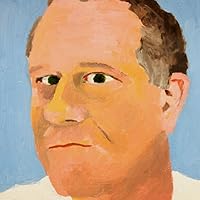
October 16, 2020
Cheever writes a swift pace. One clichГ© of biographies is to write a strict chronological tale. It makes the most sense yet the structure sets up a predictable arc. Cheever works within this with deep insight. She concentrates on Cummings relationship with people. Cummings relationships were intense and dramatic so his life makes for a great opera featuring poetry rather than music. [return][return]There is brief examination of his prose and slight criticism of his poems. I like this, because I realize he was prolific and a serious poetic criticism would added hundreds of pages to this book.[return][return]The book delivered what I wanted, a short, factual and emotional tale of e e cummings personality.

December 20, 2023
I liked the book. It was well written and the only reason I know about Cummings is because we thought his name was funny in high school and we would make a weird voice and say his name. I never read any of his poems until now because I was forced to in high school. If I did read any of his poems I don't remember. I didn't know anything about him either but now I do since I did read the book. I recommend it as a beginner book about him but if there's a more detailed book definitely read that one.

April 19, 2020
Another audiobook version.
This book was a good introduction to the poet and I learned a lot about him and his life which I find fascinating, especially his relationship with his biological daughter, which you wouldn’t get just from reading the Wikipedia.
However I am aware that there may be some minor inaccuracies in this text thus this book would not be an authority to refer back to. Otherwise it is a good lighter biography to the man behind the poems.
This book was a good introduction to the poet and I learned a lot about him and his life which I find fascinating, especially his relationship with his biological daughter, which you wouldn’t get just from reading the Wikipedia.
However I am aware that there may be some minor inaccuracies in this text thus this book would not be an authority to refer back to. Otherwise it is a good lighter biography to the man behind the poems.
Displaying 1 - 30 of 113 reviews