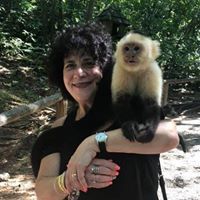
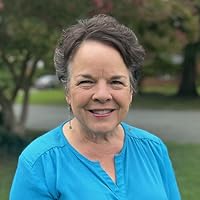
Betty Martin (pseudonym of Edwina Parra) is an American writer (1909-2002). She was born into a family prominent in New Orleans society. In December 1927, when she was nineteen, she was diagnosed with Hansen's Disease; in order to protect her family from the stigma associated with this illness, when she entered the leprosarium of Carville in January 1928 she chose to take the name Betty Parker. She changed her pseudonym in Betty Martin when she married another Carville patient who had taken the name of Harry Martin. She wrote the story of her life in her two books. She and her husband returned permanently to Carville in 1989, as free care continued to be provided for former patients.
I enjoyed getting to read the story of what happened after Betty and Harry Martin drove away from Carville with so much hope at the end of "Miracle at Carville". It was heart wrenching reading about their many struggles to make up for lost time in a world that they still saw as hostile towards Hansen's disease, how they still lived in fear of people finding out. I wish I could do something. And I wish I could do something now! I was sad to see that Hansen's is still considered interchangeable with "leprosy", given how much damage and stigma that created! I was also sad that their story (as far as I know) still ended with fear. They were living quietly and happily, and they recognized that great steps had been taken to remove the stigma... But they felt that they had lived too long with it to expose themselves (by revealing their true names, etc). I guess it felt like they had been defeated by their fear. But like a friend said, "that's real life". But at the same time! I also think that there is a place for victory over fear, even in this life. And that is through Christ, His death and resurrection bringing real victory to real people and situations... Anyway. It's worth a read (after you read the first book, of course)
I read this book on the heels of having read "In the Sanctuary of Outcasts", which gave an overview of Carville in recent times. I may read Betty's first book, but I was most interested in how those who had spent considerable time at Carville adjusted to life on the outside. This book details life after Carville for Betty and her husband Harry. As other reviewers have noted, their life was a series of arduous sagas partly due to their naiveté from living an institutionalized life at Carville since young adulthood, partly because they were unfamiliar with the world outside, and because of their previous and ongoing health challenges. I appreciated hearing their story, which was so interesting to consider, however the writing was amateurish and repetitive. The aspects in their stories that stood out for me were that they were essentially imprisoned at Carville, and yet they believed (rightly) they needed to create a new and ironically more isolating prison as soon as they left due to the stigma of the disease and their, mostly accurate, perception of the fear and misunderstandings as well as potential brutal outcomes of their outing themselves as people who have Hansen's Disease. For example, they could be shunned, driven out of their homes, lost their financial stake in their property, lost their jobs, or even hurt by those that felt threatened by their disease. I also was interested in learning about the early remedies, then the more effective remedies that allowed patients to leave Carville, then how the toxicity or effectiveness could change over time leading to revisiting Carville for further treatment. The parallels of being "othered" during the Covid times, for those that did not follow the rules, did not escape me. The misunderstandings of both times also linger for years, if not decades, and yet over time can and do change, such as Betty witnessed in Louisiana where people became familiar with the changing situation of Hansen's Disease, where transmission was better understood (it is not easily transmissible ) and effective cures exist.
When I was a teenager, Reader's Digest Selection magazines circulated in my house and also those big books that contained the condensed version of the best-selling books of the moment. I've read tons of books in this condensed form and then spent years looking for the unabridged versions. One book I had loved so much was the condensed version of Miracle at Carville. In recent days I discovered that this book is in the Internet Archive and I therefore had the opportunity to read the complete version. Not only that, but I managed to find this one, No One Must Ever Know, which chronicles the author's life in the years following the publication of the first book, and I devoured it. In those years, not only there was no real cure for Hansen's disease, but the sick were forced to hide. The author changed her name once she entered the leper colony and resumed her real name only when she left it. So she published the books under a pseudonym, and she had to hide from everyone, apart from a few relatives and friends who knew of her illness, that she had written two quite successful books. She even tells of having participated in conversations where her book was discussed, without being able to reveal that she was the author. The book is very touching and tells of a difficult life, made up of continuously destroyed plans and hopes, in which, however, the author has learned to enjoy the little things of life.
For those who read Betty Martin's first biography "Miracle at Carville" and wonder how the rest of her life turns out, "No One Must Ever Know" is well worth the time to read. The author shares her & husband Henry's experiences of what it is like to live in Post WWII America with the same radiance as in her first book. This sequel can be read without reading her earlier story, however "Miracle at Carville" certainly will help the reader understand the immense trauma and fear the two experience as they overcome numerous obstacles as they strive to make a new life for themselves.
I loved "Miracle at Carville" and was delighted to learn that there was a sequel, because I wanted to know what happened to Betty and Harry. Not quite as compelling a read as the first book, it still was very interesting and I am glad that I was able to learn more; this is a poignant tale.
Sequel to 'Miracle at Carville.' Fascinating. My favorite sentence (about Stanley, who made it his crusade to spread knowledge about Hansen's disease around the the world.) "Illness made Carville his niche, and he gave it space and greatness that helped make it as wide as the world."
This entire review has been hidden because of spoilers.