Jump to ratings and reviews
Rate this book

Why We Die: The New Science of Aging and the Quest for Immortality

Rate this book
A groundbreaking exploration of the science of why and how we age and die—from Nobel Prize-winning molecular biologist Venki Ramakrishnan.

The knowledge of death is so terrifying that we live most of our lives in denial of it. Throughout human history—from the immortal afterlife of Judeo-Christian thought to the cycle of reincarnation posited by many Eastern religions—we have developed beliefs that allow us to avoid recognizing its finality. One of the most difficult moments of childhood must be when each of us first realizes that not only we but all our loved ones will die—and there is nothing we can do about it.

Or at least, there hasn’t been. Today, we are living through a revolution in biology. Giant strides are being made in understanding why we age—and why some species live longer than others. Could we eventually cheat disease and death and live for a very long time, possibly many times our current lifespan?

Venki Ramakrishnan, recipient of the Nobel Prize in Chemistry and former president of the Royal Society, takes us on a riveting journey to the frontiers of biology, asking whether we must be mortal. Covering the recent breakthroughs in scientific research, he examines the cutting edge of efforts to extend lifespan by altering our natural biology. But might death serve a necessary biological purpose? What are the social and ethical costs of attempting to live forever?

Why We Die is a narrative of uncommon insight and beauty from one of our leading public intellectuals.

320 pages, Hardcover

First published March 19, 2024

1203 people are currently reading
10671 people want to read

About the author

Venki Ramakrishnan

5 books77 followers

Ratings & Reviews

What do you think?
Rate this book

Friends & Following

Create a free account to discover what your friends think of this book!

Community Reviews

5 stars
732 (32%)
4 stars
958 (42%)
3 stars
464 (20%)
2 stars
74 (3%)
1 star
14 (<1%)
Displaying 1 - 30 of 313 reviews
Profile Image for Francis Tapon.
Author 6 books47 followers
January 24, 2024
Barbara Ehrenreich said that we should "think of life as an interruption of an eternity of personal nonexistence, and seize it as a brief opportunity to observe and interact with the living, ever-surprising world around us."

Venki Ramakrishnan's book about death is fascinating and illuminating.

I love the final chapter about living forever and the pros and cons about that.
It should make those who believe in eternal life think twice.
Profile Image for Kara.
110 reviews4 followers
October 16, 2023
BOOK REVIEW: Why We Die: The New Science of Aging and the Quest for Immortality by Venki Ramakrishnan 🔬🧬

Fun Fact: I love aging science so much, my master’s thesis was on foodborne illness incidence and recurrence among older adults. Safe to say I was stoked to find this book on netgalley and was extra excited to read once I got approved. That said, I carry a bias toward the content of this book and I have a greater interest and knowledge than the typical reader. Disclaimer aside, let’s get into it!

Venki Ramakrishnan gives insight on a phenomenon that plagues us all: death. From the biological mechanisms of death, why it happens, why our bodies are less prepared for aging compared to our early adolescent and reproductive years, to what’s being done, Ramakrishnan covers it all in digestible segments. Now more than ever, our national and global populations are growing older. That, coupled with life expectancy reaching heights doubling that of our ancestors, aging science reaches the spotlight with more funding and grants aimed at understanding why we age and what can be done to ameliorate complications associated with getting older.

I love the topic this book covers. I also love niche, bite sized nonfiction books. Why We Die spends a lot of time describing crucial biological and genetic concepts to make sense of our aging bodies and the current research being conducted. A reader with less scientific background may find those parts difficult to read and may feel bogged down by the information being presented. That information is necessary for understanding and I encourage anyone at any knowledge level to sit down with this book. We are always aging. We might as well begin to learn more about our bodies. Let’s keep learning together!

Thank you netgalley and William morrow books for the ability to read this advanced reader copy in exchange for an honest review. Why We Die is expected to release on 19 March 2024.

My rating: ⭐️⭐️⭐️⭐️
Profile Image for Bharath.
942 reviews630 followers
June 24, 2025
This book does an excellent job of providing a summary of longevity research with a realistic portrayal of where we are and what we can expect to see shortly.

The author mentions that we humans are always conscious of death but avoid referring to it. We believe in a few possibilities related to death across cultures - rising from the dead / being reborn / soul lives on / we leave a legacy others remember us by. The anecdotal evidence suggests that ability to propagate genes & aging are inversely related. There are some lifeforms who do not age fast – hydra & jellyfish, for instance. On average, most mammals have 1.5 billion heartbeats in a lifetime. We have twice as much, and our life expectancy has doubled in the last 100 years. That said, the maximum lifespan has not moved and is still limited to ~120 years. Various options to increase lifespan have been researched: calorie reduction, resveratrol, NMN, rapamycin, metformin, young blood transfusion etc. While each seem to have some impact, nothing dramatic has been proven to extend lifespan significantly for humans.

I read about longevity research in the books Lifespan by David Sinclair (referred a few times in the book) and Cheating Death by Rand McClain. While those books struck a very optimistic tone indicating that major discoveries were around the corner, this book takes a more cautious and realistic approach – outlining the promise as well as the challenges. The research quoted is wide-ranging & elaborate.

This is a very informative and well-written book. Much recommended!

My rating: 4.5 / 5.
Profile Image for Allison.
132 reviews
September 25, 2023
Why We Die by Dr. Ramakrishnan is an incredibly well researched and well written book on the biology of aging. I am impressed with how much information Dr. Ramakrishnan was able to include in such an understandable way in 300 pages.

The book begins with very basic cell biology and then discusses several examples of the relationship between the size of an organism and its lifespan. This is followed by a plethora of information on the key genes and cellular processes believed to be involved in aging. Dr. Ramakrishnan sites several historical scientific studies utilizing model organisms and incorporates the latest research and theories on human aging.

Importantly, Dr. Ramakrishnan covers the ethics of aging research. There are many start up biotech companies with various technologies under development and Dr. Ramakrishnan commits to taking a "hard, objective look at our current understanding of aging and death." The final chapter of the book covers the ethics of extending the human life span with particular emphasis on the challenges of extending human life span to society.

I highly recommend this book which is fascinating and very readable.

Thank you to NetGalley and William Morrow for an advanced reader copy of this book in exchange for an honest review.
Profile Image for Jessica Mae Stover.
Author 5 books194 followers
June 18, 2025
I need a fact check from a fellow reader (and you’re about to find out how nerd-deep I go at reading and researching the books I read): can someone who owns this book fact check me on the following since I had to return it to the library?:
On page 140 of the hardback there is a study about TB & zebrafish summarized as, “in a recent study, scientists show that…” and there is indeed a citation to the paper in the back of the book, which as I searched it should be, https://pubmed.ncbi.nlm.nih.gov/36103894 . HOWEVER, does the author leave out in both places that his sister, Lalita Ramakrishnan (also a scientist and microbiologist at Cambridge), is one of the study’s scientists/paper authors? Am I correct?

If so, it’s certainly possible the editor struck those details without asking for a deeper rewrite to better organize and include that information. If so, that was a wrongful omission. That wouldn’t fly anywhere with fact checking, so just a reminder that there are no standards for nonfiction books and authors are usually not supported with fact checking at the major publishers.

Review: Cell biology and associated discoveries and logic taught through the lens of a compelling question. I admit that I wish my early bio classes were approached this way: with a purpose. I learned so much from Venki Ramakrishnan via this book (thank you to the author).

Audiobook production: The audiobook adaptation was not five stars. The narrator has a great voice however the production did not allow for enough takes and there are lines that have mushy readings and lines without the right words emphasized for clarity that needed another take/re-record. Usually that indicates a problem with the budget i.e. the conglom allowing enough time for labor to do their work professionally. This issue in a audiobook—and it happens many times herein—is akin to having many, many typos per chapter in a print book. The fault lay with the publisher (Harper Collins: a megaconglomerate!) first due to not funding the project acceptably, and then, if budget wasn’t the issue, the fault lay with the producer and director. I had to cross-reference the physical book for clarity. This is an important work of scicomm given the context and author, and Harper Collins has done the reader and society a disservice in making it more difficult to access the text via audiobook.

Finally, and it has to be said lest the practice remains too mechanical and unexamined: one can conclude that suffering was experienced by some of the mice and the like used in context of any torturous experiments along the paths of human discovery summarized herein.

Audiobook

2025
Profile Image for Amber.
126 reviews21 followers
September 12, 2024
2.5 stars.. I really enjoyed the first half of this book. The second half got really deep, like, molecular level deep in microbiology that maybe Amber taking biology in college would have appreciated and understood WAY more than my present-day self.

Not a bad book though. I think the title should read *How* We Die instead of *Why* We Die. “Why” implicates a lot of philosophical thought and I found this book to be more scientific than philosophical but should humans live forever? Legacy and children aside? Absolutely not! 🤣
Profile Image for Ingrid.
1,552 reviews127 followers
not-finished
April 15, 2025
It was interesting, but many parts were too technical for me to understand unfortunately.
Profile Image for Alanna.
182 reviews
September 22, 2024
1 ⭐️🎧 This book was highly rated, but I really disliked it!! Too technical and yet too fluffy at the same time. There were parts that were moderately interesting, but I didn’t gain any new insights or practical knowledge that will influence my life or guide further reading. Do not waste your time with this one!
Profile Image for D.J. MacLennan.
Author 4 books39 followers
April 22, 2024
An excellent, clearly-written book explaining some of the fundamental molecular-biological factors that cause aging, and the most promising approaches to tackling them... completely ruined by the last two chapters. There, the author takes on the sneering aspect of the old establishment scientist, writing off as 'crackpots' any newcomers with the vision to realise that all advances in science seem impossible until they're done. His knowledge of advances in cryopreservation seems particularly lacking: there's just no way, he asserts, we will *ever* be able to preserve to a high enough degree of fidelity something as complex as the human brain.

In the final chapter he expounds on the undesirability of living a greatly-extended lifespan. We'd just get bored and be unproductive. He frames the whole situation in terms of where we are now, and simply cannot imagine a time when healthy, long-lived people freed from the burdens of work contribute afresh to vibrant new kinds of societies.

I really hoped he wouldn't conclude the book in this judgemental way, but I could see it coming. He's a great scientist but a terrible foresighter. For the sake of progress, perhaps stay in your lane, Venki.
Profile Image for Stefanie.
777 reviews37 followers
December 14, 2025
3.5 stars. I am very fascinated by this topic, but the science in this one almost overwhelmed me at points. Luckily, Ramakrishnan's politely opinionated narrative dropped back in to save me every time I almost tapped out. And certainly I have a better understanding of why we age and die (insofar as it's possible since they are still figuring it out.)

This book is understanding aging and dying from a cellular level first of all, which makes sense for an author who's a Nobel Prize Winner in Chemistry and leads a molecular biology lab. I really had to stretch my brain back to high school chemistry and biology (the last time I, a liberal arts person, had those subjects) to follow along, but I mostly managed. These were the difficult bits.

But everything else was super fun. Ramakrishnan does a great job of putting our fascination (obsession?) with immortality and slowing aging in historical context, and he's not shy about describing the personalities of the scientists behind recent discoveries (or throwing some lowkey shade on the ones he doesn't like lol).

The latter part of the book goes into the more out-there experiments, which Ramakrishnan doesn't have a very high opinion of (e.g. cryogenics) but that are probably the sort of thing that most people want to read about. (Most people = me.) I also like that he challenged the age=wisdom truism, pointing out that lots of older folks are reactive and vote against broad interests.

The last chapter was probably my favorite one, where Ramakrishnan sets science aside and delves into the philosophical and structural challenges our society would have if the general human lifespan expanded to 120 years. I hadn't seen those issues laid out quite so fully and neatly before, and it definitely gave me food for thought. What's retirement at 65 if you have half again that long to still live??

Still, there's two things I'm going to take away from this book and they're: 1) giving young blood to older mice ACTUALLY WORKS in slowing their aging (!) and 2) the old adages are mostly true: don't eat so much, eat mostly plants, get good exercise and sleep.

After all that research, that's still the best we know about how you "solve aging"! (Spoiler?)
Profile Image for Shain Verow.
254 reviews12 followers
January 16, 2025
Aging is intimately connected to the inevitable fact that we are all mortal and if we are fortunate enough to avoid all of the other causes of death, eventually we will simply cease to function.

This is an authoritative book, that isn’t trying to sell you something, and as a result it’s a bit dense, and I say this as someone with a pretty solid background in cellular biology. That said, this book appears to be a genuine effort by an expert in the field to communicate the current state of aging science around the noise of so much slick advertising and dubious literary infomercials.

If you have an interest in learning about what we actually know, as of early 2024 at least, about aging in humans and how we know what we know, then I recommend this book. Just be patient, he’s thorough with his explanations and background.
Profile Image for David W. W..
Author 13 books50 followers
April 6, 2024
There's lots to admire in the new book "Why We Die: The New Science of Aging and the Quest for Immortality" by distinguished scientist Venki Ramakrishnan (Nobel prize winner and former President of the Royal Society). But it falls short in some key aspects too.

First, the good points. It is clearly written, and easy to follow. It provides an excellent survey of ideas about the science of aging, including lots of recent research. It filled in parts of my understanding which were rusty or incomplete.

The science is interspersed with potted biographies of some of the people within the longevity research community. They're entertaining but not always directly relevant. They're also questionable in places (like getting the biblical age of Methuselah wrong by over 100 years).

Unfortunately, he fails to properly engage with the damage repair approach of Aubrey de Grey, and uncritically repeats some rather old objections to it. That approach points out that much of the huge complexity of biological metabolism can be side-lined. You don't need to alter these complex biological metabolisms to prevent them from creating that damage. Instead, it's much simpler (though still hard, of course) to design interventions that periodically remove or repair that damage. It's a pity this approach wasn't addressed fairly, and that the book chose to laugh at the idea.

Moreover, whereas Ramakrishnan is sure-footed with his explanations of biology and chemistry, he is out of his depth in his comments about transhumanism. The description he provides of transhumanism is far too narrow.

The reason that's important is because the transhumanist literature contains extensive discussion of topics that he says no-one has thought hard about, namely the broader societal implications of people around the world living longer healthier lives.

For example, a significant part of my own 2016 book "The Abolition of Aging" addresses these questions, and I'm far from being the only person to have written about these topics at such length.

Another person with important insights (and data!) about the implications of longer lives is Andrew Scott, whose book "The Longevity Imperative" appeared just a few days before the one by Ramakrishnan. It contains extensive economic analysis.

I'll end with another positive comment. Ramakrishnan points to various problematic aspects of the broader community that is sometimes uncritically over-enthusiastic about biorejuvenation treatments. Alas, that "longevity shadow" (my term) is pushing potential allies away.
Profile Image for Ali.
1,797 reviews162 followers
April 10, 2025

This is clearly written, highly accessible survey of the science around ageing. This ranges from the mechanics of cells function through to topics such as dementia and the collapse of homostasis. He also looks at length at research around how to "combat" ageing from caloric restriction to cryogenics. The book is technical without being difficult, but also sticks to a pretty high level in most cases. It comes alive through Ramakrishnan's clear passion for his discipline and desire to communicate more clearly about what ageing actually entails. He is far from edgy in his interpretations - there is some basic selfish gene stuff I thought was overly simplified - but his analysis avoids easy answers on the social impacts, if not always the science.
He is carefully neutra, but you do get a feel that he is not a huge fan of delayed ageing, at least without having solved the myriad of social problems supporting an infirm population brings with it, and the problems of infirmity itself. Or maybe that was just me reading my own doubts on this.
Profile Image for Gorab.
842 reviews153 followers
April 7, 2025
Why it was picked?
Loved gene machine. Trigger to pick this was because of his session in litfest. Had plans to finish the book before the session, but alas!

Whats it about?
Non fiction.
Exploration on why we die. Latest research material on longevity... which species live longer and why?
For humans, logically and structurally breaking down the process of ageing. At a molecular and DNA level.
The art of debugging our ageing process is so beautifully dissected!

Various debates on technically how much the humans can extend life expectancy, and it's repurcussions. Could we live longer? Should we?

None of the topics is superficial. Supported by deep research and references.

Much recommended if you like this topic. It was a bit heavy for me though.
Profile Image for Sokobedy.
39 reviews1 follower
November 29, 2025
"Although we think of birth and death as instantaneous events - in one instant we come into existence and in another we cease to exist - the boundaries of life are blurry."

"Dobzhansky once wrote "Nothing in biology makes sense, except in the light of evolution." In biology, the ultimate answer to a question about why something occurs is because it evolved that way."

"When we say life expectancy, we mean life expectancy at birth, or the average number of years a newborn would live if current mortality rates remain unchanged. This value, as you can imagine, is greatly affected by infant mortality rates. Even in the 19th century, when life expectancy was forty years, a person who reached adulthood had a good chance of living to be sixty or more. Most of the increase in life expectancy has come about because of improvements in public health rather than ground-breaking advances in medicine."

"[The Covid-19] vaccines are made from mRNA molecules that contain instructions on how to make the spike proteins that are on the surface of the virus that causes Covid-19. When those mRNA molecules are injected into us, our cells read the instructions in it and produce the corresponding spike proteins, which in turn trains our immune system to be ready to fight the real Covid-19 virus."

"Considering that sleep can be perilous - animals are vulnerable to attack when they are asleep - it must have huge biological benefits for it to persist through evolution."

"Following the dictum of Max Planck that scientists rarely change their minds in light of contradictory evidence..."

"You could use the energy of the sun to warm things; you could burn wood and other fuel to generate heat; you could use the flow of a river of the power of wind to turn a mill wheel; or use wind to sail across oceans. However, these different sources of energy are not interconvertible, and they can be used only in very limited ways. You could not, for example, use wind to cook your food.
Now think of today's world: virtually every source of energy, from solar and wind, to fossil fuels and nuclear fission, can be converted to electricity. Electricity in turn can be used for almost everything. It provides heat and light, moves us around in cars and trains, entertains us through our television sets and other gadgets, and enables instant communication around the world. Electricity has become the universal currency of energy, in much the same way that monetary currency replaced barter trade hundreds of years ago.
That is exactly what mitochondria do in a cell. They take less versatile forms of energy - for example, the carbohydrates that we consume - and convert them into the universal energy currency of the cell, which is the molecule ATP."

"In fact, there is a modern equivalent [to mummification]. Biologists have long wanted to be able to freeze specimens so that they can store and use them later. This is not so straightforward because all living things are composed mostly of water. When this water freezes into ice and expands, it has the nasty habit of bursting open cells and tissues. This is partly why if you freeze fresh strawberries and thaw them, you wind up with goopy, unappetizing mush."

"De Grey's central idea is that if we can improve average life expectancy faster than we age- if, in other words, life expectancy increases by more than a year annually - we can hope to escape death altogether. He calls this 'escape velocity'"

"When they were young, they wanted to be rich, and now that they're rich, they want to be young."

"The WHO omitted aging from the international classification of disease. While many in the gerontology community were disappointed by this decision, others welcomed it because they were worried that classifying aging itself as a disease could lead to inadequate care form physicians: rather than pinpoint the cause of a condition, they would simply dismiss it as an unavoidable consequence of old age."

"The social consequences of extending life span are immense. Nearly all state-backed retirement programs assume that people will stop working around age sixty-five. These measures were introduced when people generally lived only a few years past retirement age, but now they can live two decades beyond it. In both social and economic terms, this is a ticking time bomb, and it is no surprise that governments the world over are enthusiastically funding aging research to improve health in old age in the hopes that this segment of the population can be both more productive and independent for a longer time, and in less need of costly care."

"She quotes the writer Barbara Ehrenreich, "Think of life as an interruption of an eternity of personal nonexistence, and seize it as a brief opportunity to observe and interact with the living, ever-surprising world around us."

"[I asked him why he did not fear death], Devy said we have to regard our individual selves as parts of larger entities like family, community, and society, just as all the cells in our body are part of tissues and organs and us. Millions of our cells die every day. Not only do we not mourn their passing, but we are not even aware of it. So even if we as individuals die, our society and indeed, life on Earth, will go on."

"Roy Amara said that we tend to overestimate the effect of a technology in the short run and underestimate its effect in the long run."

"While we wait for the vast gerontology enterprise to solve the problem of death, we can enjoy life in all its beauty. When our time comes, we can go into the sunset with good grace, knowing that we were fortunate to have taken part in that eternal banquet"
Profile Image for jrendocrine at least reading is good.
705 reviews54 followers
March 18, 2025
Ramakrishnan has distilled a lot of the research on aging, and I think it is done in a way that's approachable by a non-biologist. It's very clear, easy to read, and organized well. For a biologist, it's fun to see how such a smart guy breaks it all down - and I learned a few great tidbits - e.g., Rapamycin is named from the bacterium, Streptomyces hygroscopicus, that was pulled from soil on Rapa Nui.

On the whole an impressive distillation of the process of aging, efforts to stop it, a measured take on push me /pull me of cancer vs aging, the crazies (including Musk and Thiel) who want to live forever (or at least be uploaded into the cloud), and even a philosophical take on enjoying the life you have for the time you have it.

I particularly felt the last chapter where he talks about old professors occupying tenured chairs and never retiring, even though young people can do those jobs -- probably better in many ways.

Very enjoyable.
Profile Image for Sherif Gerges.
232 reviews36 followers
October 3, 2025
I’m exhausted by popular science books that re-teach Biology 101. This one spends pages re-explaining the cell and the central dogma; as if many readers haven’t seen them a thousand times, while the real substance is buried or absent. I came for concrete insight and left skimming pages. Too elementary.
Profile Image for Giada Brugnera.
82 reviews6 followers
June 26, 2025
In questo saggio del 2024, “Perché moriamo?”, il premio Nobel per la chimica Venki Ramakrishnan esplora il complicato intreccio dei processi biologici e molecolari che causano (o conseguono all'?) invecchiamento. A dispetto del titolo dal tono quasi esistenzialista, questo è un saggio dall'impronta eminentemente scientifica: i primi capitoli illustrano i possibili rapporti tra invecchiamento, genetica, DNA, evoluzione e metabolismo. I capitoli centrali sono dedicati alla codifica delle proteine, al danneggiamento del DNA, all'invecchiamento mitocondriale. Le questioni poste in luce dagli studi dell'ultimo secolo sulla longevità e sulla mortalità sono estremamente interessanti: l'invecchiamento è una malattia o uno stato normale della vita biologica? L'aspettativa di vita è destinata a crescere indefinitamente o c'è un limite massimo a cui la specie umana può aspirare di arrivare? E ancora, l'invecchiamento è causato da un singolo gene, che agisce a cascata sui nostri processi biologici, oppure da un insieme di fattori genetici e ambientali? Quanti di questi possiamo sperare di controllare e modificare?
Paradossalmente, negli ultimi due secoli la nostra speranza di vita si è duplicata, eppure la nostra paura della morte e dell'invecchiamento è più viva che mai: non sorprende quindi che le ricerche sulla longevità (o l'immortalità) abbiano guadagnato via via maggior rilevanza nel panorama della biologia. E non solo, anche numerosi finanziamenti da aziende esterne: oggi esistono più di settecento imprese biotecnologiche focalizzate su quest'ambito di ricerca, per un valore di mercato da più di trenta miliardi di dollari (che va dagli integratori alla crioconservazione), e sono capitanate spesso e volentieri dai miliardari “visionari” della Silicon Valley.
L'ultimo capitolo porta in primo piano le questioni che è urgente porci, prima che qualsiasi scoperta scientifica generi un cambiamento inarrestabile: vivere più a lungo sarebbe davvero auspicabile? A quale età potremmo dirci davvero soddisfatti? E che conseguenze avrebbe sulle nostre società ed economie, già profondamente segnate da disuguaglianze? Che impatto avrebbe sulla nostra sostenibilità ambientale?
19 reviews1 follower
December 12, 2024
Very interesting of the molecular biology of aging and death. It starts out super interesting by asking some great questions about evolution and death but then devolves into a textbook before reincarnating into the authors’ (critical) views on those (especially in Silicon Valley) selling all things anti aging. Venki is obviously a gifted scientist but I wish he was able to fight his urge to get into the weeds on every third page - this tendency made this fairly brief book a lot denser than it needed to be.
Profile Image for Andrew.
58 reviews
September 3, 2024
Waited a long time to read this so was quite excited when it arrived. However, I found myself switching off during long sections about proteins making it hard for me to recall what the main point was. Enjoyed the last few chapters but it was not really for me.
Profile Image for Daniel Hicklin.
190 reviews5 followers
May 10, 2024
Probably a bit TOO Science-y for the Layman amongst us (me! Me!) but interesting nonetheless. Nice, easy-reader for me next, I think. 😂😂
Profile Image for Twirlsquirrel.
77 reviews13 followers
November 30, 2024
Covers some basics about aging. If you have any formal education or research experience in aging from a biochemical, molecular biological, or related perspective, there's nothing new here. If you are fresh to the topic, there are several problems that can make for a bad foundation.

The basic science is okay (if incomplete and unimaginatively described) and might merit two stars if it were simply a solid pop-science introduction to aging for the general public. The problem is that even on that level there's nothing to recommend this book. It perpetuates incomplete and warped frameworks for looking at aging and other scientific or philosophical issues, and the author goes out of his way to hide the standard biases held by people in his particular academic circles. All of this is rehashed from countless standard works on aging from the past many decades. I'll try to address a few of these issues specifically.

To begin with, the history is wrong. It propagates the same lazy, unethical forms of all histories of science told through the usual Western lens with its associated patriarchal impulses, colonial fetishization, and other conceptual failings.

A basic example of these patriarchal impulses is when the author states early in the book, in the intro to his chapter on genes, that Watson and Crick "deduced" the structure of DNA. This is completely false and has been known as such for decades. Let's discuss what actually happened and why it matters to this review.

Watson and Crick had imagined multiple possible structures of DNA, each incompatible with the other. They only settled on the version that won them the Nobel after stealing Rosalind Franklin's data and using it without her consent and without citing her essential contribution to their conclusion. In modern academic terms, if Watson and Crick were undergrads behaving in exactly this same way and got caught, they would get kicked out of their lab. If they were grads taking a course on scientific ethics, they'd fail this question on the test. If they were research staff or faculty publishing this data in a rigorous journal, they'd be forced to edit their paper at a minimum, probably retract it, and possibly get their university in legal trouble.

So why does any of that matter to this book? Several reasons. Let's start with the fact that the author, Ramakrishnan, does not even mention Franklin's name, let alone her essential contribution, when he makes his absurd passing statement about Watson and Crick's "deduction".

First, because this was not a deduction at all, but rather a scientific conclusion based on unambiguous scientific data, we can see the author is misusing standard scientific terminology. Yet we're expected to trust all the other scientific terminology, some of it much more nuanced, that he uses while discussing something as complicated and confusing as aging research.

Second, Watson and Crick's theft is unambiguous and, in the present day (when this book was written), ubiquitously known. I genuinely believe it's impossible this news has not reached Ramakrishnan's ears. And yet he has no trouble perpetuating these combined lies of commission (calling what Watson and Crick did a "deduction") and omission (not even mentioning Franklin's essential contribution). But despite this fundamental failure of basic narrative ethics we're expected to trust his ethical judgment in far more complex and complicated ethical discussions around aging and aging research.

Third, Ramakrishnan is a fellow male science Nobel winner in an overwhelming crowd of male science Nobel winners who stepped on and stole from their female colleagues. (Look up Vera Rubin and Lise Meitner to get your toes wet in the sea of female scientists' essential contributions that have been drowned by the Nobel committees.) So all I see here is Ramakrishnan perpetuating the Nobel boys' club. The pattern is old as time and so fucking boring in 2024. Patriarchy is so god damn unimaginative it can't even think up new tricks to make itself seem convincing. Yet we're supposed to believe any predictions Ramakrishnan makes about future histories of aging science, or his interpretations of existing histories, when he can't even get something right that is so profoundly well-known that any random biochemistry undergrad could tell him about it? It's astoundingly embarrassing and, at this point in time, not something any scientist or science writer should be allowed to get away with. Minus two stars for this colossal failure and everything else it illustrates about this book.

For someone who wants to explain a topic requiring as much imagination as aging research, this guy can't even imagine the long-settled historical fact that his male idols stole their claim to fame from a more technically proficient woman. If I let my eyes roll as far back as they want to roll right now, I'd probably die and accidentally summon a poltergeist at the same time.

A while back I also mentioned colonial fetishization. What do I mean by that? Well, several things, but once again let's focus on a single illustrative example. Early on, Ramakrishnan briefly mentions and then immediately dismisses a purported case of a man living to be around 150 years old. I hold no stake in who this man was or how old he lived to be, but the way the author dismissed him was telling. It essentially amounted to (this is a paraphrase): "He couldn't remember his early childhood, therefore he couldn't have been that old because old people seem to remember their early childhoods best." And then he immediately pivots to talking about the oldest "documented" people.

I won't run through all the issues here in the same depth as my patriarchy example, but I'll briefly mention them. First, projecting limited current evidence regarding a deeply complicated and experimentally unsteady topic (the measured neural structures, processes, phenotypes, and phenomenologies of memory in elderly individuals) into a universal prediction ("old people seem to remember their childhoods best, therefore all old people will uniformly remember their childhoods best") is, on its face, really bad science. Second, "documented" just means somebody wrote something down. Written words can be as much a lie as spoken words, and spoken words can contain just as much truth as written words. These issues - reduction of sparsely sampled complex human possibilities into universally applied statistical models, and fetishization of the written word over the spoken - are very much specific products of Western colonial mindsets and the specific forms of science they produced.

Why does any of that matter? First, these oversights pose an obvious problem in terms of demography alone, considering how many long oral histories of aging you omit if you only include "documented" ones that, oh snap, it just so happens exclude the majority of histories around the world. Second, they pose a worse problem in terms of epistemology, because this fetishization of colonial methodologies is exactly the same road that led to (as just one prominent example among many) Western colonial forest managers pissing on Indigenous forest stewardship methods around the globe for centuries, until Western colonial scientists "discovered" that the Indigenous management strategies they'd arrogantly denigrated were actually much better for long-term ecological health and global climate control.

I genuinely don't care how many Nobel prizes the author has, I can't take any of their scientific or philosophical conclusions seriously when they're writing like they still live in 1800s Britain.

This review is getting enormous so I'll try to wrap it up with a few more structural problems this book has.

The same tired analogies about aging that always show up are present in their same usual forms here. Here's a classic that this book repeats (this is another paraphrase): "Organisms age and die like corporations and cities do. All of them require centralized law and order to maintain proper function. When they finally go, they go all at once in a cascade failure and are lost forever." We'll look past the assumption that corporations - a social arrangement unique to capitalism with its own very strong idiosyncrasies - are anything like cities, and just focus instead on the old-school comparison of cities to organisms.

Ramakrishnan seems to possess the same old limited Western colonial misunderstanding of cities as entities that arise in predictable steps of historical development and then die from catastrophic cascades (think Rome and the Goths, for example) when "law and order" is lost. That is obviously why he chooses this analogy, because his viewpoint throughout the book is clearly that humans will always be limited to the same ultimate fates of biological death following the same set of rules.

The problem is that none of this is a fact about cities at all. Take the great metropolises of Cahokia and the North American Mound Cities, which were intentionally abandoned over long periods of time as their inhabitants decided they'd live more fulfilling, peaceful, and egalitarian lives outside of these metropolitan settings. Or Teotihuacan, the city that inspired Tenochtitlan and which spent the first century of its existence under brutal "law and order" before undergoing a revolutionary switch to a communal form of city governance that lasted the remainder of their prosperous centuries. (To learn more about these fascinating kinds of city history that are utterly ignored in the standard Western colonial lens, I recommend the incredible books 'The dawn of everything' by Graeber and Wengrow, and 'Native nations' by DuVal.)

If you insist on making analogies between cities and organisms, the end of cities like Cahokia is less like a human's cascading death failure and more like the embryonic reversion of Turritopsis dohrnii. That version of the analogy would still have problems, but those problems would be much more interesting to explore than the fluff we get here. Meanwhile Teotihuacan's loss of "law and order" led not to chaos and ruin but many additional centuries of markedly improved life for all of its citizens. To carry this analogy back into the realm of this book, this is less like a human's aging regulation pathways failing and leading to death, and more like that human getting an entirely new alternate set of pathways that added on several additional lifespans.

Ramakrishnan ignores all this because he starts this book committed to his one quaint, outdated set of ideas about human death and progress, at the level of the organism and the city alike, and continues that commitment straight through to the book's conclusion. It's so predictable I'd give it one star as a murder mystery too. Ultimately the only thing his analogies illuminate is Ramakrishnan's own deep ignorance about the topics he's pretending to explain to his readers. (It also reinforces my earlier point about Western colonial academics disregarding entire histories that weren't "documented" - like, say, Cahokia's.)

The final thing I'll mention is that this book seems devoid of any admission of something that is extremely well known in aging research circles, which is the fact that aging researchers, almost universally, collectively and consciously downplay the ideas of lifespan extension in favor of healthspan extension. This is largely not because of inherent scientific obstacles in the former relative to the latter - though some of that is certainly present - but rather because it is a universally acknowledged fact that this is the strategy required to continue being taken seriously by federal grant funding committees and therefore retaining funding. The dominant force here is politics, not science. I would have given this a pass except that Ramakrishnan goes out of his way to bash antiaging startups in the corporate world (which to be clear, I have no love for) without ever once acknowledging the dominant bias of the academic researchers he quotes throughout this book - a bias equally rooted in economic considerations as the profit bias of the corporate startups.

Hopefully the next big popular book on aging science will be much, much better than this. This is not worth anyone's time.
Profile Image for Sahina.
11 reviews
March 9, 2025
Some parts of the book felt like a science textbook offering an overview of molecular biology. From the perspective of someone working in science, some parts seemed a bit repetitive. However, considering the general public as the target audience, the author introduces these topics with care, and the analogies and anecdotes used to explain complex subjects were well-executed.
I was particularly looking forward to a more in-depth discussion and the author's take on anti-aging research. However, given that this is a science-based book, it couldn't have been structured any other way without first laying out the foundational facts behind aging.
That said, I was introduced to several concepts I hadn't encountered before, such as cryonics, which I found particularly intriguing. The extent to which people would go to 'deny death,' as in the case of cryonics, seems rather bizarre and unsettling, especially considering there’s no proof or even a roadmap for how or if at all, it would work.
Overall, this wasn't a book that lingered with me long after I finished it, but it did broaden my understanding of some new ideas.
Profile Image for Julija.
17 reviews2 followers
December 5, 2025
Another brilliant piece of work by Venki. I'd say the scientific content covered about 70% of my undergraduate course in life sciences, presented in a way that is easy to understand for people from completely different fields, so to all those that want to understand molecular biology better - I couldn't recommend this more. I love Venki's comedic style of writing and how he presents short biographies of scientists when discussing a specific area of biology that they contributed to. The book ends with thoughts on how we, as a society, should approach the problem of an aging population. The solution should be designed for all and not a few billionaires that just want to keep the party going; we are not meant to live forever but the final years could be made easier, as opposed to extending life with pain or living forever with no purpose.
Profile Image for Thaïs Rolly.
48 reviews
October 1, 2025
It read more like a textbook than a book; very informative but densely filled with technical explanations.
9 reviews1 follower
December 22, 2025
Great overview of longevity research, highlighting the (lack of) evidence in longevity promises.

Enjoyed the reflections on the implications of eternal life.
Profile Image for Robbie Delany.
21 reviews
March 15, 2025
Intelligent and objective. If only American politicians wrote with such candide honesty of the human condition.
Profile Image for Moon Rose (M.R.).
193 reviews42 followers
July 6, 2025
DISCLAIMER: Contains sensitive views. This is not a review. This is just my thoughts gleaned after reading the book. I do not intend to offend any culture, religion and belief. Any mistake you might find here is entirely my fault. Keep an open mind should you decide to read.
"Death is beautiful when seen as a law and not as an accident."--Henry David Thoreau
Death is a common occurrence in our everyday life. Its inevitability, exactness, reliability and reality is every where around us. Yet, despite that irreversible fact, it remains a taboo in a culture where most people try to shrug it off and live life as if they can live forever. Few would delve into its territory as if eternity lies in its secrets. Yes, most would seek the source of the fountain of youth for immortality, the elixir that gives eternal life, but no one seems interested to know why exactly it happens. Why nature, in its ability to nurture species of all kinds to flourish and multiply allows its siblings to eventually face death--the so called end of life, the final destination of all beings, where ceasing to exist becomes the greatest fear of everyone walking. The void that everyone tries to avoid. The shadow everyone would like to cast aside. Now the question is why?
Why we die? Venki Ramakrishnan , this Nobel laureate scientist, peers deeply in into this question based from the existing scientific research of our time.

The answer appears not as straightforward as we think it may be. It is not as simple as the natural phenomena of deterioration that causes it. It maybe as complex as perhaps, the most difficult question to answer, does God exist? Which modern science can neither prove nor deny.

Logically speaking, aging is intertwined with death. The older we get the closer we approach death. The closer we are to death, the more deteriorated the body has become. Since aging is as inevitable as much as death is, the variation amongst people would only now depend on individual lifestyle, inherited genes, outlook in life and most importantly our ability to handle stress.

The book is very much too "sciencey" in its approach, which was what I expected when I first saw the book. As a student, I never really liked Science and especially Math that was why I took a degree in Arts & Letters in college. Only much later on, I somehow developed a latent interest in the field of Science as I grew older. Still not good in Science though, but my interest ws peaked. Perhaps influenced by the enjoyment I experienced reading science fiction books like Andy Weir 's Project Hail Mary (which movie version starring Ryan Gosling I'm so excited to see), Philip K. Dick 's works, and Michael Crichton 's Jurassic Park and Micro as well as watching well made and plausible sci-fi movies like Denis Villeneuve's Arrival , which was actually based from Ted Chiang 's Story of Your Life and of course, the films of one of my favourite directors, Christopher Nolan, Inception and Interstellar . These works of art provokes the mind to think outside of the box, somehow providing our imagination to tinker with the possibilities of the realities each one conveys.

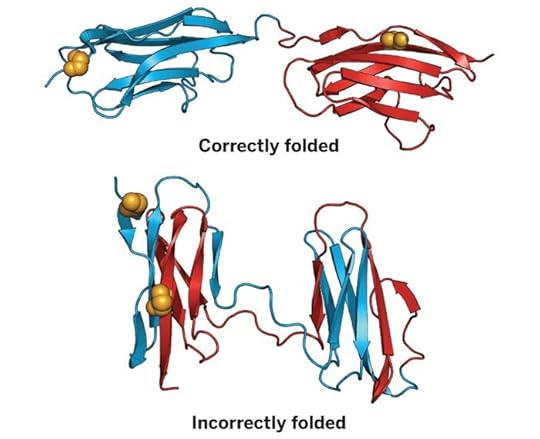
Though my interest in Science rest mostly on Astronomy, I realized Biology is not so different after all. The whole Cosmos from the one cell organism to a more complex species like us, humans to the the largest star in Universe are not so different after all as we all share the same blueprint that is present in the whole Cosmos. From the micro to the macro, we are made up of countless communities or groups that work together to make existence possible and just like in human communities, there are those who go ashtray and become so called rebels, terrorists, transgressors of some sort that create havoc in the community, similar to cells that should work in our body to keep us healthy and alive, some unexplainably veers the other way causing us to age and eventually die like proteins that do not fold the way they should or defective mitochondria in our DNA that create havoc everywhere in our bodies when left unattended, which eventually can cause cancer or other fatal diseases when not treated. Strange indeed to think that we are the controller of our own lives when deep down inside most of what is happening we are completely unaware. They function the way they should as it is meant to be, like there are literallyy lives within our own life.

<I The distance between two dyes (attached at orange balls) reveals whether a multidomain protein has swapped strands and thus is incorrectly folded. {source}

So logically, the question now is why humans continue to hurt one another? Why we continue to hate and increasingly divide further the world between the rich and the poor? Why some of us would like to dominate the rest and allow others to suffer without compassion? WHY? And in similar fashion, why our cells reach the point that they refuse to regenerate altogether? Why mitochondria and proteins misbehave the way they do that aggravate the human condition? Why the cells repair malfunctions? WHY?

I think the question of why we die is very much linked to why we behave the way we do. Why we or most of us are oblivious, isolated in their own high castles leaving behind the rest of the world in deep suffering. Why we are capable of destroying the world, our only known home in the Universe and why we continue to do do? If this behavior goes untreated, why we will eventually destroy ourselves and make ourselves extinct. Just like the cells in our bodies, if they all stop to regenerate, we grow old and die.

WHY WE DIE?: And Why God Exists.
"You can think of death bitterly or with resignation and take every possible measure to postpone it. Or, more realistically, you can think of life as an interruption of an eternity of personal nonexistence, and seize it as a brief opportunity to observe and interact with the living, ever-surprising world around us."
---Barbara Ehrenreich
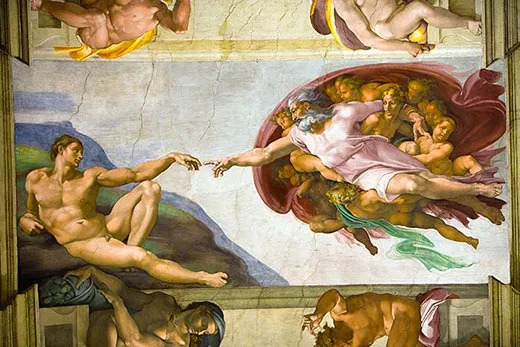
<I Michaelangelo's Sistine Chapel

The question of why we die and the quest for immortality seem to be on the same plane as the search for God. Immortality if it ever exists is like finding God Himself, breaking through in His impenetrable fortress of a hiding hole. If you compare our existence to the life of the stars and the galaxies around us even to our Sun and Planet Earth, it's obvious that our species is like a blip in comparison, inconsequential to their almost immortal life span. Though they die too the same as ours, they seem to be impervious to the fast deterioration that happens in our bodies as we age.

<I Adam and Eve, by Lucas Cranach (1526)

The striking difference between us and these heavenly bodies including the animal and plant species that come and go is the we are completely aware of our existence, aware of our own mortality and our surroundings, it's like we become a stowaway or biblically speaking, we become the arrogant Prodigal Son, Jesus was referring to in His parable. The Universe, or God has either gifted us, or cursed us with this thing we called "consciousness". An attribute that we all consider the main factor that separates us from all other species, making us special indeed, contributing to the rise of civilizations and advancement of technology we all enjoy today, but is it really? Time can only tell.

What separate us and distinguishes us from the rest appears like a mutation of some sort that happened in some point in evolution, a glitch in the perfect system as consciousness appears like a cosmic disease that enabled us to be dispelled from the eternity of nonexistence from the void of nothingness , our natural habitat, our home and ever since, we are plaguing the Planet Earth like a virus. Unlike us, other species on Earth counting even those which existed billions of years ago and now extinct also possessed a similar separate bodies and developed their own individuality and yet, they are never disconnected from nature, or to Mother Earth and thereby going through all their entire lives in tune to the whole Universe in full surrender to their fate like the stars and galaxies around them, which none of them knew. Though they had been subjected like us to evolution, they only acted according to their nature, in other word, instinctive, making them incapable of bringing drastic change in their environment nor become curious to discover what they are and where they came from thereby freeing them from curiosity and the unabated bitter taste of dissatisfaction that soon follows. Unlike us, humans, who barely walked the Earth in comparison to other species before us, which inhabited the world for millions if not billions of years ago, are already changing and destroying the environment around us in a mere thousands of years of existence, mimicking the rogue and detrimental cells in our bodies that misbehave and eventually multiply, harming the tissues until our organs fail.

Perhaps, consciousness, in the same vein as that time when the W.H.O. considered aging as a disease, which is something that can be cured eventually as the technology advances. We can also say that the quest for immortality is also a quest to find a remedy to our separate consciousness, if not through evolution and would remain as it is, it's going to eventually drive us to our own extinction. Similar to the cells in our bodies that malfunction and continue to go ashtray, if left with no treatment, will cause the body to eventually die.

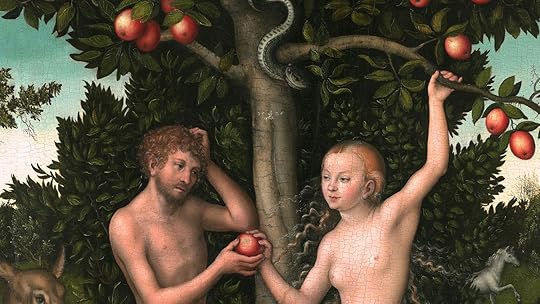
Perhaps, the apple that Eve ate and shared with Adam in the Christian Bible symbolizes this break, this interruption from the eternity of personal nonexistence . As the apple from the Tree of Knowledge of Good and Evil is the separateness we experience. It is the disease of dichotomy, the sickness of duality, the cause of several conflicts, of endless wars, of terrorism, of fundamentalism and of death. Science in its attempt to find the elixir of life, is looking for the cure by studying and thoroughly understanding our own Biology and finally put to stop the process of aging caused by our cells degeneration.
“Science and religion are not at odds. Science is simply too young to understand.”---Dan Brown, Angels & Demons
At this point, Science and Spirituality converges to find a solution. They both try to make sense of the Universe albeit in different perspectives and approaches. Science uses tools and experiments to discover the secrets of the physical aspect of the Universe by finding proofs while Spirituality on the other hand unravels the mysteries by tapping into the realms of the unconscious mind through different mediums like meditation, contemplation, deep prayer and such. Scientists utilize observation to measure while Masters of Spirituality uses symbolism to explain the complexities of the concepts they discerned. Just like Jesus with His parables, Buddha and His Dharma Wheel and Krishna with his vishvarupa.
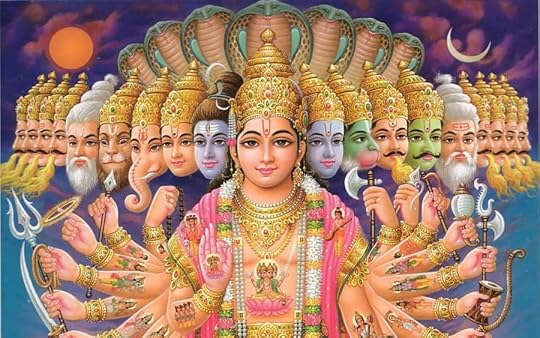
<I Krishna showing Vishvarupa to Arjuna before Kurukshetra War
However, Science is yet to uncover the cure while Spirituality had had the answer all along. Yet, the impossibility goes both ways as scientists struggles to find answers from the complexities of aging despite our advanced technology today. Spirituality, on the other hand in spite of having a solution for thousand of years already failed to translate it for the benefit of en masse. And as an anti-climax to the rigorous scientific search for the antidote for aging, death, the thing we all tried to go around with is the cure itself. The moment we die, we cease to exist and go back to the fold of eternal oblivion. We are finally freed from our individuality and thereby go back home to nonexistence.

ETERNITY OF NONEXISTENCE - VOID OF NOTHINGNESS: The Healing Power of Unified Reality

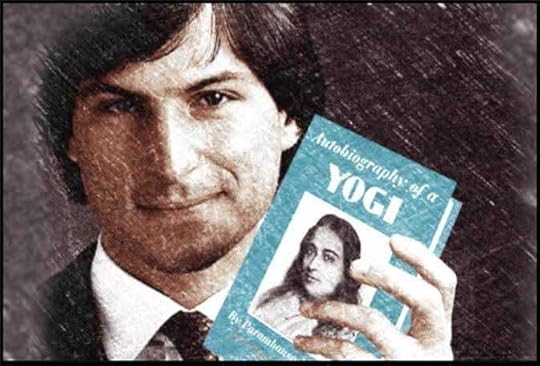
<I The only book Steve Jobs read more than 40 times.

When reading about the life of the Steve Jobs , I came across a book, which he loved so much, Autobiography of a Yogi by Paramahansa Yogananda , which was the only book downloaded in his iPad and actually read more than 40 times. It was even gifted to the attendees of his memorial service. In coincided at that time when my interest in Hindu Philosophy was at its peak, it was just after reading the Hindu Bible, The Bhagavad Gita , which has become ever since, one of my favourite books of all time.

The book is highly spiritual in nature, containing supernatural occurrences--visions, levitation, teleportation, miracles that appear quotidian to Paramahansa Yogananda and in it is the journey each consciousness should strive to achieve, the Self-Realization (God-Realization) or knowing the Unified Reality---a deeper sense of the One True Reality. It is a concept that understandably all of us could not be able to imagine as our ability to do so is restricted by our sense of reality, but what it's like to be one with all? Without the senses and the nervous system, will you lose yourself, your identity as you shed your individuality? You as yourself in this life would just vanish like a drop of water poured into the ocean of consciousness? Is that the eternity of nonexistence? The darkness of nothingness? Is nonexistence existence at all? Perhaps, immortality as a reality is the nonexistence of an individual soul in the totality of eternal darkness.

"He will wipe away every tear from their eyes, and death shall be no more, neither shall there be mourning, nor crying, nor pain anymore, for the former things have passed away"---Revelation 21:4
This entire review has been hidden because of spoilers.
Displaying 1 - 30 of 313 reviews

Can't find what you're looking for?

Get help and learn more about the design.