

What do you think?

The Silence of the Body: Materials for the Study of Medicine
Drawing on ancient and classical texts, the author offers a study of modern medicine, exploring such topics as medicine's prolongation of life without providing wisdom, and human indifference to moral responsibility
- GenresEssaysNonfiction
233 pages, Hardcover
First published January 1, 1979
About the author
Guido Ceronetti
82 books27 followersGuido Ceronetti è un poeta, filosofo, scrittore, giornalista, drammaturgo italiano. Uomo di erudizione e di sensibilità umanistica, ha cominciato nel 1945 a collaborare con vari giornali; la sua presenza sul quotidiano La Stampa ebbe inizio nel 1972 e continua tuttora. Nel 1970 ha dato vita al Teatro dei Sensibili allestendo, insieme alla moglie Erica Tedeschi, spettacoli itineranti con le sue "marionette ideofore". Amico di Emil Cioran, quest'ultimo gli ha dedicato un capitolo di Esercizi di ammirazione pubblicato in Italia nel 1988. Nel 1981, all'uscita del primo libro tradotto in italiano di Emil Cioran (Squartamento), presso Adelphi, Ceronetti scrisse la prefazione definendo lo scrittore rumeno-francese "squartatore misericordioso". Di rilievo la sua attività di traduttore, sia dal latino (Marziale, Catullo, Giovenale, ecc.), sia dall'antico ebraico (Salmi, Qohèlet, Libro di Giobbe, ecc.). È noto per essere un acceso sostenitore del vegetarismo. Nel 2012 è stato insignito del premio "Inquieto dell'anno" con cerimonia avvenuta il 2 giugno 2013 nell'auditorium di santa Caterina a Finale Ligure
Ratings & Reviews
Friends & Following
Create a free account to discover what your friends think of this book!
Community Reviews
Displaying 1 - 13 of 13 reviews

January 12, 2011
Guido Ceronetti is an exemplary vestige of the humanist tradition: there painters slice and study cadavers and the philosopher reads by Caravaggian candlelight, a skull at his elbow; there the comedian is a symptomologist of venereal and urologic affliction, the tragedian a deviser of serial slaughters and eulogistic pomp; and all who are literate transcribe remedies. It is a tradition increasingly macabre, marginal, and repellent, as societies begin to believe in perfectibility, to conceal and euphemize bodily horrors; as they adopt medicine as a polite profession and impose a taboo of mortuary secrecy. As we suffer less visibly and live longer and hope more and more to defeat death, “the curse of dragging about a corpse”—what Ceronetti’s admirer E.M. Cioran identified as the “very theme” of The Silence of the Body—recedes as a mainstay of literature. Ceronetti is definitely of another time (though at home in the eternal present of poetic speech). What could be more humanistic, more antiquated, than his approval of Petronius’s “amazing maxim Medicus enim nihil aliud est quam animi consolatio (For a doctor is nothing more than consolation for the spirit),” which, he says, “reduces medical practice to its essence—psychology—and equates medicine with landscape, poetry, perfumes, and love”? The only modern milieu in which he might fit is that of the great 19th century French pessimists—though they felt belated and exiled, too. Cioran mentions Huysmans. I can see Ceronetti getting on with the Goncourts, those voyeurs of hospitals and asylums; as well as with Flaubert, the country doctor’s son who contrived to spy on his father's dissections, and who was once cartooned in La Parodie as a cold literary pathologist, proudly hoisting Emma Bovary’s heart on scalpel.
In The Silence of the Body Ceronetti sprinkles aphorisms between paragraph-length prose poems and disquisitions of many pages. Among the topics: infanticide, industrial pollution, cunnilingus, chemotherapy, coprophagy, executions, grave robbing, obstetrics, syphilis, totalitarianism, demagoguery, meat as murder, pesticides, witchcraft, menstruation, masturbation, excretion, assassination, Dürer, Altdorfer, Goya, Leopardi, Leonardo, Confucius, homeopathy. “A procession of physiological secrets that fill you with dread,” said Cioran. (I dunno, I liked it.) The style is mordant, skeletally lyrical; and the texture formidably erudite. In addition to the expected Greco-Roman classics and Hebrew scriptures (Ceronetti has translated Job and Isaiah), there’s enough ethnography to remind one of Eliot and Pound—poets who don’t really excite me but whose work, read forcibly once upon a time, I feel trained me for texts like this, texts in which the allusions are often obscure but always presented dramatically, and therefore somewhat legibly. “Genuine poetry can communicate before it is understood,” said Eliot. From the tractate on Egypt (ellipses are his):
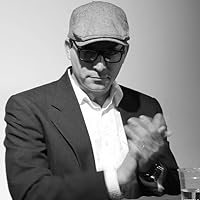
Gimme more! I especially cherish “the barking of Anubis,” the jackal-headed funerary god. Biographical shard: Ceronetti (1927- ) is co-founder of the Teatro dei sensibili, a traveling marionette theater. Here he is with his actors.

In The Silence of the Body Ceronetti sprinkles aphorisms between paragraph-length prose poems and disquisitions of many pages. Among the topics: infanticide, industrial pollution, cunnilingus, chemotherapy, coprophagy, executions, grave robbing, obstetrics, syphilis, totalitarianism, demagoguery, meat as murder, pesticides, witchcraft, menstruation, masturbation, excretion, assassination, Dürer, Altdorfer, Goya, Leopardi, Leonardo, Confucius, homeopathy. “A procession of physiological secrets that fill you with dread,” said Cioran. (I dunno, I liked it.) The style is mordant, skeletally lyrical; and the texture formidably erudite. In addition to the expected Greco-Roman classics and Hebrew scriptures (Ceronetti has translated Job and Isaiah), there’s enough ethnography to remind one of Eliot and Pound—poets who don’t really excite me but whose work, read forcibly once upon a time, I feel trained me for texts like this, texts in which the allusions are often obscure but always presented dramatically, and therefore somewhat legibly. “Genuine poetry can communicate before it is understood,” said Eliot. From the tractate on Egypt (ellipses are his):
Hippocrates learned medicine in Egypt, a shelter housing all the infectious diseases. Imhotep’s bag never had a moment’s rest. Out of it came beautiful surgical instruments and an anesthetic made from vinegar and the dust of Memphis marble, to treat every type of tumor listed in the Ebers papyrus. Perhaps the same diseases existed in Rome and Athens, but Egypt in particular conjures up the image of a sad, sick man and of a wisdom in the shadow of his disease, smelling of iodine and camphor, at the end of a gray ward in an old hospital. (The Romans had instead a cheerful sanatorium whose dry climate attracted everyone who coughed.) Blame it on the museums; they exhibit only ruins from tombs, and welcome you with a long moan, interrupted by the barking of Anubis.
Like intelligent people who suffer from chronic illnesses, the Egyptians were mischievous, humorous, and satiric. The Nile was their perpetual and colossal physician, with the gods in charge of the various wards, followed by throngs of assistants…So much rachitis! So many backs with Pott’s disease! So many spastics! So many dystrophics! So many blind and half-blind! Polio, smallpox, typhus, leprosy, bilharziasis, cholera…They got drunk for relief, and their bellies swelled with liquid…I imagine Egypt as a giant freak show of curved spinal columns, achondroplastics, irregular outlines, and exsanguine profiles, under the protection of dogs, cats, crocodiles, hippopotami, oxen, and monstrous chimeras, the only ones to possess good health in the Nile Valley. And the parasites, permanent guests of the bowels: pend, heft, herxtf, the ruthless corroding worms…the worm of ààà, the unknown disease…Endless torrents of diarrhea…
I am amazed that such big onion eaters were so diced by infectious diseases…Famously flatulent…But at least their kidneys worked…Bread and beer swelled the stomachs—the rohet—of the poor, the bellies of the peasants; game meat and roast gazelle and ostrich inflamed the stomachs of the rich. A people deeply immersed in the mystery of nourishment: they received it from a river god, shared it with the dead and with the heavenly beings, with the breath of the living universe. They mated kitchen and Tomb to invent bread and alchemy. If an invoked deity refused to heal a sick person, the supreme threat of the man of the words was: You won’t get any more to eat.
Gimme more! I especially cherish “the barking of Anubis,” the jackal-headed funerary god. Biographical shard: Ceronetti (1927- ) is co-founder of the Teatro dei sensibili, a traveling marionette theater. Here he is with his actors.

August 10, 2013
Una gozada de libro que sin duda ofrecerá muchas relecturas.
Dentro, además, esconde buena parte de mis obsesiones últimas y de mis temas de siempre.
Aquí he seleccionado algunas citas:
http://www.lunamiguel.com/2013/08/no-...
Muy recomendable.
Dentro, además, esconde buena parte de mis obsesiones últimas y de mis temas de siempre.
Aquí he seleccionado algunas citas:
http://www.lunamiguel.com/2013/08/no-...
Muy recomendable.
October 3, 2024
El ensayo final a modo de epílogo, donde dice que abandona la medicina, que abandona "el cuerpo a su justo silencio" para recogerse en Dios, me hace pensar que a Dios solo debería poder llegarse desde la estación de la sabiduría y la experiencia, y no desde el fanatismo y la ignorancia, que lo empequeñecen y embarran.
Este ha sido un libro juicioso y muy lúcido, hecho de fragmentos y apuntes que conducen a un pensamiento articulado en su erudición y su extraordinario arsenal de archivo. Salpicada de detalles insólitos y deslumbrantes, la prosa de Ceronetti es la que un lector gourmet desea revisitar, no solo por el placer de los reencuentros con piezas que son problematizadoras más que iluminadoras, sino por el contagio, el impulso estético, la inclinación hacia la escritura que concita el diálogo con ellas.
Este ha sido un libro juicioso y muy lúcido, hecho de fragmentos y apuntes que conducen a un pensamiento articulado en su erudición y su extraordinario arsenal de archivo. Salpicada de detalles insólitos y deslumbrantes, la prosa de Ceronetti es la que un lector gourmet desea revisitar, no solo por el placer de los reencuentros con piezas que son problematizadoras más que iluminadoras, sino por el contagio, el impulso estético, la inclinación hacia la escritura que concita el diálogo con ellas.

May 31, 2019
Uno gnolo per medico: se medichi, medita, se mediti, medichi.

May 15, 2013
"la scelta profonda dell'uomo sarà sempre per un inferno appassionato piuttosto che per un paradiso inerte"

October 4, 2017
"Io credo di appartenere alla folla senza numero degli egoisti medi, col tormento di saperlo; a volte riesco a spostare il mostro dagli occhi (o dal cuore, o dalla schiena), a volte ne sono facilmente sopraffatto e guidato. Convivo con la sua porzione in me, patteggio di continuo, firmo trattati, la ragione mi conforta quando sono perdente." (p. 194)

June 27, 2017
Brilliant collection of notes about the human body, life, death and diseases that author shares with us in his profound and humorous fashion. Nevertheless this is a serious work of modern philosophy.

June 6, 2018
Ouvrage incomparable, Le silence du corps est une somme étrange de textes brefs autour du corps humain. L’impressionnante érudition de Ceronetti s’y déploie avec maestria, évoquant croyances, folklore, sciences et philosophie, des temps anciens à aujourd’hui.

September 25, 2017
All anatomical philosophy and no fiction makes Jack a dull boy.

July 1, 2020
"El silencio del cuerpo" es un recopilatorio de reflexiones del autor Guido Ceronetti que realiza el mismo para darnos a conocer sus notas.
Un libro para los que les guste la filosofía.
Un libro para los que les guste la filosofía.

January 4, 2024
Ho fatto una faticaccia a leggerlo, che ne ha rovinato anche il buono e il bello che vi ho trovato.

January 9, 2014
“La medicina tradizionalmente, è una disciplina filosofica, che si può studiare come si vuole, anche frequentando le facoltà mediche; ma nessuno ci tolga la libertà di aprire in solitudine il cranio, il cuore e il ventre dell’uomo, di leggere i fili che lo legano al cielo e alle regioni ctonie, di guarirci o di lasciarci morire, per guarire dalla vita, soli.” – Guido Ceronetti.
http://www.subliminalpop.com/?p=8384
http://www.subliminalpop.com/?p=8384
April 3, 2025
raccolta di aforismi ma senza originalità e sempre secondo l'intellighenzia dominante
Displaying 1 - 13 of 13 reviews