

What do you think?

Sailor Twain: Or: The Mermaid in the Hudson
One hundred years ago. On the foggy Hudson River, a riverboat captain rescues an injured mermaid from the waters of the busiest port in the United States. A wildly popular—and notoriously reclusive—author makes a public debut. A French nobleman seeks a remedy for a curse. As three lives twine together and race to an unexpected collision, the mystery of the Mermaid of the Hudson deepens.
A mysterious and beguiling love story with elements of Poe, Twain, Hemingway, and Greek mythology, drawn in moody black-and-white charcoal, this new paperback edition of the New York Times Best-Selling graphic novel by author/illustrator Mark Siegel is a study in romance, atmosphere, and suspense. Don't miss Sailor Twain.
A mysterious and beguiling love story with elements of Poe, Twain, Hemingway, and Greek mythology, drawn in moody black-and-white charcoal, this new paperback edition of the New York Times Best-Selling graphic novel by author/illustrator Mark Siegel is a study in romance, atmosphere, and suspense. Don't miss Sailor Twain.
400 pages, Paperback
First published September 27, 2011
About the author
Mark Siegel
21 books354 followersMark Siegel was born in Ann Arbor, Michigan, grew up in Paris, France, and now lives in New York. A graduate of Brown University, he is the author and illustrator of several award-winning picture books, including the graphic novel, SAILOR TWAIN, and the 5 WORLDS series. Mark is also founded First Second Books—Macmillan's prestigious graphic novel publisher.
Ratings & Reviews
Friends & Following
Create a free account to discover what your friends think of this book!
Community Reviews
Displaying 1 - 30 of 618 reviews

August 7, 2012

Toothless and tamed. Declawed and domesticated. Over time, the old legends evolve from being terrible and terrifying to existing as pacified gentilities. As the world is industrialized (and more, technologized), our fear of the fantastic is replaced by something more civilized. We've traded the savage for the banal. And certainly, some of us prefer the latter to the former. Because fearing fantasies is distasteful to a society that is smarter than that, we make our monsters into men and our men into monsters. And as much as we gain for the transformation of our cultural lore, we do lose something in the process.
Disney, for its part in revitalizing the traditional lore of Western civilization, has robbed nearly every legend in its stable of its teeth. Sleeping Beauty, Pinocchio, Snow White, Rapunzel, The Hunchback of Notre Dame, Robin Hood, and The Jungle Book. Each of these have been sanitized for the consumption of post-19th-century audiences for whom the production company believes the raw source to be too stark, too grim, too violent, or too sexy. In some cases, the inoculation of these stories from more disturbing elements distances the Disney films so far from source that it becomes difficult to even posit the one as adaption of the other.
The great (and deserved) popularity of Disney's 1989 adaptation of The Little Mermaid certainly defanged Hans Christian Anderson's story, but more: the Disney company's vision of mermaids all but obliterated societal consciousness of what mermaids used to be.1 Today, the mermaid is a creature of whimsy and delight—a creature who falls in love with humans and goes to lengths to win true to that romance. The end of the matter is that today, categorically, mermaids are not monsters.
And in a way, this is too bad.
As much as there is no reason that the myths of a former culture shouldn't be reappropriated, subverted, and recast to communicate something relevant to succeeding cultures, it can be worthwhile to retain at least a historical appreciation for the things that have been said previously. So as much as mermaids today are Not Monsters and Not Dangerous, it can be refreshing to rediscover an era in which they were.

[Any sensible person would at exactly this point turn right around. On the other hand: boobs.]
For centuries, mermaids were known as creatures of havoc—happy to destroy the lives of sailors. Long linked to the sirens of Greek myth, the sociological purpose of their legend seemed to have been pedagogical, speaking to the danger of the seductress. Mermaids would use their allurements (both in voice and body) to draw sailors to a death of submergement. They represent the futility of the male passion in that their upper torsos (what would be visible above the waves) picture the truest and most desirable physical beauty, while the body existing below the waist offers no culmination to the male romantic expression.2 Doomed loves, doomed lives. And refreshingly, it is this kind of mermaid lore that Mark Siegel explores in his long-awaited3 graphic novel, Sailor Twain: Or the Mermaid in the Hudson.
Sailor Twain is a triumph of collaboration. Lore, history, mood, social ethics, and romance swirl together, weaving a thing of ominous beauty. The mermaids' contemporary myth is subverted in the book's reclamation of the antique myth. In telling the tale of Captain Elijah Twain, Siegel skates through and about a world pitting loyalty against lust, where temptation holds court and the verdict is yet to be decided. This is a story about sex, about desire, and about how dangerous these things can be when directed without discretion. In a way, the book offers a moral as quaint as the lore with which it concerns itself—though even this moral is twisted in deliciously challenging ways as happily-ever-after careens drunkenly from comfortable expectation. Siegel raises delicious questions to challenge our presuppositions through a story illustrated and written with obvious care.
Siegel's narrative concerns Elijah Twain, charged with the captaincy of the Hudson river steamboat Lorelei. It's 1887 and Twain (no relation to the author, who wasn't really named that anyway) is a man of strict personal governance, bound by his morals, his promises, and his watch. One evening, he discovers crawling onto his deck a wounded mermaid, a victim of a harpoon. Her name means South and he cares for her injuries; things both ravel and unravel from the beginning of his stewardship of her.
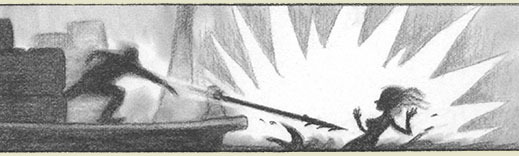
I'm not certain if I prefer Siegel the writer or Siegel the artist. The book in its sheer physicality is a joy to encounter. It's well-bound, has a nice mermaid embossed on its cover, and contains gorgeous art. Siegel's art is cartoony but expressive, reminiscent (to me at least) of some of the European comics I've encountered over the years and nearly the entire thing is composed in charcoals, giving the book a melancholy softness. In Sailor Twain's panoply of greys, the reader will find herself suffused in an exotic romance of dueling shadows. But for all that, it may be that Siegel's non-visual storytelling is still more impressive.
It's clear that Siegel has put plenty of research into this book, from the requisite study of lore to investigations into the Hudson's historical environs. Beyond that though, it's his use of literary device that wins my heart. While Twain is tempted by the sea-born siren, whose physiognomy renders her impossible for romantic liaison, his own wife of seven years (Pearl) is crippled below the waist and is known especially for a singing voice gifted from the Divine himself. It is unclear whether Pearl's condition renders her incapable of sexual alliance, but Siegel almost certainly has this juxtaposition between South and Pearl in mind. When Twain asks his wife if they are a couple of cold fish, the reader is on alert and winking back at Siegel—and again on the next page when Twain asks Pearl if she's ready for the next day and she responds "A few scales and I will be." The captain is torn between the mermaid he rescued and the siren whom he married, neither of whom will give him satisfaction. And it's in the midst of this that Siegel's story finds its sinew, bone, and life's blood.
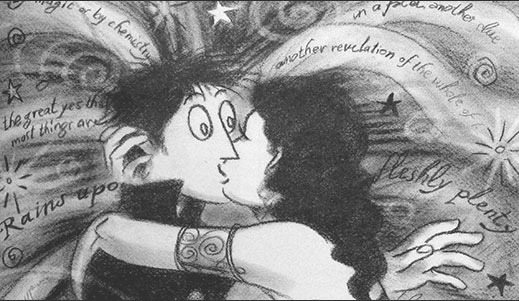
[Whoops. Instamuse.]
In all honesty, I found Sailor Twain breathtaking. I was predisposed to like it but I didn't expect to find it as beautiful and haunting4 as it is. Siegel's book will certainly find itself in my Top Ten for the year and is now entrenched in that collection of comics works that I consider Essential Reading for those interested in charting the medium. I will almost certainly be recommending this to scads of friends.
Note to Parents
If it's the kind of thing to concern you, the mermaid (as mermaids ought to be) is entirely topless for the book's length. That is to say: there is a half-nude woman on roughly a quarter of Sailor Twain's nearly 400 pages. It's important to the narrative and true to the lore but will bother some parents of young readers. There is, as well, a smattering of sexuality and some murderous violence and death—but for one reason or another, it's the nudity that tends to catch attention so I thought I'd mention it, lest you sight-unseen order the fun mermaid book for eleven-year-old Johnny and add greater fuel to his immature perversions, sending him deep into the realms of mermaid fetishism. Or something.
Also, the above images have been edited slightly to render South's nudity less distinct. Because fetishists.
Footnotes
1. All blame for the pacification of mermaid lore cannot be laid entirely at the 1989 movie's feet. All through the 20th century, mermaids had been moving toward something friendlier and more human. Disney's Peter Pan, for instance, softens J.M. Barrie's dangerous mermaids (who would have drowned Wendy had Peter not been vigilant) into something naughty rather than outright nasty. Also, my wife here interjects that the mermaid in Little Bear, for all we see of her, is a kindly soul. Even Anderson's original Little Mermaid (which included cutting out the mermaid's tongue, the mermaid contemplating murdering the prince in order to restore her mer-form, and the mermaid failing in her quest and being dissolved into sea foam) was a departure from the traditional lore and rendered the mermaid in softer tone than predecessors.
It might be more fair to say, then, that the pacification of the mermaid was gradual and only culminated in Disney's 1989 adaptation.
2. Certain expressions of the mermaid have sought to subvert this—notably, Starbucks' original mermaid icon, featuring a topless creature with two tails, spread as legs and inviting romantic consummation.

3. I actually first encountered Sailor Twain what feels like a long time ago when Siegel first began publishing pages as a webcomic. As I don't have the patience to return to a webcomic week after week to make incremental progress through its story, I promptly forgot that it existed—despite thinking it looked beautiful. When I discovered that it had been collected into a single hardback, I was excited and knew I had to see where Siegel went with things. I was, fair warning, predisposed to enjoy this book.
4. I think probably 85% of all reviews of this work will find some way to use the word haunting to describe it. The others will use chilling.
_____________________
[Review courtesy of Good Ok Bad]

December 2, 2017
A story set on a riverboat. The art is in black and white. The author put lots of time and love into his creation. It is very misty and mysterious. The art fits the tone of the story.
There is a mermaid in the story. The thing about this story that is the most real regarding a mermaid is her hair isn't draped constantly over her breasts. She is bear chest anytime you see her. That is how it would be, I doubt mermaids would be so modest. So, there are a lot of breasts in this story.
It is also about polygamy. There are a great many subjects in this novel. I was engrossed as to what was going to happen. The mythology really works for the story.
I felt the characters were fleshed out and had their own motivations. Such an interesting read. I enjoyed it.
There is a mermaid in the story. The thing about this story that is the most real regarding a mermaid is her hair isn't draped constantly over her breasts. She is bear chest anytime you see her. That is how it would be, I doubt mermaids would be so modest. So, there are a lot of breasts in this story.
It is also about polygamy. There are a great many subjects in this novel. I was engrossed as to what was going to happen. The mythology really works for the story.
I felt the characters were fleshed out and had their own motivations. Such an interesting read. I enjoyed it.

May 29, 2013
this is just a lovely book, an objet d'art beautifully packaged in a way that's increasingly rare these days. i liked the charcoal drawings in this hardbound graphic novel, particularly the scenic shots of the riverboat on the water very much. the protagonist, captain twain (not, not mark -- this one, elijah, reminds us that twain was not his real name and that he's some other writing riverboat captain) sort of looks like the count from sesame street but i eventually got over the resemblance.
the story is told in flashbacks and there are several narrative strands. siegel does a pretty great job with his visual storytelling and i was very engaged in the various romances, and friendships and nightmares presented. i do think that the ending was a little weak -- discussing it with patty, who let me read her copy, i agreed with her that he was attempting to leave it open, but to me, it just felt confused and unresolved, and honestly, a teensy bit like a cop out. but! overall a fun little read and i'd be curious to read more of his work.
rounding up to four stars. n.b. for those who like charcoal drawings of cartoon naked lady boobs, there are a LOT of cartoon naked lady boobs (sort of hard to avoid when one of your main characters is a mermaid. :)
the story is told in flashbacks and there are several narrative strands. siegel does a pretty great job with his visual storytelling and i was very engaged in the various romances, and friendships and nightmares presented. i do think that the ending was a little weak -- discussing it with patty, who let me read her copy, i agreed with her that he was attempting to leave it open, but to me, it just felt confused and unresolved, and honestly, a teensy bit like a cop out. but! overall a fun little read and i'd be curious to read more of his work.
rounding up to four stars. n.b. for those who like charcoal drawings of cartoon naked lady boobs, there are a LOT of cartoon naked lady boobs (sort of hard to avoid when one of your main characters is a mermaid. :)

November 22, 2015
This is only the second authentic graphic novel I have read and this time I understand the appeal of the genre. I liked Sailor Twain for the story itself, the artwork, the feel of the book, all the lovely details that went into this volume. This was the first time I could see how drawings add extra dimensions to the narration, sometimes become the narration. I want to go back to the beginning and start all over again, just for the fun of looking for details I may have missed!
But meanwhile, what is this book about? Well, we start off in a tavern with our hero Twain and a woman named Camomille. They share a past, but at this point we do not know anything about that. She wants him to tell her the truth about what happened on the river, during the days he had been captain of a steamship running along the Hudson river. He is reluctant, but then does tell his story: about how he discovered a wounded mermaid clinging to the side of his ship one night. How he takes her to his cabin and heals her, then learns parts of her own story. And about what happens after that.
The owner of the ship is a man by the name of Lafayette, who had been partners in the river trade with his brother, who seems to have disappeared under mysterious circumstances. Lafayette boards the Lorelei for this particular voyage, and is very much involved with six women during his trip. Is there a reason for his being such a Don Juan or is he just another sex addict? And what is his connection to that wounded mermaid in Captain Twain's cabin? She goes into a rage any time his name is mentioned. Why? He does not even know she is there.
Destinies are intertwined, and as we read, we learn more about the different characters: their secrets, their hopes and desires. Do their dreams become reality? Or does an ancient curse prevail, keeping everyone from living the lives they wish to live?
I still tend to think of graphic novels as being for children, but this is definitely an adult book. (There are pages of nudity and sex here...tastefully done, but I suppose some people might be bothered by it.) Captain Twain faces puzzling decisions throughout the story. Like so many people in real life, he makes choices which will affect his future because he needs to understand his present. Then he has to live with the results of those choices. But is that something he can manage to do?
About the book itself: I love the cover, but took it off to read the book as I usually do. And I was surprised to see a figure of the mermaid embossed on the actual front cover of the book. That was my first treat. Another was the sheer loveliness of this volume. It feels good in the hands, and looks pretty as you read. The pages between each chapter feature maps of various areas of the Hudson river valley; and the background of each chapter's title page is a collage of supposed newspaper articles concerning the characters and actions at that point in the story. There is no color in the drawings, they are all black, white and various shades of gray, but they work. Color would have been too much.
Overall, a thoroughly compelling, interesting book; beautiful in numerous ways, and well worth reading.
But meanwhile, what is this book about? Well, we start off in a tavern with our hero Twain and a woman named Camomille. They share a past, but at this point we do not know anything about that. She wants him to tell her the truth about what happened on the river, during the days he had been captain of a steamship running along the Hudson river. He is reluctant, but then does tell his story: about how he discovered a wounded mermaid clinging to the side of his ship one night. How he takes her to his cabin and heals her, then learns parts of her own story. And about what happens after that.
The owner of the ship is a man by the name of Lafayette, who had been partners in the river trade with his brother, who seems to have disappeared under mysterious circumstances. Lafayette boards the Lorelei for this particular voyage, and is very much involved with six women during his trip. Is there a reason for his being such a Don Juan or is he just another sex addict? And what is his connection to that wounded mermaid in Captain Twain's cabin? She goes into a rage any time his name is mentioned. Why? He does not even know she is there.
Destinies are intertwined, and as we read, we learn more about the different characters: their secrets, their hopes and desires. Do their dreams become reality? Or does an ancient curse prevail, keeping everyone from living the lives they wish to live?
I still tend to think of graphic novels as being for children, but this is definitely an adult book. (There are pages of nudity and sex here...tastefully done, but I suppose some people might be bothered by it.) Captain Twain faces puzzling decisions throughout the story. Like so many people in real life, he makes choices which will affect his future because he needs to understand his present. Then he has to live with the results of those choices. But is that something he can manage to do?
About the book itself: I love the cover, but took it off to read the book as I usually do. And I was surprised to see a figure of the mermaid embossed on the actual front cover of the book. That was my first treat. Another was the sheer loveliness of this volume. It feels good in the hands, and looks pretty as you read. The pages between each chapter feature maps of various areas of the Hudson river valley; and the background of each chapter's title page is a collage of supposed newspaper articles concerning the characters and actions at that point in the story. There is no color in the drawings, they are all black, white and various shades of gray, but they work. Color would have been too much.
Overall, a thoroughly compelling, interesting book; beautiful in numerous ways, and well worth reading.

June 18, 2013
Given the title “Sailor Twain” and the picture of the 19th century steamboat, you’d be forgiven for thinking Mark Siegel had written a story featuring a young Sam Clemens before he became the celebrated novelist Mark Twain. In fact, the Captain Twain of the Steamship Lorelei is an aspiring writer himself though he begins the book uninspired and blocked from writing. His crippled wife is onshore trying different treatments while he is on board his ship, earning as much as he can ferrying passengers up and down the Hudson River so the two can live their dream of romantic travel around the world. But its clear their marriage is troubled because of Twain’s frequent absences due to his work - and then a beautiful mermaid shows up.
Starting life as a webcomic, “Sailor Twain” became so popular it landed the author, Mark Siegel, a book contract and shot up the bestselling book charts, garnering praise from literary luminaries such as Pete Hamill and John Irving.
I’m conflicted about this book - I like parts of it, and the general atmosphere of it (brooding magical adventuresome), and I like comics like this that are different from mainstream comics and are ambitious enough to go for the same kinds of themes literary prose novels go for; but on the other hand, I feel like it was overlong, the characters felt somewhat muddled, and the final act was handled really poorly.
The book is drawn in charcoal, lending it the grimy feel of life aboard a steamship while also giving it the airs of a time past and matching the serious tones of the story. Above all this is essentially a tragedy with romantic elements mixed in so the charcoal look gives the book the required dramatic hues. Siegel does a really great job with the artwork and it’s clear he’s an accomplished artist - the book looks really beautiful in places and despite using just charcoal he’s able to portray all kinds of lighting effects perfectly. That said, quite often pages would be filled with pretty, scenic art of the ship, the river, the weather, etc. with no real relevance to the story except that they’re kinda pretty.
While initially the story of the mermaid whom Twain picks up after spotting her floating injured in the waters of the Hudson, and secretly nurses her back to health in his room, is a captivating one, the book more or less stalls soon after. This is a 400 page book that - while it does read at a nice clip - didn’t need to be 400 pages. Twain and the Mermaid’s relationship wasn’t that interesting and read like every other romance you’ve ever read. After a while it became rather rote and dull to watch them fall in love. Factor in the unnecessary side-stories such as the mystery author of a popular mythological book turning out to be a - gasp! - female, and the overlong sequences where a ridiculous French caricature (who’s drawn as the spitting image of Cyrano de Bergerac!), Lafayette, hops from one woman’s bed to another in a misguided and highly confusing effort to save his dead brother’s spirit (?!), and the overall effect leaves the book feeling bloated. The interest starts to flag long before the end as it becomes clear the story has been stretched beyond its limits to become boring.
And then there’s the third act which is all over the map. Siegel introduces a rogue element to the story - suddenly in the third act there’s the concept of split-selves, of a physical self and a spiritual self that can be separated by the mermaid. The mermaid suddenly becomes somewhat evil herself as it’s revealed she’s been using various people into trying to free her heart from the riverbed for many years (this storyline is revealed by the mystery female writer Beaverton, though how she could know this accurate information is glossed over) and the book ends bizarrely and abruptly. I won’t go into the various anachronisms that the ending threw up but it read like Siegel was trying to be too clever by creating numerous story threads and then tried the impossible act of meshing them together seamlessly - especially as, once you think about it, a lot of it didn’t make sense. Bottom line, it just got too magical realist to the book’s detriment.
I think that Siegel, like many writer/artists, excels at the drawing element and falls short with the writing. His comparisons between Twain’s wife (legs broken, in a wheelchair, practicing her scales - singing in a church choir) and the Mermaid (legs are “broken” in that they aren’t there, she literally has scales, her siren song) were obvious and forced as was the visual metaphor at the start of the stag swimming in the river, about to drown.
Reading “Sailor Twain” was like watching one of those godawful “Pirates of the Caribbean” movies where none of it makes sense and you’re kind of bored though it looks good and has some good moments. It’s an accessible and somewhat enjoyable book that’s well drawn, and I feel that if it had been edited down that it would read a lot better - that and tightening up the final act, discarding some elements to create a more focused, powerful ending. I wasn’t too enamoured with the simplistic characters but I have a soft spot for the folklore-ish quality of the story and the art is really good. There’s a great comic in here somewhere it’s just mixed in with a lot of other pointless things that bring down the book’s quality.
Starting life as a webcomic, “Sailor Twain” became so popular it landed the author, Mark Siegel, a book contract and shot up the bestselling book charts, garnering praise from literary luminaries such as Pete Hamill and John Irving.
I’m conflicted about this book - I like parts of it, and the general atmosphere of it (brooding magical adventuresome), and I like comics like this that are different from mainstream comics and are ambitious enough to go for the same kinds of themes literary prose novels go for; but on the other hand, I feel like it was overlong, the characters felt somewhat muddled, and the final act was handled really poorly.
The book is drawn in charcoal, lending it the grimy feel of life aboard a steamship while also giving it the airs of a time past and matching the serious tones of the story. Above all this is essentially a tragedy with romantic elements mixed in so the charcoal look gives the book the required dramatic hues. Siegel does a really great job with the artwork and it’s clear he’s an accomplished artist - the book looks really beautiful in places and despite using just charcoal he’s able to portray all kinds of lighting effects perfectly. That said, quite often pages would be filled with pretty, scenic art of the ship, the river, the weather, etc. with no real relevance to the story except that they’re kinda pretty.
While initially the story of the mermaid whom Twain picks up after spotting her floating injured in the waters of the Hudson, and secretly nurses her back to health in his room, is a captivating one, the book more or less stalls soon after. This is a 400 page book that - while it does read at a nice clip - didn’t need to be 400 pages. Twain and the Mermaid’s relationship wasn’t that interesting and read like every other romance you’ve ever read. After a while it became rather rote and dull to watch them fall in love. Factor in the unnecessary side-stories such as the mystery author of a popular mythological book turning out to be a - gasp! - female, and the overlong sequences where a ridiculous French caricature (who’s drawn as the spitting image of Cyrano de Bergerac!), Lafayette, hops from one woman’s bed to another in a misguided and highly confusing effort to save his dead brother’s spirit (?!), and the overall effect leaves the book feeling bloated. The interest starts to flag long before the end as it becomes clear the story has been stretched beyond its limits to become boring.
And then there’s the third act which is all over the map. Siegel introduces a rogue element to the story - suddenly in the third act there’s the concept of split-selves, of a physical self and a spiritual self that can be separated by the mermaid. The mermaid suddenly becomes somewhat evil herself as it’s revealed she’s been using various people into trying to free her heart from the riverbed for many years (this storyline is revealed by the mystery female writer Beaverton, though how she could know this accurate information is glossed over) and the book ends bizarrely and abruptly. I won’t go into the various anachronisms that the ending threw up but it read like Siegel was trying to be too clever by creating numerous story threads and then tried the impossible act of meshing them together seamlessly - especially as, once you think about it, a lot of it didn’t make sense. Bottom line, it just got too magical realist to the book’s detriment.
I think that Siegel, like many writer/artists, excels at the drawing element and falls short with the writing. His comparisons between Twain’s wife (legs broken, in a wheelchair, practicing her scales - singing in a church choir) and the Mermaid (legs are “broken” in that they aren’t there, she literally has scales, her siren song) were obvious and forced as was the visual metaphor at the start of the stag swimming in the river, about to drown.
Reading “Sailor Twain” was like watching one of those godawful “Pirates of the Caribbean” movies where none of it makes sense and you’re kind of bored though it looks good and has some good moments. It’s an accessible and somewhat enjoyable book that’s well drawn, and I feel that if it had been edited down that it would read a lot better - that and tightening up the final act, discarding some elements to create a more focused, powerful ending. I wasn’t too enamoured with the simplistic characters but I have a soft spot for the folklore-ish quality of the story and the art is really good. There’s a great comic in here somewhere it’s just mixed in with a lot of other pointless things that bring down the book’s quality.

February 19, 2015
I wasn’t a fan of the art at first, and the main character remained kind of distractingly comical-looking for me, but it grew on me. The charcoal look is great, suits the setting perfectly, and for all that Sailor Twain himself looks a little odd, some of the characters are beautifully done. Including, of course, the mermaid. Funnily enough, I read this just the day before I read Brubaker’s Fatale: Death Chases Me, and the whole enchantment aspect seemed pretty similar; a shared theme bridging two dissimilar graphic novels.
The mythology… I could wish it was delved into a little more. We get what we need to know and no more, and I still had plenty of questions — it felt like the rules were made up for the story, rather than the story bending to the rules, which is a pet peeve of mine, really. You’ll always convince me more easily by writing out your rules and then constraining your story within them.
It’s a very quick read, for all that it looks really chunky, and some of the character backstories are really interesting. I don’t know, though; I found myself wishing for more depth, in the end.
The mythology… I could wish it was delved into a little more. We get what we need to know and no more, and I still had plenty of questions — it felt like the rules were made up for the story, rather than the story bending to the rules, which is a pet peeve of mine, really. You’ll always convince me more easily by writing out your rules and then constraining your story within them.
It’s a very quick read, for all that it looks really chunky, and some of the character backstories are really interesting. I don’t know, though; I found myself wishing for more depth, in the end.

November 8, 2012
I liked the art a lot. The misty, creepy hudson river, the steamboat, the 1800s - it was a lovely setting. The women in this book are really pretty. Unfortunately, that's about all they are - either pretty and sexy/fuckable or pretty and evil/monstrous. I liked the mermaid mythology because mermaids were awesome, of course. Unfortunately, I did not like the storytelling and this book was unsalvageable for me. The mythology was never as in-depth as I wanted it. I kind of hated all the characters. It just didn't work for me.

December 26, 2012
I wanted to like this more than I did.
It's an epic tale incorporating northeast amerikan myth, literary legends, lustful temptation, slavery politics, and workplace ethics. And it's received a lot of acclaim. Personally, though, I didn't connect.
The art was extremely uneven for me. There are beautiful panels, but caricatured human figures felt like an odd choice for the charcoal aesthetic. Some of the shading work or lack of which got downright dissonant in context. It felt like a mock-up for the color, ink version still to come. But I know I'm in the minority on that.
But really, I've been won over by a lot of disappointing art. Books I've balked at at first, I start and get pulled into the story. And this book should have done that. And it didn't. I kept being distracted by the quality of the art, and a good enough story would have distracted me from that.
I also felt like the women here were overly simplified. They didn't feel real. It's a little too like a fever dream.
I don't know, I wanted to like it. But I didn't. And maybe I'm not the intended audience. So maybe I shouldn't hold my dislike against the book. It clearly has its fans.
It's an epic tale incorporating northeast amerikan myth, literary legends, lustful temptation, slavery politics, and workplace ethics. And it's received a lot of acclaim. Personally, though, I didn't connect.
The art was extremely uneven for me. There are beautiful panels, but caricatured human figures felt like an odd choice for the charcoal aesthetic. Some of the shading work or lack of which got downright dissonant in context. It felt like a mock-up for the color, ink version still to come. But I know I'm in the minority on that.
But really, I've been won over by a lot of disappointing art. Books I've balked at at first, I start and get pulled into the story. And this book should have done that. And it didn't. I kept being distracted by the quality of the art, and a good enough story would have distracted me from that.
I also felt like the women here were overly simplified. They didn't feel real. It's a little too like a fever dream.
I don't know, I wanted to like it. But I didn't. And maybe I'm not the intended audience. So maybe I shouldn't hold my dislike against the book. It clearly has its fans.

June 27, 2021
Not a fan of the illustrations but the story is really cool!

January 30, 2016
As this book starts out, Sailor "don't call me captain" Twain (thanks David) is approached in a tavern by a somewhat disguised woman, the mysterious, hooded Miss Camomille. She offers him a special necklace in return for the story of her lost love. Twain is grouchy and a little belligerent and tells her she won't believe the story even if he told her, but she gets him to sit and talk. This is the framing of the novel. Sailor Twain is telling sad-big-eyed-Camomille a story in a pub. The "Overature."
Already in these first few pages I get a sense of the style, cartoonish yet moody. A little gothic, a little anime. Part straight-up-caricature and part manga and part something else. As other reviewers have mentioned the charcoal work gives it the gothicy feel (rhyme of the ancient mariner-esque?) But the cartoonishness sometimes puts it more in Scooby-Doo territory.
In any case, right from the start I got the feeling the captain and Camomille were living in two different stylistic stories, and as the book goes on, I notice each character is drawn in some variation of cartoonishness and/or caricature, but none of them in quite the same style. Which is a bit distracting.
Okay, so, now we get to chapter one and we learn that in addition to CaptainSailor Twain and Miss Camomille, there are two brothers in this story. Jacques-Henri, who has disappeared and is thought to be dead. And Lafayette, his brother, the one Miss Camomille loves and wants to know about.
Jacques-Henri once owned the ship Twain is captaining (or sailoring.) But, as I've mentioned, he's disappeared. So now Lafayette is the owner of the ship (I believe) and he is working really hard to get romantic with a lot of different women on said ship. But not because he's especially fond of profligacy. (More to be revealed, though maybe not here.)
The story goes on. Lafayette woos so assiduously he nearly does himself in. Captainsailor Twain disapproves of him. Two creepy kids appear and disappear. Books appear and disappear. A mermaid appears and disappears. A curse appears and does or doesn't disappear.
There is one book in particular that Lafayette wants a copy of. He sends Captain Twain ashore to get a copy for him and on his way Twain has a run-in with the two disappearing (literally, they just vanish, they are not your every day mortals) children (who are also avid readers.) Lafayette has a correspondence with the author of this book, about the history of the Hudson River, and its mythology. Lafayette and the author write back and forth, mainly about mermaids (though one is writing more literally and the other more figuratively.) And somehow Captainsailor Twain gets a hold of these letters and reads them, though I don't know. But he does. And he is very interested in them because he, too, is trying to learn all he can about mermaids. He has had a bit of a run-in with one himself.
The book hints in certain ways that it will be a sort of history of the Hudson River, which I was looking forward to. But in the end, it is mainly about mermaids seducing people with their songs and their bosoms and people struggling to get free, or not. So, basically, men are trying to free themselves from haunting female seduction (yawn). And the females they are seduced by are mainly mermaids or other kinds of mythical creatures?
I am not sure what else this book is about. Power? Love? Greed? Fear? Or maybe just mermaids.
What can I say? This book has gotten a lot of press, and I found it frustrating. I think it's half-baked and the gender-dynamics un-thoughtful or un-thought-through. The variations on the theme of caricature does dangerous things at times, and not brave-dangerous, but careless. There are entirely different consequences (for lack of a better word) when caricaturing a wealthy white French dude and black characters and a naked mermaid. And to all have them caricatured differently, well, I found it confusing and concerning, the way certain people were portrayed as compared to others.
Moreover, I didn't really understand the back stories or the whole underworld situation, and chronologically speaking there were some pretty confusing moments.
So, though I was excited to read this book, when I finished it I 1) wanted someone to please explain the last hundred pages to me (I reread and reread and nothing became clearer) 2) felt like I had read an elaborately-half-sketched-out idea 3) was confused and a bit pissed off about the gender and race dynamics 4) was pretty tired of seeing the looks of worry and despair on the faces of the penis-nosed Lafayette and the wide-eyed Captain Sailor Twain. 5) Had lost interest in characters or the story (though I did want to know which half was which and if it even mattered. Will not explain because of spoilers.)
Already in these first few pages I get a sense of the style, cartoonish yet moody. A little gothic, a little anime. Part straight-up-caricature and part manga and part something else. As other reviewers have mentioned the charcoal work gives it the gothicy feel (rhyme of the ancient mariner-esque?) But the cartoonishness sometimes puts it more in Scooby-Doo territory.
In any case, right from the start I got the feeling the captain and Camomille were living in two different stylistic stories, and as the book goes on, I notice each character is drawn in some variation of cartoonishness and/or caricature, but none of them in quite the same style. Which is a bit distracting.
Okay, so, now we get to chapter one and we learn that in addition to CaptainSailor Twain and Miss Camomille, there are two brothers in this story. Jacques-Henri, who has disappeared and is thought to be dead. And Lafayette, his brother, the one Miss Camomille loves and wants to know about.
Jacques-Henri once owned the ship Twain is captaining (or sailoring.) But, as I've mentioned, he's disappeared. So now Lafayette is the owner of the ship (I believe) and he is working really hard to get romantic with a lot of different women on said ship. But not because he's especially fond of profligacy. (More to be revealed, though maybe not here.)
The story goes on. Lafayette woos so assiduously he nearly does himself in. Captainsailor Twain disapproves of him. Two creepy kids appear and disappear. Books appear and disappear. A mermaid appears and disappears. A curse appears and does or doesn't disappear.
There is one book in particular that Lafayette wants a copy of. He sends Captain Twain ashore to get a copy for him and on his way Twain has a run-in with the two disappearing (literally, they just vanish, they are not your every day mortals) children (who are also avid readers.) Lafayette has a correspondence with the author of this book, about the history of the Hudson River, and its mythology. Lafayette and the author write back and forth, mainly about mermaids (though one is writing more literally and the other more figuratively.) And somehow Captainsailor Twain gets a hold of these letters and reads them, though I don't know. But he does. And he is very interested in them because he, too, is trying to learn all he can about mermaids. He has had a bit of a run-in with one himself.
The book hints in certain ways that it will be a sort of history of the Hudson River, which I was looking forward to. But in the end, it is mainly about mermaids seducing people with their songs and their bosoms and people struggling to get free, or not. So, basically, men are trying to free themselves from haunting female seduction (yawn). And the females they are seduced by are mainly mermaids or other kinds of mythical creatures?
I am not sure what else this book is about. Power? Love? Greed? Fear? Or maybe just mermaids.
What can I say? This book has gotten a lot of press, and I found it frustrating. I think it's half-baked and the gender-dynamics un-thoughtful or un-thought-through. The variations on the theme of caricature does dangerous things at times, and not brave-dangerous, but careless. There are entirely different consequences (for lack of a better word) when caricaturing a wealthy white French dude and black characters and a naked mermaid. And to all have them caricatured differently, well, I found it confusing and concerning, the way certain people were portrayed as compared to others.
Moreover, I didn't really understand the back stories or the whole underworld situation, and chronologically speaking there were some pretty confusing moments.
So, though I was excited to read this book, when I finished it I 1) wanted someone to please explain the last hundred pages to me (I reread and reread and nothing became clearer) 2) felt like I had read an elaborately-half-sketched-out idea 3) was confused and a bit pissed off about the gender and race dynamics 4) was pretty tired of seeing the looks of worry and despair on the faces of the penis-nosed Lafayette and the wide-eyed Captain Sailor Twain. 5) Had lost interest in characters or the story (though I did want to know which half was which and if it even mattered. Will not explain because of spoilers.)

March 8, 2013
I almost never read other GR reviews before I review a book, but here I did because I was (initially and still am) confused. The blurbs on the back of the book are written by a range of people: john Irving (who talks about its "erotically charged" images, which is true), Pete Hamill who says this book singlehandedly changes the nature of the novel and puts graphic novels on a new plane...Rachel Maddow found it "addicting"...and maybe thus it becomes a New York Times bestseller... an achievement of aggressive marketing, which from the beginning made me skeptical, and I have read a lot of great graphic literature in the past few years, and I am not easily convinced by such claims... and my reading of it left me even more skeptical, and confused.
The art here seems pretty impressive, charcoal, sometimes deftly useful in creating mood and emotion, sometimes too sketchy, and the charcoal creates a gray cast, consistent with its creepier-than-Disney Mermaid story (thanks, Seth Hahne). But then there are all these very cartoony images, which makes it feel like the audience should be much younger...YA? Children? Which made me think of the brutal origins of fairy tales and Bettelheim and maybe the darkness of this story is really what all folklore and fairytales makes available for kids... But then there are the breasts, which almost EVERY GR reviewer calls "boobies," for some reason (does calling them boobies make breasts somehow less seriously erotic? Because that is the POINT of the breasts in this probably not for kiddies graphic novel; this book is about the dangers of Desire for two brothers, Sailor (Don't call me Captain) Twain and his brother Napoleon. One brother, Napoleon has sex with everything that moves (napoleon the "conquerer<" get it?), and the other, the increasingly unhappily anguished Twain doesn't have sex with his apparently paralyzed wife and can't have sex with the mermaid (named South.. get it, Going South?) he rescues from the Hudson... and these breasts/boobies (mentioned in almost all reviews, like its the main thing all readers mention) are on (thank you, Seth, for your close statistical work :)) roughly 100 of the 400 pages we read. And then there are the breasts of all the women the conquering Napoleon has sex with... And what's the point? Well, it's not a kiddie book, yet the feel of the story in some respects IS kiddie book, easy to read... and yet it is in another way very complex, very complicated intertwined stories of two brothers and the mermaid, it's about folklore, mythology, reading, literature, horror, desire, tragedy, but I guess in one way you can see the "moral" as mainly a scary Just Say No story about the dangers of desire (not unlike the scary horror story about sex and desire such that Charles Burns tells)... which the (primarily male") reader gets to experience as well as the main characters because we see what they see...
This IS a story in part about research and reading, which Siegel does and which Twain does with South, reading with her as he keeps her in the room, his kept woman Scheherazade, but I am not sure what really really happens in the end, after all this layering, so this confusion also undermines all my admiration for the careful research and story complexity that is here... My first impression was 3 stars, for sure. I didn't love the art, at first, very much. So it wasn't until I read other reviews that I began to appreciate the art a bit more (which I still don't think serves the story as well as it could--the cartoony aspects), and started to like the story for its darkness and depth and horror... So, maybe finally I am liking it more, so will reread it to a see if it gets more wonderful... but I do not think it is one of the best graphic novels I have her read. It's ambitious, and interesting as hell, and I am starting to more than just like it, but I am still skeptical. On second read: 3 stars.
The art here seems pretty impressive, charcoal, sometimes deftly useful in creating mood and emotion, sometimes too sketchy, and the charcoal creates a gray cast, consistent with its creepier-than-Disney Mermaid story (thanks, Seth Hahne). But then there are all these very cartoony images, which makes it feel like the audience should be much younger...YA? Children? Which made me think of the brutal origins of fairy tales and Bettelheim and maybe the darkness of this story is really what all folklore and fairytales makes available for kids... But then there are the breasts, which almost EVERY GR reviewer calls "boobies," for some reason (does calling them boobies make breasts somehow less seriously erotic? Because that is the POINT of the breasts in this probably not for kiddies graphic novel; this book is about the dangers of Desire for two brothers, Sailor (Don't call me Captain) Twain and his brother Napoleon. One brother, Napoleon has sex with everything that moves (napoleon the "conquerer<" get it?), and the other, the increasingly unhappily anguished Twain doesn't have sex with his apparently paralyzed wife and can't have sex with the mermaid (named South.. get it, Going South?) he rescues from the Hudson... and these breasts/boobies (mentioned in almost all reviews, like its the main thing all readers mention) are on (thank you, Seth, for your close statistical work :)) roughly 100 of the 400 pages we read. And then there are the breasts of all the women the conquering Napoleon has sex with... And what's the point? Well, it's not a kiddie book, yet the feel of the story in some respects IS kiddie book, easy to read... and yet it is in another way very complex, very complicated intertwined stories of two brothers and the mermaid, it's about folklore, mythology, reading, literature, horror, desire, tragedy, but I guess in one way you can see the "moral" as mainly a scary Just Say No story about the dangers of desire (not unlike the scary horror story about sex and desire such that Charles Burns tells)... which the (primarily male") reader gets to experience as well as the main characters because we see what they see...
This IS a story in part about research and reading, which Siegel does and which Twain does with South, reading with her as he keeps her in the room, his kept woman Scheherazade, but I am not sure what really really happens in the end, after all this layering, so this confusion also undermines all my admiration for the careful research and story complexity that is here... My first impression was 3 stars, for sure. I didn't love the art, at first, very much. So it wasn't until I read other reviews that I began to appreciate the art a bit more (which I still don't think serves the story as well as it could--the cartoony aspects), and started to like the story for its darkness and depth and horror... So, maybe finally I am liking it more, so will reread it to a see if it gets more wonderful... but I do not think it is one of the best graphic novels I have her read. It's ambitious, and interesting as hell, and I am starting to more than just like it, but I am still skeptical. On second read: 3 stars.

September 23, 2017
Rather gothic novel like, very enjoyable, and for me very aesthetic.

May 4, 2012
The graphic novel comes with a fantastic synopsis (the title alone is awesome) that snagged my interest and I requested it on Net Galley without doing my research and realizing it was a graphic novel. I went into it anyway because I like graphic novels and I ended up with a story that is definitely quirky and keeps you guessing. If I were to retitle this book, I would call it the Disintegration of Sailor Twain. The protagonist of this novel, the captain of a cruise boat (ship?) that makes its way up and down Hudson River rescues a mermaid and becomes ensnared in her wiles. The novel narrates visually and through prose the gradual dissolution of the captain’s moral and professional workers in the face of his fascination with the mermaid.
Included in the cast of characters is the ship’s owner, a French monsieur whose name I have forgotten and various women with whom the ship-owner is conducting simultaneous affairs. There is a purpose to his seeming insatiability where women are concerned and that too, ties in with the main narrative. The ending is surprising and made me like the novel more than I did previously.
Do I recommend this? If you looking for a dark graphic novel that delves into themes of humanity and human nature with a huge slice of cynicism thrown in, then yes, this is for you. Oh, the art? I liked it – cept for the noses. Some of the characters were mostly noses.
Included in the cast of characters is the ship’s owner, a French monsieur whose name I have forgotten and various women with whom the ship-owner is conducting simultaneous affairs. There is a purpose to his seeming insatiability where women are concerned and that too, ties in with the main narrative. The ending is surprising and made me like the novel more than I did previously.
Do I recommend this? If you looking for a dark graphic novel that delves into themes of humanity and human nature with a huge slice of cynicism thrown in, then yes, this is for you. Oh, the art? I liked it – cept for the noses. Some of the characters were mostly noses.

August 18, 2017
4.5 stars
This was a really fun graphic novel I picked up in the library without knowing anything about it (which is odd for me as I normally only read graphic novels that are quite popular or from publishers that I’ve requested as I’m not a huge GN reader).
This is about a Captain called Captain Twain who sails on a boat on the Hudson River in the 1800s. There’s a mystery about the disappearance of the original owner of the boar, and his brother is now running it but seems more interested in bedding women. Than Twain comes across an injured mermaid, whom he helps but ends up becoming obsessed with.
The drawings in this were beautiful. I particularly liked many of the drawings of the different women as they were just stunning. I really liked the story around the mystery of the mermaid and how she captured people’s souls with her song. I was a bit confused around the ending of the story and wasn’t 100% sure what actually happened, or what was the end result so I left off a .5 star.
I would really recommend this graphic novel though for an evening’s entertainment.
This was a really fun graphic novel I picked up in the library without knowing anything about it (which is odd for me as I normally only read graphic novels that are quite popular or from publishers that I’ve requested as I’m not a huge GN reader).
This is about a Captain called Captain Twain who sails on a boat on the Hudson River in the 1800s. There’s a mystery about the disappearance of the original owner of the boar, and his brother is now running it but seems more interested in bedding women. Than Twain comes across an injured mermaid, whom he helps but ends up becoming obsessed with.
The drawings in this were beautiful. I particularly liked many of the drawings of the different women as they were just stunning. I really liked the story around the mystery of the mermaid and how she captured people’s souls with her song. I was a bit confused around the ending of the story and wasn’t 100% sure what actually happened, or what was the end result so I left off a .5 star.
I would really recommend this graphic novel though for an evening’s entertainment.

May 7, 2012
Perhaps I'm a bit biased -- knowing the author personally and actually having been drawn into the comic while it was being serialized online -- but Sailor Twain is one of the most beautiful and inventive graphic novels I've read in the past year. It is utterly engrossing, and Mark does an amazing job of telling a story with many twists, turns, heart-wrenching moments, and a lovely ending. If you enjoy historical fiction with a bit of fantasy thrown in (and even if you normally don't), you'll probably love this book.

May 25, 2012
Twain is a riverboat captain who thinks that he has the difference between right and wrong fairly well figured out. He's faithful to his sick wife while at sea and tries to keep a reputable ship, with a hard-working crew. Therefore it's not such a big surprise that he's at odds with Lafayette, a French nobleman who is a passenger on his ship. He is obsessed with having 'seven loves' at the same time. It may not be for the reasons Twain thinks though - Lafayette has been afflicted by a mermaid's call. He is fighting the urge to go under the water and not resurface again. Meanwhile, Twain has saved an injured mermaid from the Hudson River and is hiding her from his crew while she recovers. In spite of her promise never to sing to him, Twain feels himself coming under her spell just the same. Will all be lost to the mermaid's song or will Sailor Twain be able to defeat her curse? At first I didn't quite get what was going on (as I had missed the second part of the book's title). I was still intrigued, so despite confusion I soldiered on. I ended up falling in love with the illustrations in the graphic novel (which I also did not know this happened to be a GN before I began reading). Their black and white splendor, with an almost obsessive attention to detail was beautiful. I liked that they were cartoon style rather than realistically drawn. It lent to the feel of the story as an American myth. I felt as though I were reading a book written by a Victorian author and I loved every minute of it. The characters were multi-dimensional and the story was so layered I could swim in it for days. I loved the ending and the way the plot unfolded in general. You could tell that Mr. Siegel has done a LOT of research and it certainly payed off. If you are a fan of historical fiction, suspense and romance this is the book for you - even if Graphic Novels aren't your thing you should give it chance. You'll be pleasantly surprised.
VERDICT: 5/5 stars
*I received an Advanced Reading E-book Copy from the publisher, via NetGalley. No money or favors were exchanged for this review. This book's expected publication date is October 2, 2012.*
VERDICT: 5/5 stars
*I received an Advanced Reading E-book Copy from the publisher, via NetGalley. No money or favors were exchanged for this review. This book's expected publication date is October 2, 2012.*

January 10, 2013
I've never read a graphic novel before. It will probably be a while before I read one again. However, if this author writes another, I may just have to make an exception. I've picked up graphic novels in bookstores and have been uninterested for one reason or another. Most of them seem to be written for teenagers or gamers. I read a review about this one, reserved it at the library, then promptly forgot about it until it showed up. By that time I had forgotten that it was a graphic novel! The story takes place in 1887 NY on a riverboat that sails between Albany and NYC on the Hudson. It is run by a Frenchman named Lafayette, absurdly dressed in 18th Century garb despite the date. He was in partnership with his older brother until one day his brother disappeared. His sexual appetite seems to know no bounds which disgusts Twain who has given up his dreams of writing to pilot the boat. He is married to Pearl who has a mysterious illness. She had hoped that their lives would be different, but Twain is, as Pearl said, chained to the river. One day he sees a stag in the river, then suddenly it's gone. Lafayette is staring at it, but shrugs when Twain says it probably drowned. Shortly thereafter, Twain pulls a mermaid out of the water. She has been harpooned. He secretly nurses her back to health. Meanwhile Lafayette has been writing to Beaverton, an author, who only uses first initials and last name, but whose book has caused a sensation. Then the author reveals herself as a woman much to the displeasure of the intelligentsia. Meanwhile the mermaid has become Twain's muse. He is writing feverishly every night as he entertains her with stories and pictures. Nevertheless, she disappears. He MUST find her. The drawings in this are surprisingly complex and lovely. It was done in charcoal and the result is a soft look that fits well with the stories. Old charts and news stories that look like they were plucked from the New York Times of the day are arranged in a strange and wonderful decoupage. It's a wonderful story of love and eroticism.

January 1, 2013
This is an intriguing and interesting graphic novel. I really liked it. When I began reading it, I thought the illustrations were a bit comical, especially the eyes and noses. However, I grew to love the illustrations. I found them to be tantalizing and evocative. The story--that of a New York river mermaid's hold over various characters--is peppered with funny and erotic and sometimes sad pieces that made me want to keep reading. I am not a huge graphic novel fan, but this one tells a story that I could easily visualize and willingly explore. Is there a connection to Mark Twain, the writer and steamboat pilot? It appears so, but I would need to re-read the book and buff up on my Twain knowledge to be sure it isn't just a lure. Even it is just a tease, it works well. My only real complaint--and it is a personal preference really--is that I wanted more text at the end. I know the bare bones of what happened from the illustrations--but I wanted more words. This is NOT a children's book; it is full of R-rated dialogue and illustrations, though I'm sure teens would enjoy it as well as anyone with any background in literary or fantasy lore.
February 14, 2013
I stayed up way too late because I could not stop reading this graphic novel and I stayed up even later thinking about it. When I finished reading I wasn't sure what to think, but the later I stayed up, ruminating over the story and how it grabs you, the more I appreciated the dark beauty of this work.
Sailor Twain, or the mermaid in the Hudson is the story of Captain Twain, a highly respected Captain who runs a steamship, the enchanting mermaid he rescues one night, and how his obsession for her slowly begins to make his entire life unravel. The ship, his wife, the things he once revered, soon become a distant second behind the mermaid. The story grabs the reader like a sirens song much the way the mermaid takes possession of Captain Twain.
The story is haunting and the artwork is beautiful. In all honesty, I first thought the art was not very exciting, but the true beauty of it is that as the story pulls you in the artwork is what truly captures the reader. The pictures in this book are what truly move the story forward and the black and white reflects the darkness of the story.
Sailor Twain, or the mermaid in the Hudson is the story of Captain Twain, a highly respected Captain who runs a steamship, the enchanting mermaid he rescues one night, and how his obsession for her slowly begins to make his entire life unravel. The ship, his wife, the things he once revered, soon become a distant second behind the mermaid. The story grabs the reader like a sirens song much the way the mermaid takes possession of Captain Twain.
The story is haunting and the artwork is beautiful. In all honesty, I first thought the art was not very exciting, but the true beauty of it is that as the story pulls you in the artwork is what truly captures the reader. The pictures in this book are what truly move the story forward and the black and white reflects the darkness of the story.

October 4, 2012
This was a joy to read. I loved that so much of it took place around where I live. There will be no spoilers coming from me.
The artwork is all charcoal or pencil which fits in well with steamboats and sooty New York in the mid-1800's. There is also a little sex and nudity so don't hand this to some kid before you read it yourself. As a big fairy tales and legends fan I enjoyed the use of both as story elements. It must have been a lot of fun doing research on this book.
I recommend this book to all my Hudson River Valley friends, and all my fantasy friends, and most of my comic book friends.

November 6, 2013
via NYPL - I really enjoyed this one. In the 1880s on the Hudson River, a steamship captain rescues a wounded mermaid, a French expat seeks to remove a curse, and a mysterious author is about to make a public appearance for the first time. Siegel's figures are very cartoony, but the use of shadowed charcoal drawings gives the book incredible texture and mood. The script is deliberate, weaving new threads into the book's greater tapestry and building to a stunning conclusion. The characters are compellingly motivated, and the mix of folklore, legend and historical setting mix well to create a feeling of a lost magical time. Definitely worth seeking out.

April 18, 2012
An absolutely gorgeous graphic novel that's actually a mermaid tale. Another one of those books that I don't have a ton to say about, but is just one of those high-quality First Second titles that catches you and surprises you from start to finish. Highly recommended.
October 7, 2012
I followed this as a web serial as it was coming out. I'm so glad to see it released in book form. I loved the attention to period detail, the deft way the supernatural/magical elements are woven into the narrative, and the twisting, turning storyline.

March 27, 2013
I always have been a fan of sailors lifestyle. Therefore, this book was so fine. Also, apart from that, I liked all the mysteries under the water. I only wish if there were another part of it or if the end hold more details.

November 13, 2017
Bei Graphic Novels ist man ja bekanntermaßen recht schnell durch.
Eine wunderschöne Geschichte, über eine verzweifelte Merrjungfrau, die jemanden sucht, der sie erlöst, und dabei Menschen über Menschen ins Verderben zieht.
Eine wunderschöne Geschichte, über eine verzweifelte Merrjungfrau, die jemanden sucht, der sie erlöst, und dabei Menschen über Menschen ins Verderben zieht.

October 1, 2012
There's all sorts of interesting stuff going on--ghosts, romance, mystery, danger, obsession, and more!--in this weird, atmospheric, and quite engrossing tale.

July 31, 2012
“'Correct me if I’m wrong, Mister Lafayette, but won’t Descartes’s people sneer at such reason-resistant magic?'
'You’re asking the wrong Frenchman. I’ve been here too long. After a time, America casts a spell on even the most enlightened European. Stay on the Hudson a few years and it turns you into a mystic. Unless you’re already dead, of course.'"
Set aboard a steamboat traveling the Hudson River line between New York City and Albany in 1887, this graphic novel resonates with mystery, tragedy, sexual intrigue, and vibrant characters. Captain Elijah Twain runs a tight ship aboard The Lorelei, and is also a good husband, as well as a secretive writer and artist. When he discovers a mermaid on the river, suffering from a harpoon wound, he brings her aboard, shutters her in his quarters, and nurses her back to health. Other plot lines intersect, including the story of Lafayette, the Frenchman with the prodigious sexual appetites, who has taken over the business end of the steamboat line, after his brother’s mysterious disappearance. The character of C.G. Beaverton, a reclusive bestselling author whose identity is finally revealed, also figures prominently in the novel. And there are mysterious twins who appear as stowaways on board, always evading the captain’s grasp.
As Twain begins to know the Mermaid (named South), he becomes drawn more to her world, and learns the startling connections between her, Lafayette, and his lost brother. The backstory of the Mermaid and her sisters is tragic, as is the fate of those lured underwater by their songs. It’s up to Twain to avoid a similar fate.
This graphic novel is absolutely lush – the writing is outstanding, and the artwork, done in charcoal, is gorgeous. The novel began life as a serialized web comic (http://sailortwain.com/), with publication of the entire work coming this fall. I’d strongly recommend looking at the site, if only for the extra material Siegel provides, particularly about the history and geography of the region in the late 19th century. This novel has obviously been a labor of love for Siegel, and that comes through clearly on every page. It’s a graphic novel that demands a slow read, and rewards readers who want strong storytelling along with beautiful imagery.
'You’re asking the wrong Frenchman. I’ve been here too long. After a time, America casts a spell on even the most enlightened European. Stay on the Hudson a few years and it turns you into a mystic. Unless you’re already dead, of course.'"
Set aboard a steamboat traveling the Hudson River line between New York City and Albany in 1887, this graphic novel resonates with mystery, tragedy, sexual intrigue, and vibrant characters. Captain Elijah Twain runs a tight ship aboard The Lorelei, and is also a good husband, as well as a secretive writer and artist. When he discovers a mermaid on the river, suffering from a harpoon wound, he brings her aboard, shutters her in his quarters, and nurses her back to health. Other plot lines intersect, including the story of Lafayette, the Frenchman with the prodigious sexual appetites, who has taken over the business end of the steamboat line, after his brother’s mysterious disappearance. The character of C.G. Beaverton, a reclusive bestselling author whose identity is finally revealed, also figures prominently in the novel. And there are mysterious twins who appear as stowaways on board, always evading the captain’s grasp.
As Twain begins to know the Mermaid (named South), he becomes drawn more to her world, and learns the startling connections between her, Lafayette, and his lost brother. The backstory of the Mermaid and her sisters is tragic, as is the fate of those lured underwater by their songs. It’s up to Twain to avoid a similar fate.
This graphic novel is absolutely lush – the writing is outstanding, and the artwork, done in charcoal, is gorgeous. The novel began life as a serialized web comic (http://sailortwain.com/), with publication of the entire work coming this fall. I’d strongly recommend looking at the site, if only for the extra material Siegel provides, particularly about the history and geography of the region in the late 19th century. This novel has obviously been a labor of love for Siegel, and that comes through clearly on every page. It’s a graphic novel that demands a slow read, and rewards readers who want strong storytelling along with beautiful imagery.

May 27, 2012
Disclaimer: I got a ARC via Netgalley.
Sailor Twain is a novel.
Not just a graphic novel, but a novel.
I know, we tend to only refer to graphic novels that people tend to apply that term to are Maus and Watchmen.
But this is a novel.
Sailor Twain tells the story of a steamboat on the Hudson River; in particular it is concerned with the boat’s captain, a Captain Twain. Twain works for a Frenchman, who has been missing, and, therefore, at the moments takes orders from the man’s brother, Lafayette. There is the mystery of the engine room, and there are a couple of strange stowaways who are likable because they are children who know how to read. Then Twain pulls something from the Hudson, a mermaid. A hurt mermaid.
Mark Siegel draws upon American literature and history, and world mythology to tell a story of love, loss, and strength. It is worthy of any grand opera or majestic work of literature.
I must admit that the charcoal drawing weren’t done in the style that I was expecting (I’m not sure what I was expecting in term s of charcoal drawings), but they do draw the reader into the story. There is something about the style. It’s somewhat like anime, somewhat European, yet wholly American. Whatever it is, it works. It suits the story.
And the story is the key. Told in parts and chapters, the story presents multi-layered characters in a conflict that is more than simple good against bad. Part of the story is the need to remove a curse, and this leads to a question about right and wrong. Despite the black and white of the drawings, the motives of the characters and the choices that must be made are not black and white.
Opening this book, even in the ARC galley form that I read does transport you to the Hudson of the later 1800s. You are there. You can smell the river, feel the boat move; in short, the reader becomes one of the passengers on that steamboat, something more than a disinterested reader. It is a way work – novel, poem, painting, comic – that can do that. This one can.
Which is why I am going to buy it.
Sailor Twain is a novel.
Not just a graphic novel, but a novel.
I know, we tend to only refer to graphic novels that people tend to apply that term to are Maus and Watchmen.
But this is a novel.
Sailor Twain tells the story of a steamboat on the Hudson River; in particular it is concerned with the boat’s captain, a Captain Twain. Twain works for a Frenchman, who has been missing, and, therefore, at the moments takes orders from the man’s brother, Lafayette. There is the mystery of the engine room, and there are a couple of strange stowaways who are likable because they are children who know how to read. Then Twain pulls something from the Hudson, a mermaid. A hurt mermaid.
Mark Siegel draws upon American literature and history, and world mythology to tell a story of love, loss, and strength. It is worthy of any grand opera or majestic work of literature.
I must admit that the charcoal drawing weren’t done in the style that I was expecting (I’m not sure what I was expecting in term s of charcoal drawings), but they do draw the reader into the story. There is something about the style. It’s somewhat like anime, somewhat European, yet wholly American. Whatever it is, it works. It suits the story.
And the story is the key. Told in parts and chapters, the story presents multi-layered characters in a conflict that is more than simple good against bad. Part of the story is the need to remove a curse, and this leads to a question about right and wrong. Despite the black and white of the drawings, the motives of the characters and the choices that must be made are not black and white.
Opening this book, even in the ARC galley form that I read does transport you to the Hudson of the later 1800s. You are there. You can smell the river, feel the boat move; in short, the reader becomes one of the passengers on that steamboat, something more than a disinterested reader. It is a way work – novel, poem, painting, comic – that can do that. This one can.
Which is why I am going to buy it.

October 25, 2012
I received a free Advanced Reader Copy of this book from the publisher.
Sailor Twain compiles a serialized webcomic written and illustrated by Mark Siegel. In hardcover, the book is rather daunting in thickness at 399 pages, but it's a very fast read as it's a graphic novel. Most pages feature little text. The blurbs show an impressive array of positive remarks from notables such as John Irving, Pete Hamill, Rachel Maddow, and Robin McKinley.
Since it is a graphic novel, there are several aspects here to analyze. Siegel is an experienced artist, but I found much of the art to be easy to flip past. His depictions of the steamboat Lorelei and other scenes were fantastic and showed his talent--the depiction of the main characters, not so much. In particular, the design of the main character, Twain, bothered me because of his over-simplicity; I realize this was probably done because of the difficulty in doing detailed work in charcoal, but then why not choose another medium?
The pace is engaging. It's a very easy book to read. The characters are distinct (even if not appealing to me, personally) and the book created some deep questions early on that propel the plot: what happened on the Lorelei? Why is the Twain at the beginning so angry, when the flashback shows he's a fairly average fellow? What has the mermaid done? I should add that despite the fact this is a graphic novel, this isn't a book for kids or even young adults; there's actually a good bit of nudity and sex.
It's a good story, as moody and mysterious as a fogged-in river. But I didn't see the reason for the hype or the effusive cover blurbs. It does some unique things with mermaid mythology, but many of the big twists are predictable, and in the end it just was not a compelling read for me. Maybe this is intended more for literary types who don't read historical fantasy, and therefore this is something completely fresh for them. I didn't mind reading Sailor Twain, but it's not a book I would keep on my shelf.
Sailor Twain compiles a serialized webcomic written and illustrated by Mark Siegel. In hardcover, the book is rather daunting in thickness at 399 pages, but it's a very fast read as it's a graphic novel. Most pages feature little text. The blurbs show an impressive array of positive remarks from notables such as John Irving, Pete Hamill, Rachel Maddow, and Robin McKinley.
Since it is a graphic novel, there are several aspects here to analyze. Siegel is an experienced artist, but I found much of the art to be easy to flip past. His depictions of the steamboat Lorelei and other scenes were fantastic and showed his talent--the depiction of the main characters, not so much. In particular, the design of the main character, Twain, bothered me because of his over-simplicity; I realize this was probably done because of the difficulty in doing detailed work in charcoal, but then why not choose another medium?
The pace is engaging. It's a very easy book to read. The characters are distinct (even if not appealing to me, personally) and the book created some deep questions early on that propel the plot: what happened on the Lorelei? Why is the Twain at the beginning so angry, when the flashback shows he's a fairly average fellow? What has the mermaid done? I should add that despite the fact this is a graphic novel, this isn't a book for kids or even young adults; there's actually a good bit of nudity and sex.
It's a good story, as moody and mysterious as a fogged-in river. But I didn't see the reason for the hype or the effusive cover blurbs. It does some unique things with mermaid mythology, but many of the big twists are predictable, and in the end it just was not a compelling read for me. Maybe this is intended more for literary types who don't read historical fantasy, and therefore this is something completely fresh for them. I didn't mind reading Sailor Twain, but it's not a book I would keep on my shelf.

November 2, 2012
Reason for Reading: Set in the 1880s, I wasn't about to pass this one by as it sounded just to my tastes.
Phenomenal! One of my favourite graphic novels of the year. This is a haunting, gothic story set in Victorian era New York, or to be more exact on a steamer upon the Hudson River. From the beginning prologue, the book is surrounded in mystery. The fog that fills the graphic panels also hovers heavily over the plot. Atmosphereic only begins to describe the aura one feels reading this book and I'll say that it didn't take me long before I forgot I was reading a graphic novel, per se. I was totally invested in these characters and the story was compelling, a real treat for someone looking for a spooky ghost story that involves much more than ghosts. On top of that the book examines love in its varied forms, how can one truly hang on to it, is temptation always too much to handle or can a certain kind of love stand against it. I was mezmorized while reading Sailor Twain and will be keeping this for a second read later down the line.
Be forewarned though that this is an adult book with frontal n*udity of both s*xes, and has s*x scenes. I thought they were represented very tastefully, just not something I would hand to anyone without knowing where their limits lay in that direction. Also there is cursing, including multiple use of the F-word.
Phenomenal! One of my favourite graphic novels of the year. This is a haunting, gothic story set in Victorian era New York, or to be more exact on a steamer upon the Hudson River. From the beginning prologue, the book is surrounded in mystery. The fog that fills the graphic panels also hovers heavily over the plot. Atmosphereic only begins to describe the aura one feels reading this book and I'll say that it didn't take me long before I forgot I was reading a graphic novel, per se. I was totally invested in these characters and the story was compelling, a real treat for someone looking for a spooky ghost story that involves much more than ghosts. On top of that the book examines love in its varied forms, how can one truly hang on to it, is temptation always too much to handle or can a certain kind of love stand against it. I was mezmorized while reading Sailor Twain and will be keeping this for a second read later down the line.
Be forewarned though that this is an adult book with frontal n*udity of both s*xes, and has s*x scenes. I thought they were represented very tastefully, just not something I would hand to anyone without knowing where their limits lay in that direction. Also there is cursing, including multiple use of the F-word.
Displaying 1 - 30 of 618 reviews