

What do you think?
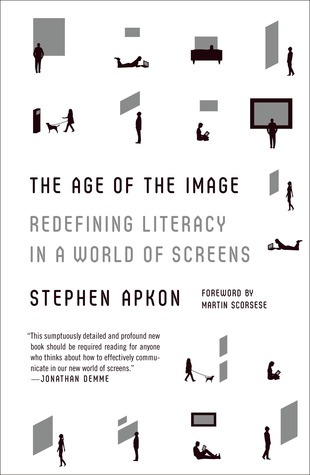
The Age of the Image: Redefining Literacy in a World of Screens
An urgent, erudite, and practical book that redefines literacy to embrace how we think and communicate now
We live in a world that is awash in visual storytelling. The recent technological revolutions in video recording, editing, and distribution are more akin to the development of movable type than any other such revolution in the last five hundred years. And yet we are not popularly cognizant of or conversant with visual storytelling's grammar, the coded messages of its style, and the practical components of its production. We are largely, in a word, illiterate.
But this is not a gloomy diagnosis of the collapse of civilization; rather, it is a celebration of the progress we've made and an exhortation and a plan to seize the potential we're poised to enjoy. The rules that define effective visual storytelling-much like the rules that define written language-do in fact exist, and Stephen Apkon has long experience in deploying them, teaching them, and witnessing their power in the classroom and beyond. In The Age of the Image , drawing on the history of literacy-from scroll to codex, scribes to printing presses, SMS to social media-on the science of how various forms of storytelling work on the human brain, and on the practical value of literacy in real-world situations, Apkon convincingly argues that now is the time to transform the way we teach, create, and communicate so that we can all step forward together into a rich and stimulating future.
We live in a world that is awash in visual storytelling. The recent technological revolutions in video recording, editing, and distribution are more akin to the development of movable type than any other such revolution in the last five hundred years. And yet we are not popularly cognizant of or conversant with visual storytelling's grammar, the coded messages of its style, and the practical components of its production. We are largely, in a word, illiterate.
But this is not a gloomy diagnosis of the collapse of civilization; rather, it is a celebration of the progress we've made and an exhortation and a plan to seize the potential we're poised to enjoy. The rules that define effective visual storytelling-much like the rules that define written language-do in fact exist, and Stephen Apkon has long experience in deploying them, teaching them, and witnessing their power in the classroom and beyond. In The Age of the Image , drawing on the history of literacy-from scroll to codex, scribes to printing presses, SMS to social media-on the science of how various forms of storytelling work on the human brain, and on the practical value of literacy in real-world situations, Apkon convincingly argues that now is the time to transform the way we teach, create, and communicate so that we can all step forward together into a rich and stimulating future.
288 pages, Paperback
First published April 16, 2013
About the author
Stephen Apkon
3 books4 followersStephen Apkon is the Founder and Executive Director of The Jacob Burns Film Center, a non-profit film and education organization located in Pleasantville, N.Y. The JBFC presents a wide array of documentary, independent, and foreign film programs in a three theater state-of-the-art film complex, and has developed educational programs focused on 21st century literacy. Under Steve’s leadership, the JBFC opened a 27,000 square foot Media Arts Lab in 2009. Since its doors opened in 2001, JBFC education programs have reached over 100,000 children.
Steve serves on the boards of The World Cinema Foundation and Advancing Human Rights. He is President of Big 20 Productions; the director and producer of The Patron, a collaboration with Ido Haar (in production); a producer of Enlistment Days, directed by Ido Haar; and a producer of I’m Carolyn Parker: The Good, the Mad, and the Beautiful directed by Jonathan Demme.
Steve serves on the boards of The World Cinema Foundation and Advancing Human Rights. He is President of Big 20 Productions; the director and producer of The Patron, a collaboration with Ido Haar (in production); a producer of Enlistment Days, directed by Ido Haar; and a producer of I’m Carolyn Parker: The Good, the Mad, and the Beautiful directed by Jonathan Demme.
Ratings & Reviews
Friends & Following
Create a free account to discover what your friends think of this book!
Community Reviews
Displaying 1 - 30 of 40 reviews

August 9, 2022
After just reading the title it sounded like this book was made for my media curious mind. However, it ended up reading as a bit of a scrambled mess. A sudden detour takes the reader into film making 101? A useful chapter, but probably for a different book. In the end, Apkon's desperate attempts to get the reader to buy into a new world where schools teach the language of film feels forced. Its age of almost 10 years isn't doing it any favours either. There is a lot of potential here, it's just too bad it didn't work out.

April 30, 2013
A beautifully written and informative book. Steve persuasively argues for a visual literacy curriculum in our educational system, and clearly demonstrates the benefits that can accrue from such a focus. The book is both entertaining and insightful, and it has already inspired me to think about ways in which I can engage my kids through visual mediums. It also serves as a great resource for those of us who are interested in how images are created and the impact they can yield.

May 15, 2013
Stephen Apkon defend the idea of watching films in the same way we read books, from an analytical point of view. To defend his idea, Apson starts by summarizing communication techniques throughout human history, from cave paintings to the Youtube generation, moving to the importance of being visually literate while redefining the concept of what is to be literate in an era of screens popping out at every corner. A go to book for anyone interested in visual literacy.

December 6, 2015
This book made me think hard about what it means to be literate. I really liked Apkon's definition: "the ability to comprehend and have facility with those areas deemed critical to our being full participants in the world." I've got many thoughts running through my head after reading this, and now I need to sit down and really think hard about what it means for me as a teacher. What do I do with this information? How do I use it to inform my practice?

August 18, 2019
The idea of this book is that to be literate in the modern world, you need to understand images as well or better than written words.
It's a good point, but Apkon doesn't do very much with it. Rather than exploring in depth how this could change society, how other forms of literacy constrain and/or inform our thinking, or the consequences of being visually illiterate, he spends most of the book on a history of visual images (with some interesting facts, to be fair) and a beginners guide to film-making (which again, to be fair, I did still learn some things from).
I have the same problem with this book that I had with What Are Intellectuals Good For? - the title poses an interesting question that is given only a cursory examination before moving on to something else.
It's a good point, but Apkon doesn't do very much with it. Rather than exploring in depth how this could change society, how other forms of literacy constrain and/or inform our thinking, or the consequences of being visually illiterate, he spends most of the book on a history of visual images (with some interesting facts, to be fair) and a beginners guide to film-making (which again, to be fair, I did still learn some things from).
I have the same problem with this book that I had with What Are Intellectuals Good For? - the title poses an interesting question that is given only a cursory examination before moving on to something else.

May 15, 2021
Apkon gives a unique take on the topic of literacy, namely, that the technological shifts in the 21st century demands a new kind of literacy. In this day and age, it’s not enough just to know how to read and write words. We also need to know how to analyse and create visuals, whether it’s a meme, an insta story, or a piece of political punditry. Today we need to have media literacy to thrive.
Informative read overall, but Apkon should’ve talked about the various types of media - from memes to caught on cameras - and distilled the workings behind them. Instead, the author chose to focus squarely on film, which although I am a big fan of, is hardly the core of today’s media saturated world of TikTok and Twitch.
Informative read overall, but Apkon should’ve talked about the various types of media - from memes to caught on cameras - and distilled the workings behind them. Instead, the author chose to focus squarely on film, which although I am a big fan of, is hardly the core of today’s media saturated world of TikTok and Twitch.
July 26, 2019
Lots to think about in this strong text about the impact of visual literacy on our development as learners, consumers and creators. From TV to film to advertisements to YouTube to memes, the author explains how and why we connect so deeply with visuals, and how visual images are so much more effective when tied to a strong narrative. In terms of education, the author argues that students become much more media- and visual-literate when they learn how to create their own visual stories.

March 2, 2022
Loved the intro and Apkon's style, but I'm giving this book three stars because I just wasn't convinced of Apkon's plight to redefine literacy. This book fills a very weird niche; leaving the literacy advocates, cinephiles, and inequity warriors wondering how their strange team could be assembled with a game plan in hand by this book.

July 24, 2018
I found this highly relevant and informative to my work in design and education. If there is an update to this book I’d love to see more focus on VR and AR.

October 10, 2020
I hyped this up in my head for like 5 years and it wasn't even especially good. First third was the best, tho. OK onto the next, see ya

February 16, 2021
"We can't learn (or teach) what we can't communicate--and, increasingly, that communication is being done through visual media."

August 8, 2025
3.5 ish? Just not what I expected and I was hoping for more commentary.

May 28, 2013
2013 seems to be the year of excessive hand-wringing about our digital-dominated present. I've indulged in some of it myself. When we're not bemoaning the deaths or slow death pangs of totemic rituals like record store shopping; bookstore browsing; long, contemplative reading; and analog-based cinema, we're fretting that our children are organically moving away from the necessary sorts of book-learning that helped make each of us whom we are today (for better or for worse, right?) - and that we've created a short-attention-span generation that is already rewiring itself into a cohort that's, well, dumber than previous generations. It may all be very much true. I certainly have my worries. Stephen Apkon turns the nervous blabbering into something quite a bit more realistic and hopeful for today's digital denizens; his book title, "The Age of the Image: Redefining Literacy in a World of Screens" truly says it all.
Apkon helped to found the Jacob Burns Film Center in New York City, and teaches both aspiring filmmakers and collaborates with students of the visual form there. He's strongly invested in evolving our understanding of the cultural world in which we find ourselves, and he's an excellent writer and transmitter of both fact and opinion. The first half of his book is exactly what I'd hoped it will be: succor for a nervous digital-age dad that the move toward visual literacy, as opposed to written-word literacy, isn't such a bad thing after all. Apkon confirms and relays much of the recent scientific literature that our brains are wired to accept, understand and retain visual imagery much better than we do the written word. Words on paper, unlike things we can see with our own eyes, either on the Serengeti plain or on YouTube, are a fully human construct. We forced this method of learning and understanding upon ourselves several centuries ago, and yes, it has served us well. Now technology has reached the stage - and the affordability - that we can tell our stories in a manner even more conducive to actual retention and understanding, something that our brains understand, retain and appreciate even more.
As a lover of great film who can easily be brought to tears through a fantastic image or film sequence - I'm thinking right now about the first zoom directly into Liv Ullmann's face when Erland Josephson tells her he wants a divorce in Ingmar Bergman's "Scenes From A Marriage", which made me pause the VHS tape and catch my breath and dab my eyes when I first saw it fifteen years ago - I'm fully bought in to how powerful and incisive the visual image can be in the hands of a great director. Like Apkon, I'm in no hurry to see book-learning die, either. His premise that we all need to understand and appreciate the conventions of visual imagery - how they're made, how they can be manipulated for good and for ill, and what tools are available for each of us to engage in making them - is spot-on, and I'd like to see his manifesto help to prod the educational establishments in each of our respective countries into a modest curriculum shift. I'm sold.
The book took a wicked left turn about two-thirds of the way in that I wasn't expecting at all. Apkon goes full-on professor all of a sudden, and extends his thesis into practical instruction on how to make a film (even if that film is only a 2-minute smartphone video). What is a producer? How do you set up your lighting? What apertures should you consider? That's where I stepped off the book for a chapter or two, in order to rejoin later for the concluding chapters. Perhaps it's because I'm a know-it-all fortysomething who doesn't need nor want to learn how to make a film. Perhaps I'm good enough already at understanding what goes into image-making, even if I don't do it myself. Or maybe I was just looking for a sociological and cultural overview of the state of visual learning and visual technology, and how it compares to our traditional way of understanding literacy, and wasn't looking for a hands-on practicum.
Regardless, I got what I wanted out of this book, and I found it be a very good thought-provoker. Others might approach the book from different angles, and that's good - he's certainly got a couple of different angles from which to approach it.
Apkon helped to found the Jacob Burns Film Center in New York City, and teaches both aspiring filmmakers and collaborates with students of the visual form there. He's strongly invested in evolving our understanding of the cultural world in which we find ourselves, and he's an excellent writer and transmitter of both fact and opinion. The first half of his book is exactly what I'd hoped it will be: succor for a nervous digital-age dad that the move toward visual literacy, as opposed to written-word literacy, isn't such a bad thing after all. Apkon confirms and relays much of the recent scientific literature that our brains are wired to accept, understand and retain visual imagery much better than we do the written word. Words on paper, unlike things we can see with our own eyes, either on the Serengeti plain or on YouTube, are a fully human construct. We forced this method of learning and understanding upon ourselves several centuries ago, and yes, it has served us well. Now technology has reached the stage - and the affordability - that we can tell our stories in a manner even more conducive to actual retention and understanding, something that our brains understand, retain and appreciate even more.
As a lover of great film who can easily be brought to tears through a fantastic image or film sequence - I'm thinking right now about the first zoom directly into Liv Ullmann's face when Erland Josephson tells her he wants a divorce in Ingmar Bergman's "Scenes From A Marriage", which made me pause the VHS tape and catch my breath and dab my eyes when I first saw it fifteen years ago - I'm fully bought in to how powerful and incisive the visual image can be in the hands of a great director. Like Apkon, I'm in no hurry to see book-learning die, either. His premise that we all need to understand and appreciate the conventions of visual imagery - how they're made, how they can be manipulated for good and for ill, and what tools are available for each of us to engage in making them - is spot-on, and I'd like to see his manifesto help to prod the educational establishments in each of our respective countries into a modest curriculum shift. I'm sold.
The book took a wicked left turn about two-thirds of the way in that I wasn't expecting at all. Apkon goes full-on professor all of a sudden, and extends his thesis into practical instruction on how to make a film (even if that film is only a 2-minute smartphone video). What is a producer? How do you set up your lighting? What apertures should you consider? That's where I stepped off the book for a chapter or two, in order to rejoin later for the concluding chapters. Perhaps it's because I'm a know-it-all fortysomething who doesn't need nor want to learn how to make a film. Perhaps I'm good enough already at understanding what goes into image-making, even if I don't do it myself. Or maybe I was just looking for a sociological and cultural overview of the state of visual learning and visual technology, and how it compares to our traditional way of understanding literacy, and wasn't looking for a hands-on practicum.
Regardless, I got what I wanted out of this book, and I found it be a very good thought-provoker. Others might approach the book from different angles, and that's good - he's certainly got a couple of different angles from which to approach it.

June 24, 2013
This is one of the most thought provoking books I've ever read on corporate and political communications. For anyone involved with communications the implications of Apkon's thesis, even if he only partly right, are profound. Those who wish to succeed in the corporate world need superior communication skills. Today, these include not only listening, speaking, reading and writing, but also superior visual communications skills.
Apkon argues that we are on the threshold of a new era where the democratic reach of media can now stretch to a level never before possible in human history. This phenomena is enabled by the ubiquity of screens to consume video; the universal language of the image over the specificity of written communications; the power and reach of the networks of distribution through YouTube and the web; and, finally, our ownership of the means of production via smart phone cameras and inexpensive editing tools. Apkon notes:
"What we are now seeing is the gradual ascendance of the moving image as the primary mode of communication around the world: one that transcends languages, cultures, and borders. And what makes this new ear different from the dawn of television is that the means of production-once in the hands of big-time broadcasting companies with their large budgets-is now available to anyone with a camera, a computer, and the will."
Akpon details how the human brain is wired for images (the province of 85% of our grey matter) and why we trust the evidence of our eyes above all else. Images are understood in context, which can be manipulated with narrative to hook an audience emotionally. We expect nothing less from Hollywood, we should not deny ourselves this facility.
Images have energized corporate storytelling. Apkon shares examples where the old rules no longer apply: from the low-budget Dorritos Super Bowl ad to Gillette's instructional video on How to Shave Your Groin, corporate video appeals directly to our `reptilian mind', prior to logic and rationality. Lawyers and journalists are tapping into the power of the image to bolster reasoned arguments.
The days of the copy editor, speech writer, or PR professional who focuses on the language of the press release alone are numbered. We need to relax our obsessive focus on a logical, written narrative. Instead of endless meetings about the nuances of a product announcement, we should look for ways to craft images that will emotionally connect with an audience. Apkon recommends we learn from the black arts of the political advert:
"Political images are much less logical that they let on-in fact, they rely on the image makers' ability to tap into primitive emotional centers that govern adaptive urges such as fear, comfort, and love."
Corporate communications professionals need to grab their Flip cameras (or whatever is available to them), fire up Windows Movie Maker and go stick the lens in the face of customers, partners, employees, and, yes, even executives. Apkon's important book challenges us to recognize the importance of the image over the written word, to learn to become literate in this medium, and to be willing to step forward and say "Lights, Camera, Action!".
Apkon argues that we are on the threshold of a new era where the democratic reach of media can now stretch to a level never before possible in human history. This phenomena is enabled by the ubiquity of screens to consume video; the universal language of the image over the specificity of written communications; the power and reach of the networks of distribution through YouTube and the web; and, finally, our ownership of the means of production via smart phone cameras and inexpensive editing tools. Apkon notes:
"What we are now seeing is the gradual ascendance of the moving image as the primary mode of communication around the world: one that transcends languages, cultures, and borders. And what makes this new ear different from the dawn of television is that the means of production-once in the hands of big-time broadcasting companies with their large budgets-is now available to anyone with a camera, a computer, and the will."
Akpon details how the human brain is wired for images (the province of 85% of our grey matter) and why we trust the evidence of our eyes above all else. Images are understood in context, which can be manipulated with narrative to hook an audience emotionally. We expect nothing less from Hollywood, we should not deny ourselves this facility.
Images have energized corporate storytelling. Apkon shares examples where the old rules no longer apply: from the low-budget Dorritos Super Bowl ad to Gillette's instructional video on How to Shave Your Groin, corporate video appeals directly to our `reptilian mind', prior to logic and rationality. Lawyers and journalists are tapping into the power of the image to bolster reasoned arguments.
The days of the copy editor, speech writer, or PR professional who focuses on the language of the press release alone are numbered. We need to relax our obsessive focus on a logical, written narrative. Instead of endless meetings about the nuances of a product announcement, we should look for ways to craft images that will emotionally connect with an audience. Apkon recommends we learn from the black arts of the political advert:
"Political images are much less logical that they let on-in fact, they rely on the image makers' ability to tap into primitive emotional centers that govern adaptive urges such as fear, comfort, and love."
Corporate communications professionals need to grab their Flip cameras (or whatever is available to them), fire up Windows Movie Maker and go stick the lens in the face of customers, partners, employees, and, yes, even executives. Apkon's important book challenges us to recognize the importance of the image over the written word, to learn to become literate in this medium, and to be willing to step forward and say "Lights, Camera, Action!".

July 22, 2013
3 ½ stars
Are you visually literate?
•Do you know when a visual has been created in order to manipulate its viewer?
•Do you understand how an image is constructed and coded?
•Could you create a visual project, such as a webpage or a short film?
Is it important that we have these skills? In a “world awash with images” (from sleeve), the answer is yes. Apkon shows how literacy – “the ability to comprehend and to express or articulate” (37) – can no longer be limited to just reading and writing. It must also include listening, speaking and viewing.
The Age of the Image begins with a background and history of literacy and visual media. It continues with the following topics:
•the neuroscience of images
•our present experience with images, e.g., Kony 2012, YouTube
•business and images: manipulation and persuasion
•the practical basics of making a movie
•and designing a new curriculum
In designing a new curriculum, Apkon proposes we ask students to create multimedia projects to see what they have learned about a topic, instead of assessing with tests or essays. These kinds of assignments require “a level of library skills that [are] much greater than...using the Dewey decimal system” (211). They also engage students and develop soft skills, such as teamwork.
To naysayers and prospective Luddites, Apkon responds: “Literacy is always a response to emerging technology. While conservative elements in a society often fear and resist change, the transformation is usually painless” (13). We used to resist having televisions in homes and calculators in schools.
This book has challenged me to think more visually, and to be more critical of what I create and what I view.
•Can we convey more information through images if our audience can read them correctly?
•Is text becoming redundant?
•Here are a couple of links that extend these ideas:
o http://www.theageoftheimage.com/
o http://www.beyondliteracy.com/
On the other hand
Although the book stresses the use of stories, I would have liked to have heard more about the importance of narrative. The book needed more editing to trim the repetition, too. Ironically, for a book about visual literacy, there aren’t a lot of images. More would be nice, preferably in colour, especially when illustrating the practical aspects of movie-making.
Are you visually literate?
•Do you know when a visual has been created in order to manipulate its viewer?
•Do you understand how an image is constructed and coded?
•Could you create a visual project, such as a webpage or a short film?
Is it important that we have these skills? In a “world awash with images” (from sleeve), the answer is yes. Apkon shows how literacy – “the ability to comprehend and to express or articulate” (37) – can no longer be limited to just reading and writing. It must also include listening, speaking and viewing.
The Age of the Image begins with a background and history of literacy and visual media. It continues with the following topics:
•the neuroscience of images
•our present experience with images, e.g., Kony 2012, YouTube
•business and images: manipulation and persuasion
•the practical basics of making a movie
•and designing a new curriculum
In designing a new curriculum, Apkon proposes we ask students to create multimedia projects to see what they have learned about a topic, instead of assessing with tests or essays. These kinds of assignments require “a level of library skills that [are] much greater than...using the Dewey decimal system” (211). They also engage students and develop soft skills, such as teamwork.
To naysayers and prospective Luddites, Apkon responds: “Literacy is always a response to emerging technology. While conservative elements in a society often fear and resist change, the transformation is usually painless” (13). We used to resist having televisions in homes and calculators in schools.
This book has challenged me to think more visually, and to be more critical of what I create and what I view.
•Can we convey more information through images if our audience can read them correctly?
•Is text becoming redundant?
•Here are a couple of links that extend these ideas:
o http://www.theageoftheimage.com/
o http://www.beyondliteracy.com/
On the other hand
Although the book stresses the use of stories, I would have liked to have heard more about the importance of narrative. The book needed more editing to trim the repetition, too. Ironically, for a book about visual literacy, there aren’t a lot of images. More would be nice, preferably in colour, especially when illustrating the practical aspects of movie-making.

Read
January 17, 2016The first half of this book was disappointing. The author uses numerous examples throughout history to prove that images are a powerful as the written word and, therefore, need to be included in the idea of "literacy". There's interesting bits of science and biology and "mirror" neurons that show the viewed "film" can create companion feelings in the viewer.
I found it disappointing because most of this I was already aware of. It's all, blah, blah, blah, cave paintings, blahblahblah, people experiencing vertigo with filmed images, blahblahblah, Nixon's five o'clock shadow, blahblahblah, LBJ KOs Goldwater with a 60 second commercial...
I guess, if it's new to the reader, it's an impressive case.
There were several passages where Apkon was needlessly and cloyingly descriptive. Princeton University is called a "leafy" campus. I felt then that he was padding out this work and, with the examples that were not anything new, I feared I was wasting my time.
The book picks up with the last chapters suggesting curriculum changes to standard education to create film literacy and, most likely, make school more interesting. Apkon has several examples here that are enlightening. By the end, I wanted to storm my local school board and demand filmmaking be put into the curricula. And I'm not an educator. Apkon makes a strong case that film and video images are the primary language and means of communication in the 21st century and that the USA needs to be effective in this medium or lose it's current standing in the world.
Martin Scorcese write the foreward to this book. Scorcese says he met the author at a screening of Gangs Of New York, so at least something positive came out of that film.
I found it disappointing because most of this I was already aware of. It's all, blah, blah, blah, cave paintings, blahblahblah, people experiencing vertigo with filmed images, blahblahblah, Nixon's five o'clock shadow, blahblahblah, LBJ KOs Goldwater with a 60 second commercial...
I guess, if it's new to the reader, it's an impressive case.
There were several passages where Apkon was needlessly and cloyingly descriptive. Princeton University is called a "leafy" campus. I felt then that he was padding out this work and, with the examples that were not anything new, I feared I was wasting my time.
The book picks up with the last chapters suggesting curriculum changes to standard education to create film literacy and, most likely, make school more interesting. Apkon has several examples here that are enlightening. By the end, I wanted to storm my local school board and demand filmmaking be put into the curricula. And I'm not an educator. Apkon makes a strong case that film and video images are the primary language and means of communication in the 21st century and that the USA needs to be effective in this medium or lose it's current standing in the world.
Martin Scorcese write the foreward to this book. Scorcese says he met the author at a screening of Gangs Of New York, so at least something positive came out of that film.

September 16, 2013
"Images and visual processing are directly linked to natural behavior, while the language of words is more recently evolved, and necessitates an indirect path from reception to cognition. It keeps us further removed from its emotional core and leaves lots of room for us to fill in our own experiences. This is certainly one of the great pleasures of reading, but it is also a peek into why the less–mediated visual experience is so powerful" (Apkon, pg. #80).
"A common observation about the Zapruder film is that it was 'accidental,' and in one sense this is correct. Abraham Zapruder certainly did not leave his office in the Dal–Tex building with the intention of filming the murder of an American president. But in another sense, it was not accidental at all. Zapruder set out to capture the parade of a president, the meeting of the governor with the governed in a street theater of flaunted power that went back at least as far as Queen Elizabeth I. Zapruder may have intended his home movie to be shown only in his living room, to his family and a few bored friends, but for him it was supposed to be something special, the magic presence of the chief executive—a constructed political image. It has since entered the cultural vernacular, existing as a constructed image of a different sort" (Apkon, pg. #106).
"A common observation about the Zapruder film is that it was 'accidental,' and in one sense this is correct. Abraham Zapruder certainly did not leave his office in the Dal–Tex building with the intention of filming the murder of an American president. But in another sense, it was not accidental at all. Zapruder set out to capture the parade of a president, the meeting of the governor with the governed in a street theater of flaunted power that went back at least as far as Queen Elizabeth I. Zapruder may have intended his home movie to be shown only in his living room, to his family and a few bored friends, but for him it was supposed to be something special, the magic presence of the chief executive—a constructed political image. It has since entered the cultural vernacular, existing as a constructed image of a different sort" (Apkon, pg. #106).

November 23, 2013
Apkon's insight is useful and the topic he covers is vital, but this relatively short book tries to be a catch-all on all of visual culture. There is an entire chapter on the basics of cinema technique that neither provides enough information to be useful on its own nor enough insight to supplement other, better crash courses.
The book's second-to-last chapter, about the state of education in the US, is the vital bit; it's more along the lines of what I was expecting the whole book to cover. A decent read that will get your mind working but by no means definitive.
One other thing: Apkon's key conceit is that sharing narrative through visual media is a key to success. I agree, but it's interesting to read this push for narrative alongside Douglas Rushkoff's Present Shock, which posits that we are in crisis because of a breakdown in narrativity. Interesting times…
The book's second-to-last chapter, about the state of education in the US, is the vital bit; it's more along the lines of what I was expecting the whole book to cover. A decent read that will get your mind working but by no means definitive.
One other thing: Apkon's key conceit is that sharing narrative through visual media is a key to success. I agree, but it's interesting to read this push for narrative alongside Douglas Rushkoff's Present Shock, which posits that we are in crisis because of a breakdown in narrativity. Interesting times…

September 14, 2016
I thought this was going to be about how traditional literacy is impacted by our visual culture, but it seems to be more about how using videos in education will help prepare kids for the modern world. The author tries to cover too many things and deals with each of the topics too shallowly to really get to anything interesting. Basically, this book isn’t for people who have already read anything else about print literacy or the digital age, it’s basically an intro for a hypothetical person who hasn’t yet realized that we are now communicating in new ways (see: the Internet!).
Also, the author quoted from and then gave top billing as a resource to the book The Alphabet Versus the Goddess, which is a fairly unscientific book (although with an interesting premise) about how literacy privileges masculine qualities in the brain. This set off alarm bells; that book should not be the first resource for anything, let alone this.
Also, the author quoted from and then gave top billing as a resource to the book The Alphabet Versus the Goddess, which is a fairly unscientific book (although with an interesting premise) about how literacy privileges masculine qualities in the brain. This set off alarm bells; that book should not be the first resource for anything, let alone this.

July 8, 2013
A mostly compelling argument for creating visual literacy standards in American education, this ambitious and yet efficiently crafted book is a great primer on the history of language and how language has evolved thanks to the moving image. The book falters at points in the historical sections with errors such as referring to Boss Tweed as the mayor of New York City and The Birth of a Nation as "the first feature film." The chapter "Grammar, Rhythm and Rhyme in the Age of the Image" is the longest chapter in the book at 52 pages and the weakest, covering a wealth of very elementary cinematic concepts such as the 180-degree rule without, ironically, employing images to accompany the text. I think this chapter really could have been omitted, since it doesn't really support the argument and exists merely as a how-to guide.

May 19, 2014
Maybe a star too many. The argument is: literacy in the twenty-first century crucially involves visual literacy. This is not surprising to hear. We get a brief overview of technology's impact on social and political change. What is less convincing is the suggestion that the means to visual expression are democratic in that everyone has access to the mans of visual communication. Nevertheless, Apkon is right to emphasis the importance of teaching visual literacy. And his book offers a very brief, but instructive introduction to matters of composition and lighting and editing of the moving image. In short, this book takes on a lot and delivers enough to make it worthwhile reading.
February 3, 2018
The author makes excellent points about what “literacy” means in an era when much of the information we consume is visual. The first half of the book is captivating. If he had stopped there, it would have been enough. The second half repeats a lot of the same information. There is a helpful section on deconstructing film - how to use aspect ratio, camera angle and movement, etc. to convey feeling - which is good for anyone new to “reading” movies from a technical perspective. Overall, interesting points, overly repetitive, and could be half the length while still conveying the essential message.
November 23, 2013
Apkon's argument to include media literacy within the American school system cirriculum is quite necessary, and although he places this argument in line with some great historical references, he leaves out the specific elements of media literacy that are important for such education's preparation. A great read, for the contemporary references and the wider historical context, but is in need of a more comprehensive educational plan.

June 4, 2014
Not terribly impressed. It's an important concept and he makes a lot of good points... but I'm not convinced that we need to formally teach literacy of the image to the same extent that we teach how to digest written texts since so much of visual media is intuitive. How to make videos and dissect their presentation is certainly important in our day and age, but I think he goes too far-- the written word is timeless and will certainly not be replaced by visual media.

June 11, 2013
Could have been half as long. And I thought it would have a broader definition of the screen. It was really about literacy and the moving image, but we use screens in more diverse ways now. Ultimately I think the literacy he's talking about is important but not the whole story about the literacy required for the future.

July 5, 2013
What started as a broad but well-constructed overview of the history of the written word, photography, and the motion picture became a rudimentary filmmaking "how to" and eventually a plea for change in the education system through the requirement of visual media in curriculum.
The discussion of the concept of "neurocinema"was a high point.
The discussion of the concept of "neurocinema"was a high point.

July 20, 2013
Invoking a broad definition of literacy, this book argues new technology such as YouTube Videos redefines literacy. I will accept the expanded definition based upon its many discussions. I was particularly moved with its chapter about evolving education and its perception that students aren't failing in the schools, but rather schools are failing students.

January 27, 2016
I found the information and ideas in the book fascinating. I never really considered literacy from a visual standpoint, but I see that it is important, and also something that is not being addressed adequately in our classrooms today. Like so much in education these days, visual literacy is another area where we are behind.
June 2, 2013
While a lot of the film grammar tips are pretty old hat to those that watch a lot of commentary tracks, the message of the book is inspiring; promoting film literacy in educational systems and getting off of No Child Left Behind.
August 30, 2013
A wonderful and varied look at the role images play in our global society. Apkon makes a convincing arguement for the importance of visual literacy. I learned a lot from the read and think it is a must read for educators.
Displaying 1 - 30 of 40 reviews