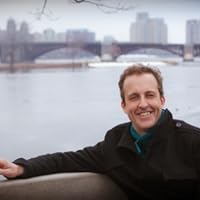
Dr. Stephen LaBerge draws on recently developed techniques that teach you to be aware of what you are dreaming, and ultimately control and manipulate the outcome of your dreams, in order to: overcome long-term, deep-seated fears, anxieties, and phobias; harness the healing power of your unconscious, awaken creativity, and more. Dr. LaBerge presents further excersises in EXPLORING THE WORLD OF LUCID DREAMING.
Stephen LaBerge (1947–) is a psychophysiologist and a leader in the scientific study of lucid dreaming. He began researching lucid dreaming for his Ph.D. in Psychophysiology at Stanford University, which he received in 1980. In 1987, he founded The Lucidity Institute, an organization that promotes research into lucid dreaming, as well as running courses for the general public on how to achieve a lucid dream.
A lucid dream is a dream in which the dreaming self becomes aware that s/he is dreaming. For me, that awareness would lift my heart with excitement because I would immediately think, 'This is a dream! I can do anything.' And I would immediately jump from the ground and fly. I've been to the moon, 'flew' underwater, swam with whales, etc.
This book is excellent, and contains simple techniques to help promote the lucid dream experience.
Also fascinating are LaBerge's review of the role of dreaming in different cultures.
LD also looks into the philosophy of life, what dreams might mean to our understanding of being alive. One of the most bemusing/interesting examples is that of an over active lucid dreamer who became addicted to the dream world that he'd created. In that world he had elevated himself to be his dream world's spiritual and secular king. That was, until an old man dressed in white hit him over the head and asked 'How do you know that I am not dreaming you?!' At which point the dreamer woke up to wonder at what was his role, really, in 'his' dream. Take a look at pages 264-6.
And, more prosaically, LaBerge also includes data and experimental studies around the science of dreams.
You may not ever experience a lucid dream, although I hope you do! Regardless, this book will change your ideas about dreams and dreaming.
Probably the fastest I’ve ever read a nonfiction book. It was very interesting and I learned a lot about dreaming. The last two or three chapters got a bit unexpectedly spiritual, so as a believer, I’d recommend reading those with caution and use discernment.
I found this author from a workshop about lucid dreams, in 2010. After searching a bit, I found this book, but only a few years later I found a suitable reader to read the file on my mobile. Stil, I wasn't much captivated by the language used, I think it's very technical and scientific, despite of loving the subject. That's why it took me three years or so to read it. I apreciated the reports about lucid dreams, the pratical guidance and the techniques to have them, but it's not really working for me. I had lucid dreams after the workshop, (or at least I think I had them, but also I think I could be dreaming that I was having a lucid dream) I could not control it, it seems that I keep my fears, despite of knowing that it is a dream. I've been trying the MILD technique for several months, but with no results. I'll keep trying, specially when wake up early in the morning and still have time for another sleep, and in the afternoon naps that I can make um weekends and holidays. I'll keep trying until I find some results. The last chapters were very interesting, whem he writes about the applications of lucid dreaming and transcends to life after death. I found some similarities with what Neal Donald Walsch wrote in his book Home with God: In a Life That Never Ends. I realize that mindfull meditation and yoga are in the same mindset, and since these subjects interest me, I'll keep practicing, searching and trying until I got it.
LaBerge puts forward an applied, experimental approach you can try for yourself. I recommend ignoring the New Age psychobabble others have pinned to the topic of lucid dreaming. Of course, it's fun to imagine fantastical implementations of the practice, as in the film Inception, but it's way more interesting to actually dream lucidly. I had the privilege of living in Germany for three years in the early 1990s. We arrived at the beginning of February. Our little village of about 300 people was at approximately 49.5 ° N, a little farther north than Vancouver, BC. Winter nights were very long and it was easy to sleep. I decided to practice lucid dreaming according to LaBerge's methods. As he predicted, it took a long time to set myself up for the experience. My results were inconsistent (not every night) but increased in frequency and were occasionally astonishing. In addition to the preparation practice, I found getting a full night's sleep was essential. For me, that meant about eight to nine hours. When I returned to the U.S., I was unable to get as much sleep because of 90-to-180 minutes of commuting each day. My lucid dreams frequency dropped to nearly zero. An ancillary benefit of engaging in a lucid dreaming practice is the increase in presence (a goal of mindfulness and other meditative practices) and in awareness of what's actually happening in you and in your environment in real-time. It becomes easier to discern things like emotional flooding and its reality-distorting effects. That discernment enables you to put some distance between the reactive habits in your life and your immediate ability to think and choose clearly. This benefit derives from the pre-lucid-dreaming practice of paying increasingly close attention to perceptions while awake. It's how you train your brain to better notice when what's occurring deviates significantly from waking reality. That realization is the within-dream trigger for becoming lucid. There's quite a bit of ongoing lucid dreaming research. Findings are raising new implications about the nature and purpose of sleep and dreaming, for cognition, and for increasing self-awareness and self-direction.
This book is a classic and tells a lot about the history of dreaming (everyone heard the story about the sewing machine...) and is a nice introduction for everyone who's new to lucid dreaming. However, if you are an experienced lucid dreamer, this book will kinda dissapoint you. There are experiments you've probably done yourself and sometimes he tries to convice you of his opinion while there is no real proof (yet). Of course you can't judge an old book because of that. What I absolutely didn't like about the book is his 'monkey mind', one page he's talking about what happens when we die, second page he's talking about lucid dreams, then about OBE's, then you read dream journal examples and then he continues talking about what happens when we die - again. Another one 'Why do we dream?' have been repeated dozens of times and leaves you with an open answer. Laberge believes OBE's and LD's are the same because he had (what I call) OBE-dreams... just because he didn't experience the real deal, he's convinced OBE's are just dreams. Some techniques are discussed but how to's are not included (except for motivation and a short piece about MILD). He mentions other people a lot, for example it's very obvious he's not a big fan of Castaneda and just by reading -his- book I now know Garfield's lucids were mostly sexual...in case you forget, he will mention it several times. A perfect book for people who are new to lucid dreaming but not for those who wish to go deeper with this practice.
What an exploration of consciousness, human imagination, and the forces that drive us we still don't quite understand.
The first time, I read this book at uni and was so taken by it that I started sleeping only ~6 hours a night and napping in the afternoons in order to have higher chances of lucid dreams occurring. It worked for about a month and then, once I have stopped actively trying and devoting attention to it, the lucidity dissipated.
Having read this again, I am doing my best to introduce more reality checks into the day. Not only to improve my chances of lucid dreaming, but at least as importantly because it seems the best way to become more aware, more mindful, and more appreciative while awake as well. No wonder Tibetan yogis used dreams to go deeper into their consciousness thousands of years ago already :)
In about 1985 or 1986 I read an article in Omni Magazine on the subject of Lucid Dreaming and it gave this book as the source of information. I was intrigued and ordered the book. After reading the book, without even practicing the exercises I had a spontaneous lucid dream. (Before this article and book I did not even know there was such a thing). I started doing the exercises and had some very amazing lucid dreams as a result! Excellent book.
Pretty good book, covers the topic of Lucid Dreaming from a lot of perspectives from scientific to spiritual, and arms you with a concise MILD guide, the most successful method to induce a lucid dream ever discovered.
In other news, I'm discovering I have a keen interest in non-theistic religions and will probably be reading a lot more Buddhist literature soon.
Tahle knížka nenaučí lucidně snít. Jenom vám nastíní různé metody. Ale je to zajímavé pojednání o snech, jak lucidních tak normáních. A o tom co všechno je v nich možné a jak si jimi si můžete zpetřit svůj život.
Another way of truly knowing yourself. The method suggested to end a recurrent nightmare is something worth trying. Reviewing an unpleasant dream while awake did help on occasion. I rarely r3member my dreams. A dream journal might help.
Очень интересное направление, которое заставляет поверить в что-нибудь больше, чем наша реальность и осуществить самые запредельные желания. Такие мысли посещали меня в преддверии прочтения книги.
Ожидания и реальность, к сожалению, не сошлись. Ничего конкретного и официально доказанного. Куча примеров с других книг и просто размышлений.
Показалось, что все написано для того, чтобы привлечь инвестиции для сомнительных исследований.
Recommended to me in an off-handed manner by a counselor, this book helped me get rid of some bad sleep disorders. After I read it, I found that I'd been awake but not aware in my dreams. I learned how to recognize when I was dreaming and take advantage of it, instead of letting my subconsious phobias take over and run their course. My sleep became as enjoyable as it was frightening. After a while, because my sleep became normal, I stopped having the lucid dreams. I'll take the peaceful sleep, though. This is not a mystical, or shamanistic work in the manner of Castaneda, it's a scientific, medical study. Most bookstores and libraries put it with Castaneda, stating that anything to do with dreams has to go in the Mystical section. Shame. I highly recommend this for anyone having sleep disorders.
The book I’m here reviewing is Lucid Dreaming by Stephen LaBerge published in 1985 (304 pages).
I found the book readable in part, but much of it was quite boring. It is a well-written, intellectual/cerebral account not only of lucid dreaming but dreaming as a whole and other related subjects.
The author is irritatingly skeptical, and, for instance, does not believe that out-of-body experiences are real, but that they are a form of lucid dreaming. He himself has had several out-of-body experiences but uses his own form of logic to explain them away.
In conclusion, I would say that many will appreciate this book, which is an all-round theoretical approach to the subject, but I myself was disappointed, and will now be looking for other hopefully more captivating books on lucid dreaming, and OBEs also for that matter.
Another enjoyable book on lucid dreaming. I've had another recently. A lucid dream, that is. Usually, when I realize I am lucid I get all excited and wake up. The dream only lasts seconds once the realization hits. Then I find myself lying in bed trying to will myself back into the dream, which hasn't worked in years and years. But this time, when I recognized I was lucid I managed to change the trajectory of the dream and then lost my sense of being lucid...if that makes sense. But I remembered much of it and wrote it down. Does that mean I'm getting better? I hope so. A second reading was pretty interesting.
Like all of LaBerge's work, there is a tension between the promise of enabling readers to do all of the things that he outlines and the fact that he seems to ignore the fact that, while 50% of people achieve lucidity sometime in their lives, few can do it on command, even with his guidance and techniques. Though a frequent lucid dreamer myself, I have always been ambivalent about being constantly in control and have opted for a more occasional dip into lucid waters. Laberge doesn't seem to value any dreams but the lucid ones, but that said, he is an able guide to what they can offer.
This book has such a mind blowing concept. You can be awake while you are dreaming. This book opened up a lot of my life and I have read it at least 5 times. My copy actually belonged to my roommate in College and i still have not given it back to him. I probably never will. Stephen LaBerge shows us an amazing aspect of our mind. I will tell you that the technique he outlined is difficult, but with enough practice, the results are beyond description. This book is a must read by everybody.
Have been interested in dreams and altered states for a long time. My wife and daughter claim to have the ability to "lucid dream" a dream in which one is conscious of dreaming and can alter the progress/outcome of a dream. I've been reading this book hoping to become "lucid" so far a lot of very bizarre dreams, but none in which I am aware of dreaming.
The book is somewhat interesting but had many punctuation errors which I find annoying (no cap starting a sentence?)
This book is a great introduction to lucid dreaming and by extent to the science of dreams. As a lucid dreamer myself, I found it a valuable addition to my knowledge.
Unfortunately it becomes jarringly esoteric in the last two chapters where he writes confusing stuff about dream telepathy, objective dream reality, and astral bodies, that kind of put the whole book into questionable new age territory, something that lucid dreaming clearly doesn't deserve.
I know next to nothing about lucid dreams, nor have I ever, to my recollection, had one. This book inspired me to want to dream lucidly and provided techniques to achieve that goal. The author writes well, and the overall quality of writing is scholarly but fairly effortless to get through. Highly recommended for someone looking to get an introduction to the field of lucid dreams.
It's been years since I read this. I don't remember much about it, except I was disappointed in it overall although it meandered to some interesting areas. I already had been dreaming lucidly for years but didn't find much information that was new.
A must read. Specially if you have have lucid dreams sometimes. I used to have a lot, but I never thought about them too much. Then they became nightmares and I fought for not having any more. With succees. Now Lets see.
This book was really informative and I will continue to put the methods described in this book to practice with the hope of having a successful lucid dream. I would highly recommend this book to anyone who wishes to have a lucid dream.
I read this a long time ago so I don't remember very much about it, but I seem to remember that it helped me to have a lucid dream or two at the time. If that's something you're looking for then I recommend this book.