Jump to ratings and reviews
Rate this book

Maria Mitchell: Life, Letters, and Journals

Rate this book
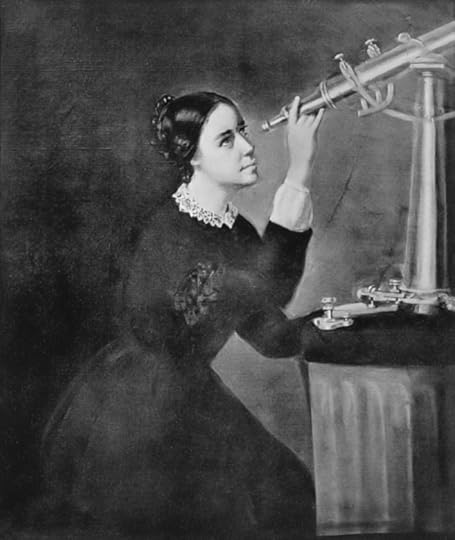
Maria Mitchell: Life, Letters, and Journals was written in 1818 by the American astronomer Maria Mitchell. Her Quaker parents valued education and insisted that their daughters received the same education as their sons. Her father taught her astronomy at home. At age twelve, she aided her father in calculating the exact moment of annular eclipse. Mitchell discovered "Miss Mitchell's Comet" (Comet 1847 VI, modern designation is C/1847 T1) in the autumn of 1847. She was the first professional woman astronomer in the United States. She is credited for her discovery that sunspots are whirling vertical cavities and not clouds as some had proposed.

212 pages, ebook

First published October 28, 1991

43 people are currently reading
240 people want to read

About the author

Maria Mitchell

7 books2 followers

Ratings & Reviews

What do you think?
Rate this book

Friends & Following

Create a free account to discover what your friends think of this book!

Community Reviews

5 stars
9 (26%)
4 stars
14 (41%)
3 stars
9 (26%)
2 stars
2 (5%)
1 star
0 (0%)
Displaying 1 - 2 of 2 reviews
Profile Image for Owlseyes .
1,805 reviews306 followers
October 18, 2017


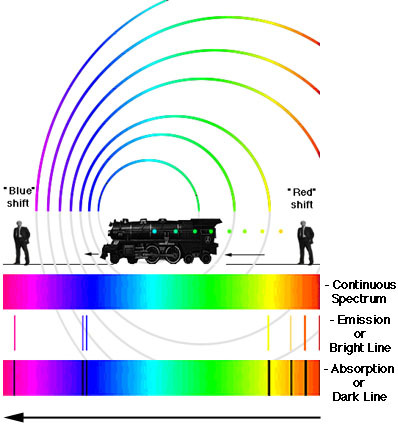
The Doppler Effect works both ways, in the visual and auditory world. A train that approaches will provoke certain type of sound wavelengths…you know what I’m talking about; quite contrary to the train that’s departed of which you hear a fainter murmur….

A (red) star that’s far away (even fading away, due to her life span getting to its end) receding…will look quite different from that bluish one, approaching, young, full of life, still….


It’s commonsense: Astronomy was, for long, a male activity; if you’re asked to name an astronomer only male names will pop up, most likely. MM is a curiosity in itself, the first female professional astronomer,…in the USA. That’s why I read this book and wrote the review.


Infancy and education

She was born in the island of Nantucket, August the 1st, 1818. Her parents were of a long list of generations of Quakers (then called Friends). She was surrounded by an environment of “hardships”, due to the “(whale) ships at the sea” activity so characteristic of that area. Father was a “kind to children” man, liking “bright colors”. Mother, …of a “strong character”.

The author of the book, sees MM as a “shy and slow” child; not “brilliant”. Yet in her way, [my view] she was a bit privileged in terms of life opportunities. Starting in school.

She had the people who instilled in her the idea that the study of books was “charming”, she recalls of her first school teacher; and a Mr Pierce who nurtured her “taste for math”; and a mister Mitchell responsible for her fondness of astronomy: he had brought a “Doland telescope” in.

She was 12 and had the chance to watch the annular eclipse of 1831, “totally central” in Nantucket. Due to the whaling activity, many ships required “chronometers” on time, so she was soon introduced to the “sextant”.

Most significant was this great opportunity she had to become a librarian for 20 years of her life in the Nantucket Athenaeum, after 16 years old; MM had “ample leisure for study”; she devoured books; read Laplace…and Gauss’s book on astronomy, in Latin.

Later in life she would lecture in Vassar's College.

The book is a collection of journals’ quotations that span MM’s whole life. I’ve found of particular interest how she was viewed by her students and her own self-appraisal.

July 1887-“My students used to say that my way of teaching was like of the man who said to his son, there are the letters of the English alphabet go into that corner and learn them. It is not exactly my way…”.

One student wrote about her:” as a teacher Miss Mitchell’s gift was that of a stimulus not that of a drill”.


Travels

MM was a well-travelled lady; she made two European tours (England,France, Italy…). It was very surprising her visit to Russia’s Saint Petersburg, on her second tour. First, there was the temperature issue: same temperatures didn’t match in the USA and Russia, in terms of weather. Cold in Russia is not the same cold as in America. Then going to bed while the sun “still shone” ,was new to her. Additionally, contrary to her expectations, the women’s situation was quite different: she came from the “democratic “USA, and ushered in the “despotic” Russia; nevertheless, just in the area of Saint Petersburg, she got to know: there were thousands of women studying science (unlike the USA); and she witnessed how proficient some of these were in several languages (French, German and English). Only one slight remark: the people running the government observatory of Pulkova (1873),all had some military connection...leading up to the Czar.

Religious beliefs

As already mentioned, she was raised within the “Quaker discipline” framework. Later in life she would move into the “Christian Unitarianism”. But some of her journals observations are revealing of her true faith.

1854: “There is a God, and he is good, I say to myself, I try to increase my trust in this, my only article of creed.”

Sunday, December 18, 1866 “ Reverend A…Deuteronomy…It seems to me strange that since we have the history of Christ in the New testament, people continue to preach about Moses”.


Women’s rights

MM never married; but she was fully aware of the challenges of the woman situation of her time. To those who had the intellect and capability she said: “endow the woman with genius with time”. But saying:”not every girl should go to college”, she was acknowledging the motherhood role as important too. She wanted freedom for the scientists.

In 1875 she led the Women’s Congress and in 1869 she was the first woman elected to the American Philosophical society. Between 1874 and 1876 she headed the American Association for the Advancement of Women.


Academic and scientific life


Again, she was the first woman being a professional astronomer. A lunar crater was named after her.

Of outstanding value I would point her studies on the surface features of Jupiter and Saturn; and her photographs of the stars. She discovered a comet, named after her.

The book offers insightful observations about color and language, like:
“we call the stars garnet and sapphire but these are vague terms, our language has not terms enough to signify the different delicate shades”.

About the Denver eclipse of 1878 she wrote:
“there was certainly not the beauty of the eclipse of 1869,then immense radiations shot out in all directions …in 1869, the rosy prominences were so many so brilliant, so fantastic, so weirdly changing…”.
It looks like literary pieces.


Last years

Due to her poor health she retired from Vassar in 1888.
MM died in June 28, 1889 in Lynn, Massachusetts. President Taylor at her funeral said:”the most striking trait of her character …genuineness, no false note in Maria thinking”.
Of her own education there was only one thing she lamented: not having learned (formally) music, despite the piano at home. She wrote.”I was born incapable of appreciating music, I mourn it”.


Well, her star will surely shine for long. And her music/words too, because depending on your position, sometimes they’ll sound as reddisher…sometimes bluisher, it really doesn’t matter; the Doppler Effect works both ways: visually and auditory...ly.

Music to my ears,... reading her.
Profile Image for Morning Glory.
520 reviews7 followers
Read
July 3, 2024
Delightful narration of a grand tour and astronomical inquiry, despite her blatant anti-religiosity. Punchy reflections and realistic depiction of life and human relations in her time. My favorite was her description of meeting Harriet Haslam as she was working on her Zenobia statue because it's one of my favorites and I've seen it in St. Louis.
Now I know what nolens volens means: like it or not.
Favorite quotes:
"To know what one ought to do is certainly the hardest thing in life. Doing is comparatively easy but there are no laws for your individual case--yours is one of a myriad. There are laws of right and wrong in general but they do not seem to bear upon any particular case. In chess playing you can refer to rules of movement for the chess men are few and the positions in which they may be placed numerous as they have a limit. But is there any limit to the different positions of human beings around you? Is there any limit to the peculiarities of circumstances?"
"[A] woman needs a home and the love of other women at least if she lives without that of man ."
"He said that he had been ill so much that he had been kept out of temptation but that the forecastle of a ship was no place for improvement of mind or morals."
Displaying 1 - 2 of 2 reviews

Can't find what you're looking for?

Get help and learn more about the design.