

What do you think?
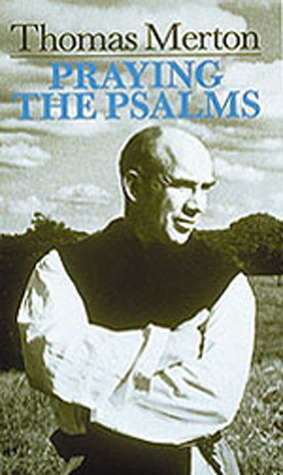
Praying the Psalms
In Bread in the Wilderness , Merton looks at the psalms as poetry; in this book he regards them as prayer. Guiding the reader through the more representative psalms, he explains why the Church also considers the psalms as the best way to praise God.
48 pages, Paperback
First published June 1, 1956
About the author
Thomas Merton
596 books1,974 followersThomas Merton, religious name M. Louis, was an American Trappist monk, writer, theologian, mystic, poet, social activist and scholar of comparative religion. In December 1941 he entered the Trappist Abbey of Gethsemani and in May 1949 he was ordained to priesthood. He was a member of the convent of the Abbey of Our Lady of Gethsemani, near Bardstown, Kentucky, living there from 1941 to his death.
Merton wrote more than 50 books in a period of 27 years, mostly on spirituality, social justice and a quiet pacifism, as well as scores of essays and reviews. Among Merton's most enduring works is his bestselling autobiography The Seven Storey Mountain (1948). His account of his spiritual journey inspired scores of World War II veterans, students, and teenagers to explore offerings of monasteries across the US. It is on National Review's list of the 100 best nonfiction books of the century.
Merton became a keen proponent of interfaith understanding, exploring Eastern religions through his study of mystic practice. His interfaith conversation, which preserved both Protestant and Catholic theological positions, helped to build mutual respect via their shared experiences at a period of heightened hostility. He is particularly known for having pioneered dialogue with prominent Asian spiritual figures, including the Dalai Lama XIV; Japanese writer D.T. Suzuki; Thai Buddhist monk Buddhadasa Bhikkhu, and Vietnamese monk Thich Nhat Hanh. He traveled extensively in the course of meeting with them and attending international conferences on religion. In addition, he wrote books on Zen Buddhism, Confucianism, and Taoism, and how Christianity is related to them. This was highly unusual at the time in the United States, particularly within the religious orders.
Merton wrote more than 50 books in a period of 27 years, mostly on spirituality, social justice and a quiet pacifism, as well as scores of essays and reviews. Among Merton's most enduring works is his bestselling autobiography The Seven Storey Mountain (1948). His account of his spiritual journey inspired scores of World War II veterans, students, and teenagers to explore offerings of monasteries across the US. It is on National Review's list of the 100 best nonfiction books of the century.
Merton became a keen proponent of interfaith understanding, exploring Eastern religions through his study of mystic practice. His interfaith conversation, which preserved both Protestant and Catholic theological positions, helped to build mutual respect via their shared experiences at a period of heightened hostility. He is particularly known for having pioneered dialogue with prominent Asian spiritual figures, including the Dalai Lama XIV; Japanese writer D.T. Suzuki; Thai Buddhist monk Buddhadasa Bhikkhu, and Vietnamese monk Thich Nhat Hanh. He traveled extensively in the course of meeting with them and attending international conferences on religion. In addition, he wrote books on Zen Buddhism, Confucianism, and Taoism, and how Christianity is related to them. This was highly unusual at the time in the United States, particularly within the religious orders.
Ratings & Reviews
Friends & Following
Create a free account to discover what your friends think of this book!
Community Reviews
Displaying 1 - 30 of 49 reviews

August 26, 2020
A gift from my best friend Jane. She knows my love for Sacred Scripture and must have been listening to the Holy Spirit because I have been wanting to embark on another perusal through the Psalms. As I have been reading through the The Didache Bible: With Commentaries Based on the Catechism of the Catholic Church, it seemed appropriate to pause and spend a little extra time with this prayer-songbook. So, an extra book, another set of eyes and/or a fresh perspective on this ancient and timeless collection of poetic prayers is like having another person join in a group discussion. I will also pull from other books I have on The Book of Psalms, NIV, such as: Reflections on the Psalms, The Psalms with Commentary, Psalms / Now (Unabridged Version), and my favorite, Book of Psalms-NLT. This last in the list has pride of place in my heart because each psalm is lovingly interpreted in a 1 or 2 page spread of visual calligraphy. Each prayer comes to life in a whole new dimension.
This book by Merton is a slim, simple introduction to the overwhelming richness of this inexhaustible well of spiritual superabundance of Faith, Hope, Love and Wisdom. It was the song book of the Jewish people and is the prayer book of Christians everywhere and many of the individual psalms have also been set to music by moderns also. Since one has to begin someplace on a never-ending journey, this is not a bad place, but certainly it cannot be the end, nor did its author intend it to be. Happy song-journeying!
Marked as read, but actually will keep open as an on-going reference.
This book by Merton is a slim, simple introduction to the overwhelming richness of this inexhaustible well of spiritual superabundance of Faith, Hope, Love and Wisdom. It was the song book of the Jewish people and is the prayer book of Christians everywhere and many of the individual psalms have also been set to music by moderns also. Since one has to begin someplace on a never-ending journey, this is not a bad place, but certainly it cannot be the end, nor did its author intend it to be. Happy song-journeying!
Marked as read, but actually will keep open as an on-going reference.

September 16, 2019
Merton ci presenta la grande importanza che hanno avuto e che hanno i Salmi nella preghiera cristiana quotidiana, perché in essi assaporiamo la lode divina alla sua fonte pura e immacolata, in tutta la sua autenticità e perfezione originaria. I Salmi, infatti, non sono soltanto i canti di profeti ispirati da Dio; sono i canti dell'intera Chiesa, l'espressione stessa della sua vita interiore più profonda. Dio si è dato in essi come in un sacramento. La Chiesa ama i Salmi perché in essi canta la sua esperienza di Dio, la sua unione con la Parola incarnata, la sua contemplazione di Dio nel mistero di Cristo.

February 14, 2021
To the reader who has grown accustomed to the distance allowed to them to the ‘Word of God’ by the Bible’s first eighteen books (all written as chronicles in the third-person) the Psalms must come as a surprise. It is here that the reader is first prompted to formulate those strange words for themselves: that address, a supplication, found in almost every psalm: “O Lord” or “O my God.” It is difficult to read the Psalms as historical or religious ‘artefacts’ as a secular reader might be tempted to read other books of the Bible. The singular voice of the Psalms springs from the text – they demand to be read as poems. And so, read as poems (with all of great poetry’s honesty, spontaneity, difficulty) they offer the reader of the Bible something new: a glimpse of the subjectivity of faith, and, in that, a glimpse at communion.
All great poems and works of art are a communion of sorts – the mind of the writer and reader are one, if only for the moment that the words are written and read. This fleeting connection is likewise a glimpse at something which the Christian might call love, or brotherhood, or community. But normal poems, even great ones, don’t explicitly allow the extended franchise of communion that the Psalms offer to Christians; the community of poetry sees itself as small, ephemeral, fragmented – we meet each other in secret, in marginalized and difficult words. What the Psalms offer alternatively, in Merton’s view, is an entry into the ‘mind of the Church’ which, if imagined and accessed correctly, means something along the lines of a communion that extends beyond the marginal confines of poetry as it is. The Psalms, as Merton puts forth, are the very poems and prayers that Christ and Mary and the apostles would have read, studied, and prayed. So it is entering into this realm of shared poetic experience that the Christian reader enters “the mind of Christ” or the body of his Church.
It is close to this sense that Merton writes, “There is no aspect of the interior life, no kind of religious experience, no spiritual need of man that is not depicted and lived out on the Psalms.” It is through Christ, Merton believes, and the Psalms as part of the content of his life, that the internal spiritual life, the universal life, is constituted and illuminated, surveyed and conquered. The range of experiences in the Psalms illuminates the trials and joys of the wholly integrated or ‘spiritual’ life that Christ’s prophetic predecessors lived to an evolving extent that culminates in the perfection of Christ’s life (to Merton, the final synthesis of Poetry and Life).
But how do the Psalms achieve this goal of offering this ‘mind’ to the reader, where other Biblical books fall short or serve other purposes? It is a certain paradox in all poetry but especially in the Psalms (and for their aforementioned purpose of perfection and salvation) that communion comes not from generic ‘accessible’ poetry but from poetry that is unrepeatably singular, or genius. The circumstances that prompted the composition of each psalm were singular and personal. They do not profess to be universal or are even organized in coherently for directed reading in the Bible. They are not intended as guidelines of faith or a kind of religious informatics. Merely, each is an organic and honest expression of a single poet’s life – the singular effort towards perfection that each prophetic predecessor (and successor) of Christ makes. They are inspired words, sometimes limpid, sometimes opaque – sometimes elated, sometimes despairing. The paradox is that this genius, is repeated again but to a more complete extent in Christ’s life. Christ achieves poetry because he understands fully himself and therefore understands the whole of humanity and their relation to God and each other.
At first glance, many of the points made in Thomas Merton’s book about what the psalms are and how they should read and prayed seem obvious and uncontroversial. His advice to read the Psalms personally (as this is how Christ’s successors, the apostles, Mary, or Christians and readers of the Bible throughout history see their relation to the ‘Universal Mind’ which is the ‘Other Mind’ of Poetry) is self-evident to anyone who reads poetry. It raised the question: how do most Christians even read the Psalms? Do they read it with an understanding that the Psalms serve this purpose? to glimpse this foreign mind?
For one, it’s true that there has always been an aversion in Christianity to laypeople reading the Bible for themselves. As Merton explores in another book, Opening the Bible, for too great a portion of the history of the Church, the ‘Word of God’ was reserved only for an elect few – the vast majority of people and Christians consigned to receive its divine transmission (its divine Poetry, here in the Psalms) indirectly.
A parallel tendency, whether an enduring consequence of this first fact or not, is that a reverence for the Bible as a high sacrament beyond reproach held by many Christians in effect discourages the reader from seeing themselves and their individual lives in this ‘Word.’ A passive adoration of the Bible and the Psalms, that discourages honest and critical reading, impairs the power of its language and forces the spirit of poetry into hibernation.
Seen with this risk in mind, Merton’s encouragement to read the psalms existentially – to see in them the unplumbed depths and unwitnessed apogees of one’s own spiritual being – becomes an urgent and troubling challenge to the reader. It is this challenge – to read intimately and openly – that invites real danger into the reader’s world. Because to fully listen to poetry’s voice, which perhaps we have not yet identified as our own, invites a terrifying prospect: the possibility of a real transformation of our lives.
All great poems and works of art are a communion of sorts – the mind of the writer and reader are one, if only for the moment that the words are written and read. This fleeting connection is likewise a glimpse at something which the Christian might call love, or brotherhood, or community. But normal poems, even great ones, don’t explicitly allow the extended franchise of communion that the Psalms offer to Christians; the community of poetry sees itself as small, ephemeral, fragmented – we meet each other in secret, in marginalized and difficult words. What the Psalms offer alternatively, in Merton’s view, is an entry into the ‘mind of the Church’ which, if imagined and accessed correctly, means something along the lines of a communion that extends beyond the marginal confines of poetry as it is. The Psalms, as Merton puts forth, are the very poems and prayers that Christ and Mary and the apostles would have read, studied, and prayed. So it is entering into this realm of shared poetic experience that the Christian reader enters “the mind of Christ” or the body of his Church.
It is close to this sense that Merton writes, “There is no aspect of the interior life, no kind of religious experience, no spiritual need of man that is not depicted and lived out on the Psalms.” It is through Christ, Merton believes, and the Psalms as part of the content of his life, that the internal spiritual life, the universal life, is constituted and illuminated, surveyed and conquered. The range of experiences in the Psalms illuminates the trials and joys of the wholly integrated or ‘spiritual’ life that Christ’s prophetic predecessors lived to an evolving extent that culminates in the perfection of Christ’s life (to Merton, the final synthesis of Poetry and Life).
But how do the Psalms achieve this goal of offering this ‘mind’ to the reader, where other Biblical books fall short or serve other purposes? It is a certain paradox in all poetry but especially in the Psalms (and for their aforementioned purpose of perfection and salvation) that communion comes not from generic ‘accessible’ poetry but from poetry that is unrepeatably singular, or genius. The circumstances that prompted the composition of each psalm were singular and personal. They do not profess to be universal or are even organized in coherently for directed reading in the Bible. They are not intended as guidelines of faith or a kind of religious informatics. Merely, each is an organic and honest expression of a single poet’s life – the singular effort towards perfection that each prophetic predecessor (and successor) of Christ makes. They are inspired words, sometimes limpid, sometimes opaque – sometimes elated, sometimes despairing. The paradox is that this genius, is repeated again but to a more complete extent in Christ’s life. Christ achieves poetry because he understands fully himself and therefore understands the whole of humanity and their relation to God and each other.
At first glance, many of the points made in Thomas Merton’s book about what the psalms are and how they should read and prayed seem obvious and uncontroversial. His advice to read the Psalms personally (as this is how Christ’s successors, the apostles, Mary, or Christians and readers of the Bible throughout history see their relation to the ‘Universal Mind’ which is the ‘Other Mind’ of Poetry) is self-evident to anyone who reads poetry. It raised the question: how do most Christians even read the Psalms? Do they read it with an understanding that the Psalms serve this purpose? to glimpse this foreign mind?
For one, it’s true that there has always been an aversion in Christianity to laypeople reading the Bible for themselves. As Merton explores in another book, Opening the Bible, for too great a portion of the history of the Church, the ‘Word of God’ was reserved only for an elect few – the vast majority of people and Christians consigned to receive its divine transmission (its divine Poetry, here in the Psalms) indirectly.
A parallel tendency, whether an enduring consequence of this first fact or not, is that a reverence for the Bible as a high sacrament beyond reproach held by many Christians in effect discourages the reader from seeing themselves and their individual lives in this ‘Word.’ A passive adoration of the Bible and the Psalms, that discourages honest and critical reading, impairs the power of its language and forces the spirit of poetry into hibernation.
Seen with this risk in mind, Merton’s encouragement to read the psalms existentially – to see in them the unplumbed depths and unwitnessed apogees of one’s own spiritual being – becomes an urgent and troubling challenge to the reader. It is this challenge – to read intimately and openly – that invites real danger into the reader’s world. Because to fully listen to poetry’s voice, which perhaps we have not yet identified as our own, invites a terrifying prospect: the possibility of a real transformation of our lives.

June 25, 2021
Wonderfully brief, insightful, and enriching. I have a fresh perspective on the Book of Psalms having read this essay. I now plan on going back and re-reading so that I can highlight sections, cross reference in my Bible, and retrieve more gems and pearls I am confident were missed the first time through. Highly recommend!
February 20, 2023
Merton articulates the purpose and importance of praying the Psalms and making them central in the praying life of the Church (as opposed to any other liturgical text, or spontaneous prayer).
A very worthwhile read. And mercifully short.
A very worthwhile read. And mercifully short.

December 27, 2020
Some helpful points on absorbing the psalms as our own and not trying to “get something out of them” but putting work into understanding them on our own. We can’t take every single one of the psalms as our own because we have unique and individual experiences. But by finding the ones that fit in the grooves of our soul at those times and we PRAY them, using them to unite our will with Gods and learning to bless him, praise him, and submit to Him with joy, we can really experience the psalms the way they were meant to. Not just calls for worship and in mindless recitation or even mindless “boring” singing during worship.

February 6, 2024
A small treatise on the importance of the psalms in a Christian life of prayer. Because the psalms are God’s very own words and because they contain in them the life of Christ, we enter into his Life when we enter into the psalms.
“Nowhere can we be more certain that we are praying with the Holy Spirit than when we pray the psalms.”
“Nowhere can we be more certain that we are praying with the Holy Spirit than when we pray the psalms.”

August 26, 2026
This was my brief introduction to Thomas Merton but I found his insights on the psalms very insightful in a way that our experiences cannot be individualized but always bring us back to the Church.

April 3, 2020
Really short book, all of 45 pages, but an impactful read. Merton has a few key insights on why the Psalms are so key to our faith and prayer life, but the most impacting takeaway for me was his obvious love for the Psalms. Not even that he loved them because of what he got from them, but simply that he loved that because it revealed more of who God was.
August 30, 2021
Spiritually invoking
My Spiritual journey brought me back to Merton. His explanation of the value of Psalms 8n my life were beyond measure.
What a blessing he is, even though he is no longer with us in body, his spirit through his words live on.
Short read, powerful.
My Spiritual journey brought me back to Merton. His explanation of the value of Psalms 8n my life were beyond measure.
What a blessing he is, even though he is no longer with us in body, his spirit through his words live on.
Short read, powerful.

July 27, 2009
I generally like Merton's writings. However, for a fuller treatment from Merton on the Psalms, read Bread in the Wilderness. This book is kind of a rehash.

October 25, 2012
not what I was hoping for. Maybe the Bonhoeffer book will be more what I was looking for.
Read
September 5, 2021The best book on the Psalms I have ever read.

Read
June 9, 2024Nice little reference etc book. Also led to confusion when recommended psalms for certain situations were quoted in part and my memory had a different number attached. Initially doubted my memory and read on. But then a few I KNEW came up. So somehow despite living in a very Roman Catholic community I was this many years old before I realized the psalms are numbered differently. So travelled down that rabbit hole of why. Note for myself later below. Have to remember if ever reach for this book again for its category lists of psalms to refer the right list.
"There is a difference in numbering between the Hebrew (Masoretic) text and the Greek and Latin (Septuagint and Vulgate). Psalms 9 and 10 in the Hebrew get combined into one as do Ps 114 & 115. Psalms 116 and 147 both get split in two.
Most Protestant Bibles follow the Hebrew numbering while most Catholic and Orthodox ones follow the Greek.
"There is a difference in numbering between the Hebrew (Masoretic) text and the Greek and Latin (Septuagint and Vulgate). Psalms 9 and 10 in the Hebrew get combined into one as do Ps 114 & 115. Psalms 116 and 147 both get split in two.
Most Protestant Bibles follow the Hebrew numbering while most Catholic and Orthodox ones follow the Greek.

March 31, 2020
A brief read (about 20 minutes) that highlights many of the wonderful aspects about the nature of the Psalms from a Catholic perspective. It is clear throughout the work that Merton is summarising a lot of what has gone before him in the Christian tradition, particularly from Augustine, Ambrose and many other Church fathers.
Worth reading for those new to the Christological nature of the Psalms, or those wanting to further their insight on the book of Psalms in general. With the exception of the last paragraph or two, and a few references to the Rosary, I don't find anything in here that would be objectionable to a protestant.
Worth reading for those new to the Christological nature of the Psalms, or those wanting to further their insight on the book of Psalms in general. With the exception of the last paragraph or two, and a few references to the Rosary, I don't find anything in here that would be objectionable to a protestant.
October 11, 2025
Catholic and mystical. Short encouraging meditation to make the psalms an integral part of our Christian life. Reading the book brings peace. Explains the different kinds of psalms, and how they are all appropriate for inclusion in our prayer life. "In the last analysis. it is not so much what we get out of the psalms that rewards us, as what we put into them. Good for any Christian looking to grow in their prayer life.

March 24, 2026
I have many books by Thomas Merton and this one is joining the ranks of one of my most favourite of his.
Although this is a small book - only 32 pages - it is packed full of knowledge.
I especially liked that so many Psalms were included - with explanations by Merton on their meaning.
In these turbulent times that we are currently living in - I feel that reading the Psalms will help us get through the events that our World currently faces.
Blessings to all.
Although this is a small book - only 32 pages - it is packed full of knowledge.
I especially liked that so many Psalms were included - with explanations by Merton on their meaning.
In these turbulent times that we are currently living in - I feel that reading the Psalms will help us get through the events that our World currently faces.
Blessings to all.
May 18, 2026
For Merton, the Psalms contain the whole of the interior life of the human being. Expertise in them is helpful to dig into the thorny bits, but they are best experienced rather than dissected. This is the function of poetry. The final two pages are worth the cost of the book. Merton's reflections are slight, but reading this short meditation made me want to dip back into the Psalms, and that was really Merton's entire goal.

November 19, 2021
Here is a very short work that praises the value of praying the Psalms. Fr Merton has written some essays on the value of this prayer and he calls out various Psalms for various occasions.
This is not so much a book to meditate by, but rather a guide post along the way.
This is not so much a book to meditate by, but rather a guide post along the way.

May 4, 2023
The length and caliber of this book is so apt considering the subject matter: the Psalms. Just like the Psalms, Thomas Merton's writing here is brief yet deep, sweeping yet intimate. With the time I saved by finishing this book in two sittings, I'm going to go Pray the Psalms.

January 1, 2024
Revealing
I have read the psalms and most many times. However, I never looked at them as supportive groups revealing so much interconnectedness. I finally understand that each is a prayer. Uttering our deepest feeling to God the way he wants them said.
I have read the psalms and most many times. However, I never looked at them as supportive groups revealing so much interconnectedness. I finally understand that each is a prayer. Uttering our deepest feeling to God the way he wants them said.
October 27, 2025
More like an essay than a book, Praying the Psalms gives Merton's thoughts on why the Catholic Church emphasizes the psalms in the Liturgy of the Hours and why it's important for people to include the psalms in their daily prayers; not just reciting them but internalizing their message.
March 28, 2018
Great help in understanding the psalms.Now I read then slowly and ponder them, instead of rushing through them
April 21, 2018
A wonderful companion book to reading the Psalms. Written by Thomas Merton, a gifted writer who died too you.

August 19, 2019
Excellent book of writing advice. I love Writer’s style. Highly recommend for other.

January 11, 2021
The book is more of a booklet at 45 pages. It was good, but just not enough to sink your teeth into.

April 14, 2022
4.
I don’t fully agree with everything he said.
I do enjoy his approach on the psalter and the prayers.
I am hoping to be like that one day.
I don’t fully agree with everything he said.
I do enjoy his approach on the psalter and the prayers.
I am hoping to be like that one day.

July 30, 2023
Clear and concise, really helped me understand how to use the psalms as opposed to just praying them.

February 9, 2025
A great pamphlet but does not deserve the title or price of a book.
May 25, 2025
Psalmist
After more than 75 years Merton’s explanation of the importance of the psalms in our lives is still relevant today. It’s very clear the psalms were his pathway to God.
After more than 75 years Merton’s explanation of the importance of the psalms in our lives is still relevant today. It’s very clear the psalms were his pathway to God.
Displaying 1 - 30 of 49 reviews