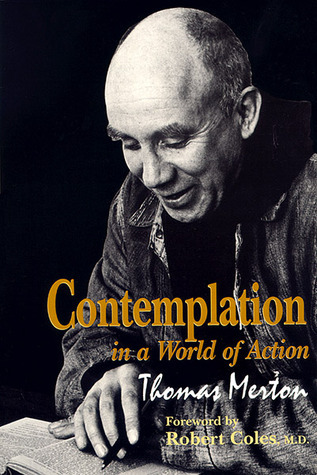
The spiritual and psychological insights of these essays were nurtured in a monastic milieu, but their issues are universally human. Thomas Merton lays a foundation for personal growth and transformation through fidelity to "our own truth and inner being." His main focus is our desire and need to attain "a fully human and personal identity." This classic is a newly restored and corrected edition and the inaugural volume of Gethsemani Studies in Psychological and Religious Anthropology, a series of books that explores, through the twin perspectives of psychology and religion, the dynamics and depths of being fully human. "When I speak of the contemplative life I do not mean the institutional, cloistered life, . . . I am talking about a special dimension of inner discipline and experience, a certain integrity and fullness of personal development . . . . Discovering the contemplative life is a new self-discovery. One might say it is the flowering of a deeper identity on an entirely different plane . . ." --Thomas Merton, from the book
Thomas Merton, religious name M. Louis, was an American Trappist monk, writer, theologian, mystic, poet, social activist and scholar of comparative religion. In December 1941 he entered the Trappist Abbey of Gethsemani and in May 1949 he was ordained to priesthood. He was a member of the convent of the Abbey of Our Lady of Gethsemani, near Bardstown, Kentucky, living there from 1941 to his death. Merton wrote more than 50 books in a period of 27 years, mostly on spirituality, social justice and a quiet pacifism, as well as scores of essays and reviews. Among Merton's most enduring works is his bestselling autobiography The Seven Storey Mountain (1948). His account of his spiritual journey inspired scores of World War II veterans, students, and teenagers to explore offerings of monasteries across the US. It is on National Review's list of the 100 best nonfiction books of the century. Merton became a keen proponent of interfaith understanding, exploring Eastern religions through his study of mystic practice. His interfaith conversation, which preserved both Protestant and Catholic theological positions, helped to build mutual respect via their shared experiences at a period of heightened hostility. He is particularly known for having pioneered dialogue with prominent Asian spiritual figures, including the Dalai Lama XIV; Japanese writer D.T. Suzuki; Thai Buddhist monk Buddhadasa Bhikkhu, and Vietnamese monk Thich Nhat Hanh. He traveled extensively in the course of meeting with them and attending international conferences on religion. In addition, he wrote books on Zen Buddhism, Confucianism, and Taoism, and how Christianity is related to them. This was highly unusual at the time in the United States, particularly within the religious orders.
I like the 1971 version. In my opinion, the 98 edition leaves out the most important part of the original - chapters about eremitism. I see this inclination, to subdue then ignore solitude, as part of the overall American fetish for action.
“The nineteenth century declared that God was dead, and now the twentieth, in consequence, has come to discover that without God man himself doubts the validity and meaning of his own existence. When “God died” there was something in man that died also. If we do not resuscitate these dead men—our own dead selves—with the word of the Gospel, we will only consecrate dead men to a “dead God”. And those who come to us will ask themselves what profit there can be in seeking the living among the dead.”
The world changed with Covid-19 and confinement to our homes leads to thinking about the quiet time this pandemia induced. The contemplative life of domestic monastic life is an opportunity to renewal our deep life, and find God in our hearts.
This was a bit daunting for my second book by Merton. Quite dense theologically, but very rewarding for spiritual growth. We discussed it over two years in the Thomas Merton Society meetings at the Holy Spirit Retreat Center.
"Merton’s writings invite us into a more tranquil expression of our faith. We must make time in isolation so that we are left alone with who we are and the God who holds us. We must face honestly the realities of the world around us and the pain of sin, death, and injustice, even as facing these things bring us anguish. Our prayer lives are not meant to harness the Holy Spirit (as if anyone could tame the Breath of God) so we are more effective in our pursuits. Our prayer lives must subject us to the harsh and beautiful light of both judgment and unmerited, unmitigated grace. Only then will we be able to act out of the integrity of our being, as an expression of love for our neighbor, in tune with God’s will for a redeemed creation."
My favorite phrase "cloistered ghetto of pious fantasies" (refering to peity in the monostary becoming a means in itself) "Our first task is to be fully human" Merton,
Having a socially plausible identity is not the goal of the Christian life. The direct experience of God in Christ is found by traveling a way that is new and disconcerting because it is something that is not possible to be imagined by people before experiencing it. And even after its experience it is clearly not something that is useful or even credible to the rest of society, including those in the church who are convinced that Christian faith is propositional in nature. For those who start down this largely untraveled path it will mean putting up with the incomprehensible unfulfillment of the lonely, confined, silent, obscure life of patience required to allow God time and space to act first. This is the premise of CIWA. And while Merton writes as a Roman Catholic cenobite, his insights are easily transferable to any Christian who has been similarly engaged by God and is open to starting down this road. My copy was published in 1971 with a forward by Jean LeClerq. I am just about finished with my fourth reading. My first reading was in 1978 in a remote rural village in NE Thailand where I was doing agricultural development in rural holistic cooperatives. It was exactly the right place to read Merton and to expand this experiment that had begun in me years before. It is simply some of his most engaging writing. Those who have ears to hear...
I knew upon starting this that some of it would be listening to a conversation that was not intended for me, but I was interested to read it anyways. This is a series of essays by Thomas Merton, with no relation between the chapters. I did find some parts of it very interesting: I have never known much about monasticism, but I can see the appeal. I think some of his insights were fascinating, and especially was impressed by the chapters on "The Identity Crisis" and "Vocation and Modern Thought". Some of the others were more or less relevant as the years have gone by, but all were good.
I started this book years ago, but stopped when I realized that his comments were addressed to monks, and that his subject was the monastic life and its renewal. It seemed different from his other books such as New Seeds of Contemplation, which seemed to be addressed to a general audience. In fact, New Seeds was based on a course for novice monks, and this book has much to say to anyone seeking a deeper understanding of how to live a meaningful life.
Written during the 1960s and published 30 years after his death, the questions raised in this book are now more pressing than ever. Although the study takes place in a monastic setting, the idea and experience that, as Engler wrote over 20 years ago "you have to be somebody before you can be nobody" applies equally to anyone entering into a spiritual discipline. Merton addresses the problem that more and more postulants come to the monastery " with a vague sense that they have not fully addressed the problem of identity. They are hoping that in the monastery they can finally work through their identity crisis. Monastic life presupposes that one has already found his identity and has profound personal convictions and standards earned through personal experience and reflection while confronting difficulties in life. He notes that if modern man,seeking his true self,seeking an existential atmosphere of an exploration which has not been determined beforehand, comes to monastic life where all his questions have been answered beforehand,he will not be able to find himself because he will not be able to seek himself. He will simply be told who and what he is expected to be. Who among us has not felt this compulsion to conform, to be accepted into the security of the community even at the cost of betraying one's own convictions? So what,then can help to nurture a true self study in an atmosphere of search. Is this not the question of our time?