"TV Go Home" began life in the late 1990s as an outrageously funny website by Charlie Brooker which parodied the "Radio Times", and was turned into a book in 2001 when Brooker was still a relative unknown. It was a brutal and surreal satire of the world of TV, media and celebrity, written with Brooker's trademark savage wit. Unavailable for some years, we are republishing it to reach his many thousands of new fans. In "TV Go Home", visit a parallel world where reality TV and 'new media' have got completely out of control. Shows include "Daily Mail Island", where inhabitants of a small island are force-fed the newspaper and become ever more outraged, an eternal version of "Watchdog" where viewers are invited to 'phone in and complain about every single facet of every single object, product and service in the world' and various extremely rude shows featuring Mick Hucknall's testicles. Star of the book is Brooker's famous creation Nathan Barley, pretentious Hoxton new-media type 'whose very existence indelibly tarnishes the world's already questionable track record'. Not for the faint-hearted, "TV Go Home" is a gloriously funny, filthy and spectacularly angry book.
I got this the first time this was published, and was my introduction to the mind of Charlie Brooker, something I'll be forever grateful for. A good book to dip in and out of, just about every page had something that made me laugh, even the small print on the back cover.
Stomach-hurtingly funny, and not just as a TV listings parody. The ads for package vacations ("Go slowly insane in an isolated barn," "Spend a fortnight in an office with a man clearing his throat: Rasps / Hacking coughs / Phlegm ejection") are as good as anything in Viz, Private Eye or the Framley Examiner.
Charlie Brooker's acerbic early career side-hustle of basically making an darkly surreal and explicit version of the "Radio Times" for a cult website on the early internet is partially preserved in this floppy tome. The immediate impact of this Chris Morris-lens view of the banal beige of millennium era TV was enormous and the decade that followed was full of either spin-offs or progressions from this foundation - whether Nathan Barley actually BECOMING a TV character to Brooker's seminal televisual analysis show "Screen Wipe". Twenty years on, and it seems strange that the 2010 reprint is before Black Mirror and how that seeping nihilism turned so mainstream it's now the prism through which most people view the media landscape.
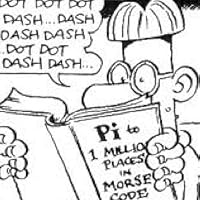
As such, TVGoHome seems wildly parochial now, with only its barbs at tabloid hate culture ("Daily Mail Island") now feeling cruelly prescient. There's a fair amount of cringy "20-something white straight bloke likes being puerile and gleefully revels in punching down" and one contributor at least is now an active bigot but its central pillar is wilful surrealism which can still be fantastic and I found myself laughing at quite a lot of the bewildering observations and asides. It's presented like a deconstructed Radio Times with a week of programming spread throughout and broken up with some dated (but also acutely well-observed) fake gossip mags, style mags, tabloids and so on. We even get a glimpse of Brooker's cartooning and there's some admirable primitive photoshop skills on display.
All-in-all, a warped window into the past but with wild imagination and some great weird gags it's definitely a more rewarding read than the dated embarrassing curio it could be potentially framed as.
The book which launched Charlie Brooker into a star (and eventually into the knickers of Konnie Huq).
Witty, rude and irrelevant: I still don't think Brooker has done anything better than this. The fake TV listings are laugh out loud funny. Best of all is the genesis of Nathan barley which would later become a TV show in collaboration with Chris Morris.
Charlie Brooker nailed the hipster culture before it even became a thing. How very hipsterish.
Ace, ace and ace again. "Hilltop Brasshead Bergerac" is a personal favourite. This will probably be utterly incomprehensible if you weren't brought up on a strict diet of the BBC's listing mag Radio Times though.