

What do you think?
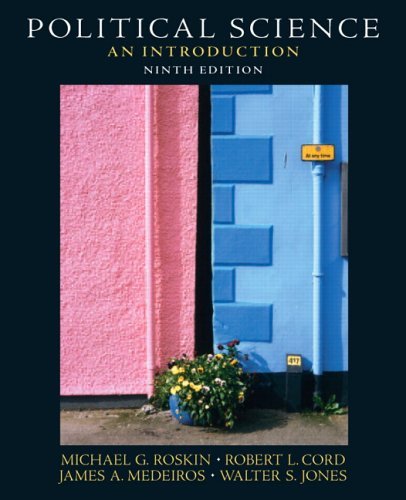
Political Science: An Introduction
Exceptionally up-to-date and rich in cross-national examples, Political Science offers an unbiased and thorough introduction to the basic concepts and theories of political science. With a critical look at the major theories, it exposes students to many ways of thinking, and challenges them to think critically. Emphasizing both U.S. and comparative politics provides students with a solid foundation for connecting their studies ot what is happening in the world around them.
422 pages, Paperback
First published February 25, 2011
Ratings & Reviews
Friends & Following
Create a free account to discover what your friends think of this book!
Community Reviews
Displaying 1 - 22 of 22 reviews

September 16, 2019
American liberal political thought exists at the center of the political thought of the author. In my opinion, American liberalism is 'measure of all' for him. What is useful or harmful, what is good or bad, what is democratic or autocratic, what causes public good or bad.
As far as I have read so far, clandestinely he praises the attributes of liberalism and his critique in regard to left is limited with soviet experience which is accepted to have been bureaucratic and extremely centralist. However, theoretical critiques and discussions are neglected. When, as a historical experience, soviets collapse is mentioned, it is said that democracy triumphed and this victorious democracy is western democracy which created colonialism, racism, imperialism and several wars in order to expand liberal virus and reproduce it across the world. In the name of scientific objectivity, fact is distorted and liberal ideology is justified.
As far as I have read so far, clandestinely he praises the attributes of liberalism and his critique in regard to left is limited with soviet experience which is accepted to have been bureaucratic and extremely centralist. However, theoretical critiques and discussions are neglected. When, as a historical experience, soviets collapse is mentioned, it is said that democracy triumphed and this victorious democracy is western democracy which created colonialism, racism, imperialism and several wars in order to expand liberal virus and reproduce it across the world. In the name of scientific objectivity, fact is distorted and liberal ideology is justified.

May 24, 2012
Political Science: An Introduction takes us on a journey which touches on many contemporary aspects of Political Science. The book starts with the assumption that the reader has almost no knowledge of the subject and provides a broad background in political theories, contemporary and historical ideologies and political parties. Other subjects, such as elections, political economy, and international relations are covered as well with the authors striving throughout to elicit the reader to pose questions about the material and to form independent opinions.
This book is a great primer for those with an interest in Political Science who don't know where to begin. The end of each chapter contains a list of books for further reading giving the reader direction on where to expand understanding of the material in each chapter.
This book is a great primer for those with an interest in Political Science who don't know where to begin. The end of each chapter contains a list of books for further reading giving the reader direction on where to expand understanding of the material in each chapter.

August 9, 2013
The basic ideas, concepts, and terminology, is very well explained, but not elaborately enough. The explanation is simple, but a little overgeneralized.
As the title says, this book is just an introduction. It's a good start for beginners.
As the title says, this book is just an introduction. It's a good start for beginners.

October 8, 2012
So This book was my syllabus for 1st Year at FEPS ..
Actually I found the book biased to American thoughts and points of view It's an American book yes but this is supposed to be an International Version !!
The part about the origin of the state wasn't that sufficient ..
I Really didn't like the part where he talked about Islamists ; it was a purely American-one-sided-point of view and this version Again supposed to be international ! so that means that the writer or whatever is directing people to the way or side of an american point of view ..
also the International Relation's Part was too small.. How the IR developed or how did it appear wasn't there in the book !
Actually I found the book biased to American thoughts and points of view It's an American book yes but this is supposed to be an International Version !!
The part about the origin of the state wasn't that sufficient ..
I Really didn't like the part where he talked about Islamists ; it was a purely American-one-sided-point of view and this version Again supposed to be international ! so that means that the writer or whatever is directing people to the way or side of an american point of view ..
also the International Relation's Part was too small.. How the IR developed or how did it appear wasn't there in the book !

October 22, 2020
I had to get a copy for the school. The narratives and perspectives are too US-centric and neoliberal oriented.
Many claims go unexamined as if the author is incapable of identifying his own bias. The examples given are just laughable; for example, he called Marx’s prediction that capitalism will eventually collapse “incorrect” simply because “capitalism hasn’t collapsed”.
I’d highly recommend whoever thinking about getting a copy of this to get anything from Andrew Heywood instead.
Many claims go unexamined as if the author is incapable of identifying his own bias. The examples given are just laughable; for example, he called Marx’s prediction that capitalism will eventually collapse “incorrect” simply because “capitalism hasn’t collapsed”.
I’d highly recommend whoever thinking about getting a copy of this to get anything from Andrew Heywood instead.

September 19, 2010
Elementary but at least current.
August 15, 2020
It's a decent introduction, but written with a very partisan outlook, despite its claim to impartiality. The writer views most issues through the lens of a neoliberal/neocon.

August 9, 2023
Wunderbar! Though I wish I'd read this under happier circumstances
July 13, 2018
awesome

June 7, 2019
Not well

February 19, 2022
Ótima análise
December 29, 2020
nice
This entire review has been hidden because of spoilers.

July 13, 2024
Decent introduction to the field, but it lacks many of the necessary nuance. I get it though; it is an introductory book, and it tries its best to make itself engaging.

January 24, 2022
Political Science
1. 5星,政治启蒙书
2. 论说,实用,政治科学
3. 解释政治科学的基本概念,结合时事
4. Content:
1. Basics
2. Attitude
3. Interaction
4. Institutions
5. Power
1. 5星,政治启蒙书
2. 论说,实用,政治科学
3. 解释政治科学的基本概念,结合时事
4. Content:
1. Basics
2. Attitude
3. Interaction
4. Institutions
5. Power
June 19, 2014
It is very good one.
This entire review has been hidden because of spoilers.

Read
December 25, 2014gamelll

October 27, 2015
I was disappointed. I probably expected more detail than an introduction can provide.
March 8, 2016
Wonderful Info!

October 19, 2016
Thank goodness that's over!
Want to Read
September 16, 2019ff
This entire review has been hidden because of spoilers.

May 26, 2014
Accidentally I bought two copies.
Great book for first learners.
Great book for first learners.
Want to Read
June 30, 2015i think it good
Displaying 1 - 22 of 22 reviews