Jump to ratings and reviews
Rate this book

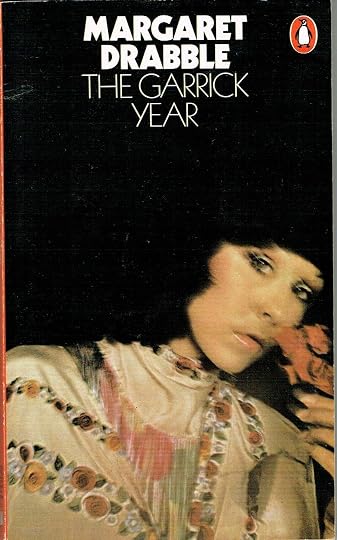
The Garrick Year

Rate this book
From the Golden PEN Award-winning A "well-written, entertaining" dark comedy of a marriage on the rocks in 1960s London (Joyce Carol Oates, The New York Times ).Emma and David Evans seem to have a perfect life. He's a handsome and successful Welsh actor; she's a sometimes model, soon-to-be television news anchor, and full-time mother. But all is not well under the surface. She's impatient and choked by domesticity; he's narcissistic and unfaithful. Between the two of them is a privately combative marriage that has fed their want of drama.Then David relocates the family from their London home to provincial Hereford, where he's to star in two plays during the city's festival season. It's here, far removed from the highbrow stimulation of the city, that Emma's resentment of David--his long hours, his expectations, his ego--finally boils over. Bored and lonely, she falls into the arms of the theater's director, an indiscretion that triggers a series of surprises neither Emma nor David could have foreseen.Narrated by a complicated, fascinating, and fiercely intelligent woman at the end of her rope, The Garrick Year is "a witty, beautiful novel . . . written with extraordinary art" ( The New York Times )."[A] romantic novel about actors and the theatre and marriage and sex and babies . . . deliciously bitter . . . so alive." -- The New Yorker"Unsparing . . . a very knowing, diverting entertainment." -- Kirkus Reviews

221 pages, Paperback

First published January 1, 1964

Loading...
Loading...

About the author

Margaret Drabble

162 books527 followers
Dame Margaret Drabble was born in Sheffield in 1939 and was educated at Newnham College, Cambridge. She is the author of eighteen novels including A Summer Bird-Cage, The Millstone, The Peppered Moth, The Red Queen, The Sea Lady and most recently, the highly acclaimed The Pure Gold Baby. She has also written biographies, screenplays and was the editor of the Oxford Companion to English Literature. She was appointed CBE in 1980, and made DBE in the 2008 Honours list. She was also awarded the 2011 Golden PEN Award for a Lifetime's Distinguished Service to Literature. She is married to the biographer Michael Holroyd.

Drabble famously has a long-running feud with her novelist sister, A.S. Byatt. The pair seldom see each other, and each does not read the books of the other.

Ratings & Reviews

What do you think?
Rate this book

Friends & Following

Create a free account to discover what your friends think of this book!

Community Reviews

5 stars
122 (18%)
4 stars
298 (44%)
3 stars
196 (28%)
2 stars
52 (7%)
1 star
9 (1%)
Displaying 1 - 30 of 98 reviews
Profile Image for Laura .
466 reviews266 followers
November 21, 2023
This is superb - it has everything I look for in a book. I'm puzzled actually as to why I like Drabble's earlier books so much. I have a sense it is something to do with her Northern roots; she was born in Sheffield, and I seem to identify with her staunch, independent - 'I'll tell it as I see it' nature.

I also approve Drabble's need for realism, for facts, for her dislike of the theatre, for as she says, 'when I am in deep anger or deeply agitated, I am speechless. There are no words.' And I understand this absolutely. Drabble was born in 1939, so, she was 25 when she wrote this, her second novel.

The content certainly involves activities close to the heart of a 25 year old, but what makes it so immensely readable is the honesty of her account, and of her insights into the nature of the other characters. Yes, it's about marital infidelity, and our narrator, Emma who struggles to balance the needs of her children, husband and her own in relation to who she is as a person. When her career oriented, ambitious and presumably talented, actor husband, David wants to go to Hereford following an offer from the notable director Wyndham Farrar, Emma finds herself with no choice but to follow. She gives up the opportunity of a part-time job as a news anchor, which would have suited her to a tee, and provided her with independence and much need self-validation after her 3 years as mother and wife. She reluctantly gives into David, knowing that he will go whether she consents or not.

I include this initial argument between the two of them, because as I'm reading it, I chuckle, and grin to myself and think - 'ha, so other couples fight like this.' So much of married life is kept private, and I love that Drabble has the guts to serve up the real situation.

"Really Emma," he said, "there's no need to be so furious about going to Hereford. What are you so annoyed with me about? Why don't you want to go?"
"I'm not at all furious," I said, loudly closing my book.
"Oh yes you are. What is it that you're so keen not to miss?"
"You know quite well how much I was looking forward to this job."
"You can get another job. Someone like you can get any number of jobs."
"In Hereford?"
"Well, I'm sure there's something you can find to do there."
"You think so? Perhaps I could apply to be an usherette at your theatre, you mean?"
"Don't be ridiculous, my love. There must be something you can do."
"I'm sure, on the contrary," I said, "that there would be simply, literally nothing that I could do."
"You could look after the children."
"David, my darling," I said, and I could still frighten him a little, though he could rarely frighten me, "don't talk to me about those children. You have hardly any right to talk to me about those children. So kindly don't. Those children will be seen to all right, and it will be me that sees to them, so don't you bring them into any of our discussions."


The arguments get pretty wild, with David, putting his fist through a wall and on another occasion hurling a marble column (which Emma has just bought from an antique shop) down the stairs.

There is definitely a point in the story where I felt a lull, and I realised it is the writer pausing before making a decision. I could feel her thinking how should I allow the affair between Emma and Farrar to play out. Will I permit them a resounding release of their mental and emotional restraints in a satisfying physical union, or shall I - tell the truth? I know she hesitates, because the truth is so much harder to explain and doesn't fit the bill of what should follow in a work of fiction. The truth doesn't necessarily make for good entertainment, or satisfied readers. But Drabble, and this is where her genius lies, refrains. She goes with the nitty gritty of what it means to have the responsibility of two small children, and the struggles of dealing with thwarted desires. Emma's sexuality and her intellectual, social and professional interests have all been submerged to her role as wife and mother. And she does the brave thing; she acknowledges - this is not enough for her.

I can't express how good this book is. It looks closely at the demands men make on women, and how men and women view sex and its stakes in different ways. For women it is always about everything, a woman gives her heart with her body, but men endlessly connect sex with ego and status. It is unfortunate but also true, many men, I dare not say all, but many, in fact most men at some stage in their lives will view sex as a conquest. A conquest that satisfies their ego - and this I think Drabble does so well. The sexual conquerors in this story are not bad men, in fact I would say Wyndham Farrar comes off lightly. He has compassion and feeling and real desire, I might even say real love for Emma, and recognises through an accident with Emma's little girl Flora that it is exactly as Emma says; she cannot for one moment not think about her children. They are her number one priority.

I literally can't say how much I admire Drabble for getting so many aspects of the male-female relationship exactly right - and she was only 25. Incredible!

And can I just say this is not a "lesser book." Of the 5 five earlier books I have read by Drabble - they are all excellent. I have struggled with her later books, most notably The Radiant Way published 1987, which I suspect is her departure point, whereby she has left the perspective of the first-person narrative and moved to a much larger landscape. I think her middle-year books wobble. She has always been an ambitious writer, and in true form has not worried too much about where her interests will take her in terms of selling books. No, she has always been determined to pursue what interests her; and I think the essence of this idea is there in this novel.
Profile Image for Roman Clodia.
3,051 reviews5,132 followers
November 18, 2026
My first Margaret Drabble and this wasn't a success. The narrator, Emma, has a strong narrative voice but I found both her and her actor husband, David, unpleasant people, bordering on obnoxious, and couldn't bear to spend any more time in their company. Both delight in being rude to people, Emma is judgy of everyone, both consider themselves somehow special, better than their surroundings, and David is a stage actor who is completely self-absorbed, who isn't interested in his fellow actors and has only contempt for his audience.

It's also a strange and uncomfortable marriage as they don't seem to like each other much though something (sexual attraction and chemistry? Was Drabble expected to not be explicit about this in the early 1960s?) keeps them bound together. Each is constantly jostling for dominance in a wearying and competitive psychodrama that seems pointless; and I almost put the book aside when, after bickering, David puts his fist through the wall.

I struggled to understand what this book thinks it's about or what it's doing or why others have seen it as funny.
Profile Image for Hugh.
1,313 reviews49 followers
September 9, 2019
I picked up copies of Drabble's first two novels, A Summer Birdcage and this one in a second hand shop earlier this year. Both seem quite slight by the standards of her more recent books, and although both are easy enough to read, neither seems essential to non-completists.

This one tells the story of a strained marriage. The narrator Emma Evans is a young mother of two children with a tentative career in television. Her husband David is an actor. At the start of the book he is offered starring roles in a season of plays in a new theatre in Hereford, and Emma reluctantly agrees to accompany him and abandon her job in London.

The rest of the book describes their time in Hereford, in which both succumb to infidelities. For me the biggest problem with the book was that none of the characters are that engaging, perhaps because all the theatrical characters seem a little stereotyped, and Emma is not the most likeable narrator.
Profile Image for Brian.
93 reviews3 followers
July 11, 2009
A couple of weeks ago the New Yorker sent out their summer fiction issue. Not being a huge short story fan these are not really my favorite issues. But this one included three short pieces on summer reading that I found fantastic. One talked about The Garrick Year. A well worn copy sits on the author's bookshelf at their summer cabin. He had read it multiple times while lounging on the deck or sitting by a fire.

For me, it was a very enjoyable, though somewhat melancholic, summer read. I liked that I did not actually like any of the characters, though still found them extremely compelling. And I enjoyed revisiting the early 60s from a woman's perspective. Emma Evans' experiences of the times are not things I am familiar with, and I should probably be more familiar with them.

I am not sure that I will read it over multiple times. But if I ever acquire a summer cabin on a lake, I just might put it on the shelves and revisit it as storms roll across the waters.
Profile Image for Nigeyb.
1,615 reviews463 followers
November 19, 2026
The Garrick Year (1964) is less successful than many other novels by Margaret Drabble however still worth reading.

I loved Margaret Drabble's debut novel A Summer Bird-Cage (1963) and despite little by way of plot, just lots of sharp social observations, it's a stellar five star read.

The Garrick Year (1964) was Margaret Drabble's second novel and is a clear stepping stone towards her third novel The Millstone (1965) (which I also love).

In this novel motherhood is treated as a trap that stalls protagonist Emma's career, only to become the anchor that forces her to ultimately face up to her responsibilities. In The Millstone, Margaret Drabble removes the frustrating husband and puts the focus entirely on a detached, intellectual young woman and the effect parenthood has on her.

In The Garrick Year Emma spends the first half of the book believing she can float above her own life as an amused, cynical observer. The book’s central thesis seems to be that you cannot live life from the sidelines because sooner or later reality will force you to take responsibility.

This novel has a curious structure, the first half is almost entirely static, as Emma and husband David circle the same resentments. There's not much happening plot-wise and then in the final third it suddenly becomes quite dramatic. That said the novel's tone remains grim and claustrophobic so even when the plot accelerates it doesn't lead to any sense of catharsis or a pleasing resolution.

3/5


Margaret Drabble’s second novel, The Garrick Year (1964), is a sharply written, unsentimental comedy of manners exploring marriage, motherhood, and female autonomy on the threshold of mid-century feminism. Drabble drew directly on her own early-1960s experience living in Stratford-upon-Avon as an actor with the Royal Shakespeare Company to write it.


Profile Image for Susan.
3,145 reviews566 followers
November 19, 2026
Published in 1964, this is Margaret Drabble's second novel, and it revolves around a young couple - David and Emma Evans. David is an actor; Emma, a former model. They have two young children, Flora and baby Joe, and Emma is hoping to take up a new career opportunity as a newsreader when David announces that he is going to star in two plays at a new theatre in Hereford. Bowing to the inevitable, Emma agrees unwillingly to go with him, and they set out from London to a small town where Emma feels bored, resentful and neglected.

Like her characters, Drabble was a young mother in the Sixties, whose actor husband worked at Stratford-upon-Avon. Although not necessarily autobiographical, I suspect there may be some elements from her own life in this novel. We follow David and Emma as they negotiate a new house, rehearsals, parenting and marital discord. In this strange, disconnected world, reality seems distant, and both are tempted by the possibility of romance outside of marriage.

I have really enjoyed discovering Margaret Drabble's work this year, and I enjoyed this novel. The ups and downs of the theatrical world, with the reality of the work behind the curtain. The moving love that both David and Emma have for their young children. I loved Emma, with all her resentments and inability to fit in. I will certainly be reading more by Margaret Drabble - one of my best literary finds.
Profile Image for John Jr..
Author 1 book72 followers
September 21, 2011
Margaret Drabble was once married to an actor, and she and her husband were both members of the Royal Shakespeare Company. That she survived with little apparent damage and went on to achieve literary renown--along with editing two editions of the Oxford Companion to English Literature, she has published a number of respected novels and a biography of Arnold Bennett--gives us some reason to hope for the future of Emma Evans, her narrator in this early novel. Emma is whip-smart, precise in her observations and relentless in her assessments (of herself as well as of others), and, just as Drabble once was, married to an actor--in Emma's case, to a Welsh leading man named David. When she and their two young children are dragged away from London by David to a season of repertory in Hereford, England, the result is boredom, frustration, affairs, triumphs, and a few near disasters: an intelligent outsider's view from inside the life of the theater.

Though Emma herself is judgmental of nearly everything and is bitterly funny about some of the company members, I can't help feeling that Drabble loves all these people, because she has allowed us as well as Emma to understand them. We come away with an excellent grasp (so it seems to me, not being an actor) of what drives David, and a clear sense of the accomplished director for whom many things have come a little too easily. (The quality of these portraits probably explains why the theater people I've given the book to loved it.) Beyond that, the book is very illuminating about the struggles of marriage and motherhood. But it's most appealing to me as a portrait of a mind. As The New Yorker's Roger Angell wrote in a short appreciation, Emma allows us to rediscover "the terrific sexual power of brains." One would love to meet her later; no doubt Emma isn't Drabble herself, but one still expects she went on to make something of herself.
Profile Image for Mar Preston.
Author 20 books48 followers
June 19, 2013
The narrator's voice was so lively it sprang off the page. Here's the wife of an actor living in vibrant London at the end of the 60s. He gets a chance at doing a theater season in the provinces and drags her along just as she's about to get a great job as one of the first TV women news readers. She's breastfeeding and has a toddler. Great for him; horrible for her. And she never lets him forget it.

Their marriage seems to be falling apart and both dabble in a liaison that seems to threaten their staying together. But one of the themes of this very entertaining book is the value of marriage, however strained.

The writing is clever and funny. You can see from the printed page it was written decades ago. The paragraphs are great page-long blocks of text that look daunting to the contemporary reader.

Take yourself back to 1960s Britain and a summer theater season in the provinces with small children. It's great fun.

Profile Image for Rebecca.
4,250 reviews3,577 followers
November 14, 2023
(3.5) My seventh by Drabble. We wanted a shorter Drabble for our women's classics book club subgroup meeting, and picked this somewhat at random because one member owned a copy and I could access another. It was Drabble's second novel, and falling as it does between A Summer Bird-Cage and The Millstone, reflects her early concern with how marriage and motherhood limited women's opportunities in the 1960s.

Emma Evans was a model but now, aged just 26, is a stay-at-home mother ambivalent about toddler Flora and baby Joseph. Her husband, David, moves the family to Hereford for his acting career and to Emma, a city lover, it feels like the ends of the earth compared to London. "I missed variety. My tastes are shallow; my life is shallow, and I like anonymity, change and fame. In Hereford I could have none of these things". Bored and jealous of David's career, she starts an emotional affair with the director, Wyndham Farrar, and .

The setup was inspired by the season Drabble and her first husband, Clive Swift, spent with the Royal Shakespeare Company in Stratford-on-Avon. She gave up on a theatre career because of having children. Adultery plots often feel old and tired, but what saves this novel from falling into tedium or overfamiliarity is Emma's voice. Whether she's at an actors' party, introducing an old school friend to one of the actresses, or stuck at home with the children, she is winningly wry. She sees herself and everyone around her clearly:
"It is a common story, I know. Passion choked by domesticity."

"I was trying to feed the munching jaws of my mind by reading an Italian novel"

"the part of me that was not a function and a smile and a mother, had been curled up and rotten with grief and patience and pain."

"I felt both far more and far less. I felt far more desire, with far less hope."

"Time and maternity can so force and violate a personality that it can hardly remember what it was."

This is similar in themes to, but not quite as good as, The Pumpkin Eater (published two years before). The descriptions of styles (furniture, clothing) and snobbish attitude also reminded me of Iris Murdoch. I had to laugh at how the Kirkus review of the time damned it with faint praise - "perhaps of greater competence than consequence" - but I think that is a fair assessment of the prose versus the plot.
Profile Image for D. George.
Author 3 books30 followers
April 2, 2014
I picked up a rather beat-up copy of this book, a second printing (1965), from the "free" box at the Brunswick (GA) regional library, and I'm sure glad I did. Even tho this book is - my goodness! - 50 years old, the story still holds up today, tho there are references to a few people that of course we would have no idea about today.

The book is told from the POV of Emma, a sophisticated Londoner with a husband and two small children. She gives up her job as a newcaster and some-time model to follow her actor husband to a small country town where he's taken a job for the season. This despite her objections, of course.

I absolutely loved Emma's voice. She's at once in love with her children and bewildered by them; angered and bored by her husband and the situation he's put them in; bored by the town they're in; bored by the theater and annoyed that everyone asks if she's an actress... She likes being shocking and daring in her dress and speech, yet this makes the people in the town simply think she belongs with the theater... and she manages to make her story ever so interesting to read.

The descriptions are engaging, the dialogue is true, and I feel like I'm there with her... my only negative comment is that I'm not crazy about the title; I believe it refers to a playwright by the name of Garrick, but I was never quite sure.

And of course, it's terribly interesting that even lo these many years later, women are still being forced to choose between their careers and their husbands, and are following their husbands across the country to support their jobs. (I may or may not have done this myownself.)

Highly recommended.
Profile Image for Paige.
36 reviews
August 6, 2013
I really enjoyed this quiet, little-known novel. Emma Evans is intriguing and although it takes place in Hereford, England, in the 1960s, it's as accessible and relatable as something written last year. Oh to be the wife of a thespian...sounds lousy. Drabble is a wicked good writer. Talk about strong characterizations; Emma Evans seems complex next to the feckless male characters. I'd recommend this to some folks over others, though...it's not for everyone.
Profile Image for Till Raether.
448 reviews247 followers
April 2, 2025
4.5

This is a very sweet novel about an arrogant, self-involved and emotionally unavailable narrator. I've met so many Emma Evans's in my life and I've loved them all.
Profile Image for Rebecca.
25 reviews6 followers
June 2, 2018
I picked up a copy of this book at a used bookstore in Montreal. The description on the back and the first chapter were intriguing, so I took a chance. I wanted to like this novel: the writing is strong, and the first person narration conveys the anxiety, disappointments, joys, difficulties, and complexities of marriage and motherhood, especially as they were beginning to be explored by women authors in the 1960s. Emma Evans, the novel's protagonist, is married to David, her egocentric actor husband, who takes her and their two children (one newborn still nursing) to Hereford for 10 months so he can act in several important plays, but at the expense of Emma's happiness and her own chance at a significant job (being one of the first women newsreaders on television).

The premise of the novel is good, and Emma is interesting at times. Her experiences as a young, harried mother are spot on. Despite being married, she's raising her children by herself, and her husband's colleagues view her (and especially her children) as background material, props at best. She tries to cope with her disappointment and boredom by embarking on a disastrous, unfulfilling affair with the much older theater director. She communicates righteous anger at her husband's self-centeredness.

Yet, at a very young 26, Emma's philosophizing and self-analysis aren't always quite convincing. She figures out that she is, in some respects, shallow, materialistic, emotionally (and sometimes physically) distant, who regularly sabotages opportunities to make different choices. Even as she's aware of this self-sabotage, and despite her sometimes savage repartee with the awful Wyndam (the self-obsessed theatre director), Emma is mostly annoying. Perhaps my late 20th- and early 21st-century vantage point is too far away from understanding Emma, or perhaps it's Drabble's narrative style, but this novel ultimately left me cold.
Profile Image for James.
496 reviews
November 5, 2022
'I thought he would see you home all right,' I said, and we continued to look at each other, finding nothing to say. Real conflict for me at least always turns out to be wordless, which is why I find drama and the theatre so unreal. We conflict because we cannot communicate, because there is nothing to be said. I know that realism is not all, but to me it is all, and anything that does not seem to be dredged up from a fleshy occurrence leaves me undisturbed. Symbols and images, oh yes, I have heard of them. But Sophy and I were there in the flesh, and though the implications might have been manifold, the fact was one, and it was unaccompanied at the time by much discussion. I know what I am through her eyes: dark, smart, bad-tempered, censorious, snobbish, and with all that quite ominously smart. And that was all I had to confront her with, amongst those spinning white windows.

Margaret Drabble writes beautifully about women's rights and women's wrongs in 1960s England. 4.5.
Profile Image for Caro.
1,563 reviews
May 7, 2021
Re-reading Drabble after forty years, I am struck by her points of view. In this case it's Emma, wife of an actor who drags Emma and their two children, an infant and a toddler, out of London into the provinces to inaugurate a new theater. Emma is hard on people, but she's hard on herself too, and witty with it:
"Throughout my life I have been accused of snobbery, in some form or another, and I do not like it, I wish it were not so. I have no desire to exclude; on the contrary, I would rather include, I would rather at every moment recognize, and am I to blame that the occasions on which I can do so are so rare?"
Drabble writes with an insider's understanding of the theater, and her descriptions of her children, whom she adores and also finds boring and/or exhausting, are so well done. Very satisfying.
Profile Image for Readerwhy.
745 reviews105 followers
Read
April 6, 2025
Luettu suomeksi.
Suomennoksen nimi: Teatterirakkautta (1964, Weilin + Göös).
Suomentaja Heidi Järvenpää

Margaret Drabble (s. 1939) on palkittu englantilainen kirjailija, jonka teoksista nykyisin harvemmin ainakaan Suomessa puhutaan.

Pitäisikö hänen kirjoistaan puhua enemmän? Onko niillä mitään annettavaa nykylukijalle?

Kyllä. Kyllä.

Teatterirakkauden alku heittää lukijan keskelle avioriitaa. David Evans ja hänen vaimonsa Emma Evans käyvät kiivasta sananvaihtoa, jossa David pyrkii vakuuttamaan vaimonsa siitä, että heidän pitää muuttaa Lontoosta seitsemäksi kuukaudeksi Herefordiin Davidin työn takia.

David on näyttelijä ja Herefordiin on perustettu uusi teatteri, johon kuuluisa ohjaaja Wyndham Farrar on ohjaamassa näytelmän, josta hän on varannut Davidille mehukkaan roolin. Emma ei tahdo jättää Lontoota, jonka syke on hänelle elintärkeää. Lisäksi Emma on ollut kotiäitinä kolme vuotta ja nyt ollaan tilanteessa, jolloin hän voisi aloittaa työt. Hänelle on tarjottu kiinnostavaa työtä televisiossa, jonka myötä hänelle avautuisi aivan uusi tulevaisuus.

Avioliitto ja sen velvoitteet ovat kaski Emman tulevaisuuden kannossa. Päästän Emman itsensä kertomaan, mitä kaikkea avioliitto on häneltä riistänyt

"itsenäisyyteni, ansiotuloni, viidenkymmenensentin vyötäröni, uneni, suurimman osan ystävistäni, jotka David oli karkottanut hävyttömyyksillään, kokonaisen nipun ajallisia asioita ja paljon ajatonta, esimerkiksi toivon ja odotuksen."

Emmaa kohtaan on helppo tuntea sympatiaa ja pitää Davidia itsekkäänä ja vaimonsa hyvinvoinnin suhteen piittaamattomana.

Ja Herefordiin he lähtevät ja heidän siellä ollessaan lukijalle alkaa paljastua Emman todellinen luonne.
Emma on aivan yhtä itsekeskeinen kuin miehensä. Hän on taipuvainen tuomitsemaan muut ihmiset ja heidän tekonsa ja nostaa omaa häntäänsä varsin usein. Hän on ammatiltaan entinen valokuvamalli ja näkee edelleen paljon vaivaa pukeutumisensa ja ulkonäkönsä suhteen.

"Kun olin valmis, näytin mielestäni suurenmoiselta; ainakin ihmisten olisi vaikea päätellä, olinko minä kala vai lintu."

Davidin kiinnittyessä teatteriporukoihin Emma kuitenkin jää väkisinkin ulkopuoliseksi. Hän tylsistyy ja hänen tilanteensa alkaa muistuttaa hänen kuuluisan etunimikaimansa Emma Bovaryn tilannetta. Ja äkkiä edessä onkin aita, jonka toisella puolella ruoho on niin loistavan vihreää. Vastaavan havainnon tekee myös David.

Seuraa ihmissuhdesotkuja, peittelemistä ja paljastetuksi tulemisen pelkoa. Tärkeintä on julkisivu sekä se, miltä näyttää. Kulissit vaan, nuo mokomat, eivät loputtomiin suostu noudattamaan Emman tahtoa.
Teatterirakkaudessa on tyylillisesti jotakin samaa kuin muutamissa Muriel Sparkin 1960- ja 1970-lukujen teoksissa. Mustaan taittuvaa älykästä, moniäänistä huumoria.
Tilaa sinäkin omatoimimatka 1960-luvun Herefordiin.
Profile Image for Cathy.
192 reviews14 followers
May 29, 2021
I enjoyed this shorter novel very much. Perhaps as I could relate, in parts, to the story and the themes of marriage, relationships etc... I almost read this through parted fingers - knowing there would be wreckage ahead, of some psychological or other kind.

Emma, as narrator, is quite an unlikable sort, but somehow as a reader I liked her for it - she was, through this year, learning about herself and her limitations. It is a shame that some of us do this with little kids around us, who have to then live alongside chaotic adults for a while - but it happens often, especially when people have children before they have worked through their own childhood grief.

I particularly enjoyed the last few chapters - there were so many ways the story might have developed and this did not disappoint in drama or pace. However, I felt it might have been a little rushed and another chapter of writing would not have been too much.

Overall an insightful, interesting read that I found provocative and very much of its time. Despite all the triggering things here (adultery, self-loathing etc) the thing that made me actually stop and cry was the scene toward the end when a doctor visits Emma at home and takes time to consider her as a human patient. The fact that one simply could not get this kind of treatment these days makes me sad, furious and envious. It reminded me of my childhood and being visited by a GP, for him to scoop me up and put me in the back of his car and drive me to the hospital as I was so poorly. It is interesting how, though my experience is disconnected to the plot exactly, it is also not.
Profile Image for James Carmichael.
Author 5 books8 followers
May 17, 2021
I liked this; it sort of got stuck into me. It was a "novel", which is a category I try to use (I still have to update the shelf to reflect this; #someday) about works that are fiction, about people and their affairs (in this case, their affairs), in a world that is our world, that...yeah, and that's it! Which is a nice thing to be.

Especially when it feels as specific to time, place, and person as this novel does. I have a very lived sense of this protagonist; both of who she is as projected out into the world, and of her own observations and inner existence. I have a similarly real sense--filtered through her, of course--of all the people around her. And it feels, like a good "novel" of its type, like an unavoidable time and space machine that transports to its context in 1960s-ish Britain.

It's a story with a distinct narrative voice and distinctive protagonist about the muddle of living and all that. It's unfussy, sentences-wise, in a crisp and clear way. I liked it.
Profile Image for Jim.
Author 2 books38 followers
July 26, 2008
Had the name "Margaret Drabble" not been used once in a Monty Python skit I would not have looked twice at any of her novels. To her credit, she is a gifted writer. Her prose is eloquent with being condescending. This particular book is filled with self-involved characters, all of whom are less than likable. My other qualm is that the protagonist's turnaround at the conclusion felt rushed and somewhat unrealistic. Still, the work is unerringly British and penned so flawlessly that it was worth the read.
Profile Image for Alex Ankarr.
Author 93 books193 followers
June 30, 2018
I read it without a gun at my head, I can't blame anyone else, and I'll never get the time back again.
Profile Image for Amy Gentry.
Author 13 books555 followers
November 2, 2026
In the "find more writers like Anita Brookner" sweepstakes, this is a jackpot. Rather than a caustic spinster we have an acid wife, mother to two small children and subject to all the attendant indignities. Emma Evans is gorgeous, highly intelligent, and, by her own admission, shallow; but her way of observing the world is intoxicatingly acute. She has that restless brain and gimlet eye of the '60s housewife, whose hands are kept busy cleaning and making boeuf bourgignon and taking the children for walks, but whose brain is starved for activity. Her husband David is an ass but a decent actor, and she drops her own shot at a career to follow him to the hinterlands for a poorly-paid season with a repertory company at the Garrick Theater. This happens in the first 10 pages, and it is such a bitterly heartbreaking 10 pages to read that, for me, it excuses Emma's more toxic qualities for the rest of the book. As in Celia Fremlin, you keep thinking "why, why do you put up with this," but the reason is the air, it's invisible. So instead you only see the coping measures, which in this book include a kind of hopeless, prickly pettiness and an affair with the theater director Wyndham--also an ass, but in a slightly different way.

Yet the book is far less about the affair than you would think from the cover copy. The title isn't the Wyndham Year, but The Garrick Year--it's about the theater, and about performance in general, not just on the stage, but as a wife, mother, lover, and woman. Emma's snottiness is a symptom of despair, and also very funny, and also written in diamond-needle prose. When she name drops Henry James halfway through the book you're not very surprised.
Profile Image for Alfie Kennedy.
93 reviews2 followers
June 4, 2025
“I stood there and rammed my fists into my eyes and wept, and varied colours came and went, blue and yellow and dilating red, the flowers of grief, and I was damp with milk and blood and tears, a varied sea of grief.”

-

My aunty recommended me this, I thought it’d be a nice lighter read after getting lost in a 500-pager before this - besides page count though I was very wrong about the lightness! This is a very real book and Emma is a very emotional narrator - it deals with marriage difficulties and the progression of life in quite a painful way to be honest, but equally Emma makes such an observant and vaguely judgemental narrator that there’s comedy in the pain.

By the time that it all hits her in the scene referenced above, the build-up makes it sting extra hard. But she’s got her daughter Flora. And it’s all gonna be alright. And there’s hope in the final moments reminding that the ups and downs of Hereford, like the events in any long-term relationship, are what pushes the ship along.

The drama of the theatre ties it all together, being an am-dram man myself I found it hilarious. Actors really are something else.

-

Okay I think it’s time for a book that’s a bit detached from reality now…
This entire review has been hidden because of spoilers.
Profile Image for Judy.
2,024 reviews505 followers
November 16, 2018

Of the last 19 novels I have read, 15 were written by women. I have reveled in being so immersed in the female point of view and somehow thrilled to be assured there are so many ways to be female.

The Garrick Year is Margaret Drabble's second novel. She is British, the sister of A S Byatt, and a frightfully good writer who is perceptively tart with humorous undertones.

Emma, mother of two small children, is married to an actor in the early 1960s. She has a chance for a career in television, not as an actor but more as some kind of show host. David, her husband, is equally ambitious for a career in the theater and possibly movies.

When an American heiress funds the renovation of the Garrick Theater in a provincial English town, David is called by the prestigious director to act in several plays for a season there. Emma gives in, not gracefully, so they rent out their London home, set off for Hereford with kids and au pair, and the fireworks begin.

For these two strong and restless as well as self-centered persons in their late twenties, life is never dull, except for Emma's dull hours in a hideous house with her kids. She is a house-proud woman. Emma and David contend, they are so much alike in some ways, they make up with humor and heart.

I loved the book for the characters (after all theater people are all characters, on stage and off), for the tension between this couple, for the absolute truthfulness about the confines of parenthood and fidelity. Emma is one of the great young married mothers I have met in literature. I understood her every emotion and action because I went through all that in my early married days.

The novel captures what it was like for women in the mid 60s when feminism was a barely conceived movement but we were all feeling it and finding our way. It was good to remember how much we loved our loving, our children, but also our freedom.
Profile Image for Jonny Lawrence.
85 reviews1 follower
October 7, 2025
There are few occasions I have encountered a writer who so effortlessly understands men and women, what it means to be in a relationship and how social constraints impose upon one’s emotions.
269 reviews2 followers
May 23, 2021
Okay, I guess I'm a DrabbleHead! I loved the narrative voice of this novel and could have listened to Emma's acerbic and merciless observations on all those who stumbled across her path for three hundred more pages. Emma is condemned to be the smartest person in the room, and remains acutely perceptive at her own plight as well as the self-involved theater people who comprise her world. I was very moved by this darkly funny and morose book.
Displaying 1 - 30 of 98 reviews