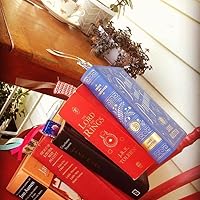
This Tolkien bio was a breath of fresh air in many ways. First, it reminded me how hobbit-y I am. Trees, and books, and delicious food (6 times a day) and what not. Second, it reminded me of some beautiful passages, memories really, from some of my favorite stories. Third, it was a biography that didn't over reach and make unfounded assumptions and intimations about the author. And fourth, it gave me a clear and beautiful sense of Tolkien's understanding of the relationship between myth and truth and the way that this concept shaped his writing.
Pearce writes, "For most modern critics a myth is merely another word for a lie or a falsehood, something which is intrinsically NOT true. For Tolkien, myth had virtually the opposite meaning. It was the only way that certain transcendent truths could be expressed in intelligible form."
We have all had that sense of transcendent truth, seen it written in nature as Tolkien so often did. And his explanation of the way myths and fairy stories help us grasp something of that Truth explains why they seem to resonate.
There is a wonderful account of a conversation between Tolkien and Hugo Dyson and C.S. Lewis that laid the foundations for Lewis's Christianity.
"We have come from God, Tolkien argued, and inevitably the myths woven by us, though they contain error, reflect a splintered fragment of the true light, the eternal truth that is with God."
Tolkien maintained that God expressed Himself "through the minds of poets," using their images to reveal parts of His eternal truth.
What had a profound effect on Lewis was the next step in the argument: Tolkien's belief that "Christianity was exactly the same except for the enormous difference that the poet who invented it was God Himself, and the images He used were real men and actual history." It is in this sense that Lewis called Christianity "a true myth." Using actual history and events, God told the story of His love for humanity, a story that illuminates the Truth in the world around us and the world within us (hat tip to Stratford Caldecott).
Pearce starts his 8th chapter with a quote from GK Chesterton: "We have come out of the shallows and the dry places to the one deep well, and the Truth is at the bottom of it." Tolkien's understanding of the beauty of Truth permeates all of his work, and Pearce does a masterful job laying that out for the reader. So glad I picked this one up!