A delicious account of a murder most gallic—think CSI Paris meets Georges Simenon—whose lurid combination of sex, brutality, forensics, and hypnotism riveted first a nation and then the world.
Little Demon in the City of Light is the thrilling—and so wonderfully French—story of a gruesome 1889 murder of a lascivious court official at the hands of a ruthless con man and his pliant mistress and the international manhunt, sensational trial, and an inquiry into the limits of hypnotic power that ensued.
In France at the end of the nineteenth century a great debate raged over the question of whether someone could be hypnotically compelled to commit a crime in violation of his or her moral convictions. When Toussaint-Augustin Gouffé entered 3, rue Tronson du Coudray, he expected nothing but a delightful assignation with the comely young Gabrielle Bompard. Instead, he was murdered—hanged!—by her and her companion Michel Eyraud. The body was then stuffed in a trunk and dumped on a riverbank near Lyon.
As the inquiry into the guilt or innocence of the woman the French tabloids dubbed the "Little Demon" escalated, the most respected minds in France debated whether Gabrielle Bompard was the pawn of her mesmerizing lover or simply a coldly calculating murderess. And, at the burning center of it Could hypnosis force people to commit crimes against their will?
Steven Levingston is a former senior book editor of the Washington Post and author of "Twilight of Camelot: The Short Life and Long Legacy of Patrick Bouvier Kennedy", "Barack and Joe," "Kennedy and King", and "Little Demon in the City of Light". He has lived and worked in Beijing, Hong Kong, New York, Paris, and Washington and reported and edited for the Wall Street Journal and International Herald Tribune.
Paris is known as the City of Love. We all know what that means; love and murder sometimes walk hand in hand after all. In this book, Steven Levingston tells the tale of the murder of Toussaint-Augsutin Gouffe at the hands of his mistress Gabrielle Bompard and Michel Eyraud, another of her lovers. That they killed was never disputed, whether or not Bompard knew what she was doing is a different question entirely. Bompard, as the blurb for this book makes clear, claimed that she was hypnotized into committing the crime. Her lover claimed otherwise. And the truth? I have no idea. Levingston might have an idea but he is very careful not to say It isn’t just the question of whether hypnotism caused Bompard to participate in the murder of one of her lovers. It is also a question of whether society and background contributed in any to the events that followed. Because Levingston goes into detail about the background of the murders one has to wonder if hypnotism is too facile an explanation. A wild child to be sure, Bompard did not have any easy life. How much the neglect and influence of older men who took her as their mistress is unclear, but one wonders if there was another type of hypnotism going on. The French seemed to think so, if the book is any indication. The hypnotism of a man, or men, by the feminine charm of an attractive, young woman, a little devil for obviously as a mistress she was morally corrupt. It makes for an interesting comparison, the more so because Levingston allows the reader to reach her own conclusion. In many ways, the idea of blame and culpability as an excuse for an act of violence is very relevant to our society today. Whether it is the case of a murderess or even of a terrorist. The question why is far more important to society in the long run than the question of who. That is the reason why a crime from so long ago has impact on today. The writing in the book is easy to follow. Furthermore, in the discussion of hypnotism and the culture of the time, the chapters could have become very dull; the sheer fact that they don’t is testament of Levingston’s writing. This book would be an excellent book for a group read as the issues it raises are not only timely but connect to gender.
“Little Demon in the City of Light” is uneven. There are some great parts but in other places it lags. The Paris setting during the Belle Époque Paris is enticing, the snippet of French criminal history especially concerning the Surete and M. Goron who headed this investigation is informative but the rampant sexism and mostly the fact that Levingston never seems to comment on how that influenced this case is neglectful.
There’s one chapter that is electric. It provides a brief history of Dr. Charcot and how he founded the study of neurology and began to work with psychology. At the Salpêtrière he studied the behaviors of his patience and later, through autopsy, began to piece together how abnormalities in the brain influenced the diseases associated with those symptoms. Unfortunately for the demented mental patients he worked with he also began to use them as guinea pigs when he hypnotized them in front of audiences and demonstrated his power over them. Not so oddly for the times these patients were women and neither Charcot nor his male audience saw any problem with exploiting and manipulating these women. Levingston’s focuses on the use of hypnotism in the commission of crime as well. Hypnotism was something new and unusual at this time. Levingston questions whether it was in the commission of the murder committed by con artist and thief Michel Eyraud to coerce his much younger mistress.Gabrielle Bompard to help him murder a mark is the main topic of “Little Demon” The crime and it’s solution and the era it was executed are all great topics. I just wish Levingston had at least provided a cursory commentary concerning how sexism and exploitation and discrimination of women played a role.
An advance readers copy was provided by the publisher.
Fascinating, dramatic and readable account of a Parisian murder in the 1890s and the ensuing international manhunt and trial. I did come away a little bit confused about some of the details about hypnotism and hysteria: it seemed the author's attempts not to get into scholarly weeds obfuscated some of the medical history and facts. Otherwise, a thoroughly gripping read.
This book reminds me heavily of Devil in the White City. While it isn’t quite as good as the Pulitzer Prize winner, it gets very close. The similarities strike me not simply because the book follows a gruesome murder, but in the narrative way the events are told and the tone that is used throughout the book. Levingston is a skilled writer and it shows as he manages to weave together the story in a very compelling way. True crime novels has a tendency to get a little lazy and let gruesome events try and carry to story rather than frame the events with good story telling. Luckily Levingston did not fall into this trap. I could imagine a weaker story teller creating a fairly drab and boring book out of these same events, which are not in of them terribly complex. Considering this crime occurred at the same time as the Jack the Ripper murders, it could suffer from the comparison if not told in the right way.
The other thing that really helps this book succeed is the high level of research that was done. Levingston has worked out the smallest details of the investigation and following trial and it feels like every piece of history has made it to the page. Particularly interesting is the depth Levingston goes to in examining and explaining the landscape of the 19th century French legal system. Specifically interesting was the description of how much credibility the courts still the pseudosciences and how little they tried to understand and deal with the mentally ill. Also particularly interesting, although not touched on as much as I would have liked, was the descriptions of the slowly growing field of forensic sciences that was just gaining acceptance. It doesn’t hit the levels covered in say The Poisoners Tale which focused on the same time frame, but it is interesting to see the lengths the police went through before fingerprints and other modern investigative tools.
With the title an obvious play on/reference to Devil in the White City, I was hoping this book would be at least half as interesting and entertaining as that one had been. And in the end, I'd say it was just about exactly that - half as interesting.
This true story takes place in Paris not long before the turn of the 20th century. Gabrielle Bompard, a young lady of somewhat flexible morals meets Michel Eyraud, an older man of no apparent morals at all. They begin a relationship, and eventually lure another man into a room in Paris to rob and kill him. They dispose of his body, and make their getaway to their new lives, stealing from people with scams instead of killing them. But of course, there would be no story if this were the perfect crime, and eventually their victim's body is found and identified. When they are put on trial, Gabrielle tries to use a hypnotism defense - she is so weak and suggestible that Eyraud was able to exert his will over her completely enough to force her to participate in the murder against her will.
You can probably guess how that went over from the dearth of modern cases using the same defense. The best part of the narrative, for me, involved the pioneering forensic work in identifying the victim's body. This was cutting-edge stuff at the time, and it's intriguing to learn how far outside the box this scientist had to think to connect the body to this case. The weakest part was just about everything involving hypnotism. That there were two schools of thought about the practice, that there was disagreement about whether or not hypnotism could really convince anyone to do something truly against their will, these are important to know. But the author goes on and on about these divergences, and talks in excruciating detail about the testimony given at the trial about it all. I feel like maybe the hypnotism angle was the wrong place to hang the story. Perhaps the hook should have been the police work involved, or the svengali-like personality of Eyraud instead.
This is engaging, well-written, certainly entertaining as only belle epoque Paris can be. It features some of the same people as The Killer of Little Shepherds: A True Crime Story and the Birth of Forensic Science, since one of the centerpieces of this story is a remarkable piece of forensic detective work. It never really answers its own questions, which bugged me a little--no discussion of modern understandings of what hypnotism can and can't do and how Gabrielle Bompard's story stacks up, and so no need to come down off the fence about whether she was as under Eyraud's thumb as she said she was or whether--as he maintained--she was the one controlling him.
Levingston occasionally has the lightning-bug problem--e.g., in describing what Emile Zola thought of women, he uses the word "distrustful" instead of the word he means (as is abundantly clear from context, even if I didn't know enough about Zola's misogyny to tell), which is "untrustworthy." But he uses primary sources--one of the French detectives kept a diary, which is worth its weight in gold--and he tells his story with flair.
This is the story of the murder of Toussaint-Augustin Gouffé and everything that happened afterwards. I breezed through the 300-plus pages in a few hours after a false start. Interesting characters in here, including all kinds of big names in French medicine (neurological and forensic) and crimebusting, and a very unusual legal defense. The text was marred in a couple of places by clumsy writing -- the author keeps saying "Mephistopheles" when he wants "Mephistophelian" -- but most of the writing was flawless, even elegant. This book provides an entertaining glimpse into the French legal system, where the defendant is allowed to argue with the witnesses without going through defense counsel and where the gallery is allowed to applaud the closing arguments. Well worth your time.
The belle epoque in Paris was the precursor of the Roaring Twenties in the United States....a time when moral and social barriers came down and a wild time was being had by all. The press loved a good scandal and people clamored for a horrific murder trial. One of the fads of the day was hypnotism (or mesmerism as it was sometimes called). Everyone was trying it.
There were two schools of thought about how a person would react under hypnotism.....one that posited that in a trance a person could be ordered to go against their moral beliefs and perform any act that the hypnotist suggested (such as murder); the second school was adamant that an individual could not be forced to perform such actions. This became the centerpiece of a famous murder trial in Paris. A con man/thief lives with his much younger mistress and they are always in need of funds. They kill a successful business man and the chase is on. When they are finally brought to trial, the young woman's defense is that the man had hypnotized her into playing a part in the murder. They were facing the guillotine and the "hypnosis defense" was the only chance she had of escaping that fate.
An interesting and informative book which also throws some light on early forensic science and a dogged police commissioner who gained fame for his detecting skills.
In this book, the author highlights hypnotism and a 1889 murder case set in Paris, France. The two main players are Gabrielle Bompard and Michel Eyraud; they both become defendants in a highly publicized case that brought hypnotism to the forefront in a Paris courtroom. At issue was whether Bompard was under the "influence" of Eyraud, or other hypnotists at the time of the murder.Eyraud presented as a low-life psychopath and Bompard as a desperate and young woman in search of immediate financial security- she was virtually on the streets having been kicked out of her house by her father. The two started a tumultuous tyrst (Eyraud is married) and much older than Bompard. The two end up murdering Toussaint-Augustin Gouff'e, a bailiff (and millionaire) for the courts providing a wide variety of services, including the collection of debts; he was also a "lady's man". The author explains some of the unique facets of the Paris judicial system (some still in place today) which seem unusual when compared to the U.S. justice system. For example, the judges investigate the criminal cases, examine witnesses and the evidence,and then present an outline of the facts and charges to the jury (in an incriminatory manner), before the prosecution and the defense start their cases. The murder is particularly brutal and seemingly premeditated; Bompard lures Gouffe into a rented room under the pretense of a sexual rendezvous where he is then hung and possibly strangled in accordance with a well-planned scheme (including depositing the body in a large trunk) cooked up by the pair. Following the murder, the two flee taking the trunk with them. The search for the fugitives, and the use of state-of-the-art forensic tools by preeminent Paris detectives fills about one-half of the book. Bompard claimed she was under Eyraud's control and her lawyer argued that she was a woman with a "fragile mental state" (There was a lot of testimony concerning hypnotism and how this may have impacted Bompard's mental capacity and ability to commit such a crime, but this theory was abandoned by her lawyer during his closing argument, and he simply argued that she was too fragile to be fully culpable and that the jury should have mercy on her). The book contains several unique facets of French culture and the party-like atmosphere at the time, and the author does an excellent job of describing the justice system, the mood of the French people- especially as it pertained to death penalty cases, and the press during this sensational trial. I recommend this book.
Last night I was trying to explain to a friend why this book was as disappointing as it was interesting. And it was *very* interesting--a glimpse at a particular time and environment (late 19th century Paris, in particular), a snapshot of gender issues, a question of hypnotism and mind control in the commission of a serious crime--but the author avoids offering any kind of modern insight into the events he recounts. That felt like an omission to me--I wanted to know what current research says about the kind of mind control the authorities were debating in this case. And I would have liked to know more of what Levingston thought about the case and its outcome. Was the 'Little Demon' truly hypnotized into submission? Or (as I think is more likely the case) was she simply brutalized by a string of abusive men, until she lacked the capacity to make healthy decisions?
Definitely some interesting details about Paris police work but the premise--and the promise--around mesmerism emerging as a major theme kind of fell through.
This is a case I had read about as a brief mention in true crime collections, but from those I only gathered the briefest details. It was a pleasure to see this brutal murder in the larger context of it's impact on psychology, hypnosis, politics, and the popular newspaper coverage of the time.
Gabriel Bompard, a wayward young woman has become the mistress of Michel Eyraud. Together, they murder their wealthy friend, Monsieur Gouffé, and then fled the county. Eyraud continues to scheme and flim flam others along the way, but Bompard finally finds a protector and turns herself in, saying that she was hypnotised into committing the murder against her will.
The French justice system was not prepared for such a defense, and the medical community is also divided about the legitimacy of her claim. The sensation the case created in Belle Epoque Paris can hardly be understated.
I leave the reader to explore and enjoy the details. A well-written book, well worth the time.
I am not convinced in the reality of hypnotic crime (or 'Devil's Breath' for that matter). This exploration of "murder and mesmerism" purports to explore such a case. However, the hypnotism, with an intriguing dose of proto-neurologist Charcot, was really just in the air at a time of public fascination with the nascent topic. Still, it is a fascination story of late 19th Century criminology. While the re-creation of the killing using the accused as actors is over the top and almost laughable, I really enjoyed the shoe leather detective work of tracking down the trunk that held the body and painstakingly recreating it.
Well written, easy to follow story about a murder that becomes a test case for the use of hypnotism as a defense in court. I appreciated how effectively the author put me in late 1800s Paris so that I felt I understood what the case meant to the citizens of that time period. Each character is well researched and detailed and I found the investigation fascinating, particularly the use of popular journalism and the public's thirst for the morbid to advance the case at several points.
This is not Devil in the White City. I feel like this story of a murder committed by a young, naive mistress, who may or may not have been under the thrall of her much older lover, could have really been tightened up - for instance, I don't care at all what ship the detectives were on when they sailed to the United States or that it was a first class ship and the apartments were richly decorated, etc., etc. There were just too many such asides and for me they spoiled any momentum regarding the actual murder case or the controversy surrounding hypnotism at the time. But, I did listen to this on Audible, so maybe reading this would have made a difference. This was just not for me.
A fine and interesting account ala Devil in White City. Key actors come alive and are memorable. Hard to find an underlying theme or pov. But a fun read none-the-less.
Really interesting look into a murder mystery, police investigations, and the justice system in belle-epoque France. Lots of detail, but engagingly told.
The set-up of this book is somewhat jumbled; the first chapter or so is hard to get through. It isn't until the storyline becomes essentially chronological that it becomes an entertaining read - and it definitely is an entertaining read. Why two stars then? Because, for me, one of the great pleasures of these types of books is getting to play modern detective. We're provided with the historical information and a ton of background research and information, which may or may not have been available to contemporary sleuths (the truth of someone's past history, the way climate change was affecting an area, historical bias in a particular witness's viewpoint - whatever), and we the reader, guided gently by the author, get to discover how it really happened (or might have happened). Levingston, in contrast, relies almost entirely on contemporary nineteenth-century reporting and memoirs to tell a straight journalistic story... and this is the kind of story which really needs a modern eye.
We learn very quickly that Gabrielle Bompart is going to rely on hypnotism to defend herself against charges of murder. This is pretty much the first thing we learn in the whole book, in fact, and as other reviewers have mentioned, it's not a great hook for this particular story - because it becomes pretty clear that this was a last-ditch effort to defend her against fairly clear-cut charges of participation in murder. Bompart became a press darling, and the overheated media went wild over her... which makes them doubly unreliable when trying to figure out what happened. It's undeniable that Bompart was beaten frequently by her lover (which Levingston tells us was normal and unremarkable, although at least one contemporary of Bompart's doesn't seem to have thought so), and she also seems to have come from a neglectful if not abusive background... but Levingston devotes no real discussions to these aspects of the story: he's too focused on whether or not the hypnosis claim might have been true. Furthermore, when discussing hypnosis he stops at the contemporary viewpoints - it's not until the end of the book that he actually gets into debunking. This makes the trial section of the book pretty tedious: several different schools of thought on hypnosis (all since debunked) are fighting it out in a courtroom while the French yellow press pant about the femme fatale and her wicked lover, because as we all know young women who flee their abusive fathers to go live in the big city are all kinds of evil manipulative harlots. Levingston doesn't buy into that but his willingness to refer to Gabrielle not infrequently as a "femme fatale" and his lack of interest in exploring what her actual driving factors may have been make it difficult to get interested in her. Were Gabrielle's lawyers really pushing the hypnosis defense because they thought the jury would swallow it? Or were the jury simply eager to find an excuse not to send a very young woman to the guillotine? Levingston doesn't answer that question - he doesn't even ask it. One is left with the sense that his research was extremely chronological and narrowly focused on this particular trial; he doesn't leave one with the feeling of being immersed in the world of belle epoque Paris, or feeling that you understand how and why things happened as they did. It's frustrating because there's a lot of interesting stuff in there, and if he had actually dug around and researched BEYOND this specific case, this could have been a really good book.
Decent yet unremarkable non-fiction tome in the style and spirit of Erik Larson's "Devil In The White City"...yet not as good. With "Little Demon in the City of Light: A True Story of Murder and Mesmerism in Belle Epoque Paris," Author Steven Levingston works hard to make his well-researched true story about the murder of a wealthy court official during the "Belle Époque" period of 19th Century Paris more interesting and engaging than it actually is.
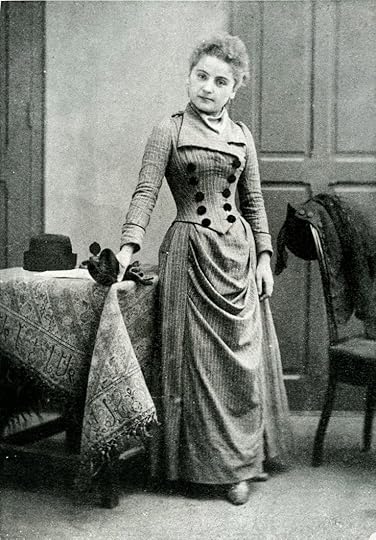
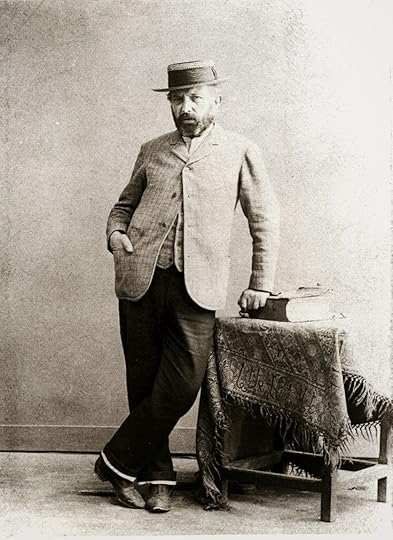
The murder of Toussaint-Augustin Gouffé in Paris at the hands of the ruthless career con artist Michel Eyraud and the "Little Demon" Gabrielle Bompard captured the attention and imagination of the international public and press in 1889. Of interest was the fact that Gouffé was a prolific womanizer, Eyraud a cunning career criminal, and 21 year old Bompard was a petite, intelligent woman from a wealthy family who was prone to hysteria and too often got herself into trouble. With a lot of story to contend with, the press had a field day.
The press plays an instrumental part of "Little Demon in the City of Light.." as its power continued to grow and sway the minds and hearts of public opinion, and in turn law and order. The legitimate press was a tamed beast to contend with on all criminal investigations, yet a beast just the same. The sensationalist press was an unforgiving behemoth of unspecified proportions that sometimes crashed head-on into a story and in turn became part of the story itself. For better or worse, Chief French detective Marie-François Goron, his detective Pierre-Fortune Jaume as well as criminals Eyraud and Bompard were all at the mercy of the press.
The story in and of itself had enough interesting elements to make a compelling book. Yet Steven Levingston presses too hard to make the trial of Gabrielle Bompard especially unique. In the defense of Gabrielle Bompard, her legal team ineffectively introduced the idea that Bompard may have been hypnotized by Michel Eyraud to help him commit the murder of Toussaint-Augustin Gouffé. In turn, the author makes a big deal of the matter and goes into great detail about hypnotism, the two schools of thought on the subject and whether or not a person under hypnosis could betray their own moral compass and commit murder. Was Gabrielle Bompard guilty of murder, yet innocent of the charges against her due to the heavily hypnotic influence of her lover Michel Eyraud? The answer is not so simple, yet simple enough that the court was able to reject the hypnotist theory outright, yet keep the "influence" theory in tact.
In essence, Steven Levingston makes a three-course meal out of an appetizer, and in turn undermines his own book. The book creates a fairly sympathetic picture of Gabrielle Bompard, and the tough life she had, and rightly so, and there are many interesting chapters about the murder investigation and subsequent trial. Yet with "Little Demon in the City of Light: A True Story of Murder and Mesmerism in Belle Epoque Paris," the author loses his way with the story with his effort to play up the hypnotism angle to the hilt, especially when the payoff is underwhelming.
“I’m living the most fantastic macabre tale that is offered to the imagination of man.”
There are two types of ‘true crime’ books. The first conceals the identify of the killer, leaving the reader to speculate on his (or her) identify until the final pages of the story when hopefully -- because in real-life not all killers are caught – the killer’s identity and motivations are revealed. The other tact (which Steven Levingston takes in Little Demon in the City of Light) is a narrative that tells you who the bad guys are from page one. It’s the execution of their vile plot, the unraveling of the criminal scheme, and the eventual hunt for the perpetrators that makes the story entertaining.
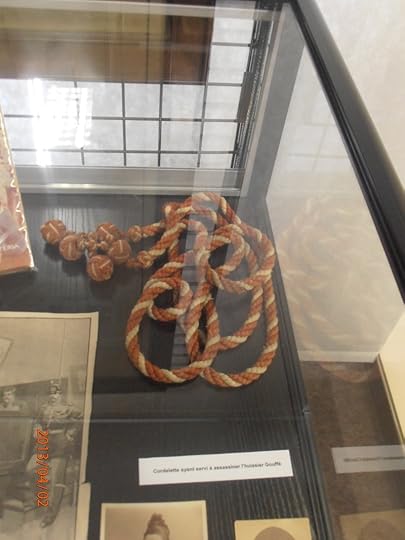
In taking the latter approach, Levingston spins the tale of couples’ killers Michel Eyraud and the petite menteuse (‘the little liar’) Gabrielle Bompard who in 1889 lured a wealthy (but philandering) debt collector named Toussaint-Augustin Gouffé to a lovers tryst in a Paris apartment where in the midst of some heavy petting, a noose was slipped around his neck. Gouffé was strangled and his body slipped into a trunk, which the couple dumped days later in a ravine above the Rhône River. This is quite the detective story, as the Sherlockian chief of the Paris Sûreté François-Marie Goron must piece together the modus operandi of the crime from the grisly remains of a rotting corpse and the scrap wood of a stinking trunk while pursuing the suspected culprits across two continents.
The amount of detail Levingston is able to tease from 100-year-old murder case is extraordinary. He gives us not just a great real-life detective story, but a rich picture of the seamy side of Belle Époque Paris. The case is also notable because of Gabrielle Bompard’s defense which argued that she had been hypnotized at the time of the Gouffé murder and, if she had had a part in it, it was as a mindless automaton to Eyraud’s will. The defense brought to blows the competing theories of the Paris and Nancy schools of mesmerism as doctors, lawyers and judges wrestled with the unenviable notion that future felons might be unresponsible for their actions if only they could show some probability that they had been mind-controlled during the crime by some scheming hypnotist.
Little Demon in the City of Light is a solid true crime book. It might get just a bit long in the tooth as we move to the trial – but perhaps that’s to be excused because even in 1890 Paris, the papers lamented the length of affair, begging for it to just ‘be done’ as the trial approached. Still … for fans of true crime, this is a good one. The insight into the ‘tours of the Paris morgue’ is certainly worth the price of admission alone and, unlike some stories where the killer remains a mystery, this one is satisfyingly resolved with little doubt left on the table.
"Little Demon in the City of Light," by Steven Levingston, tells the true story of the 1889 murder of a wealthy womanizer in Paris by a con man and his mistress. Gabrielle Bompard was a young troubled woman who came under the spell of Michel Eyraud, a long-time fraudster and con man. Together, they lured Toussaint-Augustin Gouffé to an apartment, where they murdered him and stuffed his body into a trunk, which they later dumped in a river near Lyon. From there, they traveled to North America, where Gabrielle found a new lover who took her back to France. Meanwhile, the chief of police had been working hard to track down the killers and bring them to justice, but when he did, he found that Gabrielle’s surprising defense rests on the idea that she only committed the crime under the influence of hypnosis. All of Paris wondered if this could possibly be true, and the City of Light was gripped by the possibility….This is a very entertaining tale, told well by Steven Levingston. One of the more intriguing parts of the story concerns how French courts worked, at least at that time; North Americans would be quite surprised at how much bias there was, with the defendants openly disparaging each other during the proceedings and the judge encouraging them! Quite a different form of justice there, indeed!
I first came across this story in The Killer of Little Shepherds where it's mentioned in passing in the history of forensics. In a few pages, this 19th century crime sounds riveting. Over 300+ pages, it just doesn't hold the same fascination. In places, it does live up to its "breathless true-crime thriller" cover blurb, but, in many others, it drags. When I read in the epilogue that the story had been through a number of rewrites--from a longer academic work to a popular history with a tone/title similar to a devil in another big city--it wasn't surprising. I wouldn't put it at the top of my true crime/history pile, but it's worth a read if you're interesting in the development of forensics, law, and psychology during this period.
A so-so true crime book that I picked up from the local library. The best thing in the book is the description of the 19th century sleuthing which solved the case, though the author may be a little too starry-eyed in his praise of the chief investigator. The worst thing is the political correctness that forbids the author - a Washington Post guy - from admitting the obvious: the woman murderer got a light prison sentence because of her gender, while her male accomplice literally lost his head. Instead Levinston plods through a lot of dull stuff about hypnosis, which really didn't affect the outcome of the case at all. A male murderer who tried the same hypnosis defense would have gone to the guillotine.
I was attracted to this book originally because the title and the cover reminded me of "The Devil in the White City," which is still one of my favorite books. This one is okay. It was engaging enough to continue reading, but it was not captivating. You know right away who commits the crime. The first part of the book focuses on capturing the fugitives, and the second part focuses on the trial. There are A LOT of different players, all with French names, who kind of lumped together in my mind. In the hardcover version which I read, there were photographs of the main people and that helped. If you want a casual, but not compelling, true crime read, pick this one up. Just don't bother to prioritize it over something that you really, really want to read.
One of those "truth is stranger than fiction" stories you couldn't make up if you tried, and this one had it all: Belle Époque Paris, swindling conmen, the scientific community battle over hypnosis, romance, intrigue, and international scandal. A zippy read, happily not bogged down by dry recitation of facts. It was clearly meticulously researched, with an insane level of detail (like what the murdered bailiff ate for dinner on Boulevard Montmartre, based on the contents of his stomach at his autopay), but none of it felt boring. A fascinating true crime, and a peek into the French criminal and judicial systems as well as society in the late 19th century. What's not to love.