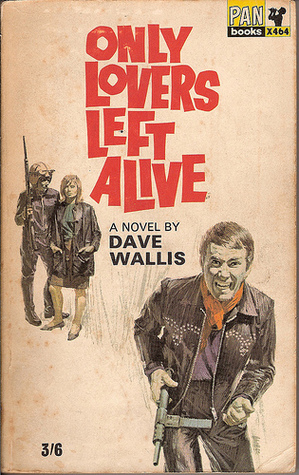
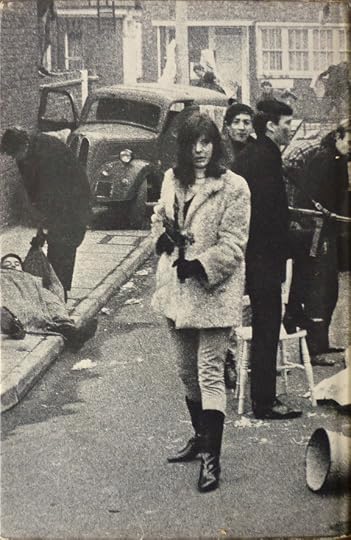
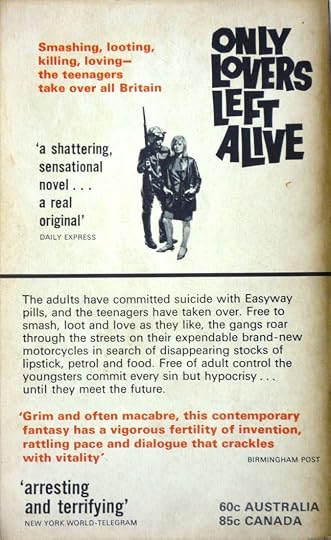
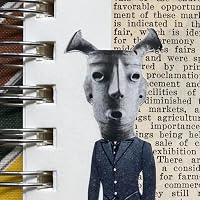
A sudden rash of suicides quickly spirals out of control, as all the adults do away with themselves in a wave of existential ennui. With the “oldies” dead, teenagers inherit the world, suddenly free to smash, loot and love as they like. Motorcycle gangs hold wild orgies in abandoned apartments and prowl through the shambles of disintegrating London in search of disappearing stocks of lipstick, gasoline and food, now the currency in a new world of unspeakable violence . . .
English novelist, brought up in Canada. He served in the Royal Corps of Signals during the Second World War and became a teacher in the late 1940s. His third and best-known novel was Only Lovers Left Alive.
Dave Wallis published this teen apocalypse fable in 1964, a year when England argued loudly about Mods and Rockers and worried plenty about the young. His premise flips that worry inside out. Every grownup past forty five opts for death outright, and the kids inherit a city with the lights still burning and the survivors left in charge.
A statistics lesson turns into a farewell speech when a teacher named Oliver closes his book on suicide figures, moments before adding his own name to the tally. His pupils barely blink, and boredom, it seems, survives even the end of the world.
Money dies along with the parents, and the London teenagers build a barter economy around bingo halls. A wry commentary on capitalism that Wallis plays with real relish. Eggs and cigarettes become currency, a full house wins petrol and tinned peaches, and the National Bingo Governing Council takes over the Bank of England building without a shot fired. Calling the numbers carries higher stakes than any grandmother ever imagined. The kids gamble their whole future on games built for pensioners.
Ernie, Charlie, and Kathy anchor a loose gang from Seely Street, squabbling over loyalty and love while the city rots around them. Their raid on Windsor Castle plays like a fairy tale about stolen treasure, though the treasure turns out to be tins of meat and spare tires instead of crowns.
Plague follows soon after, and Wallis lets disease finish the grim tally that famine started, thinning the gang down to a handful of survivors driven north along a hard, wet road.
Once the story trades city ruins for open hills, the pace slows into something closer to pastoral fiction, complete with sheep, cattle, and a return to work with actual purpose. Kathy and Ernie raise a child named Oliver, a small echo of the teacher from the opening pages, and the later chapters hint softly that history plans a rerun. Ernie already frets about spoiling the boy, an old worry that outlives any apocalypse.
Wallis handles teenage dialogue with a good ear, full of slang that dates the book charmingly instead of damaging it, and his satire of consumer culture and youth panic still carries real force decades later.
The middle stretch sags a bit during the trek north, thin on incident, but the bingo economy alone secures the book its cult reputation among readers of postwar British science fiction.
If you are curious about the roots of teen dystopia you owe this one a visit, if only to see how much William Golding and every disaster franchise aimed at teenagers since owes to a schoolteacher's dry statistics lesson and a country full of bored, orphaned gamblers betting everything on a game of chance.
It's hard to review a book that you first read when you hadn't even hit your teens (and didn't really understand) and then re-read 25 years later. It was written in 1964 and when I read my parents' copy in the mid-eighties even I knew it was incredibly cool. Now I'd describe it as a cult novel, or in the tradition of John Wyndham, or a zeitgeist reflection on burgeoning sixties rebellious mores. But when I was 12 I just knew it was way cool. It's taken me since then to track a copy down after my parents' copy went up in smoke in 1986 but worth it; I mooched it off someone in Atlanta, Georgia and [antiquarian book fetishist alert:] it's an original copy!!
It's basically about England's adults topping themselves due to general hopelessness and despair. The authorities (politicians, royalty, media) try and stop it, before giving up and doing themselves all in as well. Anyone over the age of about 20 is an "oldie" and therefore to be despised. The country thus belongs to the young who are left to get on with it once the oldies disappear. The narrative is driven by a core East End gang who fight, f*ck, and forage with abandon and increasing desperation as local supplies are depleted and they're forced to move further afield, trading tinned food and nylons for petrol and spare motorbike parts. They travel northward over a period of a few years, learning how to hunt and herd as they go. There's a curious mix of foreboding, teenage naivety and world weariness which ends on a hopeful note in Scotland.
To pick up the point about the difficulty in reviewing a long-ago read book: as I was reading it, my 37 year-old eyes began slipping in and out of my 12 year-old self. At times I couldn't tell whether what I was thinking and feeling as I read was via the old or young me. I didn't spent much time dwelling on it as the book drew me in. Over the years, I've often thought about this book and the concept (like Day of the Triffids / Lord of the Flies - ahhh, the Brits and their particular brand of alienated 60s sci-fi lit) but I'd forgotten much of the detail. I found it just as absorbing in 2009.
So I give it four stars - for the book itself, written as it is in a uniquely 60s voice; for the deeply fearful invocation of a teenage-run survivalist state; for the sparse and occasionally beautiful prose (mixed up with occasional triteness) and for the fact that re-reading can sometimes inspire as much delight and surprise as a virginal read.
"If all men died at forty-five Save poets and musicians, And only lovers were left alive To throng their exhibitions..."
The title for this novel came from the poem by Australian writer, Jack Lindsay (son of Norman.)
Britain is going through a problem at chronic levels - that of suicide, "oldies" bumping themselves off for reasons related to boredom, depression amongst other things. Some are taking taking a kind of death pill(s), some are jumping off high-level window sills, others putting their heads in gas ovens.
Soon we have a London, in fact all of Britain, nearly devoid of all oldies, and the kids -or teens- now rule! Windsor Castle has been taken over, the older Royals either dead (or maybe they fled to Canada or Australia)?
The book's main characters are the Seely Street gang - Ernie, the gang leader, his comrade Charlie, and the stammering Robert. Along with their girlfriends, Kathy, Estelle, and Julia, they roam the city, fighting the other gangs in their desperate efforts to control territory, and later for the more important quest to find food, petrol, and other items needed for survival.
Petrol, electricity, food are nearly depleted after a while, and for survival, the Seely Street gang have to fight others and even wild dogs for any precious food - and other supplies needed for them to live.
It seems that after a while, life in this new Britain, where the oldies are now dead and gone, is not easy or comfortable. As well as the constant search for life's essentials, there are other issues to face - typhoid is now wreaking havoc, sanitary conditions are declining, and some people are eating food from five-day opened cans of tinned meat.
When supplies seem near gone in the city and life is not safe, the Seely Street gang head north to the country, travelling through England and then into Scotland. But what awaits them up there? Is life any safer or more livable? Will this gang of hardy souls be able to survive?
While the book shows its age, it's still a grim, and at times grisly read. One feels these kids are not going to survive for long in this world free of the oldies. And what happens to the Seely Street kids when THEY become oldies? (I think oldies means any-one over the age of 18, or maybe 20.) The author doesn't attempt to explain. The reader can only make his/her own assumption. The author was born in 1917, so he was already an oldie when he wrote this story.
Overall, this was an interesting curio. There were plans to film the book back in the 60's with The Rolling Stones appearing in it and supplying seven songs for the soundtrack. It's a pity it didn't get made. I would have been interested in seeing such a film.
Meanwhile, this reprint describes the novel "as a rowdy grandfather of teenage dystopian fiction (that) continues to age disgracefully".
Really enjoyed this book. Although I wonder what the world would be like if all the adults or oldies as the book calls them were dead and the teenagers took control of everything. At some point they become adults. Wonder if teenagers realize that.
This book has nothing to do with the famous film. I guess the same title is a coincidence. But it is a thing of its own value. I didn’t know what to expect so there was no disappointment. I wonder why it is not wide known or adapted as movie. It is definitely worth reading if you are into teenage dystopia
Même si l'idée était pertinente, d'autant à l'époque où elle a été rédigée, elle souffre du passage du temps. La réalisation a été en deçà de mes attentes, notamment par la description des personnages féminins. Il y a eu trop de passages crus, voire sensationnalistes. La viscosité m'a trop dérangé, même si je suppose que c'était l'effet attendu. Cela aurait pu prendre plus de profondeur. La fin m'a elle-même semblé très éloignée de toute cette violence ambiante tout le long du récit. Si l'auteur avait continué dans la continuité l'intrigue aurait pris plus de sens et de corps. Sa résolution m'a, de fait été très décevante car trop "calme". Je m'explique : tout le récit a fait appel aux bas instincts, aux vices et au dépassement des règles. La clôture du récit sur une naissance après la disparition de cette société crée une boucle avec ce qui a été perdu; laissant place à une répétition de la part des personnages que l'on a suivi, et ainsi de suite. Je saisi l'idée, sûrement novatrice à l'époque mais ce "retour au calme" est polaire par rapport au reste et fait ressortir le tout comme du "gore porn".
This entire review has been hidden because of spoilers.
It had some really slow moments but overall a pretty good read. It had some tense relationships, some action, and some gore. It painted a very heavy picture of what a situation like this would really be like. There was no sugar coating and I liked the dark tones to it. I'd recommend this book but good luck finding it. I ordered a good used copy online and I'm not letting mine go. I'd read it again and surprised that this wasn't adapted into a movie. I heard that the Rolling Stones tried to get it off the ground as a movie but it never rose. Too bad.
Giving full disclosure though, it seems like a dated story with so many zombie and post apocalyptic tales written in the same fashion and a sub-genre being devoted to it but one should keep in mind that this was probably written way before a lot of those stories were put to print; in 1964 to be exact.
One of the original "adults die in apocalypse, children inherit the earth" stories, which soon became a standard of the genre. It is interesting as it goes through collapse, survival and a changing society. There is a bit too much crudity and misogyny for my tastes at times (although there to be critiqued it seems to me).
Four stars for concept and two for execution. This is a real period piece from the time when teenagers were a new phenomena. ... see also Absolute Beginners, Colin MacInnes.
Ma mère avait pour dire qu’après 15 ans, les parents n’avaient plus beaucoup d’emprise sur leurs enfants, que c’est le monde en général qui nous façonnait. Cela pouvait être l’adulation que l’on éprouve pour un(e) chanteur(se) ou un groupe de musique, un(e) athlète, le parent d’un ami proche, un(e) enseignant(e). Le point commun qu’avaient tous ces gens est qu’ils étaient adultes (jeunes ou avancés) et qu’ils nous accompagnaient spirituellement à partir d’un certain moment de notre développement — comme si nos parents nous donnaient notre charpente et que la société assurait la finition de notre personnalité.
Est‑ce là la recette d’une certaine cohésion sociale transmise par nos prochains plus âgés? Force est d’admettre que leur rôle d’arbitre (ou son absence) est mis bien en évidence dans cette dystopie méconnue où l’humanité retourne pratiquement à l’âge de pierre tant elle souffre de la perte de ses gardes‑fous. Les jeunes, forcés de vieillir trop vite, tentent de survivre dans une sauvagerie imposée et ne peuvent se fier qu’à leurs plus bas instincts pour s’en sortir.
C’est un livre violent, puéril, vulgaire, volatil comme la jeunesse laissée à elle‑même peut l’être, mais il fait à sa façon l’éloge de l’imperfection de nos structures.
Excellent book to read with Where Late the Sweet Birds Sang, if you’re of a mind to pick up both. Loved it. Always a fan of well-done post-apocalyptic tales.
Brilliant - a true lost gem, beautifully re-presented in this Valancourt edition. Violent, haunting and touching by turns, with an all-pervading sense of loss, longing and the perennial teenage search for meaning. Once optioned as a movie with Keith Waterhouse and Willis Hall brought in to write the screenplay - and starring the Rolling Stones., who were to write six new numbers for the soundtrack. What a film that would have been!
"Only Lovers Left Alive" de Dave Wallis est un roman culte des années 1960, à la fois sombre et visionnaire, qui explore un monde où les adultes disparaissent, laissant les adolescents seuls maîtres d'une société en ruines. L'histoire se déroule dans une Angleterre dystopique, frappée par une vague de dépressions massives qui conduit les adultes au suicide. Sans surveillance ni autorité, les jeunes se retrouvent livrés à eux-mêmes, errant dans un Londres en pleine décomposition.
Le récit suit Kathy, Ernie et leur bande, un groupe d'adolescents tentant de survivre dans ce monde chaotique, où la violence et l'anarchie règnent. Des gangs organisent des orgies dans des appartements désertés, d'autres se livrent au pillage dans une ville devenue jungle urbaine. Confrontés à cette dégradation progressive de la civilisation, Kathy et ses amis décident de quitter Londres pour fuir vers le nord, dans l'espoir de trouver un refuge loin de la violence.
"Only Lovers Left Alive" est une œuvre nihiliste et perturbante, souvent comparée à "L'Orange mécanique" d'Anthony Burgess pour sa puissance visionnaire et sa critique acerbe des dérives de la jeunesse et de la société. Le roman dépeint une génération en quête de sens, abandonnée par le monde adulte, où l'instinct de survie prime sur toute autre considération morale ou éthique. La violence y est omniprésente, et le désespoir se manifeste à chaque page.
Interdit en Irlande pour son nihilisme après sa publication en 1964, le livre est rapidement devenu un objet de culte dans la pop culture. Encensé par des figures telles que Jim Morrison, "Only Lovers Left Alive" a failli devenir une adaptation cinématographique avec les Rolling Stones sous la direction de Nicholas Ray, mais ce projet n'a jamais vu le jour. Plus récemment, il a inspiré le film de Jim Jarmusch du même titre, bien que celui-ci s'éloigne du thème original.
Ce roman dystopique frappe par sa pertinence et son anticipation des tensions sociales et générationnelles, en s'interrogeant sur ce qui reste de l'humanité lorsqu'elle est privée de repères. Tout aussi dérangeant que prémonitoire, "Only Lovers Left Alive" demeure un témoignage cru et saisissant d'une époque, tout en résonnant encore avec les crises contemporaines.
Only Lovers Left Alive. Published by Dave Wallis in 1964, the book takes place in England beginning with an event dubbed “The Crisis” in which all the adults start killing themselves off one by one. Jumping out of windows, sticking their heads in the oven, and so on and so forth. There is no known cause. Society in turn quickly starts to collapse. First the press stops, there are no more police, or doctors, or sanitation workers. Bartering quickly becomes inefficient due to violence and theft. Waste fills the streets as roving gangs of teenagers don their motorcycles, combing wastelands of abandoned houses for tins of food and pillaging for any supplies they can find. Street fights erupt everywhere. Plagues eventually encircle the country as the remaining children struggle to find sustenance and as the cities are slowly abandoned, survival reverts to hunting and gathering. The story reminds me a lot of the film Threads, not only in the sense that it tells a tale of a bleak and believable breakdown of society as we know it, but also because the dialogue and slang is so beautifully and authentically English. To be honest, it is difficult for me to tell whether my love for this book is due in part to my nostalgia of all the time I spent in England in my younger years. Half of my family is English and I remember going to many of the places in the book as a kid, one of which was Windsor Castle, which in the book is taken over by the biggest gang left in England. The hub of most of all the fuel and food left in the country. The Hammersmith Palais in West London is occupied by numerous gangs who’ve decided to set aside their differences and live out their last days in harmony, dancing to music instead of fighting. Anyways, the book was so highly regarded by the Rolling Stones they apparently tried to buy the rights to it with the intention of making it into a film. Jim Jarmusch loved it so much he named a film after it (which is also fantastic but has literally nothing to do with the book). I couldn’t recommend it more. 10/10
A pandemic of desolation creeps into the minds of all adults but the insane. Mr Oliver, a history teacher, (“what was he doing slaving in this examination factory”) jumps from his classroom window. Mr Tellen, a journalist looking for a story and a reason behind Mr. Oliver’s demise, similarly dispatches himself. Like Oliver and Tellen, adults make the ultimate choice, and youth is left to fend for itself.
The protagonists in the story are from the Seely Street Gang, Ernie, Charlie and Kathy, streetwise 17 year olds. Their bonds with school, with their parents and with what they had previously are suddenly severed. They are left to speculate on possible reasons for the mass suicide..
I think the squares have just given up. I mean they never seemed to get any kick out of anything, just beer and poo, and telly.
They find solace in the Tropic Night Club with its pulsating music, and in vast amounts of alcohol and sex. It’s early 1960s, not so long after World War Two, and so not difficult to return to an absence or purpose. It’s how they were brought up.
With the death of establishment and bureaucracy, the National Bingo Governing Council attempts to exert control, but the teens aren't happy, contraceptives and hair products are running short, so they take to the road.
Not all of what Wallis attempts succeeds, but most of it does, and it’s hard to understand why this novel isn't better known. Its brave, and a lot of fun.
It’s nothing like Lord of the Flies, to which it was compared when first published. Rather, it’s about to what extent do the youngsters want to get back what they had, or instead, to rid themselves of the institutional shadow of the past. And will emerge from the wreckage. Swinging 60s London, in spite of all of its youthful insolence and superficial consumerism, will give way to something new and lasting.
Cette lecture fut une expérience assez étrange pour moi, mais il m'est difficile d'expliquer pourquoi.
Tout d'abord, je pense que j'ai vraiment ressenti le fait que ça avait été écrit dans les années 60. Il y a quelque chose qui fait qu'on sent que l'auteur a vécu cette époque, un peu comme quand je regarde un film de ces années-là ; je ne sais pas si j'arrive à me faire comprendre. Ensuite, après un début assez rapide on passe très vite et quasi sans transition au cœur du sujet : un monde post-apocalyptique ; il y a beaucoup d'ellipses de ce genre dans le roman : nous sommes à Londres dans les années 60, et de plus en plus d'adultes se suicident. Et c'est comme si d'une page à l'autre on était passé au chaos : quasiment plus d'adultes survivants, que des enfants et des ados, et c'est l'anarchie. Pas d'explications, pas de recherche d'explication, on suit une bande d'ados qui tentent de survivre en étant plus forts que les autres. Le pouvoir revient aux jeunes, et c'est, j'imagine, quelque chose qui était très fort dans ces années-là (les vraies), avec Woodstock, les manifs contre la Guerre du Vietnam, Mai 68, le mouvement punk, etc.) Ce roman est comme une métaphore du conflit générationnel. Les « vieux » détruisent le monde, il n'y a plus d'avenir, no future... C'est une sorte de Sa Majesté des Mouches (bon OK je ne l'ai pas encore lu celui-là), mais je crois qu'il est beaucoup plus sombre et dérangeant. Il n'y a aucun optimisme, les jeunes font bien pire que leurs aînés : entre viols, assassinats, tortures, esclavage,... et quand on se met bien en tête que ce sont des adolescents qui font ça, c'est très malaisant. Il y a une sorte de retour dans l'Histoire : sans les adultes, la jeune humanité régresse vers les années 40, puis le Moyen-Âge et enfin la Préhistoire. Ce qui m'a aussi beaucoup dérangée, mais ça c'est intrinsèque à la période où ça a été écrit, c'est comment les femmes (les filles) sont traitées, et ça montre bien, puisque finalement c'est un peu le reflet d'une époque, que la condition féminine était toujours très limitée il n'y a encore que 60 ans.
En Angleterre, tous les adultes se sont suicidés. Incapables de prendre la relève pour assurer un fonctionnement « normal » de la société, les enfants et les ados s’organisent en bandes où seuls les plus forts survivent. Voilà donc le pitch ultra-court et ultra simple de ce roman culte publié en 1964, tellement sulfureux qu’il a été interdit en Irlande. Dave Wallis y raconte le parcours de Kathie, Ernie, Charlie et quelques autres, quittant Londres pour voyager vers le nord dans un pays en perdition. Un voyage semé d’embûches, de rencontres et de coups durs où rien ne leur sera épargné. Accusé de Nihilisme et d’opportunisme (notamment de surfer sur la vague d’affrontements entre gangs qui ont choqué l’Angleterre conservatrice dans les années 60), Wallis est avant tout un incompris. Son propos n’est pas de dénoncer la stupidité et la violence aveugle d’une jeunesse incapable de « vivre ensemble ». Par définition immature, cette jeunesse essaie de faire face avec ses armes, abandonnée par des adultes dont on ne connaîtra jamais les véritables raisons de leurs suicides de masse. Pour les vivants, l’existence devient forcément chaotique, l’avenir incertain. Plus rien ne sera comme avant mais finalement, est-ce une si mauvaise chose ? N’est-ce pas l’occasion de faire table rase du passé capitaliste et industriel pour repartir sur des bases plus simples et plus saines ? Cette lecture politique (et socialiste) du roman offre un regard différent sur les jeunes qui se débattent dans ce monde post-apocalyptique. Loin du nihilisme, les personnages cherchent à avancer ensemble, lucides sur le fait que les années à venir s’annoncent compliquées, mais également déterminés à faire en sorte que le futur reste porteur d’espoir. Malgré les apparences, un livre bien plus optimiste que désespéré. C’est en tout cas l'impression qu’il m’a laissé.
I was fifteen years old when my father’s brother, Uncle Reynold, gave me this book, I guess as an early Christmas present. I thought it was very cool, of course, when all the grownups kill themselves out of sheer boredom and leave the planet to the teenagers. Eventually after a period of mindless destruction, violence and barbarism, humanity reverts to a hunter, herder, gatherer culture and tries to raise the babies it created without the wisdom of the generation who went before. At age seventy I still remember the plot as it came flooding back during a White House coronavirus presentation. I recommend it to any teenager who ever wanted to sleep with his/her significant other, and day dreams about running away, or doing away with the adults who might object. That raises an interesting question for a teenage reader: would you trade a complex culture, (a society that offers established financial, religious, employment and cultural structures) for the right to do whatever you want, with whoever you want, whenever you wanted to do it? Really? Think about it.
This entire review has been hidden because of spoilers.
Well, the reading was a bit slow at first, because the English is British and quite dated — sixties-era — so I had to look up several words and expressions, since English isn't my first language. As for the story, it feels like a teenage version of Lord of the Flies, but with insufferable characters you can't possibly sympathize with. Well, they are teenagers, so you can't expect much. The ending disappointed me, it felt incomplete. In the edition I read, I looked for other versions, but it's really hard to find any information about this book. I came across a French edition, but it seemed to have the same ending. In the end, it's yet another take on how people react to a near-apocalyptic scenario: immature teenagers trying to survive or making the worst possible choices. Some parts drag on, and the climax brought neither surprise nor impact. At several points, the narrative settled into a predictable passivity. And that's basically it.
Ps.: Earnie is such a punchable character, I was wishing his death the whole time
l'histoire se passe où une vague de suicide se produit dans le monde et on suit des adolescents vivants cela....au début je pensais que c'était uniquement les hommes et j'avais hâte de voir la reprise du monde par les femmes...mais détrompez vous ce sont les adolescents de tous genre qui reprenne "l'humanité" Je suis assez déçu de cela d'une part, d'autres parts je trouve les protagonistes masculins abjecte! ils sont misogyne prennent les femmes pour des objets avec qui il couche et elles font à manger et ça c'est la partie la plus dérangeante de ce livre ! heureusement qu'il est court sinon je l'aurais clairement arrêté! néanmoins j'ai aimé les 20 dernières pages avec un retour à la nature chouette mais c'est vraiment le seul truc à sauver
Technically I own this, but I think I'll be leaving it in Helsinki.
Like most 60s pulp, not nearly as risqué as the cover copy would have you believe; mostly a sad, grim piece about people slowly going back to an agrarian existence. The teenager-hood mostly seems to come up in terms of having a group of people who haven't yet had any kind of midlife crisis or yet gotten bored.
Would rate between a 2 and a 3, but I really needed some background noise and this provided, so giving it a 3.
"The scene: Early 60s London. Conjure displays of cool style at local discothèques. Youthful insolence and wit. Frivolous consumerism. Into this swirling myth/reality of the “Swinging” city in the early 60s, Dave Wallis’ Only Lovers Left Alive (1964) weaves its own petulant “image making.” The youth attempt to create [...]"
Au final, c’est beaucoup moins un roman vintage qu’un roman d’aventures presque chevaleresques. C’est pas génial, mais il faut s’accrocher parce que l’histoire va en s’améliorant. C’est au final pas du tout ce à quoi on s’attendait, mais c’est une histoire que l’on a envie de continuer. J’en garderais un bon souvenir, ça change, c’est atypique et intéressant ( ps: les hommes sont archi sexistes )
я практически случайно начала слушать эту книгу и благодарна этой случайности. мне очень понравилось. это нетипичная антиутопия, но типичный young adult из 60х-80х с классическим сухим английским юмором. концовка показалась мне немного резкой, но не прям сильно. хрычи умерли, но им на смену пришло новое поколение влюблённых ❤️🔥
I was reading it in 1991 in the end of Soviet Union, it was publish in the jornal "Вокруг света" (Around the world). I was 10-11 year old and the novel left a great impression.