Uomini e cani, guerra e civiltà, crudeltà e coraggio: il XX Secolo, i suoi conflitti e gli orrori, le meraviglie di un pianeta in subbuglio, riletti e raccontati da un grande e innovativo scrittore giapponese in un romanzo avventuroso, poetico, fantasmagorico.
Guerra del Pacifico, 1942: le truppe giapponesi occupano due isole dell’arcipelago delle Aleutine, in Alaska. L’anno successivo gli americani riconquistano le isole, massacrando migliaia di giapponesi, e scoprono abbandonati nella ritirata quatto cani appartenenti alle unità cinofile. Tre pastori tedeschi e un pastore di razza Hokkaido saranno protagonisti di straordinarie vicende e spettatori di eventi memorabili. Presi in consegna dagli americani, due di loro verranno impiegati nelle battaglie decisive della guerra del Pacifico; uno diventerà il cane da slitta più famoso d’America, mentre l’ultimo, fedele ai giapponesi, attirerà un drappello di nemici verso un campo minato. Saranno i loro numerosi discendenti sparsi per il mondo, decennio dopo decennio, a essere impiegati negli scenari più sorprendenti, nella guerra di Corea, in Vietnam, in Afghanistan, oppure al servizio della squadra antinarcotici della polizia messicana negli anni Settanta, o ancora del KGB, della mafia russa e di quella cecena. E non mancheranno splendide cagnette pronte a strabiliare le platee di mezzo mondo in occasione di concorsi canini, cuccioli alle prese con viaggi transoceanici ed esperienze mistiche, e tra loro brillerà per sempre Laika, celebre e tragica, dal destino commovente, lanciata alla conquista dello spazio verso il buio e il silenzio.
Hideo Furukawa is a novelist based in Tokyo. He has received the Noma Literary New Face Prize, the Mystery Writers of Japan Award, the Japan SF Grand Prize, and the Yukio Mishima Award.
i'm not sure how i feel about this book. i know i didn't hate it, but i am left a little perplexed as to what the story was, exactly.
i know it was the story of a group of four military dogs, one american, three japanese, abandoned on the aleutian island of kiska in 1943. THIS IS NOT WHERE ISLAND OF THE BLUE DOLPHINS TAKES PLACE, ALTHOUGH THERE ARE GREAT WILD DOGS IN THAT BOOK.
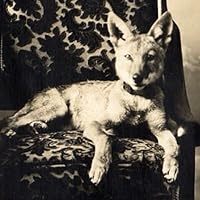
one of the dogs is a hokkaido:
oh my god, why would you ever abandon this dog??
and three are german shepherds:
which, well, yeah.
i love the notion of military dogs. i had to read eyes of the emperor for library school, and that was the first book i had ever read about military dogs. i liked that book a lot and expected to love this one, which was partially told from dog POVs. who doesn't like dog POVs?? besides jason. so these dogs are abandoned and later rescued and put to other uses. the rest of the book traces their bloodlines all over the world, outlines their experiences and the way their paths diverge and occasionally, unexpectedly converge once more. some remain military dogs, some go on to become show dogs, drug-sniffing dogs, guard dogs, sled dogs, humble pets, oceanic explorers, etc. and i agree with the other reviewer - almost all of the dog parts are riveting. but also sad, at times. their whole lives are chronicled, down to their deaths, which are occasionally heroic, but still sad.
they are kind of dog-POVs, but they are written in second person, but not second person where "you" are you the reader but "you" are you the dog. and not always the same dog, just whatever dog happens to be the focus of the narrative at that point in time. so, that's a little gimmicky, but whatever.
the other complaint i have about the dog bits is the repetition. the repetition. the repetition. the sire/dams are always invoked when discussing a new dog, as well as snippets of their backstory as though you may have forgotten it in the space of a few chapters. as well as facts from the chapter "you" are at that very moment reading. which makes for clunky prose.
as far as the more human-centric chapters, hmmm... well, the humans are not given names, just nicknames, really. you know, like they are pet dogs, dig? unless they are real people like ho chi minh or gorbachev or lyndon b. johnson. then they get to keep their names.
and there is this kidnapped eleven-year-old daughter of a yakuza boss who seems to only know the word "fuck." now, i myself have a potty mouth, so cussin' doesn't bother me at all, but it just seems so incongruous to have this little kid dropping f-bombs four or five times in a single sentence. we get it. she's hard.
and so interspersed with all the doggie "where are they nows" is the story of the cold war. the vietnam war. the afghan-russian war. the space race. and the part that the original island-dogs' descendants played in all of these. which historical content is told in in this really casual om narr voice, complete with "likes" and "you knows" and it is so distracting to get so much historical background in this voice. because it is very detailed information, but it sounds like it is coming from the mouth of some drunk guy at the bar, who i guess is the same om narr talking to "you" the reader, the dog, in all the other chapters. and, then, under all of that historical layer, there is a third story of revenge and assassins and the criminal underworlds of russia and japan.
i am making it sound like a mess, and it's not, not really. the dog bits are mostly really interesting and moving. i liked learning about the different ways dogs can be trained to fight a bad guy, alone or in a pack. the bite to the wrist to disarm, the retrieval of the gun, and then the bite to the throat, or not, depending on the particular brand of training.
awesome.
and you know you aren't going to have a russian dog story without this little cutie:
and these luckier pups:
hence, title.
it's worth reading, but it is not my most favoritest dog story ever. but it's summer soon, and this would be perfectly suitable hot-day casual reading.
There are lots of stories about men and dogs out there (or women and dogs, or dogs and dogs), but rarely do those stories place the dog in something other than a supporting role. Usually it’s the human’s story, filled with their dramas and their struggles. This does wonders for solidifying dogkind’s role as humanity’s best friend, but what if it were the other way around? What if the dogs had their own interests, and their time spent side by side with humanity had a different purpose than what we imagine? This is a question that few books explore, and none in as interesting a manner as Hideo Furukawa’s Belka, Why Don’t You Bark?
The story of Belka is an epic that begins in 1943, spans several generations and continents, and is told through the eyes of man’s best friend. It all starts when three German Shepherds, trained by the Japanese military, are abandoned on an island just before it is seized by American troops. From there it’s a winding journey filled with twists, turns, and many miles traveled by boat, plane, and of course on foot. The narrative follows the family line of these dogs all the way until the international space race, each of them leading otherwise mundane lives as dogs of war, show dogs, sled dogs, and even wild dogs. Then, one day everything changed. One of the descendents of the original three was sent up into the first manned satellite, causing dogs all around the world to all stare up at the sky, sensing but not seeing canine history in the making. Somehow, each and every one of them knew that on that day a new age had started, a dog age.
Belka, Why Don’t You Bark? isn’t a narrative in a traditional sense. It is told through dozens of different voices—some human, but mostly canine—all the while continuously jumping forward and backward through the ages. Some of the narrators tell a story that lasts their lifetime, while others may only span a few days. Unlike the canines in this story, the human characters are intentionally minimized in their importance, and are rarely given actual names. Instead Furukawa gives them monikers, such as The Archbishop, The Hellhound, or even The Yakuza Boss. The only weakness of this story is the fact that by the end of the story the journey is clearer than the destination. Lives were lived, adventures were had, and somewhere in the middle there was even a conspiracy involving the Russian mafia, but by the last ten pages I was struggling to see where all the loose threads lead, if anywhere. The story of Belka, much like the life of every canine on the face of this planet, is a story with no real future or past, only a continuous present. In many ways this makes the story truer to the main characters, for how can a novel claim to be told through the eyes of a dog when the dogs are thinking like humans?
In the end, if you’re looking for a story with a complex plot and a large and diverse cast of characters, Belka has that. If you’re looking for a compelling narrative told from the perspective of non-human characters, Belka has that too. Like any good dog, Belka gives everything it has to offer, without restraint, and when it can’t give anymore, it ends.
A really interesting, semi-fictional tale of several generations of dogs trapped next to a fairly boring and predictable post-cold-war revenge story. Skip any chapter that doesn't feature dogs.
I lost interest in this one, only reading a quarter of it before bailing. The (true?) stuff about the military dogs was rather interesting, but dogs do not make good literary characters, I don't think; it was the other part of the story, however, some weird International gangster-terrorist conspiracy that was somehow tied to the dogs, that I found to be so deeply uninteresting.
comincia bene questo libro "i primi a impiegare cani nelle azioni di guerra furono i Tedeschi" no, furono i Romani poi prosegue con un'inverosimile "gli Americani riconoscevano la leggera superiorità dei Giapponesi nell'addestramento dei cani" ma davvero?
poi c'è anche un insopportabile lamento indirizzato al cane che soffre il mare "tu come ti sentivi?" e come vuoi che si senta? è un cane! "e voialtri dove siete finiti, amati cani?" chi lo sa, ma qualcosa mi dice che ce lo stai per raccontare tu...
il capitolo su Anubi il Dio cane è un delirio totale, un cumulo di sciocchezze da srotolarsi sul pavimento dalle risate, col cane in questione, dotato di un orgoglio di razza alla giapponese e di una coscienza della sua volontà da fascista in erba, che gira col pisello ritto alla ricerca di una femmina nobile in tutta la Siberia e con una generosa visuale dei deliri personali dell'autore sul programma spaziale di Kruscev
ogni capitolo inizia o finisce con l'invocazione "dove siete finiti, miei amati cani?" più patetico di così non si riesce a immaginare nulla e inoltre vorrei proprio sapere chi è il demente che ha parlato di "nuovo Murakami", questo autore non ha nulla in comune con Murakami, la sua prosa è scadente, non è certo un postmoderno e non c'è traccia alcuna di surreale nel suo lento e monotono raccontare...
l'ultima parte è tutta rivolta ai cani, come se fossero loro a leggere questo delirio, i dettagli dell'impiego di ciascun cane nelle guerre e nei macelli per conto di Usa e URSS sono descritti nel particolare, ma questo non riesce a far si che il lettore superi l'irritazione di trovarsi a leggere cose del tipo "cosa pensavi tu Belka? Bauu Bauu Bauuu" si tratta davvero di un'abuso irritante della seconda persona singolare, immotivato e del tutto gratuito, sembra di essere in presenza di un cerebroleso che racconta una storia a un bambino
281012: sounds like a cool idea, sounds like fun violence, sounds like first-person dog story…but then you read it. translated from Japanese maybe loses something, but the main thing is a lot of politics, a lot of human stories, not enough dog even when the narrative addresses you as one of the dogs. too much humans, though it does travel, there is some interesting views of global politics, but only sometimes interesting...
When I saw this title, and by a Japanese author, I immediately expected something poetic, along the lines of Kawabata, Tanizaki or Oe, but this is more like a failed Tsutsui, an attempt at zany that ended up mostly tripping over its own clown shoes. There are two storylines here, one involving the dogs left behind in the Aleutian Islands in World War 2 and the subsequent history of their descendents, and the other a fight between Yakuza and Russian / Chechen mafias. It was suggested by one reviewer that you skip any chapter with dogs; this is not a bad idea these are longer but I suggest you also skip any chapter without dogs. The “dog” chapters are long-winded and boring, a mix of invented anecdotes and pseudo-history while the others are unbelievably amateurish and ridiculous. The fierce competition here as to which storylines were the worst-written just left me exhausted because with so few glimmers of interest, I just wanted to finish. The tongue-in-cheek violence merited a left hook to the jaw and a few broken fingers so the writer won’t make the same mistake twice. If you’re looking for some burlesque about Stalin, Mao, Khrushchev and the Russian space program, it’s here, but there’s a lot of doggy-doo you’ll have to put up with on the way – watch your step!
La segunda guerra mundial, la guerra de Vietnam, las guerras en Afganistán, las guerras entre carteles en México, de un modo u otro hay perros involucrados, algunos como escoltas, como radares, como armas, como compañía, pero siempre están presentes, y en este libro se van cruzando las historias del linaje de 4 perros militares (algunos americanos, otros japoneses) y el como su progenie se va distribuyendo poco a poco a lo largo del planeta, llegando a Rusia, a México, incluso a Samoa, pero de un modo u otro partícipes de distintas aventuras.
Un libro difícil de describir, con largos pasajes que cuentan la historia de perros como DED en Vietnam, Cabrón en México y Kita en Alaska, pero donde además, se cuenta la historia de una niña japonesa que queda en medio de un conflicto en el cual, también los perros son el motor que lleva la trama.
I'd have given this book a mere "it was ok" rating if it weren't for the fact that it's one of the weirdest books I've read in a while. Extra points just for existing. Maybe it speaks more to someone else who isn't me. I like how the narration addresses the dogs in the story directly. Silly!
This is the second book I've read from Japanese author Hideo Furkawa. This title can be considered both a non-fiction and a fiction story. The novel is about a family saga of ...dogs!!! The author narrates the story to write the human's History of the 20th century from the dogs's perspective. The author reveals that dogs, especially german sheperds, have participated in wars such as WWI, WWII, Korea War, Vietnam war and more...
Whether a dog is a pure race or mixed race, whether trained by professionnals or not, whether they serve a master or not, they still have animal instincts for survival in most dangerous places and difficult conditions. Forget the image of human's best friend and/or of domesticated dogs, the author reveals some brutal stories, but also heart warming images of these soldier dogs.
The book is unique in the theme treated, interesting to read and entertaining.
Истории собак были действительно интересными и очень грустными, очень хорошо переданы реалии войны но ,как по мне, очень много лишних вставок где автор отчаянно пытается пояснить за историю войн в разных странах углубляясь в политику. Для меня это странный ход повествования и немного лишний потому что,я считаю,что если читатель заинтересован в таких подробностях он может найти и почитать об этих событиях более подробно сам. Возможно это только моя придирка но повествование действительно становится рваным из-за тщетных попыток автора впихнуть читателю очень много отстранённой от повествования информации, собственно из-за этого я, к сожалению, не смогла проникнуться историей в полной мере. В общем и целом - неплохо. Это был довольно необычный опыт
A fanciful story about dogs and war in the second half of the twenty-first century that intertwines narratives and bloodlines that span Russia, U.S., China, among other locations and powers that participated or hosted conflicts around the Pacific.
A decent read that helped me better understand the Cold War and related conflicts in a new way. The book did feel like it lost it's focus in the last third.
3½, I think, though not worth rounding up to 4. Yes, this book is annoying, but I think a lot of the dramatic excess in the narration and the ridiculous surplus of expletives and slang in the dialogue may be the fault of the translator. And yes, instead of a major climax, it just kind of fizzles out toward the end. However, it is remarkably original and audacious in scope, and often enthralling.
This is a great idea for a novel: twentieth-century history and its unpleasantries through the eyes of military dogs and their descendants. Contemporary Japanese literature has plenty of cuddly animals, abut Furukawa's German Shepards are not those. The "animal turn" (my phrase) in writing today becomes more and more curious, and a novel like this only makes it more so. Furukawa is not my favorite Japanese novelist -- he promotes himself too shamelessly, then again, don't they all? -- but he's written something far more provocative than the better known Haruki Murakami or Yoko Tawada. Recommended if you find a copy in the library or a second-hand bookshop, if you know what I mean.




 come to my blog!