Jump to ratings and reviews
Rate this book

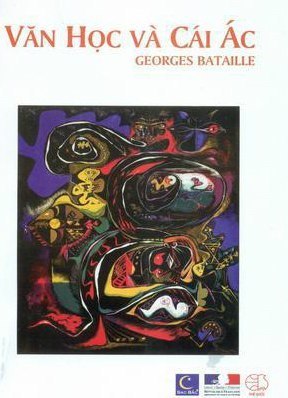
Văn học và cái ác

Rate this book
“Văn học và cái Ác” được xuất bản ở Pháp năm 1957, tập hợp những bài viết phê bình của George Bataille, phần lớn đã đăng trên tạp chí Critique.

Tác giả chọn 8 nhà văn nổi tiếng để khảo sát nghiên cứu: Emily Bronte, Baudelaire, Michelet, William Blake, Sade, Proust, Kafka, Genet. Trong số những tác phẩm này, Bronte và Kafka đã có tác phẩm được dịch ra tiếng Việt, còn lại thì hầu như độc giả Việt Nam chưa biết gì về họ. Không chỉ có tác phẩm, mà phần lý luận văn học ở giai đoạn này, mặc dù được các nhà văn, các nhà tư tưởng, lý luận phê bình nghiên cứu rất kỹ, trong khi đó đối với phần đông nhà văn và độc giả Việt Nam thì vẫn còn mới lạ.

Cuốn sách được coi như “một công trình nghiên cứu quan trọng nhưng không dễ đọc”. Theo Jacques Red, trong Văn học và cái Ác, Bataille “với sự phân tích chính xác và rạch ròi vốn có của mình tiếp tục tìm kiếm những hoàn cảnh kịch tính ở đó chân lý của thực thể con người được hồi sinh từ đám tro bụi của riêng mình”.

Chính George Bataille viết về bản chất tác phẩm nổi tiếng này: “Văn học là cơ sở của tồn tại hoặc không là gì. Nó là hình thức thể hiện rõ nét của cái Ác, một cái Ác theo tôi nghĩ, có một giá trị tối thượng. Quan niệm này không đòi hỏi sự thiếu vắng đạo đức, nó yêu cầu một “siêu đạo đức”.

Georges Bataille được hâm mộ vì sự uyên bác và vì cách tiếp cận mạnh bạo ít thấy có trong văn học. Đến cuối những năm 1950, Bataille đã được coi là những nhân vật quy định nền văn minh của châu Âu hiện đại. Martin Heidegger nói về ông như là “bộ óc tư duy xuất sắc của nước Pháp”.

315 pages, Paperback

First published January 1, 1957

192 people are currently reading
6844 people want to read

About the author

Georges Bataille

232 books2,506 followers
French essayist, philosophical theorist, and novelist, often called the "metaphysician of evil." Bataille was interested in sex, death, degradation, and the power and potential of the obscene. He rejected traditional literature and considered that the ultimate aim of all intellectual, artistic, or religious activity should be the annihilation of the rational individual in a violent, transcendental act of communion. Roland Barthes, Julia Kristeva, and Philippe Sollers have all written enthusiastically about his work.

Ratings & Reviews

What do you think?
Rate this book

Friends & Following

Create a free account to discover what your friends think of this book!

Community Reviews

5 stars
492 (32%)
4 stars
591 (38%)
3 stars
349 (22%)
2 stars
65 (4%)
1 star
24 (1%)
Displaying 1 - 30 of 129 reviews
Profile Image for Dan.
1,007 reviews134 followers
July 4, 2022
Its title suggests a much broader discussion than the book actually contains. However, Bataille does not write about some classical religious or philosophical concept of evil, nor does he discuss how it is represented in literature in general. Rather, he focuses on a particular notion of “evil” and on the work of seven particular writers: Emily Bronte, Charles Baudelaire, Jules Michelet, the Marquis de Sade, William Blake, Marcel Proust, Franz Kafka and Jean Genet.

Literature and Evil is more a work of philosophy or critical theory than a conventional instance of literary criticism and analysis. That it is more the former than the latter is reflected in the irregularity of Bataille’s approach to the writers he discusses. In the chapters on Bronte and Michelet, for instance, he comments on their work in the most general way, while in the chapter on Kafka, he quotes several passages from Kafka’s stories and diaries, but almost nothing from The Trial, The Castle or The Metamorphosis. Similarly, the chapters on Baudelaire and on Sade are less a commentary on the works of those writers and more a commentary on what existentialist philosopher Jean-Paul Sartre wrote about them. Indeed, Bataille’s unsystematic approach is reflected in the way that he discusses different writers in the context of different critical approaches: Michelet in terms of anthropology, Blake in terms of Jungian psychology, Kafka in terms of Marxism, etc. In some instances, moreover, there seems to be as much emphasis on the writer’s biography as on his or her written work.

This is not to say that Bataille does not tell us anything about the writers or their works; he comments, for instance, on the (unsurprising) resemblance between the argument of Blake’s poetry and Friedrich Nietzsche’s analyses in The Genealogy of Morals, and on Baudelaire’s romantic, and Sade’s philosophic desire for the impossible. As one reads, it becomes clear that Bataille is not so much interested in discussing these writers in terms of their significance with regard to literature, as in employing their works to explore evil as it relates to erotism and the related themes of excess and destruction.

Acquired Apr 15, 2010
Powell's City of Books, Portland, OR
Profile Image for Alex Sarll.
7,033 reviews364 followers
Read
November 16, 2015
There's a grand seriousness, teetering on the edge of ridiculousness, which is possible in French but not in English. Granted, Bosie's translation can't help, but why else did Wilde write all those witty works in English and then the incantatory and half-absurd Salome in French? And who better exemplifies the Anglo-Saxon idea of a French intellectual than that academician of the perverse Georges Bataille? Who, much to my surprise, turns out not to take some of his subjects half so seriously as they'd like. He sees through Genet's bullshit, and is probably one of the first to note that de Sade is often at least as boring as he is disgusting (his further brilliant insight - that the 120 Days* is best considered in the same light as a monk's devotional work, rather than modern literature, is not one I recall seeing adopted elsewhere). A couple of the essays here are extended quibbles with Sartre, ultimately on the grounds that Bataille finds his obsession with individual sovereignty hollow. Because Bataille loves his transgression, yes - but he's also aware of the practical limits of transgression; once you genuinely want to do evil then to you it is no longer evil - and if you devote yourself to breaking every law, what have you done but make a new law for yourself? So transgression, like sacrifice in an earlier age, must always exist within a community and an ethical framework where it is still seen as taboo and as an occasional festival. Now, this is where I'm not at all sure I agree with those Gallic sweeping statements; did a society which practised human sacrifice really even regard that as murder, any more than ours considers judicial imprisonment to be a species of kidnapping? But the wider point is certainly one to bear in mind as the notion of rebellion becomes ever more hollow and commodified.

*A title which, alongside several others and some passages of quotation, translator Alastair Hamilton leaves in French. Finish the job, mate.
Profile Image for sologdin.
1,853 reviews866 followers
August 31, 2021
Plausible interpretations of Kafka, Proust, Baudelaire, and others along the most implausible line of inquiry.
Profile Image for Ρένα Λούνα.
Author 1 book184 followers
November 10, 2022
«Βλέπουμε ότι ένας συγγραφέας, ή ένα βιβλίο, δεν είναι απαραίτητα το αίσιο αποτέλεσμα ήρεμων καιρών».

Ο Μπατάιγ συνθέτει μια εξαιρετικά διαβολική εργασία, όπου αναλύει (με δικό του ευφάνταστο τρόπο όπου και απουσιάζει το ακαδημαϊκά στεγνό πρόσημο), το έργο μεγάλων τεράτων, την εξουσία της διανόησης, υπό το πρίσμα του Κακού.

Μελετάει τον Μπωντλαίρ με τα πιο απαγορευμένα άνθη στην ιστορία των ανθέων, ως καλλιτέχνη του Κακού, την μυθολογική ψυχαναλυτική ποίηση του Μπλέικ με συναρπαστική πολιτική διαύγεια, την σοσιαλιστική ερωτική πλευρά του Προυστ, τον Ζενέ μέσα από τα μάτια του Σατρ, χτίζοντας μια εικόνα ενός απρόσιτου ιντελέκτουαλ καθηγητή, σαν άλλος Τσβάιχ που αποτυγχάνει να επικοινωνήσει με τα μάτια που τον διαβάζουν. Από αυτή την εν μέρει ανθολογία δεν θα μπορούσε να απουσιάζει ο Σαντ, ο σαδιστής του είδους, για τον οποίον πολλοί αναρωτήθηκαν γιατί γράφει ή πως μπορεί και γράφει έτσι, με τόση ακόρεστη δίψα για Κακό. Βέβαια ο Μπατάιγ τοποθετείται με κάθε αφοσίωση στον απάνθρωπο κόσμο που υπακούει στην Αρχή της Ευχαρίστησης που ο Σαντ έχει υφάνει: «Για να συνεννοηθούμε: δεν υπάρχει μεγαλύτερη ματαιοπονία από το να πάρουμε τον Sade, κατά γράμμα, στα σοβαρά».

Θα μπορούσε να είναι μια ανάλυση με συγκρούσεις και δίπολα, αλλά επιλέγει την ουμανιστική οδό μαζί με κάποια φιλοσοφικά ταυτόσημα, όπου εκεί που βασιλεύει ο άνθρωπος, τα πλάσματα είναι συναισθηματικά αλλά απολαμβάνουν και ανόθευτο σαδισμό. Εκεί που υπάρχει η στροφή προς το αποκρουστικό, προϋποτίθενται και η τρυφερή στιγμή, όπως και η τιμιότητα φουντώνει από αξία, συχνά, χάρη στη διαφθορά.

Απόλαυσα τόση χυδαία γλώσσα μαζεμένη και είμαι τυχερή που το διάβασα σε μια περίοδο που νιώθω να εκτιμώ σε βάθος τόσο τη διανόηση όσο και την καλοσύνη.
Profile Image for Aslı Can.
772 reviews293 followers
Read
August 3, 2019
Gözün Öyküsü ile tanıdıktan sonra Bataille'i böyle oturmuş sistemli sistemli edebiyat ve kötülük üzerine düşünürken görmek şaşırtıcı oldu. Gayet de güzel oldu.
Profile Image for Argos.
1,254 reviews488 followers
May 22, 2025
Çok zorlandım, sıkıldım, bitsin diye hızlıca okudum. Kitabın adında belirtilen edebiyatta kötülük kavramından eser yok, ama kitap gerçekten kötü. Tematik bir kitap bekledim. G. Bataille ne anlatmak istemişse istemiş ama ben anlamadım. Bazı yazarların biyografilerini, hayat hikayelerini anlatarak okuduğu yazar ve metinlerle Marksizim arasında nasıl bir bağlantı kurduğunu, daha da ötesinde kötü olan yazarların mı yoksa yazdıklarının mı olduğunu bir türlü anlamadım. Bazı insanlar çok bilirse, çok düşünce sahibi olursa bunları aktarmada sorun yaşayabiliyor, ben bunu motoru zorlayıp, su kaynatmasına benzetiyorum. Kitap 5 basım yapmış, belki de ben yanılıyorumdur.
Profile Image for Michael A..
421 reviews92 followers
January 31, 2019
A literary analysis of several different authors. Similar to how Bataille's "On Nietzsche" was barely about Nietzsche, this is not so much a study of the authors (Bronte, Baudelaire, Michelet, Blake, Sade, Proust, Kafka, Genet) then it is uncovering the the infantile Evil inherent in "sovereign literature". He puts sovereign in connection with communication, a dialectic, one can't exist without the other. This book is not a good place to start with Bataille.

While the chapters were fascinating in their own way (though Michelet's was disappointingly short), the last chapter, Genet, was by far the best. The chapter could very well have been titled Sartre. He politely demolishes Sartre's hagiography of Genet, and towards the end it shifts to a criticism of Sartre's Nausea. The Bataille-Sartre rivalry is very good, and Bataille's backhanded compliments were fantastic, i.e. calling Saint Genet Sartre's best work because it isn't "Good", pointing out how Sartre simultaneously venerates and desecrates productive society and calling his thought "fluid" (i.e. inconsistent), and the aforementioned shift into a criticism of Nausea, pretty much saying Sartre doesn't know how to communicate (and literature must communicate).

A great read, though of course weird and confusing, but not the best place to start with Bataille. A knowledge of the authors he analyzes here are not necessary, but a very surface level understanding would likely be alright.
Profile Image for Gastjäle.
509 reviews59 followers
May 15, 2022
Bataille does not cease to charm and baffle me. He seems to see long relations and paradoxes everywhere, yet he insists on not dispelling them or even making them intelligible: he has decided that to communicate does not mean to make intelligible. Bataille's battle is against reduction.

In Literature and Evil, we have a handful of essays on literary figures and their works, with the focus on the former. While the essays are separate, a common thread of thought runs through each and every one of them: how Bataille sees evil and how it relates to sovereignty.

As I understood it, Bataille's evil does not solely refer to superficial things like raping and pillaging and guffawing maniacally in a skull-shaped castle. It is rather a stance to aim for something that is not useful or conducive to our will to survival. It is the desire to seize the moment instead of living for the future. However, in this stance, the opposite—the good—cannot be forgone. The good, then, refers to utility, the world of projects, that ultimately upholds our survival as a species.

To murder for money is not evil in this sense, it is simply (confused) good, since it aims for profit. Indeed, if there would simply be desire towards this evil, it would not be evil at all, since Bataille seems to have a Thomist idea that we can only desire what is good. To aim for evil is to consciously step away from productivity and servility and set sails for the world of liberty without once losing the sight of the church steeple and being gnawed by remorse. It is to be sovereign, and this can never be achieved as one would reach a state. It is a doomed attempt, something only attainable through transgression, yet nonetheless it is a sacred enterprise.

Bataille instances plenty of literary figures who strove for or held acquaintance with such evil: Kafka continuously rejected utility and responsibility without once ceasing to acknowledge that his father, the embodiment of it all, was ultimately in the right; Baudelaire wanted to be employed "properly", yet he still actively forwent the opportunity and embraced all things sordid both in his life and in his poetry, even going as far as to assign himself to death and watching its aftereffects in his writings; Proust was a strong proponent of truthfulness and for this very reason he viewed himself as thoroughly guilty; Emily Brontë could not have written such a tormenting story had she not the deep consciousness of what is good etc. Through analysing different figures, Bataille gives his readers plenty of opportunities to be momentarily enlightened and inspired by something profound—especially if the reader is familiar with the authors and their works.

Take this jewel, for one, vehemently opposing the neurotic reification of mind's representations:

There is something passionate, generous and sacred in us which exceeds the representations of the mind: it is this excess which makes us human.

In a perhaps artificial yet meaningful way, the whole work could be seen to culminate in the citation below. It also shows that Bataille added a new element to his idea of sovereignty: communicability. This conforms perfectly with his critique on sheer subjectivity and his descriptions of the inner experience... but what else does one expect when reading Bataille? With the mad lucidity of the thickest fog, the veil of his communication palls his words with perfect evenness. His eye catches all and his mouth pours forth music of the innards.

We bathe in communication, we are reduced to this incessant communication whose absence we feel, even in the depths of solitude, like the suggestion of multiple possibilities, like the expectation of the moment when it will solve itself in a cry heard by others. In ourselves human existence is nothing but shouts, a cruel spasm, a giggling fit where agreement is born from a consciousness which is at last shared between the impenetrability of ourselves and that of others.

I am beautifully bemused by Bataille.
Profile Image for Adriana Scarpin.
1,730 reviews
January 10, 2018
A primeira parte fala sobre Emily Bronte, de como O Morro dos ventos uivantes é um romance de expiação e de como o mal lhe era intrínseco, versa sobre a morte como renovação do eu. Também debate uma suposta experiência mística de Bronte comparada à Teresa D'Avila e como isso a traz ainda mais perto da experiência com a morte, como bem a experiência hipermoral.
Na segunda parte sobre Baudelaire Bataille contrapõe sua visão sobre o mesmo com a do livro de Sartre, este Bataille indica que enxerga sua poesia sob um olhar da individualidade, quando é necessário enxergar a poesia baudeleriana e a vida do autor sob um viés materialista historicizado.
Na terceira parte Bataille nos traz suas considerações sobre A Feiticeira de Jules Michelet, de como este tirou as bruxas de sua posição de opróbrio, o que me fez ter uma ânsia em conhecer tal livro.
Na quarta parte o autor discorre sobre William Blake e deixa bem claro que este é um de seus mais queridos representantes da literatura inglesa muito em virtude de seu linguajar caótico, Bataille ainda esclarece ser muito interessante analisar Blake sob a luz da psicologia, seja pelo viés freudiano ou junguiano.
Na quinta parte Bataille nos fala de Sade, sobretudo de sua obra-prima 120 dias de Sodoma e infere que Sade se instalaria mais na posição do masoquista do que na de sádico, se Flaubert era Bovary, Sade era Justine.
Na sexta e melhor parte Bataille discorre sobre Proust, mesclando considerações sobre Jean Santeuil, Recherche e questões pessoais do próprio Proust como seu socialismo de juventude e o papel da moralidade e mentira em sua vida e obra.
Na sétima parte o autor explicita as dimensões antirrevolucionárias presentes na obra de Kafka, como O Castelo e O Processo e como essa passividade de seus protagonistas/alter-egos se vê refletida no relacionamento com seu pai.
Na oitava e última parte Bataille acaba por manter um diálogo com o livro de Sartre, Saint Genet, e aborda o mal em Genet enquanto soberano refletindo na incomunicabilidade de sua escrita.
Profile Image for Vince Darcangelo.
Author 13 books34 followers
March 6, 2017
Favorite Quotes:

"Literature is not innocent. It is guilty and should admit itself so."

"I believe that man is necessarily put up against himself and that he cannot recognise himself and love himself to the end unless he is condemned."

"It is to this purpose that we put the arts: they manage, on the stage, to arouse in us the highest possible degree of anxiety… evoke these derangements, these lacerations, this decline which our entire activity endeavours to avoid."

"Laughter teaches us that when we flee wisely from the elements of death, we merely want to preserve life. When we enter the regions that wisdom tells us to avoid, on the other hand, we really live it."

"But the ritual of witchcraft is the ritual of an oppressed people. The religion of a conquered nation has often become the magic of societies formed as a result of the conquest."

"Humanity pursues two goals--one, the negative, is to preserve life (or to avoid death), and the other, the positive, to increase the intensity of life."

"Even if it wanted to, poetry could not construct: it destroys; it is only true when in revolt."

"That which destroys a being, also releases him: besides, release is always the ruin of a being who has set limitations on his propriety."

"There is a turmoil, a sense of drowning, in sensuality which is similar to the stench of corpses."

"Evil is never surer of being evil than when it is punished."

"To produce a work of literature is to turn one's back on servility as on every conceivable form of diminution."
Profile Image for philosophie.
696 reviews
November 22, 2015
Στη συγκεκριμένη μελέτη ο Bataille, ενσωματώνοντας στο έργο του απόψεις του Sartre, αναλύει τις βασικές αρχές του έργου των Baudelaire, Blake, Sade, Proust και Genet. Με κριτική ματιά, δε διστάζει να κατακρίνει τις υφολογικές και νοηματικές πρωτοτυπίες των προαναφερθέντων, ενώ ταυτόχρονα ο διάλογος που αναπτύσσεται ανάμεσα στα όσα έχουν γραφτεί ήδη από τον Sartre και στα όσα γράφει, ως έμμεση απάντηση, ο Bataille καταδεικνύει, με έναν συναρπαστικό τρόπο, το σημείο που συγκλίνουν, ή και αποκλίνουν, δύο τόσο ενδιαφέροντες άνθρωποι του πνεύματος.
Η παρούσα έκδοση δεν περιλαμβάνει, δυστυχώς, τις μελέτες του Bataille πάνω στη λογοτεχνία της Brontë, του Michelet και του Kafka.
Profile Image for George Spirakis.
Author 5 books75 followers
June 20, 2018
Ανάλυση και θέση δίχως δισταγμούς και άλλες σκέψεις. Βρίσκει τον τρόπο να ανασύρει στοιχεία που θα σε κάνουν να προβληματιστείς και να αναζητήσεις μια δική σου θεώρηση για τη θεματολογία.
Profile Image for la poesie a fleur de peau.
506 reviews63 followers
April 3, 2022
"(...) a humanidade não é feita de seres isolados, mas de uma comunicação entre eles; jamais nos damos, nem que seja a nós próprios, senão numa rede de comunicação com os outros: estamos mergulhados na comunicação, encontramo-nos reduzidos a essa comunicação incessante da qual, mesmo no fundo da solidão, sentimos a ausência, enquanto sugestão de múltiplas possibilidades, como a espera de um momento em que ela se resolve num grito que outros ouvem. Porque a existência humana é em nós, nesses pontos em que periodicamente se estabelece, linguagem gritada, espasmo cruel, riso louco, onde a harmonia nasce de uma consciência enfim partilhada da impenetrabilidade de nós mesmos e do mundo."

Excerto do ensaio dedicado à obra de Genet

***

Este livro reúne reflexões em torno da obra de Emily Brontë, Baudelaire, Michelet, Blake, Sade, Proust, Kafka e Genet e pode funcionar como um bom ponto de partida ou de ancoragem para leituras que façamos desses mesmos autores. Não é o meu primeiro contacto com a obra de Bataille, um pensador que me interessa muito, e ressalvo que me fascina esta sombra que os seus livros lançam sobre mim: há secções destes ensaios que estão brilhantemente estruturadas, que promovem um prazer quase libidinoso (porque são estimulantes, entusiasmantes: acompanhar certas linhas de pensamento de Bataille é um mergulho na lubricidade, adoro-o) e outras que estão longe de estar maturadas, que são sub-desenvolvidas, fracas ou até confusas.

O primeiro ensaio elevou as minhas expectativas, tudo o que Bataille escreve sobre "O Monte dos Vendavais" está carregado de paixão, a forma como define a presença do "Mal" (os instintos/impulsos selvagens da infância, as paixões irreflectidas e a forma como contrastam com o mundo do "Bem", da ordem social, dos deveres dos adultos) agarrou-me por completo, mas quando entrei no ensaio sobre Baudelaire senti falta de toda a pujança que me puxou para este livro, pois pareceu-me que Bataille se focava mais nos pontos de vista de Sartre sobre Baudelaire, esquivando-se, assim, a elaborar um pensamento da sua autoria.

A maior proeza que este livro conseguiu fazer foi convencer-me a ler, finalmente, "Os Cento e Vinte Dias de Sodoma": os pontos de vista de Bataille sobre Sade fizeram-me querer ter a minha própria opinião fundamentada e, neste momento, após 200 páginas, posso garantir que está a ser das leituras mais entediantes que já realizei na minha vida.
Profile Image for Steven R. Kraaijeveld.
555 reviews1,923 followers
February 18, 2017
"Though poetry may trample verbally on the established order, it is no substitute for it." (29)
A fascinating collection of eight essays (on Emily Brontë, Baudelaire, Michelin, William Blake, Sade, Proust, Kafka, and Genet) that (ostensibly) centers on the notion of evil in literature, but which touches on many other themes like freedom, eroticism, death, violence, childhood, impotence, and so on. The main point that Bataille sets out to prove is that literature is a return to childhood, albeit not an innocent one; his essay on Kafka was the most convincing in this respect. Worth revisiting.
Profile Image for Peyton.
480 reviews43 followers
November 11, 2022
"The lesson of Wuthering Heights, of Greek tragedy and, ultimately, of all religions, is that there is an instinctive tendency towards divine intoxication which the rational world of calculation cannot bear."

much 2 think about! i haven't read all the authors Bataille discusses so i didn't get as much out of this as i probably would've otherwise but still really intriguing.
Profile Image for Hrafnkell Úlfur.
112 reviews6 followers
January 13, 2022
Meira svona literatúr og vonbrigði...

Ég hélt upprunalega að bókin myndi fjalla um illsku og bókmenntaformið almennt, en ekki illsku í skrifum átta höfunda: Brontë, Baudelaire, Michelet, Blake, Sade, Proust, Kafka og Genet, sem bókin gerir. Ég hafði búist við einhversskonar gagnrýni á bókmenntaformið sjálft líkt og er að finna vott af gagnvart kvikmyndaforminu í Listaverkið á tímum fjöldaframleiðslu sinnar, þar sem Walter Benjamin vísar í orð Georges Duhamel er hann skrifar: "Ég get ekki lengur hugsað það sem ég vil hugsa. Í stað hugsana minna eru komnar myndir á hreyfingu." (Afhverju að vísa í orð Duhamel beint, þegar þú getur tekið smá texta-útúrdúr og stoppað við hjá Benjamin.) Því væri ekki hægt að spyrja bókmenntaformið að slíkt hið sama?

Ég held einnig að ég hafi smá óbeit af fræðimennsku Bataille. Nokkrar af þessum greinum virðast nánast vera hrein og bein endurskrif á öðrum greinum, því fari lesandinn aftast í heimildarskrá hverrar greinar er stundum að finna einungis eina eða tvær heimildir útlistaða og svo runu af ibid, ibid, ibid, ibid, ibid.

Mér líkar hinsvegar alveg ágætlega við skáldsagnaskrif Bataille. Augu, egg, líkamsvessar, hvítir og rauðir, það get ég sólgrað í mig, en ekki þetta.
Profile Image for Cristina Bracho Carrillo.
Author 144 books71 followers
December 6, 2020
Como he leído por ahí, el título lleva a confusión. No es en absoluto lo que esperaba, la verdad, aunque los ensayos aportan un enfoque distinto de la obra de los escritores y no desmerecen la lectura.
Author 1 book57 followers
Read
September 18, 2019
Ho scoperto questo libro nella striminzita biblioteca del collegio dove ho passato i primi anni universitari. Potete immaginare l'imbarazzo.

L'idea fondamentale di questo libro mi interessa e mi preme molto. Non solo perché tratta alcuni dei miei autori preferiti, ma perché dà una risposta secca a una domanda che finora avevo giudicato più che complessa, ridicola:

«La letteratura non è innocente e, colpevole, doveva infine ammettersi tale.»


Quindi la letteratura è affine al male. Per male qui non si intende un generico essere cattivi col prossimo, ma un meccanismo preciso: la società ci impone dei limiti, dei tabù, per garantire la sopravvivenza nostra e del gruppo. Ma gli uomini hanno sempre dormiente l'impellenza di violare questi limiti, e compiersi proprio nella distruzione di sé o degli altri (più o meno metaforica). Il male è quindi argomento, mezzo o addirittura fine della letteratura.

Avere troppe opinioni fa male alla salute, ma avere domande, paure o speranze è un'altra storia. Quello che scrivo è sbagliato perché parla di cose sbagliate? Sono complice di quello che racconto? Mi sono fatto a volte questa domanda, più per imbarazzo che per vera perplessità, in un panorama virtuale sempre più caratterizzato da una strana forma di neo-puritanesimo, secondo cui pensar male e far male sono sinonimi. Non mi sono dato risposta. Affermativa o negativa, prenderebbe piede da una domanda che ancora secondo me non ha senso di esistere, almeno per gli addetti ai lavori.

«Ben oltre le idee
di giusto e di sbagliato
c'è un campo.
Ti aspetterò laggiù.»


Per me la scrittura è quel campo di cui parla il poeta Rumi, la speranza di poterci incontrare al di là di tutto, anche della nostra stessa umanità.

Non sono ancora riuscito a inquadrare Bataille. Un po' come Nietzsche, anche lui si aggira per il mondo intellettuale come un impostore, con la differenza che Bataille tenta il compromesso: quando lo leggo mi trovo davanti a una materia spuria. Intuizioni fulminanti, che starebbero in piedi da sole, sono imbrigliate in un fitto lavorio di strutture e tecnicismi che rendono l'insieme coerente, ma al contempo lo infiacchiscono. Forse perché, essendo un autore di fiction, tiro la coperta dei suoi libri dalla mia parte. Oppure perché sono troppo spirituale per considerare la società e la sopravvivenza tutto ciò di cui, anche a riposo, è fatto l'uomo.
Profile Image for Tosh.
Author 14 books776 followers
April 20, 2017
The nature of evil in literature by one of the most evil men alive - Georges Bataille. Well, I don't thnk he was evil, but he for sure was sexy in a really dirty way. He was also a great critic and a wonderful stylist of a writer. Bataille rules!
Profile Image for ciel.
184 reviews33 followers
July 30, 2022
how should i worship you, bataille xx

(ideas for shrine designs are welcome!)
Profile Image for su.
170 reviews9 followers
August 17, 2021
i don't know why but going in, i expected more congruence in bataille's approach to the authors he decided to put under the microscope for his discussion of evil. each chapter assumes a different, not a bad thing on its own, approach to the authors, rarely works themselves, and most of them read as if bataille is just piling up evidence to support his viewpoint and read them, not their work, according to jungian psychology, marxism criticism, or sometimes just sartre's existing criticism of them.

i was expecting a more literary form of criticism regarding the complicity of literature in, at times, promoting or condoning the type of evil that has a concrete impact on individuals or groups in society (thinking more along the lines of propaganda pieces really). bataille, on the other hand, inspects what can be considered evil as opposed to the Good, and mostly according to a principles of post-industrial productivity in a select few authors' personal lives and works, mostly at the expense of the works. it could've been a fascinating work, i just wish there was more attention to supporting some of his arguments he takes as granted, either because a. he says so, b. another renowned philosopher has said so before, and a stricter focus on literature as the written work and not just the bibliographic details of the authors' personal lives.
Profile Image for Mahmoud Amr.
96 reviews7 followers
December 5, 2022
If you were one of them folks who spend too much time online for their own good; in sites and forums-this list is of course an inexhaustive one- such as 4chan's /lit/philosophy/, substack, twitter, tumblr; or if you watch weird youtube videos on occultism by one Esoterica, or follow Clifford Lee Sergent a.k.a Better than food reviews and know abt his peculiar literary taste and his "favourite novel of all time" that tackles the subject of eros & Thanatos and raw eggs and eyes....... among other things, then you have already heard this unholy name uttered or written or talked abt a lot: Georges Bataille.

In addition of becoming an ultimate meme and the guy whom all of the following pretend to read while not even daring to touch his nonfiction, and if they did they totally miss the mark: edgy kids, Krypto NFT grifters pseudo intellectuals à la Justin Murphy, Angelicism01 aka middle aged cool hipster pedophilia repackaged, edgy trans nerds who love God and are crazy abt the "hermitic tradition" and Nick Land, angry punk cuteness unit (the podcast) pilled girls, anorexic masochist 20 y/os, sexual perverts, literary snobs and pretentious "artists" of all sorts; other than that, the guy was a big influence on everything postmodern thought: From high brow pornography theorizing-that every Only Fans cunt or Burlesque and BDSM "artist" pretends to have read-, new age bs occultism, Transgressive art, post structuralist thought(Derrida and co) and the unreadable drivel of Deleuze and Guattari. The breadth and scope of Bataille's influence is almost bottomless. Un gouffre béant.

In "la littérature et le mal" or literature and evil, Bataille tried to formulate an applied "esquisse "of his theories on transgression, expenditure, taboos and yeah, evil, on the works of a group of varying writers: Emily Bronte, goth kid Baudelaire, William Blake, Michelet, Hot Daddy and the ultimate gangster of love Marquis de Sade, Kafka, Michelet, Emo twink Proust and the GG Allin of Paris: Jean Genet. Also he didn't waste a moment to trash his rival and nemesis theoretical views: Jean Paul Sartre.

Bataille ideas are interesting- notwithstanding the fact that they are unverifiable, counterintuitive, haven't aged well in terms of their sociological and anthropological aspects- and his approach to arts and lit ig is rather kinda based (for its time). "Literarture shall be all or nothing" by such opening fiery statement Bataille begins his book and showing with his analytical skills how good and strong literature explores the question of evil with rigor and courage. What's most interesting is his concept of evil. For him, Evil is all act that is conducted for its own sake not in search of a benefit. Yea the ultimate cringe lord Dark Night Joker who wanna see the world burns. Too much nerdy and masturbatory intellectualism but interesting nonetheless.

All in all, its a rather interesting book, with interesting counterintuitve hot takes. The only thing I really didn't like and that it deeply showed me how bourgeois and not so revolutionary Bataille was, is his take on Genet. For him, Genet's writing was not communicable, a pretense of rebellion, an incomplete act of sovereignty, a cheap provocation and at its core a very mediocre writing. Well, my good faith part is seeing in this just him wanting to trash Sartre-who was the ultimate Genet fan boi- while showing how the big philosopher was sooo damn wrong abt Genet. The more cynical part of me is seeing in this a latent homophobia and a hardcore bourgeois attitude (well one might say what he thinks abt Genet, but it was kinda strange how the high brow intellectual of the pornographic and transgressive couldn't see the interest and gut talent of Genet, Genet who was the precursor for other titans like Kathy Acker or William Burroughs, Genet who didn't only talked the talk but walked the walk, Genet who is an actual application of Bataille's theories, while him(Bataille) being so scared to death of even publishing his novel of eyes and raw eggs with his name... imo this attitude is not only hypocritical its soo bourgeois). At the end of the day, everything Bataille said on Genet could be also said- and actually be so damn accurate- on his Divine Marquis.
Profile Image for (yz).
49 reviews3 followers
February 3, 2023
"En la depresión que resulta de estos intercambios insuficientes, donde una mampara de vidrio nos separa, como lectores, de ese autor, yo adquiero esta certeza: la humanidad no está hecha de seres aislados, sino de una comunicación entre ellos; jamás estamos dados, ni siquiera a nosotros mismos, si no es en una red de comunicaciones con los demás: estamos inmersos en la comunicación, estamos reducidos a esta comunicación incesante, cuya ausencia experimentamos hasta en el fondo de la soledad, como una sugestión de múltiples posibilidades, como la espera de un momento en que se resuelva en un grito que los demás escuchan. Porque la existencia humana no es en nosotros, en esos puntos periódicamente se anuda, más lenguaje gritado, espasmo cruel, risa enloquecida, en donde nace el acuerdo de la conciencia -al fin compartida- de la impenetrabilodad de nosotros mismos y el mundo."
Profile Image for od1_40reads.
279 reviews113 followers
April 28, 2024
New drinking game: Read ‘Literature & Evil’, down a shot every time Bataille uses the word ‘sovereign’. You’ll be on the floor long before you make it to the end. (N.B. ‘Sovereignty’ also counts!)

In this 1957 collection of essays under the title of ‘Literature & Evil’, Bataille examines the works of Emily Brontë, Baudelaire, Michelet, Marquis de Sade, Blake, Proust, Kafka and Genet. Specific titles focused on: ‘Wuthering Heights’, ‘Les Fleurs du Mal’, ‘Letter to the Father’, ‘Justine’, ‘The 120 Days of Sodom’, ‘The Thief’s Journal’, ‘Miracle of the Rose’ and ‘Saint Genet’; the essay on Kafka also references ‘The Trial’ and ‘The Castle’, but not as much as you might expect, focusing mainly on Kafka’s letter to his father. (Side note, I decided for now, to skip the essays on Michelet, Blake and Proust as I’ve not yet read any of their works.)

As the book title might suggest, this is pretty dark stuff, though not nearly sunk to the depths of Bataille’s more notorious works. It is an academic work of philosophy and literary criticism, that can run rings around a reader if you let it. It’s not an easy read, but then was Bataille ever?

Bataille’s approach to each author is inconsistent to say the least, and the essays on Baudelaire and Genet are far more about what Sartre has written on them – particularly the Genet essay, which primarily focuses on Sartre’s book ‘Saint Genet’. The whole essay reads as more of an ode to Sartre than Genet; though this does not stop Bataille from often airing his beef with Sartre on various topics, which is actually quite entertaining.

Personally I found the essay on the Marquis de Sade the most accessible. In it Bataille discusses the French Revolution’s influence on Sade’s work and tells a story which suggests that Sade might have been personally responsible for inciting the storming of the Bastille Prison in which he was captive during the famous riot in 1789; which of course is universally cited as the spark igniting the whole revolution. So, Sade personally responsible for igniting the French Revolution… oh how I’m sure he would’ve loved that.
153 reviews2 followers
September 16, 2022
A subject I’ve constantly been thinking about since beginning my reading obsession. There are evil, mean-spirited, cruel, malicious books; and I want to read them each. While lots of books have these traits in characters or situations, I prefer the ones that exuded them throughout the length of the read. For all the TikTok and Instagram book account championing the latest front shelf retail book, there is always something else. Something weirder, something creepier, something more disturbing, distressing, morbid, deceptive; you just need to find it. You always know more than the next person, don't you?

"...Such stories must exist in literature, which also has its lower depths." - Michel de Ghelderode


"Literature is not innocent. It is guilty and should admit itself so."

"And death indicates the instant which, in so far as it is instantaneous, renounces the calculated quest for survival."

"The imagine of this world is merely incoherent, or, if it has already found its cohesion, the intensity of passion exceeds it."

"I apologise for entering into a philosophical digression here in order to prove this point."
Profile Image for Sean A..
255 reviews21 followers
February 21, 2015
As much as I enjoy the idea of transgression (which bataille and mischievous others infamously espoused), I can't help but think that in today's world-at-large, where everything is permitted (as long as someone is profiting off of it) and porn is a common coming of age activity for pre-teens, transgression has lost a lot of its teeth. And yet...'story of the eye' still seems well, shocking and fucked up in an enticing way. So I dug into the most interesting lesser known bataille title available through the library. It didn't disappoint, however, the idea of what is 'evil' seems somewhat limiting again, through today's shock-fest lense. Still worthwhile and lively though (considering it's a book of literary criticism). I'm not sure I totally buy his definitions of evil and literature fully, but they definitely had a pretty high degree of appeal in their descriptions to me besides that...
Profile Image for Maxwell.
40 reviews253 followers
Read
May 23, 2018
“There is a turmoil, a sense of drowning, in sensuality which is similar to the stench of corpses. On the other hand, in the anguish of death, something is lost and eludes us, a disorder begins within us, an impression of emptiness, and the state which we enter is similar to that which precedes a sensual desire [...] we cannot reduce sexual desire to that which is agreeable and beneficent. There is in it an element of disorder and excess which goes as far as to endanger the life of whoever indulges in it.”

This only refers to the chapters on Emily Bronte, Baudelaire, William Blake, Sade, Proust and Kafka. I have never read Michelet or Genet, and have no real interest in doing so, so I skipped their bits.

The opening chapter on Emily Bronte is curious as it barely refers to Wuthering Heights, the only book she wrote. This is ostensibly a work of literary criticism but all we learn of the literature is that Heathcliff and Catherine are both evil; Heathcliff is evil by nature, Catherine is not but becomes so by loving him. There is a broader point being made about taboo inducing desire, the sensuality of fear, the ecstasy of romantic suffering & the violent eroticism of half-remembered childhood nostalgia, but it is made without too many references to Wuthering Heights.

Similarly, the second chapter on Baudelaire only quotes from his poetry once. It’s not a work on Baudelaire so much as a riposte to Sartre’s work on Baudelaire, which I haven’t read so I can’t say if Bataille has done it justice. Anyway, besides sparring with Sartre, Bataille claims a cordial dislike for biographical readings of literature, but is still preoccupied with a rather romantic view of Baudelaire’s destitution, laziness & suffering.

These opening chapters are merely a springboard, with nothing much to say about their subjects; but are oracular about Bataille’s thematic hobby horses. It’s a shame that Emily Bronte & Baudelaire were used for exposition, as they’re both very interesting writers, because the book improves significantly once Bataille is done with them. The subsequent chapter on William Blake is excellent and much more involved in his poetry. Blake shares Bataille’s view that evil is a fecund & creative force, which dovetails into an energetic and insightful reading.

Of Sade, who ‘enumerated to the point of exhaustion the possibility of destroying other human beings, of destroying them and of enjoying the thought of their death and suffering’ is portrayed as Monkish, a somewhat tedious academician of perversion and lawlessness who has trammeled transgression into repetitious mundanity. For French writers of a certain generation, Bataille, Lacan, Klossowski, Blanchot etc, Sade holds a certain fascination--which I don’t really share. But this reading of Sade as a browbeaten bookkeeper, a stenographer of disinhibition, aggression and bodily fluids is actually fairly compelling. Notably, Bataille’s book never falls into Sade’s bureaucracy of shambolic disobedience, Bataille nominally observes the prohibitions and taboos which sweeten the flavor of transgressive riot & dissent.

Some of the more complex points resolve themselves into symbiotic binaries in his writing on Proust; that the quiet, remorseful timbre of his novel(s) were necessarily implanted in his passionate youthful socialism, that goodness & virtue would be crashingly dull without the possibility of evil, that pink would be an ugly color if not for the contrast of blackness (and vice versa). This unity of opposites is a little...obvious. But most of this book is playing with the codependency of antinomies, sometimes to great effect. The fact is, we are frightened & disturbed by pleasure, but desire always elides structuration; we enjoy violence as it repulses us and we loathe stability as it nourishes us, and this contradiction reproduces itself across history and in so many great works of art. Bataille explores the interplay of this dialectic across every conceivable terrain and it is always convincing.

I think what’s interesting about Bataille, still to this day, is the hesitancy of the culture industry, even in academia, to domesticate him. Most of his contemporaneously obscene & transgressive peers (Lacan, Joyce, the surrealists) have been comfortably assimilated into the etiquette of western canonicity, and for that matter, so have all the subjects in this book--many even by the time of its writing. I think Baudelaire would be surprised to see the industry of conformist & conventional scholarship that arose in his wake. But there’s still a certain skittishness about Bataille. I think this is for several reasons; his writing isn’t easy to categorize (too literary to be a philosopher, too philosophical to be literary), much of it is explicitly pornographic, he carries a countercultural ‘alternative’ valence which is associated with a distasteful superficiality. He is also quite easy to read, I finished Literature & Evil in a couple days--and I can’t imagine anything appalling academics more--but even in the book’s straightforwardness it always has a simple kind of profundity, which I really enjoyed.
Profile Image for Hugo Santos.
199 reviews4 followers
Read
September 24, 2025
relido e tirei sem dúvida uma perspetiva mais interessante daqui. é sem duvida um mérito a quantidade de ângulos nas quais o Bataille consegue explorar a sua temática de escolha sem repetir-se demasiado. diria que os ensaios sobre bronte, blake e kafka foram os meus preferidos. engraçado sentir alguma tensão entre o Bataille e o Sartre presente aqui. não escapa, no entanto, a alguma prosa obscura muito típica dele, mas também há frases muitas frases bonitas e simples.

“Seja como for, mesmo que uma absurdidade aparente resulte da operação, o autor estava lá para se suprimir na sua obra, e dirigia-se ao leitor, que lia para se suprimir (se quisermos, para se tornar soberano através dessa supressão do seu ser isolado).”
Displaying 1 - 30 of 129 reviews

Can't find what you're looking for?

Get help and learn more about the design.