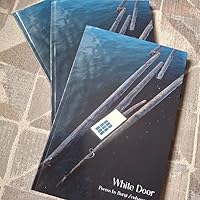
Winner of the 2012 Donald Hall Prize in Poetry Selected by Arthur Sze
Hyperboreal originates from diasporas. It attempts to make sense of change and to prepare for cultural, climate, and political turns that are sure to continue. The poems originate from the hope that our lives may be enriched by the expression of and reflection on the cultural strengths inherent to indigenous culture. It concerns King Island, the ancestral home of the author's family until the federal government's Bureau of Indian Affairs forcibly and permanently relocated its residents. The poems work towards the assembly of an identity, both collective and singular, that is capable of looking forward from the recollection and impact of an entire community's relocation to distant and arbitrary urban centers. Through language, Hyperboreal grants forum to issues of displacement, lack of access to traditional lands and resources and loss of family that King Island people—and all Inuit—are contending with.
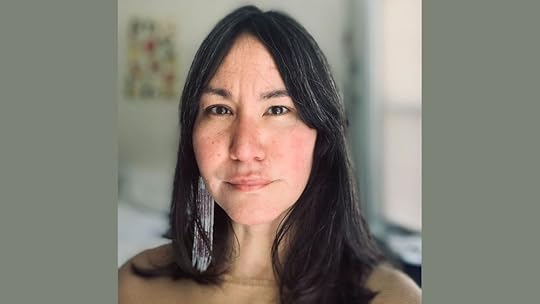
Joan Naviyuk Kane is an Inupiaq American poet. She is 2014 Indigenous Writer-in-Residence at the School for Advanced Research.
Joan Kane is Inupiaq Eskimo, with family from King Island and Mary's Igloo, Alaska. She graduated from Harvard College and from Columbia University with an M.F.A.
She lives in Anchorage, Alaska with her husband and sons.
The title of this collection, HYPERBOREAL, takes you, mentally, where you need to go, before you even get there.
Is it a real word, or a play on hyperbole and borealis? Hyperborea? It's a perfect title for a complex offering of poetry by Inupiaq-American poet, Joan Naviyuk Kane.
This is my second work of Ms. Kane’s, and I’m a fan. But, before we go any further, let me make myself clear: this lady is no garden variety poet.
I would describe Joan Naviyuk Kane’s work as startling, and luminous. I would also describe it, at times, as inscrutable and arcane. I use none of these adjectives lightly.
Oh, and while we’re at it: Ms. Kane attended both Harvard and Columbia, and several of her poems are written in Iñupiaq, in addition to a level of English that will have you looking up words. (Folks, I won an all-school spelling bee by the time I was in the 2nd grade, and I can tell you that I found more than 10 words in this collection that I’ve literally never seen before and honestly didn’t know how to pronounce).
But, (and here’s the good part): she’s good.
Almost right from the start, you can see what she does, how adept she is, at juxtaposing light and dark images in this frigid world of hers, so close to the Arctic Circle. (In the Arctic Circle?) Where there is the stark shock of pristine white snow, there is, also, nearby, the black of grease, or the red of blood on the blade.
There is loss that feels personal:
Dead mouse the dead child Once set in my hand, Its gift a stiff slight heft.
With the bone of a bird, The nail pulled loose From weathered wood,
The house huddled From rock on rock, We are strong people.
There is loss that feels communal:
Disappearance, extinction, the inability to survive as a race—these are the anxieties of an Inuit modernity. They lie at the fuzzy border between cultural and biological extinction. --Lisa Stevenson
in a city of seven too many corners
uncle struck and left to die in rain torrential in the road in the dark
adrift without relations
sister twenty at suicide having left her son swaddled in the clothes of my own
a black snow fell
aunt whose court-appointed custodian spent the money meant for heat on beer and snuff and spirits
unable to grasp the trailing dragline
grandfather with a cerebral aneurysm deposited at jail instead of hospital the police mistaking him for drunk
we hear constant surf
cousin skids off the road what’s left of a six-pack locked rolling in her trunk
for the sea is very deep
land’s end nunam izua
let us set the last stone in place
Wow. It wasn’t long ago that I might have thought: How awful it must feel to be part of a dying people! I wouldn’t have been able to relate, to be honest. I’d only have felt compassion. Now I feel as though most of us can see that our entire race, all of humanity, is now at risk.
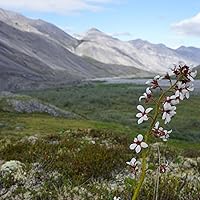
With the last snowmelt a tricklet into mud, ulterior-- One wolfbane bloom, iodine-hued, rising on its stalk Into the luster of air: June really isn’t June anymore, Is it? A glacier’s heart of milk loosed from a thousand Summer days in extravagant succession.
I wonder if we should listen to someone who is closer to the disaster?
Ms. Kane feels haunted by the inevitable end of her people (and perhaps all people). She is also haunted by an unnamed “she,” one who could be mother or lover, betrayer or friend. My mind gravitated toward it being a mother, or mother figure, but it was a pain that didn’t need to be identified. I leave you with this one (here "she" is named):
Very spare, haunting, and demanding of attention--much more deliberate about craft than some other things I've been reading lately. These poems are lovely on the page. They are often quite challenging and also stunningly beautiful. I often felt like I didn't know quite what to make of what I had just read, but I was left with these really crystalline images, startling word choices.
Arnica nods heavy-headed on the bruised slope. Peaks recede in all directions, in heat-haze, Evening in my recollection.
The shield at my throat ornamental and worse. We descended the gully thrummed into confusion With the last snowmelt a tricklet into mud, ulterior--
One wolfbane bloom, iodine-hued, rising on its stalk Into the luster of air: June really isn't June anymore, Is it? A glacier's heart of milk loosed from a thousand
Summer days in extravagant succession, From the back of my tongue, dexterous and sinister.
"Hyperboreal"
I cannot for the life of me remember which poet or critic or article recommended Joan Naviyuk Kane's poetry--but I thank the party all the same. Hyperboreal is oddly satisfying, emotionally. As the opening poem quoted above notes, we descend into its depth "thrummed into confusion."
Kane has a deft control of image and mood, the enviable ability to always choose the unexpected yet perfect word. I never felt I couldn't read her poetry; I never felt I couldn't feel her poetry, either: I just couldn't fully comprehend her poetry. Kane isn't writing an autobiography nor is she simply ranting about the plight of her people. While there are hints of both within the work, the meaning drifts like snow over the bedrock. Kane's poetry requires slow, careful, repeated readings--and is immensely rewarding when approached with an open mind not focused on understanding "what it means."
At the rim of the world, the aching world, a fault of snow and shadow. She predicts sense yet I find none: nothing, in fact, but the edges of things, in wind and the movement of animals.
Through dreams inlaid with rigid marrow at last I grew to grasp her fear: it was to have been a survivor when there were no others. Between my dreams, the net of them,
light breaks above an oyster midden as one day yokes itself to another. She could not be farther-- somewhere near the mingled voices of boys as they gather rocks for slingshots.
Hers a force as vital as my own disgrace: the pulse of it plays back at me. There is no final story, no assertion, no deception. I may never know who I am.
I splint the stem broken in recurrence from leaning so many times, and smother the roots in sand. The shoot shifts ever toward the light.
This is the type of book I'd want to carry around with me on walks. To be able to turn to and open in the out of doors. This is the kind of book I have no choice but to keep because it begs to be read and re-read and re-read. I don't remember who recommended Kane to me originally, but to that person: thank you.
cannot enthuse about joan naviyuk kane’s work enough— the first poem i read from her was “rookeries” (which isn’t in this collection) for my native american lit class, and after that i took every opportunity to write about her poems in my assignments for that course. was absolutely delighted to find this whole book on the uni ebook database; the rawness, the way she writes about landscape, is unforgettable and nothing like i’ve ever read before. i only regret not attending her (virtual) live reading that my professor invited us to (because said professor was also live reading in that event, but still).
The words in this thin book are spare and so carefully chosen. I was sent back to the dictionary six or ten times. There's a great deal of mystery on these spacious pages, yet the poet is specific and elemental. Reading this one is a magical experience, highly recommended.
Sparse lines and mostly one-page long, these poems unfold an entire world, richly layered, clear-eyed, unsparing, and lyrical at once, in English and at times Inupiaq. The boundary between the speaker's self and the landscape blurs, and the speaker's love for this landscape, its language, is deep. Reading is being immersed into it and not wanting to leave.
Siobhan’s review hit the nail on the head. I often didn’t know what, exactly, was going on on the page. A story could be pieced together with multiple readings but it also didn’t matter. The word choice, the images, the sounds, all sparing, haunting, resplendent. Like gazing at an impressionist painting or a prism refracting shades of dark blue, black, white, purple, and blood red. Beautiful.
not my absolute fav style of poetry, but still profound. favorite poem is in long light
i am reading a bunch of indigenous alaskan poetry books for work to pick out poems for a lesson plan on poetry as an essential tool in a resistance movement
There was some beautiful, stark imagery in this collection, but the (sometimes literal) gaps in knowledge/context made it clear it wasn't written for me.
Faves: - Mugnatuilana/I am not tired - The Dissolve of Voices - Fugato (2) - On Either Side - In Long Light - Looking Through - Procession - Nunaqtigiit
"Hyperboreal" is one of my favorite books of 2013. I've revisited and again revisited many of its poems over the past year and a half. Structurally simple yet strangely complex, there's something mystical about Kane's work. She has a way of speaking simultaneously of a specific landscape and all of nature, of a certain group of people enduring their specific hardships and all people. Her plainspoken, worldly images reveal something elusive yet significant about human endurance. I could not more strongly recommend "Hyperboreal" to poetry readers of all tastes, from narrative to abstract, visual and sonic.
Barebones and haunting, Joan Naviyuk Kane evokes the resilience of indigenous culture and the fragments of the natural world and the past forced to confront urban modernity. So much of this book sits with me after the first reading, which is rare for that is so evocation but also eschewing narrative. Highly recommended.