In the latest retelling of the world’s greatest stories in the Myth series from Canongate, the highly regarded novelist Salley Vickers brings to life the Western world’s most widely known myth, Oedipus , through a shrewdly told exploration of the seminal story in conversation between Freud and Tiresias.
It is 1938 and Sigmund Freud, suffering from the debilitating effects of cancer, has been permitted by the Nazis to leave Vienna. He seeks refuge in England, taking up residence in the house in Hampstead in which he will die fifteen months later. But his last months are made vivid by the arrival of a stranger who comes and goes according to Freud’s state of health. Who is the mysterious visitor and why has he come to tell the famed proponent of the Oedipus complex his strangely familiar story?
Set partly in prewar London and partly in ancient Greece, Where Three Roads Meet is as brilliantly compelling as it is thoughtful. Former psychoanalyst and acclaimed novelist Salley Vickers revisits a crime committed long ago that still has disturbing reverberations for us all today.
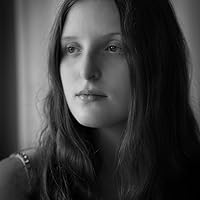
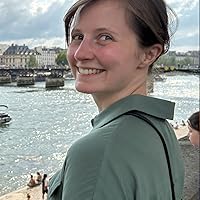
Salley Vickers was born in Liverpool, the home of her mother, and grew up as the child of parents in the British Communist Party. She won a state scholarship to St Paul’s Girl’s School and went on to read English at Newnham College Cambridge.
She has worked, variously, as a cleaner, a dancer, an artist’s model, a teacher of children with special needs, a university teacher of literature, and a psychoanalyst. Her first novel, ‘Miss Garnet’s Angel’, became an international word-of-mouth bestseller. She now writes full time and lectures widely on many subjects, particularly the connections between, art, literature, psychology and religion.
Her principal interests are opera, bird watching, dancing, and poetry. One of her father's favourite poets, W.B.Yeats, was responsible for her name Salley, (the Irish for 'willow') which comes from Yeats’s poem set to music by Benjamin Britten 'Down by the salley gardens'.
I am a sucker for the revisitation of old myths in new ways. Whether “God’s Behaving Badly” which put the Greek Gods in a London flat, “The Minotaur Takes a Cigarette Break” where we find the monster is still alive and working as a short order cook, or Atwood’s retelling of the Iliad and Odyssey from the perspective of Odysseus’s wife in the wonderful “Penelopiad,” I love reading authors riffs on these stories of my youth. With that disclosure, I cannot help but recommend “Where Three Roads Meet,” Sally Vicker’s creative and thought provoking work on Oedipus, the myth the complex, and the play.
At first glance, the premise appears both odd and in certain ways obvious. As Freud lays dying of mouth cancer, he is visited again and again by the blind prophet Tiresias. As the father of psychoanalysis slowly and painfully succumbs to his illness, the Greek ghost tell his life story, with a particular focus on the story of Oedipus. Critiquing Freud’s theory, Tiresias examines the myth from different perspectives, wondering over various characters motivations and possible willful blindness, even as the dying genius must face his own morality.
One should note, that this novel is not for everyone. Composed entirely of dialogue between these two characters, it at times reads almost like a play, and a rather “talky” one at that. Readers unfamiliar or uninterested in the original Greek story and plays and/or uninterested in the history of psychoanalysis may feel the urge to put it down. In my reading, however, Vicker’s has done a wonderful job, both in showing a remarkable depth of knowledge in her subject matter and offering it for consideration in an entirely fresh way. If you are inclined to choose to stand where three roads meet, you are sure to enjoy the view.
Freud is dying of cancer, and he is hallucinating Tieresias, who wants to tell him the Oedipus myth. It's a brilliant idea, but the actual book gets a little tedious, because the myth is so familiar, and Freud's reaction is so predictable. Vickers doesn't really seem to get inside Freud's head or tell us anything new. Maybe that's too much to expect, but why write the book if there's nothing new to say?
"You see, Doctor, he was too ready with answers. The answer to the riddle, which he gave us all so breezily, was “man”, but he never considered how the title applied to him. Know thyself. Then know that you are a human being, a member of the species of mankind. So know first and foremost that you do not know, and what you claim to know is almost certainly a means of distracting yourself from what you really know"
"What god did you cross, I wonder? I've crossed plenty of mortals who saw themselves as gods."
This was a quite interesting read, in the format of one long dialogue taking place between Freud and the prophet Tiresias. There were multiple lines that stood out to me and the manner in which the tragedy of Oedipus was retold was engaging. That being said, as far as mythological retellings go, this didn't really present a new perspective or interpretation of the original story.
This is another book in the canongate myth series, this one is a adaptation of the oedipus myth told to Freud during his last days by Tiresias.
First off I would say unlike some of the other canongate myth series it helps with this book to have some degree of knowledge of Oedipus. Also I would recommend everyone to read the short introduction in the book which talks about Freud's illness, which is valuable to know during the book.
Right this is a really quick read which is written in a conversation between Tiresias and Freud, first off she seemed to capture Freud really well, (althogh I can't claim extensive knowledge on the subject). I also really like the voice of Tiresias and learning more aboout him as a character.
The main thing I liked about this book though was how condascending each character was to each other, (they were quite a match), Freud ttalks of how Tiresiases gods are superstition and Tiresias talks about how if one person claims to know everything he is himself claiming to be god-like. I also really liked how Tiresias challenged some of Freud's theories.
I really enjoy Salley Vickers writing which is why I chose this, not realising it is part of the Canongate myth series. I already know a lot about the Oedipus story from my university days so the obscure narration was not an issue. What was a problem was the narration itself. As another reviewer notes, oh the dashes! When an author chooses to use a first person narrator to tell the story I feel it should be just that. However this is a disjointed dialogue between two people that keeps interfering with the story. I see why the novel premise of putting Freud in the story nods towards his Oedipus complex theory, but freud's constant references to sex become irritating, especially when you realise that Oedipus is trying to say something important about humans and prophecies and how their deliberate obscurity is the setting for many disasters. It feels like an opportunity missed as I, as reader, learn nothing new about Oedipus. Compare this with the wonderful retelling of Priams journey to beg for the body of his son Hector from Achilles, in Ransom by David Malouf.
Reinterpretacija mita o Edipu smjestena dijelom u anticku Grcku, a dijelom u samrtnu postelju Freuda. Bolujuci od raka i ovisno o stanjima budnosti, susrece neznanca Tiberija, cini se, u vlastitoj ordinaciji i to svjedoka poznatog mita koji mu prepricava svima dobro znanu pricu ali iz nekog novog rakursa. Dijalozi su popraceni komentarima Freuda sto je prilicno meta i simpaticno. Tko je neznanac ostaje jos uvijek nejasno, premda u tekstu na vise mjesta postoje odredene aluzije... Samo raskrizje na kojem se spajaju tri mitske ceste su u slobodnoj interpretaciji zapravo granica izmedu mita i stvarnosti, jave i sanjanja. Je li Freud zapravo zivio onoliko dugo da cuje kraj price ili je i sam dio nje, te sjedi li na njegovom kaucu Edip ili netko treci, ostaje nedoreceno ali ne smeta toliko. Vjerojatno i zbog fokusa na mit i njegovog utjecaja na nas pojam krivnje, sudbine/fatalizma i seksualnosti. Premda je knjiga atmosfericna i dirljiva na svoj cudan nacin, ipak se vise odusevljavam Yalomom i njegovim savjetovanjima s Nietzscheom, Schopenhaureom ili Spinozom.
Where Three Roads Meet kindly starts with a brief introduction into Freud's later life. This proves helpful, for the majority of the book is written in a series of short dialogues between him and Tiresias during this time period. There is a certain irony to the fact that Dr. Freud, someone who researched the mind, is talking to someone who is in his mind. The dialogue is fast paced, but has a full of a range of emotions, most notably wit and pathos. The talk these two share is food for thought, for one speaks of reason, while the other has a more spiritual approach. These two characters truly add something to the tale of Oedipus.
This is by far the strangest and most difficult to read in this series of myths retold. I have never heard of Sally Vickers. To be fair this book does not make mw want to read anything else by her. If nothing else it was gratifyingly short
The story of Oedipus is retold by Tiresias the blind seer to a dying Dr Freud.
Tiresias is himself the subject of many myths regarding his gender, his blindness, his prophetic vision and his extraordinarily long life – in the earlier myths, he is even deemed to be immortal. Freud, towards the end of his life was in great pain thanks to an inoperable mouth cancer, and lived in a morphine-induced haze. Tiresias comes to him and presents the story of Oedipus from his contemporary perspective, as it happened almost three thousand years ago. This includes Tiresias’s own life as a priest of Apollo in Delphi. Vickers examines each thought and deed in the light of Freud’s classic analysis, and Tiresias breaks down each in the light of the human condition, human experience and human suffering, with the element of chance thrown in, not, as Freud has viewed it, in the light of knowledge alone.
The story of Oedipus is a profoundly disturbing one that reverberates across the centuries, not simply because of the tale of patricide – others charged with similar crimes have been forgiven; not even because of the incest (in some societies incest was not only legal but in the case of royalty, mandatory), but because every single person in the story was aware of the prophecies and chose to ignore them. In all of us is the secret fear that this is something that might have happened to us: there but for the grace of God go I.
As Tiresias gently closes his story to coincide with Freud's own death, we see that Oedipus too, has found a release: the Oracle, which played havoc with his life and father's, has issued another prophecy, that the land where Oedipus dies and is buried shall be considered blessed by the gods, and good fortune will forever remain where his bones are interred!
A very satisfying and provocative retelling of a great myth.
This is my second Vickers novel having read Miss Garnet's Angel many years ago. I read this in one sitting tucked under a blanket on a frosty January in my cold London flat. I thought this was a little gem of a book - having read Sophocles plays I was very familiar with this and other greek mythology references made it a lovely retelling in a modern way. Bringing Freud's theory of the Oedipus Complex into the narrative was great - I have Interpretation of Dreams sitting on my shelf many years on the TBR which has stimulated a renewed interest. Making comparisons to Christian faith was also interesting re: Dionysus coming back to life, the parallels in blood & wine etc I have not thought too much about before. I got lost on occasion on whether its was Tiresias or Freud doing the speaking and had to back track in places but that was just a minor thing.
The prose was an easy and pleasing read with some lovely gems e.g -'Truth? - That is a very dark horse. -But there are those Doctor who ride a dark horse
Any when parphrasing Sir Issac Newton ' All colours are the same in the dark'
I have since acquired another Vickers 'Aphrodite's Hat' which I look forward to reading next.
I enjoyed this on two counts, one the read, but also the design of the book. The pages are a creamy white, but the extra touch is the author and book names at the top of the page are printed in a light red and the page numbers at the bottom framed with red hyphens. It’s a small thing and really unnecessary, all the text is black, but that little bit extra that showed a care over the production that I enjoyed. Then the content is a dialogue between Sigmund Freud and Tiresias, a witness to reign of Oedipus, telling the tale that clearly resonates with Freud, but largely focuses on the myth. This is, after all, part of a series based on myths published by Canongate. Salley Vickers brings a freshness to the myth and brings a bit more depth to the characters from the Greek tales. While Oedipus' fate is well known, and Freud’s also to an extent, the two involving loss of body parts is an interesting parallel, and both self inflicted to a certain degree. But the essence is fate and can it be avoided. As the narrative takes place just before the outbreak of the Second World War, it raises many questions.
Given the description of this book, I was expecting a less straightforward retelling of the Oedipus myth than what this ended up being. It was primarily just Tiresias retelling the Oedipus story to Freud. I would have liked to have seen more interplay between the two characters and more of Freud being an active participant in the discussion rather than occasionally interjecting. There were a few interesting ideas, like the notion that the prophecy around Oedipus was already fulfilled by the time his father hobbled him and put him out to die and the conversations around the meaning of Oedipus's name. But overall, this book didn't present a lot that was new about the myth for anyone who has read Oedipus Rex, the Libation Bearers, and Oedipus at Colonus.
All that said, the information provided about Freud's life at the beginning was fascinating, and I was grateful that Vickers included it to help the rest of the story make sense.
Tiresias visits a dying Freud to tell him about his life and especially the story of Oedipus. It is not bad. Just about all of it is written as quick and pretty compelling dialog, though it takes so long (about half the book) to get to Oedipus that by that point I was so invested in the story of Tiresias that I wasn't thrilled about things shifting away from it. The Tiresias parts are fun, especially the really strange portrayal of religious life at Delphi. The Oedipus bit doesn't add all too much—save for the exploration of how much worse it all gets when we assume that Jocasta knew the whole time—and most of the emotional energy focuses on events after the discovery and Oedipus' decision not to commit suicide. So all in all I liked the frame and the figure of Tiresias, but this could have been better.
Canongate myths #10: This one is difficult to rate. It has an interesting premise, Tiresias telling the story of Oedipus to Freud, theorizer of the Oedipus complex. It's a intellectual premise that can veer into pretentiousness. Also, in order to tell the story the author has to dump a lot of information about Freud on us right at the beginning. Strangely, though, the information was fascinating and mostly about his struggles with mouth cancer, which I hadn't know anything about.
It tells an in-depth story of Oedipus and draws different conclusions than Freud, but sometimes the back and forth between the two can be a bit much, and the dialogue is not traditionally formatted (which is an annoyance of mine). Yet I still enjoyed reading it for the most part. An interesting and complex look at a classic myth.
*Wow! I *Have *Enjoyed *Reading this *Excellent & imaginative retelling of one of the most famous of Greek
*Tragedies, to such an extent that I *Had to finish *Reading it in one sitting; *Easily done because it is *Entirely structured (apart from extracts from Freud's 'Interpreting Dreams' & a biographical section at the beginning) into short, dated chapters written in flowing, consecutive dialogue between an old, convalescent Sigmund Freud,
*Recovering from painful & fruitless *Operations done to his cancerous jaw, *And a mysterious visitor who appears out of the blue to *Discuss with him the tragic *Story &
*Myth of Oedipus. This was an *Enriching, entertaining, *Emotive & enlightening book *That I highly recommend to anyone who's interested in Psychoanalysis, etymology, mythology, Greek tragedy, & the human condition.
I really love Greek mythology, so this retelling was right up my alley. It's a conversation between the "seer" Tiresias and (a dying) Dr. Freud about Oedipus' story. I found the writing enjoyable, particularly Tiresias' narration of his experience in the temple and everything that came after. The whole story is written in dialogue, which is not usually something I like, but it helped bring the focus to what was being discussed between the characters. It was nice to get this different perspective of a myth that is so well known. It also raised many questions about oracles, the intentions of gods and the dangers of pushing for knowledge against better judgement. Overall, it was a very intriguing book.
I read this in parallel with reading Alice Miller's Thou Shalt Not Be aware. Miller writes of her experience as a therapist, which led her to reject some of Freud's core theories, including his theory of the Oedipus complex. Vickers offers a fictional account in which Freud, towards the end of his life, meets with Tiresias, who tells Oedipus's story from his perspective as the blind seer who witnessed Oedipus's story.
I found this both valuable as a retelling of the Oedipus story and enjoyable. It is relatively short; I read it over four days.
I have sometimes found Vickers' writing contains moments which have seemed a little "preachy" to me in ways which stimulate moments of irritation. I didn't experience this on reading When Three Roads Meet and I'm glad of it.
Eh. I think there were some interesting themes in this book and the philosophizing between Freud and his imagined Tiresias had moments of intrigue but for the most part, I was simply bored. I can't give the book one star since I loved the core premise (idea of having Freud at his deathbed confront the myth of Oedipus? Would've been amazing!) and I can see this being a really wonderful book for others but for me it just truly was not it. I wish we had gotten more of the Oedipus conversation straight away and maybe some unpacking of Freud and his relationship to that myth? I'm not sure what it is I needed in order to enjoy this book but I just couldn't get it from what was on the page itself. Frustrating.
One of the Cannongate Myths series where ancient myth is reimagined. In this case we are with Freud as he nears the end of his life. He is 'visited' by Teiresias a witness to the Oracle of Delphi and the events surrounding Oedipus - the basis of Freud's famous theory - and they proceed to have a conversation discussing what happened to Oedipus and what is happening to Freud.
Nothing new about the story, but it is beautifully told and I certainly knew nothing of Freud's later years, his illness and death.
I'll be visiting Delphi later this year and hope to release this book nearby.
I enjoyed this small book. I like the size of the books in the Myth Series. This is the story about the conversations between Sigmund Freud and Tiresias, one of the immortals. Part of the discussion reveals how we misinterpret what the Gods tell us or in this case what was told to King Laius. It also shows how it is not good to know too much as in Oedipus, (Puss Feet) insisting that Tiresias tell Oedipus the truth about his parentage or produce those who could.
I liked the premise of the myth of Oedipus being explained to Freud given its centrality to his psychoanalysis. It was good to re-read the myth. I liked the exploration of the lies we tell ourselves, and how people given the same information choose to interpret them differently. Maybe because I was tired when reading it, but there didnt seem to be any satisfying resolution.
A challenging read in which Salley Vickers illuminates the myth of the Oedipus complex. She explores it in a conversation between Sigmund Freud & Tiersais. The two men form a ghostly relationship bringing to life the myth to life. Salley Vickers has the ability to allow her readers to care for the characters she writes about. Her character drawing is a forte.
An entertaining read, lots to absorb, also funny and very poignant. I was fascinated by the parts about Freud's end of life. Also, I like it when a retelling of a myth gives me a fresh perspective or offers me something I hadn't thought of before and this retelling does that.
A dying Freud is ‘visited’ by the Ancient Greek Tiresias, who revisits the story of Oedipus. The concept is brilliant, and I adore Salley Vickers’ works, but the dialogue between the two great minds gets a little tedious. Interesting, though. But I was pleased to finish it.