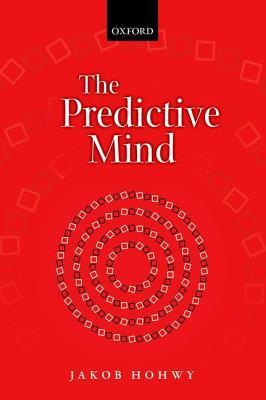
A new theory is taking hold in neuroscience. It is the theory that the brain is essentially a hypothesis-testing mechanism, one that attempts to minimise the error of its predictions about the sensory input it receives from the world. It is an attractive theory because powerful theoretical arguments support it, and yet it is at heart stunningly simple. Jakob Hohwy explains and explores this theory from the perspective of cognitive science and philosophy. The key argument throughout The Predictive Mind is that the mechanism explains the rich, deep, and multifaceted character of our conscious perception. It also gives a unified account of how perception is sculpted by attention, and how it depends on action. The mind is revealed as having a fragile and indirect relation to the world. Though we are deeply in tune with the world we are also strangely distanced from it.
The first part of the book sets out how the theory enables rich, layered perception. The theory's probabilistic and statistical foundations are explained using examples from empirical research and analogies to different forms of inference. The second part uses the simple mechanism in an explanation of problematic cases of how we manage to represent, and sometimes misrepresent, the world in health as well as in mental illness. The third part looks into the mind, and shows how the theory accounts for attention, conscious unity, introspection, self and the privacy of our mental world.
Hohwy's explanation of the theory that the brain is a sophisticated hypothesis-testing mechanism which is constantly involved in minimizing the error of its predictions of sensory input is very logically organized and does him credit as a philosopher. Unfortunately, the presentation is undercut by his lack of knowledge of a theory that predates his book by several decades - that theory being Perceptual Control Theory (PCT) developed by William T. Powers and written about by him as early as 1960 and 1973 (ex., in his book "Behavior: The Control of Perception," Chicago: Aldine, 1973). PCT is similar to Hohwy's explanation in many ways (for example, in areas such as the importance of perception, error signals, the hierarchical arrangement of the nervous system, and error reduction) but Hohwy seems to know nothing about that theory or Powers' work -- stating on page 95 that "I don't know of any other theory that can as much as begin to solve the problem of perception...." This lack is evident in his "References" also, with none of Powers' writings being cited.
As so, Hohwy and scholars such as Andy Clark in his book "Surfing Uncertainty" (Oxford University Press, 2016) which also does not cite Powers publications in its "References" seem to have gone on their own tangents of explanation and story [as Clark states] of the brain as a prediction machine, while ignoring the apparently more straightforward and highly developed PCT explanation and model of why we do what we do (i.e., to control our perceptions so that they match important references [goals, purposes, homeostatic set points, ...] that we have as much as possible).
The Predictive Processing(PP) framework has gained traction in recent years. The main ideia is the brain as a hypothesis machine, who predicts the causal structure of the world from perceptual signals. To Hohwy, our brain is trying at every moment to reduce the errors from his predictions. The prediction error minimization(PEM) is, in less rigorous terms, about expecting little surprise from the world. Moreover, the framework is an ambitious project of unification in cognitive science, explaining perception, action, attention, learning and much more.
The book is clear and direct, and does not requires the formal understanding of neuroscientific models, just a intuitive comprehension of bayes rule. Anyone interested in a topic should read this book. For someone aligned with the Embodied Cognition approach, the internalistic and kantian proposal of Hohwy has some philosophical problems, making the separation between agent and world, leading towards a skepticism.
Read the chapters 1 and 2 which was a good introduction or tutorial on the subject.
Simplistic model or starting point: The problem of perception is the problem of using the effects—that is, the sensory data that is all the brain has access to—to figure out the causes. It is then a problem of causal inference for the brain, analogous in many respects to our everyday reasoning about cause and effect, and to scientific methods of causal inference. The inference in practice means Bayesian inference. https://en.wikipedia.org/wiki/Bayesia...
But the staring point is too simple. The brain is not just a passive Bayesian machine doing perceptive inference (inductive inference) based on priors and likelihoods, and visual or other data but also an active one.
The general model really is more than passive inference. And this model was already pointed out in Helmholtz 1855. His answer was, basically, that we are guided by the answers nature delivers when we query it, using unconscious perceptual inference based on our prior learning (Helmholtz 1867). It is this kind of inference that anchors perception in the world. This brilliant and very simple idea remains the core of the modern, formal and empirical explorations of the hypothesis-testing brain..
Thus, in the new model the book is actually talking for prediction inference is still important, but prediction error minimization is all [!] the brain ever does and that action and attention is nothing but such minimization. Within cognitive science and machine learning, versions of the prediction error minimization scheme are, as mentioned, widely acknowledged. Parts of the scheme have roots in connectionism, in particular in the construction of neural networks with back-propagation algorithms, which are error correcting ways of classifying incoming data (Rumelhart, Hinton et al. 1986).
Maybe one of the hardest books I've read so far. It's scientific writing form makes it exhausting to read for non-native speakers.
Other than that his findings are extraordinary. He explains in scientific detail how the brain may work and what that means for us as individuals. His argumentation seems to be accepted widely and as a computer scientist, the fact that he implicates that the brain acts in a scientific or mathematical manner by utilizing Bayes theorem is delivering an interesting form of inner peace of mind.
I strongly suggest this book to anyone interested in the mind and deep cognitive and psychological understanding. It for sure has changed the view on myself through my own eyes.
This entire review has been hidden because of spoilers.
The author seeks to explain the predictive processing framework, provide reason as to why we should endorse it, and to demonstrate the broad explanatory scope of the prediction error minimization by applying it to cases that have been fraught with disagreement or that have resisted satisfactory explanations within philosophy and cognitive science.
Hohwy's writing is accessible, his style is clear, and the book is well-organized. I recommend this in conjunction with Andy Clark's later contribution, Surfing Uncertainty, for anyone interested in better understanding the beautiful and wonderfully ambitious theory of hierarchical Bayesian predictive coding.
I think I favor Clark's presentation of the ideas, though I am not sure where I stand on the embodied debate. Still this is another good route into thinking about PP, which doesn't really delve with enough depth into any of the relevant problem areas but does a good job of acknowledging different avenues of exploration and bringing to the fore the questions PP needs to address.