

What do you think?

The Fellowship of Ghosts: A Journey Through the Mountains of Norway
Acclaimed writer Paul Watkins describes his spellbinding solo trek through the wilds of Norway's Rondane and Jutunheimen mountains—grand but harsh landscapes where myth and reality meet. His adventure takes him through valleys bordered by thousand-foot cliffs, roaring waterfalls wreathed in rainbows, blinding glaciers, and shimmering blue snowfields. Yet this is also some of the harshest, most challenging terrain in the world. Watkins's route follows razor-thin ridges, hair-raising paths, and vertigo-inducing drops. An engaging and reflective memoir, The Fellowship of Ghosts captures the profound connection between the Norwegian landscape and the myths, peoples, and dreams that it inspires.
288 pages, Hardcover
First published July 1, 2004
About the author
Paul Watkins
98 books95 followersPaul Watkins is an American author who currently lives with his wife and two children in Hightstown, New Jersey. He is a teacher and writer-in-residence at The Peddie School, and formerly taught at Lawrenceville School. He attended the Dragon School, Oxford, Eton and Yale University. He received a B.A. from Yale and was a University Fellow at Syracuse University, New York. His recollections of his time at the Dragon School and Eton form his autobiographical work Stand Before Your God: An American Schoolboy in England.
Writes crime fiction set at the birth of Stalin's Russia under Sam Eastland.
Writes crime fiction set at the birth of Stalin's Russia under Sam Eastland.
Ratings & Reviews
Friends & Following
Create a free account to discover what your friends think of this book!
Community Reviews
Displaying 1 - 30 of 38 reviews

January 25, 2012
Superb condition - nary a crease even in the dust cover. The author is easy on the eye and the map is very welcome.
Dedication: This book is for ECW and OLW
Opening: My first journey to Norway began with an accident that almost killed me on the deck of a deep-sea fishing boat.
The cover is an approximation of Caspar Friedrich's famous painting:
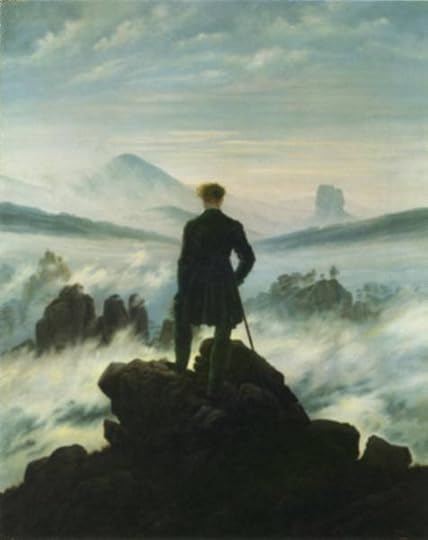 Wanderer above the Sea of Fog 1818; Oil on canvas, 94 x 74.8 cm; Kunsthalle, Hamburg
p.90 - if the [Norwegian] coast were straightened out and measured, it would stretch for over forty-five thousand kilometers.
What was the name of the guy in Hitch-Hiker's Guide to the Galaxy who designed Norway?
If you have a head for heights here are some stunning links:
http://youtu.be/LKMe-JgrJvU
http://youtu.be/UWZKCF2H9IY
http://youtu.be/W6m9Qh_4EHM
Dedication: This book is for ECW and OLW
Opening: My first journey to Norway began with an accident that almost killed me on the deck of a deep-sea fishing boat.
The cover is an approximation of Caspar Friedrich's famous painting:
Wanderer above the Sea of Fog 1818; Oil on canvas, 94 x 74.8 cm; Kunsthalle, Hamburgp.90 - if the [Norwegian] coast were straightened out and measured, it would stretch for over forty-five thousand kilometers.
What was the name of the guy in Hitch-Hiker's Guide to the Galaxy who designed Norway?
If you have a head for heights here are some stunning links:
http://youtu.be/LKMe-JgrJvU
http://youtu.be/UWZKCF2H9IY
http://youtu.be/W6m9Qh_4EHM
This entire review has been hidden because of spoilers.

October 31, 2013
What did I know about Norway before reading this book? Embarrassingly little, really.
(1) a) The annual (since 1947) very thoughtful and generous gift by the people of Oslo of an absolutely enormous Christmas tree; in memory of, and thanks for, British support for Norway during the Second World War. This stands proudly in Trafalgar Square, London.
b) Ray Mears’ excellent 2003 TV documentary on The Real Heroes of Telemark.
c) David Howarth’s superb book “We Die Alone”: https://www.goodreads.com/book/show/1...
(2) A popular destination for cruise liners!
(3) Slartibartfast, “doing the coastlines was always my favourite, used to have endless fun doing all the little fiddly bits in fjords … so anyway, the recession came …”. (p.67 of: https://www.goodreads.com/book/show/1...).
(4) A friend of mine (half Norwegian by birth), who’s one of the nicest men I know.
None of the above really prepared me for Paul Watkins’ “The Fellowship of Ghosts”. The edition I read [publ. by National Geographic (USA)] is both a visual and physical pleasure to handle. It is bound in deep blue boards and end-papers, with a spine fabric of Sierra dark navy cloth, the lettering on the spine titled in gold. The text is primarily set in FF Seria Regular (a font designed in 2000). Rather weirdly, reading through this book, I developed a somewhat curious and peculiar hallucination; as the font of the text seemed to shape itself to the imagined assumed gradients and spikiness of the landscapes described by the author.
However, much as I enjoyed "The Fellowship of Ghosts" I found a constant frustration in my not being able to clearly, quickly and accurately follow Watkins’ routes. The one map in this book (pg.-2) was barely worthy of the word ‘map’. It indicated a few place names appearing in the narrative, but dismally failed to locate anything approaching the wealth of geographic detail described by the author. Alas, Google maps was likewise frustratingly sparse of very many of the place names I hungrily sought. I urge the US National Geographic Society to remedy this.
Hence like a ghost myself I limped lightly on the landscape. That’s not to say that I didn’t enjoy periodic frissons of the majesty of planet tectonics, including: “…which almost gave the mountain a sense of movement, as if it were rising from the ground, shrugging off the luminous green grass of the valley below.” (p.10). I chortled at Watkins’ caught in a rainstorm, “Rain in my underpants.” (p.63) he sighs, before gritting his teeth and summoning up the requisite determination to walk on, bemoaning that the only songs which worked for keeping time, and which he knew by heart were hymns. “I don’t even like the words to ‘And Did Those Feet In Ancient Time’ but the blasted song has a perfect cadence for tramping along the side of a road when your legs are about to collapse underneath you and only the overriding capacity of music can keep you going.” (p.64).
The title of this book refers to earlier explorers of this part of Norway (north, but not as far as Trondheim, and westwards of Lillehammer, to the broken coastline). The verve, audacity and achievements of those long-dead men acts as a poignant reminder that many excellent books have been neither reprinted nor translated into other languages (such as English). Watkins’ briefly nails the intensity of that experience, when he mulls over the question of what passion drove his predecessors, his ‘ghosts’, into and up the mountains of Norway. He writes, “…it’s almost impossible to figure out what the emotion actually is. That ‘indescribable thing’ is the profound experience of living completely in the present.”(p.172). He warns, “The cost is that a skeletal loneliness appears when you spend more time with [long dead] people you have invented than with people who are real [alive].” (p.190). That loneliness must have got well into to Watkins. There is a major proof-reading error on pg 149, referring to “Robert Leigh-Mallory, whose corpse was discovered on Everest in 1999.” How could any author / proof-reader in this field get THAT name wrong?!
Thanks to a lack of contour lines, the reader is also left largely bereft of a measure on the hardiness of Watkins’ wanderings, so must look to his self-depreciating humour. He instantly gained my sympathies with reminiscences such as “It is an ancient trail, reminding me of the old Roman roads I walked on Dartmoor [Devon, England] in the pissing rain and oozing fog in the middle of the night on a particularly nasty cadet [i.e. school (Eton) military training)] manoeuvre, when we were put at the mercy of 42 Commando, Royal Marines. It was an experience they enjoyed in the exact proportion that we did not.” (p.185). Nicely put!
Who does Watkins write this book for? I’m not entirely sure. He writes well, but not with quite the same precision, seamless fluidity, confidence, background knowledge and expertise of Nick (Nicholas) Crane. Watkins has a good vein of humour; but has a tendency to seek the familiar, too easily (for this reader) relapsing back into his school days; as though the mere mention of Eton will sell his book faster than could a sole walker following an approximation of the trails opened by his climbing predecessors.
Much as I love the John Cleese-like humour of, “For me the atmosphere is familiar, having grown up sliding cafeteria trays past steaming vats of food, while the master-on-duty barked in my ear: ‘Move along Watkins! The kitchen staff aren’t going to tell you what’s in the stew. They don’t know. No one knows. God Almighty doesn’t have a clue, either.’ ” (p.204); I wanted to shake Watkins by the shoulders and urge him to cut out the padding and tell me more, much more, about his hard-won discoveries, his relationship to his surroundings, and to raise his time-worn ghosts to the level of deeply cherished companions.
(1) a) The annual (since 1947) very thoughtful and generous gift by the people of Oslo of an absolutely enormous Christmas tree; in memory of, and thanks for, British support for Norway during the Second World War. This stands proudly in Trafalgar Square, London.
b) Ray Mears’ excellent 2003 TV documentary on The Real Heroes of Telemark.
c) David Howarth’s superb book “We Die Alone”: https://www.goodreads.com/book/show/1...
(2) A popular destination for cruise liners!
(3) Slartibartfast, “doing the coastlines was always my favourite, used to have endless fun doing all the little fiddly bits in fjords … so anyway, the recession came …”. (p.67 of: https://www.goodreads.com/book/show/1...).
(4) A friend of mine (half Norwegian by birth), who’s one of the nicest men I know.
None of the above really prepared me for Paul Watkins’ “The Fellowship of Ghosts”. The edition I read [publ. by National Geographic (USA)] is both a visual and physical pleasure to handle. It is bound in deep blue boards and end-papers, with a spine fabric of Sierra dark navy cloth, the lettering on the spine titled in gold. The text is primarily set in FF Seria Regular (a font designed in 2000). Rather weirdly, reading through this book, I developed a somewhat curious and peculiar hallucination; as the font of the text seemed to shape itself to the imagined assumed gradients and spikiness of the landscapes described by the author.
However, much as I enjoyed "The Fellowship of Ghosts" I found a constant frustration in my not being able to clearly, quickly and accurately follow Watkins’ routes. The one map in this book (pg.-2) was barely worthy of the word ‘map’. It indicated a few place names appearing in the narrative, but dismally failed to locate anything approaching the wealth of geographic detail described by the author. Alas, Google maps was likewise frustratingly sparse of very many of the place names I hungrily sought. I urge the US National Geographic Society to remedy this.
Hence like a ghost myself I limped lightly on the landscape. That’s not to say that I didn’t enjoy periodic frissons of the majesty of planet tectonics, including: “…which almost gave the mountain a sense of movement, as if it were rising from the ground, shrugging off the luminous green grass of the valley below.” (p.10). I chortled at Watkins’ caught in a rainstorm, “Rain in my underpants.” (p.63) he sighs, before gritting his teeth and summoning up the requisite determination to walk on, bemoaning that the only songs which worked for keeping time, and which he knew by heart were hymns. “I don’t even like the words to ‘And Did Those Feet In Ancient Time’ but the blasted song has a perfect cadence for tramping along the side of a road when your legs are about to collapse underneath you and only the overriding capacity of music can keep you going.” (p.64).
The title of this book refers to earlier explorers of this part of Norway (north, but not as far as Trondheim, and westwards of Lillehammer, to the broken coastline). The verve, audacity and achievements of those long-dead men acts as a poignant reminder that many excellent books have been neither reprinted nor translated into other languages (such as English). Watkins’ briefly nails the intensity of that experience, when he mulls over the question of what passion drove his predecessors, his ‘ghosts’, into and up the mountains of Norway. He writes, “…it’s almost impossible to figure out what the emotion actually is. That ‘indescribable thing’ is the profound experience of living completely in the present.”(p.172). He warns, “The cost is that a skeletal loneliness appears when you spend more time with [long dead] people you have invented than with people who are real [alive].” (p.190). That loneliness must have got well into to Watkins. There is a major proof-reading error on pg 149, referring to “Robert Leigh-Mallory, whose corpse was discovered on Everest in 1999.” How could any author / proof-reader in this field get THAT name wrong?!
Thanks to a lack of contour lines, the reader is also left largely bereft of a measure on the hardiness of Watkins’ wanderings, so must look to his self-depreciating humour. He instantly gained my sympathies with reminiscences such as “It is an ancient trail, reminding me of the old Roman roads I walked on Dartmoor [Devon, England] in the pissing rain and oozing fog in the middle of the night on a particularly nasty cadet [i.e. school (Eton) military training)] manoeuvre, when we were put at the mercy of 42 Commando, Royal Marines. It was an experience they enjoyed in the exact proportion that we did not.” (p.185). Nicely put!
Who does Watkins write this book for? I’m not entirely sure. He writes well, but not with quite the same precision, seamless fluidity, confidence, background knowledge and expertise of Nick (Nicholas) Crane. Watkins has a good vein of humour; but has a tendency to seek the familiar, too easily (for this reader) relapsing back into his school days; as though the mere mention of Eton will sell his book faster than could a sole walker following an approximation of the trails opened by his climbing predecessors.
Much as I love the John Cleese-like humour of, “For me the atmosphere is familiar, having grown up sliding cafeteria trays past steaming vats of food, while the master-on-duty barked in my ear: ‘Move along Watkins! The kitchen staff aren’t going to tell you what’s in the stew. They don’t know. No one knows. God Almighty doesn’t have a clue, either.’ ” (p.204); I wanted to shake Watkins by the shoulders and urge him to cut out the padding and tell me more, much more, about his hard-won discoveries, his relationship to his surroundings, and to raise his time-worn ghosts to the level of deeply cherished companions.
May 17, 2024
good book

July 26, 2021
Paul Watkins is a wanderer as were the “ghosts” before him. Those ghosts were British mountain climbers/explorers whose preceded him into the mountains of Norway in the late nineteenth and early 20th centuries. Of course they did not have the modern equipment and gear that a mountaineer would have today. That can make their stories a little hair raising. The author found these climber’s books and references them frequently. I’m not sure if any are still in print. Watkins himself is not a true climber, but I would say he did some fairly rugged walks. The land sounds beautiful. Watkins has a wandering mind. That is not always a bad thing in a travel book but I didn’t find his book exactly exciting to read.

August 3, 2007
The "ghosts" of the title are several English travelers whose footsteps the author follows as he hikes through the mountains in Norway. Watkins does a good job of interweaving Viking myth with present-day reality, and his assessment of the national character struck me as fairly accurate (at least from my own short travels in Norway and encounters with Norwegians here in the US).
There's a nice meditative quality to this book that I suspect might make some impatient but which I found grand and elegiac. And I can identify with Watkins' self-assigned quest, for I'm given to this sort of highly personal travel rationale myself. Sometimes the reasons for traveling have not to much to do with finding out about a place as much as they do with finding out about ourselves. Watkins managed both.
There's a nice meditative quality to this book that I suspect might make some impatient but which I found grand and elegiac. And I can identify with Watkins' self-assigned quest, for I'm given to this sort of highly personal travel rationale myself. Sometimes the reasons for traveling have not to much to do with finding out about a place as much as they do with finding out about ourselves. Watkins managed both.

June 26, 2017
3.5 stars really. I don't know how to describe this book. Yes it is a travelogue, and a personal narrative and informs us about Norway and the men who have travelled thru it but it is more than that also. You get a somewhat confusing look at the author's history - is he American , is he British? Why did he go to school in England? etc... it is quite lyrical. Though I did get confused when he started talking about the previous travellers as tho they were still alive. I thought this book might be too literary for me but no it was quite easy to read. Not a bad read if you like a bit of history and and a bit of lyricism.

February 23, 2009
A good slow meditative read about Norway, mountains, solitude, history, and the meshing off all the above... I really enjoyed just reading a chapter during some slow part of day.

March 15, 2019
I love to learn about the cultural and natural history of a country before I visit it, and as I am traveling to Norway this Spring, I perused the used book store for an informative read on the region. This one turned out to be very so-so, I almost abandoned it as I didn't care for the author and his voice, was quite annoyed by him in several different ways, but it was an easy-going read so I ended up finishing it. He traveled to many of the areas I want to visit, so one thing I did get out of this book was a bunch of place names, like national parks, towns, mountains, scenic roadways, etc, which I would simultaneously look up on Google Earth, investigate and then often makes notes of for my general itinerary. That was useful, and here and there I picked up bits of Norwegian culture and history that will be useful. It's just that the author annoyed me page by page that it made it not very pleasant to read. He's quite full of himself, trying to make out fairly commonplace adventures in to something more epic than they were, with corny jokes, putting down the other tourists he comes across (because his style of traveling is so much more authentic!), lots of over-telling instead of letting the reader interpret things, constant reflections on his privileged youth and education, placing himself in exalted company of writers and explorers, and revealing what are to him Big Life Lessons that don't feel earned.
Another annoying thing: the subtitle of the book - the narrative never gets anywhere close to the North, or the Arctic, the true land of the midnight sun!
Another annoying thing: the subtitle of the book - the narrative never gets anywhere close to the North, or the Arctic, the true land of the midnight sun!

July 31, 2022
This book for me was a disappointment.
Watkins travels are a procession of solipsistic tropes, i sees himself not as he was but as he will be when he is old. He sees himself as his father. He sees himself as a corpse.
Meanwhile, he delivers the events of his travel in tedious detail--- his campsite in an RV park, the attitude of a waiter--- and suggests they are eblematic of some hidden Norwegianness.
Like many current travelogues, the travelong narrator is consciously refrencing previous travel accounts in Norway from the golden age of travel. All of the other accounts seem to be more interesting than this one, since the author would rather present their words than his own.
As the book goes on, it becomes clear that whatever Norway is, Watkins views it through an Etonian education and a British mindset.
This reaches the pinnacle of irrelevance when the author presents a tenuous thoery--- that Norway is the birthplace of mountaineering, while relating his hike up a "mountain" that becomes a chapter long diatribe on the fate of Mallory and Irvine on Everestm
A similar digression occurs a few times regarding Scott and Amudsen. And although the latter is Norwegian, and succeeded, we hear instead a retelling of the formers travails and demise, because he is British. Why? Because we are traveling through Norway with a British travel writer, who never really lets us forget he is British and on a trip. The fact that he is in Norway appears least important, wavering between "Norse mythology" and the next hotel room.
Watkins travels are a procession of solipsistic tropes, i sees himself not as he was but as he will be when he is old. He sees himself as his father. He sees himself as a corpse.
Meanwhile, he delivers the events of his travel in tedious detail--- his campsite in an RV park, the attitude of a waiter--- and suggests they are eblematic of some hidden Norwegianness.
Like many current travelogues, the travelong narrator is consciously refrencing previous travel accounts in Norway from the golden age of travel. All of the other accounts seem to be more interesting than this one, since the author would rather present their words than his own.
As the book goes on, it becomes clear that whatever Norway is, Watkins views it through an Etonian education and a British mindset.
This reaches the pinnacle of irrelevance when the author presents a tenuous thoery--- that Norway is the birthplace of mountaineering, while relating his hike up a "mountain" that becomes a chapter long diatribe on the fate of Mallory and Irvine on Everestm
A similar digression occurs a few times regarding Scott and Amudsen. And although the latter is Norwegian, and succeeded, we hear instead a retelling of the formers travails and demise, because he is British. Why? Because we are traveling through Norway with a British travel writer, who never really lets us forget he is British and on a trip. The fact that he is in Norway appears least important, wavering between "Norse mythology" and the next hotel room.

August 9, 2023
“I remain deeply changed by my time in Norway.” So ends the book, an interesting premise of comparing notes from explorers of Norway as much as a century ago, with the author’s own ramble in the present day, taking these authors along in his backpack on the trip.
“For each mountain i have climbed, i have in fact been climbing two. There is the mountain made of snow and rock, and there is the mountain in my head- the thing that the mountain stands for, the competition with myself, the clarity of thought that comes from climbing. But suddenly these two overlapping mountains have come together, creating a balance of the mental and the physical that before I could only experience individually, swaying back and forth between the world of the mind and the world of my thundering heart. “
For me, this is the last, most humbling lesson of the mountains. They show you the brevity of your life, but in doing so, they allow you to live it more completely.”
Enjoyed this all the more reading it before a trip to Norway.
“For each mountain i have climbed, i have in fact been climbing two. There is the mountain made of snow and rock, and there is the mountain in my head- the thing that the mountain stands for, the competition with myself, the clarity of thought that comes from climbing. But suddenly these two overlapping mountains have come together, creating a balance of the mental and the physical that before I could only experience individually, swaying back and forth between the world of the mind and the world of my thundering heart. “
For me, this is the last, most humbling lesson of the mountains. They show you the brevity of your life, but in doing so, they allow you to live it more completely.”
Enjoyed this all the more reading it before a trip to Norway.

June 2, 2018
It took me awhile to get into this book, but I thoroughly enjoyed the last third of it. Part of the issue was that I was not quite sure what Watkins' purpose is. He suffered a terrible injury that, based on his description, removed a quarter of his face, and he is drawn to Norway as a source of spiritual and psychological healing. This made me think that the "ghosts" in the title might refer to who he was before the accident and who he is now: a reflection on identity. But there's very little about his face or the accident in the bulk of the book. The "fellowship", instead, is his conversation with all of the explorers (now ghosts) of Norway who came before him as he explores the same places they did. Most of the time I enjoyed reading his thoughts on them versus his own experiences on his trip. In the last third of the book he delves more into Norwegian and Viking history, and I learned a lot from him.

May 25, 2020
For me, the test of great writing is defined by its ability to transport me to a place (real or imagined) AND leave me pondering the journey. Paul Watkins certainly checked all of those boxes with The Fellowship of Ghosts.
Though at times I found myself lost in the multi-syllabic names of Norwegian mountain ranges, towns, literary sources and historic references, I felt hypnotized by Paul's prose and observations on his heart-pumping odyssey. He adeptly winds his way, spinning images that turn his physical immersion in Norway's countryside and heritage into a larger philosophical and ultimately personal yarn.
As a non-fiction writer with Norwegian ancestry ... and lover of metaphors that sweep me off the page ... I was captivated by this book. I recommend it as a cool escape to the mountains from our current pandemic and the triple-digit summer temperatures where I live in the Valley of the Sun.
Though at times I found myself lost in the multi-syllabic names of Norwegian mountain ranges, towns, literary sources and historic references, I felt hypnotized by Paul's prose and observations on his heart-pumping odyssey. He adeptly winds his way, spinning images that turn his physical immersion in Norway's countryside and heritage into a larger philosophical and ultimately personal yarn.
As a non-fiction writer with Norwegian ancestry ... and lover of metaphors that sweep me off the page ... I was captivated by this book. I recommend it as a cool escape to the mountains from our current pandemic and the triple-digit summer temperatures where I live in the Valley of the Sun.

February 25, 2026
On his journey to Norway, Paul Watkins carried along books and stories from other long-deceased explorers and adventurers. This odd "fellowship of ghosts" is what makes this travelogue so interesting. Watkins himself hikes up into the jagged and imposing mountains of Norway in what seems to me to be a dangerous endeavor. I myself would never attempt such climbs. But what makes his journey interesting is the way his experience is juxtaposed against the stories of the people who came before him, those who blazed or braved the same trails Watkins is braving in modern times. I learned a lot about Norway, the mountains, the terrain, the fjords, the Vikings, the history, and the food, as well as words of wisdom from Watkins and his fellow explorers.
April 22, 2020
My parents were born and raised in Norway and I have been .there many times by, so I thought this book would be more interesting that it turned out to be. There was a bit too much mental and literary wandering into other subjects completely unrelated fo the main story line. The description of the scenery was beautiful but got very technical at times (directionally especially- it didn’t matter to the reader if the mountain sloped to the southwest or the lake ran east/west fro example). Ironically the arc of the book seemed similar to some of his hikes- didn’t quite reach the intended destination due to fog/rain/ impassable routes.

August 14, 2021
Lots of quirky and amusing moments in this travelogue of Norway - mostly in the mountains and ending in Oslo. I laughed and laughed at the idea of an Englishwoman wearing a coat of hundreds of squirrels during a fire alarm in an Oslo hotel and the joke about the Norwegian being mistaken for a Swede at an airport because he had been sick a long time (apparently the Norwegians are famously healthy). I liked the general idea of following around in the footsteps of a number of very old travel memoirs although I got confused sometimes about when people were real and when they were not. 3 and a half stars
November 4, 2019
Loved it! I don't think this book would be as interesting to those who haven't travelled and in particular haven't hiked across Norway. I was extremely lucky to hike and camp around the same locations as Watkins when I've turned the first page... Both me and my partner kept bursting with laughter because we could relate: in our misery in the rain, in our awe for the Norwegian nature, in our observations about people around. And we've learned so much too. This book became an absolute gem and an excellent travel companion.

May 2, 2021
Paul Watkins suffered a deep sea accident and was quite ill before making it to shore. Another crewman encouraged him by telling him stories of his life in Norway. Once again on land many surgeries were on the cards for Paul. After his recovery he decided to travel to Norway to mountain climb and see the country. This book is about his travels in Norway and histories of explorers that went before him. His story telling is fine, I just wish there had been more about the ghosts. A good read.
September 4, 2024
I am interested in learning more about Norway as that is where my paternal ancestors are from. I picked up Watkins book for this reason. For me it was very slow to get going and get engaged. But after the first 100 pages or so, the writing/story became more engaging for me and I ended up enjoying the read in the end.
I think what was really missing for me is I didn't feel like I was there experiencing the moment. I didn't feel invested in the adventure because the author didn't make me part of it.
I think what was really missing for me is I didn't feel like I was there experiencing the moment. I didn't feel invested in the adventure because the author didn't make me part of it.
February 14, 2020
Really ended up enjoying, started out a little slow but the more I read, the more I got into it. Great descriptions of the county he hiked though and more than a little on the “spirits” of the land. He had some keen observations on his life and what he observed of other travelers. Nice snippets of history of the era of polar exploration sprinkled throughout.

September 18, 2023
Following some of the ghosts of Norway’s previous travel writers, this adventure weaves through Norway’s history, culture, and importantly … mountains. This mystical and personal account of a country which essence seems to elude most, is neatly yet profoundly captured in these chapters.
If you want to want to climb mountains, I recommend you this book.
If you want to want to climb mountains, I recommend you this book.

June 1, 2018
Enjoyable book. We’re heading to Norway later this year. Part travelogue, part history, part Norse mythology and part internal dialogue of the author. I learned a bit about Norway, and laughed a few times (especially at the description of the sauna visit).

March 16, 2022
Considerably more about Watkins than about Norway, and less interesting for it. I suppose this is exactly what I should have expected from a travelogue written by a middle aged white Anglo-American novelist/writing teacher, but uggh.
November 10, 2023
If nothing else, it made me desperately want to go hiking in Norway again.
September 4, 2024
The most boring travel book I’ve ever read. You don’t learn a thing that’s useful or informative about Norway. It’s all about where he went-obscure places and no map.

February 27, 2025
Amazing book about hiking the mountainous areas of Norway. A physical and emotional journey of one man following in the footsteps of hikers who went before him. Not a long book, worth reading!
February 28, 2025
Basically a personal travel journal lacking much depth. There is little in the way of a compelling storyline, nor is the adventure itself all that impressive.
December 1, 2025
Riveting descriptions of Norwegian landscapes. Watkins travels with the "ghosts" of previous writers who have traveled the same territories. Strong writing throughout.

June 27, 2012
I knew almost nothing about Norway before I read this book. Trolls and snow and fancy sweaters and salmon with dill and cream sauce. That's about it. I don't know very much more now, but I know enough to be interested, and to have spend several rabbit-hole hours looking up stave churches and Viking carvings and pig-eating rituals and mythological creatures and the different types of mountain peaks that all have separate terms. It's a book for which I very much wanted pictures, so I spent a lot of time tracking them down.
Watkins is a wonderful writer, both plain-spoken and romantic. This memoir is of a journey undertaken alone but with the company of memoirs written by men who took the same journey before. It's quiet and funny, tantalizing and unsettling, and has left me with a longing to see what he saw.
Side note: this has a staggering number of typos and grammatical errors for a hardcover publication. Which means nothing at all, it just makes me nuts. The man trekked all the way to Norway and up a lot of very steep and treacherous mountains, and then took the time to write about it. At least have a decent copyeditor give it the once-over.
Watkins is a wonderful writer, both plain-spoken and romantic. This memoir is of a journey undertaken alone but with the company of memoirs written by men who took the same journey before. It's quiet and funny, tantalizing and unsettling, and has left me with a longing to see what he saw.
Side note: this has a staggering number of typos and grammatical errors for a hardcover publication. Which means nothing at all, it just makes me nuts. The man trekked all the way to Norway and up a lot of very steep and treacherous mountains, and then took the time to write about it. At least have a decent copyeditor give it the once-over.

July 18, 2015
I read this book while in Norway, which made it infinitely more meaningful and enjoyable. I wish Watkins would have added more history and cultural ruminations, but I did learn a lot and admire his independence and love for Norway. He also made me laugh a few times.
Displaying 1 - 30 of 38 reviews