Strikingly original' The Times 'Absorbing' Wall Street Journal 'Just as a cello's voice is divided across four strings, each with its own colour and character, this is a journey in four parts, in search of four players and their instruments...'
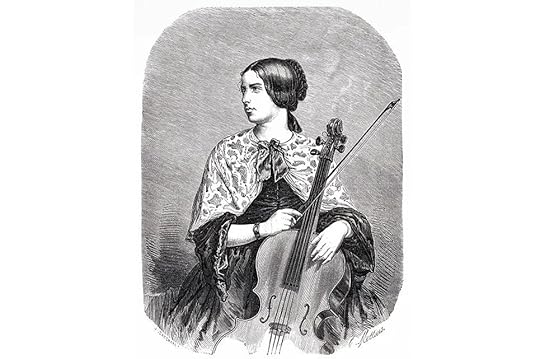
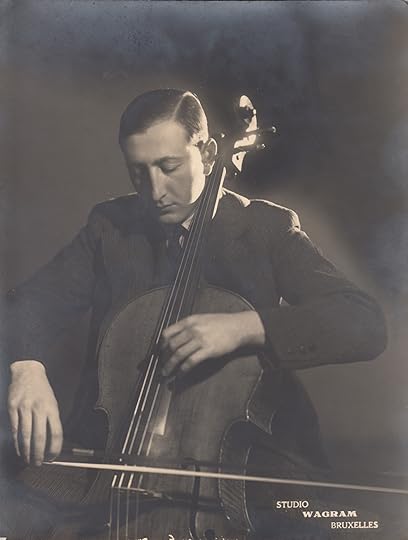
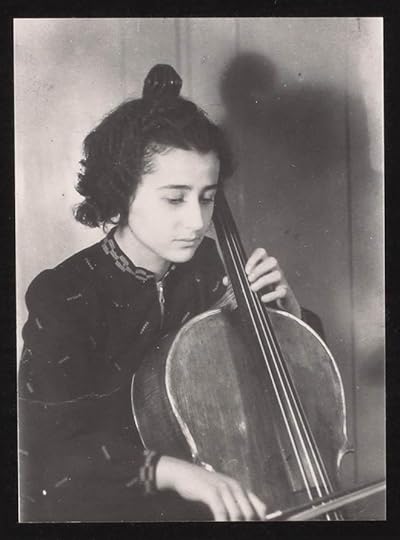
In Cello, Kate Kennedy weaves together the lives of four remarkable cellists who suffered various forms of persecution, injury and misfortune. The Hungarian Jewish cellist and composer Pál Hermann managed to keep one step ahead of the Gestapo for much of the Second World War but was eventually captured and murdered. Lise Cristiani, the first female professional cello soloist, undertook an epic – and ultimately fatal – concert tour of Siberia in the 1850s, taking with her one of the world's greatest Stradivari cellos. Anita Lasker-Wallfisch was incarcerated in both Auschwitz and Bergen-Belsen camps, only surviving because she was the cellist in the Auschwitz-Birkenau women's orchestra. Amedeo Baldovino of the Trieste Piano Trio was forced to jump from a burning ship with his 'Mara' Stradivari, losing the cello, and nearly losing his own life when the boat was shipwrecked near Buenos Aires.
Counterpointing the themes raised by these extraordinary stories are a sequence of interludes that draw together the author's reflections on the nature and history of the cello, and her many interviews and encounters with contemporary cellists. Kate Kennedy's own relationship with the cello is a complicated one. As a teenager, she suffered an injury to her arm that imposed severe limitations on her career as a performer on the instrument that was her first love. She realised that, in order to start to understand what the cello meant to her, she needed to find out what the cello – and, crucially, the absence of the cello – had meant to some other cellists, past and present.
Kate Kennedy has written an eloquent and multitextured homage to this warmest of stringed instruments – part quest narrative, part detective story, part philosophical meditation.
The best books leave you hung over. This is such a book.
Alright, boys and girls, brace yourselves for one hell of a long review - it will be well worth your time though, I promise!
The author of this book is a cellist in her own right. A cellist who couldn't play for a long while due to a terrible injury. Which made her question her identity as well as her relationship with her instrument and music in general. This led to her writing a book about 4 significant cellists who also had an extraordinary relationship with their instruments.
Although others get an honorable mention through anecdotes, the book is mostly about (in chronological order):
Lise Cristiani (24.12.1827 - 24.10.1853)
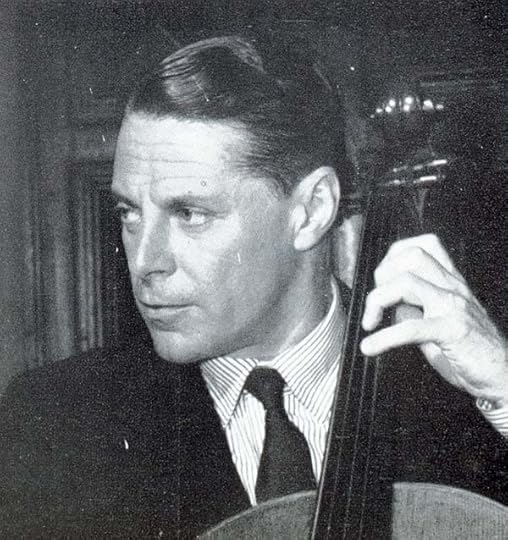
Pàl Hermann (27.03.1902 - ca. 1944, actual date unknown)
Anita Lasker-Wallfisch (17.07.1925 - ...)
Amedeo Baldovino (05.02.1916 - 13.05.1998)
Lise Cristiani was the first female professional cellist. She even toured alone with her Stradivari that is now called the "Stauffer ex Cristiani" in her honor. Sadly, her travels ended in tragedy with her being destitute, sick and alone, dying far from home aged only 26. Nevertheless, it has to be mentioned how extraordinary her life has been, how she managed the delicate balance between conforming to society and rebelling against it in her own way. She paved the way for women to generally play the cello, and not even side-saddle (yes, that was a thing). It is therefore beyond tragic what happened to her and that scarcely anyone knows nowadays (I would also kill to know how the Stradivari made it back from the place of Lise's death to Europe and, eventually, the Museo del Violino in Cremona where it is currently residing).
Pál Hermann was a Jewish cellist and composer who was eventually apprehended and killed by the Nazis, his cello lost. The author met with his 90-year-old daughter and promised to try and find the Gagliagno. As mentioned in my status updates, it was quite the rollercoaster and by the time this book went into print, Kate Kennedy had made her peace with not being able to reunite Hermann's daughter with her father's long-time companion (he had sent his daughter to other relatives so she'd be safe which means the cello was also his ONLY companion). However, as also promised in one of my status updates, there is a (somewhat) happy ending: after the author even took to Facebook to mobilize as many people from around the world as possible, the cello was found in Düsseldorf! Read here about the tear-inducing reunion this very year (2024)! And what a reunion it was!
Anita Lasker-Wallfisch is a Jewish woman who survived not one but two concentration camps because she could play the cello and thus became invaluable to Auschwitz-Birkenau's orchestra. She is still alive today and hearing from her in person thanks to the author was wonderful (if something so positive can be said about such a harrowing life experience). She did take up playing again after being liberated, by the way. Sadly, her original cello is lost though and, understandably, she had no interest in the author trying to find it as she strictly separates past from present.
Amedeo Baldovino was a member of the Trio di Trieste and is most famous for having been in a fateful incident during which his Stradivari "Mara" was lost in a river. Luckily, the pieces were found and some expert luthiers were able to save most of it (his colleague was not that lucky with his violin). No, Baldovino's and the Mara's story was not over after the incident, though it did not stay with Baldovino for too long after (fortunately, Kate Kennedy did catch us up on what happened to it since then). I still haven't heard it performed live, but I plan on changing that soon-ish.
Perhaps most amazingly, this is living and breathing history. Truth be told: I had not expected the author being so good at recounting the four main stories. It's never an easy task and she is a cellist first and foremost. However, I was touched by how respectful her tone was, how she reported on the events (never being overly dramatic) and simply let events be what tucked at the reader's heartstrings.
In between the detailed and highly fascinating accounts of these people's lives, we get interludes that familiarize us with lutherie, the old masters and all facets of their exceptional works of art, modern practices and, ultimately, the question what music and the instruments we use to make it with mean to us (collectively but also individually). The same questions are posed throughout the biographies so we're getting a 360° view from then/now, male/female, old/young, romantics/realists etc.
Whether it was the account of Kate Kennedy not having been able to play and therefore feeling lost, or tales of Jacqueline du Pré and her even worse illness that ended her career as well as her life a short time later, or stories about kind-hearted and generous Yo-Yo Ma, or the reader learning about a cello serving as a home for bees - I was hooked from the first page to the last!
The tone of the narrative(s), the context as well as the attention to detail and respect in the writing, the amount of research that has obviously gone into this, the author's palpable passion for the subject(s) ... it all enraptured me. And yes, I already perused the notes, select bibliography, and listening advices.
A wonderful book full of fact but also heart. Unsurprisingly, I shall thrust this into the hands of anyone I come across for a long while yet!
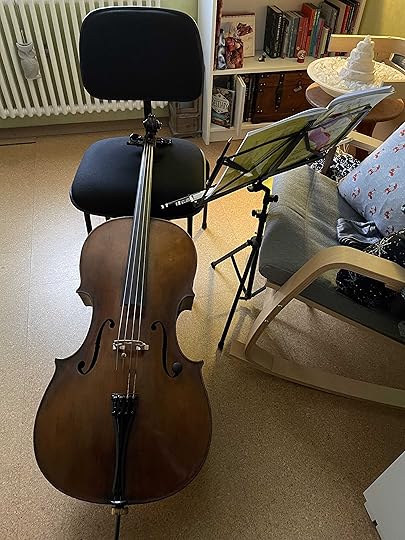
P.S.: It is one of THE regrets of my life (though I wasn't responsible) that I have come to play music so late in life. All the more joyful was the day when I found and obtained MY cello. This is the Waldeisen. It's walnut brown with some gold shimmers (a bit like a tiger's eye). Though, like many good cellos, it can appear of a slightly different colour depending on the light it is in. Its pedigree was discussed but as explained in this book, not too much info could be obtained by the luthier when he bought it at auction (it was damaged and he repaired it before putting it up for sale). To me, it doesn't matter too much, the quality of sound is more important to me than the name on the label. Sure, that also has to do with me unfortunately not being well-off enough to afford the Stauffer ex Cristiani. *lol* I do maintain that the old cellos are way better than the modern ones though. And that is not just sentiment. Think about it: the wood Stradivari, Montagnana, Amati, Gofriller and the others were able to use was way older and the trees had grown in a totally different environment - you don't get wood like that anymore. And wood is a living, breathing thing. I do not mind there being modern instruments, nor am I so arrogant as to say they cannot possibly sound nice enough (especially to amateurs). However, I believe there is a difference - not just in what we hear but also in how it feels to play these instruments.
P.P.S.: I might not have found out about this book if it hadn't been for a friend here on GR asking me if I had it on my radar - online bookclub for the win! Not only having received a good recommendation but one for what is now already one of my favorite books of all time, is simply heartwarming. So thanks, Rebecca!
As another reviewer wrote, "A book about the cello, written by a cellist, about cellists and things cello... what could there be to not like?" I picked up this book because I am a cellist and thought it might have some interesting things to say about the history of the instrument or something like that. This book was so different from my expectations, and it was such a delight to read.
The book's main structure is to follow the lives four different cellists, but the specific instruments they played are just as much main characters as the four individuals that played them. The author, a cellist herself, also has her own story that weaves in and out of these other stories, but not in an unnatural way, as if she is simply trying to insert herself into the narrative. No, the fact that she is a cellist was integral to the way she went about her research and brings greater depth and meaning to the end result. Her discovery process itself is part of the story.
I was especially intrigued by this intesection of cello music and history. All the individual stories are well-written and effective, but I was especially moved by those of Jewish cellists and their cellos during the Holocaust; reading of their experiences, especially those who endured concentration camps, was powerful. The lasting impact on those who survived was varied, but all had to come to a resolution in their own way.
In the epilogue (the "Encore"), the author writes, "In the course of writing this book, I have come to see my own cello as a completely new object - a part of my life as essential and present to me as my partner or my children, rather than a closed case in the corner of the room."
While I don't think I will ever see my cello as this essential to my life, reading this book did cause me to see my own cello in a new way, to recognize that it does have its own personality, a personality that I have spent years getting to know.
A few days ago at orchestra rehearsal, I spent a moment looking at the cello of my stand partner. A relatively new cello with a glossy varnish, smooth surface and consistent, beautiful, rich color. I then looked down at my cello. I saw dings and scratches, inconsistent color in the wood, a few worn spots where the varnish is thinner. Side-by-side, her cello next to mine, this other cello is definitely the more attractive, but only on the surface. Mine has character and personality. And I know my cello. I understand the nuances; I know which notes I need to coax out of it and which ones can simply sing. This is my instrument in more ways than just ownership.
These are thoughts I've never really had before. I credit Kate Kennedy's book for helping me see my cello in a new light.
My friend can write a better banger of a review on this one than me.
That being said, I can still give a few impressions. As the title implies, it’s not just about cellos, but about some of the most interesting tales of cellists from the last couple of centuries.
Most importantly, the whole thing evokes the tradition, the obsession, the hyper-focused dedication to the music and craft.
In short, it will wrap you in the deep sounds of life, craft, and history. Definitely a must read for anyone in love with the cello.
Key synesthesia takeaway: deep vibrations in my chest, with paint thinner--of all things.
Personal note: If anyone reading my reviews might be interested in reading my own SF, I'm going to be open to DM requests. I think it's about time I get some eyes on them.
very interesting book. deep dive into cellos, several renowned cellists as well as the author's cello experiences. I enjoyed the book. it is not a quick read. one can only read a chapter or two and then must put it aside for the next day. good concept. even has a bit of a mystery and the author's writing style is lyrical. HOWEVER, it was way too long. I got a little tired of hearing about the intense relationship between the musicians and their cellos and the anthropomorphism of the cello.
I adored this book and I don't think I've ever read anything quite like it. It reminded me why 7 year old Martha fell in love with the cello. Kate Kennedy traces the lives of some truly extraordinary cellists as they endured some of the harshest conditions a person can. Their stories are compelling and deeply moving, traversing extreme weather, war, concentration camps, and a sinking ship, all while trying to protect their beloved instruments.
A personal (and slightly lighter) highlight was an interlude on the "Bee Cello" which I thought was fascinating and I've not shut up about since.
A book about connection, with music, with life, with history, with our own mortality and with the most magical musical instrument, the cello. It’s a love story and a passionate insight into how music changes lives.
As a cellist, this was such a treat to read some narrative non-fiction about the cello! We travel along with Kate Kennedy as she rides throughout Europe with her cello, visiting sites that were iconic for four cellists she profiles. These cellists are lesser-known figures that were very notable players during their time but, for multiple reasons, their stories were erased from music history. Through her travels, Kennedy works to unearth their stories and also to find their instruments, which also have big stories behind them! This made me think a lot of investigative journalism but the author is taking the reader along on the journey of investigating instead of just giving us the finished product. At times this felt like getting away from the main point, but I thought it was interesting overall.
There are a lot of big themes and questions that she tackles - the meaning of silence both for an individual and in historical context, the juxtaposition of silence and sound, the relationship between instrument and player, identity as it relates to being a musician without your instrument. All really thought-provoking but maybe a bit ambitious. Overall, there is lots of romanticizing about the cello, which even for me felt obnoxious but she does question those notions.
I thought there was going to be more memoir about her story but we don't get very much. Kennedy was on-track to become a professional cellist and studied at the Royal College of Music, but her trajectory was interrupted due to an injury that inhibits her playing to the present-day. We don't get very much of this story, and I would have loved more.
I questioned the intended audience as well: I'm not sure if this book is meant for cellists / string players, hard-core music nerds, or a more generalized audience. There were lots of musical details like composers, instrument makers, pieces, playing techniques etc. that would make no sense to a non-musician, yet she felt the need to explain basic things like what a harmonic was. But as a cellist I still really enjoyed the deep dive. I learned so much about many different aspects of the cello, particularly with instrument-making and Stradivari. There were some modern-day adaptations that I didn't even know existed! On the historical side, there is lots of Holocaust & WWII which is SO emotional!
Overall, not exactly what I was expecting but still really enjoyed it!
I wanted to like this book. I DID enjoy all the travels in remote areas of East Euro countries, which having been to some of them, I could relate to the semi-desuetude.
The searing accounts of what happened to Pal Hermann were the most successful and moving; and the meetings with his mother(?sister) were poignant.
However, I felt the melding of the writer's OWN search (for physical and psychological healing) tasteless in its being parallelised with, especially, Hermann's horrific experiences. I think the narrative would have been-aesthetically but also morally-well cleared of these implied parallels(equivalents??); it would have made an interesting and moving self-journey in itself. I felt like Kennedy was trying to give her work ballast by these interpellations of the grim traumas of the other historical cellists.
Their lives -alone-would, also, have made a distinct, powerful book.
I think the now (in-)famous sebaldian technique of counterpointing black and white /sepia photographs as sometimes effective and beautiful; sometimes just too literal.
Slightly disturbingly, the author rarely writes about cello MUSIC; especially its emotional heft; there was a lot about technique (again, another book).
So, Kennedy tries to do too much (in a clunky counterpoint); but a valiant try.
Of all the string instruments, the cello is by far my favorite. I have had the privilege to hear in my lifetime some wonderful cellists like Zuill Bailey, Steven Isserliss, Lynn Harrell, and Alisa Weilerstein. When I saw this book reviewed in the WSJ, I decided to see if it was available from my public library. Behold, it was! It is a travelogue of sorts as Ms. Kennedy travels the routes and visits the places where they lived, played and died. She researches the lives of four cellists: Pal Hermann, Lise Cristiani, Anijta Lasker Wallfisch and Amedeo Balvovina. In some cases, hoping to find their instruments. The stories Ms. Kennedy weaves of these four are at times dark, often ending in German concentration camps. What possess a young artist to perform at various places across the expanse of Russia only to die in Siberia? Ms. Kennedy tells the tale of a cello lost in a shipwreck only to be recovered in bits and pieces. Not being a musician, sometimes the narrative dragged for me. I'm not sure I got the connection between the instrument and the performer.
This book is impossible to classify. It is part historical, part memoir, part physics, part travelogue, part mystery, part adventure story, but all of it is about music and centers on the cello. The author organizes the book around four different cellists of the past: Lise Christiani (perhaps the first known professional female cellist, intrepid, fearless, traveling throughout eastern Europe), Pál Hermann (Jewish cellist/composer murdered in the Holocaust), Amadeo Baldovino (who lost his cello in a shipwreck), and Anita Lasker-Wallfisch (a Holocaust survivor who was a member of the women's orchestra at Auschwitz). -- All of this is gracefully and thoughtfully written. The horrors of the Holocaust are made more vivid somehow, and I left the book with a keen appreciation about the relationship between the musician and his/her instrument. -- I cannot imagine anyone who loves classical music not finding this book as fascinating as I have, and I am confident even readers who do -not- love classical music would find much of interest in these pages.
As an amateur cellist, I appreciated this book. I would have given it a 3 1/2 rating if that were possible. I appreciated the biographies of the cellists, but thought the book was a little too long. The author's descriptions between one's cello and oneself would probably be felt more by a professional musician than by an amateur. That being said, I have had my cello most of my life, although I did not play it for years after I went to college. I have returned to it years later, in my retirement. And while my cello is a very important possession, it is not at the core of my emotions, in the way the author describes her relationship to her cello. The cellists whose lives she details had very valuable cellos and were professionals, so it is understandable they would have strong ties to their instruments. The book's broad emphasis on the emotional rapport between musician and instrument seemed too drawn out, since I doubt the average reader would feel similarly, even if he or she played the cello.
Beautifully and sensitively written. The relationship between player and instrument is deep and emotive but also physical. A fascinating insight into the science behind this relationship as well as following four fascinating lives of different cellists, seeking out their parallels and their own personal relationships with the instruments they owned. On her quest for finding out more about these relationships, Kate Kennedy travels with her cello, interviewing extensively, visiting luthiers, past places, relatives, concert halls, studying archives and playing instruments. It is a unique voyage of discovery comprising history, provenance, science and destiny. Sensitively and beautifully written and touching. It confirmed the deep connection and the love affair that musicians have with their instrument and how it acts as a channel of the soul. Truly fascinating and so well - written that I couldn't put it down.
A complex, moving and unusual book that is not at all like what I expected from the reviews I'd read. Long chapters printed on white pages are separated by "intermezzi" printed on grey pages. The latter make up the book I expected I was going to read, wherein a performer who had to quit the cello because of injury seeks out other cellists and discusses how they have adapted to their own injuries, as well as particular instruments they love. The white pages, however, are the meat and the soul of the book. Here, Kennedy travels in order to conduct interviews and archival research pertaining to the lives of four famous cellists who lost their lives and/or instruments in tragic circumstances. The two stories related to the Shoah are the most moving. I'm not sure that this is the most effective way to organize a book, but I am glad I read it.
Every cellist should read this. The parts about the concentration camps and all the other atrocities of the Reich are harrowing. We need to listen and pay our respects to those who suffered there. The book is a remarkable achievement, Kate Kennedy herself a cellist takes the reader with her and her cello as she searches for the missing cellos of Pal Hermann and Anita Lasker-Walfisch and tells the moving tale of cellos shipwrecked and saved. A wonderful book, I might now have to purchase my own copy after returning this to the library… I want to read it again.
A book about the cello, written by a cellist, about cellists and things cello. As a cellist myself, what could there be to not like? There is lots of discussion about cellists who were unfamiliar to me as well as their instruments, including some Strads. There are also some off-the-wall sections about things like a cello that houses a bee hive and a project to send cello kits to children in remote places so they can use the kit to make their own instruments! Fascinating.
I'm a "wanna be" cellist - I have a student's cello in its case where it stays most of the year. But I dream of playing well, or at least better. This book is a cello-lovers delight but also has so much history - of the instrument and instruments, the musicians, the history of Jewish musicians during the Holocaust and in the camps - and the search for stolen cellos. Highly recommended!