In postwar Sydney, Grace Smith takes Mary, a young Aboriginal girl, into her home. She believes she will be able to save the child by giving her all the benefits of white society. But Mary's arrival has unexpected consequences as Grace's past comes back to haunt, and condemn her.
Runner-up in the Australian/Vogel award, The Heaven I Swallowed is a tale of the Stolen Generations, told from the perspective of the white perpetrator.
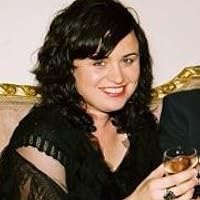
Rachel Hennessy’s first novel THE QUAKERS won the Adelaide Festival Award for an Unpublished Manuscript and was launched at Writers’ Week in February 2008. The manuscript was also short-listed for the Varuna Writers’ Centre Manuscript Development program and won the ArtsSA prize for Creative Writing. It was described by John Birmingham as "un-put-down-able".
Her second novel, THE HEAVEN I SWALLOWED, was runner-up in the Australian/Vogel Award and longlisted for the Nita B Kibble Award for an established woman writer.
Her first YA novel, RIVER STONE, was released by MidnightSun Publishing in 2019 and is to be followed up by the second book in the trilogy MOUNTAIN ARROW, in November 2020.
"RIVER STONE will send chills down your spine and have you reading just one more chapter late into the night." Kids' Books Reviews
I was surprised to discover The Heaven I Swallowed, a runner up in the 2008 Australian/Vogel awards, to be such a compelling read for me. While the premise was of interest I had no real expectations of it, yet I found it utterly absorbing within the first few pages.
Set in Australia not long after the end of the second world war, middle age widow Grace Smith takes charge of a half-cast twelve year old orphaned aboriginal girl, named Mary.
"She was just a young child and I had the entire world to give her" p11
While there is some truth in Grace's stated intent to help Mary, though framed in terms of 'rescue' from the heathen and ignorant influence of her nature, Grace's reasons for accepting Mary into her home are far more complex than she will admit to herself and have very little to do with what she can give the child.
In part Grace hoped that she would gain the esteem of her community for her her selfless act of charity. A woman who believes in rules, Grace lives in fear of breaking those she doesn't understand and unfortunately the expected praise is not forthcoming.
"It should have occurred to me...that their idea of the proper way to make a difference was to simply give more, to increase the weekly donation dropped into the padded green velvet of the church collection plate or continue with their afternoons at various charity shops. No one really wanted to see Mary there..." p37
Lonely, the widow also hopes that in some manner Mary will be a substitute for the child she miscarried years before but Grace is flustered by Mary being both older and darker than she expected. Additionally Grace is torn between ensuring Mary learns discipline, manners and a good work ethic and wanting to share affection with the girl. Raised in a strict orphanage by largely punitive nuns Grace has no real idea how to create or nurture an attachment and appearance of kindness is a double edged sword for Mary.
Strangely though, it is difficult to dislike Grace as much as you might expect to. I found her utterly intriguing though I am not so sure she would be so to everyone. In me she inspired pity for her desolate background, her ignorance, her awkwardness and lack of self awareness. Not that it excuses her poor behaviour in any way, nor is it a reason to forgive it. There is no small sense of satisfaction that in the end Mary extracts a kind of noble revenge.
While The Heaven I Swallowed is in part a commentary on the Stolen Generation, it was the complexity of the character of Grace Smith which held me enthralled, I put it down only once, and resented even that.
Set in post WWII Australia, this book is really well-written but not at all enjoyable. I mean that in the best way possible.
I mean, it's beautifully written, but it's also really, really good at portraying clinical anxiety, self-loathing, racism, the vilification of sexuality (especially in women, and thanks, Catholocism), and social stigma.
Is it bad that when I learn about something horrible another country has done, like Australia's state-sanctioned forced removal of mixed heritage aboriginal children, I think, "Well at least everywhere is as screwed up as the U.S.?" Yeah, it's probably bad.
This story is so complex. Grace is a war widow 7 years after the end of WWII. She's never had children though she wanted them desperately. She had a miscarriage months after her husband left for the war. She was an orphan and grew up in a strict (read: abusive) nun-run orphanage. She adopts/fosters/has no real commitment to a mixed-race aboriginal child named Mary, whom she disciplines with the same severity she was raised with, and simultaneous has a completely unhealthy dependent relationship with, until Mary runs away and is never seen again. And it gets worse from there, but I can't elaborate without spoilers. Even Grace's name choice is an allusion - she covets grace and unconditional acceptance for herself, but she can never let down her guard enough to offer grace to another person. I started it thinking it would be more about the Stolen Generation, but really it's kind of a commentary on organized religion, the boxes women were forced into after WWII, and yes, some racism.
Some quotes...
When Grace tries to get Mary admitted to a public school: "'She really is quite...' Mr. Robertson began. His sentence trailed off. I knew what it contained. ' I thought they were supposed to be half-castes, or even quadroons," the fawn woman said, and she walked over to stand beside Mary. She reached across to place her hand under the girl's chin and raised her head as if to give Mr. Robertson a better view. She appeared to be a moment away from asking Mary to open her mouth so they could inspect her teeth. Mary did not flinch at the woman's touch, but her eyes had gone dead. Mrs. Thompson had said she was a beautiful child. Beauty is in th eye of the beholder. There had been moments liks these in my own childhood when prospective parents would come to inspect us, walking along rows of brightly scrubbed girls, scanning from top to bottom for flaws. Perhaps I wore the kind of expression that Mary now did, for I was almost entirely overlooked in the early years and the time came when I was too old to even be included in the rows. If it had not been for the kindly Auntie Iris I would never have had any trips outside the convent. 'I really don't think...' Mr. Robertson began and, again, trailed off. I wondered if he was capable of finishing a sentence."
Okay, only that one quote, because this review has already taken way too long. I might come back and add more later. Just know that the writing is sparse, with more left unsaid than said. It's like a bleak gray winter day.
The Heaven I Swallowed, by Rachel Hennessy, is a great prelude to Indigenous Literature Week next week at ANZ LitLovers. I was completely riveted by this novel.
The Heaven I Swallowed stems from historical truth, the personal, and the political. The granddaughter of a woman given up for adoption because of her Aboriginal heritage, Hennessy was stung to write this novel because of former Prime Minister John Howard’s statement that Aboriginal children were taken away from their families for their own good. But the book is a subtle indictment of the policies and practice behind the Stolen Generations, not a bitter attack. And singularly, for a novel involving this chapter in our nation’s history, it presents not so much the perspective of the stolen child, but rather the perspective of the very strange woman who adopts her. The Heaven I Swallowed is such an accomplished novel that it was runner-up for the Vogel Prize in 2008.
The rather odd title is an allusion to the Roman Catholic communion service. Grace is a devout Catholic, but her devotion to the church seems to be a warped substitute for normal human affection. Brought up herself in an institution where she herself was physically and emotionally abused, in the aftermath of World War II, Grace lives alone as a widow. She attends meetings of the Widow’s Group but their malicious gossip and craft projects do nothing to assuage her loneliness and so she decides to take in an Aboriginal child. While she dearly longs to be thought of as a ‘good woman’ doing a worthy deed, she also craves affection, though she has no idea about how to give or receive it.
I won this book through goodreads giveaways and I couldn't wait to start it. Right from the start it had me intrigued. Grace Smith takes an Aboriginal girl named Mary into her home. She believes she can rescue this child at the same time replace her unborn child.
Grace herself was brought up in an institution where she was physically and emotionally abused. She teaches Mary manners,discipline and believes she can save the child by giving her all the benefits of white society.
I should've finished this in one day but I didn't want it to end. I really enjoyed this book and would certainly recommend it.
Runner-up in The Australian Vogel Award, and subsequently published by Wakefield Press, I suspect that this compelling and confronting novel of the stolen generations has been somewhat overlooked. See my review essay, The Year's Work in Fiction, in the Australian journal Westerly 59.1.
Set in 1950s Australia, (in all its small-mindedness, its gossipy church communities, its racism and sexism glory)... The Heaven I Swallowed was inspired by Hennessy’s grandmother who was a member of the Stolen Generations, and by her paternal great-aunt, whose husband fought in the second world war. The intriguing title is an allusion to the Roman Catholic communion service and central to the novel is Grace, a devout Catholic with complex personality - but her devotion to the church seems to be a warped substitute for normal human affection. I found this to be a well plotted novel, with intriguing personal and political links that unite the plot, characters and themes.
A well written but disturbing story of a damaged child and racial injustices. Brought back memories of the cruel Father of Lilian Singer (Kate Grenville). Both Sydney based.
I read Rachel Hennessy's historical novel The Heaven I Swallowed as part of the Australian Women Writers Challenge. Set in Sydney after the Second World War, this is Grace's story - a devout Catholic woman who sees it as her charitable duty to help Aboriginal girl Mary release the 'shackles' of her race. As it turns out, Grace and her community do more to shackle Mary than the white person's perception of a so-called 'savage' Aboriginal life ever could.
Grace is a complex character. I felt for her because of her own unhappy childhood, and I could easily see that she was nothing more than a product of her time. The Stolen Generations were taken from their homes under the misguided belief that it was the best thing for them. The way in which Grace refers to herself as saving Mary is a perfect illustration of what most white people must have felt at this time.
While this novel is part commentary on the Stolen Generations, it is more about Grace herself. I found this to be an interesting way of examining this sad time in Australian history. To tell the story from the perspective of the woman who 'adopted' the child, Hennessy was able to show the reader a different side to the events. Grace longs for a child to replace the one she miscarried. And as she is alone now her husband Fred hasn't returned from the war, she is also searching for purpose and a way to fill the void in her life. But there is more to Grace then simple lonliness. She also acts out of a desire to appear holy.
Grace craves affection and connection, but does not understand how to go about receiving them. Her dedication to the church and to God turns out to be a poor substitute for the love she really longs for. It's a sad story to read because Grace's desperate longing and rigid way of living is both devastating and infuriating all at once. I found myself liking Grace one moment and disliking her the next. Hennessy has created a flawed, yet relatable, character and for that very reason I thoroughly enjoyed reading The Heaven I Swallowed.
Rachel Hennessy’s ‘The Heaven I Swallowed’ is a ground breaking novel that gives the reader a unique insight into a little explored side of Australian history. Deftly and sensitively it unveils the psyche of a woman of the 1940s and 50’s who takes into her home an Aboriginal girl in the belief that she is doing ‘good’ for God and country.
The style is driven by a purpose and honesty and it looks at big questions: ‘what are the parameters of goodness, for the individual and for the country?’ Why was humanity ignored in the removal of Aboriginal children from their parents?’ Through the character of Grace we are brought near to an understanding of good intentions gone wrong. The action is page turning and there is an underlying wry humour. There is too a haunting almost surreal feel at times, despite the straightforward style - for this is quality writing.
Grace Teresa Mary Smith believes she can ‘rescue’ an Aboriginal child and at the same time replace her unborn child. The attitudes of the time are reflected in Grace’s desire to control and save Mary from herself and at the same time protect her from the other ‘war widows’ and church parishioners. Hennessy has created a character that is a subtle mix of poignancy and repulsion. Her voice is strong and convincing and remains with the reader long after the intriguing, suspenseful, beautifully resolved read is over.
Another one of those books that's a bit too smart for it's own good. The story of a woman who takes in an aboriginal child (of the stolen generation) in 1950s Sydney is well told, as is her personal struggles with her marriage and social status. Enjoyable as it was, I failed to see the point of what it was about. The book had many themes, but didn't seem to go anywhere with any of them, hence I wondered exactly what it was really about. Was it about the stolen generation, the struggles of a war "widow", the involvement of the Catholic church or the social structures of 1950s Sydney. There were far too many unresolved things for me, especially in the conclusion. Nevertheless, a nicely written and easy to read novel, that came with good recommendations and an interesting synopsis, but disappointed overall.
I received this book as a Goodreads Giveaway. The Heaven I Swallowed is a beautiful, poetically written story. It provides a heart-wrenching glimpse into the Stolen Generation, as well as life in Australia after the Second World War. The story of Mary, a young Aboriginal and the way in which she was treated, invoked strong feelings of sadness, yet it was impossible for one to feel anger or resentment towards her carer Grace. I found Grace an interesting character, and while her treatment of Mary was at time horrifying, it was forgivable in that she was battling her own demons. While the ending was not what I had envisioned nor hoped for, I feel the conclusion was as it should be. I must admit, this isn’t the type of book I usually read, however I found it to be very compelling and incredibly difficult to put down.
An interesting novel regarding a woman struggling on her own in post war Australia. I found the detail of what society construed as being "proper" quite on point. Although the novel is marketed as "a compelling and confronting tale of the stolen generations", I found that to be only a minor portion of the tale. I found that the story of Grace and her inability to be true to herself and her psychological struggles regarding this to be the major plot in the novel.
I did enjoy the story line and found it an easy and pleasant read. :)
An imaginative concept for a novel, well-crafted and well-written. It relies heavily on Catholic Church rituals which do not resonate with me, but the character portrayals of Grace, Mary and Fred otherwise are very acutely observed and moving.
An extraordinary book, totally devoured in two sittings. The character of Grace is exquisitely and painfully drawn. Writing is superb. I can't recommend this highly enough.
Once I got going I couldn't put this book down - a very compelling story. I loved the descriptions of Sydney and the insecure psychological ponderings of Gracie.