

What do you think?

Ego and Archetype: Individuation and the Religious Function of the Psyche
This book is about the individual's journey to psychological wholeness, known in analytical psychology as the process of individuation. Edward Edinger traces the stages in this process and relates them to the search for meaning through encounters with symbolism in religion, myth, dreams, and art. For contemporary men and women, Edinger believes, the encounter with the self is equivalent to the discovery of God. The result of the dialogue between the ego and the archetypal image of God is an experience that dramatically changes the individual's worldview and makes possible a new and more meaningful way of life.
Edward F. Edinger, M.D., a founding member of the C.G. Jung Foundation for Analytical Psychology in New York, is the author of many books on Jungian psychology, including The Eternal Drama and Anatomy of the Psyche: Alchemical Symbolism in Psychotherapy.
Edward F. Edinger, M.D., a founding member of the C.G. Jung Foundation for Analytical Psychology in New York, is the author of many books on Jungian psychology, including The Eternal Drama and Anatomy of the Psyche: Alchemical Symbolism in Psychotherapy.
304 pages, Paperback
First published January 28, 1972
About the author
Edward F. Edinger
43 books218 followersEdward F. Edinger was a medical psychiatrist, Jungian analyst and American writer.
Edward F. Edinger Jr. was born on December 13, 1922, in Cedar Rapids, Iowa, earning his Bachelor of Arts in chemistry at Indiana University Bloomington and his Doctor of Medicine at Yale School of Medicine in 1946. In November 1947, as a first lieutenant, he started a four-week Medical Field Service School at the Brooke Army Medical Center, Fort Sam Houston, Texas. He became a military doctor in the United States Army Medical Corps and was in Panama. In New York in 1951, he began his analysis with Mary Esther Harding, who had been associated with C.G. Jung.
Edinger was a psychiatrist supervisor at Rockland State Hospital in Orangeburg, New York, and later founder member of the C.G. Jung Foundation in Manhattan and the CG Jung Institute in New York. He was president of the institute from 1968 until 1979, when he moved to Los Angeles. There he continued his practice for 19 years, becoming senior analyst at the CG Jung Institute of Los Angeles.
He died on July 17, 1998, at his home in Los Angeles at age 75, according to family members due to bladder cancer.
Edward F. Edinger Jr. was born on December 13, 1922, in Cedar Rapids, Iowa, earning his Bachelor of Arts in chemistry at Indiana University Bloomington and his Doctor of Medicine at Yale School of Medicine in 1946. In November 1947, as a first lieutenant, he started a four-week Medical Field Service School at the Brooke Army Medical Center, Fort Sam Houston, Texas. He became a military doctor in the United States Army Medical Corps and was in Panama. In New York in 1951, he began his analysis with Mary Esther Harding, who had been associated with C.G. Jung.
Edinger was a psychiatrist supervisor at Rockland State Hospital in Orangeburg, New York, and later founder member of the C.G. Jung Foundation in Manhattan and the CG Jung Institute in New York. He was president of the institute from 1968 until 1979, when he moved to Los Angeles. There he continued his practice for 19 years, becoming senior analyst at the CG Jung Institute of Los Angeles.
He died on July 17, 1998, at his home in Los Angeles at age 75, according to family members due to bladder cancer.
Ratings & Reviews
Friends & Following
Create a free account to discover what your friends think of this book!
Community Reviews
Displaying 1 - 30 of 111 reviews

May 10, 2009
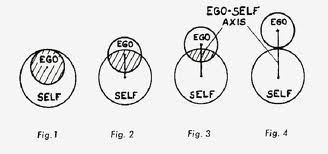
A Jungian therapist I talked with about this book encouraged me to pay special attention to the "Ego-Self Axis" concept that it presents. I can see the importance. Having just finished, though, my mind is still into the last section: a study from ancient alchemical texts about the philosopher's stone - kind of esoteric and intriguing.
Some of these Jungians I've been talking with (I'm not even sure if they like being called "JungIANS") get annoyed at the suggestion that the system is "mystical." They want to be considered "scientific," and yet they make statements about Self as synonymous with God. I'm not clear about how that can be empirical, but I like the archetypal stuff.
The following is from earlier posts:
I'm so caught up in this book, every few days I am posting quotes from it into this review space. Here are a few more:
“In my experience, the basis of almost all psychological problems is an unsatisfactory relation to one’s urge to individuality. And the healing process often involves an acceptance of what is commonly called selfish, power-seeking or autoerotic. The majority of patients in psychotherapy need to learn how to be more effectively selfish and more effective in the use of their own personal power.”
“We demand from others only what we fail to give ourselves. If we have insufficient self-love or self-prestige, our need expresses itself unconsciously by coercive tactics toward others. And often coercion occurs under the guise of virtue, love, or altruism. Such unconscious selfishness is ineffectual and destructive to oneself and others. It fails to achieve its purpose because it is blind, without awareness of itself. What is required is not the extirpation of selfishness, which is impossible but rather that it be wedded to the consciousness and thus becomes effective. All the facts of biology and psychology teach us that every individual unit of life is self-centered to the core. The only varying factor is the degree of consciousness which accompanies that fact.”
“It is a mistake to identify our individuality with any particular talent, function or aspect of ourselves. However, very often this is just what we do. If a person feels inferior and depressed in the presence of people who are more intelligent, who have read more books, who have traveled more, who are more famous, or who are more skillful or knowledgeable in art, music or politics, or any other human endeavor, then that person is making the mistake of identifying some particular aspect or function of himself with his essential individuality. Because a particular capacity is inferior to that of another person he feels himself to be inferior. This feeling then leads either to depressive withdrawal or to defensive, competitive efforts to prove he is not inferior. If such a person can experience the fact that his individuality and personal worth are beyond all particular manifestation his security will no longer be threatened by the accomplishments of others.”
“To be related to one’s individuality means to accept all that is encountered within as meaningful and significant aspects of the single whole. Yet how easily and how frequently we resort to the lazy tactic of evading genuine encounter with some aspect of ourselves by saying, ‘I didn’t really mean that,’ or ‘I just forgot,’ or ‘It was only a careless slip,’ and so on. For those who have been initiated into individuality that way out is no longer available. They know that no psychic happening is fortuitous. There is no place for chance in the meaningful world of psyche.”
“Resentment takes many forms: ‘If only I had a better childhood,’ ‘If only I were married,’ ‘If only I were not married,’ ‘If only I had a better husband or wife,’ etc., etc. All of these ‘if onlys’ are the means by which one excuses himself from relating productively to reality as it is. They are symptoms of inflation which will not grant existence of a greater reality than one’s personal desires. Job asked why his misery should happen to him. The answer that emerges from the Book of Job is so that he may see God.”
“It is through the child or primitive in ourselves in ourselves that we make connection with the Self and heal the state of alienation… To be primitive in our relation to the outer world is to be superstitious; but to be primitive in relation to the inner world of the psyche is to be wise. Jung achieved such an attitude of sophisticated primitivity and wisdom. Only a few days before his death he was asked by an interviewer about his notion of God. He replied in these words: ‘To this day God is the name by which I designate all things which cross my willful path violently and recklessly, all things which upset my subjective views, plans and intentions and change the course of my life for better or worse.’ The view Jung is expressing is essentially a primitive view, albeit a conscious and sophisticated one. Jung is calling ‘God’ what most people call chance or accident. He experiences apparently arbitrary happenings as meaningful rather than meaningless. This is precisely how the primitive experiences life. For the primitive everything is saturated with psychic meaning and has hidden connections with transpersonal powers… that all the vicissitudes of the outer and inner life have a meaning and are expressions of transpersonal patters and powers. Chance as a category of experience is a symptom of the alienated life.”
A large portion of the book’s beginning is about the “inflated ego.” This probably doesn’t sound flattering to say that I can really relate to this section about the inflated ego, but... it’s me. Here are some quotes from “Ego and Archetype” on the subject of an inflated ego:
“The psychotherapist frequently sees cases of this sort. Such a person considers himself as a most promising individual. He is full of talents and potentialities. One of his complaints is often that his capacities and interests are too wide-ranging. He is cursed with a plethora of riches. He could do anything but can’t decide on one thing in particular. The problem is that he is all promises and no fulfillment. In order to make a real accomplishment he must sacrifice a number of other potentialities. He must give up his identification with original unconscious wholeness and voluntarily accept being a real fragment instead of an unreal whole. To be something in reality he must give up being everything in potentia. The puer aeternus archetype is one of the images of the Self, but to be identified with it means that one never brings any reality to birth.”
“There are numerous lesser examples of inflation, which we might call the inflation of every day life. We can identify a state of inflation whenever we see someone (including ourselves) living out an attribute of deity, i.e., whenever one is transcending proper human limits. Spells of anger are examples of inflated states. The attempt to force and coerce one’s environment is the predominant motivation in anger. It is a kind of Yahweh complex.”
“There is also negative inflation. This can be described as identification with the divine victim – an excessive, unbounded sense of guilt and suffering. We see this in cases of melancholia which express the feeling that “no one in the world is as guilty as I am.” This is just too much guilt. In fact taking on oneself too much of anything is indicative of inflation because it transcends proper human limits.”
“If the environment of the child is so totally permissive that he has no significant rejection experiences at all, if the parents never say “No,” that also short-circuits the cycle. The whole experience of alienation, which brings consciousness with it, is omitted, and the child gets acceptance for his inflation.”
The book “Ego and Archetype” describes the relationship between Ego and Self as the way to put the inflated ego into proper alignment. He compares this to a religious experience and, being Jungian, considers all religious encounters to be a metaphorical experience of the ego with the Self. More quotes:
“It is impossible for the ego to experience the Self as something separate as long as the ego is unconsciously identified with the Self.”
“In order to break out of the alienated state some contact between ego and Self must be re-established. If this can happen, a whole new world opens up.”
“At a certain point in psychological development, usually after an intense alienation experience, the ego-Self axis suddenly breaks into conscious view. The ego becomes aware, experientially, of a transpersonal center to which the ego is subordinate.”
Okay, enough of my enthusiastic quoting from Ego and Archetype. I’ll continue reading and updating.
Some of these Jungians I've been talking with (I'm not even sure if they like being called "JungIANS") get annoyed at the suggestion that the system is "mystical." They want to be considered "scientific," and yet they make statements about Self as synonymous with God. I'm not clear about how that can be empirical, but I like the archetypal stuff.
The following is from earlier posts:
I'm so caught up in this book, every few days I am posting quotes from it into this review space. Here are a few more:
“In my experience, the basis of almost all psychological problems is an unsatisfactory relation to one’s urge to individuality. And the healing process often involves an acceptance of what is commonly called selfish, power-seeking or autoerotic. The majority of patients in psychotherapy need to learn how to be more effectively selfish and more effective in the use of their own personal power.”
“We demand from others only what we fail to give ourselves. If we have insufficient self-love or self-prestige, our need expresses itself unconsciously by coercive tactics toward others. And often coercion occurs under the guise of virtue, love, or altruism. Such unconscious selfishness is ineffectual and destructive to oneself and others. It fails to achieve its purpose because it is blind, without awareness of itself. What is required is not the extirpation of selfishness, which is impossible but rather that it be wedded to the consciousness and thus becomes effective. All the facts of biology and psychology teach us that every individual unit of life is self-centered to the core. The only varying factor is the degree of consciousness which accompanies that fact.”
“It is a mistake to identify our individuality with any particular talent, function or aspect of ourselves. However, very often this is just what we do. If a person feels inferior and depressed in the presence of people who are more intelligent, who have read more books, who have traveled more, who are more famous, or who are more skillful or knowledgeable in art, music or politics, or any other human endeavor, then that person is making the mistake of identifying some particular aspect or function of himself with his essential individuality. Because a particular capacity is inferior to that of another person he feels himself to be inferior. This feeling then leads either to depressive withdrawal or to defensive, competitive efforts to prove he is not inferior. If such a person can experience the fact that his individuality and personal worth are beyond all particular manifestation his security will no longer be threatened by the accomplishments of others.”
“To be related to one’s individuality means to accept all that is encountered within as meaningful and significant aspects of the single whole. Yet how easily and how frequently we resort to the lazy tactic of evading genuine encounter with some aspect of ourselves by saying, ‘I didn’t really mean that,’ or ‘I just forgot,’ or ‘It was only a careless slip,’ and so on. For those who have been initiated into individuality that way out is no longer available. They know that no psychic happening is fortuitous. There is no place for chance in the meaningful world of psyche.”
“Resentment takes many forms: ‘If only I had a better childhood,’ ‘If only I were married,’ ‘If only I were not married,’ ‘If only I had a better husband or wife,’ etc., etc. All of these ‘if onlys’ are the means by which one excuses himself from relating productively to reality as it is. They are symptoms of inflation which will not grant existence of a greater reality than one’s personal desires. Job asked why his misery should happen to him. The answer that emerges from the Book of Job is so that he may see God.”
“It is through the child or primitive in ourselves in ourselves that we make connection with the Self and heal the state of alienation… To be primitive in our relation to the outer world is to be superstitious; but to be primitive in relation to the inner world of the psyche is to be wise. Jung achieved such an attitude of sophisticated primitivity and wisdom. Only a few days before his death he was asked by an interviewer about his notion of God. He replied in these words: ‘To this day God is the name by which I designate all things which cross my willful path violently and recklessly, all things which upset my subjective views, plans and intentions and change the course of my life for better or worse.’ The view Jung is expressing is essentially a primitive view, albeit a conscious and sophisticated one. Jung is calling ‘God’ what most people call chance or accident. He experiences apparently arbitrary happenings as meaningful rather than meaningless. This is precisely how the primitive experiences life. For the primitive everything is saturated with psychic meaning and has hidden connections with transpersonal powers… that all the vicissitudes of the outer and inner life have a meaning and are expressions of transpersonal patters and powers. Chance as a category of experience is a symptom of the alienated life.”
A large portion of the book’s beginning is about the “inflated ego.” This probably doesn’t sound flattering to say that I can really relate to this section about the inflated ego, but... it’s me. Here are some quotes from “Ego and Archetype” on the subject of an inflated ego:
“The psychotherapist frequently sees cases of this sort. Such a person considers himself as a most promising individual. He is full of talents and potentialities. One of his complaints is often that his capacities and interests are too wide-ranging. He is cursed with a plethora of riches. He could do anything but can’t decide on one thing in particular. The problem is that he is all promises and no fulfillment. In order to make a real accomplishment he must sacrifice a number of other potentialities. He must give up his identification with original unconscious wholeness and voluntarily accept being a real fragment instead of an unreal whole. To be something in reality he must give up being everything in potentia. The puer aeternus archetype is one of the images of the Self, but to be identified with it means that one never brings any reality to birth.”
“There are numerous lesser examples of inflation, which we might call the inflation of every day life. We can identify a state of inflation whenever we see someone (including ourselves) living out an attribute of deity, i.e., whenever one is transcending proper human limits. Spells of anger are examples of inflated states. The attempt to force and coerce one’s environment is the predominant motivation in anger. It is a kind of Yahweh complex.”
“There is also negative inflation. This can be described as identification with the divine victim – an excessive, unbounded sense of guilt and suffering. We see this in cases of melancholia which express the feeling that “no one in the world is as guilty as I am.” This is just too much guilt. In fact taking on oneself too much of anything is indicative of inflation because it transcends proper human limits.”
“If the environment of the child is so totally permissive that he has no significant rejection experiences at all, if the parents never say “No,” that also short-circuits the cycle. The whole experience of alienation, which brings consciousness with it, is omitted, and the child gets acceptance for his inflation.”
The book “Ego and Archetype” describes the relationship between Ego and Self as the way to put the inflated ego into proper alignment. He compares this to a religious experience and, being Jungian, considers all religious encounters to be a metaphorical experience of the ego with the Self. More quotes:
“It is impossible for the ego to experience the Self as something separate as long as the ego is unconsciously identified with the Self.”
“In order to break out of the alienated state some contact between ego and Self must be re-established. If this can happen, a whole new world opens up.”
“At a certain point in psychological development, usually after an intense alienation experience, the ego-Self axis suddenly breaks into conscious view. The ego becomes aware, experientially, of a transpersonal center to which the ego is subordinate.”
Okay, enough of my enthusiastic quoting from Ego and Archetype. I’ll continue reading and updating.

June 15, 2017
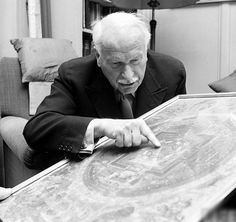
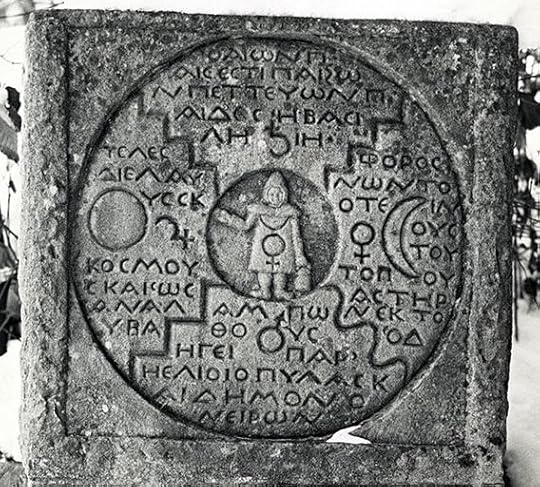
(The Bollingen stone, carved by Jung)
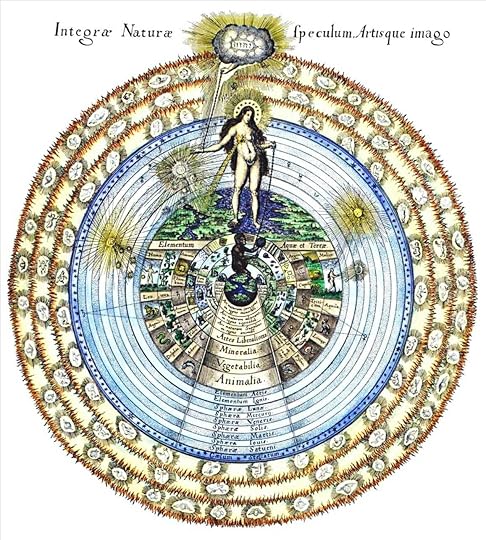
(The World Soul by Robert Fludd; “The Anima as personification of the ego-Self axis transmits guidance and support to the ego from the archetypal psyche”. )
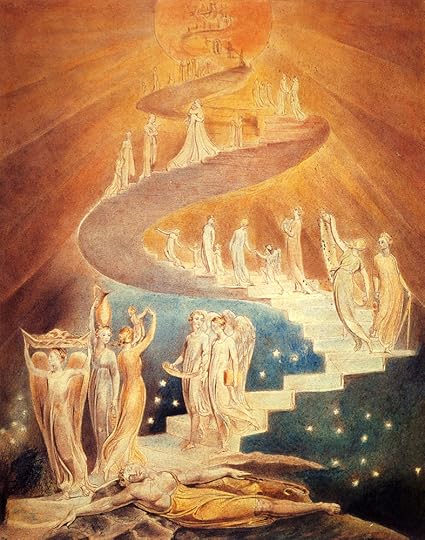
(Jacob's ladder by William Blake)
"The Self is the ordering (unifying) center of the total psyche (conscious and unconscious) just as the ego is the center of the conscious personality. The ego is the seat of the subjective identity while the Self is the seat of the objective identity".
Representing 10 years of thought and writing by Edinger, this is a wonderful book, if you just contemplate the images, displayed in such a calculated profusion as to illustrate key-Jungian concepts. They surely will make you wonder: about past and present, about you (ego), your self, their relationship (EGO/SELF)...and the future.
Quite evidently, it is a very Christian analogy for explaining psychic/soul phenomenology.
The book offers an abundant collection of paintings and Christian analogies to explain personality [ego/self] development. Take the case of the Garden of Eden:
“The garden of Eden has certain features of a mandala…
The mandala-garden is an image of the Self, in this case representing the ego’s original oneness with nature and deity. … It is the initial, unconscious, animal state of being one with one’s Self. Consciousness has not yet appeared and hence there’s no conflict. “
Other topics are approached in the same Christian vein, say, for individuality development and psychotherapy [whose goal should be taking the symbolic process conscious; one should become conscious of symbols], as well as for [the symbol of the] “Blood of Christ” as a metaphor for the release of oneself from the unconscious guilt.
Dream analysis abounds.
The last part of the book is dedicated to another rich symbol of the Self: the Philosopher’s stone, the ultimate goal of the Alchemy.
Good luck if you’re about to find (or search for) your Self.

February 21, 2011
My initial attraction to Jung and the Jungians was twofold. First, Jung himself seemed to intelligently address what I was experiencing under the influence of psychedelic drugs. Second, he seemed to offer some insight into religion, the Christian versions of which had surrounded and confounded me since childhood.
In fact, Jung has much to offer in both of these regards. He was, in the old C.I.A. phrase, "experienced" as regards hallucinagens and he did have a hermeneutical talent for translating religion into modern secular language--his father having been a pastor.
The language he chose to utilize at the outset of his professional career was that of psychiatry and this association, as well as my own unhappinesses, led me to embark on a decade of its study. The result was somewhat disenchanting. I had hoped for science, for convincing proofs and research programmes, but I had found, in the literature of depth psychology, the waters Jung swam in, little of that. Instead, what I found in both his own "analytical psychology" and in Freud's "psychoanalysis" were ideologies, ideologies with a certain power and relevance to many, but without the power to compel the assent of outsiders. Both "sciences" were pseudo-scientific in that there was little emphasis on objectivity and too much skewing to the personal terms of their founders. (It should, however, be noted that modern American psychoanalysis, because of its commitment to medical models and training, is not entirely subject to such criticism.)
Jung's personality had an immense influence on his system and on his followers. Much of the literature has a hagiographic character when the great man is mentioned and the study of his biography is a substantial portion of what passes for training in analytical psychology. Therapy aims towards recreating Jung's truths in the experience and personality of the analysand. Since this often happens and people continue to spend enormous amounts on such treatment, Jung's theories are "proven", but only in the very weak sense of William James' "will to believe."
My own encounter with depth psychology and with Jung doubtless shaped me to some extent. It certainly did give me insights into what might be going on in religion, in art and in the eccentricities of those deemed psychotic. Perhaps it was worth all the time and the effort to achieve such things.
Edinger's book is a treatment of Jung's developmental theory, what he termed "individuation" and what I have implicitly criticized above. The emphasis of individuation theory is on later life, adulthood through old age, "stages" of life not much addressed by classical psychoanalysis.
In fact, Jung has much to offer in both of these regards. He was, in the old C.I.A. phrase, "experienced" as regards hallucinagens and he did have a hermeneutical talent for translating religion into modern secular language--his father having been a pastor.
The language he chose to utilize at the outset of his professional career was that of psychiatry and this association, as well as my own unhappinesses, led me to embark on a decade of its study. The result was somewhat disenchanting. I had hoped for science, for convincing proofs and research programmes, but I had found, in the literature of depth psychology, the waters Jung swam in, little of that. Instead, what I found in both his own "analytical psychology" and in Freud's "psychoanalysis" were ideologies, ideologies with a certain power and relevance to many, but without the power to compel the assent of outsiders. Both "sciences" were pseudo-scientific in that there was little emphasis on objectivity and too much skewing to the personal terms of their founders. (It should, however, be noted that modern American psychoanalysis, because of its commitment to medical models and training, is not entirely subject to such criticism.)
Jung's personality had an immense influence on his system and on his followers. Much of the literature has a hagiographic character when the great man is mentioned and the study of his biography is a substantial portion of what passes for training in analytical psychology. Therapy aims towards recreating Jung's truths in the experience and personality of the analysand. Since this often happens and people continue to spend enormous amounts on such treatment, Jung's theories are "proven", but only in the very weak sense of William James' "will to believe."
My own encounter with depth psychology and with Jung doubtless shaped me to some extent. It certainly did give me insights into what might be going on in religion, in art and in the eccentricities of those deemed psychotic. Perhaps it was worth all the time and the effort to achieve such things.
Edinger's book is a treatment of Jung's developmental theory, what he termed "individuation" and what I have implicitly criticized above. The emphasis of individuation theory is on later life, adulthood through old age, "stages" of life not much addressed by classical psychoanalysis.

June 7, 2011
What a rich reading! Edinger really breaks down individuation and integrates powerful support direct from various texts of Jung. What stands out to me is Edinger's examination at what the individual faces in dreams, the shadow, and through symbols/archetypes. Through the use of examples of patient's dreams, he both shows us the richness of the psyche and how to begin to understand the images it brings to us. I read this for my class on Jungian psychology. I highly recommend it to anyone interested in this field!
"To be aware of individuality is to realize that one has all that one needs. It also means that one needs all that one has, namely, that every psychic content and happening is meaningful" (168).
"To be aware of individuality is to realize that one has all that one needs. It also means that one needs all that one has, namely, that every psychic content and happening is meaningful" (168).

February 17, 2013
This is definitely a classic in Jungian Studies, but in re-reading it, I am struck by what a completely patriarchal and masculine view Edward Edinger takes. This is of course, due in large part to the time it was written, but it's also due to the fact that when he discusses "religion" he almost completely means Christianity with a dash of Greek Mythology. It's a good primer (if a bit dense), but definitely explore other more feminist authors to get a wider perspective.

November 15, 2011
This is not one of the beginners guides that throw all the theories at you in a short space of time resulting in information overload. It is a more lucid attempt at getting to the core of the matter in hand, concerning itself with the development of the relationship between the Ego and the Self which lies at the heart of the problems that manifest themselves psychologically.
The text is illustrated not only with quotations from Jung but other scholars such as St Augustine,Elias Ashmole as well as relevant biblical passages and makes prolific use of illustration.
I'd recommend this as an introduction to Jung as it seemed to me to be a more comprehensive overview of individuation with a historical view of the development of the process.
The text is illustrated not only with quotations from Jung but other scholars such as St Augustine,Elias Ashmole as well as relevant biblical passages and makes prolific use of illustration.
I'd recommend this as an introduction to Jung as it seemed to me to be a more comprehensive overview of individuation with a historical view of the development of the process.

March 15, 2015
I just started reading this book and am only up to page 51 but I am absolutely loving it so far!! It really breaks down our growth process in a way that is very relateable and understandable. In my opinion its theory's fit so well with the dysfunction of some people that I know and I love that it pinpoints exactly what part of the growth process went awry and may have become stuck.
It also helped me on a personal level be more accepting of my attempts of separation from ego. Right from the get go on page five it describes the necessity of Ego Self Separation in order to grow and self individuate. It writes how the first half of life is focused on this aspect and once it is achieved then there can be a an Ego Self Union in the second half of life. Very much what I am attempting to do now.
--------------------------------------------
Update 3/21/15: I am only at page 96 but this book has already blown my mind! It is incredibly profound and one of those rare books that shockingly seems to have the answer as to how the world, humanity, psychology and G-d all fit together beautifully! Tremendous amounts of food for thought. I suspect I will be rereading this book a few times. The only caveat I would put on it is that it is probably most beneficial when one is in the right space in their self development to be open and to process the ideas in this book. It is very much like the (movie) Matrix's no going back choice of either taking the blue or red pill. It may alter forever the way you view the world. I know it already has for me.
-------------------------------------------
Update 3/27/15: So much for jumping the gun and writing a review on a book before I finished the book. This book has four sections. The first section is about 100 pages. I cant rave enough about the first section. Everything I said above, plus I will try to add to it, once I reread the first 100 pages again.
The rest of the book is a complete different story. I had to force myself to slog through it. It almost has nothing to do with the first 100 pages. I wanted to read it to make sure it did not expand or delve deeper into the area he covered in the first section. He did not. Its worth buying the book for the first section - its that eye-opening. Feel free to skip the rest of the book - unless the chapter titles appeal to you.
---------------------------------
Update April/16/2016 - I just re-read the first 100 pages and I love the incredible insight and wisdom! I do plan on reading the first 100 pages for a third time and writing something up on it. I also happen to be reading a book by Rabbi Berkowitz examining Martin Buber and it struck me that Buber's I-It and I-Thou is equivalent to the Ego and the Self, subjectivity and objectivity. This incredibly clarified individuation for me! Really good stuff and I am thrilled that it opened a new world for me. Hopefully much more to come.
It also helped me on a personal level be more accepting of my attempts of separation from ego. Right from the get go on page five it describes the necessity of Ego Self Separation in order to grow and self individuate. It writes how the first half of life is focused on this aspect and once it is achieved then there can be a an Ego Self Union in the second half of life. Very much what I am attempting to do now.
--------------------------------------------
Update 3/21/15: I am only at page 96 but this book has already blown my mind! It is incredibly profound and one of those rare books that shockingly seems to have the answer as to how the world, humanity, psychology and G-d all fit together beautifully! Tremendous amounts of food for thought. I suspect I will be rereading this book a few times. The only caveat I would put on it is that it is probably most beneficial when one is in the right space in their self development to be open and to process the ideas in this book. It is very much like the (movie) Matrix's no going back choice of either taking the blue or red pill. It may alter forever the way you view the world. I know it already has for me.
-------------------------------------------
Update 3/27/15: So much for jumping the gun and writing a review on a book before I finished the book. This book has four sections. The first section is about 100 pages. I cant rave enough about the first section. Everything I said above, plus I will try to add to it, once I reread the first 100 pages again.
The rest of the book is a complete different story. I had to force myself to slog through it. It almost has nothing to do with the first 100 pages. I wanted to read it to make sure it did not expand or delve deeper into the area he covered in the first section. He did not. Its worth buying the book for the first section - its that eye-opening. Feel free to skip the rest of the book - unless the chapter titles appeal to you.
---------------------------------
Update April/16/2016 - I just re-read the first 100 pages and I love the incredible insight and wisdom! I do plan on reading the first 100 pages for a third time and writing something up on it. I also happen to be reading a book by Rabbi Berkowitz examining Martin Buber and it struck me that Buber's I-It and I-Thou is equivalent to the Ego and the Self, subjectivity and objectivity. This incredibly clarified individuation for me! Really good stuff and I am thrilled that it opened a new world for me. Hopefully much more to come.

March 4, 2010
Incredible, Way. Jung's collective unconscious is like sci-fi. Understand myth, and much of humanities images and stories. Think adventure. Read, Inquire, Explore, Open, and Grow. Unavoidable and powerful.

April 2, 2013
This book is meant for upper level college psychology or philosophy courses. It is not accessible for the general audience. Even in the sections where I was able to follow him, Edinger writes in a vague, flowery manner that threw up some serious red flags. His words sound deep and profound, yet say very little. He used the terms the Self, the ego, individuation, and the One thousands of times each. After a while they all lost their meaning.
The beginning of the book is informative, well-written, and persuasive. But as you reach the middle, it becomes confusing, with constant repetition of the same group of terms with limited context. As it progresses it starts to lose its way and soon it felt like Edinger wandered too far from shore: theory built upon theory. Theories can't be supporting evidence, which made the book feel more like a private meditation rather than an academic text.
Eventually Edinger wandered too far for me. One chapter is labeled the Trinity and begins with a quote from someone about how people look at a group of three or trinity and always ask "where is the fourth?" The author then promises to address this question in the chapter... What the hell is he talking about??? After reading this chapter introduction, I have up on the book, about 60% through.
His discussions on Christianity are very good at first, but then he takes Christian stories and tries to fit them into psychological terms rather than their more commonly understood interpretations. For a psychologist to assert that Jesus was really talking psychology is pretty egotistical and self-serving. Some of his explanations make little sense, some even seem to contradict one another.
His constant blending of myth with psychology is confusing. Myths are stories, not facts. Readers are expected to make a serious leap: that myths endure and are popular because of some profound psychological power. Edinger NEVER establishes this, it is an underlying assumption. Personally I reject this assumption, which makes significant parts of his book irrelevant to me.
I made the mistake of selecting a high level, almost graduate-level book to read in a subject I know almost nothing about. Edinger didn't bother trying to make this accessible to a general audience.
The beginning of the book is informative, well-written, and persuasive. But as you reach the middle, it becomes confusing, with constant repetition of the same group of terms with limited context. As it progresses it starts to lose its way and soon it felt like Edinger wandered too far from shore: theory built upon theory. Theories can't be supporting evidence, which made the book feel more like a private meditation rather than an academic text.
Eventually Edinger wandered too far for me. One chapter is labeled the Trinity and begins with a quote from someone about how people look at a group of three or trinity and always ask "where is the fourth?" The author then promises to address this question in the chapter... What the hell is he talking about??? After reading this chapter introduction, I have up on the book, about 60% through.
His discussions on Christianity are very good at first, but then he takes Christian stories and tries to fit them into psychological terms rather than their more commonly understood interpretations. For a psychologist to assert that Jesus was really talking psychology is pretty egotistical and self-serving. Some of his explanations make little sense, some even seem to contradict one another.
His constant blending of myth with psychology is confusing. Myths are stories, not facts. Readers are expected to make a serious leap: that myths endure and are popular because of some profound psychological power. Edinger NEVER establishes this, it is an underlying assumption. Personally I reject this assumption, which makes significant parts of his book irrelevant to me.
I made the mistake of selecting a high level, almost graduate-level book to read in a subject I know almost nothing about. Edinger didn't bother trying to make this accessible to a general audience.

July 8, 2009
Every few months, my boyfriend and I pick a book we've liked for each other to read. This was his pick. I'm a fiction reader (almost exclusively), so philosophical analysis was definitely a unique read for me!
This is a description and analysis of Jung's philosophical work. The focus is on ego and Self (i.e. man and God) and how this pair interplays in Christian, ancient Greek, alchemical and other archetypal images, stories, and symbols. The book also features a lot of analysis of patients' dreams. The author described the path we are all on, moving from unconscious ego identification with the self to conscious rejection of the Self and/or ego, to (as the ultimate nearly unachievable goal) conscious ego identification with the self. Meanings of numbers (1,2,3,4,5,7,12 - 3 as masculine, 4 as feminine) and the sun (masculine, heat) and moon (feminine, cool).
Some of the Christian analysis made sense - Christ as the ultimate individuated ego for example (as he is both God and man). I didn't buy all of the interpretations of biblical stories, though. For example, Edinger (and Jung?) argues that when the Bible says giving to the poor is giving to God, this means we have to consciously accept all aspects of our personality, including those we don't like to achieve individuation. I think it just means we should help those less fortunate out of love and compassion. I enjoyed reading the section about sacrifice and how in the Old Testament man sacrificed to God (other people, animals, etc...) but in the New Testament Jesus (as God) sacrificed to man. I also found the word "fourness" in the book - which is a fun word!
Themes: ego, consciousness, psychology, counseling, dream interpretation, Christianity, alchemy, philosophy, symbols
This is a description and analysis of Jung's philosophical work. The focus is on ego and Self (i.e. man and God) and how this pair interplays in Christian, ancient Greek, alchemical and other archetypal images, stories, and symbols. The book also features a lot of analysis of patients' dreams. The author described the path we are all on, moving from unconscious ego identification with the self to conscious rejection of the Self and/or ego, to (as the ultimate nearly unachievable goal) conscious ego identification with the self. Meanings of numbers (1,2,3,4,5,7,12 - 3 as masculine, 4 as feminine) and the sun (masculine, heat) and moon (feminine, cool).
Some of the Christian analysis made sense - Christ as the ultimate individuated ego for example (as he is both God and man). I didn't buy all of the interpretations of biblical stories, though. For example, Edinger (and Jung?) argues that when the Bible says giving to the poor is giving to God, this means we have to consciously accept all aspects of our personality, including those we don't like to achieve individuation. I think it just means we should help those less fortunate out of love and compassion. I enjoyed reading the section about sacrifice and how in the Old Testament man sacrificed to God (other people, animals, etc...) but in the New Testament Jesus (as God) sacrificed to man. I also found the word "fourness" in the book - which is a fun word!
Themes: ego, consciousness, psychology, counseling, dream interpretation, Christianity, alchemy, philosophy, symbols

June 28, 2022
Jung and the jungians tend to get a tad bit drunk on symbols, don't they? I continously wish for sharper philosophical discourse, but it is rarely delivered. They have this strange position of 'empiricism', symbolic interpretation of literature, dreams etc., which works to some degree, but it has limits. The definite weakpoint however is the unwillingness to venture in to metaphysics - which Edinger comments on himself.
Despite all that, the sober parts of the book, roughly 75% of it, is brilliant. Much tranquility may be derived from understanding the relationship between what Jung called the Self and the Ego.
I read this book in preparation for an Ayahuasca ceremony, as Jung was the first to make explicit maps of the depths of the psyche. I felt that it really helped, comparatively speaking I fared much better than the group I was with, which naturally may have had altogether different causes as well. Whatever it is we are interacting with on DMT, or other psychedelics, the Self is a good placeholder. You could as well call it God, but probably avoiding the intrinsic associations to that word is wise. I, the ego, most definitely subordinates itself to something of immense breadth, depth and wisdom, and given adequate prerequisites, is transformed by reestablishing the connection Ego-Self-Axis. Such language is naturally only one of many ways of packaging it, but once you're familiar with what the jungians are trying to say, it is very helpful.
I think the 'empirical method' presupposes a vast amount of mythological and symbological knowledge, by name and specific details, which I lack. Some sort of visual representation would be helpful, as our visual memory tend to be stronger than our abstract memory, or whatever the latter is called.
Despite all that, the sober parts of the book, roughly 75% of it, is brilliant. Much tranquility may be derived from understanding the relationship between what Jung called the Self and the Ego.
I read this book in preparation for an Ayahuasca ceremony, as Jung was the first to make explicit maps of the depths of the psyche. I felt that it really helped, comparatively speaking I fared much better than the group I was with, which naturally may have had altogether different causes as well. Whatever it is we are interacting with on DMT, or other psychedelics, the Self is a good placeholder. You could as well call it God, but probably avoiding the intrinsic associations to that word is wise. I, the ego, most definitely subordinates itself to something of immense breadth, depth and wisdom, and given adequate prerequisites, is transformed by reestablishing the connection Ego-Self-Axis. Such language is naturally only one of many ways of packaging it, but once you're familiar with what the jungians are trying to say, it is very helpful.
I think the 'empirical method' presupposes a vast amount of mythological and symbological knowledge, by name and specific details, which I lack. Some sort of visual representation would be helpful, as our visual memory tend to be stronger than our abstract memory, or whatever the latter is called.

May 16, 2018
Such a great book, though not an easy read at all!

June 1, 2019
Edinger has amazing and very beautiful insight. What a spiritual man! And his passion for the unconscious, deciphering dreams and helping people, are all powerfully witnessed in this book. Edinger’s use of Christian theology is astounding but so is his whole world view (though predominantly European).
The front art of this book, Robert Fludds’ the World Soul has greatly inspired the Art Perspective. Inspired by astrology, alchemy and Analytical Psychology, the soul is illustrated in ways that too expresses the Associative Process' Sciences and its Art.
The majority of this book compares the life story of Jesus to the process of individuation and establishing a healthy Ego-Self axis. In the end he goes on to alchemy and this too continues what Christianity started—comparing union with God with the Philosophers’ Stone.
In short, the process of Christ's life on Earth makes the Son representative of the ego struggle. And God the Father is representative of the Self or Soul. To Edinger and Analytical Psychologists however, the self and soul have a specific meaning, the union of the conscious mind, with a superior unconscious mind (such as dreams having greater purpose).
I highly recommend this book! I'll have favorite quotes up soon from it up soon!
The front art of this book, Robert Fludds’ the World Soul has greatly inspired the Art Perspective. Inspired by astrology, alchemy and Analytical Psychology, the soul is illustrated in ways that too expresses the Associative Process' Sciences and its Art.
The majority of this book compares the life story of Jesus to the process of individuation and establishing a healthy Ego-Self axis. In the end he goes on to alchemy and this too continues what Christianity started—comparing union with God with the Philosophers’ Stone.
In short, the process of Christ's life on Earth makes the Son representative of the ego struggle. And God the Father is representative of the Self or Soul. To Edinger and Analytical Psychologists however, the self and soul have a specific meaning, the union of the conscious mind, with a superior unconscious mind (such as dreams having greater purpose).
I highly recommend this book! I'll have favorite quotes up soon from it up soon!

July 30, 2018
It was an enlightening read about the characterization of the personality. I so much learned about the two aspects of any person's personality and how they mold with time. Edward has used the mythical analysis and the Jungian theories to explain all their connections and how the mythology seeps deep into us on a deepest level whether we believe or not , they affect us that's what I came to know .
On the other hand I will also mention that it's not the everyone's cup of tea as it can go much in detail to the core which sometimes felt confusing for a normal reader seeking knowledge or reading psychology out of interest ...many a times I thought of putting the book down but in the end it was worth the effort. I find it fascinating and interesting how things in our culture and our gods make up our mind and how in the ancient time all these things already are mentioned in the types of tales and myths we symbolises now and searching for their meanings.
On the other hand I will also mention that it's not the everyone's cup of tea as it can go much in detail to the core which sometimes felt confusing for a normal reader seeking knowledge or reading psychology out of interest ...many a times I thought of putting the book down but in the end it was worth the effort. I find it fascinating and interesting how things in our culture and our gods make up our mind and how in the ancient time all these things already are mentioned in the types of tales and myths we symbolises now and searching for their meanings.

May 29, 2021
I felt great comfort upon this second reading, like sitting with an old friend.
This is a work of analytical/Jungian psychology about the individuation process, i.e. religious experience, transcending the limitations of logic and material, and unitive wholeness. This book is a must for anyone who wants or needs to understand religious concepts from a non-theological perspective and rather from a perspective of metaphor as it relates to a person’s spiritual and mental development.
Rich in cultural and mythological parallel, the reader begins to peel back layers of myth and meaning to comprehend the depths of the eternal, multifaceted truth. Different traditions have different understandings of divinity, and this is explored here in depth, but they are all pointing toward the same thing: the transpersonal nature of being.
Tat tvam asi—you are that.
Sat chit ananda—truth, consciousness, bliss.
This is a work of analytical/Jungian psychology about the individuation process, i.e. religious experience, transcending the limitations of logic and material, and unitive wholeness. This book is a must for anyone who wants or needs to understand religious concepts from a non-theological perspective and rather from a perspective of metaphor as it relates to a person’s spiritual and mental development.
Rich in cultural and mythological parallel, the reader begins to peel back layers of myth and meaning to comprehend the depths of the eternal, multifaceted truth. Different traditions have different understandings of divinity, and this is explored here in depth, but they are all pointing toward the same thing: the transpersonal nature of being.
Tat tvam asi—you are that.
Sat chit ananda—truth, consciousness, bliss.

April 6, 2021
Coming to this book with limited religious knowledge meant that it was an even more complex and challenging read than normal. And normal, I’ve come to learn from my reading of many Jungian texts, is very complex and challenging indeed!
Nevertheless, I learned a great deal from Edinger’s precise elaborations of his thesis that Christ is an archetype of the Self and that the Christian myth is the story of the individuation process.
Nevertheless, I learned a great deal from Edinger’s precise elaborations of his thesis that Christ is an archetype of the Self and that the Christian myth is the story of the individuation process.

March 20, 2016
A wonderful application of Jungian ideas to Christian thought and concept. A turning point in my own thinking about these two subjects, and ultimately in my understanding of the human narrative. Dense at times but worth reading.

July 9, 2021
Mind-bending. I find it difficult to write a review of anything discussing the archetypal psyche because it's so wild to wrap your head around. Having read a few books on this topic, I barely understand it, but it's like I'm inching closer to getting it. Truly crazy stuff

May 28, 2023
I was on the way to discover God and found this book, it helped me a lot to solve a lotttt of questions especially related to the relation of opposite Gender with God 😂 (projection of self on opposite gender)
Btw grt work it is ❤️
Btw grt work it is ❤️

May 16, 2022
More Jung than Jung. What I understood was good, but that admittedly wasn't very much. Dense treatment of archetypes and alchemy.

February 29, 2024
Fantastic! Listened on Audible for a general overview, now I’m going to go back and reread the hard copy in depth. There’s a lot to absorb, but I found the writing style extremely comprehensible.

November 16, 2025
A beautiful and concise summary of all the ideas that Jung left for us to meditate on. The last couple chapters took me two years to finish. The last bit of the book hid itself from me until I confessed my unconscious sins. Once I started presenting my true face to the world, the last few chapters opened back up to me.

April 14, 2025
Read like a Poetry in one go, cover to cover. Edinger was as thorough as I expected him to be, hugely validating, soon clearing the remarks raised in texts about him. Thus, I have remarks for the readers,
1. I know nothing of Christianity, much of what I know, is actually from my readings on Jungian Literature. Still, Everything Edinger described, quoted, every person/ diety/ forms he mentioned, all the references from Bible, Trinity, Blood of Christ, Opposites, Cain Abel, Dualism, etc was understandable. So Christianity shouldn't be a requirement.
2. I don't think it's a book for those who know nothing of Jungian Psychology, or have read him. While I have not read any book by Jung in its entirety, I have often read many essays, and parts of many of his texts, and I'm familiar with almost all the concepts, such as Complexes, Archetypes, Anima/Animus, Inflation, Ego, Shadow, Conscious, Unconscious, Psyche, Self, Deflation, Depression, Supression, Instinctual Images, Transference Function(related to 3), Quaternity, Types, Logos, Puer.. and since Depth Typology, has been of special of interest to me, I have in-depth wondered, observed, and read over Self, Ego, Inflation, Transference, Individuation, etc..
Solely because of my familiarity, I found it reading like a Poetry, because Edinger doesn't shy away to explain things with examples. He straight away throws Myths (Art, Creation of human mind) at you, and construct the concept of Individuation.
I didn't liked over-dependence on Christian Mythology at the later half, however, the ANALYSIS, part of psychological content that expresses itself into myth, was Impenetrable, and leaving 2-3 places, I almost always seemed to be agreeing with him along and by the end of his analysis.
He was precise, accurate, and simple, given that you understand the terms and abstraction of equating
- myths(stories, books, fiction, expression of mind, art),
.. with ..
- symbols(Archetypes, images, what you think of Self, God, Creator, Dying, Father, Transformation, Suppressed Pain, etc)
I was also able to find same "EXAMPLES"/ "MYTHs"/ "ARCHETYPES" in Hinduism, such as
Oneness/ Unity is mentioned at several places such that Purnamidam sloka( everything is complete ), All particles possess and are created by a unit, etc
Duality is represented at several places as
Nar-Narayana(Man-God),
Atma-Paramatma(soul of man- soul of God/ self of man, self of God/ ego-self/ self-super self)
Purush - Stree (Male-Female),
Shiva - Shakti (God - Goddess/ Absolute Masculineness- Absolute Feminine ness/ Truth-Power)
Paap-Punya (Good Action?-Sin)
Swarga-Narka (Heaven-Hell)
Jeevan-Maran(Life-Death)
Aadi-Ant (Beginning-End)
Concept of Dwait-Await ( Dualism-Monoeism), have evolved into Distinct Philosophical Religious Schools, where
Dualism claims Man and God are separate thus we should worship God and live by his scriptures (which depends, as there's no single scripture), Most Indians are Dualists.
Monoeism(Adwait/ Non-Dualism) claims that God and Man are one ( My comment to Author - Look Edinger, we can synthesize Thesis and Antithesis without a Transcendental Function/ Axis, I also don't completely agree on Axis since it's doesn't encapsulate the role of Transcendent Function, which Edinger himself prefers later in the book rather than his earlier formulation around Axis)
™ He also reminded me of Peano Theorams where we take 0/ void, Succession/ Increment Operation/ next = f(input)/ ( )++ .. and with them, create 1..
here,
0 ( )++ 1
Note, that, here we are going through time from 0 to 1, ie, you take nothing, you apply Succession Function to it, and get 1, which in turn, signify Trinity, 3. But if we're talking numbers, we're just at 1. Contrast to what Edinger says, 1 2 4, which are 3 if you observe them at one dimension above.
Reason I'm talking about all this is for you to understand, that
The myths, stories, symbols he talks about can vary. It's not important to understand them, in fact, I don't know many of things about Christ he talks about, BUT,
What's important is the Psychological Lens through which he observe these Stories, and the concepts such Self, Ego, Unconscious, Axes are at play.
if you focus on former, you'll become JORDAN PETERSON.
if you focus on later, you're next in line after Jung. I wouldn't suggest anyone to read this unless they are familiar with Jungian concepts already.
Trinity / Temporal Archetypes -
a) Brahma, Vishnu, Mahesh.. (Creator, Preserver, Destroyer), signifying a Temporal Aspect of 3.
b) Bhuta, Vartaman, Bhavishya (Past, Present, Future)
c) Devlok, Bhulok, Yamlok (Heaven, Earth, Hell),
d) Three Loans(Rn) - (Matra Rn, Pitra Rn, Guru Rn) you can go on with Dev Rn at all though, but these are often mentioned as 3 concrete ones since these 3 creditors are often alive and there to claim your freedom.
Quaternity -
Four Yug(Epochs of Time) - Sat, Treta, Dwapar, Kali
Four Varn(Castes, WHAT A RUBBISH SYSTEM to apply Slavery for thousands of years on entire bloodlines) - Brahmana, Kshatriya, Vaishya, Shudra
Four Stages of Life - Brahmacharya, Grihasth, Vanprastha, Sanyasa( Celebacy, Household Livelihood, Towards Forests - for the purpose of Penance, Vairagya - Abandonment of all that is worldly).
3. By the end, i was a bit disappointed, because I was hoping to get plenty of Psychological Analyses on the process of Individuation, rather I was met with Christian Symblicics, Some interpretations that could be done but are off topic imo, like in the chapter of Christ's Blood. Edinger, also, while clearly an Atheist, nd often critical, seem to cherry pick, nd later on in the chapter of Alchemy. The abstractions done, while understandable, nd may be attributed to human's need for the reunion, and acknowledge of lost self, but...
if We're talking about History of Economics from Gifts to Trump coin, and we're at final chapter,
I'm not going to like a discussion on Tiv human economy or Polynesian Economies, I wouldn't even like Slave Trade, Babylonian Economies, or Medival ones, instead I'd love a thorough discussion on
Markets, that are combination of many factors, which should be Indivually cleared out first like psychology, collective psychology, neuroscience, subliminal Priming, visuo-spatial sensory input, memories, trust, general consensus, prevailing theories, prevailing pop Theories, supply, demand, logistics, production, costs at different levels, taxes, etc)
and how a Money Market, ie money is traded for money, uses an object such a Trump Coin, while also giving examples of Bitcoin, Ethereum, A few scammy ones, And even commodity/ futures/ equity/ currency markets alongside, for someone to understand it.
similarly, The final chapter purely with Alchemy, wasn't satisfactory. I'd be more pleased even with a few more myths as examples, like maybe Nirvana, or bringing in Typology, or or formulating some other myth, as Symbolism meant, was not conveyed, at its best, I wanted to say that it could be a Definitive chapter, but it was a surface speculation of one aspect of human expression in forms known to us for a very complex concept.
It was like he teased me to talk about Indivuation, and disappeared right after he set up the stage.
the book was over. I was left wanting for more.
If he were alive and I'd read it before he publishes, he'd be in for a long lecture, but apart from my own complexes playing with him,
he reads, like a Poetry,
refined, yet Raw,
nd jumping between abstractions,
so sharp, clear, nd visible
he sees what's common among multitudes,
yet, oh psyche, so far he is,
to put you in words,
for words, are nothing, but
compartments of prison,
prison on visuals
prison on space
prison of time
nd yet, he told me something,
something about you,
that i did not know,
that i saw, yet not saw,
for if it was not for him,
or a Fragments of me I identify as him,
I could face you,
naked,
deflated & yet, inflated,
paradoxical, since, this image,
created by you, & you,
described in words,
created by you, & you,
are beyond, this Creation,
or his formulation,
or my grasp, for that matter,
but since you, above & beyond,
of my own potencies,
grasped it, as he expressed his Art
a mystic, to a skeptic, his mystery,
it was you, encompassing that all,
reading yourself like Poetry.
1. I know nothing of Christianity, much of what I know, is actually from my readings on Jungian Literature. Still, Everything Edinger described, quoted, every person/ diety/ forms he mentioned, all the references from Bible, Trinity, Blood of Christ, Opposites, Cain Abel, Dualism, etc was understandable. So Christianity shouldn't be a requirement.
2. I don't think it's a book for those who know nothing of Jungian Psychology, or have read him. While I have not read any book by Jung in its entirety, I have often read many essays, and parts of many of his texts, and I'm familiar with almost all the concepts, such as Complexes, Archetypes, Anima/Animus, Inflation, Ego, Shadow, Conscious, Unconscious, Psyche, Self, Deflation, Depression, Supression, Instinctual Images, Transference Function(related to 3), Quaternity, Types, Logos, Puer.. and since Depth Typology, has been of special of interest to me, I have in-depth wondered, observed, and read over Self, Ego, Inflation, Transference, Individuation, etc..
Solely because of my familiarity, I found it reading like a Poetry, because Edinger doesn't shy away to explain things with examples. He straight away throws Myths (Art, Creation of human mind) at you, and construct the concept of Individuation.
I didn't liked over-dependence on Christian Mythology at the later half, however, the ANALYSIS, part of psychological content that expresses itself into myth, was Impenetrable, and leaving 2-3 places, I almost always seemed to be agreeing with him along and by the end of his analysis.
He was precise, accurate, and simple, given that you understand the terms and abstraction of equating
- myths(stories, books, fiction, expression of mind, art),
.. with ..
- symbols(Archetypes, images, what you think of Self, God, Creator, Dying, Father, Transformation, Suppressed Pain, etc)
I was also able to find same "EXAMPLES"/ "MYTHs"/ "ARCHETYPES" in Hinduism, such as
Oneness/ Unity is mentioned at several places such that Purnamidam sloka( everything is complete ), All particles possess and are created by a unit, etc
Duality is represented at several places as
Nar-Narayana(Man-God),
Atma-Paramatma(soul of man- soul of God/ self of man, self of God/ ego-self/ self-super self)
Purush - Stree (Male-Female),
Shiva - Shakti (God - Goddess/ Absolute Masculineness- Absolute Feminine ness/ Truth-Power)
Paap-Punya (Good Action?-Sin)
Swarga-Narka (Heaven-Hell)
Jeevan-Maran(Life-Death)
Aadi-Ant (Beginning-End)
Concept of Dwait-Await ( Dualism-Monoeism), have evolved into Distinct Philosophical Religious Schools, where
Dualism claims Man and God are separate thus we should worship God and live by his scriptures (which depends, as there's no single scripture), Most Indians are Dualists.
Monoeism(Adwait/ Non-Dualism) claims that God and Man are one ( My comment to Author - Look Edinger, we can synthesize Thesis and Antithesis without a Transcendental Function/ Axis, I also don't completely agree on Axis since it's doesn't encapsulate the role of Transcendent Function, which Edinger himself prefers later in the book rather than his earlier formulation around Axis)
™ He also reminded me of Peano Theorams where we take 0/ void, Succession/ Increment Operation/ next = f(input)/ ( )++ .. and with them, create 1..
here,
0 ( )++ 1
Note, that, here we are going through time from 0 to 1, ie, you take nothing, you apply Succession Function to it, and get 1, which in turn, signify Trinity, 3. But if we're talking numbers, we're just at 1. Contrast to what Edinger says, 1 2 4, which are 3 if you observe them at one dimension above.
Reason I'm talking about all this is for you to understand, that
The myths, stories, symbols he talks about can vary. It's not important to understand them, in fact, I don't know many of things about Christ he talks about, BUT,
What's important is the Psychological Lens through which he observe these Stories, and the concepts such Self, Ego, Unconscious, Axes are at play.
if you focus on former, you'll become JORDAN PETERSON.
if you focus on later, you're next in line after Jung. I wouldn't suggest anyone to read this unless they are familiar with Jungian concepts already.
Trinity / Temporal Archetypes -
a) Brahma, Vishnu, Mahesh.. (Creator, Preserver, Destroyer), signifying a Temporal Aspect of 3.
b) Bhuta, Vartaman, Bhavishya (Past, Present, Future)
c) Devlok, Bhulok, Yamlok (Heaven, Earth, Hell),
d) Three Loans(Rn) - (Matra Rn, Pitra Rn, Guru Rn) you can go on with Dev Rn at all though, but these are often mentioned as 3 concrete ones since these 3 creditors are often alive and there to claim your freedom.
Quaternity -
Four Yug(Epochs of Time) - Sat, Treta, Dwapar, Kali
Four Varn(Castes, WHAT A RUBBISH SYSTEM to apply Slavery for thousands of years on entire bloodlines) - Brahmana, Kshatriya, Vaishya, Shudra
Four Stages of Life - Brahmacharya, Grihasth, Vanprastha, Sanyasa( Celebacy, Household Livelihood, Towards Forests - for the purpose of Penance, Vairagya - Abandonment of all that is worldly).
3. By the end, i was a bit disappointed, because I was hoping to get plenty of Psychological Analyses on the process of Individuation, rather I was met with Christian Symblicics, Some interpretations that could be done but are off topic imo, like in the chapter of Christ's Blood. Edinger, also, while clearly an Atheist, nd often critical, seem to cherry pick, nd later on in the chapter of Alchemy. The abstractions done, while understandable, nd may be attributed to human's need for the reunion, and acknowledge of lost self, but...
if We're talking about History of Economics from Gifts to Trump coin, and we're at final chapter,
I'm not going to like a discussion on Tiv human economy or Polynesian Economies, I wouldn't even like Slave Trade, Babylonian Economies, or Medival ones, instead I'd love a thorough discussion on
Markets, that are combination of many factors, which should be Indivually cleared out first like psychology, collective psychology, neuroscience, subliminal Priming, visuo-spatial sensory input, memories, trust, general consensus, prevailing theories, prevailing pop Theories, supply, demand, logistics, production, costs at different levels, taxes, etc)
and how a Money Market, ie money is traded for money, uses an object such a Trump Coin, while also giving examples of Bitcoin, Ethereum, A few scammy ones, And even commodity/ futures/ equity/ currency markets alongside, for someone to understand it.
similarly, The final chapter purely with Alchemy, wasn't satisfactory. I'd be more pleased even with a few more myths as examples, like maybe Nirvana, or bringing in Typology, or or formulating some other myth, as Symbolism meant, was not conveyed, at its best, I wanted to say that it could be a Definitive chapter, but it was a surface speculation of one aspect of human expression in forms known to us for a very complex concept.
It was like he teased me to talk about Indivuation, and disappeared right after he set up the stage.
the book was over. I was left wanting for more.
If he were alive and I'd read it before he publishes, he'd be in for a long lecture, but apart from my own complexes playing with him,
he reads, like a Poetry,
refined, yet Raw,
nd jumping between abstractions,
so sharp, clear, nd visible
he sees what's common among multitudes,
yet, oh psyche, so far he is,
to put you in words,
for words, are nothing, but
compartments of prison,
prison on visuals
prison on space
prison of time
nd yet, he told me something,
something about you,
that i did not know,
that i saw, yet not saw,
for if it was not for him,
or a Fragments of me I identify as him,
I could face you,
naked,
deflated & yet, inflated,
paradoxical, since, this image,
created by you, & you,
described in words,
created by you, & you,
are beyond, this Creation,
or his formulation,
or my grasp, for that matter,
but since you, above & beyond,
of my own potencies,
grasped it, as he expressed his Art
a mystic, to a skeptic, his mystery,
it was you, encompassing that all,
reading yourself like Poetry.

August 22, 2026
This book explores the process of individuation as well as its associated archetypes and manifestations in past and present cultures.
We begin with the Self, which is the state of wholeness including both the conscious ego and the unconscious. This is the initial state, symbolized by the Ouroboros, from which we emerge in adolescence. The emergence from this state can be viewed as the separation of the ego from the Self, accomplished through a process known as inflation. This is an initial step in the process of individuation.
Inflation has numerous cultural representations. One of the most prominent examples, expounded in depth by Edinger, is that of the original sin. By eating from the tree of knowledge, Adam and Eve separate themselves from God/the unity in exchange for the knowledge and vulnerability that accompanies autonomous will. Other examples are the theft of fire by Prometheus or the rebellion of Lucifer. Dreams relating to snake biting, committing crimes, or being gifted fruit are often indicative of an underlying process of inflation.
The establishment of the new ego identity requires a certain angst, rebellion, and expansion of pride. It requires a skepticism and ultimate rejection of some part of its preceding state.
“Consciousness, in order to exist in its own right must, initially at least, be antagonistic to the unconscious.”
Failure to achieve this ego-Self separation can result in megalomania, in which the ego is indistinguishably and indefinitely identified with the initial oneness so that all matters of the world are interpreted as relating directly to oneself. It is for this reason that, in youth, before the individual has established a sovereign identity, it is often more difficult to comprehend situations as separate from himself.
We may also intentionally prevent or delay our emergence of consciousness from this collective, infantilized form of identification because to abandon it means to sacrifice a certain level of blissful ignorance. “Distress is nullified if consciousness is not present to realize it,” Edinger notes.
This first step in the process can go too far. If an individual endlessly inflates the ego without proceeding to the next step of individuation, he loses touch with his unconscious and his relation to the matters of the world. He is overcome with a hyperintellectual, solipsistic narcissism exemplified by Icarus’s ascent, or, for that matter, Narcissus’s entrapment. (It should be noted, however, that even in the myth of Narcissus, it is not necessarily his love for his reflection which leads to his demise; it is his inability to merge with it, his permanent unreachability of wholeness. Narcissism is indeed a common phenomenon accompanying the initial stages of individuation [for this reason, perhaps, Persephone is taken to the underworld when picking the narcissus flower], but it must be ultimately progressed.)
Cultures have developed numerous methods of limiting inflation—practices or dogmas designed to maintain humility and self-doubt in its practitioners (Buddhist koans, the seven deadly sins, etc.). Practices such as these keep a sense of transpersonal value and ultimate reality grounded in a source beyond the individual’s ego. However, collective attempts at reducing inflation can result in the stagnation of individual spiritual development as the followers fall further into the participation mystique.
Religions also, to a certain extent, simulate psychic wholeness. They offer a container for the unconscious, metaphysical, numinous energy from which the ego has been separated. The efficacy of these religious “containers” is historically undeniable, as is the destabilization that occurs following their disintegration. As Edinger notes, “It is meaninglessness which is the greatest threat to humanity.”
He describes four potential outcomes when these religious containers collapse:
1. Transpersonal meaning is replaced by material substitutes as the individual drifts further into ego inflation, leading to an egoistic hunger for power and/or sensory satisfaction.
2. Meaning is altogether lost; the individual drifts into a prolonged state of alienation (which is typically a transitional period between inflation and reunification), leading to nihilism.
3. The individual projects the meaning onto secular matters, typically resulting in political fanaticism.
4. The process of individuation is nonetheless continued; the individual confronts his unconscious and the ego commences its reintegration with the Self; meaning is discovered in the Self.
As mentioned in this fourth possible outcome, in the final stage of individuation, the ego rediscovers the unconscious and integrates itself back into a state of unity. This can only occur after the initial separation of the ego, because it is through ego separation that we achieve the consciousness needed to recognize the Self.
While the separation of the ego may be experienced as a painful break, the reunification is even more exacting. It is catalyzed by a feeling of emptiness and meaninglessness. Man feels this upon separation of the ego because he has, at that point, alienated himself from the rest of the world; he struggles to identify meaning here because he has severed himself from its source, feeling as a stranded and detached consciousness, as “the creator before the creation.”
“There are numerous descriptions of religious experiences which typically are preceded by what St. John of the Cross called ‘the dark night of the soul,’ what Kierkegaard called ‘despair,’ and what Jung called ‘defeat of the ego. All of these terms refer to the same psychological state of alienation.”
It is from this state of alienation and suffering that we begin to encounter numinous experiences; through the exploration of the unconscious and the mending of our scattered, repressed complexes, we rediscover our wholeness.
“Suffering by itself is of no value. It is only consciously accepted, meaningful suffering which extracts the redeeming fluid. It is the willing endurance of the opposites within oneself, the acceptance of one’s shadow, rather than indulging in the cheap way out by projecting it onto others, which brings transformation.”
This three-part process of individuation (Self > Ego > Self-Ego Union) is to Edinger one more extrapolation of the ternary symbolism which is universally representative of developmental processes. “Although the goal is fourfold,” he explains, referencing the quaternity, “the process of realizing it is threefold”:
One (wholeness) > Two (division) > Three (reintegration)
Beginning > Middle > End
Past > Present > Future
Thesis > Antithesis > Synthesis
Father > Son > Holy Spirit
And so on…
The wholeness we ultimately discover—or rediscover—consists of a masculine principle described as solar, mercurial, and willful, which breathes fire into our psyche but must be tempered by the feminine principle described as lunar, earthly, and cool, which facilitates coagulatio (symbolized by Medusa).
There is much more rich discussion, particularly on the last point, but I’ll abridge for brevity’s sake. All in all, this book was cogent, endlessly fascinating, and simply a joy to read.
“All authentic being occurs when we live and speak out of our unified and unique individuality.”
“We demand from others only what we fail to give ourselves.”
“Fulfilled self-love is a prerequisite to the genuine love of any object and to the flow of psychic energy in general.”
“To be aware of individuality is to realize that one has all that one needs. It also means that one needs all that one has—namely, that every psychic content and happening is meaningful.”
We begin with the Self, which is the state of wholeness including both the conscious ego and the unconscious. This is the initial state, symbolized by the Ouroboros, from which we emerge in adolescence. The emergence from this state can be viewed as the separation of the ego from the Self, accomplished through a process known as inflation. This is an initial step in the process of individuation.
Inflation has numerous cultural representations. One of the most prominent examples, expounded in depth by Edinger, is that of the original sin. By eating from the tree of knowledge, Adam and Eve separate themselves from God/the unity in exchange for the knowledge and vulnerability that accompanies autonomous will. Other examples are the theft of fire by Prometheus or the rebellion of Lucifer. Dreams relating to snake biting, committing crimes, or being gifted fruit are often indicative of an underlying process of inflation.
The establishment of the new ego identity requires a certain angst, rebellion, and expansion of pride. It requires a skepticism and ultimate rejection of some part of its preceding state.
“Consciousness, in order to exist in its own right must, initially at least, be antagonistic to the unconscious.”
Failure to achieve this ego-Self separation can result in megalomania, in which the ego is indistinguishably and indefinitely identified with the initial oneness so that all matters of the world are interpreted as relating directly to oneself. It is for this reason that, in youth, before the individual has established a sovereign identity, it is often more difficult to comprehend situations as separate from himself.
We may also intentionally prevent or delay our emergence of consciousness from this collective, infantilized form of identification because to abandon it means to sacrifice a certain level of blissful ignorance. “Distress is nullified if consciousness is not present to realize it,” Edinger notes.
This first step in the process can go too far. If an individual endlessly inflates the ego without proceeding to the next step of individuation, he loses touch with his unconscious and his relation to the matters of the world. He is overcome with a hyperintellectual, solipsistic narcissism exemplified by Icarus’s ascent, or, for that matter, Narcissus’s entrapment. (It should be noted, however, that even in the myth of Narcissus, it is not necessarily his love for his reflection which leads to his demise; it is his inability to merge with it, his permanent unreachability of wholeness. Narcissism is indeed a common phenomenon accompanying the initial stages of individuation [for this reason, perhaps, Persephone is taken to the underworld when picking the narcissus flower], but it must be ultimately progressed.)
Cultures have developed numerous methods of limiting inflation—practices or dogmas designed to maintain humility and self-doubt in its practitioners (Buddhist koans, the seven deadly sins, etc.). Practices such as these keep a sense of transpersonal value and ultimate reality grounded in a source beyond the individual’s ego. However, collective attempts at reducing inflation can result in the stagnation of individual spiritual development as the followers fall further into the participation mystique.
Religions also, to a certain extent, simulate psychic wholeness. They offer a container for the unconscious, metaphysical, numinous energy from which the ego has been separated. The efficacy of these religious “containers” is historically undeniable, as is the destabilization that occurs following their disintegration. As Edinger notes, “It is meaninglessness which is the greatest threat to humanity.”
He describes four potential outcomes when these religious containers collapse:
1. Transpersonal meaning is replaced by material substitutes as the individual drifts further into ego inflation, leading to an egoistic hunger for power and/or sensory satisfaction.
2. Meaning is altogether lost; the individual drifts into a prolonged state of alienation (which is typically a transitional period between inflation and reunification), leading to nihilism.
3. The individual projects the meaning onto secular matters, typically resulting in political fanaticism.
4. The process of individuation is nonetheless continued; the individual confronts his unconscious and the ego commences its reintegration with the Self; meaning is discovered in the Self.
As mentioned in this fourth possible outcome, in the final stage of individuation, the ego rediscovers the unconscious and integrates itself back into a state of unity. This can only occur after the initial separation of the ego, because it is through ego separation that we achieve the consciousness needed to recognize the Self.
While the separation of the ego may be experienced as a painful break, the reunification is even more exacting. It is catalyzed by a feeling of emptiness and meaninglessness. Man feels this upon separation of the ego because he has, at that point, alienated himself from the rest of the world; he struggles to identify meaning here because he has severed himself from its source, feeling as a stranded and detached consciousness, as “the creator before the creation.”
“There are numerous descriptions of religious experiences which typically are preceded by what St. John of the Cross called ‘the dark night of the soul,’ what Kierkegaard called ‘despair,’ and what Jung called ‘defeat of the ego. All of these terms refer to the same psychological state of alienation.”
It is from this state of alienation and suffering that we begin to encounter numinous experiences; through the exploration of the unconscious and the mending of our scattered, repressed complexes, we rediscover our wholeness.
“Suffering by itself is of no value. It is only consciously accepted, meaningful suffering which extracts the redeeming fluid. It is the willing endurance of the opposites within oneself, the acceptance of one’s shadow, rather than indulging in the cheap way out by projecting it onto others, which brings transformation.”
This three-part process of individuation (Self > Ego > Self-Ego Union) is to Edinger one more extrapolation of the ternary symbolism which is universally representative of developmental processes. “Although the goal is fourfold,” he explains, referencing the quaternity, “the process of realizing it is threefold”:
One (wholeness) > Two (division) > Three (reintegration)
Beginning > Middle > End
Past > Present > Future
Thesis > Antithesis > Synthesis
Father > Son > Holy Spirit
And so on…
The wholeness we ultimately discover—or rediscover—consists of a masculine principle described as solar, mercurial, and willful, which breathes fire into our psyche but must be tempered by the feminine principle described as lunar, earthly, and cool, which facilitates coagulatio (symbolized by Medusa).
There is much more rich discussion, particularly on the last point, but I’ll abridge for brevity’s sake. All in all, this book was cogent, endlessly fascinating, and simply a joy to read.
“All authentic being occurs when we live and speak out of our unified and unique individuality.”
“We demand from others only what we fail to give ourselves.”
“Fulfilled self-love is a prerequisite to the genuine love of any object and to the flow of psychic energy in general.”
“To be aware of individuality is to realize that one has all that one needs. It also means that one needs all that one has—namely, that every psychic content and happening is meaningful.”

March 3, 2024
Edward F. Edinger’s 1972 extended meditation on religious experience from the Jungian perspective.
Ego and Archetype posits a framework for understanding the development of the human psyche/soul.
Edinger posits that our conscious sense of self, evolves through its interaction with archetypes.
The book outlines the process of becoming conscious of, and living in our authentic experience/expression of self.
A process Jungians call individuation.
Edinger argues that individuation is both a psychological and spiritual journey.
The book addresses the dangers of Ego “inflation”, wherein the ego identifies too closely with an archetype, leading to a distortion of self-perception and potentially to psychosis.
Edinger emphasizes the importance of maintaining a balance between the ego and the archetypal world to foster psychological growth and avoid the pitfalls of inflation.
As cool as all of that is.
The book does not seem as if it will be extremely useful for me on my personal journey and as a therapist working with others in this realm.
It’s never all together apparent what will or will not be relevant to my work as a therapist.
(Almost) everything is relevant to that endeavor at some level.
But off hand.
My instinct is that this text.
However brilliant.
Will only be of limited value for me.
Perhaps it is more advanced in the Jungian library than my (extremely limited) training/understanding could accommodate. And that the test will be more useful to a clinician with that training.
All that aside.
It’s a good and worthwhile text on many levels.
Certainly worth reading if you’re curious.
4/5 Stars ⭐️
Ego and Archetype posits a framework for understanding the development of the human psyche/soul.
Edinger posits that our conscious sense of self, evolves through its interaction with archetypes.
The book outlines the process of becoming conscious of, and living in our authentic experience/expression of self.
A process Jungians call individuation.
Edinger argues that individuation is both a psychological and spiritual journey.
The book addresses the dangers of Ego “inflation”, wherein the ego identifies too closely with an archetype, leading to a distortion of self-perception and potentially to psychosis.
Edinger emphasizes the importance of maintaining a balance between the ego and the archetypal world to foster psychological growth and avoid the pitfalls of inflation.
As cool as all of that is.
The book does not seem as if it will be extremely useful for me on my personal journey and as a therapist working with others in this realm.
It’s never all together apparent what will or will not be relevant to my work as a therapist.
(Almost) everything is relevant to that endeavor at some level.
But off hand.
My instinct is that this text.
However brilliant.
Will only be of limited value for me.
Perhaps it is more advanced in the Jungian library than my (extremely limited) training/understanding could accommodate. And that the test will be more useful to a clinician with that training.
All that aside.
It’s a good and worthwhile text on many levels.
Certainly worth reading if you’re curious.
4/5 Stars ⭐️
July 26, 2008
Fucking-a, this book blew me away, dude! Although, I dunno if I could follow it if I hadn't already had coursework that involved Jung's idears. Yeah, man. I dunno. But, it was really cool to see, in a book, idears that I'd already been thinkin' 'bout in my own head, that had bubbled up from my unconscious and presented themselves to my li'l ole NANOWRIMO novels. Idears about alchemy and how the psyche evolves over the course o' a lifetime. It's been a while since I've read the thing, though, so I'd have to lookit it again to remember, in more detail, what it was about. It talked about the World Tree. That was cool. And how mythology and religion and stuff tie in with stuff that's inside each and every one of our heads, because of our collective unconscious and all. Wait, what else? No, I'd suggest reading, I forgot what it was called. Like, a Primer in Jungian psychology or something along those lines, first, cuz that'd make this book easier to follow, man.

July 24, 2014
The etymolgy of the word 're-ligion' is 're' meaning 'again' and 'ligament' meaning 'attachment' (just as ligament adheres to bone.
Jungian scholar Marion Woodman says that life is a series of births, and in the same light, Edinger shares that we earn our own individuation and our own autonomy.
For example, when we disagree with a commonly held point of view and posit our own, we take a step closer to our unique energy within.
Just as we were first attached to our mother's womb, now, by tolerating the discomfort associated with becoming our truest selves, we re-attach to the spiritual flesh of our own best selves.
I felt very encouraged while reading this book.
Eleanor Cowan, author of : A History of a Pedophile's Wife: Memoir of a Canadian Teacher and Writer
Jungian scholar Marion Woodman says that life is a series of births, and in the same light, Edinger shares that we earn our own individuation and our own autonomy.
For example, when we disagree with a commonly held point of view and posit our own, we take a step closer to our unique energy within.
Just as we were first attached to our mother's womb, now, by tolerating the discomfort associated with becoming our truest selves, we re-attach to the spiritual flesh of our own best selves.
I felt very encouraged while reading this book.
Eleanor Cowan, author of : A History of a Pedophile's Wife: Memoir of a Canadian Teacher and Writer

July 14, 2008
Edinger draws from both Greek and Christian mythology, religion, and art to explain the individuation process and development of the Ego. He claims that through this journey to psychological wholeness one can bring meaning back to one's life.
I found his references to Christianity fascinating. Never had I thought of Christ as the paradigm of an individuated ego. I also enjoyed his explanation of the development of consciousness and how it follows a cycle. It mapped perfectly with my own experiences.
This is one of those books that I will probably read over and over and get something new out of it each time.
I found his references to Christianity fascinating. Never had I thought of Christ as the paradigm of an individuated ego. I also enjoyed his explanation of the development of consciousness and how it follows a cycle. It mapped perfectly with my own experiences.
This is one of those books that I will probably read over and over and get something new out of it each time.

May 27, 2014
This is my third reading of this amazing book. The revelations that depth psychology via Carl Jung have to offer the individual are startling beginning with ego - Self awareness and the process of individuation. The analysis of Christ as both ego and Self (God) are awesome and life changing. A basic understanding of Freud and Jung along with early Christian theology is necessary for a thorough comprehension of this book, and the last 100 pages are slightly obscure. I look forward to a fourth reading when I sense that daily life has caused me to drift away (which is inevitable) from these mystical truths.

January 24, 2011
Fascinating book on Jung's idea of individuation. Edinger argues that the ego is our subjective identity while the Self is our true identity and is transpersonal in character. The unconscious Self manifests itself through religion and myth. Images such as mandalas or themes such as wholeness, the union of opposites, the elixir of life, etc. all refer to the Self. Individuation, psychological development, or perhaps better described as self realization comes from the changing relationship between the ego and the Self. This book explores this relationship.
Displaying 1 - 30 of 111 reviews