A wild, rollicking novel on chance, friendship, love, regret, and the entire history of the twentieth century.
Johan Thoms is poised for greatness. A promising student at the University of Sarajevo, he is young, brilliant, and in love with the beautiful Lorelei Ribeiro. He can outwit chess masters, quote the Kama Sutra, and converse with dukes and drunkards alike. But he cannot drive a car in reverse. And as with so much in the life of Johan Thoms, this seemingly insignificant detail will prove to be much more than it appears. On the morning of June 28, 1914, Johan takes his place as the chauffeur to Franz Ferdinand and the Royal entourage, and with one wrong turn, he forever alters the course of history.
Blaming himself for the deaths of the Archduke and his wife, Johan hastens from the scene, and for once his inspired mind cannot process what to do next. Guilt-ridden, he flees Sarajevo, abandoning his friends, family, and beloved in the fear that he has caused them irreparable grievance. He watches in horror as the Great War unfolds, every death settling squarely on Johan’s conscience. Turning his back on his old life, Johan does his best to fade out of memory.
But the world has other plans for Johan Thoms. As each passing year burdens Johan with further guilt for his inaction, he seeks solace in his writing and in the makeshift family he has assembled around himself. With everyone from emperors to hooligans at his side, and pursued by the ever-determined Lorelei, Johan winds his way through Europe and the Twentieth Century, leaving his indelible mark on both.
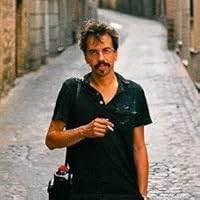
Ian Thornton read Business Studies and German at Sheffield University between 1986 and 1989, where he earned a First Class B.A. (Hons).
He has lived in a number of places including California, Costa Rica, Australia, Mexico, London, and his native and beloved Yorkshire before moving to Toronto in 2009.
In the 90s, Ian worked for Broadcast, TV World and Variety magazines. He is a co-founder of the global television industry publisher, C21 Media and www.c21media.net
He covered the Royal wedding in London for CTV, Canada's premier independent broadcaster, and has recently written for Wisden Cricketer, The Guardian, The Hindu and for the Soho House magazine, House. He also wrote on the football World Cup in South Africa for the Canadian sports channel, The Score, and has worked for Queen’s University in Ontario, where his project was presented at the White House as part of President Obama's new media initiative.
Ian is the official biographer of the Compton cricket club in California, and has been a judge on the largest Latin American film festival, Expresion en Corto. He also edited and wrote for the leading San Miguel de Allende tourist guide and website, Portal San Miguel.
He is currently writing his second novel.
Ian resides in Toronto with his wife Heather Gordon and their children, Laszlo and Clementine.
It's very difficult for me to rate this book. I really liked Joan Thoms, the main character, with his cleverness but also with all his quirks. He's an extraordinary person and I really felt for him. On the other hand the book didn't get me hooked at one point. It was written in a very witty style and I really liked the allusions to a kinds of books. But the coincidences often seemed too constructed, the allusions were too numerous and the minor characters all a bit too unlikely: it's okay to have one or two quirky characters in a novel but not a whole bunch of them. It seems like this is another novel published in the current fashion of book with a small person who changes history like The Hundred-Year-Old Man Who Climbed Out of the Window and Disappeared. A loved the Hundred-Year-Old but it seems that I'm fed up with this genre. I would have liked to rate this book higher but my lack of pleasure reading it doesn't allow for more stars.
Stories set in Sarajevo became a sub-genre in the years immediately around 2014 and the hundredth anniversary of WWI - and this is definitely my favorite. It is totally bonkers in the way it uses history, but is not chained by it. Really I can't explain how joyful, fun and exuberant it is. The titular Johan Thoms is, at the outset, a 109-year-old man looking back on his life as he prepares to step through a wormhole in time in order to stave off the First World War. His early years are a hoot: the melon-headed, prodigal child of a Bosnian mad professor, he grows up to have a debauched studenthood after getting head-butted by a stag. His wayward narrative is studded with chess diagrams, whimsical endnotes, chapter titles like “The Kama Sutra, Ganika, and Russian Vampires,” and epigraphs ranging from Boswell to Frank Zappa. But an unfortunate stint chauffeuring Archduke Franz Ferdinand around Sarajevo leads him to believe he’s set off a chain of destruction.
A tormented Thoms sets off on a decades-long picaresque journey across Europe, fleeing war at every turn, determined to stop having any effect on history. The book wreathes together real-life events and characters (a chummy George Orwell, a caustic Dorothy Parker) with wild, dreamlike, Terry Gilliam-esque scenarios. Thornton has a way with a simile (one character has “the physique of an unfinished sculpture”; another takes on “the expression of a man with a dead mackerel for a tie”), although at times he lapses into facile travel-speak (“Here among magnificent churches, and fine examples of Gothic, Renaissance, and Moorish architecture, they found a peaceful sanctuary”). And admittedly, the plot loses steam as Thoms degenerates from bon vivant to mopey madman.
The publisher trumpets Thornton’s book as “a heartbreaking meditation on chance, friendship, love, and regret,” though really it’s more of a hodgepodge, like an attic overstuffed with unfathomable antiques, the kind of story told by an eccentric grandfather whose wife says, “Don’t encourage him!” But fiction this audacious deserves to be championed.
This is an incredible story with so many layers that you almost have to read it twice. Other reviewers have sited the author's wonderful ability with a turn of phrase and indeed the book is chock-a-block full of hilarious descriptions befitting this soulful, funny set of characters. I've rarely laughed at so many oddball yet choice articulations of people and places.
The impact that history has on the protagonist Johan is at least equal to the one that he thinks he has had on history. The interplay of the mind and reality here is one of the most fascinating aspects of the story.
One review here mentioned rambling prose. For me this was one of the great features of the book and was overwhelmingly positive. The narration is the charm through which we hear multiple voices distilled as one. Like history itself, the road inside our minds is winding and befits a chorus of ideas rather than subjugation to mere fact. Another review mentioned the footnotes, which are wonderful in the way they lend verisimilitude and colour to this wild tale.
All in all this is a stunning first book and I am keen to see what else this emerging new talent will deliver next.
What if you had made a mistake of such monumental proportions that you could never, ever, ever escape it? What if the direct consequences of your mistake stacked up on battle-fields, ripped the lives of families and nations apart and tore you from the person you loved most in the world?
You'd want to keep a low profile on Facebook, screen your calls and take your name off Linkedin, these days. But a hundred years ago the only choice was self exile and self loathing.
Johan Thoms was such a mistake maker and Ian Thornton's delicious first novel allows him no place to hide. We are taken to the core of his aching, fearful and sorrowful heart as he spends a century searching for for retribution tripping over the evidence of his Great Mistake. During his journey from the Western most tip of Europe to his birthplace outside Sarajevo via the north Devon coast he manages to meet a full cast of colourful characters and influence the popular culture of the age. The bar scene in the midst of the Spanish Civil war is so vivid, so vibrant in tooth and claw you can smell the Rioja hangover on yourself the next day.
If the twentieth century seems too pre-wi-fi for you to get to grips with but you still have a hankering to understand the timeline of the last 100 years then this is the book for you. No, there are no vampires or muddled medieval monsters but there really is no need - the history of the last century told by Ian Thornton through the regrets of Johan Thoms is witty, well-written and wonderful enough. If you already know your history then you will be delighted by the details. And the love story between Lorelei and Johan? It is simply to die for.
I finished this book last night, and overall it was a pretty good read. Only problem? It was bit slow and tedious.
I loved the characters. Johan was a weird kid and adult, but his quirkiness was endearing and his intelligence astute. He's like that eccentric uncle you're always so fond of. All of the other characters were so flawed, but I didn't get annoyed or angry at their actions, like I expected, but oddly amused. Everyone is very imperfect, but somehow Thornton presents them all the better that way.
I understand that this is not a action book. In fact, it's not plot driven at all. It's an exploration of character, of emotions, and the effect of this one person on those around him. I knew this going into it, but, nevertheless, it was slow-paced and boring at times. It was akin to reading something for school. Which is why I can't give this something other than 3 stars.
Really disappointing. I love the set-up for this novel, but this is lazy, uninspired writing that offends almost every sensibility I have. It was somewhere in between the main character leaving the love of his life without so much as a word and the introduction of the mischievous-but-lovable orphan sidekick and his faithful dog that I began to hate this book.
it’s been a while since we’ve had a book inducted into “books written just for mia actually”. the main thing that makes this a “just for mia actually” read is the writing style, which reads a lot like how i aspire to write. the 3rd person narrator is witty and fun without being intrusive and taking you out of the story. the plotline is also very me. some guy can’t reverse his car which leads to the assassination of archduke franz ferdinand and causes (in his mind) not just ww1 but ww2, the cold war, and further innumerable conflicts across the globe. this all is interspersed with a tragic love story. the characters were incredible. i loved johan immensely, and similarly lorelai and cicero were highlights. this is the type of book i want to write, it was so intensely researched and reveals such an erudite author, while being so fun and camp and funny. yet had such tender moments and sentiments (i did cry towards the end). not sure anyone will take to this like i did. everyone say “thank you waterstones clearance section”
My Summary: Johan Thoms is a genius. Literally. He frequently dazzles his colleagues with displays of his sparkling wit and vast knowledge. Nobody expected 'the man who knows everything' not to know how to reverse out of a turn; nobody expected the car transporting the Archduke and his wife to be targeted by assassins. And nobody - not even Johan Thoms - could have predicted the chain of events that would be set off by the deaths of the Archduke and his wife.
As the smoke clears, Johan knows he must disappear. Bogged down by the guilt of an entire wars worth of deaths on his conscience, Johan assumes a new life away from the world he once knew, burying his past so deep that not even those who know him best have any idea of what secrets he's keeping.
But the past is coming back to haunt him, and not even Johan Thoms can figure out what to do when the love of his life appears on his doorstep, and when it appears that his old life is not as hidden as he'd hoped.
My Thoughts: I had a great time with this novel. The writing style was very witty, and the author's way of describing characters made me chuckle more than a few times. The characters themselves were incredibly interesting -- I loved the idea of one person having such a huge impact on the world and history as a whole. The pacing was done quite well, and the story itself was easy to follow. The dialogue between the characters made the novel for me, as well as it being a fresh take on a subject matter that's been written about countless times.
Final Thoughts: I recommend this novel to anyone who enjoys historical fiction as much as I do, and to anyone looking for a refreshing read to start off the cold weather months with!
Some of the initial reviews and ratings for this book seem somewhat harsh. It is certainly well written and parts of it present a lovely quirky set of characters meandering through the first half of the 20th century in Europe. This book seems to be entering a field of other recently published books where history is viewed through the eyes of a quirky character going through some kind of personal pilgrimage that takes him/her by apparent happenstance to particular historical moments -- I am thinking of books such as The Good Lord Bird and The Hundred Year Old Man Who Climbed Out the Window. It can be a great device and in many ways works well in this book. My primary reservation in this case is that the main character's mistaken view that he is personally responsible for the course of history got eventually got tiresome. It felt like a simplistic theme in contrast with the rich tapestry of characters the author had created.
It's a great read! I'm on my second read of this book after having enjoyed it the first time round immensely! I love the premise - that a seemingly insignificant yet highly intelligent young man with the world at his feet,makes a simple error in 1914. He perceives this to be the catalyst for the First World War and the subsequent carnage which blighted Europe and the rest of the world in the 20th Century. Johan's anguish and turmoil as he goes through life believing that his actions alone caused the untimely death of millions,and his increasingly bizarre actions as a result of his skewed thinking are sympathetically dealt with. The blend of documented facts interwoven with some wonderfully constructed hypothetical situations involving some of the great figures of the time made the book an immensely enjoyable read. The story is well constructed and has a good balance of tragedy and humour to keep you intrigued throughout the whole tale.
Too bad. My hopes were high going into this. It seems like the marketing wants to position this as this year's 100 Year Old Man Who Climbed Out The Window And Disappeared. Sadly, it doesn't have the charm. Some characters are interesting, the writing itself is decent (Thornton does have a killer way with a turn of phrase - "she had a face like a blind cobbler's thumb"), but the lead character, who I wanted to drive the action, is just a big lump for most of the book.
And the rambling on! So much rambling.
And end notes! End notes in Fiction ought to have warned me off.
I still might give Thornton another chance, but he needs an editor with an iron fist.
Completely intriguing, engaging, and humorous at the same time. Amazing how much trouble one man can get in to! If "Murphy's Laws" need a mascot, Johan Thoms is it. Loved reading it, going through history and coming back around full circle.
I loved Johan Thoms and his story and I think I would have finished and enjoyed this book if it had been a novella of just his part of the story but all the clever asides within the writing were just too much for me and I gave up before the end. Oh dear!
Apparently the full title is The Great & Calamitous Tale of Johan Thoms: How One Man Scorched the Twentieth Century But Didn't Mean To. That is a pretty lengthy title. If nothing else, this book might win the award for the longest titled book I've ever read.
Sometimes I read a book and from very close to the first page, I know this isn't a book for me. I know stories come to the author as they come; an author cannot necessarily give his characters or her setting some drastic makeover to appease me, a small-time writer in a distant corner of the internet, still, when it comes right down to it, the best I can say about this book is that it is about a bland man, who has a bunch of bland friends and moves around Europe inoffensively interacting with the local populace, with the exception of one event near the beginning of the novel, when he drives the car in which Archduke Francis Ferndinand is assassinated in. So there's his bit of exceptionalism, along with almost having beaten a chess master as a child, which, I guess, is supposed to make up for his monotonous personality through out the rest of the novel. Bland plus minutely exceptional still equals dull.
The characterization of the non-Johan characters in this novel is easy to comment upon, in that there isn't any. Secondary characters have no depth and seem to exist soley to prop Johan up - from his friend Cicero who putters Johan around after Johan starts to lose his mind, to Count Kaunitz who essentially gives Johan an everlasting and infinite amount of money to propel him through the rest of the novel, to his true love Lorelei who decides to be faithful and search forever for her lost love Johan to remind us constantly, basically in every chapter, how extraordinary Johan is, even though there's no logical reason why she would spend the rest of her life pining over someone who is, essentially, a lump of person with no personality. Lorelei is, essentially, like every other woman in the novel - there to actualize the male. None of the women (Johan's mother, Lorelei, Cicero's two wives, Cicero's daughter, all the nurses Johan encounters) have any purpose or motivation that isn't intrinsically tied to either Johan or Cicero, neither of whom are compelling enough to merit this; when characters need conventionally attractive sycophants to reassure readers how marvelous the characters are, that's lazy writing. Plus, I haven't read such a nurse fixation since Garp:
"He was the most grateful recipient of the nurses' toil and of the generosity of spirit which is unique to their calling, the selfless act of giving care to the injured, sick, and dying ... From the nurses and their love, (Johan) extrapolated a theory that explained everything."
And so we get to another part of this book that is not for me: the quirky bits of overwriting. Some people like this. They find it twee and endearing and sort of charming. Me, I sometimes think that we should ban all adjectives, similes, and metaphors, or at least, one should require a license, gained after extensive testing, to use them. For example, this book uses resplendent three times. That is four times more than necessary. One never needs to use resplendent, in the same way I don't ever need to read
"the now rhythmic pentameter of a matured summer storm, finger drumming on the cracked pane behind him"
or
"Cicero's smile dislodged osmotic endorphins from within Johan"
"The long-term effects of booze intake had permanently loosened his retinal musculature."
Too many words. I will allow however "shitting a sea urchin" to stay. That one was amusing enough.
By the end, maybe in the last fifty pages, Johan sort of grew on me, basically after most of his friends had died and I realized that this wasn't actually a time-traveling story like I thought it was (based on a off-handed remark of Johan's in the opening pages:
"These things you see here are my vortex, my portal, a wormhole in the space-time continuum, my passage back in time."
Yeah, he meant memory and I totally spaced on that, plus my mind still on the previous book I read, which was about alternate universes). Although, a time traveling story might have made some sense as to why Johan, as a student in 1912, had both Ulysses (published as a book in 1922) and Lady Chatterley's Lover (published 1928) on his "dustless shelves" and how, while confined in a mental asylum in 1941, Johan was having imaginary discussions about the Marshall Plan (developed 1947, implemented 1948) with Churchill. I also wonder about Johan's infinite wealth in that in 1914 his wealthy friend put Serbian money in an Austrian bank account for Johan, and with World War One, hyperinflation, the Anschluss and conversion to Reichsmarks, World War Two, and then conversion to what after that - Austrian money? Yugoslavian money? that the initial Serbian money would have stretched out until the end of the novel, sometime in the 2000s. Would it have? I need to find a monetary historian of Europe to ask. But, of course, if he were a time traveler, I assume money would be no object, so he is a time traveler? I don't know.
Now that I've started the train of questions, why was there the framing device where the son is telling the story that his grandfather heard from Johan? That seemed unnecessary. I guess I could suppose it's also a true story and the author is less of an author and more of a transcriber. But, by now, there's a lot of stuff I need to be convincing myself to make this novel make sense.
Who should read this book: I started this review by saying this was not a book for me. Ergo, is a book for someone else. Usually when I think of the idea of someone else, what I am really thinking about is my mother. Now, my mother likes to read and I like to read, but we rarely enjoy reading the same thing (obvious exception in that we both love White Teeth, as most people do). But I think my mother would like this book. It's similar to another book I disliked, The 100YearOld Man Who Climbed Out The Window And Disappeared, which I gave to my mother because I knew she would enjoy it, and she did. The Great and Calamitous Tale of Johan Thoms is similar in that, other than a suspension of belief, the book asks very little of its reader. Unfortunately, that's just not my bag.
I received a copy free from Netgalley in exchange for an honest review.
I was hoping for the book I thought this would be from the book blurb. Something like Forrest Gump and The 100 Year Old Man Who Climbed Out The Window, except with an earlier time frame. The blurb was engaging and promised great adventures, the book was neither. Johan definitely was in the wrong place at the wrong time, and the Great War followed, but he had nothing to do with any of the other events of the 20th century and still blamed himself for everything. He exiled himself and missed out on his entire life, his sweetheart and their child. Instead of feeling compassion for him, Iwas annoyed by his selfishness.
There is nothing wrong with a flight of fancy but there was never a person named Johan Thoms. The driver of Franz Ferdinand's car was named Leopold Lojka. The fancy is that he did not know how to drive in reverse which is simply untrue. The early automobile that he drove did not have a reverse gear. It's a clever and fanciful idea but my issue is that too many people will assume it's true. We're not that smart these days and are filled with taking whatever we read or watch as truth. If we were smarter, I would give this book a better review.
This book really tried to be the next "The Hundred-Year-Old Man Who Climbed Out the Window and Disappeared" but failed miserably.
The story is intriguing, set up and the overall idea are alos very interesting but the book's lost me about 1/3 through. Dull writing style and pushed humor ( but it got some good moments, I am not gonna lie)
Such an interesting book: - The concept of having a character live through and provide the reader with a unifying link of so many key events of the 20th century - and I'm guessing the wider one's general knowledge, the more one would pick up all the cross references - The beautiful prose - The terrible burden of guilt which turns a promising life into a tragedy...
Tale: 1) a fictitious or true narrative or story, especially one that is imaginatively recounted
At the age of seven, Johan Thoms outwits a chess master, but on June 28, 1914, at the age of twenty, he discovers he can’t drive a car in reverse. While chauffeuring the ill-fated Archduke Franz Ferdinand and his pregnant wife, Sophie, he takes a wrong turn and haplessly delivers the couple into the hands of an assassin, and thus, (in his mind) starts a world war. Unable to face the ramifications of this horrific blunder, he flees Sarajevo into a life filled with regret and self-blame (but not without adventure).
This is a “tale,” of course, and while the assassination of the archduke and his wife is historical fact, there is no historical Johan Thoms. In truth, historians can’t be sure who was chauffeuring the royal couple that day. (Was it Leopold Lojka or Franz Urban? The debate is still not settled.)
When Johan takes flight from his nightmare, he leaves behind his eccentric (at best) father and loving mother, his closest friend, his flamboyant benefactor, and the love of his life, the beautiful Lorelie. As he journeys out of the city, he begins to acquire a menagerie of new friends (including the faithful dog, Alfredo) and eventually crosses paths with many of the “players” of that era. (How could one not mention Hemingway when discussing the Spanish Civil War? Or Dorothy Parker?) The history of that time is used as a vehicle to deliver an epic tale.
I could ask questions about why Johan does (or doesn’t do) certain things but, to quote the book, “‘Exaggeration is naturally occurring in the DNA of the cadaver known as the tale.’ [...] this part of the game was not to be taken lightly.” (Also, if I posed these questions here, I’d have to include a spoiler alert.)
This is a story born of tragedy, of luckless blunders, of faults in perception and judgment, of misplaced guilt and missed opportunity, of squandered love. But, for all Johan lost, he made up for in his newfound friendships. For all the ugliness of that day on a street in Sarajevo, Johan meets much beauty as he runs from it—from the angelic women who nurse him, to Cicero, to the Hooligans, and even the perceptive dog, Alfredo. He makes a positive impact on the lives of so many, and who knows if he would have been able to do this if he’d stayed behind? Is this his redemption?
The Great and Calamitous Tale of Johan Thoms is clever and erudite, rich in detail and complexity without taking itself too seriously. It’s a tour de force of craftsmanship. It has elements of magical realism, and themes abound. The humor is quiet, sublime. The reader has to pay attention to be in on the joke. Some of the references, either overt or covert, require a level of knowledge that not all readers will possess, and I’m sure I missed a few. Asides, oblique mentions, footnotes, all pull the reading into the narrative—as if it is a true story being recounted and not just a work of fiction. This type of rich, lush book is uncommon, not only due to a rarity of talent but, as the author revealed in an interview, it was seven years in the making. Well worth the wait.
As a footnote about the history behind this fiction: I do not believe the driver of the car carrying the royal couple accidently turned down the wrong street. It is too big of a coincidence. However, I suppose bigger ironies—coincidences—have happened in real life. I read on the Internet (but how reliable is anything you read there?) that Lojka, one of the men attributed to being the driver, was given a stipend and opened a hotel where he displayed the bloodstained suspenders of the archduke and an item of the duchess’. If he had been innocent, would he do such a thing, especially since an innocent child was killed in the process? Perhaps so, the world is so wicked. But I prefer to believe the driver would have felt some remorse, some sense of guilt, like the fictional Johan.
The life & misadventures of Johan Thoms, promising university student, who drove the packard limo transporting Duke Franz Ferdinand, his wife, & a general to a second destination after their grand city hall reception on that fated day of June 28th 1914 when Princips, a member of the disorganized Serbian “Black Hand” assassinated the Duke & his beloved wife in Sarajevo. Johan flees the scene & makes his way westward (Italy, Spain, Portugal) and elsewhere (France, England) with a few carefree traveling companions. In Spain (1930s) Thoms also meets Hemingway, George Orwell, & Dorothy Parker! In 1945, he returns home to his aged mother & a home greatly unsettled by the war. Only at this time does he learn that his beloved girlfriend (widow to the American ambassador to Australia) borne him a son, soon after he fled in 1914.
It is with a great deal of anticipation and perhaps a little cosmic intervention, that I have found myself with the time to sit back and really enjoy this book.
I feel poorly qualified to respond to the book, but nonetheless wanted to let you know how much I enjoyed it. I was engrossed from the first to the last line. It is sometime since I have become as emotionally involved in a book, as I did in this, but then, I am a sucker for a good love story.
Firstly, this book looks good and feels good. The opening page is an irresistible invitation to read further which I found was encouraged by the chapter rich format. I also liked the length of the book, which at 300 odd pages is long enough to stand up without being a challenge.
I was concerned that my unfortunate lack of historical knowledge may hinder my progress; however, whilst the tale is brought about by war and played out in the shadow of war, it is not about war. I also enjoyed the way that the lines between fiction and reality are blurred. The circular motion of the book reflects the circular motion of life and death and the inextricable links, that we form in all of our times together. It highlights the simple, and not so simple decisions we are all faced with on a daily basis and the sometimes far reaching consequences those decisions may have. It shows the way in which we are all often unworthy captains of our own destiny.
For me, this book is about love. It talks of love in all its guises and of the often heart-breaking after effects of love. The love of a young man, the seemingly unrequited and undying love of a woman, the love of friends, the love of family, the love of a dog and the love for a dog and of love that lasts a lifetime, the sweetest love of all, first love. It also shows that while life is transitory and often fickle in nature, loves lives on in those touched by a lifetime.
The childhood story builds beautifully and perfectly sets the scene for the dramas than soon ensue. The complex and generation spanning story that unfolds is driven forward by the unseen letters from Lorelei, that serves to highlight the tragedy of one moment in 1914 when a falling blue feather changes the future for so many. Told with humour and with empathy, the result is a story of one man’s war with himself, whilst haunted by the spectre of all around him, until all that is left are ghosts. Only then can he realise his ultimate goal, to forget and to breathe deeply the long imagined fragrance of the blue rose. Not a happy ending, but one of many endings in a story that lives on in those touched by the life of Johan Thoms.
Please forgive my rambling response to this book. I found great pleasure in both reading and trying to explain my reaction to it. I look forward to reading more from Ian Thornton as time goes by. Gruntled Simeon Fletcher
The Great and Calamitous Tale of Johan Thoms (How one man scorched the twentieth century but didn’t mean to) by Ian Thornton
Johan Thoms reminded me greatly of a phrase that I have heard attributed to um.. others more then once. Johan “can be the dumbest smart person you will ever meet”. He was somewhat distractedly chauffeuring the Archduke Franz Ferdinand and his pregnant wife Sophie on the fateful day in June of 1914. This of course leads to them being killed and inadvertently beginning World War 1. Don’t expect the story to end as World War 1 did in 1918 though, Johan is always more then eager to take the blame for almost every major event throughout the 20th centur. Which in his mind all spawns from that terrible day and the single mistake he made.
The story itself is the tale of Johan’s entire life. We see him give up everything he knows and loves in shame of his dirty secret. In his attempt to hide from his demons, he travels across most of Europe leaving memorable impressions wherever he goes. Johan always keeps extremely interesting company from wall walks of life by his side. The book is littered with many hilarious quotes, jokes and references but also has a very serious side to it. Johan is no stranger to loss as he takes everyone’s death, but especially his friends, personally upon his shoulders. There is still a prominent love story, yet it rarely takes center stage as it is tactfully told through letters read many years after they were written. As Johan descends deeper into a precarious mental state and loses even more, you quickly begin to sympathize for for this self-exiled man.
Other character’s in the book were very diverse and enjoyable. It really pushed the story along when Johan’s tale seemed to fade from the spotlight. At times the story did drag but never enough to lose my interest. If you are into historical fiction this book is a must. If you don’t have a moderate knowledge of history and geography, you may at times feel lost. The story was good, I laughed many times, the characters were very fun and engaging, it’s definitely worth a read!
A great story must take hold of your imagination and take you on a rambling expedition. “The Great Calamitous Tale of Johan Thoms” fits that bill. The tale begins with Ernest, a grandfather who is on his death bed, and has a fantastical historical account to tell his grandson. And so begins the story of Johan Thoms.
Johan is an odd little boy who is born near Sarajevo, to overprotective parents Elena and Drago. Johan is brilliant, a chess master, and as a child , a loner who dreams of deer and obsesses over butterflies. An altercation with a real live deer changes his life and becomes one of many near death experiences.
At the university of Sarajevo, he develops a friendship with Billy Cartwright and the lovely Lorelei. It is his relationship with the Count of Kaunitz that changes his life and puts him in a position to forever change the course of history.
This incredible tale of Johan Thoms will definitely take you on a wild and unforgettable ride. The descriptive writing is very original, detailed and what I appreciated the most, quirky and funny. The chapters are short and each is highlighted with a unique and thought provoking quote. As the book progressed, I felt that it became bogged down with minutia. The author seemed to take every opportunity to digress from the story at hand. This was not so evident at the beginning of the book which I read eagerly , however as I read on, it became a bit tiring for me to maintain my initial enthusiasm for the book.
Mr. Thornton’s first book has so many great passages, well worth reading. It is an incredible effort of creativity with little side excursions of discussion like tiny explosions of thought. It was a thrill to receive a free copy of “The Great Calamitous Tale of Johan Thoms” by Ian Thornton through Goodreads.