Dennis "Denny" O'Neil was a comic book writer and editor best known for his work for Marvel Comics and DC Comics from the 1960s through the 1990s, and Group Editor for the Batman family of titles until his retirement.
His best-known works include Green Lantern/Green Arrow and Batman with Neal Adams, The Shadow with Michael Kaluta and The Question with Denys Cowan. As an editor, he is principally known for editing the various Batman titles. From 2013 unti his death, he sat on the board of directors of the charity The Hero Initiative and served on its Disbursement Committee.
Tim Burton always hated those titles like this one: Batman Forever. That sounds like a tattoo that somebody would get when they're on drugs or something. Or something some kid would write in the yearbook. It just raises too many questions...
Three years have passed since Batman returned...and now Batman attempts to stop Two-Face and the Riddler in their scheme to extract information from all the minds in Gotham City while adopting an orphaned acrobat named Dick Grayson—who becomes his sidekick, Robin—and developing feelings for psychologist Dr. Chase Meridian. To its credit, this was the first live-action Batman film to put on the focus on Bruce Wayne grappling with his double life and gave him plenty of character development.
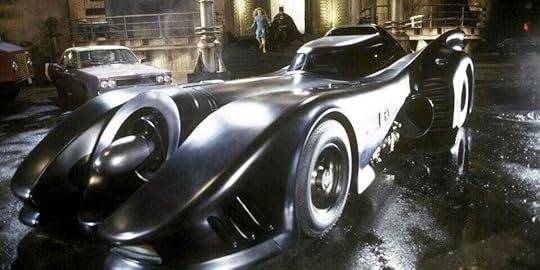
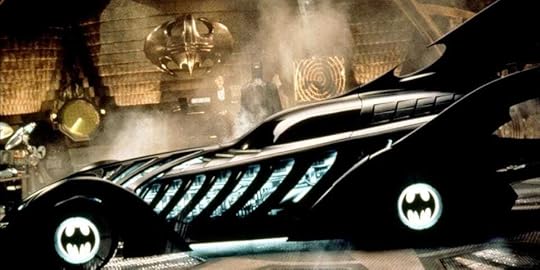
Though this film was produced by Tim Burton, it was in fact actually directed by Joel Schumacher, who mostly eschewed the dark, dystopian atmosphere of Burton'sfilms by drawing inspiration from the Batman comic books of the Dick Sprang era, as well as the late 1960s ABC television series, but without the campiness of the next film. Schumacher's direction is consistently pointed toward maximalist bombast, so the film's style, intentionally clashing as it may be, is at least consistent in execution. There is a lot of energy on the screen! Batman Forever went through a few major edits before its release. Originally darker than the final product, but still with beautiful cinematography, the film's original length was closer to 2 hours and 40 minutes, according to Schumacher. A cut dubbed "The Schumacher Cut" has yet to exist after Joel Schumacher passed away. This was believed that the version is darker and contains much less campiness than the theatrical cut. Batman's alter ego, Bruce Wayne is much more prominent in the film, and like in Cartoon Network's animated Batman adaptation (which either had ended or was already close to ending at this time), he is shown to be actively involved in the management of Wayne Enterprises. After Michael Keaton chose not to reprise his role, William Baldwin and Ethan Hawke were considered as a replacement before Val Kilmer joined the cast. Pacific Data Images contributed to visual effects work, and provided a computer-generated Batman for complicated stunts. For the costume design, producer Peter MacGregor-Scott claimed that 146 workers were at one point working together. Batman's costume was redesigned along the lines of a more "MTV organic, and edgier feel" to the suit. A new Batmobile was also designed for Batman Forever, with two cars being constructed, one for stunt purposes and one for close-ups. Swiss surrealist painter H. R. Giger (Aliens) provided his version for the Batmobile but it was considered too sinister for the film. I am showing you the two models of the Batmobiles for comparison.
Now for the plot: In Gotham City, costumed vigilante Batman defuses a hostage situation orchestrated by a arch-criminal known as Two-Face, formerly district attorney Harvey Dent. Flashbacks reveal that Two-Face was disfigured with acid by mobster Sal Maroni, which Batman failed to prevent, causing Dent to develop a split personality. Edward Nygma, an eccentric researcher at Wayne Enterprises, approaches his employer, Bruce Wayne (Batman's civilian identity), with an invention that can beam television signals directly into a person's brain. Bruce rejects the device, concerned the technology could manipulate minds. After killing his supervisor and staging it as a suicide, Nygma resigns and plots revenge against Bruce, sending him riddles. Criminal psychologist Dr. Chase Meridian diagnoses Nygma as psychotic.
Bruce attends a Haly's Circus event with Chase. Two-Face hijacks the event and threatens to detonate a bomb unless Batman surrenders. Dick Grayson, the youngest member of the Flying Graysons, manages to throw the bomb into the river, but Two-Face kills his family. Bruce persuades the orphaned Dick to live at Wayne Manor as his ward, and Dick discovers Bruce is Batman. Determined to avenge his family, Dick demands to join Batman in crime-fighting, hoping to kill Two-Face, but Bruce refuses.
Nygma, inspired by Two-Face, adopts a criminal persona, the Riddler, and allies with Two-Face. They commit a series of robberies to finance Nygma's new company and help mass-produce his brainwave device, the "Box", which steals information from users' minds and transfers it to Nygma's, which makes him smarter in the process. At a party hosted by Nygma, Batman pursues Two-Face and is almost killed but is saved by Dick.
Batman visits Chase, who explains that she has fallen in love with Bruce. He reveals to her his secret identity. The Riddler and Two-Face, having discovered Bruce's secret through the Box, blow up the Batcave, shooting Bruce and kidnapping Chase. As Bruce recovers, he and his butler, Alfred, deduce that Nygma is the Riddler when they figure out the final clue to his riddle. Bruce finally accepts Dick as Batman's partner, Robin.
At the Riddler's lair, Robin almost kills Two-Face but spares him, who holds him at gunpoint. The Riddler reveals that Chase and Robin are bound and gagged in tubes above a deadly drop, giving Batman the chance to save only one. Batman distracts the Riddler with a riddle, before destroying the Riddler's brainwave receiver with a Batarang, draining the Riddler's mind, and allowing Batman to rescue both. Two-Face corners them and determines their fate by flipping a coin, but Batman throws a handful of identical coins in the air, causing Two-Face to stumble in confusion and fall to his death.
Committed to Arkham Asylum, Nygma now exclaims that he is Batman, which leads Chase to remark that he is truly insane. Bruce resumes his crusade as Batman, with Robin as his partner.
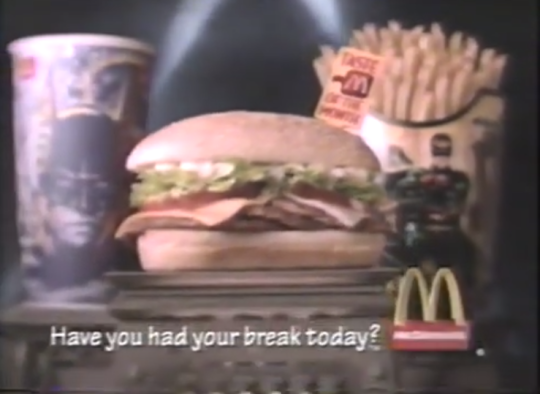
After Batman Returns made less money than expected, Warner determined the reason to be the film being too dark and inappropriate for children. Consequently, director Tim Burton was replaced by Joel Schumacher and there were many changes made to the series' aesthetics and tone. The switch to a lighthearted and less dark direction was not only an attempt to increase the box office by making the film more accessible to families but also increase merchandise and licensing income from toys and promotional tie-ins. Notably, fast-food giant McDonald's felt betrayed that their children's Happy Meals promoting Batman Returns were ultimately connected to the dreary and inappropriate end result and threatened to pull potential future promotional deals with the franchise barring a major change in the series' direction, going so far as refusing to sign any deal without full script access and having creative input on the costuming; they did, however, market a tie-in menu item to this film, called the Super Hero Burger (for those of you that don't know, it's a bit like a Whopper sub, but made with McDonald’s ingredients: three beef patties with 2 slices of cheese, topped with lettuce, tomato, onions, and mayonnaise, all served on a half-foot bun).
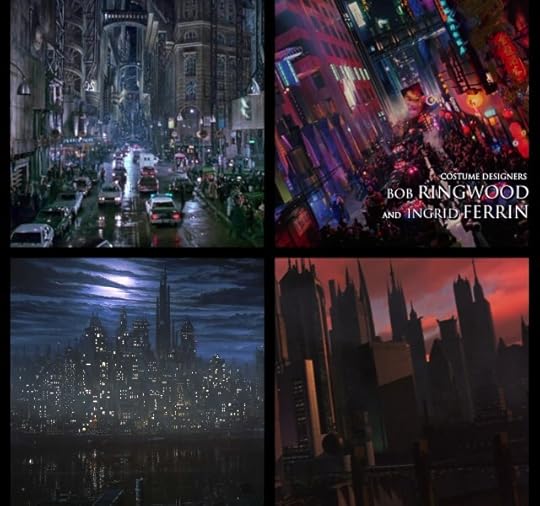
Anyway, as a result of the tonal shift, Gotham City went from a depressing, industrial/gothic city (described in the 1989 script as "Hell erupted through the pavements and built a city") and turned into a contrasty, neon-lit circus (described as "a city with personality") likened by the creatives to modern-day nighttime Tokyo, inspired by the images from the Batman comic books seen in the 1940s/early 1950s and New York City architecture in the 1930s, with more statuary, as well as various amounts of neon. And thanks to copious amounts of footage being excised (most notably the subplot of Bruce's struggle to accept his role as Batman, which was the basis of the film's title) there is an inconsistent tone as the film shifts between attempts at drama or character development and scenes of cartoonish overacting without bridging material to help transition moods. The pacing can be sluggish or cartoony at times and lacks that tight direction that Burton's films had. It can also be attributed to the fact Schumacher was told to make the movie more kid-friendly but instead, he ended up making it more campy and similar to the 1966 Batman Series, and the inconsistent tone that the movie portrays also can make the pacing seem disjointed at times. In addition the movie tries to take on a more campy, toyetic approach than Burton'sfilms did, such as the scene where the Batmobile drives up a wall, or where the Riddler and Two-Face are playing Battleship to sink Batman and Robin's vehicles. Despite being campy, it still does have some dark moments. And it still can be taken seriously at times at least than the next film. Thankfully, Arkham Asylum from the comics finally makes an appearance in the Batman film series for the first time.
Elliot Goldenthal's score is fantastic and the soundtrack (such as "Hold Me, Thrill Me, Kiss Me, Kill Me" by U2 and "Kiss from a Rose" by Seal) was one of the most popular albums of the year, selling more than 2 million copies in the US alone. "Kiss from a Rose" actually won Best Song from a Movie at the '96 MTV Movie Awards--the only award, as the film itself was nominated for Cinematography at the Academy Awards.
The leads are given odd directions in this movie. Originally, Keanu Reeves was considered to play Batman before Val Kilmer, whose performance as Bruce Wayne is inappropriately reserved in contrast to both the surrounding film and previous actor Michael Keaton's portrayal of the playboy; in fact, Schumacher had problems with Kilmer, whom he described as "childish and impossible," reporting that he fought with various crewmen and refused to speak to Schumacher for two weeks after the director told him to stop being rude. Although Kilmer's performance wasn't great, he still does at least a better job playing Batman...than George Clooney did in the next film. Robin, meanwhile, finally makes an appearance in the Batman film series; however, Chris O' Donnell gives a confusing performance as Dick Grayson, alternating between smug & assured and whiny & bratty, often without reason. Bruce Wayne taking in Dick Grayson after his parents die doesn't make much sense; he's a fully grown man, with Bruce even calling him a "college student" derisively at one point. Gordon's handwave of Dick having nowhere else to go does a lot of the heavy lifting in this film. Dr. Chase Meridian is a creepy love interest, as she is stalkerish and deceitful, yet the movie seems to find no issues with it. Her sexual assault on Batman after calling him under the false pretense of a crime is treated as amusing and flirtatious.
The villain portrayals feel like a downgrade from the two previous films, with the Riddler and Two-Face vying for the same role of "manic, over-the-top cartoon character". Jim Carrey as the Riddler is great, despite the choice to imitate the character from the Batman TV series of the late 1960s. While Carrey is an obvious choice to fill the Riddler's tights (the Emmy-winning Frank Gorshin performance of the '60s being the most prominent pop culture reference point for the character), Two-Face is a conundrum of a character, and Tommy Lee Jones is woefully miscast in the part. Also, Harvey Dent was black in the previous two movies but now he's suddenly white? It's most likely the movie was meant to be a reboot/standalone movie at the time, now it's considered non-canon or in an alternate timeline. The origin story of Harvey Dent/Two-Face feels very forced as it's only less than 1 minute and in the court, the footage mentioned in the video, Chemicals in court were spilled over his face which made him insane, which is very similar to the Joker from the first movie. The only established trait of Two-Face is his belief in chance as the only means of divining justice, often flipping a coin to determine his actions. Yet a scene late in the 2nd act has him repeatedly flipping a coin until he gets the result he wants... worse yet, this isn't a clever revelation that the character has been pulling one over on our heroes but a straight-up misunderstanding of who he is, as he ultimately ends up dying over his inability to make a choice without his beloved coin. Schumacher also mentioned Tommy Lee Jones as a source of trouble: "Jim Carrey was a gentleman, and Tommy Lee was threatened by him. I'm tired of defending overpaid, overprivileged actors. I pray I don't work with them again." Jones' discomfort with the role and his co-star is palpable, as his demeanor seems to shift whenever they share the screen. Carrey later acknowledged Jones was not friendly to him, telling him once off-set during the production, "I hate you. I really don't like you...I cannot sanction your buffoonery."
Some of the dialogue is phoned in and there are a few one-liners that don't sound clever or funny. But the Riddler's riddles were pretty creative and memorable. Such as: “If you look at the numbers on my face, you won’t find 13 any place.” “Tear one off and scratch my head, what once was red is black instead.” “The eight of us go forth not back, to protect our king from a foe’s attack.” “We’re five little items of an everyday sort, you’ll find us all in a tennis court.”
There are inconsistencies that seem baffling to the story in general, like why would Batman even appear in court, as seen in a news broadcast? Even Batman's stance that Robin shouldn't kill Two-Face is hypocritical: after telling Robin that killing his own parents' murderer brought him no peace and that he wouldn't help Robin do the same, he himself kills Two-Face in the end of the movie. And if that wasn't, like, enough, then there's a scene where Batman says that he's never fallen in love before, despite having a love interest in both of the previousfilms. And yes, the word "love" was used in those movies, too. Also, vestiges of cut plot threads linger throughout the film, primarily scenes surrounding the aftermath of the death of Bruce's parents, ultimately leading nowhere. Then there are numerous homoerotic oddities such as the Batman and Robin suits featuring sculpted nipples and oversized codpieces, the infamous suit-up scene with a lingering closeup of Batman's foam rubber buttocks, and Edward's infatuation with Bruce (the good doctor refers to his messages to Bruce as literal love letters) to the point of beginning to twin him when appearing in public, though it's ultimately portrayed as attempting to be a "bigger, better, smarter" version of Bruce. The action scenes are still nicely done, with the catsuit being much more flexible and action-friendly than the previous versions, but, quite possibly the most absurd way of telling the audience a character knows how to fight without putting them in an actual fight: The Laundry Scene.
Batman Forever was the highest-grossing film of the mid-1990s on record. Critical reception to the film has been mixed-to-negative, but it's still a much better movie than its later sequel; despite its faults, you may still enjoy it. In fact it can be considered "so bad it's good" as both films are discredited in favor of the Batman '89 comix and the 2022 film, The Flash set after Batman and Batman Returns, confirming that both later films are in their own continuity.
So there you have it forever. Everything you need to know about Batman Forever. You see, he's both Bruce Wayne and Batman. Not because he has to be, now...because he chooses to be.
This entire review has been hidden because of spoilers.
Probably the most complete of these original Batman comic adaptations. Takes me way back to revisit this. Again, not giving a star rating cuz I don’t know how.
In the tradition of adapting the first Batman flicks from the 1990s, Dennis O’Neil returns to offer the script for the third installment in the-infamous-Batman Tetralogy, ‘Batman Forever’. The movie originally came in 1995, directed by Joel Schumacher, working as a vague continuation of the first Tim Burton flicks, with the reputation of this being the first downgrade in the Bat-franchise. Adapting that film into a comic book wouldn’t be an easy task. So, imagine my surprise when I checked this out and, realize, it was pretty decent. Now, taking into consideration the original material, I think O’Neil actually did a better job, compared to ‘Batman Returns’, which felt highly generic and serviceable in a mediocre kind of way. This time, the writer actually used a few deleted sequences from the theatrical version to include in here, and plenty of the dialogue was modified in order for it to flow naturally, compared to the campy and almost rhythmic way the characters talked. The art was held by Michael Dutkiewicz, who is a far better improvement over ‘Batman Returns’ Steve Erwin; Dutkiewicz manages to capture the shadowy and more detailed approach that, for example, Jerry Ordway crafted for the first ‘Batman’ movie adaptation, although, never reaching that level of artwork, but it was a nice attempt, Scott specially thanks to Hanna’s inks, which really helped cement the comic book’s obscure aspects, that is, many will thank both, penciller and inker, for their omission of the disgraceful “Bat-nipples” in the Bat-suit. Adrienne Roy provided the colors, which, just like the previous two comics, makes this feel dated-but in a good way-, as well as retro. It helps to see the original image-atmosphere given by the film’s color pallet, and while plenty of people might not like it, in terms of adapting the film, in a visual perspective, it does deliver a faithful representation. Regarding whether or not O’Neil actually improves the film’s quality with his own script, I wouldn’t say he goes that far. Certainly he adds some “extra” content, as I said, some deleted sequences from the original movie to enhance the experience, but he doesn’t really created the “Director’s Cut” fans have been imploring for its release. There are a couple of moments I would’ve loved to see included, for instance, the dialogue between Bruce and Dick about taking revenge on Two-Face, at the gym in Wayne’s Manor, or the most iconic of the deleted material, which is the giant Rick Baker’s Bat in the Bat-cave, near the end of the film. There’s an assumption which says those deleted sequences are enough to improve over the original film’s substance, and having those added in the comic book adaptation would’ve given us a small glimpse at what the story could’ve been. Regarding the adaptation, it is faithful enough; the script follow the events of the movie, although, with a little order alteration between how the sequences really happened in the film, and how they are structured here, making me think this used one of the early drafts of the script. The art is enjoyable and does capture the visual essence of both, characters and environments, and the inks and colors works very well as a combination of all these elements. It isn’t perfect, and it is using a movie that wasn’t well-received by fans when it came out. Nevertheless, there’s a clear effort from the creators behind the project to actually make it work, and for what it is, it does. Collectors would gladly appreciate this item, and readers might let it pass and not missing much, but it is the intention of improving over a product that didn’t work that well in the first place what counts.
Гледан филмът, четен комиксът. Първи стъпки като бледен дечко в света на комиксите. Артът е феноменално добър и е една от причините да остане любовта към "книжките с картинки" завинаги!
Някога беше трудно. Такива удоволствия нямаше налични в България, а достъп имаха малцина избрани и затова попивахме като гъби, всичките малки, нищожни парченца удоволствие в картинки, които ни се предоставяха.
Днес... Днес вече е друга бира с друг свят и възможности.
A fun, fast read that’s interesting for fans of the film, as it follows the original script rather than the Theatrical version as released in 1995. A few moments here and there that weren’t in the film are present, and Two-Face’s dialogue is much more menacing on the page, when you don’t have Tommy Lee-Jones mugging to the camera.
Not revolutionary at all, but the artwork is truly stunning to look at, and it’s a recommended read if you like Batman Forever.
Ahh, memories: I was given this comic as a gift the year it came out. I remember sitting by the Christmas tree, reading it and playing with Batman Forever action figures. That nostalgia is probably sweeter than anything about the movie or its comic adaptation, but it doesn't hurt.
I should preface this review by saying that the film version of Batman Forever is the main reason for the decrease in score from the previous two installments; Dennis O'Neil wrote a very faithful adaptation of the film's script, however the jarring change in tone of this series is really what necessitated a lower score.
To give credit where it's due, I think Joel Schumacher did the best he could to follow up Tim Burton's unique vision of both the Batman character and the aesthetic of Batman's world (Gotham City), infusing the script with his signature brand of charm and humor. It's no secret that studio interference is largely responsible for the decline in quality of the Batman quadrilogy (going so far as to force both Michael Keaton and Tim Burton to leave the project), and this unfortunately shows in this adaptation. There are glaring inconsistencies in both the plot details and the tone of the film/comic overall (caused by potential script rewrites or reshoots perhaps?), and the art style, while still passable, lacks the same level of polish as the previous installments. As is true with the film it is based on, this adaptation isn't really sure what it wants to be, often swinging back and forth between a more serious tone and sudden levity fast enough to give the reader whiplash. Perhaps it's appropriate that the main villains are Two-Face and The Riddler; the two clashing tones and nonsensical plot often leave the reader scratching their head in confusion.
I love Batman Forever - it’s my childhood film. Is it objectively good? Not really no. Is it entertaining? Hell yes!
Denny O’Neil is on comic adaptation duties with Michal Dutkiewicz providing the art.
The art, particularly the colouring, makes the world of Batman Forever look very colourful and Joel Schumacher-y and Dutkiewics really shines on images like the opening shot of Arkham Asylum, creating a sort of neon horror world. Where the art struggles is with drawing people, particularly the faces.
The story follows the film closely but some scenes are in different places and some extra bit are added like Two-Face’s escape from Arkham on the first page, sprawling ‘the bat must die’ on the fence in blood.
The story does feel like O’Neil has calmed it and made it a little more sensible: e.g. Bruce and Chase’s first meeting does not here involve a punching bag or a broken door. Riddler feels a lot calmer and less stage-stealing without Jim Carrey’s performance.
Seeing Two-Face’s dialogue written on the page really proves how ridiculous it is and that there was no way for Tommy Lee Jones to play it as written except how he did. I’ve always found Batman Forever’s take on Two-Face fascinating to explore and the comic is no exception.
Robin’s origin works much better in the comic without Chris O’Donnell’s painful performance and with no laundry karate.
Batman’s relationship with Chase is left much more ambiguous at the end here than in the film too.
My one complaint is that the adaptation feels very rushed, even for an adaptation, zipping through each scene in a few panels at most. A couple extra pages really wouldn’t have hurt it.
Still loved reliving one of my favourite Batman films though.