

What do you think?

Nightingale's Nest
A powerful novel about friendship and family that calls to mind Bridge to Terabithia
Twelve-year-old John Fischer Jr., or "Little John" as he’s always been known, is spending his summer helping his father with his tree removal business, clearing brush for Mr. King, the wealthy owner of a chain of Texas dollar stores, when he hears a beautiful song that transfixes him. He follows the melody and finds, not a bird, but a young girl sitting in the branches of a tall sycamore tree.
There’s something magical about this girl, Gayle, especially her soaring singing voice, and Little John’s friendship with Gayle quickly becomes the one bright spot in his life, for his home is dominated by sorrow over his sister’s death and his parents’ ever-tightening financial difficulties.
But then Mr. King draws Little John into an impossible choice—forced to choose between his family’s survival and a betrayal of Gayle that puts her future in jeopardy.
Inspired by a Hans Christian Andersen story, Nightingale's Nest is an unforgettable novel about a boy with the weight of the world on his shoulders and a girl with the gift of healing in her voice.
Twelve-year-old John Fischer Jr., or "Little John" as he’s always been known, is spending his summer helping his father with his tree removal business, clearing brush for Mr. King, the wealthy owner of a chain of Texas dollar stores, when he hears a beautiful song that transfixes him. He follows the melody and finds, not a bird, but a young girl sitting in the branches of a tall sycamore tree.
There’s something magical about this girl, Gayle, especially her soaring singing voice, and Little John’s friendship with Gayle quickly becomes the one bright spot in his life, for his home is dominated by sorrow over his sister’s death and his parents’ ever-tightening financial difficulties.
But then Mr. King draws Little John into an impossible choice—forced to choose between his family’s survival and a betrayal of Gayle that puts her future in jeopardy.
Inspired by a Hans Christian Andersen story, Nightingale's Nest is an unforgettable novel about a boy with the weight of the world on his shoulders and a girl with the gift of healing in her voice.
256 pages, Hardcover
First published February 20, 2014
About the author
Nikki Loftin
12 books179 followers Nikki Loftin is the author of The Sinister Sweetness of Splendid Academy, which Publishers Weekly called "mesmerizing," and Kirkus called "irresistible," and Nightingale's Nest, which received a starred review from Kirkus. She lives with her Scottish photographer husband just outside Austin, Texas, surrounded by dogs, goats, and small, loud boys.
Nikki is a graduate of the University of Texas at Austin graduate writing program (MA, '98). She has been a popcorn seller, waitress, bookstore employee, Music and Gifted/Talented teacher, and a Director of Family Ministries.
Nikki teaches Zumba dance/aerobics in a mostly vain attempt to combat the ever-threatening Writer's Butt. When under extreme stress, or on submission with a novel, she bakes obsessively as a coping technique. Her favorite food/obsession is ice cream, preferably Blue Bell Moo-llenium Crunch. On very good days, she prefers writing even to ice cream.
Nikki is represented by Suzie Townsend of New Leaf Literary Agency.
Nikki is a graduate of the University of Texas at Austin graduate writing program (MA, '98). She has been a popcorn seller, waitress, bookstore employee, Music and Gifted/Talented teacher, and a Director of Family Ministries.
Nikki teaches Zumba dance/aerobics in a mostly vain attempt to combat the ever-threatening Writer's Butt. When under extreme stress, or on submission with a novel, she bakes obsessively as a coping technique. Her favorite food/obsession is ice cream, preferably Blue Bell Moo-llenium Crunch. On very good days, she prefers writing even to ice cream.
Nikki is represented by Suzie Townsend of New Leaf Literary Agency.
Ratings & Reviews
Friends & Following
Create a free account to discover what your friends think of this book!
Community Reviews
Displaying 1 - 30 of 243 reviews

January 11, 2014
Magical realism in children’s novels is a rarity. It’s not unheard of, but when children’s authors want fantasy, they write fantasy. When they want reality, they write reality. A potentially uncomfortable mix of the two is harder to pull off. Ambiguity is not unheard of in books for youth, but it’s darned hard to write. Why go through all that trouble? For that reason alone we don’t tend to see it in children’s books. Kids like concrete concepts. Good guys vs. bad guys. This is real vs. this is a dream. But a clever author, one who respects the intelligence of their young audience, can upset expectations without sacrificing their story. When author Nikki Loftin decided to adapt Hans Christian Andersen’s tale The Nightingale into a middle grade contemporary novel, she made a conscious decision to make the book a work of magical realism. A calculated risk, Loftin’s gambit pays off. Nightingale’s Nest is a painful but ultimately emotionally resonant tale of sacrifice and song. A remarkably competent book, stronger for its one-of-a-kind choices.
It doesn’t seem right that a twelve-year-old boy would carry around a guilt as deep and profound as Little John’s. But when you feel personally responsible for the death of your little sister, it’s hard to let go of those feelings. It doesn’t help matters any that John has to spend the summer helping his dad clear brush for the richest man in town, a guy so extravagant, the local residents just call him The Emperor. It’s on one of these jobs that John comes to meet and get to know The Emperor's next door neighbor, Gayle. About the age of his own sister when she died, Gayle’s a foster kid who prefers sitting in trees in her own self-made nest to any other activity. But as the two become close friends, John notices odd things about the girl. When she sings it's like nothing you've ever heard before, and she even appears to possibly have the ability to heal people with her voice. It doesn’t take long before The Emperor becomes aware of the treasure in his midst. He wants Gayle’s one of a kind voice, and he’ll do anything to have it. The question is, what does John think is more important: His family’s livelihood or a the full-throated song of one little girl?
How long did it take me to realize I was reading a middle grade adaptation of a Hans Christian Andersen short story? Let me first tell you that when I read a book I try not to read even so much as a plot description beforehand so that the novel will stay fresh and clear in my mind. With that understanding, it’s probably not the worst thing in the world that it took a 35-year-old woman thirty-nine pages before she caught on to what she was reading. Still, I have the nasty suspicion that many a savvy kid would have picked up on the theme before I did. As it stands, we’ve seen Andersen adapted into middle grade novels for kids before. Breadcrumbs, for example, is a take on his story The Snow Queen as well as some of his other, stranger tales. They say that he wrote The Nightingale for the singer Jenny Lind, with whom he was in love. All I know is that in the original tale the story concentrates on the wonders of the natural world vs. the mechanical one. In this book, Loftin goes in a slightly different direction. It isn’t an over-reliance on technology that’s the problem here. It’s an inability to view our fellow human beings as just that. Human beings. Come to think of it, maybe that’s what Andersen was going for in the first place.
It was the writing, of course, that struck my attention first. Loftin gives the book beautiful sequences filled with equally beautiful sentences. There’s a section near the end that tells a tale of a tree that fails to keep hold of a downy chick, but is redeemed by saving another bird in a storm. This section says succinctly everything you need to know about this book. I can already see the children’s book and discussion groups around the country that will get a kick out of picking apart this parable. It’s not a hard one to interpret, but you wouldn’t want it to be.
As for the characters, there wasn’t a person here that I couldn’t recognize as real. I was quite taken with the fact that Loftin continually sidesteps a lot of the usual middle grade tropes. Gayle's nasty foster brother Jeb, for example, could easily have been labeled the typical bully type character for this book. Bullies in children’s books, after all, have a tendency to be one-note characters. Jeb, in contrast, is capable of talking like a normal human being from time to time. He’s a horrible human being at other times, but at least you get the sense that he’s not just a walking two-dimensional caricature. It makes a difference.
The ending is going to be problematic for some folks. It is not, I should say, unsatisfying. I think even people who don't have a problem with what it says will only have a problem with HOW it goes about saying it. But the end of the book goes so far as to make it clear that this story really doesn’t take place in the real world in which we live. The characters face real world problems, but that doesn’t preclude the presence of something magical. “There are more things in heaven and earth, Horatio . . .” and all that jazz. For some readers, this may feel like a kind of betrayal. As if the author didn’t have the guts to stay in the real world from start to finish, but instead had to rely on something otherworldly for her climax. I don’t see it that way. Loftin’s choices seem very deliberate here, from page one onward. Just because something is magical, that doesn’t mean you can’t interpret the book in other ways. Don’t like the supernatural element at the end? Then why are you assuming it’s real? After all, we’re getting this whole story through Little John’s perspective. Who’s to say he’s the world’s most reliable narrator? Just because a book is written for children, that doesn’t mean you have to take it at face value.
In any case, I don’t believe the magic detracts in the least from what Loftin is saying here about the banality of poverty. This isn’t a book that romanticizes what it's like to be poor. It’s just Little John’s everyday existence, to a certain extent. And with the introduction of The Emperor, readers get to see firsthand how money, or the lack thereof, has a lot to do with self-worth and what you have to do with your pride and sense of self-worth when you’re indebted to another person. Little John witnesses firsthand his own father’s humiliation at the hands of the Emperor, and then finds himself in possession (in a sense) of something The Emperor wants. But rather than give him power, this just focuses the rich man’s attention on the boy, making him easy prey. Better that you never have something the wealthy think that they need. And as Little John says at one point, “What was right didn’t have a thing to do with what was.”
Reading the book, I found it enormously painful. But I at least had the wherewithal to realize that it was uniquely painful to me as a mother. Any parent reading this is going to instantly fret and worry and think about Gayle’s position in her foster home. But for kids reading this book they’re going to identify with Little John and Gayle as children, not as parents. This is a book about terrible decisions made, for the most part, by good people. This can, at times, make the story emotionally hard to follow, but I like to think Ms. Loftin had things well in hand when she came up with her tale. There’s a great comfort in knowing that even when you screw up royally, you can still find forgiveness. If kids take nothing else away from this book, I hope that they understand that much. Smart and beautiful by turns, The Nightingale’s Nest does one thing that few will contest. Once you’ve read it, you’ll have a hard time getting it out of your head.
For ages 10 and up.
It doesn’t seem right that a twelve-year-old boy would carry around a guilt as deep and profound as Little John’s. But when you feel personally responsible for the death of your little sister, it’s hard to let go of those feelings. It doesn’t help matters any that John has to spend the summer helping his dad clear brush for the richest man in town, a guy so extravagant, the local residents just call him The Emperor. It’s on one of these jobs that John comes to meet and get to know The Emperor's next door neighbor, Gayle. About the age of his own sister when she died, Gayle’s a foster kid who prefers sitting in trees in her own self-made nest to any other activity. But as the two become close friends, John notices odd things about the girl. When she sings it's like nothing you've ever heard before, and she even appears to possibly have the ability to heal people with her voice. It doesn’t take long before The Emperor becomes aware of the treasure in his midst. He wants Gayle’s one of a kind voice, and he’ll do anything to have it. The question is, what does John think is more important: His family’s livelihood or a the full-throated song of one little girl?
How long did it take me to realize I was reading a middle grade adaptation of a Hans Christian Andersen short story? Let me first tell you that when I read a book I try not to read even so much as a plot description beforehand so that the novel will stay fresh and clear in my mind. With that understanding, it’s probably not the worst thing in the world that it took a 35-year-old woman thirty-nine pages before she caught on to what she was reading. Still, I have the nasty suspicion that many a savvy kid would have picked up on the theme before I did. As it stands, we’ve seen Andersen adapted into middle grade novels for kids before. Breadcrumbs, for example, is a take on his story The Snow Queen as well as some of his other, stranger tales. They say that he wrote The Nightingale for the singer Jenny Lind, with whom he was in love. All I know is that in the original tale the story concentrates on the wonders of the natural world vs. the mechanical one. In this book, Loftin goes in a slightly different direction. It isn’t an over-reliance on technology that’s the problem here. It’s an inability to view our fellow human beings as just that. Human beings. Come to think of it, maybe that’s what Andersen was going for in the first place.
It was the writing, of course, that struck my attention first. Loftin gives the book beautiful sequences filled with equally beautiful sentences. There’s a section near the end that tells a tale of a tree that fails to keep hold of a downy chick, but is redeemed by saving another bird in a storm. This section says succinctly everything you need to know about this book. I can already see the children’s book and discussion groups around the country that will get a kick out of picking apart this parable. It’s not a hard one to interpret, but you wouldn’t want it to be.
As for the characters, there wasn’t a person here that I couldn’t recognize as real. I was quite taken with the fact that Loftin continually sidesteps a lot of the usual middle grade tropes. Gayle's nasty foster brother Jeb, for example, could easily have been labeled the typical bully type character for this book. Bullies in children’s books, after all, have a tendency to be one-note characters. Jeb, in contrast, is capable of talking like a normal human being from time to time. He’s a horrible human being at other times, but at least you get the sense that he’s not just a walking two-dimensional caricature. It makes a difference.
The ending is going to be problematic for some folks. It is not, I should say, unsatisfying. I think even people who don't have a problem with what it says will only have a problem with HOW it goes about saying it. But the end of the book goes so far as to make it clear that this story really doesn’t take place in the real world in which we live. The characters face real world problems, but that doesn’t preclude the presence of something magical. “There are more things in heaven and earth, Horatio . . .” and all that jazz. For some readers, this may feel like a kind of betrayal. As if the author didn’t have the guts to stay in the real world from start to finish, but instead had to rely on something otherworldly for her climax. I don’t see it that way. Loftin’s choices seem very deliberate here, from page one onward. Just because something is magical, that doesn’t mean you can’t interpret the book in other ways. Don’t like the supernatural element at the end? Then why are you assuming it’s real? After all, we’re getting this whole story through Little John’s perspective. Who’s to say he’s the world’s most reliable narrator? Just because a book is written for children, that doesn’t mean you have to take it at face value.
In any case, I don’t believe the magic detracts in the least from what Loftin is saying here about the banality of poverty. This isn’t a book that romanticizes what it's like to be poor. It’s just Little John’s everyday existence, to a certain extent. And with the introduction of The Emperor, readers get to see firsthand how money, or the lack thereof, has a lot to do with self-worth and what you have to do with your pride and sense of self-worth when you’re indebted to another person. Little John witnesses firsthand his own father’s humiliation at the hands of the Emperor, and then finds himself in possession (in a sense) of something The Emperor wants. But rather than give him power, this just focuses the rich man’s attention on the boy, making him easy prey. Better that you never have something the wealthy think that they need. And as Little John says at one point, “What was right didn’t have a thing to do with what was.”
Reading the book, I found it enormously painful. But I at least had the wherewithal to realize that it was uniquely painful to me as a mother. Any parent reading this is going to instantly fret and worry and think about Gayle’s position in her foster home. But for kids reading this book they’re going to identify with Little John and Gayle as children, not as parents. This is a book about terrible decisions made, for the most part, by good people. This can, at times, make the story emotionally hard to follow, but I like to think Ms. Loftin had things well in hand when she came up with her tale. There’s a great comfort in knowing that even when you screw up royally, you can still find forgiveness. If kids take nothing else away from this book, I hope that they understand that much. Smart and beautiful by turns, The Nightingale’s Nest does one thing that few will contest. Once you’ve read it, you’ll have a hard time getting it out of your head.
For ages 10 and up.

September 17, 2017
this is a beautiful story. about friendship and redemption. little john tries to make it right by gayle and his family.
it is also a story about religion and God. i do enjoy this book. but not floor by it.
it is also a story about religion and God. i do enjoy this book. but not floor by it.
March 13, 2019
Ashamed, truly, that I am just now reading this!
Nikki gave me this book when we first met, several years ago at conference in Texas. She is a delightful person and I'm pleased to say that we've become friends! I think that was partially why I didn't read the book, though. What if that nice funny woman I met wrote a bad book? Also, in my defense, right after I got it we began to remodel our basement so that I could have an office, and this and many other books that would end up on my built in bookshelves went into boxes for a while!
But suddenly the other day I saw it and went, Good heavens, I really must read it! And oh, glory, I'm so glad I did! What a gorgeous book! So beautifully and simply written, so heartfelt and wonderful! I smiled, I was tense, and I cried over the ending! This holds up both as a modern retelling of The Nightingale, and holds its own as an excellent middle grade story about grief and forgiveness.
Nikki gave me this book when we first met, several years ago at conference in Texas. She is a delightful person and I'm pleased to say that we've become friends! I think that was partially why I didn't read the book, though. What if that nice funny woman I met wrote a bad book? Also, in my defense, right after I got it we began to remodel our basement so that I could have an office, and this and many other books that would end up on my built in bookshelves went into boxes for a while!
But suddenly the other day I saw it and went, Good heavens, I really must read it! And oh, glory, I'm so glad I did! What a gorgeous book! So beautifully and simply written, so heartfelt and wonderful! I smiled, I was tense, and I cried over the ending! This holds up both as a modern retelling of The Nightingale, and holds its own as an excellent middle grade story about grief and forgiveness.

December 31, 2013
Review first posted on Views from the Tesseract: http://shanshad1.wordpress.com/2014/0...
When I first heard about this book, I couldn’t wait to read it. A middle grade fantasy with gorgeous cover art and a story that references Hans Christian Andersen’s ”The Nightingale“? That’s a surefire way to pique my interest. Sometimes this backfires on me and my high hopes just don’t live up to the actual text. But after reading this, I’m happy to report it exceeded expectations.
Twelve-year-old Little John is spending his summer in Texas working for his father clearing brush and trees from Mr. King’s property. While he’s working, he hears someone singing–and he’s astonished to find the sweet voice to a little girl hiding out in a tree. Young Gayle is something rare in Little John’s life, a bit of happiness in a life that has become shadowed by regret and loss. This half-wild girl sees Little John as her protector, someone she’s willing to trust and share her secrets with. Secrets like the magic of her healing song. But Little John’s family is struggling to survive, and when Mr. King makes Little John an offer, he’ll have to choose between helping his family, and betraying his new friend. This is a story of growing up and the weight of responsibility. A story of beauty and the price of betrayal. A story of magic and hope.
If you’re not familiar with Hans Christian Andersen’s fairy tale “The Nightingale“, you might want to look it up prior to reading this story–but it’s not strictly necessary. Nikki Loftin uses the fairy tale imagery and elements, evoking echoes of the tale, but composes a contemporary story all her own. As you might already guess from the summary and the fact that it draws on Andersen, this isn’t an easy story to read. When the story opens, Little John and his family are already suffering from deep pain and loss. Little John is lost, separated from the boyhood he had, but nowhere near becoming a man. When magic comes into his life it comes in the form of a waif of a girl who can sing with astonishing beauty and is in need of a friend and protector. It’s a hard story to read . . . you can see the betrayals on the horizon, and the bitter choices that Little John will make. But it is also a beautiful story tinged with redemption and hope for a better day.
Thoughtful tween readers who enjoy a powerful story with a bittersweet ending will want to pick this one up. It’s a rare and beautiful treasure, lightly brushed with magic.
kay nielsen_hans christian andersen_the nightingale_med
Note: An advanced reader copy was provided by the publisher.
When I first heard about this book, I couldn’t wait to read it. A middle grade fantasy with gorgeous cover art and a story that references Hans Christian Andersen’s ”The Nightingale“? That’s a surefire way to pique my interest. Sometimes this backfires on me and my high hopes just don’t live up to the actual text. But after reading this, I’m happy to report it exceeded expectations.
Twelve-year-old Little John is spending his summer in Texas working for his father clearing brush and trees from Mr. King’s property. While he’s working, he hears someone singing–and he’s astonished to find the sweet voice to a little girl hiding out in a tree. Young Gayle is something rare in Little John’s life, a bit of happiness in a life that has become shadowed by regret and loss. This half-wild girl sees Little John as her protector, someone she’s willing to trust and share her secrets with. Secrets like the magic of her healing song. But Little John’s family is struggling to survive, and when Mr. King makes Little John an offer, he’ll have to choose between helping his family, and betraying his new friend. This is a story of growing up and the weight of responsibility. A story of beauty and the price of betrayal. A story of magic and hope.
If you’re not familiar with Hans Christian Andersen’s fairy tale “The Nightingale“, you might want to look it up prior to reading this story–but it’s not strictly necessary. Nikki Loftin uses the fairy tale imagery and elements, evoking echoes of the tale, but composes a contemporary story all her own. As you might already guess from the summary and the fact that it draws on Andersen, this isn’t an easy story to read. When the story opens, Little John and his family are already suffering from deep pain and loss. Little John is lost, separated from the boyhood he had, but nowhere near becoming a man. When magic comes into his life it comes in the form of a waif of a girl who can sing with astonishing beauty and is in need of a friend and protector. It’s a hard story to read . . . you can see the betrayals on the horizon, and the bitter choices that Little John will make. But it is also a beautiful story tinged with redemption and hope for a better day.
Thoughtful tween readers who enjoy a powerful story with a bittersweet ending will want to pick this one up. It’s a rare and beautiful treasure, lightly brushed with magic.
kay nielsen_hans christian andersen_the nightingale_med
Note: An advanced reader copy was provided by the publisher.

April 9, 2014
This book just did not appeal to me -- Little John's life is so painful, his father is such a hideous character, his mother is absent, there is horrible fear of what Mr. King did with Gayle other than record her voice, the foster family is wretched -- none of this is mitigated by Gayle's magical flight at the story's conclusion.

March 18, 2014
This is going to be one of those times when I read a book that everyone else seems to love and I just don't get it. Riddled with sadness and ambiguity, I didn't truly enjoy the story at all. The closest I could come to liking this book was appreciating that author Nikki Loftin created something unusual and touching. There's a lot of good stuff here, but it didn't come together in a meaningful way for this reader. The writing was only so-so and the symbolism heavy-handed. Still, here we go:
Little John is a boy in a lamentable situation. His little sister recently died in a tragic accident. He's estranged from his best friend because he's too proud to admit that his family is nearing poverty and falling apart. Little John's teachers make him feel stupid, his mother makes him feel invisible, and his father treats him like a hired hand.
Enter a mysterious new girl who's taken in as a foster child by the awful Cutlin family in the same small town where Little John lives. She calls herself Gayle, though the Cutlins insist her name is Suzie. She reminds Little John of his sister because she's small and feisty, but her most marked characteristic is her beyond-beautiful singing voice and belief in her own magical abilities.
Little John and Gayle become friends. He tries to protect her and at the same time can't resist extorting her for money that his family desperately needs. The villain here is Mr. King, the richest man in town. Known by town folk as "The Emperor," Mr. King is obsessed with recording Gayle's voice to add to his collection. His villainous qualities are ambiguous, though. Gayle fears him and is traumatized by his presence, but why? We don't exactly know. She says he's like a crow. Little John has a built-in reason to loathe King: his father is employed by Mr. King and resents him for being haughty and rich.
The plot is driven by something you know is going to happen, even though it seems so unlikely. Gayle makes Little John promise to protect her tree and her nest because she believes her parents will use these as beacons to find her--but it's somehow inevitable that Little John will break his promise. It also seemed inevitable to me that Little John would redeem himself.
Just a few other details to mention:
1. Little John lives five miles from Mr. King and the Cutlins. In the heat of summer, he runs those five miles (ten round trip) so many times! At first, it's portrayed as a difficult journey for Little John, but then it becomes something he just does without comment. I thought this was convenient for the plot and not very believable.
2. It also bothered me that Raelynn's death was set up as a something the family still needed to deal with, but in the end they went around the issue instead of through it.
3. I'm not a fan of stories that end with poor people conveniently coming into a lot of money and voila! Everything's better! (Also )
4. This story bears only a slight resemblance to Hans Christian Andersen's "The Nightingale". I wouldn't call it a re-telling or say it was based on it. I believe the book jacket says "inspired by" and that's fair. I encourage you to go read "The Nightingale" online. It's short and tells a very different kind of story--one about valuing an imitation above the real deal. Also, in Andersen's story the main relationship is between the nightingale and the Emperor.
Little John is a boy in a lamentable situation. His little sister recently died in a tragic accident. He's estranged from his best friend because he's too proud to admit that his family is nearing poverty and falling apart. Little John's teachers make him feel stupid, his mother makes him feel invisible, and his father treats him like a hired hand.
Enter a mysterious new girl who's taken in as a foster child by the awful Cutlin family in the same small town where Little John lives. She calls herself Gayle, though the Cutlins insist her name is Suzie. She reminds Little John of his sister because she's small and feisty, but her most marked characteristic is her beyond-beautiful singing voice and belief in her own magical abilities.
Little John and Gayle become friends. He tries to protect her and at the same time can't resist extorting her for money that his family desperately needs. The villain here is Mr. King, the richest man in town. Known by town folk as "The Emperor," Mr. King is obsessed with recording Gayle's voice to add to his collection. His villainous qualities are ambiguous, though. Gayle fears him and is traumatized by his presence, but why? We don't exactly know. She says he's like a crow. Little John has a built-in reason to loathe King: his father is employed by Mr. King and resents him for being haughty and rich.
The plot is driven by something you know is going to happen, even though it seems so unlikely. Gayle makes Little John promise to protect her tree and her nest because she believes her parents will use these as beacons to find her--but it's somehow inevitable that Little John will break his promise. It also seemed inevitable to me that Little John would redeem himself.
Just a few other details to mention:
1. Little John lives five miles from Mr. King and the Cutlins. In the heat of summer, he runs those five miles (ten round trip) so many times! At first, it's portrayed as a difficult journey for Little John, but then it becomes something he just does without comment. I thought this was convenient for the plot and not very believable.
2. It also bothered me that Raelynn's death was set up as a something the family still needed to deal with, but in the end they went around the issue instead of through it.
3. I'm not a fan of stories that end with poor people conveniently coming into a lot of money and voila! Everything's better! (Also )
4. This story bears only a slight resemblance to Hans Christian Andersen's "The Nightingale". I wouldn't call it a re-telling or say it was based on it. I believe the book jacket says "inspired by" and that's fair. I encourage you to go read "The Nightingale" online. It's short and tells a very different kind of story--one about valuing an imitation above the real deal. Also, in Andersen's story the main relationship is between the nightingale and the Emperor.

May 26, 2014
Within a few pages of this book, I could feel the emotion of the story. There are some books that you just know will touch you and will make you feel. Loftin's Nightingale's Nest is certainly one of them. The writing in this book is spectacular and demands to be read not only silently but aloud to a whole group. This is a book that I found myself thinking about reading it to a class and discussing it with them. I do not feel this way about all books. Additionally there is a timeless quality to this story. Though there are some things that hint at a present day world, much of the story could pass for any time. There is a classic feel to the story.
Little John and his grieving family. The Emperor or Mr. King and his greed. Gayle and her song. The Cutlins - Gayle's foster family. Ernest and his sister, Isabelle. Such great characters and everyone plays a role in this story.
My favorite lines:
"You can't....really fix all the hurt things in the world. That's not your job, Gayle."
She sighed, that broken sound again. "I know it's not.".......But I heard Gayle's voice as I left, five words that stayed with me the rest of that week.
"It's not your job either."
Hurt, loss, forgiveness, healing, and all the decisions and consequences that build on one another. Just powerful!
Little John and his grieving family. The Emperor or Mr. King and his greed. Gayle and her song. The Cutlins - Gayle's foster family. Ernest and his sister, Isabelle. Such great characters and everyone plays a role in this story.
My favorite lines:
"You can't....really fix all the hurt things in the world. That's not your job, Gayle."
She sighed, that broken sound again. "I know it's not.".......But I heard Gayle's voice as I left, five words that stayed with me the rest of that week.
"It's not your job either."
Hurt, loss, forgiveness, healing, and all the decisions and consequences that build on one another. Just powerful!

Read
April 15, 2014A unique example of magical realism for middle grades that manages to ground itself in authentic emotions and the too-rarely seen reality of poverty. Little John is an entirely sympathetic, conflicted character, forced to make tough decisions and worrying too much about grown-up problems. While the adults in his life seem to fail him, they all have hidden complexity and even the Emperor vaccilates between appearing evil and pitiable. And Gale steers away from being too angelic, full of all the pouts and personality of a real young child.
The blend of magic and reality is well-balanced, and this reader had no trouble believing in the few magical elements. I found the rather tidy ending to be in keeping with the fairy tale sensibility. This is a world that needs a bit of magic. While the story overall centers on financial struggles, the lingering effects of tragedy and loss, and the sometimes harsh reality of life even for children, Little John and Gale's connection, the still strong strands of old friendships, the concern and assistance that comes from neighbors, and the magic of Gale's escape keep the story ultimately hopeful and uplifting. Original and thought-provoking. -Chelsea
The blend of magic and reality is well-balanced, and this reader had no trouble believing in the few magical elements. I found the rather tidy ending to be in keeping with the fairy tale sensibility. This is a world that needs a bit of magic. While the story overall centers on financial struggles, the lingering effects of tragedy and loss, and the sometimes harsh reality of life even for children, Little John and Gale's connection, the still strong strands of old friendships, the concern and assistance that comes from neighbors, and the magic of Gale's escape keep the story ultimately hopeful and uplifting. Original and thought-provoking. -Chelsea

April 28, 2014
This book was beautiful and disturbing. The first time Little John hears Gayle singing he describes, "The notes were high and liquid, a honey-soft river of sound that seeped right through me. I stopped when I heard the first notes and just stood there, dropping cedar cuttings at my feet. The song sailed over the fence, like it was meant for me alone." Little John is helping his dad with his business by cutting and removing Pecan trees at a rich man's house dubbed, "The Emperor," when Little John hears Gayle singing next door. She's the same age as his younger sister who just died in an accident. Gayle is a foster kid that is abused by her foster brother, Jeb Cutlin, and his mom, Mrs. Verlie Cutlin. Gayle hides in a nest that she built in a tree and sings to keep from despairing. She believes her parents can only find her in the nest. Little John and the Cutlin's live in poverty and life is difficult at home for Little John. His mom cannot accept her daughter's death and is not functioning on all cylinders. His dad drinks away his pain until he is in a stupor. When Little John makes a series of devastating mistakes he must decide between betraying his friendship with Gayle or saving his family from losing their home.
*spoilers - shucks, I can't seem to write a review without spoilers.*
I don't read any reviews or the blurb before reading a book. I don't want to be prejudiced in any way. I loved the magical realism and fairy tale link to Hans Christian Anderson's "Nightingale." It wasn't until the Emperor called his tape recorder a "cage" that I remembered the story and started to see the connections between the two. The reader first knows that Gayle's voice heals when she sings and the cut on Little John's hand heals. Later when she heals a deer that is near death, the reader knows that this story is part fairy tale. Because of this, the ending worked for me with Gayle's transformation.
Gayle can't heal everyone but she does make an impact on Little John and his dad, the latter smiling for the first time in ten months after he hears her sing. Mrs. Cutlin and Jeb are immune to Gayle's singing suggesting they are beyond curing. The characters are not completely one-dimensional villains. Jeb will vacillate between being a bully and showing glimmers of his humanity. The Emperor wants Gayle's voice for purely selfish reasons. Gayle said she could fix Little John inside. Gayle brings healing just like the Nightingale in Hans Christian Andersen's story. But this suggests that Gayle heals Little John by forgiving him; thus, allowing him to forgive himself for hurting Gayle and causing his sister's accident that killed her.
While Little John's family does not live in extreme poverty, they are poor and struggling at not making enough money to pay the rent. The death and funeral expenses of his sister has wiped out any savings and Nikki Loftin not only shows how poverty effects Little John's family decisions, but leads to insecurity, powerlessness, and susceptibility to violence in the community. Little John wants to do the right thing, but his family needs the money so badly that he intentionally breaks his promise to Gayle of never cutting down her tree or nest of refuge. In addition, Little John is so ashamed of his family's poverty that he breaks off his friendship with his best friend, Ernest.
The author presents some of the ugliness resulting in people's desperate need for money from the bruises on Gayle's arms and face to the whipping that Little John gets from his dad. The Cutlins take in foster children for the money only, not because they want to help or nurture children. When Little John gets beaten with a belt, his father doesn't ask Little John's side of the story; he is just angry about the money and believes the Emperor's side of the story. Money is always the priority for these desperate families; at the expense of character and doing the right thing. Later, the mom asks the dad why he's so hard on the boy and in a heartbreaking explanation the dad says it is the only way he knows how to parent. The physical abuse and harsh discipline might disturb some younger readers, but it is explained after-the-fact and there is no descriptive violence. I was most bothered by the Emperor coming across as a pedophile. He isn't, but the situation captures the difficulty of knowing when it is appropriate to take action as an adult or child. Little John should have talked to his dad about his suspicions. He does talk to the dad about the bruises on Gayle's arm and the dad agrees to let Little John spend time with Gayle. Even the adults don't take the right actions. Of course, his dad's job depends on him treading carefully and his dad can't cope with his daughter's death, much less whether or not his employer is a pedophile.
Little John struggles with the definition of saving people and being a man. He wants to atone for his mistake of causing his sister's death by saving Gayle, but realizes that he can't save her. He wants to protect Gayle from the Emperor, the Cutlins, and loss, but he fails miserably for the most part. The adults force him to compromise his morals for money, from the Emperor threatening to take away his father's job to his dad telling him to cut down Gayle's tree to save them from eviction. Ironically, Gayle loses her "nest" home at the expense of Little John keeping his. The Cutlins use stolen money to have Gayle's tree removed for a garden that will feed them. There is a cycle of violence surrounding money by the adults that disregards the feelings of Little John and Gayle and even Jeb. One reason Jeb is a bully is to try and have some power in his powerless life. This lack of authority reflects the nature of childhood. However, Little John realizes that he can make small differences when he stands up to the Emperor, "He had no power over me. He looked broken, kneeling there. As broken as Gayle. As broken as my dad."
Little John wonders what it is like to be a man and thinks of his dad and poverty and Gayle. He knows that his dad scrapes and bows to the Emperor even though he dislikes him. He doesn't want to be that way, but is forced to because his family needs a home. He knows that the only person who can give him work is the Emperor. However, when he asks for work, the Emperor asks him to have Gayle sing for him again. The first time he did this Gayle lost her voice and was devastated. Little John was ashamed that he used his friendship with Gayle to make her sing for the Emperor who gave him $500. When the Emperor asks a second time, Little John stands up to him and does what he should have done the first time. He says he won't have Gayle hurt again.
Little John wants to protect Gayle and while he is able to stand up to Jeb, his peer, throughout the novel, he learns how to stand up to powerful adults even if it means loss of money or home for his family or a whipping. In a nice scene that foreshadows the resolution, Little John tells Gayle she can't fix all the hurts and she says neither can he. In a beautiful parable called, "The Treasure Nest," at the end, Little John describes Gayle's singing that symbolizes him as a tree and her as a bird. They are both broken but find beauty in friendship and protection. Gayle teaches that, "Treasures don't come from the store, Little John." A subplot on Little John's friendship troubles with Ernest shows that he has learned that friendship is a "treasure" and that true friends forgive the mistakes of others.
Tree stumps symbolize Little John's (whose nicknamed, "Tree," by Gayle) growth internally. When Little John cuts down Gayle's tree, he gets sick over his betrayal of their friendship. He muses over the leftover stump a symbol of their injured friendship. The tree has not been completely dug up or burnt suggesting there is time to salvage the friendship. In another instance, Little John looks at a different tree stump that is in their yard - the one that killed his sister - and it painfully reminds him of her and how he caused her death when he jumped from the tree and his sister imitated him breaking her neck in the fall. His memories slowly turn from hating trees and himself to forgiveness. He is responsible for her death and must find a way to forgive his mistake. He's like the stumps. Broken and cut to the core, but from his friendship with Gayle, the singing nightingale, he can begin to heal. Little John looks at situations with a raw honesty that is moving and memorable. He refreshingly takes responsibility for his actions and admits when he is wrong. Forgiveness is a strong theme in this novel. Even the Emperor asks for Gayle's forgiveness, although he loses his voice as a consequence of his actions. When Little John climbs the tree to give Gayle the nest he made with his hair, he shows someone of great character that is willing to face his fears and live life in a positive way.
The writing is gorgeous in this book. "She nodded, her head bobbling like a heavy sunflower on a too-narrow stalk, and edged out a bit more on the branch. Her feet were bare, and dirty. Her toes were a thin as the rest of her, and kind of long - she used them to clutch the branch she was on just like a baby bird would." The contrast between poverty of the characters and the beauty of the singing helped balance what could have been a dark, depressing book. The author also shows the community trying to help Little John's family during their troubles by bringing them dinners and showing kindness. Amidst the desperation, hope shines forth. This rich and complex book has the elements of an award-winner that sings. Don't miss it.
*spoilers - shucks, I can't seem to write a review without spoilers.*
I don't read any reviews or the blurb before reading a book. I don't want to be prejudiced in any way. I loved the magical realism and fairy tale link to Hans Christian Anderson's "Nightingale." It wasn't until the Emperor called his tape recorder a "cage" that I remembered the story and started to see the connections between the two. The reader first knows that Gayle's voice heals when she sings and the cut on Little John's hand heals. Later when she heals a deer that is near death, the reader knows that this story is part fairy tale. Because of this, the ending worked for me with Gayle's transformation.
Gayle can't heal everyone but she does make an impact on Little John and his dad, the latter smiling for the first time in ten months after he hears her sing. Mrs. Cutlin and Jeb are immune to Gayle's singing suggesting they are beyond curing. The characters are not completely one-dimensional villains. Jeb will vacillate between being a bully and showing glimmers of his humanity. The Emperor wants Gayle's voice for purely selfish reasons. Gayle said she could fix Little John inside. Gayle brings healing just like the Nightingale in Hans Christian Andersen's story. But this suggests that Gayle heals Little John by forgiving him; thus, allowing him to forgive himself for hurting Gayle and causing his sister's accident that killed her.
While Little John's family does not live in extreme poverty, they are poor and struggling at not making enough money to pay the rent. The death and funeral expenses of his sister has wiped out any savings and Nikki Loftin not only shows how poverty effects Little John's family decisions, but leads to insecurity, powerlessness, and susceptibility to violence in the community. Little John wants to do the right thing, but his family needs the money so badly that he intentionally breaks his promise to Gayle of never cutting down her tree or nest of refuge. In addition, Little John is so ashamed of his family's poverty that he breaks off his friendship with his best friend, Ernest.
The author presents some of the ugliness resulting in people's desperate need for money from the bruises on Gayle's arms and face to the whipping that Little John gets from his dad. The Cutlins take in foster children for the money only, not because they want to help or nurture children. When Little John gets beaten with a belt, his father doesn't ask Little John's side of the story; he is just angry about the money and believes the Emperor's side of the story. Money is always the priority for these desperate families; at the expense of character and doing the right thing. Later, the mom asks the dad why he's so hard on the boy and in a heartbreaking explanation the dad says it is the only way he knows how to parent. The physical abuse and harsh discipline might disturb some younger readers, but it is explained after-the-fact and there is no descriptive violence. I was most bothered by the Emperor coming across as a pedophile. He isn't, but the situation captures the difficulty of knowing when it is appropriate to take action as an adult or child. Little John should have talked to his dad about his suspicions. He does talk to the dad about the bruises on Gayle's arm and the dad agrees to let Little John spend time with Gayle. Even the adults don't take the right actions. Of course, his dad's job depends on him treading carefully and his dad can't cope with his daughter's death, much less whether or not his employer is a pedophile.
Little John struggles with the definition of saving people and being a man. He wants to atone for his mistake of causing his sister's death by saving Gayle, but realizes that he can't save her. He wants to protect Gayle from the Emperor, the Cutlins, and loss, but he fails miserably for the most part. The adults force him to compromise his morals for money, from the Emperor threatening to take away his father's job to his dad telling him to cut down Gayle's tree to save them from eviction. Ironically, Gayle loses her "nest" home at the expense of Little John keeping his. The Cutlins use stolen money to have Gayle's tree removed for a garden that will feed them. There is a cycle of violence surrounding money by the adults that disregards the feelings of Little John and Gayle and even Jeb. One reason Jeb is a bully is to try and have some power in his powerless life. This lack of authority reflects the nature of childhood. However, Little John realizes that he can make small differences when he stands up to the Emperor, "He had no power over me. He looked broken, kneeling there. As broken as Gayle. As broken as my dad."
Little John wonders what it is like to be a man and thinks of his dad and poverty and Gayle. He knows that his dad scrapes and bows to the Emperor even though he dislikes him. He doesn't want to be that way, but is forced to because his family needs a home. He knows that the only person who can give him work is the Emperor. However, when he asks for work, the Emperor asks him to have Gayle sing for him again. The first time he did this Gayle lost her voice and was devastated. Little John was ashamed that he used his friendship with Gayle to make her sing for the Emperor who gave him $500. When the Emperor asks a second time, Little John stands up to him and does what he should have done the first time. He says he won't have Gayle hurt again.
Little John wants to protect Gayle and while he is able to stand up to Jeb, his peer, throughout the novel, he learns how to stand up to powerful adults even if it means loss of money or home for his family or a whipping. In a nice scene that foreshadows the resolution, Little John tells Gayle she can't fix all the hurts and she says neither can he. In a beautiful parable called, "The Treasure Nest," at the end, Little John describes Gayle's singing that symbolizes him as a tree and her as a bird. They are both broken but find beauty in friendship and protection. Gayle teaches that, "Treasures don't come from the store, Little John." A subplot on Little John's friendship troubles with Ernest shows that he has learned that friendship is a "treasure" and that true friends forgive the mistakes of others.
Tree stumps symbolize Little John's (whose nicknamed, "Tree," by Gayle) growth internally. When Little John cuts down Gayle's tree, he gets sick over his betrayal of their friendship. He muses over the leftover stump a symbol of their injured friendship. The tree has not been completely dug up or burnt suggesting there is time to salvage the friendship. In another instance, Little John looks at a different tree stump that is in their yard - the one that killed his sister - and it painfully reminds him of her and how he caused her death when he jumped from the tree and his sister imitated him breaking her neck in the fall. His memories slowly turn from hating trees and himself to forgiveness. He is responsible for her death and must find a way to forgive his mistake. He's like the stumps. Broken and cut to the core, but from his friendship with Gayle, the singing nightingale, he can begin to heal. Little John looks at situations with a raw honesty that is moving and memorable. He refreshingly takes responsibility for his actions and admits when he is wrong. Forgiveness is a strong theme in this novel. Even the Emperor asks for Gayle's forgiveness, although he loses his voice as a consequence of his actions. When Little John climbs the tree to give Gayle the nest he made with his hair, he shows someone of great character that is willing to face his fears and live life in a positive way.
The writing is gorgeous in this book. "She nodded, her head bobbling like a heavy sunflower on a too-narrow stalk, and edged out a bit more on the branch. Her feet were bare, and dirty. Her toes were a thin as the rest of her, and kind of long - she used them to clutch the branch she was on just like a baby bird would." The contrast between poverty of the characters and the beauty of the singing helped balance what could have been a dark, depressing book. The author also shows the community trying to help Little John's family during their troubles by bringing them dinners and showing kindness. Amidst the desperation, hope shines forth. This rich and complex book has the elements of an award-winner that sings. Don't miss it.

January 8, 2015
I think I just get too grumpy about magical realism maybe. I really liked the realistic parts of this--really powerful look at a family being torn apart by grief and poverty--but ??
I'm kind of irrationally irritated that the marketing for this compares it to Bridge to Terabithia, like, how dare you. Am I going to tear up when I just think about the title of your book? No? Then you are not Terabithia, good day.
I'm kind of irrationally irritated that the marketing for this compares it to Bridge to Terabithia, like, how dare you. Am I going to tear up when I just think about the title of your book? No? Then you are not Terabithia, good day.

January 26, 2014
Originally DNFed. Tried again and finished.
I get why this is getting so much buzz. It is exactly the sort of book adults like for kids to read. I was swept away by the excellent prose and the nod to Anderson's tale, but have some pretty major issues with how the end wrapped up. The book is sad, sad, sad, and then in a rush of 20 pages there is a happily ever after that left me feeling flat. That much awful wrapped up that perfectly and fast left me feeling cheated. There was no real closure.
I get why this is getting so much buzz. It is exactly the sort of book adults like for kids to read. I was swept away by the excellent prose and the nod to Anderson's tale, but have some pretty major issues with how the end wrapped up. The book is sad, sad, sad, and then in a rush of 20 pages there is a happily ever after that left me feeling flat. That much awful wrapped up that perfectly and fast left me feeling cheated. There was no real closure.

January 1, 2017
Incredibly beautiful. Nightingale's Nest captures pain, guilt, and beauty in almost every character in this book. Loftin integrates fantasy with the authenticity and emotional rawness of "real life," and, like Gayle's voice, this story has a healing element in itself. Reader, by the time you reach the ending, you may find yourself wanting to let out a tiny sigh of satisfaction (and possibly many, many tears).

May 17, 2014
Hauntingly beautiful. A story about the power of grief to overwhelm and surround us. What a story full of so many different kinds of moments- worrisome, sweet and lovely, angst filled. Upper middle grade.

June 2, 2022
3.5 stars - this story is so sad and pretty. It was almost hard to get through at times because everything is so painful and awful for the characters. But glad I made it through. I loved the magic but felt a lot of questions went unanswered and would have liked a little more explanation.

June 18, 2014
This book is a beautiful tune that speaks to your heart and nourishes your soul. If you are not familiar with the fairy tale origin's check out the Hans Anderson version here.

This book’s literary quality weaves around you like the nest Gayle built. Little John’s narrative is heart wrenching as he struggles against the harsh realities of life and protecting (what he assumes is) Gayle’s crazy naivette and innocence. The gem lies at how John is at constant conflict with himself. He struggles with overcoming his own doubts and insecurities, and views the world with a sore wounded heart. Yet, he wavers with the belief of magic and the healing power of a little girl’s voice. Does anyone remember the Winnie the Pooh episode where Rabbit takes care of a bluebird named Kessie? I remember as a child sobbing uncontrollably as Kessie had to fly away and leave Rabbit. Well, no matter how I mentally prepared for the ending---I loved that John found that

To make amends, continue friendships through tragedy and pain, live a life full of wonder and hope, and most of all learn the power of forgiveness, whether it’s from others or for himself. The magical realism element enhances the book, as (with all magical instances the one producing the magic is labeled “crazy”) everyone that has interacted with Gayle has to decide if she was just crazy, or actually possesses magical abilities.
I definitely loved that this book does not focus on any environmental platform themes. Loftin solely concentrates on the haunting aspect of life after death, and the belief in magic. In the end, the time spent with Little John or Tree was over before I felt I could savour it. It leaves me refreshed, albeit a little bit bare inside now that their journey has finished.

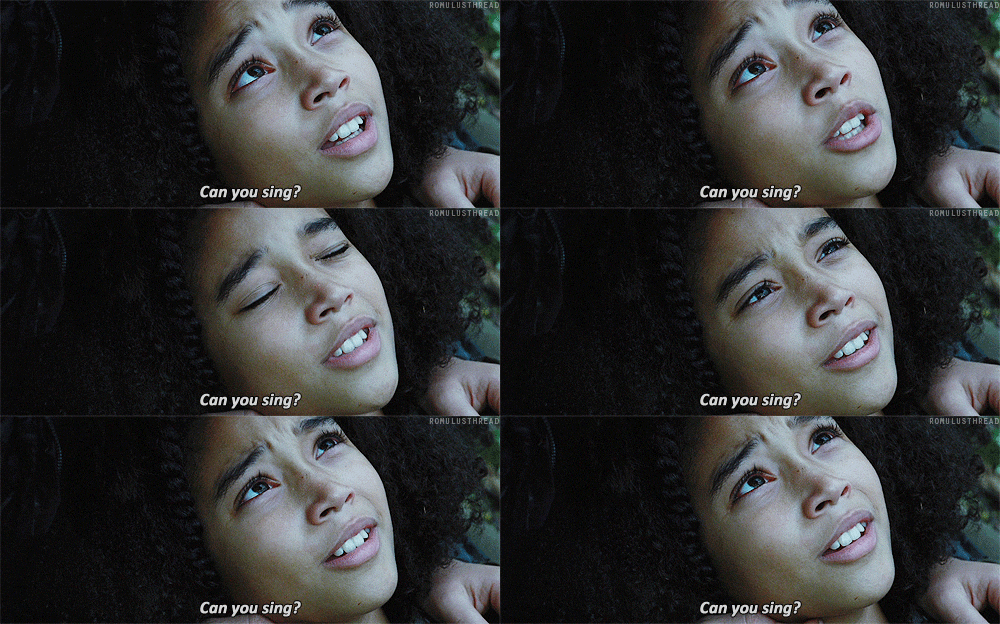
Side Note: My crazy crack theory is that Gayle was re-incarnated as Rue. ;)
This book’s literary quality weaves around you like the nest Gayle built. Little John’s narrative is heart wrenching as he struggles against the harsh realities of life and protecting (what he assumes is) Gayle’s crazy naivette and innocence. The gem lies at how John is at constant conflict with himself. He struggles with overcoming his own doubts and insecurities, and views the world with a sore wounded heart. Yet, he wavers with the belief of magic and the healing power of a little girl’s voice. Does anyone remember the Winnie the Pooh episode where Rabbit takes care of a bluebird named Kessie? I remember as a child sobbing uncontrollably as Kessie had to fly away and leave Rabbit. Well, no matter how I mentally prepared for the ending---I loved that John found that
To make amends, continue friendships through tragedy and pain, live a life full of wonder and hope, and most of all learn the power of forgiveness, whether it’s from others or for himself. The magical realism element enhances the book, as (with all magical instances the one producing the magic is labeled “crazy”) everyone that has interacted with Gayle has to decide if she was just crazy, or actually possesses magical abilities.
I definitely loved that this book does not focus on any environmental platform themes. Loftin solely concentrates on the haunting aspect of life after death, and the belief in magic. In the end, the time spent with Little John or Tree was over before I felt I could savour it. It leaves me refreshed, albeit a little bit bare inside now that their journey has finished.
Side Note: My crazy crack theory is that Gayle was re-incarnated as Rue. ;)

January 30, 2015
This was engaging and different but had I known what I was getting into I would have left the pretty book on the shelf. One of the back cover critics said that it "perfectly captures the challenges of growing up and dealing with loss". REALLY!? What I thought it perfectly captured was how cruel, disillusioned and irresponsible people are when they grow up and can't deal with loss, and how devastating and heavy life is for the children who are caught up in their web.
I'm all for teaching youth about real life and preparing them for hard things, but there wasn't a single adult in the entire book that could be looked to as any kind of role model, or could even offer any hope for the future. The young children (who I will admit were portrayed beautifully, though not believably age appropriate) were the only ones "dealing" with their losses, and having to carry the responsibility of every adult in their lives who was being crippled by them.
And lastly, there was just too much ambiguity floating around the Emperor. He was portrayed as this horribly evil villain, but we are never really sure why? Because he's rich? Because he's unsociable? Because he recorded a little girl's musical voice? We are teased throughout the story with glimpses of deeper moments that we think might give us explanation or understanding into both his apparently sinister ways or human fragility, but we never do get there. We are just supposed to assume that he is a bad man who has done something unspeakably awful, because of some traumatic past. But what!?
I liked the gentle touches of mysterious fantasy coupled with a story about hard realism: it was a unique feel. And I would love to meet a 12-year-old boy who had the courage, emotional strength and tenacity that is embodied in "Little John", but I just couldn't buy it, nor the juxtaposition between his constant, and exceptionally violent thoughts toward the Emperor and his consistently gentle protection of Gayle.
There was some beauty here, but not enough for me to suggest it as a pick for the JV audience, it was supposedly written for.
I'm all for teaching youth about real life and preparing them for hard things, but there wasn't a single adult in the entire book that could be looked to as any kind of role model, or could even offer any hope for the future. The young children (who I will admit were portrayed beautifully, though not believably age appropriate) were the only ones "dealing" with their losses, and having to carry the responsibility of every adult in their lives who was being crippled by them.
And lastly, there was just too much ambiguity floating around the Emperor. He was portrayed as this horribly evil villain, but we are never really sure why? Because he's rich? Because he's unsociable? Because he recorded a little girl's musical voice? We are teased throughout the story with glimpses of deeper moments that we think might give us explanation or understanding into both his apparently sinister ways or human fragility, but we never do get there. We are just supposed to assume that he is a bad man who has done something unspeakably awful, because of some traumatic past. But what!?
I liked the gentle touches of mysterious fantasy coupled with a story about hard realism: it was a unique feel. And I would love to meet a 12-year-old boy who had the courage, emotional strength and tenacity that is embodied in "Little John", but I just couldn't buy it, nor the juxtaposition between his constant, and exceptionally violent thoughts toward the Emperor and his consistently gentle protection of Gayle.
There was some beauty here, but not enough for me to suggest it as a pick for the JV audience, it was supposedly written for.

October 14, 2013
Based on a story from Hans Christian Andersen, this book takes “The Nightingale” and turns it into magical realism. Little John’s family is in turmoil. His little sister died jumping out of a tree, his mother can’t deal with the loss and often forgets that her daughter died, and his father is struggling to make enough money to keep them from being evicted. So Little John has to help his father take down trees to make money. It is at Mr. King’s home that Little John first meets Gayle, a young foster child whose singing voice seems to heal people and who has built a nest high in one of the trees. Then Mr. King decides that he has to record Gayle’s voice and hires Little John to bring her to him within a week. Little John doesn’t want to, so Mr. King resorts to blackmail and money to get him to do it. This story explores responsibility, betrayal, and loss in a poignant and beautiful way.
Loftin’s writing is exquisite and simple. She has taken an old tale and breathed freshness and vibrancy into it. Her setting is tightly woven, just the scope of Little John’s own summer days. It makes the focus very close, intensifying the choices that Little John is forced to make. More than most books for tweens, this one truly asks a character to face an impossible decision and then shows what happens afterwards and how that decision has repercussions for many people.
Little John is a great male protagonist. He is pure boy, resentful of the situation his family is in but also bound to them by love and blood. At the same time, he is a gentle soul, worried about Gayle and the circumstances she is living in. The only character who stretches believability is Mr. King who reads like a stereotypical villain, but he is the only character without nuance.
Magical and beautiful, this is perfect for discussion in a classroom, this book begs to be talked about thanks to its complexity. Appropriate for ages 10-13.
Loftin’s writing is exquisite and simple. She has taken an old tale and breathed freshness and vibrancy into it. Her setting is tightly woven, just the scope of Little John’s own summer days. It makes the focus very close, intensifying the choices that Little John is forced to make. More than most books for tweens, this one truly asks a character to face an impossible decision and then shows what happens afterwards and how that decision has repercussions for many people.
Little John is a great male protagonist. He is pure boy, resentful of the situation his family is in but also bound to them by love and blood. At the same time, he is a gentle soul, worried about Gayle and the circumstances she is living in. The only character who stretches believability is Mr. King who reads like a stereotypical villain, but he is the only character without nuance.
Magical and beautiful, this is perfect for discussion in a classroom, this book begs to be talked about thanks to its complexity. Appropriate for ages 10-13.

March 9, 2015
"Nightingale's Nest" - written by Nikki Loftin and published in 2014 by Penguin Group. This dark, sensitive middle-grade novel is purportedly inspired by Hans Christian Andersen's tale "The Nightingale," but really very loosely. The original story tells of an evil Emperor with a mechanical bird whose beautiful song cures him. Loftin's book is narrated by a twelve year old boy, Little John, who is plagued with bad memories, guilt and dark thoughts. The gorgeous, trilling songs come from the throat of a little foster girl, Gayle, whose sad existence is compounded when the local wealthy merchant, the "Emperor," steals her voice while recording it. He calls his recording machine a "cage." I was very uncomfortable with the way Loftin portrays this "theft" and thought some clarification regarding an actual assault should have been made.
The book strikes constant notes of tension and despair, definitely not light reading. Little John wistfully wishes, "Right then, I wanted a pork chop more than anything. A pork chop, and a family who ate meals together, and had enough money for meat...and doctor's bills." Later on, "I felt like I'd already been beaten, over and over, with a stick the size of the whole world." A lighter moment tells of their neighborhood enactment of funerals for dead birds and insects, "Little John's got something dead!" It reminded me of Doug Cooney's "The Beloved Dearly," where a boy makes a business of those funerals. The ending is somewhat nebulous, I had hoped for something more concrete. This is a challenging story and not for all middle grade readers.
The book strikes constant notes of tension and despair, definitely not light reading. Little John wistfully wishes, "Right then, I wanted a pork chop more than anything. A pork chop, and a family who ate meals together, and had enough money for meat...and doctor's bills." Later on, "I felt like I'd already been beaten, over and over, with a stick the size of the whole world." A lighter moment tells of their neighborhood enactment of funerals for dead birds and insects, "Little John's got something dead!" It reminded me of Doug Cooney's "The Beloved Dearly," where a boy makes a business of those funerals. The ending is somewhat nebulous, I had hoped for something more concrete. This is a challenging story and not for all middle grade readers.

January 4, 2014
Oh wow. Carrie Gelson called Nightingale's Nest "hauntingly beautiful." I whole-heartedly agree! Since it is based on a fairy tale ("The Nightingale"), it is bound to be somewhat creepy, which it definitely is. It makes me think of books such as "Breadcrumbs" and "The Real Boy" by Anne Ursu. Lots of theme topics come into play: right and wrong, anger, death and recovery, fear and courage, mental illness, greed, friendship, redemption, forgiveness, etc. At one point, the main character, Little John, says, "What was right didn't have a thing to do with what was." This drives many of his motivations, but in the end, doing the right thing anyway is what makes him human. The ethereal Gayle makes readers wonder what's real, the Emperor is downright icky, the downtrodden father makes it difficult for us to conjure up empathy, Isabelle makes us laugh at her enthusiasm for death, and the mother is a tragic character. Somehow, Loftin manages to make all this wrong right again. Loved it!

March 25, 2013
Nikki Loftin has a way with words that is hard to describe - all of her stories are achingly beautiful, reach right into you and touch your heart, and all have this sense of uneasiness that never quite settles as you read.
I loved this story. It was so fascinatingly unique, and I was bewitched from the first page. On the surface, Nightingale's Nest is a simplistic story, but there was so much more at work. Behind the wonders of true friendship, the struggles a family goes through after the loss of one of its own and the tricky dynamics between son and father.
Gayle makes this book. She was such an inspiring character in her unfaltering determination to achieve her goal and being optimistic. Her and Little John are the best sort of friends, and that was great.
Middle grade is magical to me, but Nikki Loftin MGs are an exceptional kind of awesome. If you haven't read anything by her, add her to your list now. You won't be disappointed.
I loved this story. It was so fascinatingly unique, and I was bewitched from the first page. On the surface, Nightingale's Nest is a simplistic story, but there was so much more at work. Behind the wonders of true friendship, the struggles a family goes through after the loss of one of its own and the tricky dynamics between son and father.
Gayle makes this book. She was such an inspiring character in her unfaltering determination to achieve her goal and being optimistic. Her and Little John are the best sort of friends, and that was great.
Middle grade is magical to me, but Nikki Loftin MGs are an exceptional kind of awesome. If you haven't read anything by her, add her to your list now. You won't be disappointed.

Read
January 18, 2015Realistic and magical, sad and hopeful, love and loss. Healing.
When Little John has to grow up way too fast and work like a man at 12, he does it without complaint. Circumstances have forced him to grow up way too fast, but then Gayle comes into his life, and he has reasons to smile.
NIGHTINGALE"S NEST is a novel with magical realism that's chock full of pain as well as hope. Little John and Gayle, a girl who's songs can heal, are characters for middle grade students looking to find some magic in the world, especially when things are dark and sad and painful. This is a touching, emotional novel. Middle graders will feel the arrow hit their hearts and will deeply care what happens to the main characters.
This is not a light-hearted novel, and because it is for middle graders, I think it will touch young readers in a way that other books won't. This is a good thing! A really, really good thing.
When Little John has to grow up way too fast and work like a man at 12, he does it without complaint. Circumstances have forced him to grow up way too fast, but then Gayle comes into his life, and he has reasons to smile.
NIGHTINGALE"S NEST is a novel with magical realism that's chock full of pain as well as hope. Little John and Gayle, a girl who's songs can heal, are characters for middle grade students looking to find some magic in the world, especially when things are dark and sad and painful. This is a touching, emotional novel. Middle graders will feel the arrow hit their hearts and will deeply care what happens to the main characters.
This is not a light-hearted novel, and because it is for middle graders, I think it will touch young readers in a way that other books won't. This is a good thing! A really, really good thing.

March 6, 2014
ARC provided by NetGalley:
I love magical children's stories such as this one. Twelve year old John is trying to keep his family together after a devastating loss. Mom is losing her grip on reality while Dad is losing himself in a bottle. As the family sinks deeper into both despair and debt, John is called upon to help his dad's landscaping business. It's on one of these jobs that he meets Gayle, a fragile and mysterious foster child. Their lives intersect as he tries to save her while continuing to try to save what's left of his family. One review I read compares this book to Bridge to Terabithia, and I think that's a fair comparison. Both are stories filled with magic, loss, and the power of friendship. This one's a must read for readers of all ages!
I love magical children's stories such as this one. Twelve year old John is trying to keep his family together after a devastating loss. Mom is losing her grip on reality while Dad is losing himself in a bottle. As the family sinks deeper into both despair and debt, John is called upon to help his dad's landscaping business. It's on one of these jobs that he meets Gayle, a fragile and mysterious foster child. Their lives intersect as he tries to save her while continuing to try to save what's left of his family. One review I read compares this book to Bridge to Terabithia, and I think that's a fair comparison. Both are stories filled with magic, loss, and the power of friendship. This one's a must read for readers of all ages!
March 29, 2014
I DID like this book. I feel compelled to say that upfront because for a long time through the book, I was plagued with that uneasy feeling one gets with certain allusions to certain situations involving vulnerable children. I wondered how the book was going to explain what really happened. It does, and it doesn't. Although this doesn't detract from the sheer quality of this book, it still left the pit of stomach feeling wobbly even if the ending righted the world again. I shouldn't be surprised. It was based off a Hans Christian Anderson tale, and those old tales are lined with stuff not for the faint of heart.

July 8, 2013
If you liked this book, you might also enjoy:
✱ Ophelia and the Marvelous Boy
✱ Breadcrumbs
✱ Keeper
✱ Nest
✱ Ophelia and the Marvelous Boy
✱ Breadcrumbs
✱ Keeper
✱ Nest

June 28, 2015
I love this book. Is one one the few books that I read, lead me to tears. Which not all books can do that. Is just too amazing. The every page you read will only bring you more tears. Which I felt is just an amazingly written book! Super duper touching.

July 3, 2013
This is a gorgeous, lyrical, haunting story that will grab your heart and squeeze it to pieces. I loved it - and blurbed it! I can't wait to share this novel with my family (nieces) and friends.

March 13, 2014
It took me a little while ti get drawn into it, but after about 75 pages, I realized I was reading a very good book. One of the best of 2014 so far. Maybe the best. I haven't decided yet.
June 21, 2014
This book was so lovely! The magical realism was so beautiful; I didn't want it to end!

July 26, 2014
Touching, beautifully written work of magical realism inspired by Hans Christian Andersen's "The Nightingale."

August 3, 2014
I am reminded of an 80s movie called The Boy Who Could Fly. Magical thinking? Or the truth of children?
Displaying 1 - 30 of 243 reviews