“A marvelously wise and expansive book. . . . Ferry writes with warmth, wit, and energy; one could call his prose conversational, but it’s rare to have a conversation quite this wonderful.” — Boston Globe
A fascinating journey through Greek mythology that explains the myths' timeless lessons and meaning
Heroes, gods, and mortals. The Greek myths are the founding narratives of Western to understand them is to know the origins of philosophy, literature, art, science, law, and more. Indeed, as Luc Ferry shows in this masterful book, they remain a great store of wisdom, as relevant to our lives today as ever before. No mere legends or clichés ("Herculean task," "Pandora's box," "Achilles heel," etc.), these classic stories offer profound and manifold lessons, providing the first sustained attempt to answer fundamental human questions concerning "the good life," the burden of mortality, and how to find one's place in the world. Vividly retelling the great tales of mythology and illuminating fresh new ways of understanding them, The Wisdom of the Myths will enlighten readers of all ages.
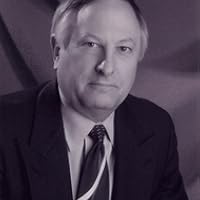
Luc Ferry (born January 1, 1951) is a French philosopher and a notable proponent of Secular Humanism. He is a former member of the Saint-Simon Foundation think-tank.
He received an Agrégation de philosophie (1975), a Doctorat d’Etat en science politique (1981), and an Agrégation de science politique (1982). As a Professor of political science and political philosophy, Luc Ferry taught at the Institut d'études politiques de Lyon (1982–1988) — during which time he also taught and directed graduate research at the Pantheon-Sorbonne University —, at Caen University (1989–96). He was a professor at Paris Diderot University (since 1996) but did not teach there.
From 2002 and until 2004 he served as the Minister of Education on the cabinet led by the conservative Prime Minister Jean-Pierre Raffarin. During his tenure, he was the minister in charge of the implementation of the French law on secularity and conspicuous religious symbols in schools. He received the award of Docteur honoris causa from the Université de Sherbrooke (Canada). He is the 2013 Telesio Galilei Academy of science Laureate for Philosophy. He was enthroned to Chevalier De La Dive Bouteille De Gaillac on the 20 march 2012 together with Max Karoubi and Francesco Fucilla.
In the Wisdom of the Myths, Luc Ferry, a philosopher and professor at the Sorbonne, argues that the Greek myths provide the underlying structure for the birth of philosophy in the 6th century BC. He sees them as a " philosophy in story form." that answers the questions of what it means to live a good life without "recourse to the illusions of a hereafter." Ferry believes that the myths provide a pathway to help humankind deal with mortality and find the best way to live with the time we have.
To illustrate his argument, Ferry analyzes and retells key myths. He examines multiple Greek and Roman sources to demonstrate variation and nuance. I found his analysis of the Odyessy, the tale of Orpheus, and the travails of Oedipus and his daughter Antigone the most compelling.
Ferry is a scholar who understands how to make complex ideas accessible. His writing conveys his enthusiasm for his subject matter. I enjoyed the book immensely and felt reading it deepened my understanding of classical mythology. I strongly recommend it to anyone interested in the classical world.
Rating 3.5 stars. Last month, I read two retellings of ancient Greek myths: a rather dry one by husband and wife Robin and Kathryn Waterfield (The Greek Myths: Stories of the Greek Gods and Heroes Vividly Retold) and a much more fluid one by Stephen Fry (Mythos: The Greek Myths Retold). Both are limited to a strict retelling, without much context (although Fry does attempt to bring the text more up-to-date).
This book, by French philosopher and prolific writer Luc Ferry (born 1951), goes much further: Ferry still presents the stories, of course, but also adds his own interpretations, in line with his own idiosyncratic philosophy. In his numerous publications he claims to be searching for "a doctrine of salvation without God, an answer to the question of the good life which does not come through a 'supreme being' or through faith, but through one's own efforts of thought and reason." And according to Ferry, Greek myths offer numerous tools for this, especially for living that "good life". Again and again he stresses how for them that comes down to accepting reality as it is, "living in the present", with its happy and its grim aspects. No wonder Ferry comes very close to stoicism (that's probably why the publisher chose to give this book its awful selfhelpish title).
In my opinion, he thereby constrains these ancient stories a bit too much, to fit his own views, which in turn limits their relevance. But I won't deny that his thesis is valuable. In conclusion, those who are only interested in the stories themselves would be better off using the work cited at the beginning, especially that of Fry, but those who want to dig deeper and see the bigger picture are definitely better off with Ferry.
The Wisdom of the Myths by Luc Ferry is about philosophy rather than mythology in the strictest sense, but it is still one of the best presentations of Greek myth for modern audiences that I have read. It is largely about how Greek mythology is now more important than ever in the quest for understanding humanity’s place in the cosmos, based on how philosophy was born from and directly influenced by Greek mythology. Ferrry insists that Greek mythology’s lasting impact on our culture makes it imperative that people of all ages read and understand the myths in order to better understand our culture and philosophies today. Although he cannot touch upon all Greek myths, Ferry does an excellent job of presenting and interpreting a number of the most influential and important stories, remaining ever mindful of the various texts that have preserved them and adapted them over time in order to give a more rounded interpretation. Overall, he presents a thoroughly researched and well-reasoned argument about how Greek mythology can still be applicable in the modern world in such a way that everyone, even those who have not studied Greek mythology extensively, can understand and apply to their lives. Even if you are not interested in the philosophy aspect, I think this is a good introduction to Greek mythology because of the variety of stories that Ferry uses and the detailed history that he gives to each one.
Gostei mesmo muito deste livro! Um verdadeiro guia através da mitologia grega (e um pouco de filosofia, mais para o final) pela mão de quem conhece a fundo os textos antigos e nos leva consigo através dos mitos que, afinal fazem parte da nossa história colectiva, mesmo quando não temos consciência disso. Li-o através do BookCrossing e entretanto decidi oferecer um exemplar a mim própria (nem de propósito, está aí o Natal), porque gostei tanto, porque tem partes que gostava de voltar a ler, e ainda porque quero tê-lo disponível para as minhas filhas (a quem já fui lendo algumas coisas, por aqui e por ali).
Back in the summer of '79, like many teenaged kids, I was headed to the beach with friends. My biggest concern was finding a good book to read. Is that what most teenagers are concerned with as they head to the shore? Anyway, I settled on a book of Greek myths because I had always enjoyed hearing the stories and thought a more complete exposure was a good idea. From that summer on I was hooked on the myths. However, one aspect of the myths, or rather how the myths are perceived and presented today, always bothered me. Each presentation always left me with the feeling that the myths were cute, interesting, amusing stories but nothing more, nothing really significant – unlike our "more sophisticated" religious stories. To me, though, the myths were more than cute stories; they were significant views of how to live in and explain this world.
What I loved most about Luc Ferry's “The Wisdom of the Myths” is that he never puts forth that “isn't this cute” condescending attitude towards the Greek myths. Rather he recognizes them for the significant and legitimate religious or, as we see in his conclusion, philosophical treatises that they have always been for me. In short, he treats them with the gravitas they deserve. To paraphrase Ferry, the Greek myths deal with cosmic order, combating hubris, and meting out justice, and help mortals make their way through a cosmos that sometimes showers meaningless, absurd travesties down upon them. Sounds like the concerns of a legitimate religion or philosophy to me.
Ferry's presentation of the various myths is smooth and detailed. Particularly enjoyable is how he includes different versions from different mythographers of the same myths. It is also nice how he explains various etymological connections between the myths and Greek or Latin or even English words. Thanks to Ferry, every time I buy a container of OIKOS yogurt I'll know that “oikos” means “natural place.”
A couple small things I did not like about the work. First, Ferry's description of the Perseus and Medusa story seems to neglect to mention the actual deed of severing Medusa's head. Second - and this could just be a personal foible of mine - on a number of occasions he says “try and.” I was always corrected by grammar teachers that “try to” is preferable to “try and.” Similarly, Ferry also says “refer back” where, I've been told, “refer” is sufficient and preferable. Picky I know, and insignificant; perhaps these two grammar issues are more a product of the translation by Theo Cuffe.
Overall I loved this book. If the attitude it proffers towards the Greek myths was prevalent back in the summer of 1979 then my trip down the shore would have been much more memorable than it was thanks to all the young women who would have been more impressed with my beach-reading choice than they seemed to be. Or not.
Torturous prose. As an example, here’s one sentence from the introduction—“From this point of view, mythology delivers messages of astonishing profundity, perspectives that open up to mortals the vista of a good life without recourse to the illusions of a hereafter, affording us a means of confronting human mortality, facing up to our destiny without closing ourselves with the consolations that the great monotheistic religions claim to bring to mankind.”
That sentence sums up the book. It is his thesis and also of shows his style in a nutshell.
Gets a little lost in Western philosophy but acknowledges the astonishing power of Greek myth to characterize the monstrous forces of the cosmos. Forces rolling ever forward, working themselves out right over our dead bodies if need be. Is this book existential? Let’s not ruin it by putting it in a category. Instead, read it.
Luc Ferry is a beautiful writer with keen insight. He is a marvelous story teller with an important message. Some, who have reviewed The Wisdom of the Myths, rightly point out that Minister Ferry can be repetitive. I don’t find the repetition to be a flaw. He tells us at the beginning that he believes myth can inspire everyone, including our children. He writes to an audience that is thoughtful, not academic, and provides a storyline that can serve adults as they share the Greek Myths with young people. I, for one, benefit from the constant reenforcement of his main lines of thought and the many examples he uses to support them. His passion for philosophy and the fabula of western civilization is infectious. His capacity for articulate reasoning is itself an inspiration.
I found the main threads of his argument to be succinct; first that we have but one life - the life we are living now and, second, that our happiness comes from accepting this fact and then placing ourselves “in our proper place”. This isn't an elitist statement that seeks to make us content in some sub-class strata of humanity, rather, it’s a call to use the power of reasoning to understand our world (our cosmos)and adapt our lives to its marvelous organization and order. When we display hubris we are fighting that cosmic order. We are creating chaos and no good will come from our rebellion. My examples would be: The hubris that leads us to the believe our environment exists to serve our will - was in fact created “for us” - can have no consequence other than then the suicidal destruction of our “place”. The hubris that leads us to believe we are entitled to live beyond our means leads to economic catastrophe and thus a much unhappier life than would otherwise be experienced. The hubris of believing we are gods, that we have immortality ahead of us, leads us to embrace the wearing of an explosive vest and destroy others with it’s detonation if we see it as a our path to deification.
It’s is through the retelling of many of the stories of Greek Mythology that Ferry shares his premise and attempts to show the reader that the ancient Greeks knew there was a way to live that would “tame the savageness of man and make gentle the life of this world” (my use of a quote and not Ferry’s). His retelling is enjoyable to read and his humor well placed. Credit should be extended to the translator Theo Cuff.
I was disappointed in one small section as it failed to answer for me a puzzle. He mentions Odysseus's trek to the underworld and his meeting of Achilles. Achille’s statement that he would rather be a living slave than a dead hero works to Ferry’s argument - it’s living well that ensures to happiness. The conflict for me has aways been my understanding that the ancient Greeks believed heroism was a path to be be remembered and its was this remembrance that created some form of mortality. If anyone can resolve this conflict I would appreciate understanding the nuance.
Please, if you simply enjoy the stories of Greek mythology or if you have an interest in the history of philosophy or if you simply would like a perspective on ‘how to live” - pick up this wonderful book by a very interesting, accomplished and articulate thought leader.
Je suis relativement déçue par cet ouvrage. Sa promesse était pourtant belle: disséquer la philosophie sous-tendant les mythes grecs et en tirer un enseignement pour notre vie quotidienne. Or, il s'avère que l'auteur ne présente que deux concepts qu'il répète (recycle?) pendant 400 pages, ce que je trouve bien maigre vis-à-vis de la promesse du titre. Par contre, et c'est le point positif de cet ouvrage, il offre une plongée dans la mythologie grecque en la présentant d'une manière simple et vivante.
The veil has lifted from my eyes. Such moments in my life are rare because I for one keep trying to define myself so I have a firm foundation, a place of being and a face to present. Now I understand the art of letting go. This is a well written journey of a line of thought. Rarely does an author make their points without a lot of emotion. How refreshing. The myths are bundles of emotion and this foray could have been fraught with shouts for attention. I enjoyed this book immensely and will definitely reread it. I find myself drawn to its reasoning for the sheer beauty of it.
Ferry’s goal is clear in the second volume of his Learning to Live series. How can man achieve salvation without a god? Another way of putting it is to ask the question, How then shall we live? Frankly, this is a question that most people will ask themselves. How do we have a good life? How do we live the good life? What is a good life?
Ferry addresses these questions in his Learning to Live series through philosophy. He explains myth in all its forms is prehistoric wisdom in story form. This is why the stories are so captivating. It is why they are so eternal. They speak to the human condition. They aren’t merely fantasy stories for entertainment, but instructions on how to approach life. Ferry’s focus is on the Greek myths as opposed to Roman, Norse or any other mythological canon that has a similar plot line; as the Greeks are the culture that developed the path from mythos to the logos. The Greeks are the foundation of Western philosophy and thought. The Greeks taught how to face life head long and walk through it. Christianity overlaid grace and transcendence to these very human stories, something Ferry sees as superstitious and fantastical.
As a Christian, I see a balance in learning wisdom from the myths, and learning wisdom from the Scriptures and theology. If true-truth is all God’s truth, then any wisdom that is true derived from the Greek myths are merely an extra-Bibilical confirmation of the wisdom expressed in the Scriptures, and in keeping agreement with Tolkien, The Gospel is a myth that is true. So, what are the truths we learn from the myths? What are some lessons we could take with us? I would like to focus on three that were particularly resonant for me.
From Odysseus, whom Ferry describes as the premier example of the wise man, we learn that a man must know his limitations, and his responsibilities. Odysseus gives up a chance at immortality because he is a mortal man. Man was not given immortality. To give up his mortality would have been to fall into hubris. Hubris leads to destruction. He accepted who he was, his place and his people. He did not deny his humanity, he fulfilled it. To have surrendered his humanity would have meant abandoning the only woman he ever truly loved, his homeland, and his child (literally his future). The lesson: You are not God, and you will never be a god. So accept who you are, grow up and be a man.
From Jason and the Argonauts, we learn about perseverance. Jason is a charmed individual, with hardly a care in the world, who finds himself making an impossible wager, for no good reason, with an outcome that will have no real bearing on Jason, or any of those around him: to obtain the Golden Fleece. In this quest, Jason must pass through 9 obstacles. Even though Jason is a lucky lucky man, who has barely had to struggle in his life. He and his team have to actually go through each of these obstacles in order obtain the Golden Fleece. They can’t go around, they can’t skip any of the obstacles. There will be no transcendent intervention that will lift them up out of the obstacles. They must go through them. Jason drives through all of the obstacles and obtains the fleece. The lesson: Life is hard for everyone. You are going to encounter many obstacles. Your only choice is to make it through. So grow up and be a man. Hold on. Push through. The only way you fail is if you don’t show up. *
From Oedipus, we learn about accepting responsibility. Oedipus is warned that he will one day murder his father and marry his mother. Oedipus takes measures to avoid this inevitability. But he can’t avoid it. It’s his destiny, and in Greek thought, destiny is defined as a reconciling of the created order. Oedipus moves far away from his home land, encounters a foreign king, kills him on the road, marries the king’s wife and together they have children. What Oedipus didn’t realize was who he thought were his parents were actually his adoptive parents. Oedipus had been given up as a baby by the very man he had killed and the woman he had married and had children with. What does Oedipus do? He takes full responsibility for his actions. He owns them. He doesn’t make excuses. Oedipus didn’t know, and he had no control over his past, but he still accepted responsibility. The lesson: You won’t have control over every aspect of your life, but a man takes responsibility for his life.
Again, as a Christian, how can these stories be helpful? Because we live in the real world with real circumstances and real consequences. A transcendent God does not always intervene to snap us out of an ordeal. But what Christianity teaches us is the lesson Oedipus understood: we are completely responsible for our life and for our mistakes. No matter how hard we try, we are going to screw up. Every time we screw up, we die a little. You could call them micro-deaths. Micro-deaths are cumulative and multiple micro-deaths will eventually cause a macro-death, which is the final death. This final macro-death is a consequence of the violation we have all committed: disrupting the created order. Our macro-death is the very thing that restores this created order. Macro-death is our destiny, not just in Greek thought, but in Christian theology as well. The wages of sin is death. What the Greeks called fate, the Scriptures call consequence.
In Greek thought, the macro-death is the end. Did you do well? Did you live a full and happy and good life? Did you do everything you could? What if you didn’t? What if, standing at the end, you realized too late that you should have kept pushing? Hopefully you taught your progeny well so they might remember you forever and save you from the complete obliteration of being forgotten by yet-unborn generations.
Christianity offers a mystery the Greeks never dared imagine: that God Himself would enter death to fulfill it on our behalf. In Christianity, the macro-death was experienced by God Himself, who took on the flesh of a man, and lived a life that in no way disrupted the created order. Instead, he took on the responsibility of us all, and fulfilled our destiny, and then he defeated the final obstacle. He went back into his mother’s womb (the earth/the tomb) and was reborn; defeating the macro-death for us all, and all those found in Christ will be glorified in Christ (the only true fulfillment of what the Greeks longed for in their myths of apotheosis). It is our destiny.
*Incidentally, Ryan Holiday, a modern popularizer of Stoicism, wrote an entire book called The Obstacle Is the Way. Strangely, he omits any reference to Jason and the Argonauts, one of the clearest mythic examples of endurance through trial. This absence reflects a broader weakness in his work: his failure to engage the mythic and poetic roots of the very tradition he claims to represent.
Although Ferry underwhelmed me the last time I read him, I enjoyed his introduction to the Greek mythos. Wisdom from the Myths is two things; Ferry retells the major stories of Greek mythology, patching them together from Homer and the dramatists, but brings them together to argue that they constitute a coherent worldview. This is one of an orderly universe in which man has a definite role as a member of a polis. (Odysseus' journey is read then as a spiritual one, with the hero confronting the death of his identity when tempted by Calypso. He may remain with her as an immortal, but in so doing would destroy every aspect of what makes him human -- his identity as a father, a son, a husband, a king...a mortal, whose glory is in living well in the face of death.) The cosmos' order is nearly self-correcting in that most negative behavior results in self-destruction, though it does seem to require the occasional hand from Zeus through his agents, Heracles and those who are aware of this unitive order. As in A Brief History of Thought, Ferry turns again and again to Stoicism, which he views as the fulfillment of this worldview. Ferry is not a Stoic, but quite sympathetic. He's unusual in that he champions a secular worldview but takes mythology and philosophy seriously, as more than just-so stories and naval-gazing. He manages to go almost the entire book without overly arcane references, a triumph for an academic. I enjoyed this far more than A Brief History of Thought, at least as a recap of Greek mythology with a Stoic bent, but the title is overblown.
4 mois pour finir de lire cet ouvrage titanesque qu’est apprendre à vivre: la sagesse des mythes. À dire vrai au départ je m’attendais à un essai sur le symbolisme de chaque mythe et des messages qui y sont cachés. Malheureusement ce n’est pas le cas et j’étais assez déçu, mais Luc Ferry a su mettre assez de piment sur le suspense. Et avec un peu de volonté j’ai réussi à tenir la cadence et le finir malgré tout. Le but du livre étant d’abord de tirer une leçon des différents mythes, l’auteur tisse avec une sorte de fil conducteur ou plutôt un fil d’Ariane à travers les différents épisodes de la mythologie ( des titans jusqu’à Œdipe en passant par les olympiens ) une morale qui les intègre toutes. J’ai pas vraiment accroché au début mais j’ai fini par aimer le style de l’auteur et sa manière de tutoyer le lecteur comme si c’était un oncle savant qui raconte une histoire à son neuveu.
This is another in Ferry's series of books in which he is attempting to lay out the case for a new type of spirituality based on first principles rather that theology. This is not as easy a read at A Brief History of Thought and at times it gets plodding. Greek myth is sometimes hard to follow, but I did find this a very interesting and thoughtful book. There are a number of important insights to the actions of man and the course of nature which everyone should remember and take to heart.
This book really brings the ancient myths to life. Ferry's analysis and commentary on Greek civilization and the part the myths played for them is illuminating. It also helps to see how the various gods and heroes were related. Ferry shows how these myths constituted a basic form of philosophy that led to Socrates, Plato and Aristotle.
Les grands mythes grecs, origine de la philosophie et fondement de notre civilisation, sont ici racontés mais aussi expliqués dans leur sens le plus profond par Luc Ferry, dans une langue accessible à tous, parents et enfants. La « pomme de discorde », « le pactole », « le taureau qu'il faut prendre par les cornes », le « dédale », la « boîte de Pandore » sont des expressions que nous utilisons quotidiennement. Pourtant, peu de gens savent qu'elles sont tirées de la mythologie grecque. Ce livre nous raconte les histoires passionnantes ou elles prennent leur source.
Mais la mythologie est surtout une représentation du monde que l'ouvrage met en lumière : l'univers y apparaît comme un être harmonieux, juste, beau, et bon. Mais si l'équilibre était donné d'emblée, il n'y aurait pas de vie : « sans les hommes, les Dieux s'ennuieraient ». C'est pourquoi la lutte contre le chaos, les premiers Dieux et les Titans constitue un thème majeur de cette mythologie. Et lorsque Zeus instaure enfin un partage ordonné du monde, ce sont encore des excès de ceux qui veulent subvertir cet ordre que découlent catastrophes et tragédies. Tel est le sens le plus profond du précepte inscrit sur le temple de Delphes : « connais toi toi-même », c'est-à-dire « ne te prends pas pour un Dieu ».
Rien n'est plus passionnant que cette plongée dans les mythes grecs : si la magie qu'ils dégagent est au moins égale à celle des contes de Grimm ou de Perrault, ils constituent de surcroît une irremplaçable source de culture qui éclaire merveilleusement les fondements de notre manière d'appréhender le monde et les hommes.
This entire review has been hidden because of spoilers.
The first volume was a genuinely useful overview of Western philosophy for the newbie. This one is just unimaginably silly, and I am abandoning it right at the beginning. His view is that the Greek myths (not myths in general, though, only the Greek ones, although we all know he will take the view it is the same Mythos as the Romans had) can offer interesting and useful observations on how to live a Good Life, without the intercessions of a Christian god.
But on page 19 he can be found parading the word "hermaphrodite" as evidence that Greek Thought Lives In Us, which is a particularly tiresome example of the etymological fallacy and I really can't even.
In any case, I have no interest at all in philosophy as a project of Self-Improvement (I will never, for example, read the Stoics). So this book sets itself a stupid task, which it carries out stupidly, and it is in any case one I am not interested in seeing done. That's a no from me, then.
For whatever reason, I found it difficult to get into this book. The first chapter was a slog for me. Once the author started telling some of the myths, I became more engaged.
Still, for the majority of the book the author summarizes the myths and jumps from one character to the next. It's a lot to keep track of. And he doesn't really go deep with any single myth until the penultimate chapter, which focuses on Oedipus Rex. This was my favorite chapter.
I was surprised to see how many myths borrow elements from Biblical stories. The overlaps are obvious. This raises the question of which came first: the Bible stories or the myths?
From what I can tell, the Torah in particular predates Greek mythology by several hundred years. But there are motives in play, and some insist oral mythology predates Biblical stories. I doubt it's an argument that can be satifactorily settled, but it's interesting nonetheless.
La sagesse des mythes m'a été donné a lire par mon prof de philo. J'ai beau être une grande fan de mythologie ce n'est pas le genre de livre vers lequel je serai aller spontanément... Et pourtant il m'a bien plu ! Évidemment un livre qui raconte des mythes ça ne pouvait pas me décevoir 😂 J'ai avant tout apprécié la partie "analyse" des mythes plus que la manière dont ils étaient racontés que j'ai trouvé un peu hostile et dense. Ce livre a beau être fais de manière « accessible » je l'ai trouvé assez difficile à lire 😬 Luc Ferry a un peu tendance à s'auto paraphraser ce qui m'a empêché de vraiment prendre plaisir dans pas mal de passage... Souvent une sensation de déjà lu qui m'amène à sauter des paragraphes entiers.
Mise à part ça le livre est vraiment cool et m'a fait découvrir un ou deux mythes que je ne connaissais pas tout en ajoutant une lecture supplémentaire aux mythes que je connaissais déjà ⭐⭐⭐
(J'ai pas l'habitude de faire des avis compliqués comme ça je sais pas pourquoi je me suis pris pour Shakespeare soudain 😂)
Un libro que bajo la premisa del análisis de la mitología griega, se encarga de hacer una serie de planteamientos filosóficos para dar sentido a una de las grandes cosmogonías de la humanidad.
Es mediante la explicación de la creación del mundo, el hombre y los mitos mas reconocidos de los antiguos griegos que Ferry nos plantea, sin ser técnico en demasía, distintas teorías filosóficas sobre la vida y que en la actualidad pueden ser aplicadas y además, nos permiten entender el desarrollo de una de las grandes civilizaciones del hombre y además, de una de sus mayores aportaciones: la filosofía.
Fue un libro difícil de encontrar y que también es extenso pero que valió la pena dosificar y disfrutar conforme fui avanzando.
The author is a philosopher and uses Greek mythology to flush out a “Greco-Roman” philosophy that still seems to fit what we experience today. He is pretty clear about the purpose of this book and his key ideas, but this also is an easy read as he draws out the drama and meaning within the Greek myths. Really good read, and I just wish I had read my own copy... this deserves written notes and dog-eared pages that are read and reread for personal reflection and for discussion.
Mouais, j'ai lu ce livre en 2 jours, je m'attendais à mieux c'est des résumés de différant mythe pour faire comprendre ce qu'est l'hybris et le dike et expliquer acosmisme de dionysos, 400 pages sont pas nécessaire et reprendre 20 fois les choses non plus. C'est limite inintéressant pour quelqu'un qui s'y connaît et trop long pour un intéressé autant lire chaque mythe de son côté au lieu de lire un résumé de 20 pages dont des citations faisant des pages pour "dexouvrir".
Um livro pra quem se interessa por mitologia grega.
Em que pese ter adorado "Aprender a viver" e do fato da admirável prosa do autor que versa sobre a mitologia, Ulisses, Troia, Rei Midas e outros que tais... Não sei, faltou um algo a mais que me fizesse exclamar "oh".
IMHO, inferior ao primeiro volume ... Vou pensar se leio ou não o terceiro volume ...
Bom livro contando cosmogonia e teogonia Grega. As vezes um pouco repetitivo e lento mas sempre interessante e trazendo várias reflexões. Destaque para os dois últimos capítulos onde as histórias contadas são “amarradas”.
Elements of this were interesting, but it was fairly repetitive and spent more time telling mythological stories than delving into the philosophy of them. I’ve certainly learnt something from reading it, but I can’t think of anyone I’d recommend it to.
Empieza muy bien arrojando ideas muy interesantes pero según avanza el libro va perdiendo ritmo y se dedica casi exclusivamente a resumir brevemente los mitos sin llegar a profundizar en sus enseñanzas. Aún así hay merece echarle un vistazo.