Bankers prowl Brooklyn bars on the eve of the stock market crash. A debate over Young Elvis versus Vegas Elvis turns existential. Detoxing junkies use a live lobster to spice up their love life. Students on summer break struggle to escape the orbit of a seemingly utopic communal house.
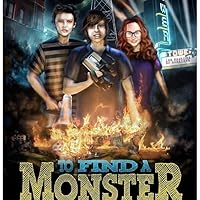
And in the title story, selected for The Best American Short Stories, two film school buddies working on a doomed project are left sizing up their own talent, hoping to come out on top—but fearing they won't.
In What's Important Is Feeling, Adam Wilson follows the through-line of contemporary coming-of-age from the ravings of teenage lust to the staggering loneliness of proto-adulthood. He navigates the tough terrain of American life with a delicate balance of comedy and compassion, lyricism and unsparing straightforwardness. Wilson's characters wander through a purgatory of yearning, hope, and grief. No one emerges unscathed.
Adam Wilson is the author of the novel Flatscreen, a National Jewish Book Award finalist, and the collection of short stories What's Important Is Feeling. His stories have appeared in The Paris Review, Tin House, VICE, and The Best American Short Stories, among many other publications. In 2012 he received the Terry Southern Prize, which recognizes "wit, panache, and sprezzatura" in work published by The Paris Review. He teaches creative writing at Columbia and NYU and lives in Brooklyn.
Adam Wilson's "What's Important is Feeling" is an exuberant "Fuck You" for every pimply kid in high school who was under-fucked and over friend-zoned. His collection of stories contains joy, ennui and unforgettable visuals like being accused of beating off on a Frida Kahlo poster in the bathroom (the dried come, her tears). Wilson's stories, at times, are absolutely gorgeous and vivid. While reading Adam's prose, I sensed Sam Lipsyte's "Venus Drive" watching, like a peeping tom in the corner, jerking off and crying. Wilson studied with Lipsyte and the echoes are palpable. My heart sunk while reading "Things I Had," a doozy about a perverse queer grandfather spiraling into dementia and the inexplicable way we can love and pity with a single gesture. In "We Close Our Eyes," young Zach is bathed in Dijon yellow light while his Jewish mother cuddles with a Catholic priest. Wilson's dialogue is somehow casual and hip in the heaviest of places and he does this like no other: he dips and dives like grieving heart playing at allowing his horrible pleasures to fall.
My initial reason for choosing this book is that the author went to Tufts (as did I) and worked at my favorite book store (Book Court) and lives in Brooklyn (as do I), so it seemed like I should. And upon further diligence (and NOT cyber-stalking) I deduced that I had his father as an English professor. All that said, the best reason for choosing this book should be the writing. The stories capture so many cringe-worthy moments of life with tenderness and that right mix of humor where you don't know if you should laugh or cry or both. I can't wait to read more.
Based on reading the e-book single, Soft Thunder, the title story in The Paris Review, and Some Nights We Tase each other in Vice, I'm very excited for the rest of this collection. The lyricism of the prose alone makes reading Wilson worth it, but there's so much more going on each time. Wilson's eye for the human condition has to be one of the fiercest out there. His stories strike that hard to achieve balance of ruthlessness and warmth.
Of the 12 short stories contained within these pages, I really only enjoyed 5 of them: the first 4 and #6. So as you can imagine things went pretty slow during the last half of the book. If I was only rating the first half, I'd be hard-pressed not to give What's Important Is Feeling a 4/5, probably even a 4 1/2. The stories I enjoyed contained so much raw heartbreak, angst and coming-of-age. I would not hesitate to read a full-length novel by Adam Wilson as his voice is unique in both its humor and tragedy.
Witty, fun and poignant reminiscent of Brett Easton Ellis's Rules of Attraction and Woody Allen coming of age humor. I wouldn't recommend for anyone under the age of 16 but after that very highly recommend! Laughed out loud on almost every page.
Twelve stories, all with first person POV, a different narrator for each. I read this collection slowly, gradually--as I often do with collections--, one story a day or every other day.
My favorite, the opener: Soft Thunder. It’s one of three stories that wasn’t previously published. The narrator is Ben. When the story opens, he’s seventeen, a table busser at Norm’s, a “retro chic diner.” His co-workers include Wyatt the manager, who goes by “Madonna,” and Claire the "lifer waitress," who “struck me as someone who had never been young, who from birth had been fading from unknown, prenatal glory.” More central to the story is Kendra, whose “matte black hair hung nearly to her waist in a puff of luminous waves. The hair probably accounted for a third of her weight. She was skinny, barely a body, just accumulated clothing on a stingy set of bones.” Her parents “looked like peasants on the covers of the Russian novels I’d been skimming for English.” Ben and some friends have a band and they conscript Kendra, though she plays clarinet, the “wrong kind of instrument.” They practice of course, in a garage:
I plucked an arbitrary chord. Alex’s keys produced a lion’s roar—the coolest effect on his old toy Yamaha. “What key are we in?” Kenda asked. “Key?” I said. Roland shook his head, gave the bass a bit of slappity. Sam smashed at his cymbals. I noodled up high on the neck. Alex nudged a few notes from the white keys. “We’re just jamming,” I said. “Just some freestyle experimental shit.” “It’s shit all right,” Kendra said. She blew into her instrument. Out came something that sounded like music. “Fo shiz,” Alex said. “I told you,” Sam said. Roland nodded in approval. “She’s Hungarian,” I said.
Great stuff! The closing compresses a number of events and years into just a few pages of narrative summary: one character gets cancer and survives, another dies, Ben’s married and working for his uncle, etc. A novella in only 22 pages. I loved these characters, and I haven’t even touched on some others, such as the sister. If the story has a fault, it’s that I wanted more, much more, and it had the feel of a project meant, perhaps, to be a novel but was abandoned? The physical description above of Kendra is only a small part of the descriptive passages spread over several pages, maybe a half to three-thirds of a page altogether, longer than in most novels. When I encountered that is when I first wondered if this might have been a frustrated novel. Maybe yes, maybe no.
Other favorites: We Close Our Eyes; Sluts At Heart; December Boys Got It Bad. In the latter, fired financial workers hit the bars, including a German-style biergarten with “a hundred beers on tap and overpriced wings dripping with watery hot sauce.”
“The blood of the factory-farmed chicken,” Lawrence says, licks his finger. [….] “I should have gone into commodities,” I say. “The American dream is orange juice.” “This is a shit restaurant,” Lawrence says. “The Internet lied to me. There were no hot wings in Hitler’s time. Am I the last of the true believers?”
I also enjoyed the titular story, What’s Important Is Feeling, though not quite as much as the other four. This one, it should be noted, was included in the 2012 edition of the (very) highly prestigious, The Best American Stories. Rated individually, for me this one was a four-star. Just goes to show, what the hell do I know?! Consider my damaged bona fides as I soldier on ... The remaining stories ranged from pretty good to a few that I frankly didn’t care for a lot. In one or two, it was the stoner humor, that generally doesn’t do much for me. Another had very short sentences. This no doubt had a purpose, but I wasn't wild about the staccato effect. It may be that I am not part of the intended audience for a few of these. For me though, the opening story alone makes this collection worth the price of admission. So! My enjoyment of these stories varied pretty widely, obviously. It's not easy to rate overall. Say ... 3.5 stars? Round up to four.
A set of short stories. Really gritty, um-comfy, and a bit pervy, and that’s the whole lot of them. Bordered on pushing a lil TOO much for shock factor but I dug most of them.
What's Important Is Feeling falls into the same trap that many collections do, in that it's too consistent in regards to its theme, its characters, its setting. Many of the leads are young Jewish men struggling with love, relationships, and their transition to adulthood. They do drugs. They live on the east coast for the most part. What this amounts to is a collection in which each story is an echo of the previous one. They aren't carbon copies, but they aren't wholly different either. Some people prefer this type of cohesiveness; I don't happen to be one of them. And I can't ignore the fact that Adam Wilson just so happens to be a young Jewish male living on the east coast, which only further adds to the "is this story about you" topic that readers so often pose to authors.
Don't get me wrong, Adam Wilson can write...and he does so with a certain authenticity and humor that I rarely see. The credentials are there, having been published in The Paris Review, VICE, and Tin House, but I suspect these stories worked better in the context of a literary magazine than a collection. Once combined, they lose all contrast and assume a sort of generic quality. I never found myself hating or loving any of them, but feeling lukewarm about something can be just as dangerous as loathing. Wilson's prose is solid, he definitely knows how to capture the character of a young twenty-something, but I wanted a little more variety out of him. "The Long In-Between", for example, is different in that it's more female-centric, but even then we're still presented the same unlucky-in-life-and-love-on-the-east-coast story that gets dished up for the majority of the collection.
The clear stand-out for me was the title story, "What's Important Is Feeling", a piece that actually takes place on the west coast. It reminded me of an article that was written about The Canyons some time ago, which mostly documented how everything about that movie was going to shit. I quite enjoyed it. But this reprieve in Wilson's book is singular, the one hit among the many stories in which characters and settings are too close, too familiar to differentiate, and therefore, lost in the shuffle. Wilson's stories can work on their own, and they can work in the context of a literary magazine, but back-to-back-to-back is something I had a hard time with. If you enjoy the cohesive element in collections, then I can't recommend this book enough. I tend to lean towards diversity in collections. In the end, I'd much rather love/hate a few stories as opposed to feeling the same about all of them.
"What's Important Is Feeling" falls into the same trap that many collections do, in that it's too consistent in regards to its theme, its characters, its setting. Many of the leads are young Jewish men struggling with love, relationships, and their transition to adulthood. They do drugs. They live on the east coast for the most part. What this amounts to is a collection in which each story is an echo of the previous one. They aren't carbon copies, but they aren't wholly different either. Some people prefer this type of cohesiveness; I don't happen to be one of them. And I can't ignore the fact that Adam Wilson just so happens to be a young Jewish male living on the east coast, which only further adds to the "is this story about you" topic that readers so often pose to authors.
Don't get me wrong, Adam Wilson can write...and he does so with a certain authenticity and humor that I rarely see. The credentials are there, having been published in The Paris Review, VICE, and Tin House, but I suspect these stories worked better in the context of a literary magazine than a collection. Once combined, they lose all contrast and assume a sort of generic quality. I never found myself hating or loving any of them, but feeling lukewarm about something can be just as dangerous as loathing. Wilson's prose is solid, he definitely knows how to capture the character of a young twenty-something, but I wanted a little more variety out of him. "The Long In-Between", for example, is different in that it's more female-centric, but even then we're still presented the same unlucky-in-life-and-love-on-the-east-coast story that gets dished up for the majority of the collection.
The clear stand-out for me was the title story, "What's Important Is Feeling", a piece that actually takes place on the west coast. It reminded me of an article that was written about "The Canyons" some time ago, which mostly documented how everything about that movie was going to shit. I quite enjoyed it. But this reprieve in Wilson's book is singular, the one hit among the many stories in which characters and settings are too close, too familiar to differentiate, and therefore, lost in the shuffle. Wilson's stories can work on their own, and they can work in the context of a literary magazine, but back-to-back-to-back is something I had a hard time with. If you enjoy the cohesive element in collections, then I can't recommend this book enough. I tend to lean towards diversity in collections. In the end, I'd much rather love/hate a few stories as opposed to feeling the same about all of them.
I had very mixed feelings about this collection. The stories were, for the most part, written very well, but some of them were also very boring. (Most of) The protagonists didn't do anything but sex and drugs, which is fine in a story or even a few but the whole collection? Not so much.
There were a few stories that left strong impressions, and a few that I ended wishing I hadn't begun. I'd have to say "We Close Our Eyes" was my favorite, with "Tell Me" a close second. Either "The Long Inbetween" or "The Porchies" was my least favorite. I can't decide.
There are certainly stories in this collection that I would recommend to many people, though not all. If you're a big fan of short stories, or if you're feeling nostalgic for wasted teenage and young adult years, you might want to pick this up.
Before I end, I'd like to point out that, while I didn't always love Wilson's plots or characters, his prose were very good. I was impressed.
Don't know why I chose this one, probably read somewhere this was a hot author. Maybe, but I didn't care for these stories on the whole. A couple of good ones, but, unfortunately, they all sound the same. Young people getting stoned and having bad sex. It seems like every single story is in the first person, I'm not going back to make sure. All the narrators are young white males with pretty much the same problems. The title story was in Best American Short Stories, what a mystery that is! Best story is a bitter little piece about family facing the imminent death of the mother, and facing it badly. I won't forget this one easily. So, give it a library try, and see what you think. I don't think I'd recommend anyone spend actual money to have this on his shelf.
A collection of short stories where middle classed guys (usually Jewish, usually from New England) live unhappy existences, do a lot of a drugs, pine for girls, feel awkward, and end unfullfilled; a few end with epilogues talking about crappy jobs and doomed marriages. It kind of wore me down. The writer is good at getting you into a story, but they tend not to be places I like to be. The writing is smooth and funny, I just felt I was reading the same story over and over. Two stories were better, the title story and one about investment bankers losing their job during the 2008 financial collapse; these two were weighed down by the others.
This was an uneven short story collection. Some of the stories were beautifully written, and left you in a haze of thoughtful melancholy. Others were juvenile, written in a format or with prose designed more to shock or challenge rather than elucidate.
Wilson is at his best when he describes the emotions and angst of young men. He authentically captures the dialogue and frustrations of educated, privileged young men who are nevertheless at a loss for what to do or feel - or how to achieve happiness.
In his best stories, Wilson manages to draw the reader into the intricacies of esoteric subjects, even if you had not initially cared for them.
stories of young people wondering how to be How Should a Person Be? set mostly in boston and or nyc area. i about gave up after 1st two, but my opinion? skip those and start with and don't stop till things i had december boys got it bad some night we tase each other we close our eyes tell me sluts at heart america is me and andy what's important is feeling
These are good stories, and Mr Wilson writes well in a smooth and telling prose. They suffer from what would once have been called New Yorker-itis, an excess of ironic distance, as though all the characters were looked at too closely from too great a distance. It's a defect, even when it lies at the heart of the writer's style.
Full disclosure: I was sent this book in exchange for my review.
Wilson often alludes to the social class of his characters--Wall Street types vs. those who went to their state schools, etc.--but the result is always the same--drugs and ennui. There's some heart here, which is nice, and some humor too, but I just didn't love it.
Probably a 3.5. Related too much to some of these middle class fuck ups and their existential angst. Accurate for their male type but often annoyingly reductive portraits of women from these narrators.
Stories I wanted to like much more than I liked, I guess. Prose is enjoyable at times. Reads quickly, fluidly. The stories largely feel half-realized, however, all too often false-starting or fizzling. They repetitively cover the same ground, much of it unfortunately bro-y.
all of the stories were pretty similar; abt adulthood, angsty teenagers smoking weed and sex but i guess thats what the description of the book said it would include. i dont know what i expected lol but it wasnt my fav, kind of dull
Pretty awful collection of short stories. You can see the big difference between his short stories and stories from Alice Munro, Raymond Carver, Lorrie Moore, Charles D'Ambrosio, etc.