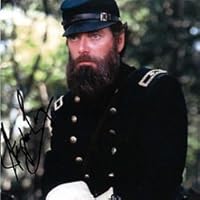
A collection of over one hundred and eighty fine art nude photographic portraits of men captured in the classical tradition of mythologised heroism and the sometimes grandiose and dramatic poses that entailed, shot in an array of contemporary, post-modernist, neo-classic and painterly environments, in both colour and warm toned black and white, reminiscent of the influences being evoked and in the tradition of fine art film photography.
Best known for his series of photographic monographs on the nude male, Paul Freeman's nude portraits of sports stars, Olympians and actors appeared between 1995 and 2005 in Studio Magazines' '(not only) Black And White', '(not only) Sport' and 'Blue', and in their books The Sydney Dream (2000), 'The Athen's Dream' (2004), and 'Sportbook' (2003) In 1996 Paul wrote the best-selling biography of footballer Ian Roberts, ('Ian Roberts: Finding Out', Random House 1997). His first monograph, 'Bondi Classic', was published to critical acclaim in 2003, and was followed by 'Bondi Urban' (2005), 'Bondi Work' (2006) and 'Bondi Road' (2007). This best-selling series, which takes its' name from Sydney's most iconic suburban beach, observes the contemporary young Australian urban male at home, at work and at play. Equally successful has been Paul's Outback series, which uses the Australian bush and its' changing moods to explore Paul's male aesthetic, and to style and weather his subjects, varying thematic focus in each of 'Outback' ( 2008) ,' Outback Currawong Creek' (2009) , 'Outback Brumby' (2010), and 'Outback Bushmen' (2012).' Outback Dusk' has just been released. His 2011 and 2013 books 'Heroics' and' Heroics II' are an exploration of the neo-classic nude male referencing sculpture and painting in Western European art, and even surrealist film interpretations. This work comments on attitudes to the naked male in public and art by juxtaposing our collective artistic heritage with contemporary reality and male physiques. Many of Paul's books are available from Amazon. Paul has made his mark in fashion and advertising, with international awards, from Cannes Lions to Clios, to his name. He has a university degree in Arts, and studied photography at the Australian Centre For Photography in Sydney. The New York Times art critic Robert Hughes' featured Paul's work in his 2000 documentary series Australia: Beyond The Fatal Shore. Please go to paulfreeman.com.au for more information.
Absolutely beautiful collection of fine art photography. I don't know how it compares to the prequel, but by god am I determined to get my hands on it now. This book has made a fan of Paul Freeman out of me and I'll definitely be coming back for more when I can!
Costumes and Attitudes from the Past in full bloom NOW!
Paul Freeman always takes his large following of admirers of his photographic artistry on an experience with every new book he publishes. With a reputation for finding the finest models in Australia to appear in his previous volumes of the outback in Australia (Outback, Outback Currawong Creek, Outback Brumby, Bondi Classic, Bondi Urban, Bondi Work, Bondi Road) the reader expects to see stunningly handsome hunks on the pages of his monographs. But this new book, HEROICS, is a different step for Freeman. And a sequel HEROICS II is on the way.
Continuing the same exceptionally high quality of photographic art - black and white, duotone, full color, and color tinted images, with the most sophisticated lighting effects available and a top sense of composition - this book places his models in the uniforms and attitudes of European historical concepts of the Hero. His basically nude models are adorned with swords, shields, armor, hairpieces, and an array of dazzling uniforms from many countries and many periods and from his matrix he recreates the 'old concept' of heroism. Many of the images are tongue in cheek - gladiators posing in front of a kitchen sink, men alone and together with allusions to great warriors from Greek legend and Roman times, men reenacting famous sculptures. Theses images may contain humor and parody, but they still retain Freeman's ability to find that special macho alluring sensuality that is his trademark.
An aspect that makes these images so refreshingly new from his other work is his use of color on otherwise monochromatic photographs. The artist in him flows freely and that aspect we hope to see more often. Just to give this collection of Heroics more validity, Freeman includes photographs of many works of art in ancient sculpture: the reader may have to look twice to realize that these sensitively placed addenda aren't live models, so well are they integrated into his book concept. This book represents a new step for Paul Freeman and to know that he can maintain our dedication to his work with each new thought is one of the marks of a very important artist. Kudos!
I won a copy of this luscious photo book in a fundraiser auction. I only have a few such books, but despite the artifice and eroticization (sp?) of war, I found it quite sexy.