

What do you think?
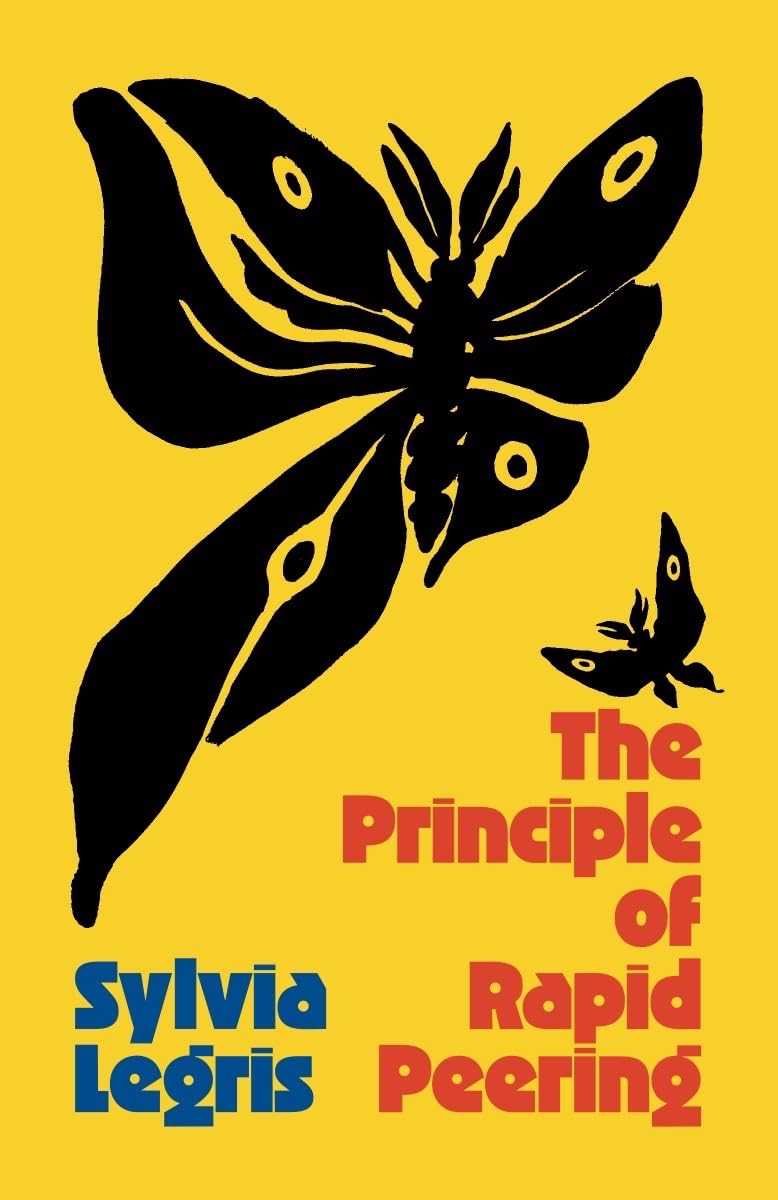
The Principle of Rapid Peering
A lyrical guide through Saskatchewan’s Aspen Parkland by a poet whose work is “fizzing with ecological intellect” ( Times Literary Supplement ). Self-seeding wind is a wind of ever-replenishing breath. ―from “The Walk, or The Principle of Rapid Peering” The title of Sylvia Legris’ melopoeic collection The Principle of Rapid Peering comes from a phrase the nineteenth-century ornithologist and field biologist Joseph Grinnell used to describe the feeding behavior of certain birds. Rather than waiting passively for food to approach them, these birds live in a continuous mode of “rapid peering.” Legris explores this rich theme of active observation through a spray of poems that together form a kind of almanac or naturalist’s notebook in verse. Here is “where nature converges with words,” as the poet walks through prairie habitats near her home in Saskatchewan, through lawless chronologies and mellifluous strophes of strobili and solstice. Moths appear frequently, as do birds and plants and larvae, all meticulously observed and documented with an oblique sense of the pandemic marking the seasons. Elements of weather, ornithology, entomology, and anatomy feed her condensed, inflective lines, making the heart bloom and the intellect dance.
- GenresPoetry
85 pages, Paperback
Published April 2, 2024
Ratings & Reviews
Friends & Following
Create a free account to discover what your friends think of this book!
Community Reviews
Displaying 1 - 9 of 9 reviews

September 4, 2024
I remember hearing children's book writer Blue Balliett talk about the kind of writing that peels off the top of your head and squeezes lemon juice on your brain. The poems in The Principle of Rapid Peering are that kind of writing. I was that blown away by this collection. I picked it up on a whim from the library's new books shelf and was utterly unprepared for the energy and inventiveness of these poems about birds, moths, winds, and seasons. The language Legris uses is scientifically elegant and precise to the point that I was having to look up multiple words per page. Even then, I wasn't always entirely understanding what I was reading--but I knew I liked it. There are so many memorable images and flashes of innovative language in these poems. I love how Legris blends keen observation and field guide research with poetic techniques like assonance and epizeuxis. The result: a collection that sings with playfulness and originality. I've never read anything else quite like this.
January 18, 2026
If Emily Dickinson, Marianne Moore, Linnaeus, Darwin, E.O.Wilson, and Gerard Manley Hopkins had a polyamorous offspring producing relationship you might get something near to these intense genetic seed library poems of the small organisms of the natural world by the Canadian poet from Saskatchewan. I think no one could memorize or recite one, even the shortest. The peering of the title is an understatement. Legris sees the ground, the grasses, the living things and words generate like creation. Few verbs. Almost anti-romantic in tone. The poetry is in the biology.

July 30, 2024
I wish it was otherwise, but I can't relate to Legris' work. It is so intimately bound to nature, but also to a strong sense of belonging in a place, which I seem to be incapable of feeling. I can recognize elements in her poems, but not what's beyond them. Neurodivergency isn't always a blessing/gift/thing to celebrate.
Not for me, but I recommend her poetry to others without reservation.
Not for me, but I recommend her poetry to others without reservation.

March 27, 2025
That was a very specific book. Unfortunately, I enjoyed the titles of the poems more than their content. They are, anyway, “titled directly or as paraphrases after passages in” other authors’ works. Overall, I only found the last two poems interesting. Too bad, the cover art was beautiful, and it misled me.

Read
August 25, 2024i need to understand when I’m not the target audience for a book!!! her verse was beautiful and i wrote down several of the lines because they were gorgeous but the concepts of the content were just out of my grasp.

February 10, 2025
This isn’t the book that is going to make me a big poetry reader. The poems aren’t bad, but since I’m not a bird watcher I don’t get the references. Janina Duszejko (the main character of Drive Your Plough Over the Bones of the Dead) would go fucking nuts for this book.
Read
March 26, 2026Not really for me

July 7, 2026
I really wanted to think that it was better than I did. But I needed more poetry and less just stating biological facts. My favourite part was the one about the moth.

February 2, 2025
Vibrant and meticulous nature observations (and research) transformed into poetic celebration. Plenty of ornithological and entomological vocabulary choices that had me consulting Google— but that is part of the fun. I was quite contented to be “spittle in the slipstream.”
Displaying 1 - 9 of 9 reviews