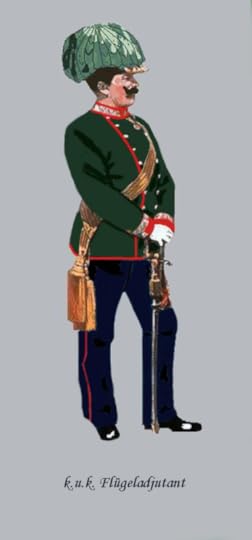
En esta pequeña obra maestra, escrita en julio de 1900 y que constituye uno de los primeros monólogos interiores de la literatura europea, Arthur Schnitzler experimenta con la narración de un flujo de consciencia, el del teniente Gustl, que ve cómo un acto banal puede a llegar a complicarle la vida: en cuestión de segundos, pasará de ser mero espectador de un concierto a temeroso contendiente en un duelo de honor. Este trepidante relato, que ocasionó no poco revuelo en el momento de su aparición, concentra en su verdad lo mejor de ese estilo punzante, regio y expresionista tan propio del escritor vienés.
Arthur Schnitzler was an Austrian author and dramatist.
The son of a prominent Hungarian-Jewish laryngologist Johann Schnitzler and Luise Markbreiter (a daughter of the Viennese doctor Philipp Markbreiter), was born in Vienna in the Austro-Hungarian Empire, and began studying medicine at the local university in 1879. He received his doctorate of medicine in 1885 and worked at the Vienna's General Hospital, but ultimately abandoned medicine in favour of writing.
His works were often controversial, both for their frank description of sexuality (Sigmund Freud, in a letter to Schnitzler, confessed "I have gained the impression that you have learned through intuition — though actually as a result of sensitive introspection — everything that I have had to unearth by laborious work on other persons")[1] and for their strong stand against anti-Semitism, represented by works such as his play Professor Bernhardi and the novel Der Weg ins Freie. However, though Schnitzler was himself Jewish, Professor Bernhardi and Fräulein Else are among the few clearly-identified Jewish protagonists in his work.
Schnitzler was branded as a pornographer after the release of his play Reigen, in which ten pairs of characters are shown before and after the sexual act, leading and ending with a prostitute. The furore after this play was couched in the strongest anti-semitic terms;[2] his works would later be cited as "Jewish filth" by Adolf Hitler. Reigen was made into a French language film in 1950 by the German-born director Max Ophüls as La Ronde. The film achieved considerable success in the English-speaking world, with the result that Schnitzler's play is better known there under Ophüls' French title.
In the novella, Fräulein Else (1924), Schnitzler may be rebutting a contentious critique of the Jewish character by Otto Weininger (1903) by positioning the sexuality of the young female Jewish protagonist.[3] The story, a first-person stream of consciousness narrative by a young aristocratic woman, reveals a moral dilemma that ends in tragedy. In response to an interviewer who asked Schnitzler what he thought about the critical view that his works all seemed to treat the same subjects, he replied, "I write of love and death. What other subjects are there?" Despite his seriousness of purpose, Schnitzler frequently approaches the bedroom farce in his plays (and had an affair with one of his actresses, Adele Sandrock). Professor Bernhardi, a play about a Jewish doctor who turns away a Catholic priest in order to spare a patient the realization that she is on the point of death, is his only major dramatic work without a sexual theme. A member of the avant-garde group Young Vienna (Jung Wien), Schnitzler toyed with formal as well as social conventions. With his 1900 short story Lieutenant Gustl, he was the first to write German fiction in stream-of-consciousness narration. The story is an unflattering portrait of its protagonist and of the army's obsessive code of formal honour. It caused Schnitzler to be stripped of his commission as a reserve officer in the medical corps — something that should be seen against the rising tide of anti-semitism of the time. He specialized in shorter works like novellas and one-act plays. And in his short stories like "The Green Tie" ("Die grüne Krawatte") he showed himself to be one of the early masters of microfiction. However he also wrote two full-length novels: Der Weg ins Freie about a talented but not very motivated young composer, a brilliant description of a segment of pre-World War I Viennese society; and the artistically less satisfactory Therese. In addition to his plays and fiction, Schnitzler meticulously kept a diary from the age of 17 until two days before his death, of a brain hemorrhage in Vienna. The manuscript, which runs to almost 8,000 pages, is most notable for Schnitzler's cas
Feverish, bitingly sharp, taunting the code of honour in vogue in the Austro-Hungarian army and so causing scandal at that time by offending the military and its practise of duelling, Arthur Schnitzler’s trail-blazing introduction of interior monologue into German literature didn’t pass unnoticed when it was published in 1900.
Schnitzler tosses the reader into the mind of the titular lieutenant Gustl – a conceited, anti-Semite, 24-years old military, a misogynist and would-be lady-killer, a uniform-loving short fuse of a whipper-snapper one loves to hate. An incident during a concert fuels his anger by affecting his sense of honour. Contemplating on what he considers the impossibility of overcoming this attack by recompense he concludes that the bell has to toll for him. Roaming the streets of Vienna during the night, he wanders off to the Prater, counting the hours for a certain death – by his own hand – awaiting him. His thoughts do go either way and tumble over each other, revealing his uncongenial and histrionic personality, his unspoken feelings of inferiority and neurotic haplessness, his anxiety and fears.
There seems nothing but gutless ugliness behind the façade of honourable conduct, the hollowness of the army’s concept of honour is mercilessly exposed by the lieutenant’s amoral, shallow thoughts and worries about keeping up appearances and his sentimental view of life and its pleasures, mischievously evoked by Schnitzler depicting Gustl with tears in his eyes imagining his own funeral and his eventual enhanced awareness of the beauty of nature, the freshness of the air, the flowers he will never see again, the smell of coffee. If it wouldn’t be such a sacrilege to associate that wonderful piece of music with such a repugnant character, one could almost imagine lieutenant Gustl bursting into chanting Schubert:
Farewell, lively, cheerful town, farewell! Already my horse is happily pawing the ground. Take now my final, parting greeting. I know you have never seen me sad; nor will you now as I depart. Farewell!
Farewell, trees and gardens so green, farewell! Now I ride along the silver stream; my song of farewell echoes far and wide. You have never heard a sad song; nor shall you do so at parting. Farewell!
Farewell, charming maidens, farewell! Why do you look out with roguish, enticing eyes from houses fragrant with flowers? I greet you as before, and look back; but never will I turn my horse back. Farewell!
Farewell, dear sun, as you go to rest, farewell! Now the stars twinkle with shimmering gold. How fond I am of you, little stars in the sky; though we travel the whole world, far and wide, everywhere you faithfully escort us. Farewell!
Farewell, little window gleaming brightly, farewell! You shine so cosily with your soft light, and invite us so kindly into the cottage. Ah, I have ridden past you so often, and yet today might be the last time. Farewell!
Farewell, stars, veil yourselves in grey! Farewell! You numberless stars cannot replace for us the little window’s dim, fading light; if I cannot linger here, if I must ride on, how can you help me, though you follow me so faithfully? Farewell, stars, veil yourselves in grey! Farewell!
(Translation by Richard Wigmore)
Schitzler aptly builds up tension, propulsing the story to its denouement through the breathless pace and the sense of the clock ticking while the hour of death approaches.
Courage and honour do not necessarily rhyme with each other and pointing that out, it was little wonder such costed Schnitzler his own officer's title. The army was not ready yet for this mirror held up to it showing the futility and silliness of formal excessiveness. The war bringing about the collapse of the Dual Monarchy still had to come.
As a second foray into Schnitzler’s work, I was struck by the acidic energy of this parodic portrayal, as quite different from the milder (self?), more bittersweet mockery characterising his brief novel Late Fame (1894). I cannot wait to meet Fräulein Else and get to Dream Story now.
El libro parece tener el mérito de ser uno de los primeros flujos de conciencia de la literatura. Más allá de ello, el libro no me ha dicho gran cosa. El personaje es un petimetre que, pese a sus años, todavía sufre de trastornos hormonales adolescentes, un racista, un mierda que se tiene en exageradísima estima. La obra es una sátira mordaz de un mal entendido, patético y ridículo, sentido del honor.
It was an act of bravery to write a short story on the cowardice of an Austrian lieutenant and the absurd honour code that was generally followed in Vienna during the Fin de Siècle.
Even more courage was needed to make it a satire, written in an early example of an inner monologue.
The story focuses on Lieutenant Gustl, who believes he has been insulted by an exchange of unpleasantries with a baker in the opera. As a result he thinks that he has to commit suicide for failing to immediately challenge the offender. The hope that nobody witnessed the situation leaves him a loophole to slip through with his "honour" intact in public, though, and he postpones his suicide several times during the following hours.
You are what others see!
By coincidence, the baker dies during the night, and Gustl is restored to life. Apart from displaying the Austrian military's insane honour code, its open antisemitism, its misogyny and lack of humour, the story most importantly delivers proof that honour is an empty word for most people, aiming at securing a position in society rather than at living according to certain principles because one is convinced of their general validity.
You are what others see!
As Schnitzler bravely displayed the cowardice of a lieutenant, he was attacked by Austrian patriots afterwards and ironically stripped of his military status for "failing to react honourably" to these attacks - which means that he failed to engage in a duel because of his satire on the meaninglessness of duelling.
If his story didn't offer enough evidence of the Austrian military stink, the reality check afterwards certainly did - more effectively than the author would have been able to describe it in a fictional account.
Thomas Bernhard and his fellow inner monologue ranters have a heap of material to draw from, both regarding literary role models and historical sources for rage!
Leutnant Gustl wird bei einem Theaterbesuch von einem Bäckermeister als "Dummer Bub" betitelt. Daraufhin fühlt sich der Leutnant so in seiner Ehre verletzt, dass er meint, sich umbringen zu müssen. Das ganze Buch ist eigentlich nur ein innerer Monolog des Leutnants und ich muss sagen, dafür hat mir die Novelle erstaunlich gut gefallen! In seiner Überspitztheit hat die Geschichte schon wieder Spaß gemacht.
😂😂 normalerweise kann ich diese sabbernden sudernden labernden nutz- und geistlosen Leute - seien sie aus der russischen Oberschicht wie bei Dostojewski, dem gähhnend langweiligen amerikanischen Mittelstand, aus dem österreichischen Militär oder sonstwoher, die einen inneren Monolog bezüglich ihrer Luxusproblemchen führen, so gar nicht ausstehen, aber bei Schnitzler ist dies alles anders.
1. Der Lieutnant Gustl bzw. Schnitzler hält sich sehr kurz, knapp und bündig und lamentiert sich nicht auf 200-800 Seiten in einem Crescendo einen Wolf und bringt damit mich als Leserin nicht nahezu in ein gehirndurchbrochenes katatonisches Lesekoma. 2. Das Luxusproblemchen und die Sinnlosigkeit in vorliegender Novelle ist sogar bei Protagonisten dieser Schicht und dieses Lebensstils derart grotesk überspitzt vom Autor konzipiert, dass auch ich als normalerweise genervte Leserin ob so eines Irrsinns herzhaft lachen musste.
Dieser Lieutnant Gustl (eigentlich müsste er Ungustl heißen) ist ein typischer Vertreter des österreichischen Militärs, ein wohlhabender, unterbeschäftigter Lebemann, zudem offenbart sich tatsächlich ein relativ schlechter Charakter: Antisemitismus, Kriegstreiberei, gnadenlose Selbstüberschätzung-und dieses weinerliche Gesudere, als ob ihm die ganze Welt was schuldig wär.
In vorliegender Novelle will sich der Herr Lieutnant doch tatsächlich umbringen, weil ihn ein bekannter Bäckermeister im Theater einen dummen Bub genannt hat, was er ja auch realiter ist. Durch die Aufbauschung dieser Petitesse zum lebensbedrohlichen Drama inklusive Pflicht zur Selbstentleibung zerlegt Schnitzler den traditionellen Ehrbegriff der K&K-Monarchie umso mehr, weil sie derart satirisch überhöht und somit alle daraus resultierenden Hirngespinste und geplanten Reaktionen völlig unrealistisch sind. Kein Wunder, dass Schnitzler bei einigen seiner Zeitgenossen alles andere als beliebt und als subversiver Brunnenvergifter und Zerstörer von Moral und Anstand berüchtigt war. Nichts ist schlimmer, als diesen unverrückbaren Begriff von männlicher Ehre derart der Lächerlichkeit preiszugeben.
Sprachlich ist das Werk relativ kurios aber auch sehr kurzweilig in seiner abgedrehten Verschrobenheit des Hauptprotagonisten, der in seinem Wahnwitz von Ehre sowohl sprachlich als auch als Figur sehr konsistent herüberkommt, solange man sich nur kurz mit so jemandem beschäftigen muss. Das Ende ist übrigens grandios und überraschend.
Fazit: Lesenswert.
Im ausführlichen Nachwort werden auch noch ein paar spannende Details offenbart. Da wäre beispielsweise die Form des inneren Monologs, die Schnitzler im Lieutnant Gustl schon Jahre vor Joyce anwandte, der eng gesteckte Zeitrahmen des Werkes und die Erkundung der Stadt Wien durch eindeutige Ortsangaben. Kommt Euch das nicht bekannt vor? Wurde Ulysses von Gustl inspiriert?
Weiters gibt es eine witzige biografisch-historische Konsequenz aus dieser Novelle: Schnitzler war definitiv infolge seines Medizinstudiums und des einjährigen freiwilligen Engagements als Sanitäter beim Militär im Offiziersrang. Er wusste also genau, was er kritisierte. Neben dem Umstand, dass die K&K Militärs über die Novelle not amused waren, was verständlich ist, wurde der Autor zudem von der bürgerlichen Zeitung „Die Reichswehr“ aufs heftigste persönlich attackiert, In Militärkreisen erwartete man nun offenbar mit unerschütterlicher Automatik, dass Schnitzler als Offizier den Chefredakteur zum Duell fordern würde. Als der Autor den Teufel tat und sich in seiner Meinung über die Absurdität des Duellzwangs nicht erschüttern ließ, erklärten man ihn des Offizierscharakters für verlustig, ergo man revidierte sein Offiziersdiplom und stufte ihn zum einfachen Soldaten hinab.
I read this wonderful story (novella) in a collection of stories/novellas titled, “Five Great German Short Stories” (edited and translated by Stanley Appelbaum). I wrote my review of each of the five stories for that collection, but wanted to add a brief comment regarding Schnitzler’s work here…
I gave this novella 5 stars. If I could give it a higher rating I would. I loved it. So clever!
The reader is in the head of Lieutenant Gustl over the space of I would say 13 hours…say from 7 pm one evening to 8 am the next morning. When I say in the head I mean in the head. You are privy to every last thought that runs through this German officer’s head. Appelbaum says this work “is outstanding as perhaps the first important interior-monologue, or stream-of-consciousness, story in European literature, preceding precedes Ulysses by some 2 decades”. I just read “Dubliners” by Joyce and loved it and in my review, I said I was scared to read him because of Ulysses and that I would never understand Joyce. Good God, this was written so well I might consider reading Ulysses!!! 🙃
Just a few comments that I wrote down as I was reading… • Lt. Gustl goes to a concert and wants his coat at the end and he gets in a dust-up with the baker and baker tells him if he doesn’t behave he’ll take his saber and break it. • Baker calls him a fool. • So Gustl is humiliated and wants to commit suicide. • However he has a duel tomorrow. • He seems like a hot-head!
Prolifico autore di teatro, attraverso il quale alla fine del secolo osava rivelare le contraddizioni della società viennese e in particolare della borghesia, Schnitzler fu anche dedito alla narrativa attraverso la quale espresse soluzioni formali all’epoca innovative per la letteratura tedesca. Forme brevi per lo più che portano alla graduale scomparsa del narratore per giungere all’uso del monologo interiore come nel caso del suo racconto più celebre, questo appunto, pubblicato la notte di Natale del 1900. Sembra di leggere Krotkaja di Dostoevskij. E in effetti anche qui c’è molta solitudine. Si tratta, in sostanza, del tentativo riuscitissimo di far venire fuori da un uniforme impeccabile una voce stridente che sarebbe meglio tacesse, restasse imprigionata in un apparato rigido e dall’alta ma apparente levatura morale. Stiamo col protagonista il tempo dell’esecuzione di un oratorio e tutta la notte fino alle prime luci dell’alba, siamo con lui nella sua testa, vediamo quello che i suoi occhi vedono, proviamo quel che la sua mente elabora. È molto confuso, si trova ad assistere ad uno spettacolo al quale non è interessato, il biglietto un omaggio, e ripensa ai suoi trascorsi e all’immediato duello che dovrà affrontare l’indomani e a Steffi che se la fa con uno, probabilmente ebreo, e al l’antisemitismo che dilaga nell’esercito e a lui che già in duello si è battuto per non aver sopportato la leggerezza di una battuta sull’esercito che altro non celava se non la verità. Si apre poi, dopo questo bellissimo sguardo d’insieme, una scena di movimento, un accalcarsi a spettacolo finito di lui tra la folla (“da non crederci , anche qui la metà sono ebrei …”) e l’incontro fortuito col fornaio che in un moto di impazienza zittisce di malo modo fino a quando lo stesso, con pochi gesti e due o tre parole ben dette e ben gestite a celare lo scandalo, osa affrontarlo. E questo affronto si amplifica nella mente del signor tenente fino al parossismo, al delirio, al maturare di un inevitabile intento suicida. Tutto crolla. Una notte fino al Prater a girovagare, a riveder la propria vita a imbastire le modalità del suo commiato della vita fino a quando all’alba … Non rivelo il finale che poi è la chiave di lettura dell’intera novella; è la metafora dell’uomo ingabbiato in una serie di convenzioni formali: basta un nulla a dissiparle per svelare quella che è la vera essenza della realtà e dell’individuo. Il racconto non piacque alle alte sfere che dopo regolare processo lo privarono del grado di medico militare per “aver danneggiato e infamato l’onore e il prestigio dell’esercito austro-ungarico”.
What time is it anyway? Half past six already. It has taken longer than expected to read... I have to hurry with this review. — what should I write; what should I write? — Why do I do this to myself again and again?... So, Gustl — Lieutenant Gustl — this is supposed to be the first ever stream-of-conscience text in German literature. When was it written again? 1900! Wow. Well done, Mr Schnitzler. I would so not be able to do this. The text is so short, only about forty pages. Should be possible to write something like that?... But you can not focus on something for more than five minutes. Now the phone chimes. Should be an SMS by the sound of it. Or maybe Twitter demands my attention. I should really make different sounds for these two. I look at it later. First I have to finish this damn thing here! Gustl is a strange guy. Just because the bakerman in the theater is stupid and argues with Gustl, he can not demand satisfaction, and he thinks he must kill himself because of the lost honor... the idiot. I wouldn't not dream of that. Then again I'm not an officer in the k.u.k. army. And I'm also not in Vienna. But I should go there again. Maybe next year. Have to persuade R. a little... Back to Gustl — so he wants to commit suicide. But first he wanders through Vienna at night and ends up in the Prater. And the way he talks, I mean thinks, a little like a Viennese... haha! fittingly. And his womanizing... I already lost track after half the text. — Something clatters. The mailbox. – – This is just great. Two copies of the BILD newspaper. For free, delivered to every household. Tabloid dimwits! They celebrate the twenty fifth anniversary of German reunification the day after tomorrow. Big deal. – – At least Gustl seems to have a good relationship with parents and sister. I do not have a sister... but if I had she should perhaps be like that of Gustl. Well, hard to imagine – – The SMS wasn't anything important. — Where was I? What more is there to say? Will Gustl put his plan into action? I always asked myself this. We only listen to what is going on in his mind. Just a few snatches of conversation from the outside; as good as nothing. Does Schnitzler really let his character die at the end? But how will that work? — Enough babble for now. The day is not getting any younger. And I still have to write my diary. It'll be short entry; SSDD or something like that. Just add the usual footer... Finished!
Lieutenant Gustl, originally translated as 'None But the Brave' (1926), was penned entirely in the form of an interior monologue. The fact it was written almost 100 years ago, you don't get the impression it was. Arthur Schnitzler, I believe was a writer totally ahead of his time, he put down a benchmark all of his own, and some of his stories could quite easily have been written yesterday.
This short novel recounts the moment-to-moment experiences of a swaggering Austrian military man going through a few troubles. After a concert in a cloakroom Gustl gets into a verbal disagreement with a baker who, reacting to Gustl's arrogance grabs his weapon (a sword) and orders him to have a little consideration and patience. Gustl then ponders his suicide and the death of the baker, thinking he has been totally dishonored. He wonders around Vienna, in a state of both melancholy and annoyance.
He would learn of the baker having a stroke, and returns to his aggressive self. Looking forward to a duel, which had been arranged just days before. Although short, it's paints a pretty strong picture of Austria's militarism, and even lead to some attacking Schnitzler on it's first publication back in 1901 as it was deemed anti-Semitic. May not be his best piece but along with 'La Ronde' probably one of his most controversial.
Una trama semplicissima, che porta alla ribalta il tema dell'onore ferito e delle drammatiche conseguenze che, agli occhi della società, potrebbe comportare. Ma è anche una storia che conduce l'occhio del lettore a guardare oltre la patina dorata che consacra i presunti galantuomini e a vedere un quadro desolante, fatto di viltà, tradimenti, pettegolezzi, vanità, finzioni. Nessun sentimento negativo viene giudicato ignobile in sé, ma solo una mera debolezza tra le tante, da tener abilmente celato agli occhi altrui perchéla reputazione non abbia da patirne. Tagliente. Amaro.
Lieutenant Gustl is Arthur Schnitzler’s short story about an Austrian soldier. Written in stream of consciousness, we experience with Gustl his eerie thought, so we know the truth of what he thinks and who he is, and what we find is a man overly concerned with the false front he presents to the world around him. His idea of honor is a twisted one, and I would dare say he spurns those who have true honor in favor of those who simply adhere to a sham of having it.
I enjoyed the ending of the story, because I feel pretty certain that I could predict what would likely come directly after. Of course, we only know what we are told in the story, but I couldn’t help having some ideas of my own.
Tempted by the bizarre goings-on in Schnitzler's 'Die Frau des Richters', I decided to listen to 'Leutnant Gustl', which turned out to be more bizarre still. Considering it from our perspective, it could be seen as an early portrait of a narcissist whose egomania is almost beyond belief (and who struck me as more or less unbearable). Schnitzler was obviously no fan of military codes of honour, so common in the K and K era in Austria; thus he heaps scorn on them as well as on the protagonist himself (who would feel obliged to shoot himself just because he was called a 'dummer Bub' by the master baker?) Apparently this novella was the first time an Austrian had used the technique of interior monologue, adding another unique aspect to the work. Not pleasant and appealing to listen to, but somehow fascinating all the same.
Oh. Wieso habe ich noch nie etwas von Schnitzler gelesen? Das ist toll, das ist intensiv, das ist extrem modern. Natürlich hat der Gustl genervt, natürlich denkt man immer wieder "Tötest du dich jetzt oder nicht?!?" und natürlich ist das Ende ein bisschen forciert. Aber es funktioniert und es passt. Besonders spannend ist es, aus der Sicht von jemandem zu lesen, der so unglaublich unsympathisch ist.
There was a strong honor code in the Austrian army at the turn of the century when duels were fought over trivial matters. This story is told as an interior monologue of Lieutenant Gustl who is concerned about defending his honor. In the stream of consciousness story, the reader is privy to all of his thoughts. Gustl is concerned about how things appear to the outside world. However, his inner monologue shows him to be a shallow young man who does not care about the truth, and treating people decently.
Der Leutnant Gustl By Arthur Schnitzler (1862-1931)
Lieutenant Gustl serves in the Austrian Army at the turn of the century. The short novel is centred around honour. The honour of an officer as the hero understands it. Strict and unforgiving.
When leaving a concert he had been attending, at the cloakroom, he arrogantly provokes a civilian and gets insulted in return.
As he recognises the man, he is stunned by the baseness of the offence and stands open-mouthed and at the instant does not know how to react.
When the offender has disappeared in the night, Gustl realises that his honour as an officer had been irrevocably destroyed as his opponent could next morning, inform the community of Vienna of the incident.
He stumbles forward in the dark without knowing his direction and slowly realises he would have to commit suicide.
The style of the novel being written in the first person, as a silent monologue is unique and fascinating.
The loaded gun is in the drawer of his night table. He would have to write to his mother and his sister, to his neighbour Kopetzky. He has some game debts to pay. He remembers all the girls he had had and the ones he wanted. Brooding over his life, he sits down on a park bench and falls asleep. Churchbells wake him in the early morning. He steps into the church to pray but does not know how to pray.
On his way back to his room and his gun, he steps into his usual Café and orders coffee. The garçon brings fresh bread rolls and tells him the surprising news of the day…….
This book is a small jewel of literature in the German language and is strongly recommended to all lovers of unique works.
Lê-se num fôlego, este exercício de mestre na arte do fluxo de consciência. Construído nas margens do verniz social do império austro-hungaro, é um livro que se intromete na alma mas,por assim dizer, só um bocadinho. A coragem,a honra e a dignidade passadas no crivo enlouquecido de uma noite da burguesia vienense, com óptima construção de género,mas que fica aquém do seu potencial escrutinador. Ainda assim,vale uma boa hora de leitura.
Breve novella che ritrae la società viennese di inizio novecento. In un unico flusso di coscienza, il sottotenente Gustl mette in mostra le contraddizioni etiche e morali dell’epoca, da come funzionava la mentalità dei militari alle idiosincrasie della gente. Un ottimo viaggio nel tempo.
Dies war einer der wenigen Klassiker, von denen ich nicht einmal den Namen kannte, bis mein (wahnsinnig guter) Literaturlehrer am Mediacampus in Frankfurt uns ihn als Beispieltext für eine bestimmte Epoche vorlegte. Die Geschichte die jetzt kommt ist altbekannt: Ich fand den Text und seinen Schreibstil anstrengend. Habe in etwa die Hälfte gelesen, was für den Unterricht reichte, und habe dann eine ganze Weile nicht mehr an ihn gedacht. Bis ich irgendwann beim Durchgehen meiner 1001 Bücher Liste wieder auf den Namen Gustl stieß. Hätte ich gewusst, dass ein paar sehr schlaue Literaturkritiker die Erzählung zu einer Art Pflichtlektüre auserkoren hatten, hätte ich vermutlich nicht nach zwanzig Seiten aufgegeben. Immerhin ist das ein Umfang den man in etwa einer Stunde lesen kann, ganz egal, ob es aus Zwang oder freiwillig geschieht. Da ich Luft hatte nach Madame Bovary (Für Rezension hier klicken) und mir manchmal die Entscheidung für den nächsten zu abarbeitenden Titel meines Stapels ungelesener Bücher wirklich schwer fällt, wagte ich mich erneut an Leutnant Gustl.
Gute Entscheidung, würde ich behaupten. Letztendlich war es eine einfache, kurzweilige Lektüre, die perfekt in die Lücke gepasst hat. Außerdem konnte ich so Buch 38 abhaken und komme meinem Jahresziel, mindestens die 50 zu erreichen immer näher.
Über den Inhalt von Leutnant Gustl zu philosophieren ist nicht nötig. Bei solch wenigen Seiten, wäre jeder Satz zu viel vorweg genommen. Wichtiger ist es, zu sagen, dass man in Schnitzlers Novelle Gustl eine Nacht lang begleitet - in seinem Kopf. Noch nie habe ich vorher etwas dieser Art gelesen und es ist auch schwer es sich vorzustellen, wenn man es nicht quasi selbst erlebt hat. Man darf hier einen mehrseitigen inneren Monolog lesen, natürlich mit den üblichen Gedankensprüngen. Für mich war das eine ganz neue Erfahrung, aber auf keinen Fall eine negative. Man braucht einige Seiten, um sich vollends darauf einzulassen, aber dann macht diese Erzählweise Leutnant Gustl zu einer raschen Lektüre, die man ohne Unterbrechung durchzieht.
Leider setze ich mit Schnitzlers Novelle nicht nur die Serie der Bücher, denen ich eine zweite Chance gebe, fort, sondern auch die Serie der Bücher, die mich nur mittelmäßig begeistert haben. Leutnant Gustl ist für mich eben nur ein Durchschnittsbuch. Ganz nett. Aber auch nicht mehr. Kurzweilig. Unaufgeregt. Einfach. Aber leider reißt das selten wen vom Hocker.
Darauf warte ich schon lange. Mal wieder ein Buch wegzulegen und traurig zu sein, dass der Autor nicht ein paar hundert Seiten mehr gefüllt hat. Ich kann mich gar nicht erinnern, wann ich das zu Letzt hatte, dass ich ein neues Lieblingsbuch gewonnen habe. Vermutlich waren es Jonathan Safran Foer mit Alles ist erleuchtet und Thomas Keneally mit Schindlers Liste.
Eine wunderbar possierliche kleine Novelle. Geschildert wird der innere Monolog des Lieutenant Gustl, der während einer Nacht keinen anderen Ausweg sieht, als sich selber zu richten, bevor die frühen Morgenstunden eine unerwartete Wende bringen. Schnitzler gelingt es in diesem Monolog, die österreichische Gesellschaft um das Jahr 1900 abzubilden und mit Gustl einen selbstgefälligen Vertreter zu porträtieren, der eingepfercht ist in fremdgesteuerten Vorurteilen und einer handgestrickten Alltagspyscholgie. Ganz im Gegensatz zu Voter Kilpis „Im Saal von Alastalo“, wo die inneren Monologe wichtiger Männer in den finnischen Schären auf über 1000 Seiten nachzulesen sind - was übrigens ausserordentlich viel Spass macht - bereitet Schnitzlers Novelle in aller Kürze ebenfalls grosses Lesevergnügen.
Ah, da liegen ja Zeitungen... schon heutige Zeitungen?... Ob schon was drinsteht?... Was denn? – Mir scheint, ich will nachseh'n, ob drinsteht, daß ich mich umgebracht hab'! Haha!
A, saj tam so časopisi... Že današnji?... Ali v njih že kaj piše?... Kaj pa? - Se mi zdi, da hočem pogledat, ali piše, da sem se ubil! Haha!
Una novelita curiosa. Entiendo que en su época fuera rompedora y vanguardista -todo ese rollo del flujo de consciencia y monologo interior que tan palot pondría a gente como James Joyce-, pero no entiendo que pueda ofrecer a un lector del siglo XXI, cuando este recurso ni es raro ni levanta pasiones. O sí, no lo se, lo mismo aun hay mucha gente que pierde el culo por estos monólogos interiores.
Yo nunca he sido muy fan de los mismos, siempre los he encontrado artificiales y tontorrones. Cuando leo monólogos de este estilo siempre intento emularlo realizando un sencillo, aunque nada inspirado, ejercicio de metacognición, meditando a mi vez sobre los mecanismos de mi propio pensamiento -no leo mentes, por lo que queda fuera de mi alcance el reflexionar sobre el proceso cognitivo de mis semejantes-, y me doy cuenta de que mi torrente de pensamientos es muchísimo más anárquico y desorganizado que el de cualquiera de los narradores de monólogos interiores.
Tal vez sea porque nunca he llegado a obsesionarme tanto con algo como para estar dándole vueltas hasta lograr dar sentido y orden a mi cadena de reflexiones. Tal vez sea un poco idiota, que tampoco sería ni novedoso ni sorprendente a estas alturas. No lo se, lo único que sí se es que esta historia tan cortita podría merecer la pena como curiosidad, por ver los motivos tan imbéciles que podían llevar a un hombre a batirse en duelo o quitarse la vida por honor. Pero no le veo mucha relevancia a día de hoy.
Another book I had (was forced) to read in literature class.
What a revolution, a book making fun of the military and ridiculing their ways. Also almost completely written in the form of an inner monologue. Quite interesting to read to say in the least.
HOWEVER that does not change that the protagonist is a complete asshole, sorry. Obviously I am not deducting any stars for that I liked hating him haha. Personally I just did not think this was interesting. I don't really like history and this time period to begin with, but like I said I did not read this willingly.
I still gave it two stars because 1. I'd feel awful to give it one star and to be fair it was not THAT bad or boring 2. It's very short luckily and therefore not hard to get through
*SPOILER* I do say I was a tad bit disappointed by the ending, I was at least expecting him to go along with his plan and kill himself, but oh well. The way he seemed to objectify every single damn woman he has interacted with made me want to punch him in the face, but in times like these I have to remind myself that it is just a book lol.
The kind of book that passed very, very slowly and I hated every minute of it. I'm a rather empathetic kind of person and it's so uncomfortable reading 40 pages of someone's flow of consciousness when they hate everyone (and themselves) so much. I get that the use of this technique for an entire novella was a brand new thing at the time, and that it was used to criticize the absurd military honor code of the time... still, reading this 5 pages at a time was excruciating!
This has to be my favorite German book so far! I didn't think I would like the internal monologue writing, but I found myself laughing out loud at some passages. I highly recommend this to any German learners, who want to read something funny and light, with a more than ridiculous and therefore extremely funny central character!
I thought I was allergic to streams-of-consciousness after dipping into Joyce, but this knocks Joyce into a cocked hat. My long standing love affair with all things Austro-Hungarian helps, as does the fact that this is so short and therefore easily digestible.
I read this book in German for my 400 level German class and found Schnitzler’s writing technique of Bewusstseinstrom, or stream of consciousness, to be incredibly thought-provoking.