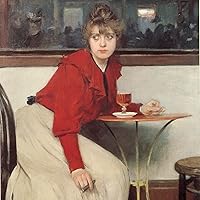
Sommer 1947. Das an den Klippen Cornwalls malerisch gelegene Hotel Pendizack wird durch einen Felssturz verschüttet, und alle, die sich im Haus befanden, liegen unter den Trümmern begraben. Nur diejenigen, die sich zum Zeitpunkt des Unglücks zu einem Fest am Strand versammelt haben, sind verschont geblieben. Kann das Zufall sein?
Eine Woche zuvor ist das heruntergekommene Herrenhaus, das die verarmten Pendizacks zum Hotel umfunktioniert haben, um die Ausbildung ihrer Söhne zu finanzieren, noch fast ohne Gäste. Nach und nach treffen Urlauber ein, unterschiedlichste Menschen, die sich ein einziges Badezimmer teilen mü die fünfköpfige Familie Gifford mit ihren besonderen Ansprüchen, die kapriziöse Schriftstellerin Anne Lechene und ihr Chauffeur, der furchteinflößende Geistliche Mr Wraxton mit seiner Tochter Evangeline. Ein jeder von ihnen, wie auch die Pendizacks, das lebenskluge Dienstmädchen Nancibel und die anderen Bediensteten, schlägt sich mit geheimen Sorgen herum und hat etwas zu verbergen. Vor der herrlichen Kulisse des offenen Meers bahnen sich Freundschaften, Romanzen, Fehden, Feindschaften an. Alles gipfelt in der Feier am Strand - und in der Frage, wer daran teilgenommen hat, um wie durch ein Wunder der Tragödie zu entgehen.
Margaret Kennedy was an English novelist and playwright. She attended Cheltenham Ladies' College, where she began writing, and then went up to Somerville College, Oxford in 1915 to read history. Her first publication was a history book, A Century of Revolution (1922). Margaret Kennedy was married to the barrister David Davies. They had a son and two daughters, one of whom was the novelist Julia Birley. The novelist Serena Mackesy is her grand-daughter.
I just read an extraordinary book. I read it in less than 24 hours. About halfway through I was hooked and could not put it down until I knew how it ended.
Those are the books that you want to read! 🙂 🙃 🙂 🙃
The story concept was clever to my way of thinking (and it turns out to a gaggle of other people — I am not the only one who is crazy bonkers about this book).
Setting is postwar (World War II) Cornwall on the British Isles, 1947. We are told at the beginning of the story that an area near a cliff that has a small hotel on it falls down hundreds of feet and there are no survivors from those who were in the hotel. But we are also told there were people who had left the hotel prior to its demise. We are also told there are 7 deadly sins: 1) Pride, 2) Envy, 3) Sloth, 4) Wrath, 5) Lechery, 6) Gluttony, and 7) Covetousness. The implication was that those who were exemplars of those 7 deadly sins were in the hotel when it met its demise (and theirs). Who died? Who lived? That is what the rest of the novel is about, and we are left to guess who lived and who died. Throughout the book we are given clues. Some people seem destined to die but then we realize...not so fast.
Note: • Here’s how she supposedly got her idea: The germ of the idea for The Feast - Margaret Kennedy's ninth novel and perhaps her most ingenious, first published in 1950 - came to the author in 1937 when she and a social gathering of literary friends were discussing the Medieval Masque of the Seven Deadly Sins. The talk turned excitedly to the notion that a collection of stories might be fashioned from seven different authors, each re-imagining one of the Sins through the medium of a modern-day character. That notion fell away, but something more considerable stayed in Margaret Kennedy's mind over the next ten years, and so she conceived of a story that would gather the Sins all under the roof of a Cornish seaside hotel managed by the unhappy wife of Sloth... Among The Feast's entertaining cast of characters are a clergyman, a gaggle of adolescents and children, a quarter of lovers, and a clutch of frustrated husbands & wives - all serving Kennedy's dark and witty moral fable, which bears out the Biblical adage that many are called but only a very few chosen. • Wow. I just figured out something! • Other authors who reviewed this and who liked it included Elizabeth Bowen and Anita Brookner
Revising my rating up to five stars. My default rating for a terrific book is four stars and I'm pretty grudging about giving five stars. Generally I know the minute I turn the last page that it's a five star, but some books creep up on me, take time for the artistry to really sink in. This one I read way back in October of 2014 and I'm still thinking about it and longing to read it again!
Clever Margaret Kennedy! Is it a thriller? Is it a morality play or an exploration of divine justice? Or is it a family/village saga and maybe even a romance?
Check all of the above. The Feast is also terrifically readable with a marvelous cast of characters. I was caught up right from the start when a conversation between two clergymen reveals the end of the story: the collapse of a cliff that buries a guest house and many of its inhabitants. We know that some died and some survived, but we don't know who until the very end.
The next chapter opens months earlier in the final week before the catastrophe. One after the other we meet the cast; some I loved from the start, others grew on me and went through changes that made me care for them, still others are revealed as rather evil and I found myself hoping that they would be the ones to die. Yes, I know--and that's the tricky part. It was thought-provoking and I found myself pondering the ending long after I put the book down.
This didn’t do much for me. *Its message is unclear. *There are too many characters—none stood out for me as being special. *The tone of the book is menacing and dark. I found it depressing.
Some authors are able to make a large cast of characters come alive. Some authors can make a dark book interesting because the message left is important. This book by Kennedy did not do either for me. It left me totally unmoved. I don’t have much else to say. This is in itself a criticism.
Colin Mace narrates the audiobook. The narration is OK, so two stars is my rating of the narration. I often had to listen several times to the text to understand that which is read. The narration did not wow me at all.
on reflection I can see this was a well-written classic - I was just a bit bored babes xxx think i went into this with the wrong expectations and thought it would be a mystery, but I wouldn't really say it is - more of a literary character study with a hint of mystery
Set in the Pendizack Manor Hotel in Cornwall in July 1947, it masquerades as a middle class catastrophe with some of the main characters representing a different deadly sin. We learn the denouement in the opening chapter. This device powerfully ratchets up the tension, for although we know what will happen we don't know who will die and who will survive.
If any of that sounds like your kind of thing, then I urge you to read this glorious Golden Age metaphysical morality tale.
5/5
The blurb…
Cornwall, Midsummer 1947. Pendizack Manor Hotel is buried in the rubble of a collapsed cliff. Seven guests have perished, but what brought this strange assembly together for a moonlit feast before this Act of God -- or Man? Over the week before the landslide, we meet the hotel guests in all their eccentric glory: and as friendships form and romances blossom, sins are revealed, and the cracks widen
I bought a beat up old hardcover of this years ago just because I had liked another Margaret Kennedy book I had read. I finally picked it up the other night. I can't believe this delightful book has been simmering on my shelf for so long.
I have tried but I just can’t get into this. Too many characters and none I find myself caring about. It has many great reviews which is why I bought it but it’s just not for me.
I felt immense impatience reading the second half of this 435 page whopper - and as I've just read Javier Marías' Berta Isla, which is 532 pages - it's not a question of length.
Kennedy's story is set in 1947. The first section is clearly labelled with this date. The whole story covers a week in the life of the people and holiday-makers in a boarding house on the coast of Cornwall. After a short Prologue, the story begins on "Saturday," August 16th, and works through each day, until the following Friday night, when there is a disaster. The steep cliffs directly behind the house, fall and seven people are extinguished. This is not a spoiler as we're given this information on the fly cover of the book - "Pendizack Manor Hotel has just been buried in the rubble of a collapsed cliff. Seven guests have perished . . . "
This would generally be considered a major faux pas. The reveal on the fly-leaf, however, is repeated in the Prologue. Father Bott of St. Sody church is preparing a funeral service, minus the bodies. His service will be delivered on the rocks in sight of the rubble, and so we understand that the disaster and the subsequent loss of life is not the real focus. Instead we are immersed in the lives of these people with the impending question of - Who Will Die? - a sort of 'disaster mystery'. There are a total of twenty-four people: guests, owners and workers in the Pendizack Hotel and it becomes a guessing game as to who will survive and who won't. In the second half, I identified the most likely ones to meet their comeuppance, for there are at least seven deeply unpleasant people; and I can see how most readers might literally root for, and cheer on their deaths. They are that bad!
So, I will not reveal who dies. If you want to grind your way through this decidedly odd novel - be my guest. It was originally published in 1950; and it's been given a new lease of life by Faber and Faber in 2021 with this very retro and colourful cover. It gives vibes of 1940s seaside fun.
There is a surprising amount of philosophising, and sermonising plus multiple references to several classic books, for example Wuthering Heights, Les Tres Riches Heures Du Duc De Berry and towards the end, the hotel guests all dress as characters from Edward Lear's The Quangle Wangle's Hat and His Shoes Were Far Too Tight which are integrated into the story in an illuminating fashion. But by then I'd had enough of the ins and outs of twenty-four different characters, and their various backstories and shenanigans.
I actually drew up two lists - the bad guys - in order from worst to least. These seven are used to represent the seven deadly sins; and the remaining 16 (Bruce the chauffeur/secretary has left; he's a good guy) are in my good list - and I also put them in order of most innocent to least. Mrs Siddal, along with her husband, who are the owners of the hotel, occupy a grey area. She appears towards the bottom of the good list, likewise Mr Siddal, who is at the bottom of my bad list in the 'least awful' position. His sin is sloth. And there is the most incredibly fraught elongation of the story whereby we are led down a minor byway as to whether Mr and Mrs will actually get out of the hotel and avoid the impending catastrophe.
Ultimately the story gives us a resounding moral lesson, which will not sit well with most modern readers. We must attempt to do good in our lives, whether we feel inclined to or not. One of the biggest sins is to sit around feeling sorry for ourselves. It is necessary to buck up and live humbly and with love, whether you feel like it or not -and in that way you will be saved.
I have to add I felt immensely satisfied at the demise of three particularly revolting ladies - I suppose that would be a sin though?
Originally published in 1950, this was reissued by Faber in 2021 with a foreword by Cathy Rentzenbrink – had she not made much of it, I’m not sure how well I would have recognized the allegorical framework of the Seven Deadly Sins. In August 1947, we learn, a Cornish hotel was buried under a fallen cliff, and with it seven people. Kennedy rewinds a month to let us watch the guests arriving, and to plumb their interactions and private thoughts. We have everyone from a Lady to a lady’s maid; I particularly liked the neglected Cove children. It took me until the very end to work out precisely who died and which (literally deadly) sin each one represented - . The characters and dialogue glisten. This is intelligent, literary yet light, and so makes great vacation/beach reading.
I might describe The Feast, Margaret Kennedy’s ninth novel in many ways: a character study, a morality tale, a social comedy, an allegory. But, above all of that, I would describe it as very readable novel.
The setting is a cliff-top hotel on the north coast of Cornwall, not long after the war. It is a hotel that will be destroyed when the edge of the cliff crumbles. These things happen: there’s coastal erosion, and in this case there was a washed-up mine too. I knew all of this because two clergymen, meeting for their annual holiday, told me so in the prologue.
And so this is the story of the last seven days of the hotel at Pendizack Point.
There’s not much plot, but the story is driven very well by the disparate band of characters: visitors, hoteliers, and locals.
Mr and Mrs Siddal are the proprietors, and she’s nearly worn out trying to keep things going, because her husband is bone idle. She couldn’t manage without her boys, but they’re grown now, and ready to strike out on their own once the season is over. They do have a housekeeper, an impoverished gentlewoman, but Miss Ellis is a terrible snob, a vicious gossip and very selective about what she will and will not do. But they also have Nanciblel, who comes in daily from the village, and is a lovely girl, a real treasure.
Lady Gifford had sent very detailed instructions before she arrived, with her husband and her four children in tow. She was in poor health, the kind of poor health that required comfort, fine food, attention, and having everything her own way. Mrs Cove had no time for such things. She had lived through the blitz, she had kept her three children by her side, and now she was going to give them a good holiday. She presented herself as a paragon, but she was quite the opposite, and before the week was over she would reveal her true colours.
And then there was a quiet couple who had survived a terrible tragedy; a militant clergyman and his downtrodden daughter; and a hack novelist, accompanied by her very sociable secretary.
Margaret Kennedy had a wonderful talent for presenting characters simply, clearly, objectively, just showing them and leaving you to draw your own conclusions. She does that perfectly here, slowly revealing details and true natures, and her style and the ideas she is exploring in this book work together beautifully.
I loved the way that Lady Gifford and Mrs Cove were both revealed as monsters.
So much happened in in those seven days: two romances develop, a theft is uncovered, two daughters defy a parent for the first time, a dramatic intervention in at mass in the village church, the ground shifts in more than one marriage, a secret society recruits new members …
Margaret Kennedy understood the time, the place, and the people, and she handled everything – from the big dramatic scenes to the small but significant moments – with aplomb.
Everything was significant, everything worked together beautifully, and I found much to appreciate.
Most of all, I was caught up with the characters; loving some, infuriated by others, wishing and hoping for so many things.
On the seventh day … there was a feast!
The Cove children had dreamed of a feast, and some of the adults, who had seen how good they were and how dreadful their mother was took it upon themselves to organise one. It would be the grandest beach party you could imagine. There would be food, drink, balloons, fancy dress, and the Coves were so lovely that they invited absolutely everybody. Though, of course, not everybody came.
They were having a lovely, lovely time.
And then the cliff crumbled.
There were fatalities and there would be survivors.
a 1940s white lotus. the story premise is that by end of week, a cliff will tumble down onto a seaside resort hotel, killing some of the guests staying there, yet we don't know who makes it and who doesn't until the very end. it's a nice beach read (i read this in february though) but i'd recommend writing down a list of characters and how they're all connected because there are over 24 of them in the book and some of them are referred to by different names too. i liked some of the characters over others, which made this a slow read for me... it's easy to digest but some of the storylines bored me to tears.
I was thinking recently of how much more difficult it used to be for a person who loved books, to find books they'd love. It was great if you could afford a trip to a bookstore, but even then you could never buy as much as you wanted to. I was mostly limited to what I could find at my local libraries, based on recommendations from nobody at all, because I didn't know anyone who read as much as I did. I hardly knew anyone who read at all.
But now, I mean now we have entire websites devoted to books and book reviews, we can see what hundreds of strangers thought of a book we're considering, and in the best cases we find like-minded bookish individuals with whom we can become (virtual) friends.
It was on the recommendation of one of those friends here on GR that I picked up The Feast, a book that I'd have never come across in the earlier, non-digital era of reading. I am so glad I did now.
You know the ending of this story within the first few pages - a cliff collapses and crushes a small hotel, killing everyone in it. What we don't know is which of the guests and staff were mercifully out at the time. Who lived, who died - remains a secret until the very end. The pages in between were absolutely and entirely absorbing.
My one complaint about The Feast, and it's not even a complaint because I think it worked well here - is that some of the unlikeable characters were so flat-out bad. Normally this would annoy me but in this case, I loved hating those characters. It was fun in a maddening way to see just how terrible they could be.
Overall a highly enjoyable book, so many insightful moments, and through it all the suspense of - when is that cliff going to fall? Why most of us have never heard of Margaret Kennedy is anyone's guess.
Warning – don’t read the introduction first! Far too much is given away. But make sure to read it afterwards as it definitely illuminates the novel’s themes. What can I say? This is just fabulous. I enjoyed every single perfectly formed sentence. It’s so clever and witty and funny and sad and tragic. A superb comedy of manners – or perhaps tragedy of manners is more apt. It’s been hailed as the perfect staycation summer read, but in my opinion this diminishes it, as it makes it sound like some lightweight beach read. And it’s really not. It’s far darker than any beach read, far more sinister with some truly evil characters and some sadly wasted lives. Cornwall 1947: the drab and still rationed post-war period. The Pendizack Manor Hotel and a motley crew of guests descend. But theirs is not destined to be an idyllic summer holiday for we are told within a couple of pages that the hotel is doomed to be destroyed in a landslide – and there will be fatalities. So as we get to know proprietors and guests the impending disaster looms over them and us. First published in 1950 it’s wonderful to see this much deserved re-issue.
An engaging, delightful book that's a bit of a puzzle, in the best way. I checked out this novel from the library, then bought my own copy, because I wanted to own it for myself.
Cornwall, Sommer 1947: An der malerischen Küste gelegen ist das Hotel Pendizack. Die Inhaberfamilie hat ihr altes, baufälliges Herrenhaus in ein Hotel umfunktionierten, damit zwei der Söhne eine gute Schulbildung genießen können. In diesem August versammeln sich die verschiedensten Menschen im Hotel: Eine Schriftstellerin mit ihrem Chauffeur, eine verarmte Witwe mit ihren drei Töchtern, reiche Eheleute mit ihren Adoptivkindern, ein jähzorniger Geistlicher mit seiner verschreckten Tochter, die Pendizacks selbst und ihr Dienstpersonal. Alle haben Wünsche und Geheimnisse, manche dunkler als andere. Alles gipfelt in ein großes Fest am Strand - und in den Einsturz der Klippen, der das Hotel samt Gäste unter sich begräbt.
"Das Fest" von Margaret Kennedy (1896–1967), übersetzt von Mirjam Madlung, ist eine unterhaltsame literarische Wiederentdeckung mit Krimielementen. Die Autorin spart nicht an Übertreibungen, all ihre Hotelgäste haben etwas zu verbergen, während sie sich auf engstem Raum begegnen. Das Hotel an der idyllischen Küste Cornwalls bietet ein atmosphärisches Setting, ich liebe Romane, die in England in ländlichen Gegenden am Meer spielen. Es hat Spaß gemacht, die vielen verschiedenen Charaktere und ihre Hintergründe kennenzulernen, besonders gerne mochte ich dabei die Bedienstete Nancibel. In der Mitte des Buchs macht der Spannungsbogen leider einen Knick nach unten, die Geschichte plätschert dahin. Zum Finale hin, in dem die Autorin über ihre Figuren richtet und manche ihrem Schicksal überlässt, nimmt der Roman aber wieder an Fahrt auf. Ich habe "Das Fest" gerne gelesen, ein englischer Klassiker mit tollem Schauplatz, der sehr gut in den Spätsommer passt und Raum zum Mit- und Nachdenken lässt.
The “readers also enjoyed” shelf that appears below this book for me shows books by Margery Allingham, a writer of pleasant, classic detective stories from the 1930s. I read dozens of them as a teenager and I agree this has more than a little Allingham in it. Only crossed with a strange, blasé cruelty of Richard Hughes’s A High Wind in Jamaica.
The Feast, first published in 1949, isn’t a mystery, though in the first chapter it sets itself up as a “who will die” novel. We hear that a hotel has collapsed and killed seven people, and then we are introduced to everyone passing through the hotel that fateful week, guests and staff alike, and left to mull over who will be the seven.
I say it isn’t a mystery because those who die aren’t randomly selected. Instead, The Feast is a very strange thing for nowadays: it’s a moral fable constructed around the Seven Deadly Sins. Seven characters personify a sin, and it is they who will perish under a pile of rubble. And while there may be some speculation early on as to who is bad, and just how bad you have to be to get crushed by rocks, it’s fairly clear fairly early who isn’t bad.
Despite being just a little bit bemused about the concept, this book was, finally, a proper summer read. Every summer I go looking for these and often the books that I think will fit the bill don’t. But a breezily written mid-century classic, or an elegant mystery by a master (in recent Augusts I’ve enjoyed In a Lonely Place and The Chalk Circle Man) seldom misfire completely.
Kennedy writes wonderfully and is full of wonderful throwaway observations and neat turns of phrase about her characters, who are such an odd bunch: there’s an unloving mother and her three dreamy, unworldly little girls, the child of another family who is a “bastard” (to a degree, in both senses of the word) and makes much mischief, a woman who has eaten a tapeworm to keep thin, a possibly misidentified piece of black amber, four young men on the verge of becoming good or bad, a muck-raking mad preacher… and the whole thing, just before finishing with an avalanche, is wrapped up unexpectedly with an uncollected Cornish folk song (as an aside, the way to my readerly heart is to finish with a folk song).
As an aside, this was my first time reading one of the McNally Editions reissued classics, and the feel and quality of the book was top notch, and really added to the experience.
It's always fascinating to see if an old book can hold up to the modern world. I find that complex characters are timeless, and there are a few in this quiet classic. The pacing is slow and I think the novel could have used a heavier editorial hand in that regard, but I didn't mind the huge cast of characters because the author does a great job differentiating their voices. There were saints and villains and everyone in between.
I can't think of anything to say that someone else hasn't already voiced. But I can say that The Feast was a thoroughly engrossing read revolving around a little hotel set up on a cliff, the disfunctional family who ran it aand their horrid mix of guests.
From the gossipy cook to the half-mad with worry young lady and her father as well as the master of the house who never does anything of use to the children running wild about the place something is bound to happen. And a feast may just decided who that something is going to happen to.
I really didn't think I'd end up enjoying this so much, I though it would be a dry character study. But it is not dry, and it beautifully captures the scenes, the cliff with the thrashing waves, the maddening girl who orchestrats the children and poor Nancy, the only character seemingly with her head screwed on right. Completely recommend.
G rating there is mention of mistresses, or more accurately a lady with her lover. Nothing shown to reader.
Another McNally edition. Another wonderful cover (though not available on GR, of course.) Another marvel.
We learn right away that a hotel, a kind of airbnb, but in Cornwall, 1947, has been taken away, crumbled from above. Siddal was warned, but he wasn't one to open the mail. The priests tell us this, preparing a funeral sermon.
What follows, though, is a week, daily told, about the ensemble cast that scurried around the place.
You will, depending, pick favorites who you hope are not named in that sermon. And, well, the others.
From the beautiful cover of the book to the storyline itself – everything appealed to me about this book. That was until I started reading it…
The book was written in 1950 and set in 1947. It opens with a conversation between two clergymen, who reveal the end of the story: the collapse of a cliff in Cornwall, which subsequently buries Pendizack Manor Hotel and some of its inhabitants. The following chapter (and the remainder of the book) is set some months earlier, but a week before the tragedy. It is here that we meet the cast of characters. As with any book, there are characters that you love and those that you hate. For me, I didn’t like any of them. Some were just evil, others bland and then there were those that I saw little point in them being written into the book. Throughout the book you are left guessing as to which of the characters you think are going to die and which will survive.
The Feast failed to capture me from the start. I read around a third of the book when I wished I had simply put it down and moved on. But I decided to persevere, as I thought that the ending will at least be of interest. I was wrong. The actual collapse of the cliff was summarised in little under a paragraph.
This book could be classed as a thriller, a summer romance, a family saga, or even a modern-day morality play. I did enjoy the portrait of a post-war seaside holiday but other than that, I found the book to be somewhat disjointed and unengaging.
If you look at the dust jacket you'll see a small hotel at the base of a huge cliff. The cliff has been undermined by an errant mine that washed into a cave at its base and exploded. No ill effects are noted for some time. But then cracks appear at the top edge of the cliff and they get wider..and wider...a note is sent to the owners of the hotel urging them to abandon the building for safety but the letter goes unopened in a pile of correspondence and rubbish...
Meanwhile, life goes on in the little hotel. There's the petty squabblers,the mopers, the heroes, the innocents as well as the seriously deranged "monsters" and even a love interest or two. Margaret Kennedy develops characters with such depth of insight into the human psyche that I felt that if she was sitting in a room with me she could pick my brain apart and tell me a thing or two.
Such an unusual but fascinating book. The only other book I've read similar in style to this is Dorothy Evelyn Smith's The Lovely Day, a book where no one character steals the show but every member of the village is given a slice of the story.
Bottom line: Well worth a read!
CONTENT:
SEX: None shown to reader VIOLENCE: None PROFANITY: Very Mild
I first heard about this book on Miranda Mills’ YouTube channel and then subsequently on the Tea or Books? podcast. Both times, I thought: “Eh, that’s not the book for me.” But then, I saw others whose book taste I trust reading it and raving about it. And I was feeling something of a Margaret Kennedy kick coming on after seeing my friend Christine read another of her books. Sometimes there’s right book, right time and sometimes there’s right author, right time. This was both.
I loved this book! I also had possibly the most unique reading experience with it that I can remember. The book opens with one Anglican priest on vacation who is visiting his Anglican priest friend in Cornwall. Usually they have a grand old time together, but the resident pastor has the grim task of leading a funeral for the seven victims of an eroded cliff that collapsed onto a small hotel nearby. We know the identity of one of those seven but the identities of the other six are a mystery.
A bunch of horrible people gather in a boarding house which we are told in advance will soon be destroyed with many of them dying and some not. At the 18% mark, I've realised I'd be fine if they all died - I just wish they'd do it quicker.
Each character is introduced and we are immediately made to dislike them intensely. More and more keep arriving and I'm not sure I've even met them all yet. A paragraph or two about one, then zip! A paragraph or two about another, then zip! No time to get interested in any individual. They're apparently supposed to be modelled on the seven deadly sins, but I must say that they each seem to have pretty much all the sins as far as I can see, and no virtues. They are also all dull, which I don't remember being a sin but in bookworld it certainly should be. Abandoned.
Re-read, 2021: An allegory masquerading as domestic drama, building suspense and unease until the unforgettable conclusion. The seven deadly sins are all present and accounted for... but something's coming...
April 2024 — Even better the second time around. There were some things I got wrong the first time (thought someone had survived when we're explicitly told in the first chapter he wouldn't; attributed some thoughts during a sermon to the wrong character) that I cleared up this time. A fierce and forceful Flannerian grace saves sixteen souls who aren't as bad as the seven who die, but who are really not worthy of their deliverance. Kennedy's character creations continue to astound me—she's brilliant in that way. I think the book would lend itself to an excellent film adaptation in the right hands. Please do yourself the favor of reading this is you haven't already!
*****
August 2023 — Best new-to-me novel I've read yet this year.
C. S. Lewis was a fan, as well.
The setup is reminiscent of The Bridge of San Luis Ray.
The Feast starts with an old clergymen arriving at a crony's manse for their annual vacation. The host has broken one of their ground rules: no sermon-writing while they are off duty. But a tragedy has occurred—part of a cliff has broken off and crushed a small hotel, killing most of the occupants—and the old priest must prepare for the funeral service.
The clock then rewinds a bit, and we meet the proprietors, servants, and guests of the hotel. Kennedy's ability to portray a personality in one scene is astounding.
As a reader, I find myself hoping that one or another will be among the victims or the survivors, and then I realize that's probably a bad attitude, despite its being only fiction.
A few hours before I finished, I was sure the end was going to gut me, but I felt that, by framing the story as she did, Kennedy had prepared me for whatever the outcome would be. Forewarned is forearmed. It didn't feel like Dickens or the bad Trollopes or your average Russian novelist.
It's not often I read something this good that no one I know has reviewed on Goodreads, so I'm eager to share the good news of it. I foresee many rereads in my future.
It's also a good test case for Nate Wilson's terrible take on spoilers. I was glad I hadn't even read the book description before I read the whole book. I know I'll never get to read it again for the first time, but anyone who had told me the ending before I started would have done me a great disservice.
Narrator was good except when he got to the text of a couple of hymns and obviously had no understanding of what he was reading.
I was really, really impressed with Lucy Carmichael. I ordered my own copy; I added it to my "favorites" list. And then I read The Feast. And it's the best book I've ever read. Yes, I know that's a big statement!
Margaret Kennedy is quickly becoming my all-time favorite author. The way she put together The Feast, I'm convinced she was a first-rate literary genius.