

What do you think?

Mental Traps: The Overthinker's Guide to a Happier Life
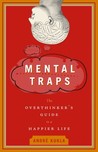
Mental Traps is André Kukla’s immensely enjoyable and down-to-earth catalogue of the everyday blunders we make in our thinking habits, how these traps can affect our entire lives, and what we can do about it.
Ever find yourself putting off even relatively minor tasks because of the many other little jobs that you’d have to tackle first? Or spending far too much time worrying about things you can’t change? Or living for the future, not for today? Truth is, we all do — and we all recognize that sometimes our ways of thinking just aren’t productive. When it comes to our daily lives, we often laugh off habits like procrastination as being human nature and just resolve to approach things differently next time. Or, when the issues facing us are enormous or traumatic, we might recognize that we’re dwelling on our problems, or otherwise spending our time on fruitless thinking, but have no idea how to get out of that miserable rut. Either way, it takes up a lot of our mental energy.
But as André Kukla makes clear in Mental Traps , what we don’t recognize — or at least admit to ourselves! — is how thinking unproductively about even the smallest elements of everyday life can mount up and keep us from being happy, from living life to the fullest. For what appear to be minor lapses are actually “habitual modes of thinking that disturb our ease, waste enormous amounts of our time, and deplete our energy without accomplishing anything of value for us or anyone else.” So whether we’re dealing with how to attain our major career goals or deciding when to serve the salad course at dinnertime, the end results can be much the readily identifiable patterns of wasteful thinking. These, in Kukla’s view, are the mental traps.
In his introduction, Kukla compares his method to that of naturalist’s guides, which take a very matter-of-fact approach to providing practical information. He then outlines eleven common mental traps, such as persistence, fixation, acceleration, procrastination and regulation. Devoting a chapter to each, he provides simple examples to help us to identify mental traps in our own thinking — and to recognize why it would be beneficial to change our ways. Our anxiety, our dissatisfaction, our disappointment — these are often the consequences of thinking about the world the wrong way. And it’s in the parallels he draws between the major and minor events of our lives that he truly brings his point How is refusing to eat olives like toiling at a job that has long ago lost all satisfaction? How is arriving at the airport too early a symptom of a life never fully lived? Again, what can seem to be a very inconsequential habit can actually signal bigger, more detrimental problems in our ways of thinking.
Kukla’s goal — one that we should share, in the end — is to help us realize how much more enjoyable our lives would be if we were a little more attentive to our thought processes. Just as Buddhism, from which the author has drawn many of his ideas, teaches that we should perform all of our acts mindfully, Kukla suggests that we make a conscious effort to step back, clear our minds, and simply observe how our thoughts develop. By doing so, we will begin to recognize unproductive patterns in our own thinking, and then we can try to avoid them. Ultimately, Kukla hopes that Mental Traps will help readers move towards what he calls a “liberated consciousness” — a state in which we no longer allow mental traps to inhibit our experiences. From having more energy to being able to act impulsively, we’d realize the benefits of living in the moment and feel truly free.
Ever find yourself putting off even relatively minor tasks because of the many other little jobs that you’d have to tackle first? Or spending far too much time worrying about things you can’t change? Or living for the future, not for today? Truth is, we all do — and we all recognize that sometimes our ways of thinking just aren’t productive. When it comes to our daily lives, we often laugh off habits like procrastination as being human nature and just resolve to approach things differently next time. Or, when the issues facing us are enormous or traumatic, we might recognize that we’re dwelling on our problems, or otherwise spending our time on fruitless thinking, but have no idea how to get out of that miserable rut. Either way, it takes up a lot of our mental energy.
But as André Kukla makes clear in Mental Traps , what we don’t recognize — or at least admit to ourselves! — is how thinking unproductively about even the smallest elements of everyday life can mount up and keep us from being happy, from living life to the fullest. For what appear to be minor lapses are actually “habitual modes of thinking that disturb our ease, waste enormous amounts of our time, and deplete our energy without accomplishing anything of value for us or anyone else.” So whether we’re dealing with how to attain our major career goals or deciding when to serve the salad course at dinnertime, the end results can be much the readily identifiable patterns of wasteful thinking. These, in Kukla’s view, are the mental traps.
In his introduction, Kukla compares his method to that of naturalist’s guides, which take a very matter-of-fact approach to providing practical information. He then outlines eleven common mental traps, such as persistence, fixation, acceleration, procrastination and regulation. Devoting a chapter to each, he provides simple examples to help us to identify mental traps in our own thinking — and to recognize why it would be beneficial to change our ways. Our anxiety, our dissatisfaction, our disappointment — these are often the consequences of thinking about the world the wrong way. And it’s in the parallels he draws between the major and minor events of our lives that he truly brings his point How is refusing to eat olives like toiling at a job that has long ago lost all satisfaction? How is arriving at the airport too early a symptom of a life never fully lived? Again, what can seem to be a very inconsequential habit can actually signal bigger, more detrimental problems in our ways of thinking.
Kukla’s goal — one that we should share, in the end — is to help us realize how much more enjoyable our lives would be if we were a little more attentive to our thought processes. Just as Buddhism, from which the author has drawn many of his ideas, teaches that we should perform all of our acts mindfully, Kukla suggests that we make a conscious effort to step back, clear our minds, and simply observe how our thoughts develop. By doing so, we will begin to recognize unproductive patterns in our own thinking, and then we can try to avoid them. Ultimately, Kukla hopes that Mental Traps will help readers move towards what he calls a “liberated consciousness” — a state in which we no longer allow mental traps to inhibit our experiences. From having more energy to being able to act impulsively, we’d realize the benefits of living in the moment and feel truly free.
256 pages, Paperback
First published September 15, 2006
Ratings & Reviews
Friends & Following
Create a free account to discover what your friends think of this book!
Community Reviews
Displaying 1 - 30 of 62 reviews

May 21, 2009
I'm afraid I found Andre Kukla perseverating on his own compartments of mental traps and eventually found it a mental trap reading it..

January 30, 2013
Интересный взгляд на мысли людей. Стоит того что бы прочитать, но наискосок. Автор мучает читателя бессмысленным повторением одних и тех же мыслей по 5 раз с одними и теми же примерами.

October 28, 2013
A Buddhist saying goes like this: our happiness and our sorrow are both the product of our thoughts and nothing else.
And this is exactly what this book concentrates upon, but with a more pragmatical approach. The question is not about happiness, but rather about the clutter of thoughts that we constantly have, which does not benefit to our mental health (eventually to our emotional state also).
Mental traps are typical to the Western mind and Andre Kukla does a great job at demolishing absurd tactics and eloquently demonstrating their futility. Although there is no mention of the Eastern(Buddhist) way of thinking, the basic principles of de-cluttering ones mind are very similar to it.
Even though it wasn't an easy read, I am sure that I will come back to this book in the future for a refresh session.
And this is exactly what this book concentrates upon, but with a more pragmatical approach. The question is not about happiness, but rather about the clutter of thoughts that we constantly have, which does not benefit to our mental health (eventually to our emotional state also).
Mental traps are typical to the Western mind and Andre Kukla does a great job at demolishing absurd tactics and eloquently demonstrating their futility. Although there is no mention of the Eastern(Buddhist) way of thinking, the basic principles of de-cluttering ones mind are very similar to it.
Even though it wasn't an easy read, I am sure that I will come back to this book in the future for a refresh session.
June 25, 2013
Highly recommended for over thinkers, like myself. Identify these mental traps: persistence, amplification, fixation, reversion, anticipation, resistance, procrastination, division, acceleration, regulation and formulation. Solution given to avoid these mental traps. Overall, interesting psychological, self-improvement book.

July 22, 2017
I liked it because I'm an overthinker and it gave me a lot more to overthink about.

September 11, 2013
I actually didn't finish this book, admittedly. It seemed interesting and I got a few chapters in, but then it started to seem confusing and repetitive. I could no longer remember which trap was which as they all sounded similar to each other. I gave up. Great idea and probably some great info in there, but pretty hard to stay in.

July 26, 2018
I don't like it very much. Well, I don't know why actually, but it keeps repeating unnecessary things many times so that is three stars for those annoying words.

November 26, 2011
I'm giving this a 4 because it's very clever and insightful... but almost in an annoying way. :P By the end of it you feel like you're wandering around overthinking overthinking. It does contain some useful advice but I don't think I could ever follow all of it. Even if you just pick and choose a couple of applicable points that probably would make a noticible improvement to your life though, so if you are an overthinker it is worth reading.
Having said that, the advice is quite difficult to follow. If I'd followed the advice early on in the book about not finishing things simply out of a sense of duty I wouln't have finished this book, because it was a bit of a hard slog. :P
Having said that, the advice is quite difficult to follow. If I'd followed the advice early on in the book about not finishing things simply out of a sense of duty I wouln't have finished this book, because it was a bit of a hard slog. :P
May 10, 2015
Descriptive and well-written about the various traps and how to spot them. However, I feel that the advices on how to overcome these mental traps aren't too practical or useful. To summarise the author's advice in a sentence : "do the right things at the right time and at the right pace"
..How exactly? If correcting for one trap sets the path towards another trap?
..How exactly? If correcting for one trap sets the path towards another trap?

June 6, 2020
Good description of mental traps (especially relevant to type A personalities), but next to nothing in terms of dealing with them.

December 19, 2016
So the first 2/3 - 3/4 of this book was fairly facile and 101 level cognitive distortion stuff, and if you've spent any amount of time in the self-help world or trying to talk yourself out of anxiety there won't be anything new here. It doesn't bill itself as anti-anxiety or self-help, and largely avoids the language of mental health altogether (except for a passing nod at depression occasionally), and seems rather to be aimed at someone who may not have as much experience thinking of themselves as neurodivergent or being introspective about their cognitive habits. There are some useful framework in terms of how to name specific behaviours, but it was pretty meh for the most part.
The last chapter of this book (which takes up a good 20% I think) is really where this begins to shine, because it takes the framework hastily developed in the first 12 chapters and applies it to the practice of mindfulness (without calling it that), and most importantly walks you through the common pitfalls that plague a meditation novice. Would've found another half a book's worth of focus on this sort of practical application quite useful tbh. It's also a super short book (clocking in around 40k words) so it's a quick read.
The last chapter of this book (which takes up a good 20% I think) is really where this begins to shine, because it takes the framework hastily developed in the first 12 chapters and applies it to the practice of mindfulness (without calling it that), and most importantly walks you through the common pitfalls that plague a meditation novice. Would've found another half a book's worth of focus on this sort of practical application quite useful tbh. It's also a super short book (clocking in around 40k words) so it's a quick read.

October 10, 2012
It was ok. I think the last third of the book was the most interesting/useful. It really should have been called 'the evolutionary path of a mental trap' because that's really what it is looking at the contents at a high level.
Everyone suffers from a configuration of the mental trap described in the book- and while it does a good job describing it, it does a poor job addressing the reality that modern life promotes all of these bad habits - im sure the author could label that reasoning with a mental trap but WHATEVER
Everyone suffers from a configuration of the mental trap described in the book- and while it does a good job describing it, it does a poor job addressing the reality that modern life promotes all of these bad habits - im sure the author could label that reasoning with a mental trap but WHATEVER

May 1, 2021
A must-read if you’re an overthinker. Just seeing the mental traps we fall into, explained in abook… it helps a lot in naming and identifying them. Granted, the author falls into a few traps himself, which is ironic but ok. The logic is faulty here and there. The premise wrong in my opinion in some places. Very oppinionated, not at all sciency despite the fact that the author speaks as if he knew the absolute truth. Take it with a grain of salt. But overall, a great book I’d definitely recommend. If the title intrigues you, the content will too.

September 19, 2013
The content of this book is drawn from many sources, including philosophy, psychology, religion, science, and most importantly, the self. This book will knock you on the head to wake you up from ignorance. Ignorance of your own thoughts, which makes you less productive and redundant. It has a potential to change lives radically. a MUST read.

June 24, 2016
"Make you think more consciously"
We use our brain to think all the time without realizing the many needless and effort-wasting mental traps: Persistence, amplification, fixation, reversion, anticipation, resistance, procrastination, division, acceleration, regulation and formulation. Reading this book might not make you think smarter, but definitely more consciously, attentively and alive.
We use our brain to think all the time without realizing the many needless and effort-wasting mental traps: Persistence, amplification, fixation, reversion, anticipation, resistance, procrastination, division, acceleration, regulation and formulation. Reading this book might not make you think smarter, but definitely more consciously, attentively and alive.

November 15, 2012
Interesting observations about the games we play in our minds. I enjoyed the insight, but it was too much description and not enough answers as to how to cope.

May 21, 2014
The problem with this book is that it ends up being its own mental trap. The writer really belaboured the point too much towards the end and ruined it.

February 8, 2016
Too repetitive … the book was a mental trap in itself

January 24, 2019
It was alright, quite repetitive, but made some insightful points. Definitely not geared towards people with mental illness.

May 3, 2024
Interesting book, deals with the topics of human thinking, sort of meditation, relaxation, control and decision making. Gives some sort of relief.

April 1, 2014
Начали за здравие, кончили за упокой, запутавшись, какая ловушка какая. Автор фактически призывает ничего не осознавать, но в то же время осознавать все свои мыслительные процессы. Взаимоисключающие параграфы, давление на читателя плюс откуда ни возьмись в конце что-то такое про религию. Не годится.

October 22, 2009
I don't think I'm an overthinker, really.
And I would have organized the book into chapters that presented the problem, then the proposed solution, rather than describing all the problems and having one "solution" chapter at the end.
And I would have organized the book into chapters that presented the problem, then the proposed solution, rather than describing all the problems and having one "solution" chapter at the end.

June 2, 2014
Difficult read, you might say trying to stick with this and finish it was a mental trap. No real solution for over thinkers presented other than counting your breaths and trying to clear your thoughts.

August 1, 2009
Not an easy book. After the first read, I had to go back and read it again.

December 9, 2009
Quite an enjoyable book. Some parts I felt I might have to re-read, but readable nonetheless.

September 2, 2011
Бросил читать, не прочитав и четверти.
March 12, 2012
One of the best psychologigal idea I had ever read in my life. Strongly recommended.

March 14, 2012
Слишком занудно и очевидно. Как классификация "тараканов" наверное потянет, но особой полезности не увидел в этой книге.

July 26, 2012
This was short. I should probably be reading my adolescent psych assignment but I do not want to.
Displaying 1 - 30 of 62 reviews