A strictly personal no holds barred overview of the horror field by one of its most respected--and fiercest--critics. This book was many years in the making. I ve been reading horror fiction pretty constantly since I was at least 10 years old, and have been a scholar in the field since I was about 17 (focusing initially on H. P. Lovecraft). UNUTTERABLE HORROR was the product of five years of solid work, and the book comes to a total of 312,000 words. It covers the entire range of supernatural and non-supernatural horror fiction from the Gilgamesh (1700 B.C.) to such contemporary writers as Caitlín R. Kiernan and Laird Barron. Along the way I discuss the Gothic novel, Edgar Allan Poe, the Victorian ghost story, Ambrose Bierce, the five titans of the early 20th century (Arthur Machen, Lord Dunsany, Algernon Blackwood, M. R. James, H. P. Lovecraft), Walter de la Mare, American pulp writers from Robert Bloch to Ray Bradbury, the horror boom of the 1970s and 1980s (William Peter Blatty, Stephen King, Peter Straub, Clive Barker, Anne Rice), and many others. This book is intended not only as a history of the field but a guide to the best writing in the field over the past two or three centuries.
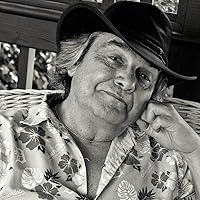
Sunand Tryambak Joshi is an Indian American literary scholar, and a leading figure in the study of Howard Phillips Lovecraft and other authors. Besides what some critics consider to be the definitive biography of Lovecraft (H. P. Lovecraft: A Life, 1996), Joshi has written about Ambrose Bierce, H. L. Mencken, Lord Dunsany, and M.R. James, and has edited collections of their works.
His literary criticism is notable for its emphases upon readability and the dominant worldviews of the authors in question; his The Weird Tale looks at six acknowledged masters of horror and fantasy (namely Arthur Machen, Algernon Blackwood, Dunsany, M. R. James, Bierce and Lovecraft), and discusses their respective worldviews in depth and with authority. A follow-up volume, The Modern Weird Tale, examines the work of modern writers, including Shirley Jackson, Ramsey Campbell, Stephen King, Robert Aickman, Thomas Ligotti, T. E. D. Klein and others, from a similar philosophically oriented viewpoint. The Evolution of the Weird Tale (2004) includes essays on Dennis Etchison, L. P. Hartley, Les Daniels, E. F. Benson, Rudyard Kipling, David J. Schow, Robert Bloch, L. P. Davies, Edward Lucas White, Rod Serling, Poppy Z. Brite and others.
Joshi is the editor of the small-press literary journals Lovecraft Studies and Studies in Weird Fiction, published by Necronomicon Press. He is also the editor of Lovecraft Annual and co-editor of Dead Reckonings, both small-press journals published by Hippocampus Press.
In addition to literary criticism, Joshi has also edited books on atheism and social relations, including Documents of American Prejudice (1999), an annotated collection of American racist writings; In Her Place (2006), which collects written examples of prejudice against women; and Atheism: A Reader (2000), which collects atheistic writings by such people as Antony Flew, George Eliot, Bertrand Russell, Emma Goldman, Gore Vidal and Carl Sagan, among others. An Agnostic Reader, collecting pieces by such writers as Isaac Asimov, John William Draper, Albert Einstein, Frederic Harrison, Thomas Henry Huxley, Robert Ingersoll, Corliss Lamont, Arthur Schopenhauer and Edward Westermarck, was published in 2007.
Joshi is also the author of God's Defenders: What They Believe and Why They Are Wrong (2003), an anti-religious polemic against various writers including C. S. Lewis, G. K. Chesterton, T. S. Eliot, William F. Buckley, Jr., William James, Stephen L. Carter, Annie Dillard, Reynolds Price, Elisabeth Kübler-Ross, Guenter Lewy, Neale Donald Walsch and Jerry Falwell, which is dedicated to theologian and fellow Lovecraft critic Robert M. Price.
In 2006 he published The Angry Right: Why Conservatives Keep Getting It Wrong, which criticised the political writings of such commentators as William F. Buckley, Jr., Russell Kirk, David and Rush Limbaugh, Ann Coulter, Phyllis Schlafly, William Bennett, Gertrude Himmelfarb and Irving and William Kristol, arguing that, despite the efforts of right-wing polemicists, the values of the American people have become steadily more liberal over time.
Joshi, who lives with his wife in Moravia, New York, has stated on his website that his most noteworthy achievements thus far have been his biography of Lovecraft, H. P. Lovecraft: A Life and The Weird Tale.
This book is like sitting next to a girl whose entire conversation consists of, "Oh my God, who told her she can wear that dress? Doesn't she know she doesn't have the boobs to pull it off?" and " I cannot believe she would wear pink and yellow together. Did she look in the mirror this morning? "
If you want a deep dive into the history of horror, you'll get it, but along the way you'll have to put up with Joshi's opinions, which are tendentious to put it mildly. He judges everything against the Platonic ideal of a horror story (which he seems to think is Call of Cthulhu) and anything that doesn't match his expectations is deficient. He never considers that authors may've had different goals in mind. Gothic novels, for instance, are really romance-mystery-adventures that have supernatural trappings. That's what 18th Century readers wanted. You have to read Gothics on those terms. But for Joshi, that's unacceptable. They aren't cosmic enough for his taste, nevermind that nobody in the 18th Century would've known what he meant by "cosmic horror". Nope, it's Ann Radcliffe's fault for not anticipating Lovecraft. Who cares that he wasn't even born until a century after she published her first novel. (And I didn't choose Radcliffe at random; it's women he vents his spleen at most, what with their gooey feelings getting in the way of the good stuff)
While Lovecraft's Supernatural Horror in Literature and King's Danse Macabre are out datd, at least they're fair minded assessments. This is just ranting.
The first volume of "Unutterable Horror" left me with mixed emotions.
For the first five chapters of the book, I had no problems and enjoyed the book enormously.
Then a bunch of problems developed.
Joshi seems to be a critic who has an image of what supernatural fiction "should" be, and woe to any work that doesn't live up to that image. So he hammers works that are set in the past, or are too religious, or are mere ghost stories. (No sooner does the vampire story appear, for example, than Joshi starts dismissing it as old-fashioned.)
Then there are inconsistencies in his judgments. He claims "Dracula" is flawed because it doesn't offer an explanation for why Dracula is a vampire, but then he sees the explanations in "Dr. Jekyll and Mr. Hyde" and "Picture of Dorian Gray" as flaws because they aren't convincing. He divides American writers into East Coast and West Coast schools and then exempts Robert Chambers and F. Marion Crawford from this scheme, even though they would clearly seem to fit into the East Coast School.
So parts of this book are annoying. But parts of it are very good, and it does a thorough job of mentioning the writers who left an important legacy in the field.
Nunca he podido con Joshi, un escritor malísimo que va de crítico mega chupi guay. Pedante, engreído y siempre sobrado en sus opiniones, a las que aconsejo no hacer mucho caso. Lo siento pero no puedo con este señor, y además no coincido en muchísimas de sus críticas. Vamos, meter a Dunsany entre los tres que más influyeron en la literatura de terror… No lo entiendo… Entre otras muchas cosas más. Yo aconsejaría al lector que está empezando a acercarse a la literatura sobrenatural que no le hago mucho caso. Bueno, que no le haga nada de caso. Este hombre hace lo que no debería hacer ningún crítico, dejarse llevar por sus fobias, sus intereses, sus gustos y su supina estupidez. Considero los libros de Bleiler muy, muy, muy superiores a los de este hombre. Y más imparciales, sinceros y válidos. Para lo único que a me sirven estos libros suyos es para conocer algún que otro autor menos conocido, y para, a partir de ahí, investigarlo por mi cuenta, nada de hacer caso de lo que diga.
First let me say that I deeply appreciate your enduring enthusiasm and hard work in allowing us to share your immense knowledge and expertise in this field but at the same time I feel obliged to let you know that this first volume was almost a disappointment.
I do not argue with your personal opinions on each author's contribution to the supernatural fiction...although I must say that I completely disagree with your treatment of Ann Radcliffe and Sheridan Le Fanu. What I found very upsetting is the language and the style used throughout the book. I couldn't believe such a wonderful and exciting topic can be recounted in such a dry, dangerously academic and often off-putting writing.
I would have enjoyed this book much more if the layout had been curated a bit more (e.g. actual footnotes etc.). It seemed I was almost reading the draft of an undergraduate thesis.
Please do reread David Punter's marvellous book. I'm sure you will find it more valuable than ever thought. Also please do check your preface before sending it to the publishers...your intentions not always corresponds to the actual text - you do end up comparing authors with one another but mostly to one in particular (boring...).
Despite all this, I must also admit that the reading improves dramatically, becomes more interesting and captivating towards the end so I'm almost certain I will soon purchase the second volume.
Not so much a history as it is a bitchy, annotated bibliography. Joshi's writing, although readable, tends toward the precious and pretentious. HP Lovecraft's work gets suitable attention, in that the chapter is somewhat more of a critical bibliography. Most other writers do not. Items tend to be brief synopses of weird writers' short stories and novels, complete with spoiler alerts.
I'd hoped for more history. The book is helpful in selecting writers to read as research. Joshi also lists a number of potential markets for horror writers.
Excellent outline of "weird" fiction from the earliest of times to the late 1800s and early 1900s.
A note on tone: Joshi, like so many critics, will speak with disdain of any number of lauded works. This negativity can make the whole book seem a touch petulant at times. He's a critic...thats what he is going to do. My favorite in the book? A few times he uses this wonderful phrase, "This [insert story] is not to be entirely despised...". It cracks me up.
So, an interesting read with the requisite strong opinions of one well-versed in their field.
As with anything of Joshi's, an extremely impressive knowledge of his field is interspersed with obnoxious snobbery and almost as obnoxious Lovecraft-worship. (And we aren't even to the 20th century yet.)
Cuando Joshi es bueno, como en el capítulo encargado de analizar la obre de Edgar Allan Poe, es muy bueno. El problema es que siente a menudo la tentación de ser malo, muy malo. ¿Qué sentido tiene consagrar un largo capítulo, como el dedicado aquí a los mid-Victorian horrors, a dejar claro tu desdén por una serie de autores mediocres y prácticamente olvidados? Como poco se podría decir que las formulas para ridiculizarlos se vuelven un poco repetitivas tras cuarenta páginas de lo mismo. Además, no está muy claro que Joshi sea capaz de apartar sus filias y fobias personales. Lo que sí queda claro es que tiene la peor opinión de las ghost stories, LeFanu, Stoker y "sus partisanos".
Informative, compelling, and personal journey through supernatural horror. In his usual fashion, Joshi doesn't mince words when he doesn't like something, but when he does, he makes a very strong case for the literary merits of works that are more often than not marginalized as "genre" works.