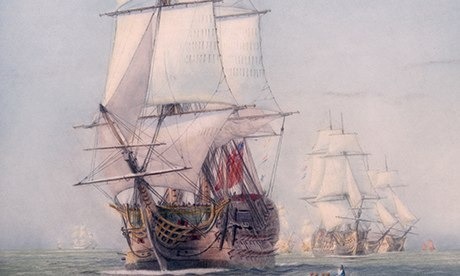
For more than twenty years after 1793, the French army was supreme in continental Europe. Only at sea was British power dominant, though even with this crucial advantage the British population lived under fear of a French invasion for much of those two decades. How was it that despite multiple changes of government and the assassination of a Prime Minister, Britain survived and eventually won a generation-long war against a regime which at its peak in 1807 commanded many times the resources and manpower?
This book looks beyond the familiar exploits of the army and navy to the politicians and civil servants, and examines how they made it possible to continue the war at all. It shows the degree to which the capacities of the whole British population were involved: industrialists, farmers, shipbuilders, cannon founders, gunsmiths and gunpowder manufacturers all had continually to increase quality and output as the demands of the war remorselessly grew. The intelligence war was also central. Yet no participants were more important, he argues, than the bankers and international traders of the City of London, who played a critical role in financing the wars and without whom the armies of Britain's allies could not have taken the field.
The Duke of Wellington famously said that the battle which finally defeated Napoleon was 'the nearest run thing you ever saw in your life': this book shows how true that was for the Napoleonic War as a whole.
Roger John Beckett Knight is one of the leading scholars in the field of 18th century and Napoleonic era British naval history. A former Deputy Director of the National Maritime Museum at Greenwich, he is a Fellow of the Royal Historical Society and has served as a member of the council of both the Society for Nautical Research and the Navy Records Society.
The author of this book Roger Knight says that the ‘historical headlines’ of the Napoleonic Wars has been warped to focus on the duel of Napoleon and Wellington at Waterloo and the Congress of Vienna. However as Knight explains this was a twenty year struggle where all aspects of British society transformed to defeat the French and bring about stability in Europe. The victory was built on the back of the hard work and determination of craftsmen, farmers, fishermen and merchant seamen who transported goods and materials to ensure that the war effort was adequately supplied for and the people of the United Kingdom were properly fed. This all had to be co-ordinated by the growing class and occupation of civil servants who wrote and signed the documents, did the maths in the back rooms at Whitehall and Somerset House. This was as essential as the soldiers on the battlefield. Knight explains that it was this extraordinary management of resources, this organisation which allowed Britain to wage a longer and more deadly war than had come previously or has been seen since. The enemy was much bigger and more powerful than the UK, but it was still able to stop it.
Britain Against Napoleon starts with the genius of William Pitt the Younger, a once in a lifetime talent, who came to office in the aftermath of the American War of Independence. Through creating the sinking fund, which built up monies to defeat a deficit and keeping defence spending at a higher level, when war broke out with Republican France in the aftermath of the execution of Louis XVI in 1793, there was at least some foundations. What Knight does show is that the civil services were not ready for this new type of world war and so had to reinvent and grow itself to cope with the increasing demand and complexities. There are other lesser known men, who are remembered by Knight and brought to the forefront, such as John Herries, Henry Bunbury and Samuel Bentham who were young men who worked tirelessly for the government to bring all this together. It was recognised that civil servants needed a place to work, solid pay and had to be selected on skill set rather than patronage. Their hours at work needed also the be drastically increased.
All of this started to increase, reshaping how this was run and managed. Public services grew, with efficiently calculated on how much they got done rather than how much they cost. Doubling the personnel doubled the work they completed. The armed forces also grew rapidly up to 400,000 people across the navy, army and militias. They needed feeding, pay, uniform and equipment and all of this had to be organised and arranged. Many wanted pay to be sent back to families at home and again this had to be managed. The number of prisoners of war also hugely increased and again they had to be housed, fed and watched. There were huge logistical problems involved. Equally with the Royal Navy. The ships had to be constantly repaired and refitted to keep them in working condition. The RN ships spent more time at sea than any other navy, especially with the blockades of French and later Spanish ports. Dry docks first came into existence in this time with the continual search for oak and timber to keep them seaworthy. This was unlike any other nation on the globe at the time.
In a way Britain had its own revolution during this time and the war was definitely the end of the previous age. The industrial march had begun and a new century and era was upon the UK. One where social privilege was going to decline and universal suffrage was to grow. Knight has written a really interesting book on how Britain organised the victory. He keeps close to his points and does not get bogged down in other details, nor does he stray far from his intended path. This is not a narrative on Britain against France from 1793 until 1815, but more how the British managed to transform themselves in order to cope with the war. Knight’s point, as I have mentioned above is that this is just as important as the battles or soldiers as without these merchants or public servants the war could not have been fought. This was a truly talented generation of people who managed to get it done.
This is a very good book. The author has written a well received biography of Nelson, and it shows. The book does not suffer from want of detail or a paucity of interesting tidbits left for the reader.
I am a bit torn on the broad story line that is most interesting in “Britain Against Napoleon” (BAN). There are at least two and perhaps even three that come to mind.
First, we are in the centennial for the Treaty of Versailles and related treaties that ended WW1. Versailles, for lots of reasons including the exclusion of Germany and the USSR, is seen as the exemplar for “winning the war but losing the peace” — a treaty that guaranteed that WW2 would occur as the second part of a 20th century thirty years war.
BAN provides an example of the reverse - losing the war and winning the peace. Knight is not referring to the war against the French and Napoleon - that was a war ending in victory and which was accompanied by a fairly resilient peace that came out of the Congress of Vienna. Knight is referring to the Treaty of Paris of 1783 that concluded the American War of Independence. Knight’s global argument in the book is that while Britain lost the colonies, it got the peace right and used the time to build a political-economic system that prepared it for the next war and allowed it to defeat Napoleon and dominate the world in the 19th century up through WW1. This is a really good story line and I think the author is spot on in making it.
A second story line in BAN is that of organization and bureaucracy as weapons of war. Sure, there are great battles that have the potential to change the world, but this is a history of twenty plus years of warfare involving millions of people fighting on land and sea across vast expanses of territory. If you can get a sufficient number of ships and crews provisioned and deployed ahead of your enemies and you have an edge that will become increasingly powerful over time. This was also one of the very first modern economic wars in which the entire manpower and economy of the nation are pressed into service. People can be rallied to great sacrifice and accomplish much in the short term. In the long term, national enthusiasm may subside, losses mount, fatigue sets in, and demography becomes a burden. You had better have some organizational systems in place that support a mass war effort in the long haul. The key is in the title of the book - France had Napoleon, but Britain had to have a lot more than a charismatic leader and a committed citizen army - and the Royal Navy is as much a big complex and capital intensive system as it is anything else. You could even put a modern emphasis on this - France had Napoleon but Britain had LOGISTICS. The Napoleonic War and the Industrial Revolution merge together here to great effect.
There is actually a third narrative running through the book - the transition from the traditional aristocratic hierarchy controlling the British war effort to a newer and more professional bureaucratic organization of the war effort. This involved two separate transitions. The first is from a system in which office holders did not really have to work too hard and in which they exerted quasi ownership rights over their offices (extra pay and bribes, perquisites, etc.). This old system changed to a system that was more rational and task based, with standardized compensation schemes and work rules, and large bodies of clerks and secretaries to process requests and keep records. The change from the old system to the new also involved a generational shift as a new set of leaders, often much younger than those they replaced (30-40 year differences in some cases). Knight’s account of this transition suggests that it could have been the subject of numerous self-help books if such genres had been established at the time. There was also a lot of material on the interaction of public agencies and private firms in the course of the wars. Developing this further would have required a much longer book.
What didn’t I like? I do not have a lot of complaints. One issue I have involves level of analysis. If I focus on the administrators and bureaucrats, I keep away from the battle and heroics of the military almost by definition. OK, so Napoleon had his issues, but how did France handle or not handle its organizational and bureaucratic issues? That did not bother me too much since the book is already quite long and a detailed French comparison would lengthen it further. To be clear, this does not negate Knight’s arguments and there were some areas of focus on France, such as in the Continental system. My concern is more one of emphasis and focus. Knight does provide for a focused application of his argument towards the end when he discusses in tandem Napoleon’s attack on Russia and the continuing war on the Iberian peninsula. In both of these campaigns the superior logistics of the allies and the extended geographic strain on the French combined to turn the tide of the entire war against Napoleon. Knight also provides some background on financial changes during this period although there could easily have been more. What better reason for developing a rational bureaucracy than to run an active taxation system.
This is a challenging book to read, with lots of details, many names, and almost as many subplots. Overall, it is well worth the effort and is an outstanding study of bureaucratic organizations and history long before such organization became the norm, especially after WW2.
2 & 1/2 Stars. Read after favorable review in The Economist and by several here. Yet, it falls short. Incredible amounts of information--but hardly a compelling style or organization. Hugely repetitive--for example, the transition from clerks paid, essentially, by bribe to salaried clerks, is mentioned in nearly every section. The most common phrase in the book is "as we saw in Chapter [ ]". The last few chapters (starting with finance) are good. And one has to enjoy knowing that the watchword for troops quartered in Tullamore to quell tensions among resentful Catholic Irish was "Stand Off I am loaded" (page 442).
Still, until then, it reads as if it were a stapled-together selection of quotes. The footnotes actually are a distraction, as if the author wanted to show off extra, but irrelevant, research. When he says 1/4 of the carronades supplied in August and September 1804 failed their proof test, I thought a significant fact was to be revealed; but the author doesn't follow through with what would have been useful--a record (however incomplete) of improvement over the course of the war. To be fair, a few pages later, the book details the change in delivery of muskets: 40,000 in 1803; 167,000 in 1804.
__
Canning, writing about the Trinity House pilotage and bouyage service, which had plans to sink ships in the Thames should Napoleon invade:
"If blocks should the nation deliver Two places are safe from the French; The one is the mouth of the River The other the Treasury Bench."
__
Britain, for most of these wars, faced a strategic difficulty in going on to the offensive through what has been called the 'amphibious bottleneck'. The sea gave Britain two advantages. It acted as a defensive shield against invasion and allowed the transport of goods and military stores cheaply and quickly. But the dependence on wind and weather also made it extremely difficult to transport by sea an army that was large enough to gain ground quickly and achieve an element of surprise.
__
The historical headlines have been usurped by Napoleon and Wellington, the drama of Waterloo and the Congress of Vienna. The foundations of military victory, though, lay in the industrial capacity of cannon-founders, the expertise of gunsmiths in their machine shops, the diligence of shipbuilders and the makers of ropes, uniforms, gun-carriages and gunpowder, the hard work of those who toiled in the increasingly efficient agricultural sector, the merchant seaman whose ships transported vital stores and food, and the crews of packet-ships who provided the means of communications throughout the year.
In my small bit of the planet, making a documentary television series on Napoleon, this book is outstanding. A massively needed account of a gap in the history of the Napoleonic era. Invites readers to think of the Napoleonic Wars as a World War, equivalent to 2WW.
It’s obviously a masterpiece, if not sparkling prose.
Think author doesn’t quite make enough of advantages of parliament vs napoleonic system.
Shows importance of sound finances/long term investments in infrastructure.
Highlights for important individual administrators/project leaders can be. Need to bring them into public service and allow them to act without constant constraint.
Advantages of a smaller, but very highly skilled/relatively efficient bureaucracy.
A great book, one I’d wish I’d read earlier. This work presents a unique history of Britain’s conflict against France from 1792 to 1815. If “amateurs study tactics while professionals study logistics”, this book shows that “amateurs study strategy while professionals study a nation’s means of prosecuting conflict.” Not presented as a description of strategy or as a narrative of the military engagements, but instead as a deep dive into the Political-Economic-Military complex of the British state itself. Rather than a simple chronological narrative, the book collects up major elements of Britain’s path to victory and relates them as a collective whole. It has a diverse set of detailed topics, such as the growth of luxury taxes, changes in ship repair methods, government size limitations due to Whitehall office space, and the use of canals to expand the area that hogs were bred for government salt pork production. It presents these topics in a well organized manner, broken down by related areas and time periods. The book steps through the major historical events, but concentrates on how the applicable fighting forces or money subsidies were made ready when needed, rather than the fighting itself. Thus Trafalgar is told through the long road to efficiency in ship repair and means of supplying the Fleet, the Peninsula campaign is told mostly through descriptions of the victualing industry and Transport Board, and the British subsidized Central European campaigns of 1813-1814 are described through the ever increasing revenue productivity of the tax system within the growing British economy. The book starts off with Britain’s economic dark days after the American Revolution, where efforts primarily intended to bolster a sagging economy ended up providing a weak but sufficient foundation for the struggle ahead (the usefulness of government expenditures in a recession is not limited to the 20th century). It ends with the start of the “Second British Empire” and a burgeoning Industrial Revolution. So many of the problems we see today in the many defense acquisition and resource management fields were faced 200+ years ago by well-meaning professionals attempting to confront Revolutionary France’s military juggernaut. The ways these professionals overcame, changing their internal systems and eventually defeating, in a titanic military struggle, literally, two continents, is fascinating. If ever one needed proof that the Industrial Revolution was kick-started by government largesse during the Napoleonic wars, this book provides that in spades. For those interested in how dockyard politics actually worked, how Britain was able to churn out so many men for combat without resorting to conscription, and how a country can go through several ‘administrations’ but maintain the same broad policies, this is the book to read. Highly recommended for anyone wanting to better understand how (in any period) navies are built, armies put in the field, and nations fight modern wars.
A fascinating perspective on the French revolutionary/ napoleonic wars. Clearly setting these conflicts as precursor to the world wars in the 20th century. Also challenges the origin of the 2nd British empire; the extent to which the professionalisation of the state bureaucracy contributed.
This is an extraordinarily thorough and readable history for which the author deserves the highest praise. The enthusiasm with which Knight approaches a potentially quite dry topic (administration and logistics) lends the writing a certain spark which makes it surprisingly gripping.
I will admit that after each chapter (~30 pages) I found myself quite tired! Knight certainly packs in a lot of information, and leaves the reader with many interesting concepts to ponder. This history gave me a new perspective of the Napoleonic Wars that works very well in complement with more traditional military and political histories. It is a 'behind the scenes' look at the British war effort that will connect many dots for an avid reader of Napoleonic history.
For a casual reader looking to dip into Napoleonic history for the first time, I would not recommend it. Not only is it very dense, it also assumes a general knowledge of the course of events in the wars. Important events such as the Treaty of Amiens and the Treaty of Tilsit are frequently mentioned but not fully described or explained. Furthermore, the book is arranged thematically, with the result that Knight jumps through the full course of the wars (1793-1815) in every chapter. It is not a chronological history, and hence requires prior knowledge to prevent frustration.
Overall I would certainly recommend this to readers of Napoleonic history that seek an understanding of the importance of government planning, policy, administration and logistics in orchestrating a significant war effort.
A fascinating insight into the logistics and finance which went into Britain's war effort against Napoleon and the unsung heroes who kept Nelson's fleet and Wellington's army supplied with guns, food, ammunition, gunpowder etc. and the root and branch reform of Britain's institutions
Roger Knight’s book about how many aspects of British society contributed to the defeat of Napoleon is a huge book, which is crammed full of detailed research. I learned so much in reading this account, including: how the warships were built, maintained, manned and sailed, how the army was supplied and funded, how government was reorganised and administered more efficiently and lots, lots more. Knight tells the stories of the great characters involved in the fight against the Emperor including those in government such as prime ministers William Pitt & Spencer Percival and the civil service such as John Barrow at the admiralty. He also tells us about the military leaders we know so well and of the bankers and financiers such as Nathan Rothschild who enabled the government to raise funds and to pay money to contractors, suppliers, service men and foreign allies at the right time. The detail Knight squeezes into his masterpiece is incredible for example he tells us quite a lot about gun and gun powder manufacture. In fact, there is so much in this book I found it quite overwhelming at times and it did take me quite a long time to get through it. However, the effort was well worth it.
This was a very good book, but I warn any prospective readers that there are two preconditions to find it interesting: (a) the reader must be familiar with the general flow of events in the wars between Britain and France from 1793 to 1815, and (b) if you are not interested in the sinews of war – finance, taxation, production, mobilization of manpower, and logistics – this book is not for you. For battle enthusiasts, I also warn there is very little about the land and naval battles themselves.
Knight has written an extensively-researched and detailed account of the organizational work behind British war effort and paints entertaining portraits of dozens of politicians, civil servants, soldiers, and sailors, from Pitt the Younger to Wellington. One comes away from the book with a sense of the superiority of the parliamentary system of government, as opposed to the unipersonal rule of Napoleon. The transparency obtained by public debate of the various issues faced by the British state was far more beneficial to the war effort than the supposed greater speed and efficiency of Napoleon's one-man rule.
For geeks who like to know how a state is organized to wage war, there are few books better than this one.
What to Do After You’ve Lost a War – and an Empire? Almost ten years ago, British scholar Roger Knight published “Britain Against Napoleon, The Organization of Victory, 1793-1815” and this Penguin edition appeared the following year, 2014. If this book made any splash here in the US, I missed it. This past May (2022), I was in London again for a trip originally planned for 2020 which due to the Covid Pandemic was only then taking place. Whenever I manage to get to London, I try to hit my favorite bookstores, including my longstanding favorite – Foyles. As I scanned the shelves of the history section I spotted the title and quickly perused the contents and was taken immediately by the book’s claimed theme – ‘how did Britain go from losing in the conflict with its former colonies in America and thus lose a major imperial holding, to emerging in 1815 as the victor after almost a quarter century contest with Revolutionary/Imperial France?”. Some 500 pages later, I had the answer – in fact, I had the answers – the many, many answers. Dividing his answers to the question into 16 chapters addressing every aspect of warfare as conducted by a modern state from administration to command and communications to intelligence gathering to logistics to manufacturing and trade. Identifying the contributions (both for good and ill) of various key politicians and military officials whose actions advanced (most of the time) and sometimes hindered (less of the time) Britain’s preparations for war and the subsequent conduct of the wars with France. The author bolstered the main body of text with a Chronology (1789-1815), an appendix that identifies the names and tenures of the key official figures, a chronology of official reports for the year 1780 to 1812, a glossary, almost 50 page of End Notes, and a 36 page bibliography. This in my view is a must read for anyone who in an official capacity is dealing with similar issues today – which clearly includes the US and appears likely to include their Russian counterparts in the present or near future. The text is well written and an easily accessible and even an entertaining read (NB – that could just be my inner Historian/Geek getting over excited – your mileage may vary).
How Britain defeated Napoleon, told as story where government ministers, civil servants and contractors are the heroes, rather than generals and admirals. Knight argues that, in a war fought at both land and sea in multiple theatres, improving the organisation of the armed forces and ensuring consistent financing were key to Britain staying in the war and then, ultimately, winning it.
The book highlights well the challenges of simply raising enough men for the army and navy and supplying them, let alone winning battles with them. The problems of transporting armies by sea, occur again and again. The links between the state, the military and the domestic economy are well brought out. A picture of a heavily militarised southern England emerges from this book, and is reminiscent of David Edgerton's book Warfare State.
This is a very detailed book, as times overly so. There are discursive footnotes and appendices that probably aren't needed by most readers. There is also some repetition between the chapters. Even so, it will probably be the best starting point on the topic for some years to come.
Britain AgainstNapoleon is thoroughly researched, but for a book that is intended for a general readership by avoiding scholarly debates and theoretical concepts like the 'fiscal-military state' and others, I do feel that it lacks the narrative strength that characterizes some of the other books covering this period. Whereas this is not the tale of the great naval battles and spectacular victories (and defeats) but rather one that focuses on the political, bureaucratic, logistical and industrial aspects of the Napoleonic Wars, it is of course understandable to take a different approach. But still, it felt that some of the chapters were rather academic articles that could be read seperately from the rest of the book. They would be excellent articles, but simply not what I expected from this book.
A really interesting book (particularly the first few and last few chapters) with a middle section that dragged somewhat. There is a genuinely compelling narrative here, giving a unique take on an exciting period of history, but I think about 33% less content would have given the narrative (and me) a bit more room to breathe. At times, it was very easy to lose the narrative thread amongst the overflowing facts and figures, which made it a hard book to pick back up! But, despite this, Knight has helped me think more about how deeply the ‘exciting’ bits of history depend on less lauded people doing the behind-the-scenes work of logistics, organisation and administration.
Did I enjoy it? Yes, mostly. Would reading it again be a wise use of life? No, probably not.
This is a thoroughly comprehensive, erudite and exceedingly well-researched account of the British government, civil service and bureaucratic inrastructure of the Napoleonic wars. Given its narrow focus it won't be read by many, but for those with an interest in the period it is hard to see this being bettered for a long time. 25 years ago I decided not to pursue a PhD on the foreign policy of the Portland Government (1807-09) - a wise choice that I have never regretted. Had I done so, this is the sort of book that I would have aspired to write. It was nice to be reminded of some of the politicians that I studied and wrote about.
Very dense, there is an awful lot of information to digest. It is mostly in thematic rather than chronological order, although there is a rough division based around the 1802 Peace of Amiens, where Britain was out of the war. I probably ought to have read this after some general histories of the Napoleonic Wars. That said, it really does convey the sheer scale of the effort over twenty years to defeat France. The author certainly makes their case well that this was a total war akin to the word wars, in my opinion.
Britain Against Napoleon is an interesting read but suffers from a lack of exciting sections that limit the readers ability to engage. This is not a history of the conflict itself but a look at the home front of the conflict, and therefore the actions of the government itself rather than the army commanders.
Saying that the detail and knowledge is impressive by the author. There are brief sections such as the Gold standard which are really interesting to students of economics. Would recommend to readers who are committed to this period already and have a base knowledge.
I'm glad I read this book. It reminded me of the kind of things I used to read in college a lot. That's part of what intrigued me about it. While the book is very detailed, and makes its point very academically, it's not the most well written narrative ever. Well, actually I would say it's a well written academic book, but not necessarily a fun read.
While Knight touches on the drama of that time, he never quite captures any sense of the dramatic. He could have driven his thesis a little harder with a little more narrative direction. There isn't enough sense of the personal here.
A tremendous, but at times a little dense, history of Britain’s organisational efforts during the Napoleonic wars.
Knight, as a former Deputy Director of the National Maritime Museum, was certainly the right chap to write this epic history; focusing not on the military endeavours solely, as so many historians have, but rather on the enormous logistical, economic and political might it took to rally the nation and indeed Europe in order to beat Napoleon’s forces.
Very much looking forward to reading his book ‘Convoys’ soon!
Undoubtedly, an interesting and well researched book. It's difficult to present such information and here the sections are not chronological but roughly divided by theme or topic.
It makes it more text book and and excellent summary of all the referenced material. Not, for me, the easiest cover to cover read.
An appendix helps with the chronology. Another with the people.
A clear conclusion is not spelt out till the very end.
It makes one want to read further books on the subject. That must be good, surely.
Knight puts weaves together an interesting narrative with an abundance of statistics and information. Sometimes hard going due to its dense nature, yet offers strong and compelling arguments. Would enjoy more if I had more of a grasp of economic history.
This is probably the driest history book I have read, but I am glad I did so. I have read a lot of Napoleonic history, but this book essentially presents the backstory - all the work, financing and politics that went on during this period, in excruciating detail.
Reveals all sort of original material and unexpected rich veins for further exploration. A big book covering so much yet really made me feel it could have dug even deeper and fuller
A remarkable history book, which instead of focusing on the wars with France in detail, instead unpacks who Britain modernised and found a way to win through better government systems - reducing waste and corruption, and promoting those with talent and skill. Really dense and packed full of facts. Not for the non history buff, but a important account of a lightly understood era in British history. Recommended.