

What do you think?

The Fifth Column and the First Forty-Nine Stories
Hemingway's first forty-nine stories and play.
597 pages, Hardcover
First published January 1, 1938
About the author
Ernest Hemingway
2,189 books33.7k followersErnest Miller Hemingway was an American novelist, short-story writer and journalist. Best known for an economical, understated style that significantly influenced later 20th-century writers, he is often romanticized for his adventurous lifestyle, and outspoken and blunt public image. Most of Hemingway's works were published between the mid-1920s and mid-1950s, including seven novels, six short-story collections and two non-fiction works. His writings have become classics of American literature; he was awarded the 1954 Nobel Prize in Literature, while three of his novels, four short-story collections and three nonfiction works were published posthumously.
Hemingway was raised in Oak Park, Illinois. After high school, he spent six months as a cub reporter for The Kansas City Star before enlisting in the Red Cross. He served as an ambulance driver on the Italian Front in World War I and was seriously wounded in 1918. His wartime experiences formed the basis for his 1929 novel A Farewell to Arms. He married Hadley Richardson in 1921, the first of four wives. They moved to Paris where he worked as a foreign correspondent for the Toronto Star and fell under the influence of the modernist writers and artists of the 1920s' "Lost Generation" expatriate community. His debut novel The Sun Also Rises was published in 1926.
He divorced Richardson in 1927 and married Pauline Pfeiffer. They divorced after he returned from the Spanish Civil War, where he had worked as a journalist and which formed the basis for his 1940 novel For Whom the Bell Tolls. Martha Gellhorn became his third wife in 1940. He and Gellhorn separated after he met Mary Welsh Hemingway in London during World War II. Hemingway was present with Allied troops as a journalist at the Normandy landings and the liberation of Paris. He maintained permanent residences in Key West, Florida, in the 1930s and in Cuba in the 1940s and 1950s. On a 1954 trip to Africa, he was seriously injured in two plane accidents on successive days, leaving him in pain and ill health for much of the rest of his life. In 1959, he bought a house in Ketchum, Idaho, where, on July 2, 1961 (a couple weeks before his 62nd birthday), he killed himself using one of his shotguns.
Hemingway was raised in Oak Park, Illinois. After high school, he spent six months as a cub reporter for The Kansas City Star before enlisting in the Red Cross. He served as an ambulance driver on the Italian Front in World War I and was seriously wounded in 1918. His wartime experiences formed the basis for his 1929 novel A Farewell to Arms. He married Hadley Richardson in 1921, the first of four wives. They moved to Paris where he worked as a foreign correspondent for the Toronto Star and fell under the influence of the modernist writers and artists of the 1920s' "Lost Generation" expatriate community. His debut novel The Sun Also Rises was published in 1926.
He divorced Richardson in 1927 and married Pauline Pfeiffer. They divorced after he returned from the Spanish Civil War, where he had worked as a journalist and which formed the basis for his 1940 novel For Whom the Bell Tolls. Martha Gellhorn became his third wife in 1940. He and Gellhorn separated after he met Mary Welsh Hemingway in London during World War II. Hemingway was present with Allied troops as a journalist at the Normandy landings and the liberation of Paris. He maintained permanent residences in Key West, Florida, in the 1930s and in Cuba in the 1940s and 1950s. On a 1954 trip to Africa, he was seriously injured in two plane accidents on successive days, leaving him in pain and ill health for much of the rest of his life. In 1959, he bought a house in Ketchum, Idaho, where, on July 2, 1961 (a couple weeks before his 62nd birthday), he killed himself using one of his shotguns.
Ratings & Reviews
Friends & Following
Create a free account to discover what your friends think of this book!
Community Reviews
Displaying 1 - 16 of 16 reviews

October 28, 2013
As many before me have discovered, these are among the best short stories ever written. Don't be fooled by the title: This is not beginner's stuff, this is short story writing of the very highest caliber. It includes such famous works as "Big Two Hearted River", "A clean, well-lighted place", "The light of the world" etc, all of which have been standard fare in hundreds and hundreds of literary classes.
And for good reason. Forget all the fake papa-Hemingway machismo and dive into these stories which are among the best Hemingway ever did, using his famous "ice-berg theory": On the surface, it all seems so simple and straightforward, and yet there is always that un-nerving, disturbing sense of something that lies beneath. This is simply second-to-none writing. Often much better, I would say, than what he later did in the novels.
And for good reason. Forget all the fake papa-Hemingway machismo and dive into these stories which are among the best Hemingway ever did, using his famous "ice-berg theory": On the surface, it all seems so simple and straightforward, and yet there is always that un-nerving, disturbing sense of something that lies beneath. This is simply second-to-none writing. Often much better, I would say, than what he later did in the novels.
March 14, 2019
The play "The Fifth Column" set in the Spanish civil war, I enjoyed very much, although I hardly ever read plays or attend the theatre. The forty-nine are an extremely welcome collection of Hemingway's short stories up to 1938.

May 10, 2015
Another collection of short stories, which I really enjoyed. Hemingway is a real expert in this genre.

March 3, 2021
Wenn alle was über Feminismus lesen, setz ich mich hin und schau über die
grünen Hügel Afrikas
grünen Hügel Afrikas

April 18, 2023
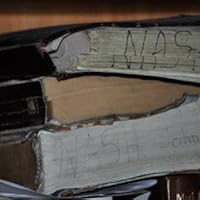
oK, also didn't really finish this one but my copy is from 1938 and whenever i open it the cover sort of breaks. lovely book though. i dont like the nick stories though, which is interesting cuz those are the hemingway stories he like ficticiously wrote about himself. also his story a very short story is about him!?!? one of my faves either way.

February 10, 2022
Hodne tezko se tato kniha hodnoti a nejvice mi to pripomina razne kopcovitou krajinu Japonska - emocne i kvalitou. Nektere povidky jsou vyborne, jine jsem stezi zvladl docist. Behem tech vybornych jsem potom mohl byt smykan emocemi pribehu neuveritelnou merou. Nevim, zda Hemingway vskutku byl tak razantni jako ve filmu Pulnoc v Parizi, ale jeho povidky tak pusobi.

August 9, 2023
A mixture of stories, some inconsequential, some haunting and influencial.

November 21, 2023
2,5 ⭐️
Za lepsze i gorsze momenty :(:
„Wzgórza jak białe słonie” wspaniałe!!!
Za lepsze i gorsze momenty :(:
„Wzgórza jak białe słonie” wspaniałe!!!
February 15, 2024
Some of the greatest short stories ever written.
February 2, 2025
Gifted to me by a wonderful friend! I have a complicated relationship with Hemingway but the sentiment brings up the rating!

May 7, 2025
Najs bok, många historier, inspirerande många tankeställare och synvinklar

September 27, 2021
The Fifth Column and the First Forty-Nine Stories is zoals de naam al doet vermoeden een verzameling van allerlei materiaal dat geschreven werd door Ernest Hemingway en is uitgebracht in 1938. Een ietwat rare collectie aangezien er een aantal volwaardige kortverhaalcollecties inzitten (In Our Time uit 1925, Men Without Women uit 1927 en Winner Take Nothing uit 1933) maar het meest interessante voor mij is het segment "Latest Writings" waarin een aantal (toen) nog niet in boekvorm gepubliceerde kortverhalen inzitten: The Short Happy Life of Francis Macomber, The Capital of the World, The Snows of Kilimanjaro en Old Man at the Bridge.
Die werden namelijk allemaal in een magazine gepubliceerd en daardoor is dit absoluut zijn aanschaf waard. The Snows of Kilimanjaro is een enorm fascinerende dialoog tussen een koppel waarbij een man aan gangreen lijdt (een kortverhaal dat trouwens vakkundig om zeep is geholpen door Henry King in 1952, Hemingway zou later zelf verkondigen dat enkel de hyena goed acteerde), in The Short Happy Life of Francis Macomber volgen we een koppel op jacht in Afrika met alle gevolgen van dien, The Capital of the World gaat over een jonge ober die matador wilt worden en in Old Man at the Bridge ontmoet een soldaat een man die zich vooral zorgen maakt over de dieren die hij in oorlogstijd heeft moeten achterlaten. Stuk voor stuk vintage Hemingway en stuk voor stuk verhalen die van de eerste tot de laatste seconden beklijven. Die interactie tussen Harry en Helen in Kilimanjaro is werkelijk heerlijk geschreven en hoewel de verhalen over Francis Macomber en de jonge ober een tikkeltje voorspelbaar zijn, zijn het ook ware pageturners. Enkel Old Man at the Bridge vond ik een beetje tegenvallen maar dat is ook wel een erg kort verhaal.
Hemingway heeft nooit weinig woorden nodig om een situatie te schetsen, maar dat was me toch iets te weinig. Het had evengoed in For Whom the Bell Tolls kunnen zitten bijvoorbeeld. Verder bevat deze collectie ook nog Up in Michigan dat voorheen in 1923 werd uitgebracht in Three Stories and Ten Poems en het toneelstuk The Fifth Column. In 1944 werd dat verhaal uit de collectie gehaald en werd er een editie uitgebracht met als naam "The First Forty-Nine Stories".
Die werden namelijk allemaal in een magazine gepubliceerd en daardoor is dit absoluut zijn aanschaf waard. The Snows of Kilimanjaro is een enorm fascinerende dialoog tussen een koppel waarbij een man aan gangreen lijdt (een kortverhaal dat trouwens vakkundig om zeep is geholpen door Henry King in 1952, Hemingway zou later zelf verkondigen dat enkel de hyena goed acteerde), in The Short Happy Life of Francis Macomber volgen we een koppel op jacht in Afrika met alle gevolgen van dien, The Capital of the World gaat over een jonge ober die matador wilt worden en in Old Man at the Bridge ontmoet een soldaat een man die zich vooral zorgen maakt over de dieren die hij in oorlogstijd heeft moeten achterlaten. Stuk voor stuk vintage Hemingway en stuk voor stuk verhalen die van de eerste tot de laatste seconden beklijven. Die interactie tussen Harry en Helen in Kilimanjaro is werkelijk heerlijk geschreven en hoewel de verhalen over Francis Macomber en de jonge ober een tikkeltje voorspelbaar zijn, zijn het ook ware pageturners. Enkel Old Man at the Bridge vond ik een beetje tegenvallen maar dat is ook wel een erg kort verhaal.
Hemingway heeft nooit weinig woorden nodig om een situatie te schetsen, maar dat was me toch iets te weinig. Het had evengoed in For Whom the Bell Tolls kunnen zitten bijvoorbeeld. Verder bevat deze collectie ook nog Up in Michigan dat voorheen in 1923 werd uitgebracht in Three Stories and Ten Poems en het toneelstuk The Fifth Column. In 1944 werd dat verhaal uit de collectie gehaald en werd er een editie uitgebracht met als naam "The First Forty-Nine Stories".
This entire review has been hidden because of spoilers.
August 18, 2020
I read the majority of this and it was enough to get the idea. Hemingway is clearly an important writer in the development of English literature for his masterfully condensed style. He has an impressive ability to convey complex emotions and experiences that are human commonalities using remarkably little.
Due praise being given, I still can't say that I enjoyed most of the writing. I frequently found myself losing the meaning of even short sentences for want of punctuation. Many's the time I wished Hemingway would deign to lower himself to using a comma to help the reader understand what he's trying to say. Hemingway focuses on fairly depressing subjects, often conflict or the depravity of men. Alcoholism, misogyny, and dominion over the weak are frequent themes. Many of Hemingway's characters are strong men who seem to feel little remorse over crushing the feelings of the beautiful women who've fallen hopelessly in love with them. And if they kill several animals along the way, so much the better.
The fifth column reminded me of nothing so much as a film Noir rendition of the Spanish civil war (I wonder if you could trace the influence that started film Noir back to Heminway). The focus of the play was slavishly devoted to the leading male who, as a strong emotionally closed off type, will not reach out for help as his soul is slowly crushed by the brutal and murderous work he does in counter-espionage. Ultimately his spirit is broken as thoroughly as the bodies of the enemies he helps to torture. I suppose this was much more original in the late 30's / early 40's when Hemingway originally wrote this and I should appreciate it in the context of its time. But there's too much in the Western and Noir genre that gets at similar themes/characters/motifs, and Hemingway's play-writing wasn't brilliant.
Still, I enjoyed some of the writing and I think that Hemingway is still worth reading if only for his style.
Due praise being given, I still can't say that I enjoyed most of the writing. I frequently found myself losing the meaning of even short sentences for want of punctuation. Many's the time I wished Hemingway would deign to lower himself to using a comma to help the reader understand what he's trying to say. Hemingway focuses on fairly depressing subjects, often conflict or the depravity of men. Alcoholism, misogyny, and dominion over the weak are frequent themes. Many of Hemingway's characters are strong men who seem to feel little remorse over crushing the feelings of the beautiful women who've fallen hopelessly in love with them. And if they kill several animals along the way, so much the better.
The fifth column reminded me of nothing so much as a film Noir rendition of the Spanish civil war (I wonder if you could trace the influence that started film Noir back to Heminway). The focus of the play was slavishly devoted to the leading male who, as a strong emotionally closed off type, will not reach out for help as his soul is slowly crushed by the brutal and murderous work he does in counter-espionage. Ultimately his spirit is broken as thoroughly as the bodies of the enemies he helps to torture. I suppose this was much more original in the late 30's / early 40's when Hemingway originally wrote this and I should appreciate it in the context of its time. But there's too much in the Western and Noir genre that gets at similar themes/characters/motifs, and Hemingway's play-writing wasn't brilliant.
Still, I enjoyed some of the writing and I think that Hemingway is still worth reading if only for his style.

August 3, 2014
For now I'm just going to read "Big Two-Hearted River" (parts 1 and 2) which I've heard so much about and plan on visiting that river soon.
8/29/14: Finally got around to reading it, and good thing I wasn't reclining or I would have been asleep. While I thoroughly enjoyed my recent trip to the mouth of the Two-Hearted River, the story does not live up to expectations. I recognize that Hemingway's clipped prose style (which, I notice, particularly comes out in his short stories rather than his novels) is supposed to be simple and meaningful, but it comes off like he is writing for the simple-minded. Or maybe Nick Adams is just simple-minded. Maybe I missed the point. Either way, not sure I'll be continuing reading the Nick Adams stories unless I want to be put to sleep. I am still not convinced that Hemingway is for me.
8/29/14: Finally got around to reading it, and good thing I wasn't reclining or I would have been asleep. While I thoroughly enjoyed my recent trip to the mouth of the Two-Hearted River, the story does not live up to expectations. I recognize that Hemingway's clipped prose style (which, I notice, particularly comes out in his short stories rather than his novels) is supposed to be simple and meaningful, but it comes off like he is writing for the simple-minded. Or maybe Nick Adams is just simple-minded. Maybe I missed the point. Either way, not sure I'll be continuing reading the Nick Adams stories unless I want to be put to sleep. I am still not convinced that Hemingway is for me.
June 29, 2013
I enjoyed reading this compilation of Hemingway's earliest work, though the immaturity of his skills shows in the nearly complete absence of plot and characterization. His mastery of description nonetheless makes most of these "stories" well-worn reading.
May 5, 2020
He is not always on, but even his lesser stories are intriguing for their historical and personal perspective. A the great ones are treasures.
Displaying 1 - 16 of 16 reviews