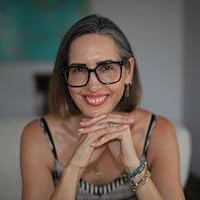
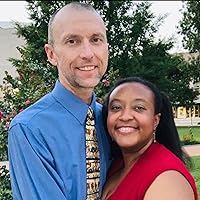
In 1988 Su Meck was twenty-two and married with two children when a ceiling fan in her kitchen fell and struck her on the head, leaving her with a traumatic brain injury that erased all her memories of her life up to that point. Although her body healed rapidly, her memories never returned.
Yet after just three weeks in the hospital, Su was released and once again charged with the care of two toddlers and a busy household. Adrift in a world about which she understood almost nothing, Su became an adept mimic, gradually creating routines and rituals that sheltered her and her family, however narrowly, from the near-daily threat of disaster, or so she thought. Though Su would eventually relearn to tie her shoes, cook a meal, and read and write, nearly twenty years would pass before a series of personally devastating events shattered the normal life she had worked so hard to build, and she realized that she would have to grow up all over again.
In her own indelible voice, Su offers us a view from the inside of a terrible injury, with the hope that her story will help give other brain injury sufferers and their families the resolve and courage to build their lives anew. Piercing, heartbreaking, but finally uplifting, this book is the true story of a woman determined to live life on her own terms.
There are two scales on which to rate memoirs: how well they are written and how interesting the author's life is. A few memoirists are excellent writers who have also been fortunate (or unfortunate) enough to have interesting life experiences. A few horrible memoirs are poorly written and terribly boring. Most fall somewhere between the two, and "I Forgot To Remember" is on that spectrum of middle ground. The subject matter is undeniably engaging and leaves you wondering what you would be life if you started your life over, as a blank slate, right now. However, the writing is not great; I think it is a fantastic effort given how Su has had to relearn everything from drinking from a cup on up. That this memoir exists at all is an amazing feat she should absolutely be proud of. However, it gets a bit tedious at times, as many memoirs do. It was a very quick read, though, so I don't regret the time I spent with Su on her journey back to herself.
On a more personal note, I understand why she has chosen to stay in her marriage but it really was a bit difficult to read about her husband putting them hundreds of thousands of dollars in debt secretly to pay for strippers, hookers, and secret girlfriends. I know it is a memoir but I kind of found myself wishing it was a novel so it could turn out differently. I wanted a happy ending where she dumped his ass and found someone who didn't ever verbally abuse her or physically attack her in his sleep. Yikes.
This entire review has been hidden because of spoilers.
There are a lot of novels and films about amnesia, but the reality of living with the condition is considerably more difficult than what is portrayed in fiction. At least for Su Meck. Some people with brain injuries are able to recover some of their memories over time. Not so for Su. She has no recall of the first 22 years of her life before her brain injury, and very little memory of the first few years after the injury.
Imagine coming to consciousness in a hospital with no idea who you are and no recognition of the people who say they are your family. You don't know what your likes and dislikes are, what your childhood was like, or what your basic personality is like. You no longer know how to read, do simple arithmetic, prepare food, or behave in social situations. Nor do you have any recall of ever having known how to do these things. And after MRIs have been done, the doctors tell your husband it's a psychiatric condition.
This is what happened to Su Meck in 1988, after a falling ceiling fan gave her a traumatic brain injury (TBI). This book chronicles her struggle to be a wife and mother with no memory of what the words marriage, motherhood, sex, or even love meant. For many years she was like an automaton, mimicking the behaviors of those around her, with no understanding of why she was supposed to do and say those things.
The first part of the book is very interesting, as Su explains what it means to have severe amnesia, and the disorientation she felt every minute of every day. As the book progresses, it gets mired down in the mundane details of married life and raising kids. The dailiness of her account grows tedious at times. I would rather have learned more about how, specifically, she regained some of her basic skills. For example, she says it took her many years to learn how to read again, but she doesn't describe how that re-learning evolved.
The story is still well worth reading despite a sometimes lagging pace. For twenty years after her accident, Su Meck kept her struggle with amnesia a secret from almost everyone. Part of her purpose in writing the book was to let people with similar problems know they're not alone and can reach out to others for support and guidance. I applaud her for the effort, and for taking on the challenge of writing a book for which she had to rely almost entirely on the memories of family and friends.
Many thanks to goodreads for the advance readers copy of this book. Amazing read. Amazing lady.
This is the story of a young wife and mother incapacitated by a traumatic brain injury that stole her entire life from her. She suffered complete amnesia and was unable to remember anything from her past. Her family and friends were nothing more than strangers. Her environment was unknown. Her life was a huge blank.
I cannot possibly imagine waking up daily and not knowing who I am, where I am, who the guy lying next to me is, what I am supposed to do on any particular day. I don't know how I would have handled something that all-encompassing. There is not a single aspect of daily life that it wouldn't have affected.
But Su Meck knows. She dealt with it. She continues to deal with it and she always will deal with it. Her story is the stuff of nightmares. From medical staff deeming her 'fixed' simply because nothing tangible was evident on MRI to her lightning headaches and blackouts to her inability to remember her daily routine without extensive notes to times she found herself unable to read simple words, it is simply horrifying.
But her story is also full of hope. She is an extremely courageous lady with the inner strength of Hercules. She might say that she did what she did because she didn't know what else to do. And that may well be the truth, but it doesn't mean that she didn't have a reserve of strength and resolve upon which to draw.
She shows us that it is possible to not only survive a traumatic brain injury with significant residuals but to thrive. The book is simply written and her life flows on every page. You sense her bewilderment, her confusion, her fear. She shows us how she's compensated for her memory loss, how she learns to remember again. And that is remarkable.
Recommended reading. This one is going up as my staff pick when it's released.
Amnesia memoirs – isn’t that an oxymoron? Nonetheless, a couple of recent books have marketed themselves as just that.
“I don’t remember any of what I’m about to tell you.” With that jolting line, Meck begins her chronicle of a rare case of complete retrograde amnesia, known as “Hollywood amnesia” because it occurs more in movies than in real life. She has absolutely no memories between her birth in 1965 and May 22, 1988. On that day she was playing with her son in their kitchen when a ceiling fan fell on her head.
Much of the book’s early section is reconstructed from hospital medical records. Having entered with partial paralysis, horrible headaches, and extremely limited vocabulary, Meck improved enough that doctors released her within three weeks, recording that her long-term memory “seems fairly unaffected.” Meck expresses outrage at her treatment, in her typically sarcastic, slang-filled style: “I was the goddamned valedictorian of head injury patients!” How could doctors have overlooked her total amnesia?
The accident created such a rupture in Meck’s identity that she refers to having lived two lives. Her techie husband, Jim, calls her “Su 2.0.” And, indeed, her personality seems to have undergone fundamental change: before, she was a rebel – a pot-smoking college drop-out, married at 19; after, she was clean-living and compliant. Returned to a childhood state, she had to relearn everything. Mostly she watched others to see how she should behave. She became a pro at acting normally. Yet every few days ‘lightning strikes’ left her unconscious on the floor. Her children had to take care of her as well as themselves.
It’s an unsettling book; perhaps the most disturbing element is Meck’s marriage to Jim. Clueless about finances and unsuspicious about Jim’s months-long work trips, Su was flabbergasted to learn he’d blown most of their money on strip clubs and affairs. He also has “sleep drunkenness,” which causes him to shout and hit people in his sleep. It seems something of a miracle that they’ve been married 30 years – and that Jim didn’t object to this memoir’s frank portrayal of his mistakes.
Meck rebuilt her confidence by taking classes at Montgomery College. After two decades of concealing the accident, trying desperately to be like everyone else, she found freedom in telling her story. She was approached by a Washington Post reporter (coauthor Daniel de Visé), and her experience became front-page news in 2011. Now a Smith College student, she continues sharing her life story to raise awareness of traumatic brain injury.
I was lucky enough to win a copy of this from a Goodreads first reads giveaway.
Wow... just wow. I had a really hard time putting this book down. What Su Meck went through is just unbelievable, and I found myself eager for the next chapter to find out if things got worse, or better. Even now, after finishing the book, I've got to remind myself that it is a work of nonfiction, not fiction.
Throughout this book I felt admiration for Su, frustration towards some members of her family (was there some serious denial going on, or what?), anger-lots of that-, sadness, and thankfully, also hope. A whole range of emotions.
I recommend this book to anyone who enjoys an interesting memoir, but I'm sure it's of special interest to those who know someone with a traumatic brain injury. But warning, since Su is still relatively young (late 40s), at the conclusion of the book you might find yourself asking "What's next??" Hopefully nothing but the best.
I applaud you Su Meck for bringing light to the consequences of a TBI- I knew nothing about TBIs before this book, and at least now, I am a little more educated.
I feel like biographies, as long as they are well-organized and interesting, should all be rated fives--because, hey, this is someone's life. That's something that really struck me about I Forgot To Remember--it's not some movie, where everything is black and white, right or wrong, where everyone is a hero or a villain. This book is a beautiful reflection of real life, with all its heartbreaks, what-ifs and uncertainties. It's simply fascinating.
Su Meck lost her memory almost completely when a kitchen fan fell on her head. She spent several weeks in the hospital, but received only minimal help. Nobody saw the extent of her impairment, which was major, and they sent her home with no resources or follow-up. Honestly, it infuriates me. She was young, with a toddler, a baby, and a husband who wasn't home much, none of whom she remembered. She didn't have much consciousness besides the present minute, couldn't read, write, cook, change a diaper, anything. She looked healthy, and took cues from what people seemed to expect of her, well enough that nobody knew what was happening, or not happening, in her mind. It took her years to piece together any kind of overview of her situation, but she did, and this book is the result. I don't want to say I enjoyed it, because it was hair-raising, but it is very readable. The brain is amazing, and this book - Meck's life - illustrates some of the ways that it can work
Su Meck tells an intriguing personal account on how a brain injury had affected the course of her life. But that's just all, she tells. Every single detail, which sometimes has no consequence to her or the reader. And she repeats. In retrospect, that does slightly capture how she must have felt when living with the repetitive but familiar routine that she was only comfortable with.
There are some honest revelations that she shares of herself, her husband, and her family. It was all very empathetic, and it was inspiring seeing a person slowly come out of adversity with determination and the support of loved ones, even if it is still a constantly evolving story. What leaves me underwhelmed is that there was a missed opportunity to be of something more enriching than it had presented itself since I am unsure if there is anything groundbreaking to learn from here.
Su is courageous, more so than most people could ever know. To live like she did in the begining, and the constant terror she must have felt, is heart breaking. I love how far she has come, and hope she continues to learn, be brave, and voice herself in the future. I hope Jim realizes how special she is.
In 2011, the Washington Post published an article about Meck. I read the article, fascinated, but I don't think I understood then just how gone her memory was or what a profound impact that would have.
Meck's memoir goes a long way toward explaining that, but I wonder how possible it really is to understand that -- after all, Meck, who in many senses became a new person as a consequence of her injury (you could get into a serious ton of philosophy here -- who are you without your memories?), only knows who she was pre-injury because of other people's memories.
I've taken so long to write this review in large part because I am still struggling to put what I want to say about it into words, and also in part because so much of my reaction has nothing to do with the writing (or other things that the author could control) but with the appalling lack of basic understanding that she faced from the people who should have been responsible for her post-injury, and I'm not sure how productive it is to focus on that in a review.
At times it feels as though Meck is still figuring that out -- what went right and wrong after her memory loss -- because for such a long time she had nothing to compare against, and nobody realised that. This is a book about memory loss and rebuilding a life with no road map, no baseline, and in that sense it's both sad and triumphant. But it's also ends up being about the basic failure of doctors and family to understand how to support someone with TBI, and on that end it's much, much sadder. How do you release from hospital, without outside support, a woman who not only doesn't have memories of childhood but also doesn't know she's supposed to have memories of childhood?
I wish we could also understand the woman Meck was before her injury -- though of course that's impossible, and if it were possible this would be a very different book.
I received a free copy of this book via a Goodreads giveaway.
There is no denying Su Meck’s story is intriguing – since I can remember I’ve been fascinated by the idea, or perhaps the logistics and fall-out, of waking up not remembering a single thing. Add to this Meck was only 22 and the mother of two with an asshole of a husband (more on that later) and you should have a rip-roaring read.
But, and it’s a big but for me, I found Meck’s voice bizarre. She is not a natural writer and at times the story feels forced and disengaged. Meck writes (as a possible explanation for her style?): “A big part of the problem was that I continued (for years) to have an incredibly literal mind” (124)”. The book sure reads that way.
I tried to keep in mind she simply cannot remember the early part of the story and had to rely on other people’s stories and banal medical notes. I don’t mind these techniques but the book could have been more entertainingly put together. For example, rather than reel out the content of the medical notes, a graphic or reproduction of the notes would break things up. I wonder at co-writer de Vise’s input; it is logical to think that as a ‘writer’ he could have better directed Meck’s structure and voice.
And then there’s the absentee husband: cheater, liar, big spender. And, worst of all, he uplifted Meck and the children to live in chaotic Cairo when he knew that Meck only survived with routine and the familiarity of home. I get that he was young when his wife changed forever and that he didn’t imagine life to turn out like it did, but you know what? Take the head injury out of the equation and I bet he’d still have done some of those things.
It’s like Meck was told foreshadowing is the writer’s number one technique – she makes hints about her husband all through the book so you expect what happens, along with a major reaction. And then she hints and hints about the ex-boyfriend…and you expect a major reaction. But it doesn’t happen. This aspect of the story left me feeling disappointed and expecting more from this incredible woman.
Four for content, and one for the writing technically equals 2.5, but it gets a 2 from me.
This book will remain in my head hopefully to my last day on earth - you think you have heard it all, and then Su Meck's amazing life comes to print. The title, having to do with memory or the lack of it, interested me since I did have a short period back in time, in the winter of 1967, when an inoperable injury to my skull left me with no memory. The cause was what you can call a garden variety head-on collision, college kids drinking and driving late at night. After a few days in coma, my recovery began. My amnesia was so brief, perhaps a matter of weeks, and I had no fear that it might not be fully restored. Yet to this day I am mindful that some event from my first 21 years, until now absent, will come back. We all could say that we don't know what or who we don't know. Events like winning the lottery or the like can produce long lost friends, relatives or previously unknown creditors. But the extraordinary life of the author is no such tidy or potentially comical topic of conversation. The story of how she has survived and thrived and risen to so many challenges in her life contains an improbable realization that at her "birth" she already has a husband and is the mother of two children. It is a fascinating book - you just have to read it. Thank you, Su, for giving your readers the gift of your story.
Wishing everyone a very happy new year. Here’s my first book for this wonderful new year and new decade. Happy 2021 and Happy reading!
I Forgot to Remember is a true story of a young girl named Su who suffers a traumatic brain injury (TBI) after a ceiling fan falls on her head. She is 22, married with two very young sons. She loses all memory of her life for the those 22 years of her life. This is her story and her struggles as she tries to relearn everything - she can’t read, she can barely write, she can’t tie her shoe laces because she doesn’t know how. Her journey is painful to read - you marvel at the mysteries of the brain but her struggles are so real and seem so unfair. You don’t know what to make of the emotional and sometimes physical abuse by her husband who was all of 24 when she had the accident. It’s disturbing. However, you can’t but help but really admire her grit and determination to get things done. She does well if she has a schedule, her young 3 year old son and later her younger son and daughter, literally do all they can to keep her out of trouble. It’s almost them doing the parenting. She decided to go to college and graduated in her 40s. She still has no recollection of her life before the accident. The brain is complex but it really fascinates me and I liked the book.
This memory has gotten some pretty nice reviews, but I don't think it quite lives up to them. Su Meck suffered a closed head injury when she was in her early 20s. With little the doctors could do, she returned home with no memory of her former life, family or friends. Complicating the matter was her inability to read, write, use a fork, recognize objects in a house, remember her way home, understand social cues or deal with an increasingly difficult husband. She never regains her memory although she does eventually learn to function and twenty years later returns to college.
The problem with this book is that there is no clear narrative about how she learns anything--and probably with good reason as she still suffers from severe memory issues.
It was interesting, but ultimately unsatisfying because of two factors: it was hard to imagine how she was able to relearn things with the level of disability she describes and her husband really came off as a jackass. I actually cannot believe the things she wrote about him and that she didn't leave him. The things she wrote about her husband were things I would hope kids would never know about their dad.
This entire review has been hidden because of spoilers.
An inspiring story of one person's courage to survive.
A true story of one journey through life under extreme circumstances. Told with honesty. showing the real ups and downs of maturing in life o g with a sereious medical condition. A message to the medical community that not being able to explain a medical conditiupporton does not mean it is just in your head. Despite little support from family and the doctors this woman shown great courage in fighting to understand the world around her and to try to find out "Who am I ?"
Very interesting book. I was intrigued how this story would go since it is a memoir about losing memory, so i was very curious. The book did not let me down. awesome book!
Who are we, really, if not our memories? If our memories are destroyed but our bodies live on, do we really, in any sense, live on ourselves? That's the question that, although not explicitly posed in the book, haunted me as I read I Forgot to Remember, an amnesiac's memoir--how strange and ironic that one with no memories could write a memoir: I Forgot to Remember is the author's story of her life but as remembered by her friends and family members and then, when she was able to form her own memories again, her own remembrances.
At age 22 following a blow to the head, Su Meck suffered severe retrograde amnesia: she lost all of her memories of those first 22 years of her life. To this day, she has never regained even a trace of those memories. Additionally, she had trouble forming new memories for many years afterwards, to the extent that she can now remember almost nothing of the first 4 or 5 years after her injury. The brain trauma also left her unable to read, unable to name many familiar objects, unable to perform many basic tasks of daily living, and unable even to understand her role as a wife and mother of two young boys. The trauma also changed her personality: she went from being outspoken, rebellious, and nonconformist to quiet and apprehensive.
As I read this novel, I was struck by the strange affect in Meck's tone: she's rather blunt and extremely open. Not only were her memories affected by the trauma, but her ability to experience and process emotion changed. I would almost describe her as a bit autistic. Her primary ruling emotions immediately after the trauma and, to some extent, even today, seem to be bewilderment, fear, and anger. She has existed in a constant state of confusion, though much less so now than in previous years: she admits that even today, she still has trouble remembering things, and she has difficulty fully understanding something as fundamental as time, stating that she cannot really understand concepts like one week from now or one year from now. Her writing in this book also reflects a level of immaturity, and I'm not trying to be insulting: she writes like a high school student: she holds nothing back, does not seem to edit herself in any way, tosses in random asides throughout, and does not engage in much serious reflection or analysis. It appears that her co-author (journalist Daniel de Vise) largely allowed Su to speak in her own voice throughout. And that's actually a good thing because we get an honest, open portrait of Su.
Much of I Forgot to Remember is the tale of how Su survived in the aftermath of her trauma. She had almost no help from the medical and psychological community. She candidly admits that her children (her two boys born before and her one daughter born after her trauma), even when her oldest son was as young as 3-years-old, parented her and looked after her in many ways. She describes herself as learning right along with her children as they went to school and she herself learned by not helping with but rather engaging in their homework: writing spelling words, doing math exercises, etc.
Su's husband, Jim, could not have been less helpful. He never really seemed to realize just how badly Su was affected by her brain injury. Yes, he recognized that she had lost all of her memories, but he failed to comprehend just how much she had forgotten about how to live her day-to-day life. After the accident, Su had the mentality of a 3- or 4-year-old child, yet Jim still expected her to behave like a grown woman. Outrageously, not long after the injury, Jim moved Su and their two boys from Texas, where Su's parents lived close enough that they could drive to Jim and Su's home and help Su, to Maryland. I was completely dismayed that Jim even forced Su drive one of their two vehicles across half a continent.
Su also speaks frankly of not being in love with Jim even today and not, at least immediately after the injury, even really loving him: she had no idea what it meant to be Jim's wife. She relates that the whole idea of sex was gross and weird to her, and yet Su tells us that Jim still had sex with her when she was in this state of mind. I honestly think this bordered on rape.
Jim also traveled extensively for his work, often leaving Su alone at home with her sons (and later her daughter) to fend for herself. I was utterly amazed throughout this novel at Jim's complete inability to see just how much Su had been affected by her injury, and Jim often flew into rages at Su and screamed at her when she made mistakes--which she often did. Su speaks constantly of being afraid of Jim and refraining from speaking for fear of arousing Jim's anger.
Yet, still, Su came to love and depend upon Jim, and she still loves him today. Wonderfully, it appears that all three of Su and Jim's children are psychologically healthy, stable young adults today. Su herself has written this memoir and is pursuing an undergraduate degree at Smith College. Her life story is fascinating, and she is an amazing human being. She is certainly not the person she was for the first 22 years of her life: that woman is gone. But Su is now her own person with her own memories, but memories that begin only after her injury.
The story is well told, and a true story, albeit terrifying and saddening, rather than uplifting at the end as the book cover implied. Such is life, but it was too disturbing for me to reread.
This book, to me, was worth reading, though due to its intriguing subject matter more so than the way in which it is handled. The author experienced a freak head injury – a ceiling fan fell down and hit her – that left her with no memory of her life up to that point. I really felt for the author as she chronicled her struggle to build a life without any of the foundation for it. She handled these challenges admirably, truly--eventually running a household, taking care of her children, and even working, all without ever regaining her memory. Unfortunately, the book is written with a certain level of detachment. I don't know if this should be attributed to the fact that it was written with the help of another person, or if that is one of the effects of her head injury, or what. Ultimately, it left me with more questions than answers. I felt like so much more could have been done with this amazing story. There is a lot of focus on the mundane activities of daily life, and not much at all about the particulars of her efforts to regain the skills and abilities that had vanished when she suffered her injury. Even more disappointing, the book failed to address the rebuilding of relationships. For example oftentimes our relationships with siblings rely heavily on childhood memories and shared history, which for the author do not exist. And what about her parents? What a horrible situation for them, ostensibly having lovingly raised her, and everything that they ever taught her or instilled in her is gone in the blink of an eye. How do they overcome that as a family? Spoiler alert: one of the most compelling "subplots" of this memoir is what we see unfold with the author's marriage. Certainly, her husband deserves some sympathy, having lost his wife as he knew her, including all her memories of meeting him, falling in love with him, marrying him, and having children. Moreover, certain aspects of her personality apparently changed upon her injury. It must have been extremely difficult for him as she was grappling with basic skills, perhaps focusing on that, and bringing the same level of detachment that she writes with to their marriage itself. However, readers' sympathy for him can only go so far, as it is very apparent that he has taken advantage of the situation. He seems to be using her vulnerable state to manipulate her, and through his job transfers, arguably removing her from other loved ones, almost in the way that an abuser might. By the end of the book – again, spoiler alert – we, and the author herself, learn that he has some dark secrets, including a number of affairs of varying significance to him, as well as an extremely high amount of debt (which might explain just why he was apparently okay with her writing this book), connected in large part to those affairs. In light of this, it seems that the author has in fact suffered a tragedy prior to her devastating head injury: she discovers that she had a boyfriend prior to meeting her husband, who it would seem was a wonderful and devoted guy. Unfortunately, her friends were jealous of the relationship, made up some lies about him cheating on her, and challenged her to retaliate by sleeping with a random guy. They pointed her in the direction of (you guessed it) the man who would become her husband. The the poor boyfriend went on to carry a torch for her for many years, never knowing why their relationship ended. He is now married, so the reader does not have the satisfaction of supposing that the author will dump her selfish husband for her former boyfriend. So the reader is left to just feel bad for the author, who despite her detached demeanor, surely deserves much better.
I received this book through a Goodreads First Reads giveaway and would like to thank the author and/or publisher for the opportunity to read and honestly review it.
It was interesting to consider 'nature vs nurture' when considering personality. When Su lost her memory, she had some other significant characteristic changes as well. I can understand some of the changes (such as no longer wanting to drink since she's already dealing with constant impairment), but another example ('before accident' Su loved the water and even worked as a lifeguard when she was younger but 'after accident' Su is terrified of water and won't go in) truly baffled me since her accident didn't involve water at all. The brain is a mystery.
The fact that Su has never regained any of her memories from prior to the accident, leaving her to rely solely on other people's information to determine who she was, was fascinating to think about. If I were in her shoes, I'd be screwed; I have many internal thoughts and feelings that nobody else would know or remember.
I didn't mind the format because I love medical stuff and don't need a lot of extra words but it could read as basic or bare to some. There was quite a bit of 'this person said this' and 'this person wrote that', and many questions were asked but never fully answered (understandable given her limitations but still frustrating to someone looking to flesh out the whole story).
As with all memoirs, I don't want to judge the people themselves. However, I was very surprised at the lack of concern or follow up Su and her family showed for many years. She was frequently (like, for weeks at a time) alone with the kids, they didn't tell people about her condition, and there were times Jim sounded downright abusive (based on the way he was portrayed throughout the book). They even moved to Cairo for a few years - how disorientating and isolating would that be? I'm glad her kids turned out okay because some of those situations sounded downright scary.
A Few Quotes from the Book
"Babies are coddled, nursed, and coaxed into childhood. Not me. I was born into a life already in progress."
"The old Su may have longed to finish school, to return to work, to seize all the dreams she had left at the door to motherhood. As for me, this was the only life I had ever known. For years, I had nothing to long for. I had no neglected hobbies, no dormant talents, and no dreams that I knew about."
Another reminder that the organ we rely on most is not only fragile and complex, but also of how little we know about how it functions. Su Meck found out first hand just how devastating a traumatic brain injury is, not only in terms of daily functioning, but also for our very sense of self. Meck still wonders just who she was before her brain injury, as she has no memories of her past, not of growing up, her parents and siblings her own thoughts, actions and beliefs.
At the time of her injury doctors couldn't explain her combination of short and long term memory loss and (in the beginning) her inability to create new memories. When she awoke in the hospital she couldn't feed herself and didn't have a memory of her family members or of things, such as forks. Over time she was able to regain the ability to create memories and recall them, but a tedious process much different than those of us who have not had a TBI (traumatic brain injury).
Not only a tale of Meck's own resiliance and determination to overcome the challenges she faced, but also an amazing tale of how the human brain heals itself, creates new pathways around damaged areas and forges ever forward, truly amazing how complex our brains are and after the horror of their relative fragility the good news that they seem to be able to create new networks and regain health.
It was a bit difficult, aside from reading about her TBI, to read about how her friends changed her life possibly negatively just as a joke and how her husband used her brain injury to justify and help maintain his adulterous second life.
Those who are interested in either neuroscience or psychology may find this interesting, as well as those who enjoy biographies of normal people whose lives get thrown upside down by a single event, such as Augusten Burroughs memoirs, Rob Smith's "127 Hours", Janine Latus' book "If I am Missing or Dead."
This book really challenged how I look at life and further challenged me as a medical professional. Su has done a remarkable job at continuing on and relearning basically everything. How she was sent home from hospital so quickly with no memories and very few skills is scary and frustrating on it's own. That she was also a stay at home mum with very little support from family, who did not live close, and her husband, who was not coping with her injury and working long hours & away from home, is just horrifying. Reading about the early years after the accident really reinforced how much we need to look at every person and their situation individually and we cannot make assumptions. I realise that this was back in the 80's and I believe that as a whole things have improved however from personal experience as well, I could actually see this still occurring and that scares me. The book isn't the easiest to read but the content alone means it shouldn't be and considering Su had to relearn how to read and write in her 20s, whilst still having difficulty retaining memories, and had to reconstruct most of her story from other's memories and medical notes I think she has done a remarkable job. Su is able to portray the seriousness of a lot of situations whilst also appreciating the humour in them. Through describing her views and difficulties understanding things, such as descriptions of relationships, she really made me appreciate how complex life and the English language is if you don't have a good grasp of conceptual ideas. I believe this book will go on the list of books that have impacted my life and greatly appreciate Su sharing her story. It should come with a trigger warning for domestic violence.
My View: This is a book that caused much debate, actually let me re phrase that; not so much debate – but rather a consensus and shared sadness that these events relayed in this memoir actually occurred – the systems that let you down Su, the situations that you coped with on your own are heartbreaking; this is an open, frank and at times confronting creative memoir that offers an insider’s view of life after suffering a Traumatic Brain Injury (TBI) but more or rather should I say in addition, this is a story of a family’s struggle to cope are with a horrendously debilitating injury and this is a story of domestic violence – Su, I know you probably dont want to hear that but the moment I started reading your story the warning bells rung loud and clear to me… such manipulation and control and anger…
Apparently Jim (the husband) agreed to have all these reflections of behaviour and attitudes “on record” (p.274), for me that does not excuse the behaviour. Su, you also reflect here on why you stay with Jim…I leave that you the reader to absorb and contemplate.
My voice clearly echoes the feelings this book has stirred up. This is an extraordinary book. Su you are living an extraordinary life; good luck and I hope you do find love.
This is the perfect book club read – I know it will educate and it will definitely create debate… and evoke many feelings.
I read an advance copy, so there were possibly changes in the final version, I don't know. It's a fascinating book, in the way that terrible stories and accidents kind of grab your attention and though you think "no, I should move on" still you stay and gawk. It very much reads as a "as told to" sort of book, and no wonder, since Su has yet to recover all her verbal skills. I don't really know how to rate this book, really (though I will, of course)...there are things in it that just kind of made me shudder, and I'm trying to figure out why; notably the true confession part of her husband, but also I think the absolute horror of the whole situation: I mean, imagine waking up one day in the hospital with no memory at all of your past. It happens in the movies, true, but seldom in real life. And the book sort of made me uncomfortable (yes, I must be a bad person) in the way that someone with a horrible injury sitting in front of me when I can't do a thing makes me inwardly squirm.
So interesting for that; it does make you examine yourself. But..oh, in some ways I wish I hadn't read it at all.
This memoir details the life of Su Meck, who in her early twenties and married with two young sons, loses her memory and never gets it back. She spends her adult life raising her children and "faking it." She fakes that she has basic competence, that she understands social niceties, that she knows how to be an adult. Only when her own children go to school does she begin to reclaim elementary skills, such as how to read, through working with them. Meck is failed by so many people. The medical community dismisses her, and her husband, who should have been her partner and advocate, instead, resents and blames her for the situation. Meck's story illustrates the painful issues and contradictions that confront anyone suffering a memory disorder. As memories are defining, what becomes of a person's identity without memories? Adults should have autonomy and be able to make their own decisions, but what should be done when an adult no longer remembers how to care for herself? What becomes of a marriage when a partner is no longer recognizable? This memoir was an interesting, thought provoking, and sad.
I felt such empathy for the author of this autobiographical account of what it is like to make a life out of the one you used to have but now have lost all memory of it. I also identified with her as I once lived in the area where she lived and so many things she spoke of were so familiar to me. If you have ever wondered what it would be like to total amnesia (I'm talking big-time amnesia like having to learn to read and write all over again), then this is a very personal and intense look at what such a situation entails. I read it in a day because I totally dropped everything else I had to do - it was completely engrossing.
I Forgot to Remember by Su Meck and Daniel de Vise. This is an amazing and shocking first hand story of a young woman, mother of 2 and wife, who suffers a traumatic brain injury in a freak accident with a falling ceiling fan, and is brilliantly and entertainingly written. I read it in 2 days, hard to put down. I thank my friend Ruth, who has a granddaughter with TBI and short term memory impairment, and who helped me with a dear friend who had a stroke and short term memory loss, for recommending this book. I recommend it to all for the inside information on memory loss and the beautiful writing.
Fascinating look at severe amnesia and traumatic brain injury......I cannot imagine living through everything Su has gone through, but this book gave such clear descriptions, I could put myself in her shoes and try to imagine not remembering anything before age 22. Not understanding what being a wife, mother, sister, daughter meant. She is brave and so are her children! As for her husband, well, it's not for me to judge. Excellent book though, well worth reading, especially if you have any interest in brain injuries.
It’s difficult to rate memoirs outside of the quality of writing and the interest of the story. This one in particular fell severely short in the first area, and somewhere in the middle on the next. I love to read about people’s experiences that are so far away from my own, it helps me relate to others on some level. Su Meck’s story was certainly interesting and at times heartbreaking, but I was constantly pulled out of the story telling by poor writing. For me, it’s not something I can ignore.