

What do you think?
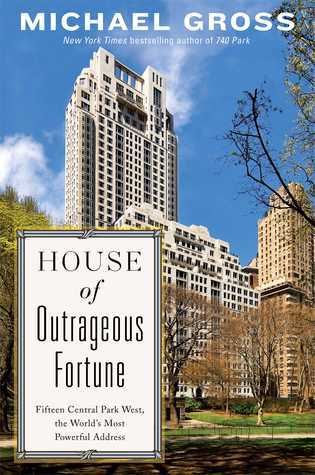
House of Outrageous Fortune: Fifteen Central Park West, the World's Most Powerful Address
“Michael Gross’s new book…packs [in] almost as many stories as there are apartments in the building. The Jackie Collins of real estate likes to map expressions of power, money and ego… Even more crammed with billionaires and their exploits than 740 Park” (Penelope Green, The New York Times).
With two concierge-staffed lobbies, a walnut-lined library, a lavish screening room, a private sixty-seat restaurant offering residents room service, a health club complete with a seventy-foot swimming pool, penthouses that cost almost $100 million, and a tenant roster that’s a roll call of business page heroes and villains, Fifteen Central Park West is the most outrageously successful, insanely expensive, titanically tycoon-stuffed real estate development of the twenty-first century.
In this “stunning” (CNN) and “deliciously detailed” (Booklist, starred review) New York Times bestseller, journalist Michael Gross turns his gimlet eye on the new-money wonderland that’s sprung up on the southwest rim of Central Park. Mixing an absorbing business epic with hilarious social comedy, Gross “takes another gossip-laden bite out of the upper crust” (Sam Roberts, The New York Times), which includes Denzel Washington, Sting, Norman Lear, top executives, and Russian and Chinese oligarchs, to name a few. And he recounts the legendary building’s inspired genesis, costly construction, and the flashy international lifestyle it has brought to a once benighted and socially déclassé Manhattan neighborhood.
More than just an apartment building, 15CPW represents a massive paradigm shift in the lifestyle of New York’s rich and famous—and is a bellwether of the city’s changing social and financial landscape.
With two concierge-staffed lobbies, a walnut-lined library, a lavish screening room, a private sixty-seat restaurant offering residents room service, a health club complete with a seventy-foot swimming pool, penthouses that cost almost $100 million, and a tenant roster that’s a roll call of business page heroes and villains, Fifteen Central Park West is the most outrageously successful, insanely expensive, titanically tycoon-stuffed real estate development of the twenty-first century.
In this “stunning” (CNN) and “deliciously detailed” (Booklist, starred review) New York Times bestseller, journalist Michael Gross turns his gimlet eye on the new-money wonderland that’s sprung up on the southwest rim of Central Park. Mixing an absorbing business epic with hilarious social comedy, Gross “takes another gossip-laden bite out of the upper crust” (Sam Roberts, The New York Times), which includes Denzel Washington, Sting, Norman Lear, top executives, and Russian and Chinese oligarchs, to name a few. And he recounts the legendary building’s inspired genesis, costly construction, and the flashy international lifestyle it has brought to a once benighted and socially déclassé Manhattan neighborhood.
More than just an apartment building, 15CPW represents a massive paradigm shift in the lifestyle of New York’s rich and famous—and is a bellwether of the city’s changing social and financial landscape.
416 pages, Hardcover
First published March 11, 2014
About the author
Michael Gross
9 books90 followersThis book list is a work in progress. Michael Gross is recognized as one of America’s most provocative writers of non-fiction–its “foremost chronicler of the upper-crust,” says curbed.com. His latest book Unreal Estate, to be published November 1, 2011, is a west coast version of his bestseller, 740 Park, this time exposing the most exclusive neighborhoods of Los Angeles–Beverly Hills, Holmby Hills, Bel Air and Beverly Park–and their residents. 740 Park, published in 2005, is the inside story of New York’s richest, most prestigious cooperative apartment building. Built by James T. Lee, Jacqueline Kennedy Onassis’ grandfather, and long the residence of John D. Rockefeller, Jr., 740 Park is today the home of some of New York’s wealthiest and most prominent families. Fortune has described 740 Park as “jaw-dropping apartment porn.” It offers an unprecedented peek into the world of such latterday financial heroes and villains as Stephen Schwarzman, Ezra Merkin and John Thain.
In between these real estate epics, Gross published the wildly controversial expose of New York’s cultural elite Rogues’ Gallery: The Secret History of the Moguls and the Money that Made the Metropolitan Museum in 2009, setting off an extraordinary campaign by some of New York’s most influential citizens to suppress the book. It failed. The New York Times Book Review called it “a blockbuster exhibition of human achievement and flaws” and Vanity Fair said it is simply “explosive.” Why? “Gross demonstrates he knows his stuff. It’s a terrific tale…gossipy, color-rich, fact-packed …What Gross reveals is stuff that more people should know,” according to USA Today. A paperback edition was released in May 2010.
Before 740 Park, Gross wrote Genuine Authentic, a biography of fashion designer Ralph Lauren. It was acclaimed by The New York Times as a work of “impressive reporting” that “hack(s) through the hype and half-truths” of the Polo purveyor’s legend. Publishers Weekly praised his “meticulous research and artful prose…The crackerjack journalist simultaneously tells a compelling story and gives it meat enough to be satisfying.”
A Contributing Editor of Travel & Leisure, Gross has also worked as a columnist for The New York Times, GQ, Tatler, Town & Country, and The Daily News; a Contributing Editor of New York (where he wrote 26 cover stories, including the magazine’s all-time best-selling reported cover story on John F. Kennedy, Jr.), and of Talk; a Senior Writer at Esquire, and a Senior Editor at George.
In 2000, Gross published My Generation, a generational biography of the Baby Boom. It was called “wonderful” by the Washington Times, “trenchant, well-dramatized, thought-provoking and unusual” by Kirkus Reviews and “hugely entertaining…a brilliantly reported story,” by the Orlando Sentinel.
Gross’s 1995 book, Model: The Ugly Business of Beautiful Women, was an investigative tour-de-force, and a blistering expose of the fashion-modeling business. It was a New York Times bestseller, and a selection of the Quality Paperback Book Club. Model, which remains in print and in demand more than a dozen years after its first publication, was also published in France, the U. K., Canada, Australia, Germany, Japan, Brazil, and China. Most recently, an updated edition was published in Russia. Click here to read reviews of Model.
Over the years Gross has profiled such subjects as John F. Kennedy Jr., Greta Garbo, Stephanie of Monaco, Richard Gere, Alec Baldwin, Madonna, and Ivana Trump; fashion figures Tina Chow, Calvin Klein, Diane von Furstenberg, Isaac Mizrahi, Ralph Lauren, and Steven Meisel, and he’s written on topics as diverse as philanthropy, the theft of the internet domain sex.com, plastic surgery, divorce, the A-List, Sex in the 90s and Greenwich Village-the last in an article that introduced the phrase “quality of life” into New York City’s 1993 mayoral campaig
In between these real estate epics, Gross published the wildly controversial expose of New York’s cultural elite Rogues’ Gallery: The Secret History of the Moguls and the Money that Made the Metropolitan Museum in 2009, setting off an extraordinary campaign by some of New York’s most influential citizens to suppress the book. It failed. The New York Times Book Review called it “a blockbuster exhibition of human achievement and flaws” and Vanity Fair said it is simply “explosive.” Why? “Gross demonstrates he knows his stuff. It’s a terrific tale…gossipy, color-rich, fact-packed …What Gross reveals is stuff that more people should know,” according to USA Today. A paperback edition was released in May 2010.
Before 740 Park, Gross wrote Genuine Authentic, a biography of fashion designer Ralph Lauren. It was acclaimed by The New York Times as a work of “impressive reporting” that “hack(s) through the hype and half-truths” of the Polo purveyor’s legend. Publishers Weekly praised his “meticulous research and artful prose…The crackerjack journalist simultaneously tells a compelling story and gives it meat enough to be satisfying.”
A Contributing Editor of Travel & Leisure, Gross has also worked as a columnist for The New York Times, GQ, Tatler, Town & Country, and The Daily News; a Contributing Editor of New York (where he wrote 26 cover stories, including the magazine’s all-time best-selling reported cover story on John F. Kennedy, Jr.), and of Talk; a Senior Writer at Esquire, and a Senior Editor at George.
In 2000, Gross published My Generation, a generational biography of the Baby Boom. It was called “wonderful” by the Washington Times, “trenchant, well-dramatized, thought-provoking and unusual” by Kirkus Reviews and “hugely entertaining…a brilliantly reported story,” by the Orlando Sentinel.
Gross’s 1995 book, Model: The Ugly Business of Beautiful Women, was an investigative tour-de-force, and a blistering expose of the fashion-modeling business. It was a New York Times bestseller, and a selection of the Quality Paperback Book Club. Model, which remains in print and in demand more than a dozen years after its first publication, was also published in France, the U. K., Canada, Australia, Germany, Japan, Brazil, and China. Most recently, an updated edition was published in Russia. Click here to read reviews of Model.
Over the years Gross has profiled such subjects as John F. Kennedy Jr., Greta Garbo, Stephanie of Monaco, Richard Gere, Alec Baldwin, Madonna, and Ivana Trump; fashion figures Tina Chow, Calvin Klein, Diane von Furstenberg, Isaac Mizrahi, Ralph Lauren, and Steven Meisel, and he’s written on topics as diverse as philanthropy, the theft of the internet domain sex.com, plastic surgery, divorce, the A-List, Sex in the 90s and Greenwich Village-the last in an article that introduced the phrase “quality of life” into New York City’s 1993 mayoral campaig
Ratings & Reviews
Friends & Following
Create a free account to discover what your friends think of this book!
Community Reviews
Displaying 1 - 30 of 50 reviews

April 23, 2014
I heard about House of Outrageous Fortune from a radio interview with the author and was intrigued by the concept: Who lives in the most exclusive apartment building in the world? Who has $50 million to drop on a fifth home? How did they get there and what does their lifestyle look like? Interesting subject, right? Well. Sort of. Michael Gross has written a sometimes fascinating - sometimes eye-gougingly boring book about the world’s most financially exclusive apartment building; its history, its residents and its style.
Fifteen Central Park West is the address in question. It’s a refined concrete and limestone “house and tower” combination situated near Columbus Circle between Broadway and Central Park West on the southwest corner of Central Park in Manhattan. Boasting such influential residents as financial titans like Goldman Sachs CEO Lloyd Blankfein and Hedge Fund manager Daniel Loeb to rock stars and celebrities such as Sting, Bob Costas, Denzel Washington and Alex Rodriguez; it’s easy to see why this address holds such fascination. With some of the smaller, lower units going for one or two million dollars and one of the most flashy penthouses just selling for a whopping $88 million, these dwellings are not for your average run-of-the-mill buyers.
So how does one go about writing an entire book about something like this when, at least to my mind, a Wikipedia article would have been more than sufficient? Research, interviews and a load of New York City real estate history - - - and I mean a LOAD of New York City real estate history. Gross spends about the first two fifths of his book primarily detailing the rise of the co-operative housing development and the arrival of the luxury condominium. We’re talking history from the early 19th century up to today. Was it boring? You better believe it was boring! Good grief. It was a struggle not to toss the book out the window (figuratively, of course, after all, it was a Kindle edition I was reading) and move on.
But once the history was out of the way, the interesting stuff could be devoured. Who lives there? What apartment do they call home? Did they buy or do they rent? What did they pay for their pad? These questions are answered pretty thoroughly along with a brief biography of each individual to give the reader some background. I was surprised to learn that the vast majority of 15 CPW residents are self-made, coming from poor to lower class beginnings. 15CPW seems to be built on “new money”, with Orthodox Jews living side by side in peaceful harmony with Islamic royalty and immigrant Russian oligarchs rubbing shoulders with Hollywood and Rock n’ Roll celebrities in the elevators. The author found himself asking what makes all of this work? The answer is simple: money. They all feel as though they can relate to each other because they understand each other – their bond together being their outrageous fortunes.
So, was the book worth reading? No, not really. Sure it was fascinating at times – especially the stories surrounding A-Rod and his prostitute addiction, Kelsey Grammer and his wife/mistress faux pas and Dimitri Rybolovlev’s drama around his marital strife, his estate shenanigans and his 22 year old socialite daughter. But all of that's just gossipy nonsense, truth be told, and if those things aren’t your cup of tea, there really isn’t much more to draw you in. If New York architecture and real estate speculation are passions of yours, then this book might be a delightful excursion for you. If you just find yourself fascinated by the mystique of 15 CPW and want to know the gory details about who’s who on the various apartment’s deeds, Google it instead.
Overall, the book was very well written and edited. I saw no jarring typos or grammatical errors at all and the verbiage and vocabulary were well executed and entertaining. Sure, Gross’ style can tend toward dull but, for the most part, his writing had a way of keeping me coming back even when I thought I’d never finish – pretty high praise for a book whose subject matter I found a little dry. The book isn’t overly long. In fact I was surprised when I hit the Epilogue as my Kindle showed I had only read about 75% of the book. Pictures, Acknowledgments and an extremely healthy bibliography round out the final fourth of this book.
Did I enjoy it? . . . Yes and no. It is difficult to recommend this book to anyone else because I found it extremely boring in parts and difficult to pick back up once I’d put it down. But, I did find the history of the Zeckendorf brothers, the brief mention of Donald Trump and the biographies of many of these billionaires to be extremely interesting and enlightening. I guess I’m glad I read it because it gives me a new perspective on an element of life on this planet of which I had absolutely no experience. But I am glad it’s over so I can move on to something with a few more fart jokes and a lot more explosions. What can I say? I’m a simple man.
Three stars for House of Outrageous Fortunes.
Fifteen Central Park West is the address in question. It’s a refined concrete and limestone “house and tower” combination situated near Columbus Circle between Broadway and Central Park West on the southwest corner of Central Park in Manhattan. Boasting such influential residents as financial titans like Goldman Sachs CEO Lloyd Blankfein and Hedge Fund manager Daniel Loeb to rock stars and celebrities such as Sting, Bob Costas, Denzel Washington and Alex Rodriguez; it’s easy to see why this address holds such fascination. With some of the smaller, lower units going for one or two million dollars and one of the most flashy penthouses just selling for a whopping $88 million, these dwellings are not for your average run-of-the-mill buyers.
So how does one go about writing an entire book about something like this when, at least to my mind, a Wikipedia article would have been more than sufficient? Research, interviews and a load of New York City real estate history - - - and I mean a LOAD of New York City real estate history. Gross spends about the first two fifths of his book primarily detailing the rise of the co-operative housing development and the arrival of the luxury condominium. We’re talking history from the early 19th century up to today. Was it boring? You better believe it was boring! Good grief. It was a struggle not to toss the book out the window (figuratively, of course, after all, it was a Kindle edition I was reading) and move on.
But once the history was out of the way, the interesting stuff could be devoured. Who lives there? What apartment do they call home? Did they buy or do they rent? What did they pay for their pad? These questions are answered pretty thoroughly along with a brief biography of each individual to give the reader some background. I was surprised to learn that the vast majority of 15 CPW residents are self-made, coming from poor to lower class beginnings. 15CPW seems to be built on “new money”, with Orthodox Jews living side by side in peaceful harmony with Islamic royalty and immigrant Russian oligarchs rubbing shoulders with Hollywood and Rock n’ Roll celebrities in the elevators. The author found himself asking what makes all of this work? The answer is simple: money. They all feel as though they can relate to each other because they understand each other – their bond together being their outrageous fortunes.
So, was the book worth reading? No, not really. Sure it was fascinating at times – especially the stories surrounding A-Rod and his prostitute addiction, Kelsey Grammer and his wife/mistress faux pas and Dimitri Rybolovlev’s drama around his marital strife, his estate shenanigans and his 22 year old socialite daughter. But all of that's just gossipy nonsense, truth be told, and if those things aren’t your cup of tea, there really isn’t much more to draw you in. If New York architecture and real estate speculation are passions of yours, then this book might be a delightful excursion for you. If you just find yourself fascinated by the mystique of 15 CPW and want to know the gory details about who’s who on the various apartment’s deeds, Google it instead.
Overall, the book was very well written and edited. I saw no jarring typos or grammatical errors at all and the verbiage and vocabulary were well executed and entertaining. Sure, Gross’ style can tend toward dull but, for the most part, his writing had a way of keeping me coming back even when I thought I’d never finish – pretty high praise for a book whose subject matter I found a little dry. The book isn’t overly long. In fact I was surprised when I hit the Epilogue as my Kindle showed I had only read about 75% of the book. Pictures, Acknowledgments and an extremely healthy bibliography round out the final fourth of this book.
Did I enjoy it? . . . Yes and no. It is difficult to recommend this book to anyone else because I found it extremely boring in parts and difficult to pick back up once I’d put it down. But, I did find the history of the Zeckendorf brothers, the brief mention of Donald Trump and the biographies of many of these billionaires to be extremely interesting and enlightening. I guess I’m glad I read it because it gives me a new perspective on an element of life on this planet of which I had absolutely no experience. But I am glad it’s over so I can move on to something with a few more fart jokes and a lot more explosions. What can I say? I’m a simple man.
Three stars for House of Outrageous Fortunes.

Want to Read
February 24, 2023Contains at least two interesting brief tidbits -- one on Arthur McArthur, the son of Gen. Douglas McArthur, who, living under an assumed name, was one of the hold-out tenants in the Mayflower Hotel. Then there's a bit about the final hold-out tenant, who was able to get more than $17 million out of the developer in return for vacating the premises.

January 1, 2015
By no means a fast read, Gross' House of Outrageous Fortune: Fifteen Central Park West, the World's Most Powerful Address provided fascinating insights into the history and staying power of NYC's east side vs. west side, coop vs. condo, old money vs. new money, WASP vs. Jew factions as played out in the dog-eat-dog world of its prestige address apartment buildings. While perhaps too heavy at times on the details/antics of the residents of this particular property, the work is perhaps best summarized in the following excerpt:
Gross' book is fascinating in its treatment of the sheer magnitude of events to be orchestrated perfectly in order to zone, permit, design, construct, and then bring such a property to market. The cast of characters--everyone from developers, investors, residents, the starchitect Robert A.M. Stern whose practice got it all down on paper--is vast and far reaching. At mid-point the book became a bit bogged down in the personal foibles of the folks involved, but I am happy to have forged through the sloggy bits.
This building, the reigning king of NYC trophy apartments, broke all sorts of records. Its first round of residents were also taking possession of their units at the same time that the fit was well and truly hitting the shan on Wall Street. Major players from Goldman Sachs, as just one example, figure prominently in the story of 15 CPW. In fact, in the fall of 2012, participants in Occupy Goldman Sachs set up shop directly across from the building for several weeks. Actors, athletes, investors, artists, and a host of accomplished business people and their families call 15 CPW home.
I enjoyed the book, founds its details and insights fascinating. The one thing that surprised me as I read it was that I imagined its developers would love for readers to drool with envy at the opulence of the building and its utter inaccessibility to the rest of us 99%ers. While Gross did a very nice job of verbally describing a building that, for security reasons, he couldn't even provide a floor plan for, in my estimation he never succeeded in giving the building a soul. In some ways, the descriptions of different developers trying to out-build and out-step the latest highest price paid/square foot reminds me of the latest Vegas hotel--nice for now, but destined to be outdated in a very short time and, equally possible, destined to be razed and replaced by "the next best thing" just as 15 CPW replaced older, smaller buildings that were of a decidedly more modest scale and met the needs of a different era.
The real-property embodiment of Hegel's dialectic, 15 CPW grafted the thesis of the impenetrable limestone-clad Park Avenue co-op with the antithesis of the amenity-rich glass-tower condo to forge a synthesis, a new kind of club for the newly enriched and those who aspire to join them (p. 261).
Gross' book is fascinating in its treatment of the sheer magnitude of events to be orchestrated perfectly in order to zone, permit, design, construct, and then bring such a property to market. The cast of characters--everyone from developers, investors, residents, the starchitect Robert A.M. Stern whose practice got it all down on paper--is vast and far reaching. At mid-point the book became a bit bogged down in the personal foibles of the folks involved, but I am happy to have forged through the sloggy bits.
This building, the reigning king of NYC trophy apartments, broke all sorts of records. Its first round of residents were also taking possession of their units at the same time that the fit was well and truly hitting the shan on Wall Street. Major players from Goldman Sachs, as just one example, figure prominently in the story of 15 CPW. In fact, in the fall of 2012, participants in Occupy Goldman Sachs set up shop directly across from the building for several weeks. Actors, athletes, investors, artists, and a host of accomplished business people and their families call 15 CPW home.
I enjoyed the book, founds its details and insights fascinating. The one thing that surprised me as I read it was that I imagined its developers would love for readers to drool with envy at the opulence of the building and its utter inaccessibility to the rest of us 99%ers. While Gross did a very nice job of verbally describing a building that, for security reasons, he couldn't even provide a floor plan for, in my estimation he never succeeded in giving the building a soul. In some ways, the descriptions of different developers trying to out-build and out-step the latest highest price paid/square foot reminds me of the latest Vegas hotel--nice for now, but destined to be outdated in a very short time and, equally possible, destined to be razed and replaced by "the next best thing" just as 15 CPW replaced older, smaller buildings that were of a decidedly more modest scale and met the needs of a different era.

August 30, 2020
I really don't know what to rate this at all...
It was really hard to get in to, and for a while I blamed myself for not setting aside the time or paying enough attention, but I think the problem is the density of the sentences, and the fact that they don't really flow. In one sentence, you can learn all about an individual's history, only to find out his cousin's spouse's motive for buying a penthouse apartment at Fifteen in the next sentence. It was just too much to take in, and I found myself clinging desperately to the fact that I was almost in the middle and could therefore soon relish in the photograph spread.
With a little over a hundred pages left, I decided that if I was going to finish, I couldn't keep skimming. I tried really hard to read every sentence carefully and get a sense of the non-flow. This never really got easier, and I never got 'used to' the writing style enough to comfortably read several pages without noticing that I was reading. However, I did become much more interested in the subject matter once I forced myself, and once I saw what facts I was missing out on, I became bummed out. Literally every topic that I like reading about is in here! Glamour, scandal, reified beings, ridiculous spending, downfalls, real estate, cultural histories of cities...all of it...and somehow it still missed the mark.
I have been really back and forth about whether or not I want to remove 740 Park from my TBR...usually when an authour writes something exceptionally bad, I take all their other works off of my list because ain't nobody got time to go through that again...but now I'm wondering if perhaps there is potential for me to enjoy that book if I accept it for what it is and read it for the fact nuggets and not for the experience of joy. Sigh, stay tuned to find out if I end up reading 740 in like five years or not.
It was really hard to get in to, and for a while I blamed myself for not setting aside the time or paying enough attention, but I think the problem is the density of the sentences, and the fact that they don't really flow. In one sentence, you can learn all about an individual's history, only to find out his cousin's spouse's motive for buying a penthouse apartment at Fifteen in the next sentence. It was just too much to take in, and I found myself clinging desperately to the fact that I was almost in the middle and could therefore soon relish in the photograph spread.
With a little over a hundred pages left, I decided that if I was going to finish, I couldn't keep skimming. I tried really hard to read every sentence carefully and get a sense of the non-flow. This never really got easier, and I never got 'used to' the writing style enough to comfortably read several pages without noticing that I was reading. However, I did become much more interested in the subject matter once I forced myself, and once I saw what facts I was missing out on, I became bummed out. Literally every topic that I like reading about is in here! Glamour, scandal, reified beings, ridiculous spending, downfalls, real estate, cultural histories of cities...all of it...and somehow it still missed the mark.
I have been really back and forth about whether or not I want to remove 740 Park from my TBR...usually when an authour writes something exceptionally bad, I take all their other works off of my list because ain't nobody got time to go through that again...but now I'm wondering if perhaps there is potential for me to enjoy that book if I accept it for what it is and read it for the fact nuggets and not for the experience of joy. Sigh, stay tuned to find out if I end up reading 740 in like five years or not.

February 11, 2014
“House of Outrageous Fortune” by Michael Gross, published by Atria Books.
Category – Sociology Publication Date – March 11, 2014
It is very difficult to categorize this book because it could very well have been classified under several categories. It is a book that will be of interest to those who like books on New York, Architecture, Contracting, Real Estate, Celebrities, and Uncommon Wealth.
Fifteen and 15CPW all stand for the address 15 Central Park West. This address could easily be the most expensive address in the world. It is a high rise that has been subdivided into condos that command some of the most expensive real estate in the world.
The book is a history of the area surrounding the address, the people who foresaw the possibilities, and how they went about building the structure. This address has attracted such celebrities as Alex Rodriquez, Jeff Gordon, Bob Costas, Sting, and multi-millionaires both local and overseas. Many of the owners were people who acquired their fortunes in the hedge fund market.
Location, location, location. Depending on the location and size of a condo the going price, at initial offering, for the smallest unit was $1.78 million and the penthouses for $21 million.
Many buyers bought the condos as an investment and made millions of dollars when the building was complete and sold off their condo.
Although this is not an easy read, the parts that the reader may be interested in will fly by. The people involved, the insane amounts of money involved, and the putting together of this prestigious address almost seems like a work of fantasy.
Category – Sociology Publication Date – March 11, 2014
It is very difficult to categorize this book because it could very well have been classified under several categories. It is a book that will be of interest to those who like books on New York, Architecture, Contracting, Real Estate, Celebrities, and Uncommon Wealth.
Fifteen and 15CPW all stand for the address 15 Central Park West. This address could easily be the most expensive address in the world. It is a high rise that has been subdivided into condos that command some of the most expensive real estate in the world.
The book is a history of the area surrounding the address, the people who foresaw the possibilities, and how they went about building the structure. This address has attracted such celebrities as Alex Rodriquez, Jeff Gordon, Bob Costas, Sting, and multi-millionaires both local and overseas. Many of the owners were people who acquired their fortunes in the hedge fund market.
Location, location, location. Depending on the location and size of a condo the going price, at initial offering, for the smallest unit was $1.78 million and the penthouses for $21 million.
Many buyers bought the condos as an investment and made millions of dollars when the building was complete and sold off their condo.
Although this is not an easy read, the parts that the reader may be interested in will fly by. The people involved, the insane amounts of money involved, and the putting together of this prestigious address almost seems like a work of fantasy.
August 1, 2014
Ugh! Someone should have taught Michael Gross how to write! His sentences are so cumbersome that they bury what interesting facts he does have in such poor construction at you either skip over them or reread a half dozen times...
The history and change in condo or cooperative living among the wealthy in NYC is interesting, but it could have been greatly shortened, as could the long digressions into the lives of the parents and grandparents of the major players.
The best chapter of all came at the end when he told about the Friedmans and Tsinbergs -- two Russian Jewish couples who came to this country with next to nothing so they could escape Russian oppression. They worked hard and didn't gain their wealth by shady means to come to a place where they could live in 15CPW. They, unlike many of the people living there, actually appreciate what they have.
The history and change in condo or cooperative living among the wealthy in NYC is interesting, but it could have been greatly shortened, as could the long digressions into the lives of the parents and grandparents of the major players.
The best chapter of all came at the end when he told about the Friedmans and Tsinbergs -- two Russian Jewish couples who came to this country with next to nothing so they could escape Russian oppression. They worked hard and didn't gain their wealth by shady means to come to a place where they could live in 15CPW. They, unlike many of the people living there, actually appreciate what they have.

December 12, 2014
I am a fan of the Upper West Side and have stayed at The Mayflower Hotel which provided the foot print for THE HOUSE OF OUTRAGEOUS FORTUNE. The book is packed with information as to the history of the builders, the mortar and brick decisions, those with truly "outrageous fortunes" who fought for the prime apartments, and offers a look into a world unknown to most. And with such intriguing info in what I assume to be a thoroughly researched book, it all comes across "bland". An esoteric choice for those who are interested in NYC real estate.
January 14, 2025
Interesting history of the Upper West Side and the development of condos in NYC.
The profile of the Zeckendorfs is also compelling.
I was mostly interested in reading about the residents who were moved out of the Mayflower Hotel - again, more of a profile of people and personalities. But that was cut short in favor of more details surrounding the financing and development of 15 CPW, which just isn’t as interesting to me.
The profile of the Zeckendorfs is also compelling.
I was mostly interested in reading about the residents who were moved out of the Mayflower Hotel - again, more of a profile of people and personalities. But that was cut short in favor of more details surrounding the financing and development of 15 CPW, which just isn’t as interesting to me.

April 25, 2024
A gossipy, jaw-dropping account of the development of 15 Central Park West (or 15CPW), a luxury condominium building in Manhattan that completed construction in 2007.
The success of Trump Tower in 1983 spawned countless other copycat high-rise towers: Museum Tower, Metropolitan Tower, CitySpire, Central Park Place, and the Millennium Tower. The prices kept climbing, exceeding $1,000 per square foot. Developers began to focus on Columbus Circle, where Trump redeveloped the old Gulf+Western Building (where I worked for a couple years in the late 1980s) into the new Trump International Hotel and where the old New York Coliseum (a convention center) was demolished and replaced by the new Time Warner Center (now the Deutsch Bank Center).
The intrepid Zeckendorf brothers, Arthur and Bill, had their eyes on a precious property located just north of Trump International Hotel on the southwest corner of Central Park, where the old Mayflower Hotel stood. To fulfill their vision of a grand new limestone-clad fortress that harkened back to other Central Park West landmarks built in the 1920s, they needed to acquire the lots, raise the financing, hire an architect, and begin promoting the apartments to the global elites. It was a bold plan, but once Goldman Sachs became a partner its success was practically guaranteed. The project became yet another vehicle for Goldman executives to enrich themselves, improve their status, and promote another commodity—luxury condominiums—to their super-rich clients.
Gross does an excellent job describing the multi-generation history of the Zeckendorf family, particularly Arthur and Bill Zeckendorf and their grandfather, real estate legend William “Big Bill” Zeckendorf, whom Donald Trump used as the model for his career in New York real estate. Although Gross wrote the book independently, the Zeckendorfs obviously provided him enormous access while he researched the book, which has wonderful insider details.
The Zeckendorf brothers recognized that a new luxury condominium tower on Central Park West would be a magnet for global elites, so they spent years doing deals to make the project happen. The Goldman-funded venture ending up shelling out about $690 per square foot for the land, and another $750 per square foot for construction, so the Zeckindorfs would need to charge at least $1500 per square foot just to break even. They charged MUCH more than that. Prices of condos at 15CPW ultimately ranged from $2,000 to $6,000 per square foot, with an average of $3,300 per square foot. Gross provides details on the design (by architect Robert A.M. Stern) and construction, and profiles dozens of wealthy occupants, some famous celebrities (e.g., Sting and Denzel Washington), many Goldman Sachs executives, hedge fund managers, and foreign billionaires.
Unfortunately, most of the occupants of 15CPW that Gross profiles are insipid. The book demonstrates that money might buy you a nice condo in Manhattan with spectacular views of Central Park, but it won't make you interesting.
But there is one fascinating character in the book. Herb Sukenik was a reclusive 73-year-old PhD hermit who lived in a one-room, filthy, rent-controlled apartment in the Mayflower Hotel. Before the Zeckindorfs could begin construction on 15CPW, they needed to evict the eccentric Sukenik. To get him out, the Zeckendorfs ended up buying a $2 million furnished apartment with gorgeous park views, and then leased it to Sukenik for only $1 a month for life. They also paid Sukenik an astonishing $17 million. Suckenik remained a shut-in and died at age 80 in 2011, leaving a $10 million estate.
Gross failed to capitalize on the more compelling story behind 15CPW: Goldman Sachs, the company that financed the building, was also the chief villain behind the 2008 global economic crisis. As the ridiculously overpaid Goldman Sachs executives, including CEO Lloyd Blankfein, moved into their finished apartments in 15CPW, household wealth in the United States fell $11 trillion, unemployment rose to 11%, thousands of people lost their homes, and countless businesses failed. That's the real story surrounding 15CPW: how rapacious greed led unscrupulous bankers to chase after ever more luxurious apartments while everyone else struggled to survive the Great Recession that they caused. But there are other books that cover the Great Recession in detail (for instance, Too Big to Fail by Andrew Ross Sorkin). Although no Goldman Sachs officials were prosecuted for their blatant fraud, the company ended up paying the largest penalty in history for a Wall Street firm, $550 million, to settle its case with the SEC.
The book is 10 years old, and the picture it paints of Manhattan (despite all the luxurious photos at the back of the book) is a sad one. Manhattan used to be place where ordinary people could live and work, but now it's just a playground for billionaires. Ironically, most of the billionaires who bought condos at 15CPW don't even live there; at night, the lights are out. As Gross notes, "Apartments at 15CPW are often second, third, or fifth homes, and they are not rented out to pay expenses." For billionaires, a luxury condo isn't a home; it's just a commodity.
The success of Trump Tower in 1983 spawned countless other copycat high-rise towers: Museum Tower, Metropolitan Tower, CitySpire, Central Park Place, and the Millennium Tower. The prices kept climbing, exceeding $1,000 per square foot. Developers began to focus on Columbus Circle, where Trump redeveloped the old Gulf+Western Building (where I worked for a couple years in the late 1980s) into the new Trump International Hotel and where the old New York Coliseum (a convention center) was demolished and replaced by the new Time Warner Center (now the Deutsch Bank Center).
The intrepid Zeckendorf brothers, Arthur and Bill, had their eyes on a precious property located just north of Trump International Hotel on the southwest corner of Central Park, where the old Mayflower Hotel stood. To fulfill their vision of a grand new limestone-clad fortress that harkened back to other Central Park West landmarks built in the 1920s, they needed to acquire the lots, raise the financing, hire an architect, and begin promoting the apartments to the global elites. It was a bold plan, but once Goldman Sachs became a partner its success was practically guaranteed. The project became yet another vehicle for Goldman executives to enrich themselves, improve their status, and promote another commodity—luxury condominiums—to their super-rich clients.
Gross does an excellent job describing the multi-generation history of the Zeckendorf family, particularly Arthur and Bill Zeckendorf and their grandfather, real estate legend William “Big Bill” Zeckendorf, whom Donald Trump used as the model for his career in New York real estate. Although Gross wrote the book independently, the Zeckendorfs obviously provided him enormous access while he researched the book, which has wonderful insider details.
The Zeckendorf brothers recognized that a new luxury condominium tower on Central Park West would be a magnet for global elites, so they spent years doing deals to make the project happen. The Goldman-funded venture ending up shelling out about $690 per square foot for the land, and another $750 per square foot for construction, so the Zeckindorfs would need to charge at least $1500 per square foot just to break even. They charged MUCH more than that. Prices of condos at 15CPW ultimately ranged from $2,000 to $6,000 per square foot, with an average of $3,300 per square foot. Gross provides details on the design (by architect Robert A.M. Stern) and construction, and profiles dozens of wealthy occupants, some famous celebrities (e.g., Sting and Denzel Washington), many Goldman Sachs executives, hedge fund managers, and foreign billionaires.
Unfortunately, most of the occupants of 15CPW that Gross profiles are insipid. The book demonstrates that money might buy you a nice condo in Manhattan with spectacular views of Central Park, but it won't make you interesting.
But there is one fascinating character in the book. Herb Sukenik was a reclusive 73-year-old PhD hermit who lived in a one-room, filthy, rent-controlled apartment in the Mayflower Hotel. Before the Zeckindorfs could begin construction on 15CPW, they needed to evict the eccentric Sukenik. To get him out, the Zeckendorfs ended up buying a $2 million furnished apartment with gorgeous park views, and then leased it to Sukenik for only $1 a month for life. They also paid Sukenik an astonishing $17 million. Suckenik remained a shut-in and died at age 80 in 2011, leaving a $10 million estate.
Gross failed to capitalize on the more compelling story behind 15CPW: Goldman Sachs, the company that financed the building, was also the chief villain behind the 2008 global economic crisis. As the ridiculously overpaid Goldman Sachs executives, including CEO Lloyd Blankfein, moved into their finished apartments in 15CPW, household wealth in the United States fell $11 trillion, unemployment rose to 11%, thousands of people lost their homes, and countless businesses failed. That's the real story surrounding 15CPW: how rapacious greed led unscrupulous bankers to chase after ever more luxurious apartments while everyone else struggled to survive the Great Recession that they caused. But there are other books that cover the Great Recession in detail (for instance, Too Big to Fail by Andrew Ross Sorkin). Although no Goldman Sachs officials were prosecuted for their blatant fraud, the company ended up paying the largest penalty in history for a Wall Street firm, $550 million, to settle its case with the SEC.
The book is 10 years old, and the picture it paints of Manhattan (despite all the luxurious photos at the back of the book) is a sad one. Manhattan used to be place where ordinary people could live and work, but now it's just a playground for billionaires. Ironically, most of the billionaires who bought condos at 15CPW don't even live there; at night, the lights are out. As Gross notes, "Apartments at 15CPW are often second, third, or fifth homes, and they are not rented out to pay expenses." For billionaires, a luxury condo isn't a home; it's just a commodity.

August 3, 2020
Check full of history of the UWS. Great stories, tons of detail.

August 3, 2020
I guess I was looking for more drama with the residents. There is a lot of history about New York building.
November 16, 2023
3.5 stars

August 20, 2016
I can't even decide on how to begin to explain the disaster that is this book. So let me start with the passage where I realized that Gross is not just a bad author, he is terrible at research.
Dear heaven. Look, if you are going to copy so liberally from The Park and the People: A History of Central Park then at least bother to read the first chapter beyond its title. The unnamed gentle man of that flurry of words posing as a paragraph was Robert Minturn; the date of his letter to the Journal of Commerce was June 1851; and the location on the East River was, specifically, Jones Wood. However, too bad for Mr. Gross, this was hardly sui generis to our "American gentleman". The mayor of New York had already introduced an expanded parks program proposal a full month before Minturn's letter went to press, and William Cullen Bryant began beating the drum for a large European-style showcase park as early as 1844.
So what does this have to do with the building at 15 Central Park West? you ask. This kind of slopshod research dump is what Gross thinks history looks like. Details and fact-checking? Never heard of it! We get four endless pages detailing Carl Icahn's version of how he didn't buy into 15 Central Park West, pages where Gross spells out the square footage and appreciated value of Icahn's other apartment compared to the sweet suites that he let pass him by at 15CPW. We get sketchy rumorous BS that is supposed to pass for factual history. This is how Gross thinks, Gross passes off dimly understood factual information with infinitely less precision and fidelity than the obviously self-serving narratives of the hedgies. It infuriates me that Gross believes this is a reasonable way to present any information. His phrasing is blustery and pompous, his word choices are cliche piled upon cliche, and the construction of his sentences is so monstrous that the ridiculous grammatical error I copied directly from the book above is obscured by the category five poop storm. See if you can diagram that beast and find it for yourself.
In addition to his awful writing, Gross is also an obvious toady, a perfect Robin Leach-ian lickspittle who gobbles up every self-justifying morsel of excremental nonsense that the equally fatuous super-rich happen to lob his way. He is obsessed with the minutia of the hedge fund billionaires and developer class, collecting their garbage and piling it into this book. There is no other overarching theme aside from gossip unless you want to count this as an entry in some kind of name-dropping competition. The pretense that this book is about the 15CPW branding breakthrough and a West Side real estate revolution is just not supported by what Gross heaps before us. This is a book of constant and impossible digressions, a book of unsupported anecdotes about the RICH!!!!, a book that spends much more time tracing how many different ways the various developer families figured out how to snub each other than describing the building. But the mind-clawing worst are the many many many stories relating how every single condo unit in 15CPW was wrangled over and who won and who lost in the fight for penthouse views of the park: stories that are retold with their own iterative digressions and pointless conclusions.
Goddam it, I am an urbanist by profession. I love process stories about planning and construction. I love detailed city histories. I know a lot about Central Park West, I have published articles about the area and believe me when I say that I have read a mountain of supremely boring and fussy books about New York and its history. This book trumps them all for just pure uselessness and dubious facts. Gross writes like a half-literate Chihuahua with ADHD and never met a digression that he could refuse. I hate this book entirely because of the lost opportunity it represents. This could have been an interesting book. Hell, given the same information your average history undergraduate would have made this readable. Now I know better and will avoid Gross's other books assiduously.
Before the Civil War, an American gentleman returned from a grand tour of Europe with the notion that his city, to be world-class, needed a great public park. He and some like-minded men of wealth and influence focused on a large piece of land on the East River, but as so often happens in New York, bitter argument followed.-p. 19
Dear heaven. Look, if you are going to copy so liberally from The Park and the People: A History of Central Park then at least bother to read the first chapter beyond its title. The unnamed gentle man of that flurry of words posing as a paragraph was Robert Minturn; the date of his letter to the Journal of Commerce was June 1851; and the location on the East River was, specifically, Jones Wood. However, too bad for Mr. Gross, this was hardly sui generis to our "American gentleman". The mayor of New York had already introduced an expanded parks program proposal a full month before Minturn's letter went to press, and William Cullen Bryant began beating the drum for a large European-style showcase park as early as 1844.
So what does this have to do with the building at 15 Central Park West? you ask. This kind of slopshod research dump is what Gross thinks history looks like. Details and fact-checking? Never heard of it! We get four endless pages detailing Carl Icahn's version of how he didn't buy into 15 Central Park West, pages where Gross spells out the square footage and appreciated value of Icahn's other apartment compared to the sweet suites that he let pass him by at 15CPW. We get sketchy rumorous BS that is supposed to pass for factual history. This is how Gross thinks, Gross passes off dimly understood factual information with infinitely less precision and fidelity than the obviously self-serving narratives of the hedgies. It infuriates me that Gross believes this is a reasonable way to present any information. His phrasing is blustery and pompous, his word choices are cliche piled upon cliche, and the construction of his sentences is so monstrous that the ridiculous grammatical error I copied directly from the book above is obscured by the category five poop storm. See if you can diagram that beast and find it for yourself.
In addition to his awful writing, Gross is also an obvious toady, a perfect Robin Leach-ian lickspittle who gobbles up every self-justifying morsel of excremental nonsense that the equally fatuous super-rich happen to lob his way. He is obsessed with the minutia of the hedge fund billionaires and developer class, collecting their garbage and piling it into this book. There is no other overarching theme aside from gossip unless you want to count this as an entry in some kind of name-dropping competition. The pretense that this book is about the 15CPW branding breakthrough and a West Side real estate revolution is just not supported by what Gross heaps before us. This is a book of constant and impossible digressions, a book of unsupported anecdotes about the RICH!!!!, a book that spends much more time tracing how many different ways the various developer families figured out how to snub each other than describing the building. But the mind-clawing worst are the many many many stories relating how every single condo unit in 15CPW was wrangled over and who won and who lost in the fight for penthouse views of the park: stories that are retold with their own iterative digressions and pointless conclusions.
Goddam it, I am an urbanist by profession. I love process stories about planning and construction. I love detailed city histories. I know a lot about Central Park West, I have published articles about the area and believe me when I say that I have read a mountain of supremely boring and fussy books about New York and its history. This book trumps them all for just pure uselessness and dubious facts. Gross writes like a half-literate Chihuahua with ADHD and never met a digression that he could refuse. I hate this book entirely because of the lost opportunity it represents. This could have been an interesting book. Hell, given the same information your average history undergraduate would have made this readable. Now I know better and will avoid Gross's other books assiduously.
February 23, 2014
(My star posts aren't registering....5**)
[FTC DISCLOSURE:I received this ARC as part of a GoodReads/First Reads giveaway abd I thank the sponsers for the book. However, this in no way affected my opinions, which, as akways, are 100% my own]
This book is a five star read into the historical and present day history of Manhatten architecture, and how the third generation of the Zechandorf family continues to influence the way condos are built.
It is also a sociology lesson on status, money and power, perceived or otherwise among Manhatten's uber riche for good or for bad. You learn the diffwrence between co-ops and condos and why it matters; what it means to hold the rights to airspace, and just what are the foundations onManhatten buildt on anyway.
And, finally, it's a jaw dropping, name dropping, "they did....WHAT???" Or a read dovetailing with our love of reality shows and gossip. Mr. Gross, to misquote Mae West :" if you have nothing good to say about someone, come sit with me". A wonderful book
[FTC DISCLOSURE:I received this ARC as part of a GoodReads/First Reads giveaway abd I thank the sponsers for the book. However, this in no way affected my opinions, which, as akways, are 100% my own]
This book is a five star read into the historical and present day history of Manhatten architecture, and how the third generation of the Zechandorf family continues to influence the way condos are built.
It is also a sociology lesson on status, money and power, perceived or otherwise among Manhatten's uber riche for good or for bad. You learn the diffwrence between co-ops and condos and why it matters; what it means to hold the rights to airspace, and just what are the foundations onManhatten buildt on anyway.
And, finally, it's a jaw dropping, name dropping, "they did....WHAT???" Or a read dovetailing with our love of reality shows and gossip. Mr. Gross, to misquote Mae West :" if you have nothing good to say about someone, come sit with me". A wonderful book

January 20, 2016
I loved his 740 Park more, but this book shed light on the development of a part of the Upper West Side that I knew nothing about. Particularly fascinating was how they put the parcel together. The design of the building is not that interesting, sort of a post-modern pastiche, but the story of the people to whom it appeals is compelling, or at least it ended by being compelling. But when he began that chapter, it read, as one journalist wrote, and I am quoting from memory, as a guest list "for the guillotine." But then you see how diverse the population is and that this building represents the dreams of people who have both inherited great wealth as well as those who have worked for some measure of wealth and it puts it all in perspective. It must have been harder to write this book than the one about 740, because that book was more social history than Page Six, and he admits that some people spoke to him only in glowing terms, which is hard to believe. But you can read between the lines.

August 7, 2014
Ended up skimming most of this--but largely because I do not know Manhattan that well so could not follow the history of development, of various areas, as well as a Manhattanite.
Interesting about the co op system by which one purchases ownership in a traditional Upper East side building. Apparently, these condo towers have since developed, primarily for those with much money but without that elusive "other stuff" one needs to buy into a co op. Also, interesting the way some of these condos are becoming unlived in investments the way those ghost cities in China are unlived in investments. What sort of future NYC will this practice lead to?
Further, really liked the story about the two last men to move out of the building that had to be torn down so that Fifteen could go up.

October 1, 2014
I would say that 30% of this book was a great read for anyone interested in real estate in NYC. Gross introduces the players who made the city skyline what it is today. I can see how this book would be beyond dull for anyone not from NYC or interested in real estate.
As for the other 70%... I absolutely hated the gossip of the lives of "hedgies" and other Wall Street types... I struggled to find the information presented about their cars, affairs, and lavish vacations to be relevant...
I must admit as a Yankees fan the bit about A-rod had me laughing. he really is as much of an asshole as I thought...
Overall, probably not worth the read... and if you do decide to read it will take a good month as most of it is incredibly slow...
As for the other 70%... I absolutely hated the gossip of the lives of "hedgies" and other Wall Street types... I struggled to find the information presented about their cars, affairs, and lavish vacations to be relevant...
I must admit as a Yankees fan the bit about A-rod had me laughing. he really is as much of an asshole as I thought...
Overall, probably not worth the read... and if you do decide to read it will take a good month as most of it is incredibly slow...

November 24, 2014
This book is pretty bombastic in tone and overwrought and sometimes confusing in its prose. As a new Yorker, I loved reading about the people I read about while growing upin the papers in the 60's and 70's and about the addresses and neighborhoods in which I traveled and played. But there is something quite out of reality in the lives of the "rich and famous", old vs. new money and the competition by the "boys" to have and build the biggest toys (in this case, buildings). I found it somewhat difficult to follow and I got bored easily and kept putting the book down and picking it back up. There needed to be more pictures of the buildings to really show NY at its best and make the written word come alive.

April 9, 2014
I really liked this book but it certainly isn't for everyone. First, you must have a true interest in New York, in history and in real estate. Michael Gross has a tendency, in this book, to go into some incredible detail that seems designed more to flaunt his knowledge than to educate the reader. However, he does provide a bigger picture of how New York's real estate got to the point that a 15 CPW building was even possible. It just felt a bit overdone to me.
I recommend the book if you are very interested in the subject matter, but I enjoyed reading his book on 740 Park better than this one.
I recommend the book if you are very interested in the subject matter, but I enjoyed reading his book on 740 Park better than this one.

April 19, 2014
Maybe 2.5 stars. Told in a cut and dried way that is very offputting. It isn't that I exactly wanted gossip but concerning the really wealthy people who live in this building there must be something more interesting to write than "so and so bought one apartment for 8 million then waited until the adjoining apartment came up for sale and paid 5 million". That is it. A book based on real estate and tax records. There are a few photos and a few floor plans but the fact that everyone but A-Rod is friendly does not make for a good read.
May 4, 2014
This book is so sporadic and dull. It doesn't follow a clear time line and jumps between years. The majority of the book profiles the condo buyers and details their ensuing transactions and publicity. The book also begins with a painfully long story about the Zeckendorf's acquiring the land, finding investors, and selecting an architect. The descriptions of the design decisions are very interesting as is the history of the Upper West Side, but other than that I've found it exceedingly dull. It seems like it was written to stroke the egos of the developers and wealthy owners of the condos.

June 29, 2014
I think perhaps I was expecting more celebrity intrigue and stories, but I really enjoyed this book for the history of Central Park West and the great property developers of New York. The author goes into a great deal of detail about property developments, the co op culture in NYC (fascinating) and the rise of international wealth and the condo. There are some celebrity stories (yes I loved the A Rod stories) but the book focuses more on the financial barons who anchor this building who are quite interesting in themselves. If you have a real fascination with New York, this book is for you.

July 14, 2014
If you expect anything "Page Six" worthy in this book, you will be shattered. As far as I am concerned, the promo on the inside flap is hyped to a level I'm not sure I've seen. This book is incredibly serious and probably not of interest to too many people. Basically this is a history and sociology lesson on where and how the wealthiest city-dwelling New Yorkers lived and live. It's not your grandfather's NYC but I'm much more intrigued by trying to figure out whose NYC will await future grandpeople.

March 13, 2014
I started reading this and gave up quite quickly. I thought it might be interesting to read into the living spaces of the .01% but the real estate jargon and the repetitiveness turned me off really quick --I get it Sting and Denzel have apartments there! this only repeated about 15 times in the first thirty pages. Unfortunately I probably missed out on the stuff I wanted to read about but the first few chapters just turned me off and I felt it wasn't worth my time.

March 19, 2014
What's the saying? "Will it play in Peoria?" Or is it acceptable to the mainstream?
No, "House of Outrageous Fortune", does not play in Peoria, or certainly not in my corner of the Midwest.
This book is very full of itself, and all it does is spout dollar amounts of "celebrities" who bought into a condo at 15 Central Park West.
Who cares? Boring. No redeeming value.
Full disclosure: I won this book in a giveaway via Goodreads.com.
No, "House of Outrageous Fortune", does not play in Peoria, or certainly not in my corner of the Midwest.
This book is very full of itself, and all it does is spout dollar amounts of "celebrities" who bought into a condo at 15 Central Park West.
Who cares? Boring. No redeeming value.
Full disclosure: I won this book in a giveaway via Goodreads.com.

Read
October 20, 2013I love architecture, I love gossip, I love New York, and I love non-fiction. That should have made this a slam dunk for me, but I just couldn't get it into it. It joins the elite ranks of books that I just couldn't bring myself to finish. Maybe I'll try again someday.
I received a copy of this book from NetGalley in exchange for a fair and honest review.
I received a copy of this book from NetGalley in exchange for a fair and honest review.
April 7, 2014
The 1% paying upwards of $5,000 per square foot for apartments that were not overwhelming despite the nice views. More wheeling-dealing and fewer vivid personalities than in his earlier "740 Park," but still interesting. It is amazing how money is spent on property that is in most cases not even their principal dwelling.Nice illustrations.

started-but-didn-t-finish
May 27, 2014This should have been right up my alley. I wrote a term paper on residential skyscrapers in college. For a while, I was interested. Granted, I was completely lost in the list of property names. Then, my sister came home and dumped a pile of much-anticipated books on me from her library. (Ah, the beauty of privately managed interlibrary loans.) So, three weeks later, I give up.

August 9, 2014
very well researched. describes the history of real estate in new york and co-ops vs. condominium development, the roles of developers and architects, the history of hedge funds and the finance sector in the city. the listing of goldman sachs employees who buy apartments is probably catnip for finance people, but got kinda boring to the average person.

January 18, 2015
I heard the author interviewed so I decided to buy the book. I wouldn't recommend it to anyone who isn't interested in NYC history, it's pretty boring. What kept me going were 2 and 3 page biographies of some of the apartment owners. The bios were interesting, but there was a lot of uninteresting stuff as well.
Displaying 1 - 30 of 50 reviews