

What do you think?

Nonfiction
This is definitely not a ghost story. But for a while after you’re gone, I see you everywhere. Every ragged young person sitting huddled on a pavement, every stretched-out body under cardboard in a shop doorway.
Two parents stand by powerlessly as their only child seems intent on destroying herself. As the mother—a novelist—attempts to understand her daughter, she finds herself revisiting her own uneasy, unresolved relationship with her mother. Weaving between childhoods past and present, laced with temptation and betrayal, A Novel is an unflinching account of a mother, daughter, wife, and author reckoning with the world around her. But can a writer ever be trusted with the truth of her own story?
Clear-eyed, lacerating, and fearless, Julie Myerson’s A Novel explores maternal love as an emotional foundation to both crave and fear. A hauntingly beautiful and deeply moving love letter from a mother to a daughter, this is a tale of damage and addiction, recovery and creativity, compassion and love.
Two parents stand by powerlessly as their only child seems intent on destroying herself. As the mother—a novelist—attempts to understand her daughter, she finds herself revisiting her own uneasy, unresolved relationship with her mother. Weaving between childhoods past and present, laced with temptation and betrayal, A Novel is an unflinching account of a mother, daughter, wife, and author reckoning with the world around her. But can a writer ever be trusted with the truth of her own story?
Clear-eyed, lacerating, and fearless, Julie Myerson’s A Novel explores maternal love as an emotional foundation to both crave and fear. A hauntingly beautiful and deeply moving love letter from a mother to a daughter, this is a tale of damage and addiction, recovery and creativity, compassion and love.
235 pages, Kindle Edition
First published May 26, 2022
About the author
Julie Myerson
26 books185 followersJulie Myerson is the author of nine novels, including the internationally bestselling Something Might Happen, and three works of nonfiction. As a critic and columnist, she has written for many newspapers including The Guardian, Financial Times, Harper’s Bazaar, and the New York Times.
Ratings & Reviews
Friends & Following
Create a free account to discover what your friends think of this book!
Community Reviews
Displaying 1 - 30 of 243 reviews
Read
November 2, 2023Author Julie Myerson wrote an autobiographical novel about her chaotic life with her son as he descended into drug addiction in 2009. She received criticism for violating her son’s privacy. Her recent novel, “Nonfiction” is marketed as a mother’s nightmarish struggle when her daughter falls into drug addiction. The mother is a novelist, much like Myerson. I was intrigued. Is Myerson messing with the critics?
This is a quiet, contemplative novel. Myerson doesn’t use narrative punctuation, so those who dislike this style of writing might be annoyed. It required me to reread many paragraphs to discern who “you” is and who “she” is. Also, the unnamed narrator describes events in which multiple characters are involved which makes it an attentive read. This is akin to one long narrated letter.
Although Myerson made her child a daughter in the novel, this daughter is more boy-like in her ways of fighting and destroying her life. This comes close to autofiction. It’s sad, frightening, exhausting, and heartbreaking.
As the unnamed narrator explores her relationship with her daughter, attempting to figure out where it all went wrong, she also contemplates her own relationship with her mother. Her mother is cruel and demanding. The read becomes overwhelming when the narrator needs to deal with both a destructive daughter and a cruel mother at the same time.
Myerson writes in a past lover who is also manipulative towards the narrator. If there is a complaint I have, it’s that there are too many horrible characters in this story. Her husband is the only compassionate person. She isn’t a likeable character per say but given the life she leads with her daughter and mother; one can make allowances.
This is raw and gritty. Myerson doesn’t hold back on the debasing life of a drug addict. This novel is being published in January 2024.
This is a quiet, contemplative novel. Myerson doesn’t use narrative punctuation, so those who dislike this style of writing might be annoyed. It required me to reread many paragraphs to discern who “you” is and who “she” is. Also, the unnamed narrator describes events in which multiple characters are involved which makes it an attentive read. This is akin to one long narrated letter.
Although Myerson made her child a daughter in the novel, this daughter is more boy-like in her ways of fighting and destroying her life. This comes close to autofiction. It’s sad, frightening, exhausting, and heartbreaking.
As the unnamed narrator explores her relationship with her daughter, attempting to figure out where it all went wrong, she also contemplates her own relationship with her mother. Her mother is cruel and demanding. The read becomes overwhelming when the narrator needs to deal with both a destructive daughter and a cruel mother at the same time.
Myerson writes in a past lover who is also manipulative towards the narrator. If there is a complaint I have, it’s that there are too many horrible characters in this story. Her husband is the only compassionate person. She isn’t a likeable character per say but given the life she leads with her daughter and mother; one can make allowances.
This is raw and gritty. Myerson doesn’t hold back on the debasing life of a drug addict. This novel is being published in January 2024.

July 3, 2024
If you are a mother who has had anything go wrong with your child or children, I advise you to approach this novel with extreme caution, especially if the wrong thing is still wrong.
If you are a mother whose care and devotion to your child or children has been rewarded with a child or children who are fine, who are growing up as you hoped or are adults and doing well, and you have maintained your sense of self but sometimes feel judgmental towards mothers who have not managed that balancing act as well as you have, you should read this novel.
It is the story of a mother and her husband whose only daughter fell into addiction as a teen, leaving them distraught, fearful for her and dreading the worst. It is mostly the mother’s story. She is a writer. When the tragedy strikes and despite all their efforts to deal with it have mostly failed, she is filled with guilt and self-blame and examines her own life to try and make some sense out of it all.
It is a sad, sad story.
I am a mother who has had things go wrong with my two sons. They are still wrong. I may have been an unusual mother, I may have married the wrong man, but I was not a bad mother. I have been dealing with this for a very long time and though I am in a better place now than I was, though I now have a wonderful, supportive and reliable husband, it has all taken its toll. I have often felt judged by myself and other mothers. I have also had unconditional support from my sisters and my nieces and nephews. It is all part of the tale.
Julie Myerson is a British novelist with 10 previous novels to her credit though I had not known about her until the Otherppl Book Club selected this one for the January 2024 book. Her writing is beyond excellent and I want to read more.
If you are a mother whose care and devotion to your child or children has been rewarded with a child or children who are fine, who are growing up as you hoped or are adults and doing well, and you have maintained your sense of self but sometimes feel judgmental towards mothers who have not managed that balancing act as well as you have, you should read this novel.
It is the story of a mother and her husband whose only daughter fell into addiction as a teen, leaving them distraught, fearful for her and dreading the worst. It is mostly the mother’s story. She is a writer. When the tragedy strikes and despite all their efforts to deal with it have mostly failed, she is filled with guilt and self-blame and examines her own life to try and make some sense out of it all.
It is a sad, sad story.
I am a mother who has had things go wrong with my two sons. They are still wrong. I may have been an unusual mother, I may have married the wrong man, but I was not a bad mother. I have been dealing with this for a very long time and though I am in a better place now than I was, though I now have a wonderful, supportive and reliable husband, it has all taken its toll. I have often felt judged by myself and other mothers. I have also had unconditional support from my sisters and my nieces and nephews. It is all part of the tale.
Julie Myerson is a British novelist with 10 previous novels to her credit though I had not known about her until the Otherppl Book Club selected this one for the January 2024 book. Her writing is beyond excellent and I want to read more.

August 23, 2025
an intense, deeply moving read about mother-daughter relationships and addiction. i really loved the writing style here - there is a lack of quotation marks and short choppy sections, which won’t work for everyone, but i loved the second person POV to show the narrator addressing her daughter.
i went into this knowing nothing about the author’s life or the book itself. it was recommended to me based on its rachel cusk blurb and that was all it took for me to request it at the library. i can totally see why cusk had praise for this book as she has also written about the complicated nature of motherhood, and like julie myerson, has come under fire for the way she has exposed her personal life within her writing (reading about myerson’s personal life after finishing nonfiction, i could totally see her being discussed with the other female authors in olivia sudjic’s exposure).
if you have a particular interest in autofiction, i think you should check this one out. lots of comments on how often female authors are perceived to be the main characters in their fictional work, who has the right to tell certain stories, and the feeling of having artistic freedom to draw from real life within writing. loved the juxtaposition of the title of the book being nonfiction but it being a novel, paired with those musings on the nature of fiction.
i went into this knowing nothing about the author’s life or the book itself. it was recommended to me based on its rachel cusk blurb and that was all it took for me to request it at the library. i can totally see why cusk had praise for this book as she has also written about the complicated nature of motherhood, and like julie myerson, has come under fire for the way she has exposed her personal life within her writing (reading about myerson’s personal life after finishing nonfiction, i could totally see her being discussed with the other female authors in olivia sudjic’s exposure).
if you have a particular interest in autofiction, i think you should check this one out. lots of comments on how often female authors are perceived to be the main characters in their fictional work, who has the right to tell certain stories, and the feeling of having artistic freedom to draw from real life within writing. loved the juxtaposition of the title of the book being nonfiction but it being a novel, paired with those musings on the nature of fiction.
October 12, 2024
Six stars, actually. Six brutal, brutal stars. I don’t think this book is for everyone, but if you occasionally like to get absolutely destroyed by a book that will just crack your heart, well — this is it.
Also, a really unique writing style that I dug.
Also, a really unique writing style that I dug.

February 22, 2024
“THERE’S A NIGHT—I THINK THIS IS THE MIDDLE OF June—when we lock you in the house. We don’t want to do it, but—or so we tell each other—we seem to have no choice….So we lock all the doors and leave you with a hammer….Your father doesn’t think this is necessary, but I think it’s necessary. I don’t want you to die in a fire.”
An unnamed narrator struggles with her daughter’s drug addiction, her relationship with her overly critical mother, the reappearance of an ex-lover, and the difficulties of a writer’s life. Much of the novel was addressed to her daughter with accounts describing the narrator and her mother’s childhoods and her daughter’s cycles through addiction and rehab. The narrator was often asked in interviews whether her novels were works of fiction or nonfiction.
“Though not everything in the novel is real, of course. She wouldn’t want anyone to think that. Most of what she’s written is pure fiction. Or perhaps it’s more accurate to say that it’s a kind of fiction which could not possibly have been written were it not for the real things that have happened to her in her real life. But then isn’t that true of almost all novels at the end of the day?”
An unnamed narrator struggles with her daughter’s drug addiction, her relationship with her overly critical mother, the reappearance of an ex-lover, and the difficulties of a writer’s life. Much of the novel was addressed to her daughter with accounts describing the narrator and her mother’s childhoods and her daughter’s cycles through addiction and rehab. The narrator was often asked in interviews whether her novels were works of fiction or nonfiction.
“Though not everything in the novel is real, of course. She wouldn’t want anyone to think that. Most of what she’s written is pure fiction. Or perhaps it’s more accurate to say that it’s a kind of fiction which could not possibly have been written were it not for the real things that have happened to her in her real life. But then isn’t that true of almost all novels at the end of the day?”
February 1, 2024
The story of a couple with an addict for a daughter.
As raw and heartbreaking as it was, I could not put it down.
The story is told in many different voices..
The relationships between parents and lovers and siblings..
The constant shadow of death and overdoses. The hope that this time she will go to rehab and stay clean..
And always the what if..
As raw and heartbreaking as it was, I could not put it down.
The story is told in many different voices..
The relationships between parents and lovers and siblings..
The constant shadow of death and overdoses. The hope that this time she will go to rehab and stay clean..
And always the what if..
February 8, 2024
Well, this wrecked me. Potentially the most devastating final line I've read in a novel.
I love this type of meta, tangling, spiraling fiction-but-not-fiction, especially when exploring motherhood. That this book extends to also explore how it feels to be the child of a mother and to be a writer is just beautiful. I will be thinking about it for quite a while.
bonus points for second person narration done so well.
I love this type of meta, tangling, spiraling fiction-but-not-fiction, especially when exploring motherhood. That this book extends to also explore how it feels to be the child of a mother and to be a writer is just beautiful. I will be thinking about it for quite a while.
bonus points for second person narration done so well.

February 21, 2023
This book is about addiction and difficult parent/child relationships.
The narrator's daughter is a drug addict and it covers this in the book along with their difficult relationship with her. Also emthe narrator's relationships with other people too. I don't think this book is what I thought it would be but it was okay.
The narrator's daughter is a drug addict and it covers this in the book along with their difficult relationship with her. Also emthe narrator's relationships with other people too. I don't think this book is what I thought it would be but it was okay.
September 10, 2025
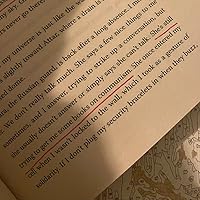
Puh, das Buch ist doll, aber das Buch hat auch einen Schreibstil, der mich wirklich sehr begeistert hat. Die Geschichte ist so tragisch, durch die Zeitsprünge aber auch so eingebettet, dass ich das Gefühl hatte, es wird aushaltbarer, sie nachzuverfolgen, wobei gleichzeitig nichts passiert, dass es alles weniger schlimm macht. Aber genau solche Bücher finde ich so wichtig, weil sie zeigen, was wir gerne ignorieren und so ehrlich sind.

February 16, 2024
Nonfiction is an emotionally turbulent read, it wasn’t necessarily enjoyable but you cannot argue that Myerson is not a talented writer. It does not follow a linear pattern, she takes you on a journey of twists and turns that keep you guessing for the future and questioning the present.

May 8, 2024
Nonfiction hit me hard from the start, and the battering never ceased.
Naturally, I loved it.
The novel contained two elements I tend to enjoy: a sad narrator and an ambiguous narrative. Structurally, however, it was not my ideal, but I was willing to accept its incoherent timeline. In fact, I think this method served as a symbol of grief and memory, as if these intangible components were sloppy, undefinable characters trying to seek out a mutual identity. I suspect that’s why its nonlinear path actually worked for me. It contributed to the depth of its impact.
Julie Myerson brazenly tackled something she has (in the past) received heavy criticism for: She brought recognizable fragments of her own reality into the story, shredding the curtain of privacy. It’s not possible to separate the truth from its fiction through this work, but it is starkly painful as it reveals portions of her honest and suffering heart. She did, however, almost seem to have fun with this aspect, as if she were playfully instigating her critics while amply explaining her motives.
I found pieces of myself within the relationships presented in the text. While I may not relate to every detail, I understood enough from my own experiences to know why even the simplest phrases were so profoundly tragic. But it’s often a comfort to find yourself within some tear stained pages, so I’ve no authentic complaints about the way Nonfiction wounded me.
Naturally, I loved it.
The novel contained two elements I tend to enjoy: a sad narrator and an ambiguous narrative. Structurally, however, it was not my ideal, but I was willing to accept its incoherent timeline. In fact, I think this method served as a symbol of grief and memory, as if these intangible components were sloppy, undefinable characters trying to seek out a mutual identity. I suspect that’s why its nonlinear path actually worked for me. It contributed to the depth of its impact.
Julie Myerson brazenly tackled something she has (in the past) received heavy criticism for: She brought recognizable fragments of her own reality into the story, shredding the curtain of privacy. It’s not possible to separate the truth from its fiction through this work, but it is starkly painful as it reveals portions of her honest and suffering heart. She did, however, almost seem to have fun with this aspect, as if she were playfully instigating her critics while amply explaining her motives.
I found pieces of myself within the relationships presented in the text. While I may not relate to every detail, I understood enough from my own experiences to know why even the simplest phrases were so profoundly tragic. But it’s often a comfort to find yourself within some tear stained pages, so I’ve no authentic complaints about the way Nonfiction wounded me.

June 15, 2023
I liked this book a lot, but it was a tough read. I wish there had been more of it. It reminded me a lot of my late sister.
It’s a beautiful, moving, gut-wrenching book.
It’s a beautiful, moving, gut-wrenching book.

February 14, 2024
how do you grieve someone who isn’t physically dead? how do you emotionally let go of someone who you love very dearly?
March 5, 2024
there's this compressing weight on my chest and it feels like i can't breath because this book has taken all the air out of me
June 21, 2024
a gut punch. i didn't love everything about it but i loved many pieces of it very fiercely. devastatingly beautiful.
February 4, 2024
I read this book first and some reviews after - can a writer separate their lives and experiences from their work is a theme explored throughout which is interesting. To me It felt like I was reading a traumatic diary of depression and tragedy - a life full of sadness with even the happy moments tinged with an inevitability of disaster. At the end though I was left with unresolved questions about one of the main characters as there is a late suggestion of a fidelity unexplained and I thought this passing reference was frustrating.
Read
February 5, 2024“It’s a fact which so many people in the world take for granted, but it’s never occurred to me before. The strength and confidence that comes from being loved by a parent, it’s astonishing—I suppose I’ve never given it any thought.”

December 22, 2023
So much good stuff about writing in this wrenching book about a mother and her addict child. I underlined so many passages.

January 27, 2025
This was close to a five star read. It’s a tough read about addiction, about cruel mothers, and an affair with a manipulative man. It’s also about what an author can write about. Nothing uplifting about it, but I liked it a lot.

March 27, 2024
Compelling, a heartbreaking story - generational trauma, the unknowability of those we love, including, and often especially, how our actions may or may not be responsible, told without undue sentimentality.

February 21, 2024
Definitely not for the faint hearted, but such an intense, beautifully written novel about motherhood and addiction, and a commentary on fiction and autobiography. The author herself was the center of some controversy when she published a memoir about her son's own addiction- this was at the time heavily criticized as the greatest betrayal.
How bold to call this new fiction novel "Non Fiction" - I read this as a little "fuck you" to the critics and I just loved it. This time, the narrator is a writer struggling with her relationship with her mother, while her own daughter has a heroin addiction - she is in and out of rehab. She also has a lover that has been floating in and out of her life and a husband she tries her hardest to maintain some connection with.
The novel's exploration of trauma over generations - troubled grandmother - mother - daughter is at the heart of the story, and the daughter's descent and spiral is while difficult to read, just gripping. Non Fiction is just superb - it really gets to the center of the pain, watching the person you love the most suffer and harm themselves. It invites conversations about female writers and what truth that are comfortably allowed to publish.
How bold to call this new fiction novel "Non Fiction" - I read this as a little "fuck you" to the critics and I just loved it. This time, the narrator is a writer struggling with her relationship with her mother, while her own daughter has a heroin addiction - she is in and out of rehab. She also has a lover that has been floating in and out of her life and a husband she tries her hardest to maintain some connection with.
The novel's exploration of trauma over generations - troubled grandmother - mother - daughter is at the heart of the story, and the daughter's descent and spiral is while difficult to read, just gripping. Non Fiction is just superb - it really gets to the center of the pain, watching the person you love the most suffer and harm themselves. It invites conversations about female writers and what truth that are comfortably allowed to publish.

January 30, 2024
Wow.
Even though I kinda knew where this was going, I still feel so powerlessly speechless by the end.
At once viscerally claustrophobic -yet compulsively (almost unashamedly) urgent in its portrayal. Myerson’s latest novel -for it is a novel (though with a nod to the “auto fiction” at times it seems) “Nonfiction”, is such a powerfully intimate, and gut wrenchingly brutal exploration of; writing, motherhood, love, loss, betrayal and addiction, that I’ve read in a LOOOOOOONG old time.
Complexly challenging in its conviction, “Nonfiction” really does push the boundaries of (or at least our understanding of) a mother’s (aka “unconditional”) love, as well as the individual’s (in this case artists) need to be seen and heard.
As I said, (somewhat) speechless (or more accurately, wordless?)
4.5/5 stars - I’m still undecided
PS - thanks again to the publishers for sending me a copy!
https://www.instagram.com/dylankakoulli/
Even though I kinda knew where this was going, I still feel so powerlessly speechless by the end.
At once viscerally claustrophobic -yet compulsively (almost unashamedly) urgent in its portrayal. Myerson’s latest novel -for it is a novel (though with a nod to the “auto fiction” at times it seems) “Nonfiction”, is such a powerfully intimate, and gut wrenchingly brutal exploration of; writing, motherhood, love, loss, betrayal and addiction, that I’ve read in a LOOOOOOONG old time.
Complexly challenging in its conviction, “Nonfiction” really does push the boundaries of (or at least our understanding of) a mother’s (aka “unconditional”) love, as well as the individual’s (in this case artists) need to be seen and heard.
As I said, (somewhat) speechless (or more accurately, wordless?)
4.5/5 stars - I’m still undecided
PS - thanks again to the publishers for sending me a copy!
https://www.instagram.com/dylankakoulli/
October 6, 2022
This was brilliantly written. Tragic tale of mother daughter relationships through generations. It was horrific and brutal at times and not an easy or light read. Very smart but not sure I would recommend as it is so sad. Definitely one for Rachel Cusk fans.
May 27, 2022
This was a really good read that dealt with hard hitting issues in an original way. IT was well written with a compelling storyline and well developed but flawed characters. An enjoyable read
September 1, 2024
This review may contain spoilers!!!
I devoured this book, but I didn’t want to. Every page read was bittersweet, delightfully consumed with a melancholy aftertaste knowing I closer to the end. Still, I couldn’t resist reading on. Julie Myerson’s Nonfiction commanded my attention from start to finish. How did Myerson craft characters with such complexity, who are nameless? Every character is dimensional through so little explicitly told. Nonfiction is a masterclass in writing; every word is essential. There is no fluff, no excess. This trim novel packs a punch, and every time the weight of the emotion knocked me down, I got up, ready, more excited even, for another round.
I thoroughly enjoyed Myerson’s unconventional plot structure. Nonfiction doesn’t just move back and forth in time, but races forward, springs backwards, crashes to a halt in the present, and catapults to the future, stretching the brackets of beginning and end in the process. Each line break I anticipated my new placement, relishing the whiplash of the surprise. Myerson’s use of time creates a chaos that upends chronology with something entirely unique and original. This chaos lurks in the negative space of the scenes, paralleling the chaos our nameless narrator experiences in the pages. We were uncovering something together. I was amazed at how quickly I adjusted to Myerson’s cadence of time, following along with little to no confusion from scene to scene. I believe this quick adjustment was made possible by being open to the narrator from the trust I was given as a reader. There was a quietness in the details that made me lean in and be open to the lack of information apparent at times. I took what I was given, knowing the other pieces would be revealed in due time—and, as it turned out—in ways that exceeded all anticipations.
I found Nonfiction to be about so many things, but also not really one thing. Prior to reading, I thought it would be about a mother grappling with her daughter’s addiction. While this book is about just that, I didn’t feel as though that element took precedent over the others at play. I dare say the addiction theme is not the most powerful in the book, though I also don’t feel comfortable saying what is—if not the addiction, then what? And I think that’s the point: that it isn’t just one thing, but the processing of everything. Our nameless narrator is no expert in the answers to her life, or trying to understand why, because she knows the point is not why. She understands unearthing Why will not alleviate the struggle her daughter endures; it will not mend her tumultuous relationship with her own mother; it will not fix her marriage. The only thing the narrator knows is what happened, and how she felt about it then, and how she feels about it now. And the in-between of all those events. The narrator’s humble humility in this knowledge, and the frankness about her life, are what make her convincing, and provide the reader with an authority of voice to believe in—because we can all relate to something presented to us here. What may have been the most memorable and impactful moments for me may be totally different from other readers. They may overlap, or perhaps be the same. The negative space in Nonfiction that Myerson so delicately protects allows for such various interpretations of the audience to differ and overlap. Of course, this effect is what good writing should do, but I find Myerson’s achievement to be beautifully haunting in her clean, honest prose.
One of the elements of Nonfiction that I remain most in awe of is the use of writing as part of the story itself (perhaps my favorite if I had to choose). The narrator is a writer, and her relationship to, and experience of, writing, is keenly observed throughout the pages. It’s almost as if Nonfiction breaks a fourth wall—the interrogation of writing as a cornerstone to the book itself. But such a statement feels inaccurate, because it’s not really a fourth wall that Myerson breaks, but a fifth wall the Myerson creates. The fourth wall is in plain sight, and she points at it, remarking on the craft of writing, but ultimately directing our attention to a fifth wall that becomes excavated as the story progresses. Her fifth wall takes this meta-grappling of form up a notch, making the reader ask what fiction really is, among countless other questions, in this pentagon of a room. This fifth wall is all her own, authentic to Nonfiction. I have never read a novel with this meta grappling of form not only weaved in flawlessly to the story, but even articulated at all. Identified and confronted, with the reader, together.
My favorite line: “Because I do have this one idea. I don’t know if it’s fiction or nonfiction.” I wept. It all hits you there. I can’t wait to revisit my favorite passages, as well as the whole novel cover to cover, again, and again.
I devoured this book, but I didn’t want to. Every page read was bittersweet, delightfully consumed with a melancholy aftertaste knowing I closer to the end. Still, I couldn’t resist reading on. Julie Myerson’s Nonfiction commanded my attention from start to finish. How did Myerson craft characters with such complexity, who are nameless? Every character is dimensional through so little explicitly told. Nonfiction is a masterclass in writing; every word is essential. There is no fluff, no excess. This trim novel packs a punch, and every time the weight of the emotion knocked me down, I got up, ready, more excited even, for another round.
I thoroughly enjoyed Myerson’s unconventional plot structure. Nonfiction doesn’t just move back and forth in time, but races forward, springs backwards, crashes to a halt in the present, and catapults to the future, stretching the brackets of beginning and end in the process. Each line break I anticipated my new placement, relishing the whiplash of the surprise. Myerson’s use of time creates a chaos that upends chronology with something entirely unique and original. This chaos lurks in the negative space of the scenes, paralleling the chaos our nameless narrator experiences in the pages. We were uncovering something together. I was amazed at how quickly I adjusted to Myerson’s cadence of time, following along with little to no confusion from scene to scene. I believe this quick adjustment was made possible by being open to the narrator from the trust I was given as a reader. There was a quietness in the details that made me lean in and be open to the lack of information apparent at times. I took what I was given, knowing the other pieces would be revealed in due time—and, as it turned out—in ways that exceeded all anticipations.
I found Nonfiction to be about so many things, but also not really one thing. Prior to reading, I thought it would be about a mother grappling with her daughter’s addiction. While this book is about just that, I didn’t feel as though that element took precedent over the others at play. I dare say the addiction theme is not the most powerful in the book, though I also don’t feel comfortable saying what is—if not the addiction, then what? And I think that’s the point: that it isn’t just one thing, but the processing of everything. Our nameless narrator is no expert in the answers to her life, or trying to understand why, because she knows the point is not why. She understands unearthing Why will not alleviate the struggle her daughter endures; it will not mend her tumultuous relationship with her own mother; it will not fix her marriage. The only thing the narrator knows is what happened, and how she felt about it then, and how she feels about it now. And the in-between of all those events. The narrator’s humble humility in this knowledge, and the frankness about her life, are what make her convincing, and provide the reader with an authority of voice to believe in—because we can all relate to something presented to us here. What may have been the most memorable and impactful moments for me may be totally different from other readers. They may overlap, or perhaps be the same. The negative space in Nonfiction that Myerson so delicately protects allows for such various interpretations of the audience to differ and overlap. Of course, this effect is what good writing should do, but I find Myerson’s achievement to be beautifully haunting in her clean, honest prose.
One of the elements of Nonfiction that I remain most in awe of is the use of writing as part of the story itself (perhaps my favorite if I had to choose). The narrator is a writer, and her relationship to, and experience of, writing, is keenly observed throughout the pages. It’s almost as if Nonfiction breaks a fourth wall—the interrogation of writing as a cornerstone to the book itself. But such a statement feels inaccurate, because it’s not really a fourth wall that Myerson breaks, but a fifth wall the Myerson creates. The fourth wall is in plain sight, and she points at it, remarking on the craft of writing, but ultimately directing our attention to a fifth wall that becomes excavated as the story progresses. Her fifth wall takes this meta-grappling of form up a notch, making the reader ask what fiction really is, among countless other questions, in this pentagon of a room. This fifth wall is all her own, authentic to Nonfiction. I have never read a novel with this meta grappling of form not only weaved in flawlessly to the story, but even articulated at all. Identified and confronted, with the reader, together.
My favorite line: “Because I do have this one idea. I don’t know if it’s fiction or nonfiction.” I wept. It all hits you there. I can’t wait to revisit my favorite passages, as well as the whole novel cover to cover, again, and again.

September 9, 2025
Utterly compelling. The style grabs you in the relentless inevitability of a tragedy unraveling a family, a mother, a dream. Many will mistake this fiction for nonfiction (the warning is in the title) and accuse Myerson of self-pity or profiting from her own experience by writing it out, presenting only “her” side of the suffering her character’s endure. She tackles this accusation head on with a vignette from a writers’ festival, with a caustic male critic asking whether she is embarrassed by her fiction closely mirroring her life, acting as wish fulfillment. This novel stands as testament to reading the work without making it a roman a clé. In here are all the people who would use everyone else, first-person narrator included, and then blame those others for “what you made me do”.
The novel asks what do we really owe others, especially those we love, or are supposed to love? Can the mother daughter bond break, is the child we loved ever really gone. Not just what is expected of us, but what we can do when we no longer love but want to love.
The novel asks what do we really owe others, especially those we love, or are supposed to love? Can the mother daughter bond break, is the child we loved ever really gone. Not just what is expected of us, but what we can do when we no longer love but want to love.

January 15, 2024
Nonfiction is the best book I’ve read about the craft of writing. Julie Myerson weaves a thriller “Can a mother save her wayward daughter from self-destruction?” into an acknowledgment that splashes across the page; that perhaps all art comes from life.
“… because where else would it come from?”
On her publisher’s page, Myerson speaks of her latest novel’s release:
“Although it’s a work of fiction, it is the most personal book I’ve written or know or believe about writing.”
It helps that our unnamed narrator is a novelist, but Myerson’s splendid narrative makes you forget with compact and subtle prose and an undiluted experience that touches on family, love, friendship, and loss.
Who would’ve thought that love could be so lonely?
But is our narrator telling the truth?
Nonfiction is straightforward: A middle-aged couple deals with the tragedy of their daughter’s drug addiction.
This premise is threaded with a love affair, but Nonfiction never falls into the crevasse of didacticism, nor does it ever feel the need to pull itself out of the morass.
It is a quiet book. One that unfolds without the pretense of unfolding. Oftentimes, I didn’t know what hit me. Myerson’s flashbacks slice your soul.
“There’s a night – I think this is the middle of June – when we lock you in the house.”
This is the first sentence of the novel, and although it is unsettling, Myerson never lets you fear the unknown. In fact, it is a confession of sorts. One that is as beautifully written as it is intricate and raw.
Myerson herself thinks it is a book about writing.
Yes, the themes of motherhood and addiction are pervasive, and Myerson makes the damage palpable, but that never feels the point of Nonfiction.
The novelist takes on a client. A writer whose predilections are nominal yet familiar (as Myerson may even be talking to a former self), and it is in these interactions, the novel is exquisite.
In her young charge’s draft, “not one conversation contains a single moment of controversy or tension and the one time something bad seems to be about to happen, someone else conveniently steps in and sorts it out.”
They talk for a while about this crucial lack of jeopardy, and our narrator doesn’t know what it’s all for, to which her client balks: “Does it need to be “for” anything?”
Myerson’s beautiful and tragic Nonfiction gives the reader and the writer so many reasons to read on.
“… because where else would it come from?”
On her publisher’s page, Myerson speaks of her latest novel’s release:
“Although it’s a work of fiction, it is the most personal book I’ve written or know or believe about writing.”
It helps that our unnamed narrator is a novelist, but Myerson’s splendid narrative makes you forget with compact and subtle prose and an undiluted experience that touches on family, love, friendship, and loss.
Who would’ve thought that love could be so lonely?
But is our narrator telling the truth?
Nonfiction is straightforward: A middle-aged couple deals with the tragedy of their daughter’s drug addiction.
This premise is threaded with a love affair, but Nonfiction never falls into the crevasse of didacticism, nor does it ever feel the need to pull itself out of the morass.
It is a quiet book. One that unfolds without the pretense of unfolding. Oftentimes, I didn’t know what hit me. Myerson’s flashbacks slice your soul.
“There’s a night – I think this is the middle of June – when we lock you in the house.”
This is the first sentence of the novel, and although it is unsettling, Myerson never lets you fear the unknown. In fact, it is a confession of sorts. One that is as beautifully written as it is intricate and raw.
Myerson herself thinks it is a book about writing.
Yes, the themes of motherhood and addiction are pervasive, and Myerson makes the damage palpable, but that never feels the point of Nonfiction.
The novelist takes on a client. A writer whose predilections are nominal yet familiar (as Myerson may even be talking to a former self), and it is in these interactions, the novel is exquisite.
In her young charge’s draft, “not one conversation contains a single moment of controversy or tension and the one time something bad seems to be about to happen, someone else conveniently steps in and sorts it out.”
They talk for a while about this crucial lack of jeopardy, and our narrator doesn’t know what it’s all for, to which her client balks: “Does it need to be “for” anything?”
Myerson’s beautiful and tragic Nonfiction gives the reader and the writer so many reasons to read on.

September 7, 2024
Some lines I liked:
"Later, though, it occurs to me that it's very simple: I don't know who I am without my most unforgiving and self-lacerating thoughts."
"He has even, I would say, so completely ceased to exist for me that it does not seem physically possible that he should be standing here - "
"For a long time afterwards, I find myself checking the weather app on my phone to see how cold or wet or windy it is in the place where she lies. Even now I do it. Today, for instance, they say there is a chance of snow there. I think of her lying down there all alone under that freezing earth and my heart breaks."
"There seems to be no question at all about it in their eyes. It does not seem for one moment to have crossed either of their minds to think that I might be a very bad mother indeed - neglectful, selfish, frightened, and chaotic, that I might have spent years putting my own appetite and interests and emotions first - t hat I might even possible be to blame for this appalling and tragic mess you are in."
"Later, though, it occurs to me that it's very simple: I don't know who I am without my most unforgiving and self-lacerating thoughts."
"He has even, I would say, so completely ceased to exist for me that it does not seem physically possible that he should be standing here - "
"For a long time afterwards, I find myself checking the weather app on my phone to see how cold or wet or windy it is in the place where she lies. Even now I do it. Today, for instance, they say there is a chance of snow there. I think of her lying down there all alone under that freezing earth and my heart breaks."
"There seems to be no question at all about it in their eyes. It does not seem for one moment to have crossed either of their minds to think that I might be a very bad mother indeed - neglectful, selfish, frightened, and chaotic, that I might have spent years putting my own appetite and interests and emotions first - t hat I might even possible be to blame for this appalling and tragic mess you are in."
Displaying 1 - 30 of 243 reviews