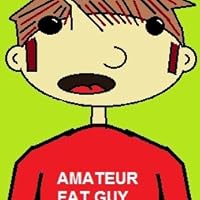
All Howard Plumber's friends from the bygone Denver punk poetry scene have moved away to popular cities like New York or L.A. during the months of his hospitalization, and all his more recent allies from Vermont's experimental Power Mountain college and graduate school live in locations equally distant. The internet keeps Howard everywhere, a kind of selective omniscience enabling his interactions on Facebook with an infamous imprisoned cult leader named Hal Blare; an intimate of controversial late comedian Roberta Bogchar's inner circle, who may or may not be a secret agent in disguise; and countless other anti-famous notables. Apparitions from pop culture (among them TV's Gabe Kotter and the Carson McCullers character Frankie Addams) have begun to appear in Howard's daily interaction, implying he's either mentally unbalanced or extra perceptive about some unspecified shift society is undergoing. Charmed by appearing women fictional and actual (or neither) (or both) and tortured by a sense of incompleteness as more and more fathers are taken from him, Howard follows peace symbols in the sidewalk cracks and tries to win a living as a creative artist of some kind, a dying art. The webzine's fan page on the social network Facebook, which he uses as a bulletin board for newsworthy items, becomes a virtual map of the apparent self contradiction engendered by this transformation, where anything can be proven and nothing is meant to be. Set triply in Howard's life in Denver, his memories of grad school on the East Coast, and the no-man's-everywhere inhabited by his cartoon doppelganger, Dim Jim Driscoll, Sorehead is colored by Howard's commitment to psychoemotional transfiguration.
I just published one called Main Character Syndrome, Kindle version available at Amazon, paperback by tomorrow (2/21/24). Something brand new about artificial intelligence and mortality called Uneasy World was also recently published and is currently available at Amazon along with There Ain't Nowhere but Here about dysfunctional tenants and communities. Uneasy World is the hardest book I've had to write so far and I think it came out nicely. A few years ago, I founded a co. called Camp Elasticity Productions, edited and published an anthology called The Cool Zone, a revised edition of my first novel, Reality Stars, published three more, Problem Contest, Lucky Jokers, and Happiness, and started putting together a film. Take a look at my website for blog entries and podcasts. More updates are always coming soon.
It's always a joy to find an author with a new voice, a new vision, and a unique way of using words- and Zack Kopp certainly delivers. Influences abound, but never to the point where the author is anyone but himself. There's an old Kerouac type beat to the writing, a Gonzo wit, a Beckett and Satre state of being and a post-Generation X feeling. Anyone who sits on the side of Bill Hicks' way of looking at the world, won't be disappointed with Sorehead.
So what's it all about? Howard Plumber, the protagonist, is trying to make it as a writer- surrounded by musicians, poets, artists... trying to make sense of the world, as each generation's artistic counter culture does. But in this brave new i-world of the twenty first century, there's something else that defines this present alternative culture, and yet it can't quite be pinpointed in any meaningful short sentence. Enter Howard Plumber's head and you'll find mysticism, synchronicity, conspiracy truths, modern day paranoias, comic books, music, movies, subjective and objective arguments, the five sense illusion of the world, seeing peace signs in cracks on pavements, alien contemplation, marijuana medicine, the Law of Attraction, interconnectedness, sub stories that take the notion of self and split it into even more personalities that are sometimes human, sometimes God, sometimes nothingness. Sometimes just humour. When reading Sorehead, it often felt as though I was sifting through my very own thoughts. If you want something different, something groovy and something that'll make you think, Sorehead is for you.
Harry Whitewolf. (Author of Route Number 11: Argentina, Angels & Alcohol.)
If Jack Kerouac were alive today, if Jack Kerouac were living in Denver writing, hungover with a sweet desperation, high on some punk rock-infused jumpin’ jack juice, writing of what it’s like to be alive in these weird, fragmented, attention deficit disordered early days of the 21st century, he’d’ve written Sorehead. But Kerouac’s long gone. And only writer and editor Zack Kopp could’ve written this wildly inventive and satisfyingly twisted novel – a kind of noir meets W. S. Burroughs meets the Clash on Colfax Avenue. Like an oddball, twisting Mobius strip turning inward, outward, every which way, Sorehead’s troubled, good-hearted hero, Howard Plumber carries on, just looking for clues on how to live in these dark days. You may find Sorehead tough going at times, but sometimes a great new voice requires a bit of patience – keep at it – Sorehead’s a trip worth taking.
Disclaimer: I know the author personally, so I will share my reflections on the work without resorting to boosterism.
The protagonist, Howard, in some ways resembles a 4th Century BC philosophical skeptic transplanted into a 21st Century that is somewhat sinister and full of mysterious happenings. Then, his thoughts are also largely occupied by doubts relating to human relations, particularly with women; human ambitions, particularly artistic and literary; and mortality, particularly that of his family, self, and peers. But I'm not sure anyone, including the author, would agree with this characterization, because it seems to me that Howard has pursued skepticism to the extreme degree that it has become its opposite.
When I was a teenager, oh so long ago, my friends and I used the phrase "to go around the world," to mean the phenomenon of something becoming its opposite, like walking away to the west only to emerge from the east. And Howard's skepticism has gone around the world. He's gone from being unable to affirm any idea with certainty, to being skeptical of his own skepticism, to being unable to deny any idea, to finally being unable to resist any idea. So much so that he has to embrace "AND thinking," a mindset that allows him to entertain what appear to be mutually-exclusive or contradictory beliefs equally and simultaneously.
These ideas emerge from the book as we follow characters in very human interactions. They are not presented as a treatise. But hints appear, and there is at least this one overt passage to support what I've concluded: he "...wanted to understand every perspective without committing to any... this made it hard for him to relate to other people with more specific viewpoints, and hard for them to understand his lack of one."
The input received from internet sources, mainstream media, and the speculation and musings of acquaintances, all become fuel for doubt, while sometimes also allowing for an ephemeral sensation of enlightenment to peek through.
Of course, our affable protagonist is often challenged in his ability to express the ideas which he forms, or to defend them against those who are more strongly affirmative or are too prone to sensitive reaction and misinterpretation. This is not only because Howard's philosophy of doubt (somewhat unconscious, but always an influence) prevents him from "proving" anything. It is also because Howard has trouble converting ideas into precise language, due to a history of seizures and traumatic head injury. It is ALSO also because Howard is fallibly human, or humanly fallible. He blunders. (I guess we could also give some credit to the perpetual presence of cannabis in his daily life).
The author is certainly aware of the fallibility of the character he has devised. He openly presents the novel as a way to poke fun at himself, and he sort of plays the foil to his own ambitions. But for all its comic play, the book expresses some real sincerity; in fact I'd say that's the main impression given by the book: sincerity. Interestingly enough, this demonstrates both the expressiveness of the author AND his occasional opacity/inexpressiveness.
But when it's time to push the creative absurdity to a higher level, that's when Howard's more exaggerated wise-fool persona arrives in the form of Dim Jim Driscoll. In many ways the Dim Jim vignettes are the most entertaining elements because they are so free-form. They can stand apart independent from one another and from the larger structure of the text, and are not limited to the rational and concrete world. They are fascinating flights of fancy, while expressing some of the same anxieties and doubts, as well as fantasies of the (marginally) more earth-bound Howard.
I haven't detailed the plot here, mainly because the story is in the form of interactions, relationships, and vignettes. I.e., it is not the product of central conflict theory, and does not pursue a goal-oriented narrative line. It's largely linear (but not completely), but it's a book of character and idea more than it is a book of action and consequence. Many of the best exchanges of the book take place between strangers, or customer and clerk, or people otherwise thrown together by circumstance, and some of these are truly hilarious, especially when someone crosses the line of what is expected in these kinds of interactions, or when some misstep results in embarrassment or conflict.
One line in the book (a very honest and revealing line) gives us significant insight into what's going on in Howard's relationships with women: "Howard's unfortunate fetish for unrequited love really got in the way sometimes." Howard, generally, may have opportunity drop into his lap occasionally, but he is not necessarily one to hold on to what he's got.
Death and breakups have something in common in this novel. Both occur offstage, and both occur without apparent cause... they are the arbitrary tragedies which we only come to recognize in their aftermath, and the aftermath is often largely silent. That in itself tells us about the author's perspective, and the nature of Howard as a character.
Along the way, doubt and the willingness to ponder anything leads to some very interesting observations that down-to-earth people will never stumble upon. For instance: A bird that is able to imitate human speech (cockatoo) escapes into the wild, and other wild birds imitate it, thus spreading the imitation. Does this imply the possibility that the bird songs we hear today could in fact be echoes of the long-extinct languages of our primitive ancestors?
I hope that these reflections appeal to curious readers, and that they will agree with the intentions of the author. The book does have some apparent editing/formatting issues in terms of an occasional typo or unexpected page break, but these issues did not impair my ability to enjoy the novel and its characters.
There is one line in the novel Sorehead which I felt encompassed the being of the whole thing completely. And it is this: “There is no consensus reality.” I thought this single sentence was the perfect distillation of the entire story. It is a statement that is both boldly certain and staggeringly philosophical at the same time. And it represents the malleable putty of reality that is represented in this piece of Zack Kopp’s writing. Protagonist Howard Plumber meanders through the daily struggles of being a writer, flitting in and out of the lives of the many people in his world and taking away something new about the personal perspectives of every one of them. Even his own reality is stretched and contorted by his occasional interaction with fictional characters, blending the line between reality and the surreal. There is humor and woe. There is punk rock art. There is the frequent analysis of existential theorems and the exploration of human logic through the use of witty, sharp banter and inner dialogue. In short, this is a novel that offers a deep, rich spectrum experience. It’s like a grand mural spray painted on the side of a giant, city apartment monolith: something of urban beauty that is both broadly fascinating in the big picture and finely intricate when viewed up close. Read this book.
Having read Millennium Sickness, I was eager to pick up Sorehead and found myself enjoying it just as much, if not more because of its more novel-sized length. Howard Plumber is never without a dull moment, and though it's often trouble that finds him, he floats in and out of the lives of others like a man wandering through a house party trying to find just the right person to hang out with. This is more than just a glimpse into the urban punk art scene of Denver, and more than just a tale of a man trying to make it as a writer while suffering from previous physical problems. This is a rich, poignant look into the heart and soul of a man just trying to find his place in the world, and I would highly recommend it.