THE FAMED ANTHROPOLOGIST LOOKS AT 1970s CULTURE
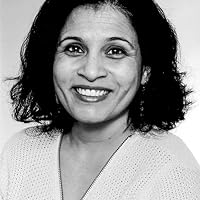
Margaret Mead (1901-1978) was a famous American cultural anthropologist. She wrote in the Preface to the Revised (1978) edition of this original 1970 book, “This book is based on what I have learned about the way human cultures are transmitted and changed, as I have watched primitive cultures come into the modern world during my last fifty years of field work in the Pacific. Since the first edition of this book, I have made three trips to the Pacific, revisiting the Manus, whom I first studied in 1928, and revisited four other groups in various stages of transition. In between I have attended international conferences and discussed issues like food and population, transition and change… with people from many countries. At Columbia University I have taught a great variety of students, and I have lectured to and held discussions with student audiences all over the country and carefully considered their questions. It is on these experiences that I base my statements. As a cultural anthropologist, I am concerned with the cultural aspects of the generation gap and generational change and their implications for the world community. It was to these concerns that the old pages in the book were addressed.”
She states in the first chapter, “I believe that the reason we can look at all the great civilizations of the past and at successive stages in the history of our own era as a succession of repetitive traps is that we do not know enough about them. It is upon great historical emptiness---the lives of unknown peoples lived out within high-standing broken walls now in ruins… that the human imagination can project its fantasies and its despair. In history, as in science, the grand design without the detail shakes belief and trust to the core. (Pg. 10)
She explains, “In past studies on the way in which culture is transmitted, I have found it useful to distinguish between those cultures in which change is so slow that it seems as if a child’s cultural expectations could be defined at birth and those in which change was more rapid so that some young people and even some adults had to learn from their peers rather than from their elders. We have now entered a new phase, in which adults all over the world have to recognize that all children’s experience is different from their own. To distinguish these three cultural styles I am using the words ‘postfigurative,’ when the future repeats the past, ‘cofigurative,’ in which the present is the guide to future expectations, and ‘prefigurative’ for the kind of culture in which the elders have to learn from the children about experiences which they have never had.” (Pg. 13)
She notes, “What has not been emphasized enough, I believe, is that when there is no written language, no documentation of the past, the perception of the new is rapidly engulfed by the style of the old. The elders who edit the version of the culture that is passed on to the young mythologize or deny change.” (Pg. 30)
She observes, “Today, suddenly, because all the peoples of the world are part of one electronically based, intercommunicating network, young people everywhere share a kind of experience that none of the elders ever have had or will have. Conversely, the older generation will never see repeated in the lives of young people their own unprecedented experience of sequentially emerging change. This break between generations is wholly new: it is planetary and universal. Today’s children have grown up in a world their elders never knew, but few adults knew that this would be so. Those who did know it were the forerunners of the prefigurative cultures of the future in which the prefigured is the unknown.” (Pg. 64)
She acknowledges, “It was when I realized that the anthropological experience itself was too special to provide recommendations which would be of much use to the vast majority of the present generation, as neither they themselves nor their children would be anthropologists, that I decided to write my autobiography ‘Blackberry Winter,’ as a record of how children could be brought up, conscious of the changes which their forebears had undergone, treated as persons with immediate contributions to make, rather than merely as learners not yet deserving of notice.” (Pg. 103)
She says, “I pictured what had happened in the mountains of New Guinea, as naked, aspiring men, who had washed the pig fat out of their hair, arrived at a government post saying,’ We have built a school and hospital. Please send us a doctor and a teacher’---calling for emissaries of that modern world they had heard bout and craved to enter. And the picture is true, in the sense that this is what really happened and is happening all over the world. People who have only seen airplanes in the sky and have heard of the wonderful ways of radio, satellites…. Are eager to experience these marvels for themselves.” (Pg. 121)
She says of a prefigurative society, “The sense that the children are a little better prepared to face these unknowns because they are at least birthright members of the newer order can be either comforting and give hope or be twisted into a philosophy of despair. But there is a constant danger, more constant than I realized ten years ago, that the struggle will prove too difficult, and the by-products too destructive. Hope for the future must also be balanced, and rooted in memory of the past. Without such deep roots, then shallowly rooted plants… will wither in the first drought.” (Pg. 135)
She concludes, “If we know how to cherish and cultivate this urge for participation until it becomes a safeguard for human evolution, then we can contain the kind of exploitative engineering and power-seeking, profit-seeking, prestige-seeking motives which produce runaway feedbacks that threaten the whole planet. It will become impossible to sacrifice one group for another, for everyone will be there… Today the demand that everyone listen and be listened to is the hope of an endangered but potentially self-healing world.” (Pg. 156-157)
Nearly fifty years after the first edition of this book was written, many aspects of it seem predictably ‘dated.’ But Mead’s anthropological perspective also provides some insights of lasting value.